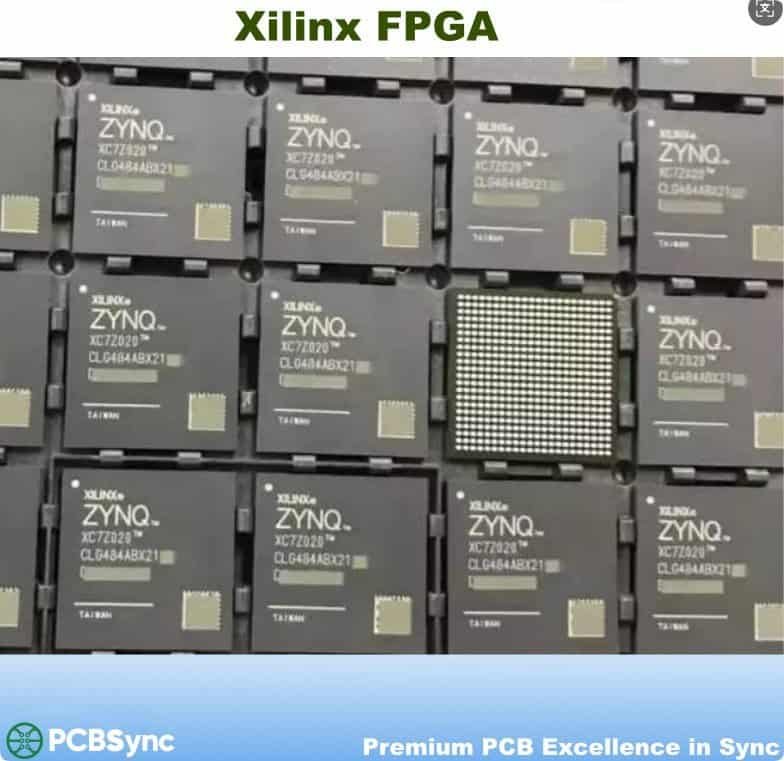
Overview of the XCV50E-7FG256I FPGA
The XCV50E-7FG256I is a powerful field-programmable gate array (FPGA) from AMD Xilinx’s Virtex-E family, designed to deliver high-performance programmable logic solutions for demanding digital applications. This versatile FPGA combines advanced 0.18μm CMOS technology with exceptional processing capabilities, making it an ideal choice for engineers and designers working on complex digital signal processing, telecommunications, and embedded systems projects.
Built on AMD Xilinx’s proven Virtex architecture, the XCV50E-7FG256I offers substantial computational resources packed into a compact 256-pin Fine-pitch Ball Grid Array (FBGA) package. Whether you’re developing industrial control systems, telecommunications equipment, or data encryption applications, this Xilinx FPGA delivers the flexibility and performance required for next-generation electronic designs.
Key Technical Specifications
Core Architecture and Logic Resources
| Specification |
Value |
| Logic Elements/Cells |
1,728 |
| Logic Array Blocks (LABs/CLBs) |
384 |
| System Gates |
71,693 |
| Total RAM Bits |
65,536 (8 kB) |
| Maximum Frequency |
400 MHz |
| Process Technology |
0.18μm, 6-layer metal CMOS |
Input/Output and Package Details
| Feature |
Specification |
| Number of I/O Pins |
176 |
| Total Pin Count |
256 |
| Package Type |
256-FBGA (Fine-pitch Ball Grid Array) |
| Mounting Type |
Surface Mount |
| Package Dimensions |
Compact BGA footprint |
Power and Environmental Specifications
| Parameter |
Range |
| Supply Voltage |
1.71V ~ 1.89V (1.8V nominal) |
| Operating Temperature |
-40°C ~ 100°C (TJ) |
| Speed Grade |
-7 (commercial grade) |
| RoHS Compliance |
Compliant |
| Lead Status |
Contains Lead |
Advanced Features and Capabilities
Programmable Logic Architecture
The XCV50E-7FG256I features AMD Xilinx’s optimized Virtex-E architecture, which delivers dramatic improvements in silicon efficiency through enhanced place-and-route capabilities. The aggressive 6-layer metal interconnect structure provides superior signal routing flexibility, enabling designers to achieve higher performance while maintaining design efficiency.
Multiplier Blocks
This FPGA includes dedicated 16×16-bit multiplier blocks, essential for high-speed digital signal processing operations. These hardware multipliers significantly accelerate mathematical computations compared to software-based implementations, making the device particularly suitable for:
- Digital filters and FFT operations
- Image and video processing algorithms
- Communications signal processing
- Real-time data encryption
Memory Resources
With 65,536 total RAM bits organized as embedded block RAM, the XCV50E-7FG256I provides sufficient on-chip memory for buffering, lookup tables, and intermediate data storage. This eliminates the need for external memory in many applications, reducing system complexity and improving performance.
Primary Application Areas
Digital Signal Processing (DSP)
The XCV50E-7FG256I excels in DSP applications requiring real-time processing capabilities. The combination of high-speed logic, dedicated multipliers, and embedded memory makes it perfect for implementing sophisticated filtering algorithms, modulation/demodulation schemes, and signal analysis functions.
Industrial Control Systems
Engineers leverage this FPGA for industrial automation applications where programmable logic, multiple I/O interfaces, and reliable operation in harsh environments are critical. The wide operating temperature range (-40°C to 100°C) ensures dependable performance in industrial settings.
Telecommunications Equipment
With 176 I/O pins and 400 MHz maximum frequency, the XCV50E-7FG256I supports complex telecommunications protocols and high-speed data interfaces. Applications include:
- Protocol converters and interfaces
- Base station processing
- Network switches and routers
- Communication test equipment
Data Encryption and Security
The programmable nature of this FPGA makes it ideal for implementing custom encryption algorithms and security protocols. Hardware-based encryption offers superior performance and security compared to software solutions, particularly for applications requiring high throughput.
Design and Development
Software Tools Compatibility
The XCV50E-7FG256I is supported by AMD Xilinx’s comprehensive development tools:
- Xilinx ISE Design Suite: Classic tool for Virtex-E development
- Vivado Design Suite: Modern development environment with enhanced features
- HDL Support: Compatible with Verilog and VHDL hardware description languages
Programming and Configuration
This FPGA supports industry-standard programming methods including JTAG boundary scan, enabling straightforward device configuration and in-system programming. Compatible programming hardware includes:
- Xilinx Platform Cable USB
- JTAG programming interfaces
- Third-party programming solutions
Package and Mounting Information
256-FBGA Package Advantages
The Fine-pitch Ball Grid Array package offers several benefits for modern electronic designs:
- Compact Footprint: Smaller PCB area compared to quad flat packages
- Superior Electrical Performance: Shorter signal paths reduce parasitic effects
- Enhanced Thermal Performance: Better heat dissipation through the package substrate
- High I/O Density: Maximum pin count in minimal space
PCB Design Considerations
When designing printed circuit boards for the XCV50E-7FG256I, engineers should consider:
- Adequate power supply decoupling with multiple capacitors
- Proper grounding and power plane design
- Controlled impedance routing for high-speed signals
- Thermal management through board layout and heat sinking
Product Status and Availability
Obsolescence Status
The XCV50E-7FG256I is currently listed as obsolete by AMD Xilinx, meaning production has been discontinued. However, this status presents opportunities:
- Cost-Effective Solutions: Existing inventory often available at competitive prices
- Legacy System Support: Perfect for maintaining and upgrading existing designs
- Proven Reliability: Mature product with well-documented performance characteristics
Sourcing Recommendations
While obsolete, the XCV50E-7FG256I remains available through:
- Authorized distributors with existing stock
- Electronic component marketplaces
- Specialized obsolete component suppliers
For new designs, consider evaluating current-generation Xilinx FPGA families that offer enhanced performance and continued long-term availability.
Comparison with Alternative Solutions
Advantages Over ASICs
Unlike Application-Specific Integrated Circuits (ASICs), FPGAs like the XCV50E-7FG256I offer:
- Flexibility: Reconfigurable logic adapts to changing requirements
- Faster Time-to-Market: No mask design or fabrication delays
- Lower NRE Costs: No expensive tooling required
- Field Upgrades: Logic can be updated after deployment
Performance Benefits
The XCV50E-7FG256I delivers superior performance compared to software-based solutions:
- Parallel processing of multiple operations
- Deterministic timing for real-time applications
- Lower latency for time-critical operations
- Reduced power consumption for specific tasks
Quality and Reliability
Manufacturing Standards
As an AMD Xilinx product, the XCV50E-7FG256I is manufactured to stringent quality standards:
- Industry-standard qualification testing
- Automotive-grade temperature ranges
- Long-term reliability validation
- Comprehensive electrical characterization
Testing and Verification
Devices undergo rigorous testing including:
- Functional testing of all logic resources
- I/O characterization across voltage and temperature ranges
- Speed grade verification
- Package integrity inspection
Integration and System Design
Interface Compatibility
The 176 I/O pins support various interface standards, enabling connection to:
- Memory devices (SDRAM, DDR, Flash)
- Communication interfaces (UART, SPI, I2C)
- High-speed serial links
- Custom parallel interfaces
- Sensor and actuator networks
Power Supply Design
Proper power supply design is critical for reliable operation:
- Core voltage: 1.8V with tight tolerance (±5%)
- Separate power domains for core and I/O
- Low-noise regulation for sensitive analog interfaces
- Adequate current capacity for peak loads
Technical Support and Resources
Documentation
Comprehensive technical documentation available includes:
- Product datasheets with electrical specifications
- User guides and application notes
- Package mechanical drawings
- PCB layout guidelines
- IBIS models for signal integrity simulation
Community and Forums
The extensive Xilinx user community provides valuable resources:
- Design examples and reference implementations
- Troubleshooting assistance
- Best practices sharing
- Third-party IP cores and tools
Purchasing Considerations
Packaging Options
The XCV50E-7FG256I is typically available in:
- Tray packaging: Suitable for automated pick-and-place assembly
- Bulk packaging: Cost-effective for high-volume applications
- Anti-static packaging for component protection
Quality Assurance
When purchasing, verify:
- Genuine AMD Xilinx parts (beware of counterfeits)
- Proper storage conditions (moisture sensitivity level)
- Date codes and traceability information
- Warranty and return policies
Environmental Compliance
RoHS Status
While RoHS compliant in design, this device contains lead in the BGA solder balls, which may be exempt under certain RoHS provisions. Verify regulatory compliance for your specific application and region.
Disposal and Recycling
Follow appropriate electronic waste disposal procedures in accordance with local environmental regulations. Contact certified e-waste recyclers for proper handling of obsolete components.
Performance Optimization Tips
Design Best Practices
Maximize performance of your XCV50E-7FG256I implementation:
- Resource Utilization: Efficiently use available logic elements and memory
- Clock Management: Implement proper clock distribution and timing constraints
- Pipeline Architecture: Leverage FPGA parallelism through pipelined designs
- Place and Route: Optimize floorplanning for critical signal paths
- Power Management: Use clock gating and power-down modes when applicable
Debugging Strategies
Effective debugging approaches include:
- Embedded logic analyzers (ChipScope/ILA)
- JTAG boundary scan testing
- Incremental design verification
- Simulation before hardware implementation
- Signal integrity analysis for high-speed interfaces
Future-Proofing Your Design
Migration Path
For designers currently using the XCV50E-7FG256I who need to transition to current products:
- Evaluate pin-compatible or functionally equivalent devices
- Consider Xilinx 7-Series or UltraScale families for new designs
- Plan for design portability using portable HDL coding practices
- Maintain modular architecture for easier migration
Long-Term Support
Plan for long-term product lifecycle:
- Establish secondary sources for critical components
- Consider lifetime buy quantities for essential applications
- Evaluate FPGA alternatives with extended availability commitments
- Document design thoroughly for future maintenance
Conclusion
The XCV50E-7FG256I Virtex-E FPGA represents proven technology for high-performance programmable logic applications. With 1,728 logic elements, 176 I/O pins, and robust environmental specifications, this device continues to serve critical roles in industrial, telecommunications, and embedded applications worldwide.
While classified as obsolete, the XCV50E-7FG256I remains a cost-effective solution for legacy system maintenance and specific applications where its capabilities align perfectly with project requirements. The mature ecosystem of development tools, extensive documentation, and proven reliability make it a dependable choice for experienced FPGA developers.
For engineers seeking reliable programmable logic solutions with established performance characteristics, the XCV50E-7FG256I delivers exceptional value. Whether implementing digital signal processing algorithms, industrial control systems, or custom communication protocols, this Xilinx FPGA provides the flexibility and performance needed for successful project outcomes.