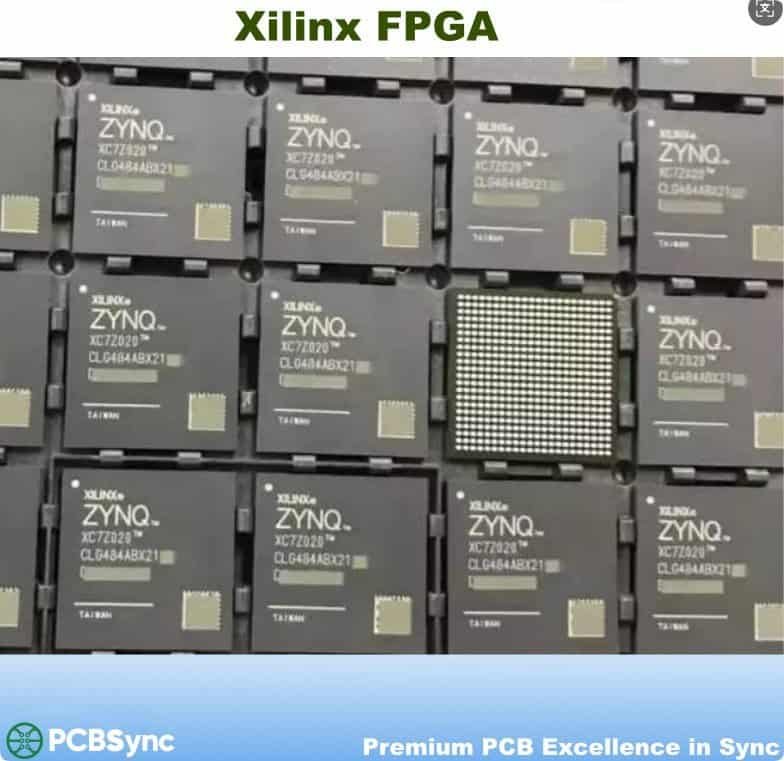
Overview: AMD Xilinx XCV50E-FG256AGT FPGA
The XCV50E-FG256AGT is a high-performance Field Programmable Gate Array (FPGA) from AMD’s renowned Virtex-E family. This programmable logic device delivers exceptional flexibility and processing power for demanding embedded applications, making it an ideal choice for engineers seeking reliable, adaptable digital solutions. As part of the legacy Xilinx FPGA product line, this component continues to serve critical roles in telecommunications, industrial automation, and aerospace systems.
Key Technical Specifications
The XCV50E-FG256AGT stands out with its robust technical capabilities optimized for complex digital signal processing and high-speed data operations.
| Specification |
Value |
| Manufacturer |
AMD (formerly Xilinx) |
| Product Family |
Virtex-E 1.8V FPGAs |
| Part Number |
XCV50E-FG256AGT |
| System Gates |
71,693 gates |
| Logic Cells |
1,728 cells |
| CLB Array |
16 x 24 configuration |
| LABs/CLBs |
384 |
| Total RAM Bits |
65,536 bits |
| Maximum Clock Frequency |
Up to 357 MHz |
| Core Voltage |
1.8V (1.71V – 1.89V) |
| Process Technology |
0.18 μm CMOS, 6-layer metal |
Package and Pin Configuration
| Package Details |
Specifications |
| Package Type |
256-Ball Fine-Pitch Ball Grid Array (FBGA) |
| Package Dimensions |
17mm x 17mm |
| Total Pin Count |
256 pins |
| User I/O Pins |
176 I/O |
| Mounting Type |
Surface Mount Technology (SMT) |
| Moisture Sensitivity Level |
MSL 3 (168 hours) |
Operating Conditions
| Environmental Parameter |
Range |
| Operating Temperature |
0°C to +85°C (TJ) for commercial grade |
| Extended Temperature |
-40°C to +100°C (TJ) for industrial variants |
| RoHS Compliance |
Contains lead / RoHS non-compliant (legacy product) |
Architecture and Performance Features
Advanced FPGA Architecture
The XCV50E-FG256AGT leverages Virtex-E’s optimized architecture designed for maximum place-and-route efficiency. The device features an aggressive 6-layer metal 0.18 μm CMOS process that delivers dramatic improvements in silicon efficiency compared to earlier FPGA generations.
Core Architectural Highlights:
- High-density programmable logic blocks with enhanced routing resources
- SelectRAM+ embedded memory blocks for flexible data storage
- Advanced clock management with DLL (Delay-Locked Loop) technology
- Highly flexible SelectI/O+ technology supporting multiple I/O standards
Digital Signal Processing Capabilities
This FPGA excels in DSP-intensive applications with dedicated resources for:
- High-speed digital filtering operations
- Real-time signal encoding and decoding
- Complex mathematical computations
- Multi-channel data processing
Memory Architecture
The integrated SelectRAM+ blocks provide distributed and block RAM options, offering 65,536 total RAM bits that can be configured flexibly to meet application-specific memory requirements.
Primary Applications and Use Cases
Telecommunications and Networking
The XCV50E-FG256AGT is widely deployed in communication infrastructure for:
- Protocol conversion and packet processing
- Channel encoding/decoding operations
- Signal conditioning and filtering
- Network traffic management
- Base station signal processing
Industrial Automation and Control
In industrial environments, this FPGA powers:
- Motion control systems
- Real-time machine vision processing
- Sensor data acquisition and processing
- Industrial protocol implementations
- Programmable logic controllers (PLCs)
Aerospace and Defense Systems
The reliability and performance characteristics make it suitable for:
- Navigation system processing
- Satellite communication terminals
- Radar signal processing
- Avionics control systems
- Mission-critical embedded applications
Consumer Electronics and Medical Devices
Additional application areas include:
- Medical imaging equipment
- High-definition video processing
- Test and measurement instruments
- Automotive electronic control units
- Scientific instrumentation
Programming and Development Tools
Supported Design Software
The XCV50E-FG256AGT is compatible with legacy Xilinx development tools:
- Xilinx ISE Foundation Series™: Comprehensive design entry and synthesis
- Xilinx Alliance Series™: Advanced development environment
- HDL Support: VHDL and Verilog hardware description languages
- Schematic Entry: Graphical design capture capabilities
Note: This device is not supported in the newer Vivado Design Suite, but legacy ISE tools remain available for download and continue to provide full development capabilities.
Configuration Methods
Multiple configuration options provide flexibility for different deployment scenarios:
| Configuration Mode |
Description |
Best For |
| JTAG |
Serial configuration via boundary scan |
Development, debugging, field updates |
| SelectMAP |
Parallel configuration interface |
Fast production programming |
| Master Serial |
SPI flash-based configuration |
Autonomous system startup |
| Slave Serial |
Host-controlled serial loading |
Multi-FPGA systems |
Design Development Workflow
- Design Entry: Create designs using HDL or schematic capture
- Simulation: Verify functionality with ModelSim or other simulators
- Synthesis: Generate gate-level netlist from RTL code
- Implementation: Place and route design onto FPGA fabric
- Timing Analysis: Ensure timing constraints are met
- Bitstream Generation: Create configuration file
- Programming: Load bitstream via selected configuration mode
Advantages Over Alternative Solutions
Why Choose XCV50E-FG256AGT?
Legacy System Compatibility: Ideal for maintaining and upgrading existing systems designed around Virtex-E FPGAs, avoiding costly redesigns.
Cost-Effective Performance: Delivers robust performance at lower cost points compared to latest-generation FPGAs for applications that don’t require cutting-edge features.
Proven Reliability: Decades of field deployment demonstrate exceptional reliability in mission-critical applications.
Lower Power Consumption: The 0.18 μm process and 1.8V core voltage provide efficient power characteristics suitable for embedded systems.
Extensive IP and Reference Designs: Mature ecosystem with abundant intellectual property cores and design examples.
Comparison with Modern FPGAs
While newer FPGA families offer advanced features like AI acceleration and higher speed grades, the XCV50E-FG256AGT remains competitive for:
- Applications with established timing requirements
- Systems requiring long-term availability
- Budget-conscious projects
- Legacy equipment maintenance
Technical Support and Documentation
Available Resources
Engineers working with the XCV50E-FG256AGT have access to comprehensive technical documentation:
- Detailed product datasheets with electrical characteristics
- Application notes for specific use cases
- Reference designs and IP cores
- PCB layout guidelines for FBGA package
- Thermal management recommendations
Design Considerations
Thermal Management: The 256-FBGA package requires appropriate thermal design with adequate airflow or heatsinking for sustained high-performance operation.
Power Supply Design: Stable 1.8V core power with proper decoupling capacitors is essential for reliable operation. Multiple power domains may require careful sequencing.
Signal Integrity: High-speed I/O operation demands attention to PCB trace impedance, termination, and ground plane design.
Procurement and Availability
Supply Chain Information
The XCV50E-FG256AGT is available through:
- Authorized AMD/Xilinx distributors
- Electronic component brokers
- Independent component suppliers
- Surplus and obsolete component specialists
Important Note: This product is marked as “NOT RECOMMENDED for NEW DESIGN” by the manufacturer, indicating it is in the mature/declining phase of its lifecycle. Engineers should consider this when planning new projects with multi-year production horizons.
Quality Assurance
When sourcing XCV50E-FG256AGT components:
- Verify authenticity through authorized channels
- Check date codes and storage conditions
- Request certificates of conformance
- Consider pre-shipment inspection for critical applications
- Validate part markings against datasheet specifications
Replacement and Migration Options
Alternative Part Numbers
Similar Virtex-E family members that may serve as alternatives:
- XCV50E-6FG256C: Different speed grade variant
- XCV50E-7FG256I: Industrial temperature range option
- XCV50E-8FG256C: Higher speed grade version
- XCV100E-FG256: Higher gate count in same package
Migration Path to Modern FPGAs
For new designs, consider migration to:
- AMD Spartan-7 series for cost-optimized applications
- AMD Artix-7 series for performance-oriented designs
- AMD Zynq-7000 for SoC functionality
- AMD UltraScale+ for advanced features
AMD provides migration guides and support for transitioning legacy Virtex-E designs to current FPGA architectures.
Frequently Asked Questions
What is the difference between XCV50E-FG256AGT and similar part numbers?
The suffix indicates speed grade and temperature range. The “A” typically denotes automotive-grade qualification, while different speed grades (-6, -7, -8) indicate maximum operating frequencies.
Can I use Vivado to program the XCV50E-FG256AGT?
No, the XCV50E-FG256AGT requires legacy Xilinx ISE tools. Vivado does not support Virtex-E family devices.
What I/O standards does this FPGA support?
The SelectI/O+ technology supports LVTTL, LVCMOS, PCI, GTL, HSTL, SSTL, and other common I/O standards with programmable drive strength and termination.
Is this FPGA suitable for new product development?
While technically capable, the manufacturer no longer recommends this device for new designs. Consider modern FPGA families for new projects requiring long-term production support.
How do I ensure authentic parts when purchasing?
Source from authorized distributors, verify part markings, request authenticity certificates, and consider using component authentication services for critical applications.
Conclusion: Reliable Performance for Established Applications
The XCV50E-FG256AGT Virtex-E FPGA continues to provide valuable programmable logic solutions for maintaining existing systems and specialized applications where its specific characteristics align with project requirements. With 71,693 system gates, 1,728 logic cells, and proven 0.18 μm CMOS technology, this device delivers dependable performance for telecommunications, industrial control, and embedded computing applications.
While positioned as a legacy product not recommended for new designs, the XCV50E-FG256AGT remains a critical component for sustaining infrastructure, aerospace, and industrial equipment with multi-decade service lives. Engineers appreciate its cost-effectiveness, proven reliability, and the extensive knowledge base surrounding the Virtex-E architecture.
For organizations maintaining Virtex-E-based systems, the XCV50E-FG256AGT offers a path to continued operation while planning strategic migrations to current FPGA technologies. The robust ecosystem of development tools, IP cores, and technical documentation ensures that teams can effectively support and enhance existing designs.