Inquire: Call 0086-755-23203480, or reach out via the form below/your sales contact to discuss our design, manufacturing, and assembly capabilities.
Quote: Email your PCB files to Sales@pcbsync.com (Preferred for large files) or submit online. We will contact you promptly. Please ensure your email is correct.
Notes: For PCB fabrication, we require PCB design file in Gerber RS-274X format (most preferred), *.PCB/DDB (Protel, inform your program version) format or *.BRD (Eagle) format. For PCB assembly, we require PCB design file in above mentioned format, drilling file and BOM. Click to download BOM template To avoid file missing, please include all files into one folder and compress it into .zip or .rar format.
Arduino ISP (In-System Programmer) is firmware that transforms any Arduino board into an AVR programmer, allowing you to program microcontrollers without removing them from circuits. This functionality uses the SPI (Serial Peripheral Interface) protocol to communicate with the target chip’s ICSP (In-Circuit Serial Programming) pins.
In production environments, this capability is invaluable. Instead of purchasing dedicated programmers like USBtinyISP or AVR Dragon, you leverage Arduino hardware you already own. More importantly, it enables field programming and bootloader recovery—critical when troubleshooting deployed systems.
Most Arduino boards ship with a bootloader that enables USB programming. However, several scenarios require Arduino ISP:
Bootloader Corruption: Upload failures or power interruptions can corrupt the bootloader, making USB programming impossible. Arduino ISP restores functionality.
New Microcontrollers: Blank ATmega chips don’t have bootloaders. Arduino ISP burns the initial bootloader.
Production Programming: Custom PCBs with AVR chips need initial programming. Arduino ISP provides a cost-effective solution.
Memory Optimization: The bootloader consumes 512-2KB of flash memory. Programming via ISP uses the entire memory space.
Fuse Configuration: Arduino ISP allows programming fuse bits to configure oscillator settings, brown-out detection, and other hardware features.
Hardware Requirements and Setup
Components Needed
Component
Purpose
Notes
Programmer Arduino
Acts as ISP programmer
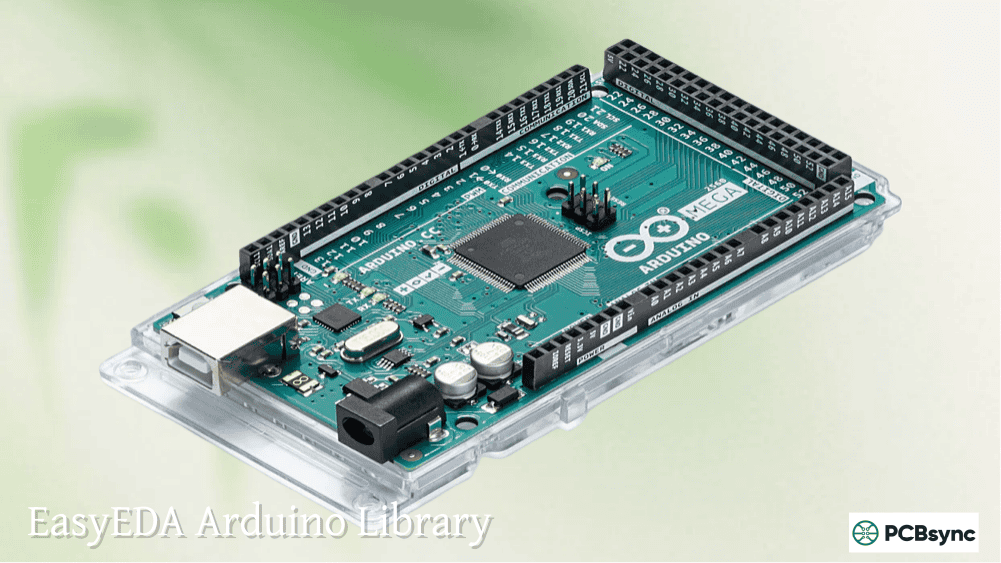
Uno, Nano, Mega all work
Target Arduino/AVR
Device to program
Any AVR-based board
Jumper Wires
Connect programmer to target
6 minimum (M-M or M-F)
10µF Capacitor
Prevents programmer reset
Optional but recommended
LEDs (optional)
Status indicators
2 LEDs + resistors
Understanding ICSP Pin Configuration
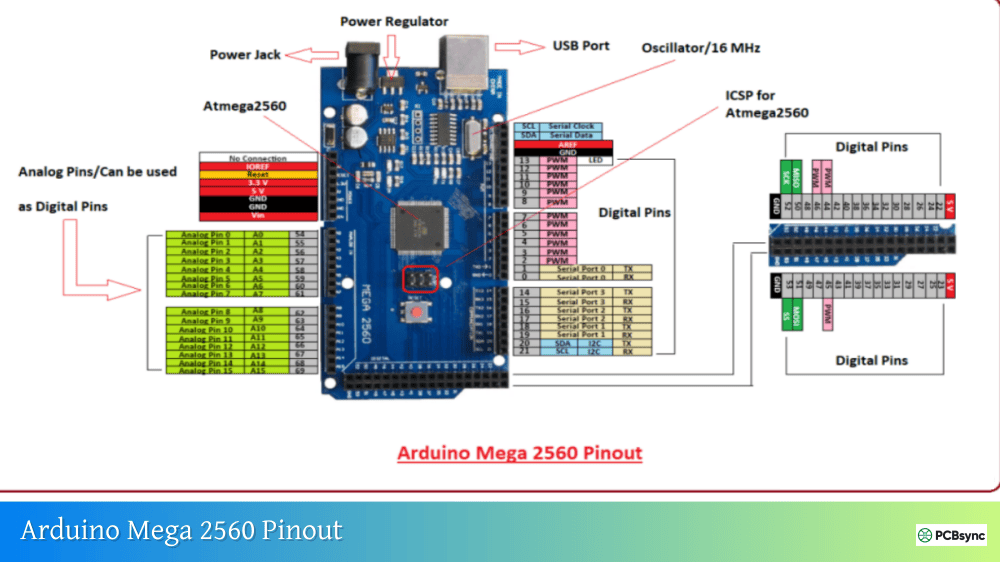
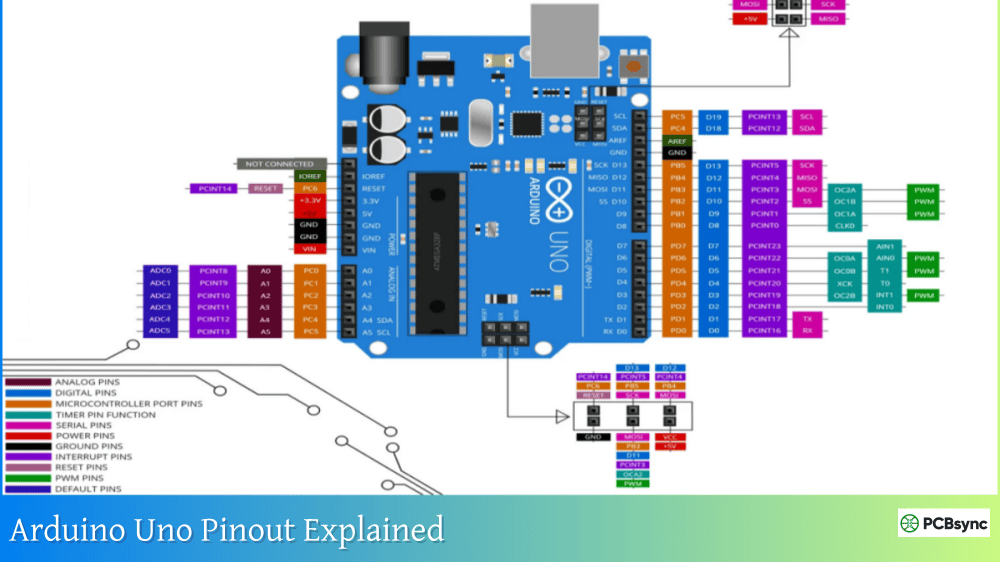
The ICSP header is a 2×3 pin arrangement standard on Arduino boards. Understanding the pinout is critical:
ICSP Header Pinout (Standard)
┌─────────┐
│ 1 2 │ Pin 1: MISO (Master In Slave Out)
│ 3 4 │ Pin 2: VCC (5V or 3.3V)
│ 5 6 │ Pin 3: SCK (Serial Clock)
└─────────┘ Pin 4: MOSI (Master Out Slave In)
Pin 5: RESET
Pin 6: GND (Ground)
Pin 1 is typically marked with a dot or square pad on the PCB.
Arduino Pin Mapping
ICSP Pin
Function
Arduino Uno
Arduino Mega
Arduino Nano
MISO
Data from target
D12
D50
D12
MOSI
Data to target
D11
D51
D11
SCK
Clock signal
D13
D52
D13
RESET
Target reset
D10
D10
D10
VCC
Power (optional)
5V
5V
5V
GND
Ground
GND
GND
GND
Step-by-Step Wiring Guide
Basic Wiring Configuration
Connect the programmer Arduino to the target device following this schematic:
Programmer Arduino → Target Arduino/AVR
D10 (SS) → RESET
D11 (MOSI) → MOSI (D11 or ICSP-4)
D12 (MISO) → MISO (D12 or ICSP-1)
D13 (SCK) → SCK (D13 or ICSP-3)
5V → VCC (ICSP-2) [optional if target powered separately]
GND → GND (ICSP-6)
Critical Wiring Considerations
Power Management: The target board must be powered during programming. You can either:
Power target via its USB connection
Power target from programmer’s 5V pin
Use external power supply
Never power from multiple sources simultaneously to avoid voltage conflicts.
Reset Capacitor: Place a 10µF electrolytic capacitor between RESET and GND on the programmer Arduino (positive lead to RESET). This prevents the programmer from resetting during the programming process. Without this, many programming attempts will fail with sync errors.
Optional Status LED Configuration
For visual feedback during programming:
LED 1 (Heartbeat) → D9 + 1kΩ resistor + GND
LED 2 (Error) → D8 + 1kΩ resistor + GND
LED 3 (Programming) → D7 + 1kΩ resistor + GND
The ArduinoISP sketch uses these pins for status indication:
Heartbeat: Pulses to show programmer is alive
Error: Lights on error conditions
Programming: Illuminates during data transfer
Software Configuration and Programming
Loading ArduinoISP Firmware
Step 1: Connect programmer Arduino to your computer via USB
Step 2: Open Arduino IDE → File → Examples → 11.ArduinoISP → ArduinoISP
Step 3: Select your programmer board (Tools → Board → your Arduino model)
Step 4: Select COM port (Tools → Port → your port)
Step 5: Upload sketch (Ctrl+U or Upload button)
The green LED should pulse when upload completes, indicating the programmer is ready.
Burning Bootloader to Target
Step 1: Wire programmer to target as described above
Step 2: In Arduino IDE, select target board type (Tools → Board → target board)
Missing reset capacitor: Add 10µF cap between programmer’s RESET and GND
Wrong programmer selected: Use “Arduino as ISP” not “ArduinoISP.org”
Poor connections: Check all 6 wires, ensure firm contact
Target not powered: Verify target has power (LED should illuminate)
Wrong board selected: Ensure target board type is correctly selected
Problem: Programmer Resets During Programming
Solution: The 10µF capacitor is essential. Connect positive lead to programmer’s RESET, negative to GND. This holds the programmer in running state during ISP operations.
Arduino Cookbook: Practical Arduino projects and techniques
Frequently Asked Questions
Q1: Can I use Arduino ISP with non-Arduino AVR boards?
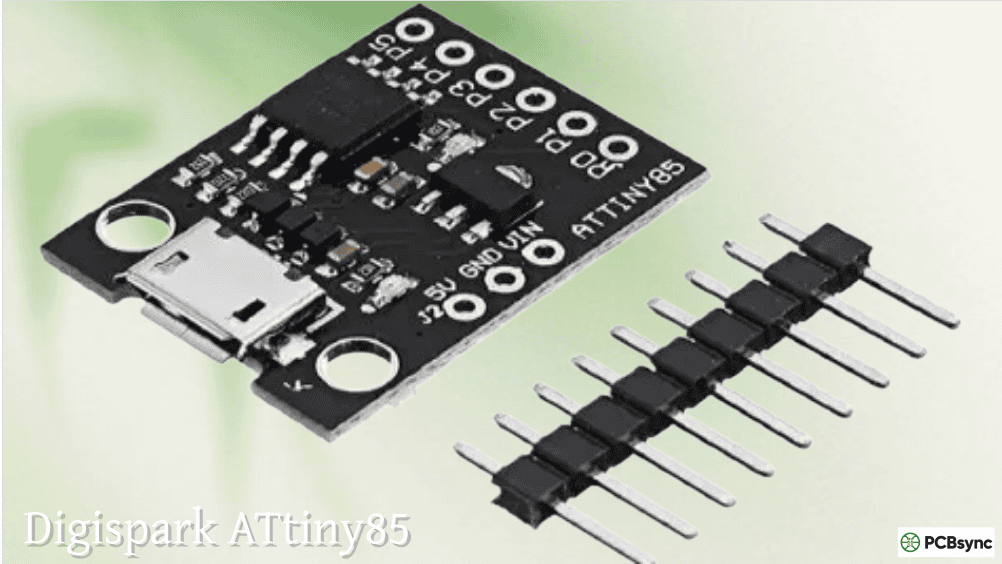
Absolutely. Arduino ISP works with any AVR microcontroller that supports ISP programming—this includes ATtiny series, ATmega series, and many others. The key requirement is access to the ICSP pins (MISO, MOSI, SCK, RESET, VCC, GND). You can program standalone ATmega328P chips, ATtiny85 for small projects, or custom PCBs with any AVR chip. Just ensure the target board type is correctly configured in Arduino IDE or use avrdude directly with appropriate device parameters. Many hobbyists use Arduino ISP to program ATtiny chips for compact projects that don’t need full Arduino capability.
Q2: Why do I need a capacitor between RESET and GND on the programmer?
The capacitor prevents auto-reset during programming. When the Arduino IDE initiates serial communication, it toggles the DTR line, which normally resets the Arduino to enter bootloader mode. During ISP operations, you don’t want the programmer to reset—it needs to stay running to maintain SPI communication with the target. The 10µF capacitor holds the RESET line high during these DTR pulses, keeping the programmer operational. Without it, you’ll encounter “not in sync” errors as the programmer resets mid-operation. The capacitor value isn’t critical; anything from 4.7µF to 22µF works. Ensure proper polarity—positive lead to RESET.
Q3: What’s the difference between “Arduino as ISP” and “ArduinoISP.org” in the programmer menu?
“Arduino as ISP” uses the standard ArduinoISP sketch with 19200 baud communication, which works reliably with most Arduino boards. “ArduinoISP.org” uses different communication parameters intended for boards programmed with alternative firmware. Always select “Arduino as ISP” unless you specifically modified your programmer’s firmware. Using the wrong selection is the single most common cause of programming failures—I’ve spent hours troubleshooting projects only to discover this simple setting was incorrect. The Arduino IDE doesn’t prevent selecting the wrong option, so this catches many beginners.
Q4: Can I use Arduino ISP to recover a completely dead Arduino that shows no signs of life?
If there’s truly no power (no power LED), Arduino ISP won’t help—that’s a hardware problem (power supply, voltage regulator, etc.). However, if the power LED illuminates but the Arduino won’t accept sketches or respond to USB, Arduino ISP can usually recover it. The bootloader might be corrupted, but the microcontroller itself is fine. Wire up your Arduino ISP, burn the bootloader, and the board should revive. The exception is if fuse bits were incorrectly set—for example, configured for an external crystal that doesn’t exist. This requires either connecting an appropriate crystal temporarily or high-voltage programming. I’ve recovered dozens of “dead” Arduinos this way. One word of caution: if someone uploaded a sketch that drives all pins high simultaneously, the chip might be physically damaged from overcurrent.
Q5: Is it possible to program Arduino bootloaders to ATmega chips removed from the board?
Yes, this is a common production technique. You’ll need a way to connect the chip to your Arduino ISP—either a breadboard with appropriate wiring or a dedicated ZIF (Zero Insertion Force) socket shield. The ATmega328P has 28 pins in DIP package; wire up VCC (pin 7), GND (pin 8, 22), RESET (pin 1), and the SPI pins (MISO-18, MOSI-17, SCK-19). Add a 16MHz crystal between pins 9-10 with 22pF capacitors to ground if you’re burning the standard Uno bootloader (it expects external crystal). Then burn bootloader normally through Arduino IDE. For production runs, people often build programming jigs with pogo pins that contact the chip in seconds. This is much cheaper than buying pre-programmed chips or dedicated programmers for small production runs.
Inquire: Call 0086-755-23203480, or reach out via the form below/your sales contact to discuss our design, manufacturing, and assembly capabilities.
Quote: Email your PCB files to Sales@pcbsync.com (Preferred for large files) or submit online. We will contact you promptly. Please ensure your email is correct.
Notes: For PCB fabrication, we require PCB design file in Gerber RS-274X format (most preferred), *.PCB/DDB (Protel, inform your program version) format or *.BRD (Eagle) format. For PCB assembly, we require PCB design file in above mentioned format, drilling file and BOM. Click to download BOM template To avoid file missing, please include all files into one folder and compress it into .zip or .rar format.