Inquire: Call 0086-755-23203480, or reach out via the form below/your sales contact to discuss our design, manufacturing, and assembly capabilities.
Quote: Email your PCB files to Sales@pcbsync.com (Preferred for large files) or submit online. We will contact you promptly. Please ensure your email is correct.
Notes: For PCB fabrication, we require PCB design file in Gerber RS-274X format (most preferred), *.PCB/DDB (Protel, inform your program version) format or *.BRD (Eagle) format. For PCB assembly, we require PCB design file in above mentioned format, drilling file and BOM. Click to download BOM template To avoid file missing, please include all files into one folder and compress it into .zip or .rar format.
Arduino FreeRTOS: Multitasking Tutorial for Embedded Systems
As a PCB engineer working on embedded systems, I’ve encountered countless situations where traditional Arduino programming just doesn’t cut it. You know the scenario: you’re reading a temperature sensor, updating an LCD display, managing serial communication, and suddenly everything locks up because of a single delay() function. That’s where Arduino FreeRTOS becomes a game-changer for your projects.
Understanding Arduino FreeRTOS: What Every Engineer Should Know
FreeRTOS (Free Real-Time Operating System) transforms your Arduino from a simple sequential processor into a sophisticated multitasking powerhouse. Instead of executing one task at a time in the traditional loop() function, Arduino FreeRTOS enables multiple tasks to run concurrently through intelligent task scheduling.
From a hardware perspective, FreeRTOS doesn’t add magical parallel processing capabilities to single-core microcontrollers. Instead, it implements a scheduler that rapidly switches between tasks, creating the illusion of simultaneous execution. This context switching happens so quickly that your sensors, displays, and communication protocols appear to operate independently.
After designing dozens of embedded systems, I’ve learned that certain projects absolutely demand real-time operating systems:
Non-blocking operations: Traditional delay functions halt your entire program. With Arduino FreeRTOS, one task can wait while others continue executing.
Deterministic timing: When your PCB interfaces with time-critical sensors or actuators, FreeRTOS ensures predictable task execution patterns.
Clean code architecture: Complex projects with multiple peripherals become manageable when each function operates as an independent task.
Resource optimization: FreeRTOS manages CPU allocation efficiently, crucial when working with limited AVR resources.
Supported Hardware and Requirements
Before diving into implementation, let’s examine which Arduino boards work with FreeRTOS and their limitations:
Arduino Board
RAM Available
Max Tasks
Notes
Arduino Uno
2 KB
3-5
Minimal implementation only
Arduino Mega 2560
8 KB
10-15
Suitable for moderate complexity
Arduino Leonardo
2.5 KB
3-5
Similar to Uno limitations
ESP32
520 KB
30+
Dual-core, full FreeRTOS support
Arduino Due
96 KB
20+
ARM Cortex-M3, excellent support
Teensy 3.x/4.x
64-256 KB
20+
Outstanding FreeRTOS performance
Critical consideration for PCB design: When specifying microcontrollers for FreeRTOS projects, I always recommend boards with at least 8 KB RAM for comfortable development. The 2 KB constraint on Arduino Uno severely limits practical applications.
Installing Arduino FreeRTOS Library
The installation process differs slightly depending on your target hardware:
For AVR Boards (Uno, Mega, Leonardo)
Open Arduino IDE
Navigate to Sketch → Include Library → Manage Libraries
Search for “FreeRTOS” in the Library Manager
Install “FreeRTOS by Richard Barry” or “Arduino_FreeRTOS_Library”
Verify installation by checking File → Examples → FreeRTOS
For ESP32 Boards
Good news: FreeRTOS comes pre-installed with the ESP32 Arduino core. No additional installation required. Simply include the header:
#include <freertos/FreeRTOS.h>
#include <freertos/task.h>
For STM32 Boards
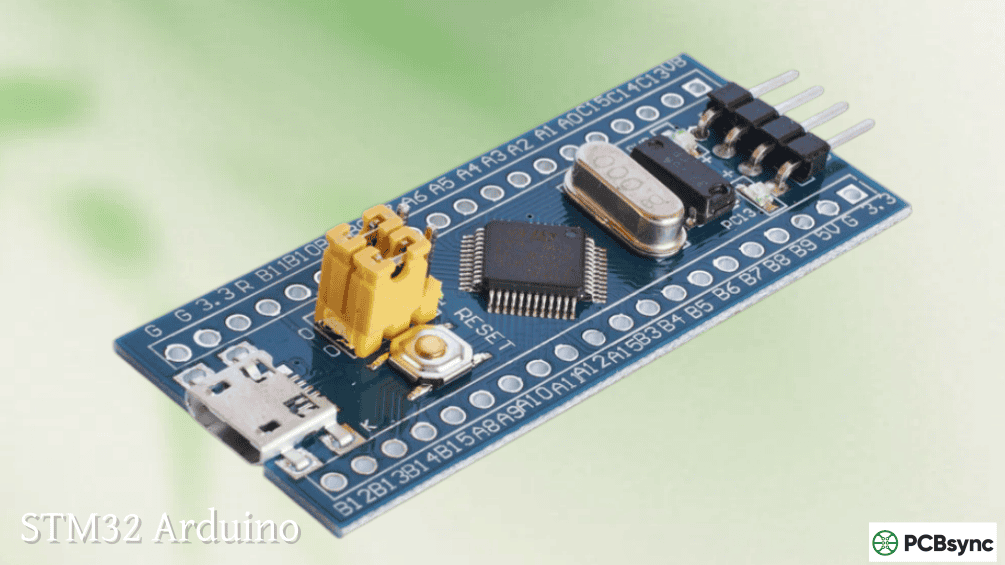
Install “STM32duino FreeRTOS” through the Library Manager following the same procedure as AVR boards.
Creating Your First Task in Arduino FreeRTOS
Let’s start with practical implementation. Here’s how task creation differs from standard Arduino code:
Traditional Arduino Approach
void loop() {
digitalWrite(LED1, HIGH);
delay(1000); // Everything stops here!
digitalWrite(LED1, LOW);
delay(1000);
readSensor(); // Must wait for LED code
updateDisplay(); // Must wait for sensor
}
Arduino FreeRTOS Approach
#include <Arduino_FreeRTOS.h>
void TaskBlinkLED(void *pvParameters);
void TaskReadSensor(void *pvParameters);
void setup() {
xTaskCreate(
TaskBlinkLED, // Task function
“LED Blink”, // Task name
128, // Stack size (words)
NULL, // Task parameters
2, // Priority
NULL // Task handle
);
xTaskCreate(
TaskReadSensor,
“Sensor Read”,
128,
NULL,
1,
NULL
);
}
void loop() {
// Empty – tasks handle everything
}
void TaskBlinkLED(void *pvParameters) {
pinMode(LED_BUILTIN, OUTPUT);
for (;;) { // Task loop
digitalWrite(LED_BUILTIN, HIGH);
vTaskDelay(1000 / portTICK_PERIOD_MS);
digitalWrite(LED_BUILTIN, LOW);
vTaskDelay(1000 / portTICK_PERIOD_MS);
}
}
void TaskReadSensor(void *pvParameters) {
for (;;) {
int value = analogRead(A0);
// Process sensor data
vTaskDelay(100 / portTICK_PERIOD_MS);
}
}
Understanding xTaskCreate Parameters
From a practical engineering standpoint, each parameter in xTaskCreate() significantly impacts system behavior:
Parameter
Purpose
Engineering Considerations
TaskFunction
Function pointer to task code
Must contain infinite loop for(;;)
TaskName
String identifier
Used for debugging, max 16 chars
StackSize
RAM allocation in words
Critical for stability, monitor carefully
Parameters
Pointer to pass data
Use for configuration values
Priority
Task importance (0-255)
Higher numbers = higher priority
TaskHandle
Reference for task control
Store if you need suspend/resume
Stack Sizing: The Critical Decision
This is where many Arduino FreeRTOS projects fail. Too small causes stack overflow crashes, too large wastes precious RAM.
My engineering approach:
Start with 128 words (256 bytes) for simple tasks
Add 64 words for each local variable array
Add 32 words if using Serial.print()
Add 128 words if using floating-point math
Monitor with uxTaskGetStackHighWaterMark()
Task Priority and Scheduling Behavior
Arduino FreeRTOS uses preemptive priority-based scheduling, which means:
Higher priority tasks always run first
Equal priority tasks share CPU time (round-robin)
Tasks must voluntarily yield CPU through delays or blocking calls
Priority Assignment Strategy
Priority Level
Typical Use Case
Example Task
0 (Lowest)
Background processing
Data logging
1
Regular sensor reading
Temperature monitoring
2
Display updates
LCD refresh
3
User interface
Button handling
4
Critical timing
PWM control
5+ (Highest)
Emergency response
Safety shutdown
Real-world lesson: I once debugged a project where a low-priority LED task starved sensor readings. The issue? Forgetting to add vTaskDelay() in the LED task, causing it to monopolize the CPU despite lower priority.
Inter-Task Communication: Queues, Semaphores, and Mutex
When designing PCBs with multiple peripherals, tasks inevitably need to share data or coordinate access to hardware resources.
Queues: Passing Data Between Tasks
Queues provide thread-safe data transfer. Perfect for sensor-to-display pipelines:
if (xQueueReceive(sensorQueue, &receivedValue, portMAX_DELAY)) {
Serial.println(receivedValue);
}
}
}
Mutex: Protecting Shared Resources
When multiple tasks access the same hardware (SPI bus, Serial port, I2C), mutex prevents data corruption:
SemaphoreHandle_t serialMutex;
void setup() {
Serial.begin(115200);
serialMutex = xSemaphoreCreateMutex();
xTaskCreate(Task1, “Task1”, 128, NULL, 1, NULL);
xTaskCreate(Task2, “Task2”, 128, NULL, 1, NULL);
}
void Task1(void *pvParameters) {
for (;;) {
if (xSemaphoreTake(serialMutex, portMAX_DELAY)) {
Serial.println(“Task1: Starting transmission”);
vTaskDelay(10 / portTICK_PERIOD_MS);
Serial.println(“Task1: Complete”);
xSemaphoreGive(serialMutex);
}
vTaskDelay(1000 / portTICK_PERIOD_MS);
}
}
void Task2(void *pvParameters) {
for (;;) {
if (xSemaphoreTake(serialMutex, portMAX_DELAY)) {
Serial.println(“Task2: Starting transmission”);
vTaskDelay(10 / portTICK_PERIOD_MS);
Serial.println(“Task2: Complete”);
xSemaphoreGive(serialMutex);
}
vTaskDelay(1500 / portTICK_PERIOD_MS);
}
}
Engineering note: I always use mutex for Serial, I2C, and SPI in Arduino FreeRTOS projects. Without mutex, you’ll see corrupted data, garbled output, or complete system lockups.
This occurs when a low-priority task holds a mutex needed by a high-priority task. Arduino FreeRTOS mutex implements priority inheritance to minimize this, but careful priority assignment remains crucial.
Watchdog Timer Conflicts
On AVR boards, Arduino FreeRTOS uses the watchdog timer for scheduling. Ensure you’re not manually configuring the watchdog elsewhere in your code.
Use uxTaskGetStackHighWaterMark() for stack monitoring
ESP32 tools: ESP-IDF Monitor with heap tracing
Segger SystemView (ARM boards) for real-time visualization
Example Projects Repository
The official Arduino FreeRTOS library includes excellent examples:
AnalogRead_DigitalRead: Basic sensor handling
Frtos_Mutex: Serial port protection
Interrupts: ISR integration
Blink_AnalogRead: Classic multitasking demo
Frequently Asked Questions (FAQs)
1. Can I use Arduino FreeRTOS with existing Arduino libraries?
Yes, most Arduino libraries work with FreeRTOS, but you must protect shared resources (Serial, SPI, I2C) with mutex. Some libraries with heavy interrupt usage may need modification. I’ve successfully used Adafruit sensor libraries, LiquidCrystal, and Ethernet with proper mutex protection.
2. How do I choose the right task priority?
Start all tasks at priority 1, then increase priority only for time-critical tasks. My rule: if a task must respond within 10ms, use priority 3+. For regular sensor reading (100ms intervals), priority 1-2 suffices. Never create many high-priority tasks—they’ll starve lower-priority operations.
3. Why does my Arduino freeze after adding FreeRTOS?
Most freezes result from stack overflow or forgetting vTaskDelay() in task loops. Without delays, tasks consume 100% CPU and prevent task switching. Always include vTaskDelay() even if it’s just vTaskDelay(1) to yield control.
4. What’s the difference between vTaskDelay() and delay()?
In Arduino FreeRTOS, vTaskDelay() suspends the current task and allows other tasks to run. The traditional delay() function is automatically remapped to vTaskDelay() when you include the FreeRTOS library, so both work similarly. However, explicitly using vTaskDelay() makes your intention clear.
5. Can I run Arduino FreeRTOS on Arduino Nano or Mini?
Yes, but with severe limitations. The ATmega328P in Nano/Mini has only 2 KB RAM. Realistically, you can run 2-3 simple tasks. For serious multitasking projects, I recommend ESP32 or Arduino Mega. If you’re designing a PCB and plan to use FreeRTOS, specify microcontrollers with at least 8 KB RAM.
Conclusion
Arduino FreeRTOS transforms embedded system development from sequential programming into true multitasking architecture. For PCB engineers designing complex systems with multiple sensors, communication protocols, and display interfaces, FreeRTOS provides the structure and determinism required for professional-grade products.
The learning curve exists, but the investment pays dividends. Your code becomes more maintainable, your timing more predictable, and your systems more robust. Whether you’re prototyping IoT devices, building industrial controllers, or designing custom instrumentation, mastering Arduino FreeRTOS elevates your embedded development capabilities.
Start with simple examples, gradually add complexity, always monitor memory usage, and protect shared resources. With these principles, you’ll build reliable multitasking applications that would be impossible with traditional Arduino programming.
Inquire: Call 0086-755-23203480, or reach out via the form below/your sales contact to discuss our design, manufacturing, and assembly capabilities.
Quote: Email your PCB files to Sales@pcbsync.com (Preferred for large files) or submit online. We will contact you promptly. Please ensure your email is correct.
Notes: For PCB fabrication, we require PCB design file in Gerber RS-274X format (most preferred), *.PCB/DDB (Protel, inform your program version) format or *.BRD (Eagle) format. For PCB assembly, we require PCB design file in above mentioned format, drilling file and BOM. Click to download BOM template To avoid file missing, please include all files into one folder and compress it into .zip or .rar format.