Inquire: Call 0086-755-23203480, or reach out via the form below/your sales contact to discuss our design, manufacturing, and assembly capabilities.
Quote: Email your PCB files to Sales@pcbsync.com (Preferred for large files) or submit online. We will contact you promptly. Please ensure your email is correct.
Notes: For PCB fabrication, we require PCB design file in Gerber RS-274X format (most preferred), *.PCB/DDB (Protel, inform your program version) format or *.BRD (Eagle) format. For PCB assembly, we require PCB design file in above mentioned format, drilling file and BOM. Click to download BOM template To avoid file missing, please include all files into one folder and compress it into .zip or .rar format.
If you’ve ever watched a professional concert or theater production and wondered how hundreds of lights synchronize perfectly with music and cues, the answer is DMX512—the industry standard protocol that’s been running stage lighting since the 1980s. The Arduino DMX Shield brings this professional capability to the maker community, allowing you to control everything from simple LED PAR cans to complex moving head fixtures using your Arduino board. As a PCB engineer who’s designed custom lighting controllers for live events, I can tell you that understanding DMX is your gateway from hobbyist LED blinkers to legitimate theatrical control systems.
DMX512 (Digital Multiplex with 512 pieces of information) replaced the nightmare of analog lighting control where each dimmer required its own dedicated wire. Imagine a rack with 96 dimmers needing a 100+ pin cable—that was reality before DMX. The protocol was standardized as ANSI E1.11 DMX512-A and revolutionized how lighting systems communicate.
Core DMX512 Specifications:
Parameter
Specification
Engineering Significance
Baud Rate
250 kbps
Fixed data rate, non-negotiable
Physical Layer
RS-485 differential signaling
Noise immunity for long cable runs
Topology
Single-ended daisy chain
No star or ring configurations allowed
Channels per Universe
512 maximum
Each channel = 8-bit value (0-255)
Update Rate
~44 Hz typical
Complete universe refresh 44 times/second
Cable Impedance
120Ω (specification)
Termination required for signal integrity
Connector Standard
XLR-5 (permanent) / XLR-3 (temporary)
XLR-3 common despite spec calling for XLR-5
The protocol operates as unidirectional broadcast communication. The controller (your Arduino DMX Shield) continuously transmits all 512 channel values, and fixtures listen for their assigned addresses. There’s no acknowledgment or handshaking—pure one-way data stream.
RS-485 Signal Characteristics
From a signal integrity perspective, DMX uses differential RS-485 transmission with two signal wires (Data+ and Data-) that carry inverted copies of the same signal. The receiver measures the voltage difference between these wires, providing excellent common-mode noise rejection.
Voltage Levels:
Signal State
Data+ (A) Voltage
Data- (B) Voltage
Differential Voltage
Mark (1)
+1.5V to +5V
-5V to -1.5V
+200mV minimum
Space (0)
-5V to -1.5V
+1.5V to +5V
-200mV minimum
Idle
Both lines between -0.2V and +0.2V
Tri-state condition
This differential signaling allows DMX to reliably operate over 1000+ foot cable runs in electrically noisy environments—critical for concert venues with high-power lighting and audio systems creating electromagnetic interference.
Arduino DMX Shield Hardware Architecture
Essential Components Breakdown
The Arduino DMX Shield isn’t just a simple breakout board—it’s a sophisticated signal conditioning circuit that bridges the Arduino’s TTL serial communication and the professional DMX512 standard.
Core Hardware Components:
Component
Common Part Numbers
Function
Critical Specifications
RS-485 Transceiver
MAX485, SN75176, LT1785
TTL to differential conversion
250 kbps minimum data rate
XLR Connectors
Neutrik NC3MAH1/NC3FAH1
Professional audio-grade connectors
3-pin or 5-pin variants
Termination Resistor
120Ω 1/4W
Signal reflection damping
Often switchable via jumper
Direction Control
Pullup/Pulldown resistors
Master/Slave mode selection
Configurable via jumpers or pins
Isolation (optional)
6N137 optocoupler
Galvanic isolation
Protects Arduino from line faults
MAX485 Pinout and Arduino Connection:
MAX485 Pin
Function
Arduino UNO Connection
Signal Direction
1 – RO
Receiver Output
RX (Pin 0) or Serial1 RX
Output to Arduino
2 – RE
Receiver Enable
Control pin (active LOW)
Input from Arduino
3 – DE
Driver Enable
Control pin (active HIGH)
Input from Arduino
4 – DI
Driver Input
TX (Pin 1) or Serial1 TX
Input from Arduino
5 – GND
Ground
Arduino GND
Common reference
6 – A
Non-inverting Output/Input
DMX Data+ (XLR Pin 3)
Differential pair
7 – B
Inverting Output/Input
DMX Data- (XLR Pin 2)
Differential pair
8 – VCC
Power Supply
Arduino 5V
4.75V-5.25V operating range
Critical Design Note: Pins 2 (RE) and 3 (DE) must be controlled oppositely—when transmitting DMX, DE goes HIGH and RE goes LOW. Many shields tie these together with RE inverted, simplifying control to a single direction pin.
XLR Connector Pin Configuration
Understanding XLR pinouts prevents the most common mistake: accidentally connecting DMX equipment to audio equipment, which can destroy the DMX shield due to phantom power or higher voltage audio signals.
DMX XLR-3 Pinout (Most Common):
XLR Pin
DMX Function
Wire Color (Standard)
Voltage
Pin 1
Common/Ground
Shield (bare or green)
0V reference
Pin 2
Data- (Cold)
Blue or white
RS-485 B signal
Pin 3
Data+ (Hot)
Red or black
RS-485 A signal
DMX XLR-5 Pinout (ANSI Specification):
XLR Pin
DMX Function
Usage
Pin 1
Common/Ground
Same as XLR-3
Pin 2
Data- (Primary)
Same as XLR-3
Pin 3
Data+ (Primary)
Same as XLR-3
Pin 4
Data- (Secondary)
Optional second universe
Pin 5
Data+ (Secondary)
Optional second universe
Warning: XLR-3 is mechanically compatible with audio equipment. Always label DMX cables and equipment clearly. Audio phantom power (48V) will immediately damage your MAX485 chip and potentially your Arduino.
Setting Up Your Arduino DMX Shield
Hardware Assembly and Connection
Most commercial Arduino DMX Shield modules stack directly onto Arduino UNO, Mega, or compatible boards. However, understanding the underlying connections helps when troubleshooting or building custom solutions.
Step-by-Step Assembly:
Inspect Shield Configuration Jumpers
Locate EN (Enable) jumper: Controls shield connection to TX/RX pins
Locate DE/RE jumper: Sets direction control pin assignment
Locate TERM jumper: Enables/disables 120Ω termination resistor
Configure for Master Mode (Transmitting DMX)
EN jumper: Installed (shield enabled)
DE pin: Note which Arduino pin controls direction (often Pin 2 or Pin 4)
TERM jumper: Removed (only terminate last device in chain)
Stack Shield onto Arduino
Align header pins carefully—bent pins are common assembly mistakes
Ensure shield sits flush with Arduino headers
Verify no pins are bridged or misaligned
Connect DMX Fixtures
Use male XLR connector on shield (output)
Connect to first fixture’s female XLR input
Daisy-chain fixtures: fixture output to next fixture input
On last fixture: enable termination if available (many fixtures have built-in termination switches)
Shield Configuration Tables
Common Shield Models and Their Pin Assignments:
Shield Model
TX Pin
RX Pin
Direction Pin
Enable Jumper
Termination
Conceptinetics CTC-DRA
TX (1)
RX (0)
Pin 2 (DE)
Required
120Ω switchable
SparkFun DMX Shield
Pin 1
Pin 0
Pin 4
Optional
Built-in
DFRobot DMX Shield
TX (1)
RX (0)
Pin 2
Required
Via jumper
DIY MAX485 Circuit
Configurable
Configurable
User-defined
N/A
External resistor
Arduino Board Compatibility:
Arduino Board
Hardware Serial Ports
Recommended Configuration
Considerations
UNO R3
1 port (RX/TX)
Use RX/TX for DMX
Cannot use Serial Monitor during operation
Mega 2560
4 ports (Serial-Serial3)
Use Serial1, keep Serial0 for debugging
Ideal for complex projects
Leonardo
1 HW + USB Serial
Use RX1/TX1, USB for Serial Monitor
Perfect debugging setup
Due
4 ports
Any Serial1-Serial3
3.3V logic—verify shield compatibility
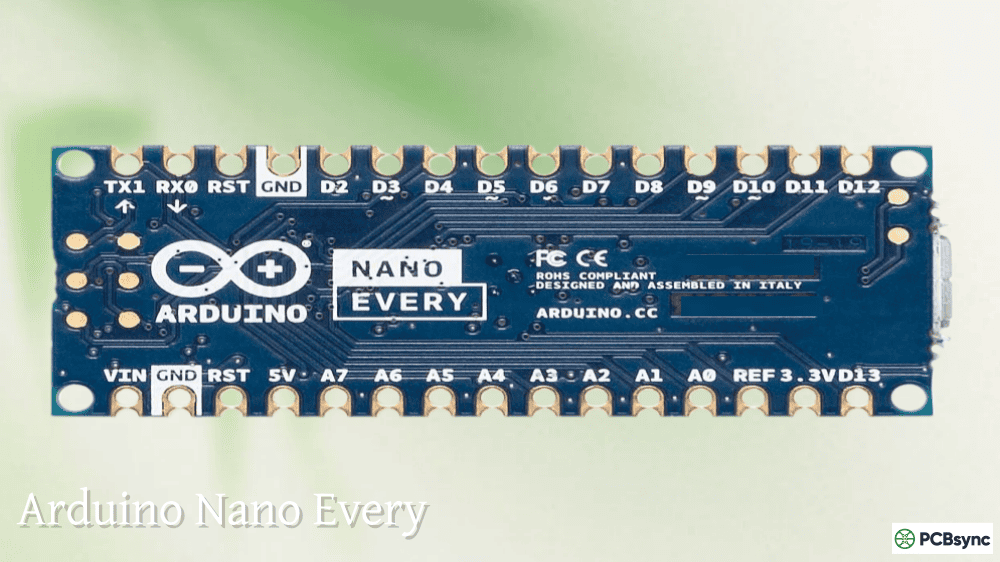
Nano Every
1 port
RX/TX for DMX
Compact form factor
Power Supply Considerations
The Arduino DMX Shield itself draws minimal current (typically <50mA), but understanding power distribution prevents system failures:
Power Budget Analysis:
Component
Typical Current
Peak Current
Notes
Arduino UNO
50mA
200mA
Without peripherals
MAX485 Transceiver
0.3mA
10mA
During transmission
DMX Shield Logic
5-10mA
20mA
Including LED indicators
Total Shield Draw
5-11mA
30mA
Negligible compared to Arduino
Important: The DMX shield only sends control signals—it doesn’t power the fixtures. Each fixture has its own power supply (typically 120VAC or 240VAC for theatrical units, 12-24VDC for LED fixtures).
Programming the Arduino DMX Shield
Essential Libraries
The Arduino ecosystem offers several DMX libraries with different capabilities:
Library Comparison:
Library Name
Maintainer
Transmit
Receive
RDM Support
Hardware Serial
DmxSimple
PaulStoffregen
Yes
No
No
Any digital pin (bit-banged)
Conceptinetics
Conceptinetics
Yes
Yes
Yes
Hardware serial only
ArduinoDMX
Arduino
Yes
Yes
No
Hardware serial (Arduino RS485)
DMXSerial
Matthias Hertel
Yes
Yes
No
Hardware serial
Installation via Library Manager:
Open Arduino IDE
Navigate to Sketch → Include Library → Manage Libraries
Search for “DMX” or specific library name
Click Install on desired library
Restart Arduino IDE
Basic DMX Transmitter Code
Here’s production-quality code for controlling a simple RGB PAR light fixture:
#include <Conceptinetics.h>
// DMX Shield uses Arduino Serial on pins 0 (RX) and 1 (TX)
// Pin 2 is typically the enable/direction pin
#define DMX_MASTER_CHANNELS 12 // Total channels to control
byte t = (v * (255 – ((s * (255 – remainder)) >> 8))) >> 8;
switch (region) {
case 0: r = v; g = t; b = p; break;
case 1: r = q; g = v; b = p; break;
case 2: r = p; g = v; b = t; break;
case 3: r = p; g = q; b = v; break;
case 4: r = t; g = p; b = v; break;
default: r = v; g = p; b = q; break;
}
}
Understanding DMX Timing
From an engineering perspective, DMX timing is critical:
DMX Packet Structure:
Packet Element
Duration
Purpose
Break
88-120 µs minimum
Signals start of new packet
Mark After Break (MAB)
8-16 µs
Synchronization period
Start Code
44 µs
Byte value 0x00 (standard DMX)
Channel Data
~44 µs per byte
512 channels = ~22.5 ms
Mark Time Between Frames
0-1 second
Idle time before next packet
A complete DMX packet takes approximately 23 milliseconds minimum, yielding a maximum refresh rate of ~44 Hz. This is fast enough for smooth lighting transitions and effects.
Troubleshooting Common Issues
Problem 1: No DMX Output Signal
Symptoms:
Fixtures don’t respond
DMX tester shows no signal
Shield LED indicators don’t activate
Diagnostic Procedure:
Check
Test Method
Expected Result
Fix if Failed
Enable jumper
Visual inspection
Jumper installed on EN pins
Install jumper
Direction pin
Multimeter on DE pin
Should read HIGH (~5V)
Verify pinMode(RXEN_PIN, OUTPUT) in code
TX signal
Oscilloscope on Pin 1
250 kbps serial activity
Check dmx_master.enable() called
Power supply
Measure VCC on MAX485
4.75-5.25V
Check Arduino 5V rail
XLR wiring
Continuity test
Pin 2 → B, Pin 3 → A
Rewire if incorrect
Code Verification:
void setup() {
// CRITICAL: Must call enable() to start transmission
dmx_master.enable();
// CRITICAL: Direction pin must be OUTPUT
pinMode(RXEN_PIN, OUTPUT);
// Set at least one channel to non-zero for testing
dmx_master.setChannelValue(1, 255);
}
Problem 2: Intermittent or Flickering Lights
Symptoms:
Random flashing or flickering
Some fixtures work, others don’t
Issues worsen with cable length
Root Causes and Solutions:
Missing Termination
Problem: Signal reflections on unterminated line
Fix: Add 120Ω resistor between pins 2 and 3 of last XLR connector
Verification: Measure resistance between Data+ and Data- at end of chain
Incorrect Cable Type
Problem: Using audio XLR cable instead of DMX-rated cable
Fix: Replace with 120Ω characteristic impedance cable
Temporary workaround: Keep cable runs under 50 feet with audio cable
Theatre Sound Mailing List: Professional DMX discussions
Frequently Asked Questions
1. Can I control moving head fixtures with an Arduino DMX Shield?
Absolutely. Moving head fixtures are just more complex DMX devices with additional channels for pan, tilt, color wheels, gobos, and other features. Each function occupies its own DMX channel. For example, a typical moving head might use 16 channels: dimmer, shutter, pan (coarse), pan (fine), tilt (coarse), tilt (fine), color wheel, gobo wheel, gobo rotation, prism, focus, zoom, frost, and several control channels. The challenge isn’t technical capability—your Arduino DMX Shield handles this identically to simple RGB fixtures—but rather understanding the fixture’s DMX map from its manual and implementing the control logic. The 16-bit pan/tilt control uses two channels per axis (coarse and fine) to achieve smooth movement, requiring you to split your desired position (0-65535) into high and low bytes for the respective channels.
2. What’s the difference between DMX Master and DMX Slave modes?
Master mode means your Arduino is generating and transmitting DMX signals to control fixtures—this is the most common use case. Your Arduino sets channel values and broadcasts them continuously to all connected devices. Slave mode means your Arduino is receiving DMX from another controller and responding to incoming channel data. In slave mode, you might build a custom fixture (like an Arduino-controlled LED matrix) that listens for specific channels and changes its behavior accordingly. The hardware difference: Master mode has the DE (Driver Enable) pin HIGH to transmit, while Slave mode has RE (Receiver Enable) pin LOW to listen. Most shields include jumpers to switch modes, or you can control it in software. Important: you cannot simultaneously transmit and receive on the same DMX universe—it’s one-way communication. For bidirectional control, you need RDM (Remote Device Management), which is an extension protocol some shields support.
3. How many DMX fixtures can I control with one Arduino?
The limiting factor is DMX channels, not the number of physical fixtures. One DMX universe provides 512 channels total, so if you have simple RGB fixtures using 3 channels each, you could theoretically control 170 fixtures (512 ÷ 3 = 170.6). However, practical limitations include: fixture addressing (fixtures often have minimum address spacing), your Arduino’s memory (storing effect patterns and states), and code complexity (managing hundreds of fixtures requires organized data structures). For large installations, professionals use lighting consoles or software controllers that manage multiple DMX universes (each universe is a separate physical cable with its own 512 channels). With an Arduino Mega and multiple DMX shields on different serial ports, you could control 2-3 universes (1024-1536 channels) but at that scale, Art-Net over Ethernet becomes more practical than multiple Arduino boards.
4. Why does my DMX shield work with some fixtures but not others?
This usually comes down to three issues: electrical compatibility, addressing conflicts, or protocol variations. First, verify your fixtures are actually DMX512 devices and not proprietary protocols—some cheap LED lights claim “DMX” but use non-standard implementations. Second, check if your fixtures require specific start codes or DMX packet formats. The standard DMX start code is 0x00, but some devices expect different codes for RDM or proprietary modes. Third, cable quality and termination become critical with mixed fixtures—cheap fixtures often have poor input circuitry that’s sensitive to signal quality. If some fixtures work and others don’t, try connecting only the non-working fixtures directly (shortest cable, proper termination) to isolate whether it’s a signal integrity issue or a protocol incompatibility. Finally, verify you’re addressing the correct channels per each fixture’s manual—even within the same manufacturer, different fixture models often have completely different channel maps.
5. Can I use wireless DMX with my Arduino DMX Shield?
You have two options: wireless DMX transceivers or Wi-Fi/Bluetooth bridges. Wireless DMX transceivers (like Lumen Radio or W-DMX devices) sit between your Arduino’s wired DMX output and your fixtures, converting the wired signal to 2.4GHz or 5.8GHz wireless transmission. This is plug-and-play: your Arduino doesn’t know or care that the signal goes wireless—it just sends standard DMX to the transceiver’s receiver input. The downside is cost ($100-500+ per transceiver pair) and potential interference in crowded RF environments. The second option is integrating Wi-Fi (ESP8266/ESP32) or Bluetooth modules with your Arduino to receive control data via Art-Net, sACN, or custom protocols, then converting that to DMX output. This requires more programming but gives you network-based control. Libraries like ArtnetWifi make this relatively straightforward. For ESP32-based projects, you can eliminate the separate Arduino entirely and use DMX shields designed for ESP32, combining wireless capability and DMX output in one device.
Conclusion
The Arduino DMX Shield transforms your Arduino from a hobbyist microcontroller into a professional-grade lighting controller capable of running theatrical productions, concert lighting, and architectural installations. Understanding the DMX512 protocol—from its RS-485 electrical characteristics to its 250 kbps timing requirements—separates successful projects from frustrating troubleshooting sessions.
From a PCB engineering perspective, the elegant simplicity of the DMX shield (primarily just a MAX485 transceiver and XLR connectors) belies the sophistication of the protocol it implements. The differential signaling provides noise immunity that allows reliable control over 1000+ foot cable runs in electrically hostile environments filled with high-power lighting and audio equipment.
Whether you’re building a small home theater setup, creating interactive art installations, or prototyping professional lighting control systems, the Arduino DMX shield provides an accessible entry point into theatrical lighting technology. The combination of Arduino’s programming flexibility and DMX’s industry-standard protocol opens possibilities from simple color-changing effects to complex synchronized lighting shows.
Master the fundamentals covered in this guide—proper cable termination, channel addressing, shield configuration, and basic programming—and you’ll have the foundation to design increasingly sophisticated lighting control systems. The leap from blinking an LED to controlling a wall of moving head fixtures isn’t as large as it seems; it’s just 512 very organized blinks.
Inquire: Call 0086-755-23203480, or reach out via the form below/your sales contact to discuss our design, manufacturing, and assembly capabilities.
Quote: Email your PCB files to Sales@pcbsync.com (Preferred for large files) or submit online. We will contact you promptly. Please ensure your email is correct.
Notes: For PCB fabrication, we require PCB design file in Gerber RS-274X format (most preferred), *.PCB/DDB (Protel, inform your program version) format or *.BRD (Eagle) format. For PCB assembly, we require PCB design file in above mentioned format, drilling file and BOM. Click to download BOM template To avoid file missing, please include all files into one folder and compress it into .zip or .rar format.