Inquire: Call 0086-755-23203480, or reach out via the form below/your sales contact to discuss our design, manufacturing, and assembly capabilities.
Quote: Email your PCB files to Sales@pcbsync.com (Preferred for large files) or submit online. We will contact you promptly. Please ensure your email is correct.
Notes: For PCB fabrication, we require PCB design file in Gerber RS-274X format (most preferred), *.PCB/DDB (Protel, inform your program version) format or *.BRD (Eagle) format. For PCB assembly, we require PCB design file in above mentioned format, drilling file and BOM. Click to download BOM template To avoid file missing, please include all files into one folder and compress it into .zip or .rar format.
Arduino Button LED: Digital Input Projects – Complete Engineering Guide
Learning to work with digital inputs is fundamental to any embedded systems project. As a PCB engineer who has designed countless Arduino-based control systems, I can tell you that mastering the Arduino button LED interface is where every professional journey begins. This seemingly simple project teaches critical concepts about pull-up resistors, debouncing, and state management that you’ll use throughout your career.
Digital inputs allow your Arduino to sense the physical world. Unlike analog inputs that measure varying voltages, digital inputs recognize only two states: HIGH or LOW. When you press a button connected to an Arduino pin, you’re creating a discrete signal that the microcontroller can process and respond to.
The Arduino Button LED project represents the perfect introduction to digital input handling. It demonstrates how user interaction through a physical button can control an output device like an LED. This fundamental principle scales up to complex industrial control systems, home automation, and IoT devices.
Essential Components for Arduino Button LED Projects
Before diving into circuit design, let’s examine the components you’ll need:
Component
Specification
Purpose
Typical Cost
Arduino Uno
ATmega328P
Main microcontroller board
$20-25
Push Button
6x6mm Tactile Switch
Digital input device
$0.10-0.50
LED
5mm, any color
Visual output indicator
$0.05-0.15
220Ω Resistor
1/4W
Current limiting for LED
$0.02
10kΩ Resistor
1/4W
Pull-down resistor
$0.02
Breadboard
830 points
Prototyping platform
$3-5
Jumper Wires
Male-to-male
Connections
$2-4
From an engineering perspective, component selection matters. I always recommend tactile switches with clear tactile feedback and rated for at least 100,000 cycles. For LEDs, standard 20mA types work perfectly with 220Ω current-limiting resistors.
Circuit Design: Pull-Down vs Pull-Up Configurations
Pull-Down Resistor Configuration
The traditional approach uses an external pull-down resistor. When the button is not pressed, the 10kΩ resistor pulls the Arduino pin to ground (0V). Pressing the button connects the pin to 5V, creating a clear HIGH signal.
Circuit connections:
Button terminal 1 → Arduino digital pin (e.g., pin 7)
Button terminal 1 → 10kΩ resistor → GND
Button terminal 2 → 5V
LED positive leg → 220Ω resistor → Arduino pin 13
LED negative leg → GND
This configuration provides excellent noise immunity and is common in commercial PCB designs. The pull-down resistor prevents the pin from floating, which would cause erratic behavior.
INPUT_PULLUP Configuration
Arduino boards include internal pull-up resistors (typically 20-50kΩ) that eliminate the need for external components. This simplifies wiring considerably:
pinMode(BUTTON_PIN, INPUT_PULLUP);
Simplified connections:
Button terminal 1 → Arduino digital pin 7
Button terminal 2 → GND
LED circuit remains the same
The INPUT_PULLUP mode inverts the logic: the pin reads HIGH when the button is not pressed and LOW when pressed. This is my preferred method for prototyping because it requires fewer components and reduces PCB trace complexity.
Basic Arduino Button LED Code Implementation
Here’s production-quality code for a simple Arduino Button LED project:
// Pin definitions – use constants for clarity
const int BUTTON_PIN = 7;
const int LED_PIN = 13;
// Variable to store button state
int buttonState = 0;
void setup() {
// Configure pin modes
pinMode(LED_PIN, OUTPUT);
pinMode(BUTTON_PIN, INPUT_PULLUP);
// Initialize serial for debugging
Serial.begin(9600);
}
void loop() {
// Read current button state
buttonState = digitalRead(BUTTON_PIN);
// Control LED based on button state
// LOW = pressed (due to INPUT_PULLUP)
if (buttonState == LOW) {
digitalWrite(LED_PIN, HIGH);
Serial.println(“Button pressed – LED ON”);
} else {
digitalWrite(LED_PIN, LOW);
Serial.println(“Button released – LED OFF”);
}
delay(50); // Small delay for stability
}
This code demonstrates professional practices: clear pin definitions, meaningful variable names, and serial debugging output. The 50ms delay helps stabilize readings without significantly impacting responsiveness.
Advanced Project: Button Toggle LED State
A more sophisticated implementation toggles the LED state with each button press. This requires state tracking and edge detection:
const int BUTTON_PIN = 7;
const int LED_PIN = 13;
int ledState = LOW;
int lastButtonState = HIGH;
int currentButtonState = HIGH;
void setup() {
pinMode(BUTTON_PIN, INPUT_PULLUP);
pinMode(LED_PIN, OUTPUT);
digitalWrite(LED_PIN, ledState);
Serial.begin(9600);
}
void loop() {
lastButtonState = currentButtonState;
currentButtonState = digitalRead(BUTTON_PIN);
// Detect button press (HIGH to LOW transition)
if (lastButtonState == HIGH && currentButtonState == LOW) {
Serial.println(“Button pressed – toggling LED”);
// Toggle LED state
ledState = !ledState;
digitalWrite(LED_PIN, ledState);
delay(50); // Simple debounce
}
}
This implementation responds only to the button press event (falling edge), preventing multiple toggles from a single press. The toggle operation (ledState = !ledState) is an elegant way to invert boolean values.
Button Debouncing: Solving Real-World Problems
Mechanical buttons create electrical noise when pressed. The metal contacts physically bounce, generating multiple transitions instead of a clean signal change. Without debouncing, a single button press might register as several presses.
Hardware Debouncing
Professional PCB designs often include hardware debouncing:
Method
Components
Response Time
Complexity
RC Filter
100nF capacitor + 10kΩ resistor
~1ms
Low
Schmitt Trigger
74HC14 IC
<1μs
Medium
SR Latch
Two NAND gates
<10ns
High
The RC filter is my go-to for most applications. Connect a 100nF (0.1μF) capacitor between the button pin and ground. This creates a low-pass filter that smooths voltage transitions.
Software Debouncing
For Arduino projects, software debouncing is more flexible and cost-effective:
const int BUTTON_PIN = 7;
const int LED_PIN = 13;
const int DEBOUNCE_DELAY = 50; // milliseconds
int ledState = LOW;
int buttonState = HIGH;
int lastButtonState = HIGH;
unsigned long lastDebounceTime = 0;
void setup() {
pinMode(BUTTON_PIN, INPUT_PULLUP);
pinMode(LED_PIN, OUTPUT);
digitalWrite(LED_PIN, ledState);
}
void loop() {
int reading = digitalRead(BUTTON_PIN);
// Check if button state changed
if (reading != lastButtonState) {
lastDebounceTime = millis();
}
// Only accept state change if stable for debounce period
if ((millis() – lastDebounceTime) > DEBOUNCE_DELAY) {
if (reading != buttonState) {
buttonState = reading;
// Toggle LED on button press
if (buttonState == LOW) {
ledState = !ledState;
digitalWrite(LED_PIN, ledState);
}
}
}
lastButtonState = reading;
}
This non-blocking debounce algorithm uses millis() for timing instead of delay(), allowing other code to run simultaneously. The button state must remain stable for 50ms before being accepted as valid.
Multi-Button LED Control Systems
Real applications often require multiple inputs. Here’s how to control different LEDs with separate buttons:
const int BUTTON1_PIN = 7;
const int BUTTON2_PIN = 8;
const int BUTTON3_PIN = 9;
const int LED1_PIN = 10;
const int LED2_PIN = 11;
const int LED3_PIN = 12;
void setup() {
// Configure button inputs
pinMode(BUTTON1_PIN, INPUT_PULLUP);
pinMode(BUTTON2_PIN, INPUT_PULLUP);
pinMode(BUTTON3_PIN, INPUT_PULLUP);
// Configure LED outputs
pinMode(LED1_PIN, OUTPUT);
pinMode(LED2_PIN, OUTPUT);
pinMode(LED3_PIN, OUTPUT);
}
void loop() {
// Read all buttons
int btn1State = digitalRead(BUTTON1_PIN);
int btn2State = digitalRead(BUTTON2_PIN);
int btn3State = digitalRead(BUTTON3_PIN);
// Control corresponding LEDs
digitalWrite(LED1_PIN, (btn1State == LOW) ? HIGH : LOW);
digitalWrite(LED2_PIN, (btn2State == LOW) ? HIGH : LOW);
digitalWrite(LED3_PIN, (btn3State == LOW) ? HIGH : LOW);
delay(10); // Minimal delay for stability
}
This code demonstrates the ternary operator for concise conditional logic. In production systems, I’d implement this using arrays and loops for better scalability.
Combine button input with PWM output for adjustable LED brightness:
const int BUTTON_PIN = 7;
const int LED_PIN = 9; // Must be PWM-capable pin
int brightness = 0;
int lastButtonState = HIGH;
void setup() {
pinMode(BUTTON_PIN, INPUT_PULLUP);
pinMode(LED_PIN, OUTPUT);
}
void loop() {
int currentButtonState = digitalRead(BUTTON_PIN);
if (lastButtonState == HIGH && currentButtonState == LOW) {
brightness += 51; // Increment by 20% (255/5)
if (brightness > 255) brightness = 0;
analogWrite(LED_PIN, brightness);
delay(200); // Debounce delay
}
lastButtonState = currentButtonState;
}
Button Counter with LED Display
Track button presses and display count using multiple LEDs as binary indicators:
const int BUTTON_PIN = 7;
const int LED_PINS[] = {8, 9, 10, 11}; // 4 LEDs for 4-bit binary
int count = 0;
int lastButtonState = HIGH;
void setup() {
pinMode(BUTTON_PIN, INPUT_PULLUP);
for (int i = 0; i < 4; i++) {
pinMode(LED_PINS[i], OUTPUT);
}
Serial.begin(9600);
}
void loop() {
int currentButtonState = digitalRead(BUTTON_PIN);
if (lastButtonState == HIGH && currentButtonState == LOW) {
count++;
if (count > 15) count = 0; // Reset after 15 (4-bit max)
// Display count in binary on LEDs
for (int i = 0; i < 4; i++) {
digitalWrite(LED_PINS[i], (count >> i) & 1);
}
Serial.print(“Count: “);
Serial.println(count);
delay(200);
}
lastButtonState = currentButtonState;
}
This project demonstrates bitwise operations for LED control, a technique commonly used in embedded systems.
Troubleshooting Common Issues
Problem
Symptom
Solution
Floating pin
Erratic LED behavior
Add pull-down resistor or use INPUT_PULLUP
Button bounce
Multiple toggles per press
Implement debouncing (50ms delay)
LED won’t light
No response when pressed
Check LED polarity and resistor value
Inverted logic
LED on when button not pressed
Reverse HIGH/LOW logic in code
Unreliable reads
Intermittent operation
Check connections, add 100nF capacitor
From my PCB design experience, most button-related issues stem from improper grounding or missing pull resistors. Always use a multimeter to verify voltage levels when troubleshooting.
Professional Circuit Design Tips
When designing PCBs for button input systems, follow these engineering principles:
Trace routing: Keep button traces short (under 6 inches) to minimize noise pickup
Ground plane: Use a solid ground plane for stable reference voltage
ESD protection: Add 1kΩ series resistor and TVS diode for exposed buttons
Mounting: Use through-hole buttons for mechanical stability
Testing points: Include test pads for debugging during development
For high-reliability applications, consider using sealed tactile switches rated IP67 or higher. These prevent ingress of dust and moisture that could cause intermittent failures.
Interrupt-Based Button Handling
For time-critical applications, interrupts provide faster response than polling:
const int BUTTON_PIN = 2; // Must be interrupt-capable (2 or 3 on Uno)
Interrupts allow immediate response to button presses while the main loop handles other tasks. The volatile keyword ensures the compiler doesn’t optimize away variables modified in interrupt service routines.
Useful Resources and Downloads
Arduino Libraries for Button Handling
ezButton Library – Simplified debouncing with built-in state detection
Bounce2 Library – Advanced debouncing with multiple configuration options
OneButton Library – Detect click, double-click, and long-press events
TinkerCAD Circuits – Free online Arduino simulator for testing code
Proteus Professional – Advanced simulation with oscilloscope features
Arduino Create – Web-based IDE with project sharing
Code Examples Repository
All code examples from this article, along with Fritzing diagrams and additional projects, are available in organized folders:
Basic button LED control
Toggle implementations with debouncing
Multi-button systems
PWM brightness control
Interrupt-based handling
Frequently Asked Questions
Why does my LED blink randomly when I don’t press the button?
This indicates a floating input pin. The Arduino pin is reading electrical noise because it’s not connected to a definite voltage level. Solution: Add a 10kΩ pull-down resistor between the button pin and ground, or use pinMode(BUTTON_PIN, INPUT_PULLUP) in your code. The pull resistor ensures the pin reads a stable LOW when the button isn’t pressed.
How do I prevent multiple LED toggles from a single button press?
Button bounce causes this issue. Mechanical contacts bounce for 5-50 milliseconds after pressing. Implement software debouncing by adding a 50ms delay after detecting a state change, or use the millis() function to ignore state changes that occur too quickly. Hardware solutions include adding a 100nF capacitor between the button pin and ground.
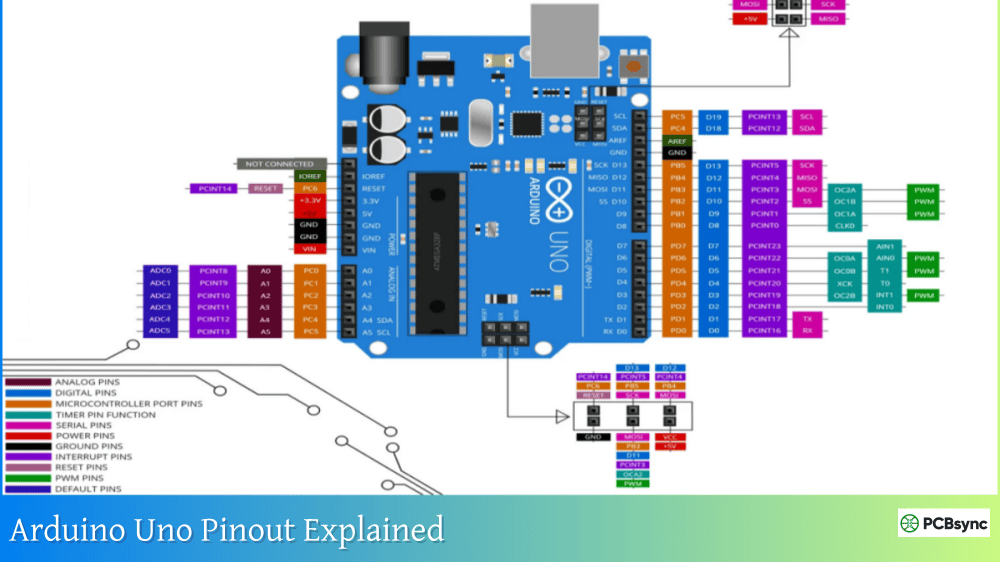
Can I use the built-in LED on pin 13 for testing?
Yes, all Arduino boards have a built-in LED connected to digital pin 13. This is perfect for initial testing without external components. Simply use pinMode(13, OUTPUT) and digitalWrite(13, HIGH/LOW). However, note that pin 13 often has a 1kΩ resistor already in series, so it may appear dimmer than external LEDs.
What’s the difference between INPUT and INPUT_PULLUP modes?
INPUT mode configures the pin as a high-impedance input requiring an external pull-down or pull-up resistor. INPUT_PULLUP mode activates Arduino’s internal pull-up resistor (20-50kΩ), eliminating the need for external components. With INPUT_PULLUP, the logic is inverted: the pin reads HIGH when nothing is connected and LOW when connected to ground through a button.
How many buttons can I connect to an Arduino Uno?
The Arduino Uno has 14 digital I/O pins, so theoretically you could connect 14 buttons. However, practical limitations include available pins after accounting for LED outputs, serial communication, and other peripherals. For projects requiring many buttons, consider using a matrix configuration or port expander ICs like the PCF8574, which provides 8 additional I/O pins via I2C communication.
Conclusion
Mastering the Arduino Button LED interface builds essential skills for embedded systems development. From basic circuits to advanced debouncing techniques, these projects teach fundamental concepts applicable to professional PCB design and firmware development.
As you progress, experiment with interrupts, multiple input handling, and integration with sensors and actuators. The principles learned here scale directly to industrial control systems, home automation, and IoT devices.
Remember that robust button handling requires attention to both hardware design (pull resistors, debouncing) and software implementation (state tracking, edge detection). By following engineering best practices, your Arduino projects will be reliable, maintainable, and production-ready.
Start with the basic examples, understand the underlying principles, and gradually increase complexity. The journey from a simple LED toggle to sophisticated control systems begins with these fundamental digital input techniques.
Inquire: Call 0086-755-23203480, or reach out via the form below/your sales contact to discuss our design, manufacturing, and assembly capabilities.
Quote: Email your PCB files to Sales@pcbsync.com (Preferred for large files) or submit online. We will contact you promptly. Please ensure your email is correct.
Notes: For PCB fabrication, we require PCB design file in Gerber RS-274X format (most preferred), *.PCB/DDB (Protel, inform your program version) format or *.BRD (Eagle) format. For PCB assembly, we require PCB design file in above mentioned format, drilling file and BOM. Click to download BOM template To avoid file missing, please include all files into one folder and compress it into .zip or .rar format.