Inquire: Call 0086-755-23203480, or reach out via the form below/your sales contact to discuss our design, manufacturing, and assembly capabilities.
Quote: Email your PCB files to Sales@pcbsync.com (Preferred for large files) or submit online. We will contact you promptly. Please ensure your email is correct.
Notes: For PCB fabrication, we require PCB design file in Gerber RS-274X format (most preferred), *.PCB/DDB (Protel, inform your program version) format or *.BRD (Eagle) format. For PCB assembly, we require PCB design file in above mentioned format, drilling file and BOM. Click to download BOM template To avoid file missing, please include all files into one folder and compress it into .zip or .rar format.
Arduino Bluetooth App Control: Complete Guide for Android & iOS Projects
There’s something deeply satisfying about picking up your phone and wirelessly controlling a device you built with your own hands. Arduino Bluetooth app control has become one of the most popular ways to add wireless functionality to DIY projects, and for good reason—it’s affordable, relatively straightforward to implement, and opens up endless possibilities for remote control and monitoring.
I’ve integrated Bluetooth into dozens of projects over the years, from simple LED controllers to complex robotic arms. The technology has matured significantly, and today’s options for both Android and iOS make it easier than ever to get started. This guide will walk you through everything you need to know to implement Arduino Bluetooth app control in your own projects.
Understanding Bluetooth Technology for Arduino Projects
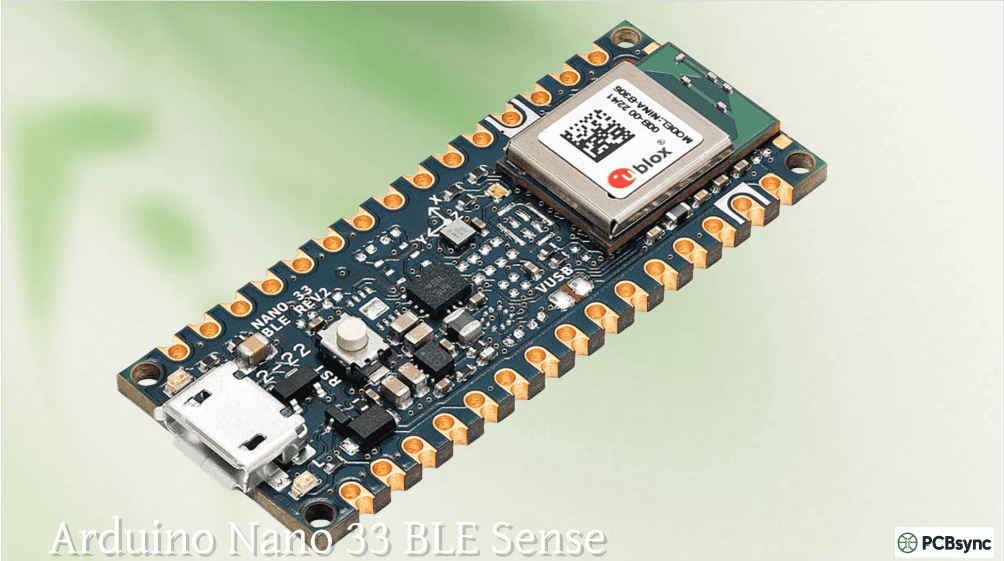
Before diving into apps and code, it helps to understand what you’re working with. Arduino boards don’t have built-in Bluetooth capabilities (with a few exceptions like the Arduino Nano 33 BLE and Arduino R4 WiFi), so you’ll need an external Bluetooth module.
There are two main Bluetooth standards you’ll encounter in the hobby electronics world:
Bluetooth Classic (2.0/2.1) uses the Serial Port Profile (SPP) for communication. Modules like the HC-05 and HC-06 fall into this category. They’re cheap, widely available, and work great with Android devices. The catch? iOS has restricted Bluetooth Classic for non-MFi certified accessories since iOS 7, which means these modules won’t work directly with iPhones or iPads.
Bluetooth Low Energy (BLE/4.0+) is the newer standard designed for low-power applications. Modules like the HM-10, HM-11, and AT-09 support BLE and work with both Android and iOS. The trade-off is slightly more complex setup, but the cross-platform compatibility is worth it if you need iOS support.
Choosing the Right Bluetooth Module
Your choice of Bluetooth module will determine which apps and devices you can use. Here’s a quick comparison:
Module
Bluetooth Version
Role
iOS Compatible
Price Range
Best For
HC-05
2.0 Classic
Master/Slave
No
$3-6
Android-only projects, Arduino-to-Arduino
HC-06
2.0 Classic
Slave only
No
$2-5
Simple Android control
HM-10
4.0 BLE
Peripheral
Yes
$4-8
Cross-platform projects
HM-11
4.0 BLE
Peripheral
Yes
$5-10
Compact BLE applications
AT-09
4.0 BLE
Peripheral
Yes
$3-5
Budget BLE option
ESP32
Classic + BLE
Both
Yes
$5-10
Advanced projects, WiFi+Bluetooth
For most beginners, I recommend starting with the HC-05 or HC-06 if you’re working exclusively with Android. If you need iOS compatibility or want future flexibility, invest in an HM-10 from the start.
Best Apps for Arduino Bluetooth App Control
One of the biggest questions I get is “which app should I use?” The answer depends on your platform, project complexity, and whether you want a pre-built solution or custom development.
Android Bluetooth Control Apps
Android offers the widest selection of Arduino control apps, thanks to its open Bluetooth API and the prevalence of Bluetooth Classic modules.
App Name
Type
Features
Best For
Arduino Bluetooth Controller
Pre-built
Buttons, terminal, voice control, accelerometer
General control projects
Bluetooth Terminal
Terminal
Raw serial communication, logging
Testing and debugging
Bluetooth Electronics
Widget-based
Customizable gauges, buttons, graphs
Dashboard interfaces
Roboremo
Visual builder
Sliders, buttons, custom layouts
Robotics projects
MIT App Inventor
Custom app builder
Full app development, free
Custom applications
Arduino Bluetooth Controller stands out for its versatility. It includes a terminal for debugging, customizable buttons that send specific commands, voice recognition, and even accelerometer control—which is fantastic for projects like Bluetooth cars where you want to steer by tilting your phone.
Bluetooth Electronics is my personal favorite for projects that need visual feedback. You can create dashboards with gauges, graphs, and meters to display sensor data received from your Arduino.
Roboremo deserves special mention for robotics applications. Its slider interface makes it perfect for controlling servo motors—you can send position values from 0-180 just by dragging a finger across the screen.
iOS Bluetooth Control Apps
iOS options are more limited due to Apple’s Bluetooth restrictions, but there are still solid choices for BLE-based projects.
App Name
Module Support
Features
Price
ArduinoBlue/MicroBlue
HM-10/HM-11
Joystick, sliders, buttons
Free
BLExAR
CC2541-based
Serial console, custom commands
$2.99
Bluetooth for Arduino
BLE modules
Gamepad, RGB controller, custom modes
Freemium
LightBlue
Any BLE
GATT explorer, testing
Free
nRF Connect
Any BLE
Advanced BLE debugging
Free
MicroBlue (the successor to ArduinoBlue) is probably the best option for serious iOS Arduino projects. It comes with a dedicated Arduino library that handles all the communication complexity, so you can focus on your project logic rather than Bluetooth protocols. Features include joystick control, custom buttons and sliders, tilt sensing, and even a path-drawing mode for robot navigation.
BLExAR provides a straightforward serial console that mimics what you’d get with a Bluetooth terminal on Android. It’s perfect for projects where you just need to send text commands back and forth.
LightBlue and nRF Connect aren’t specifically designed for Arduino control, but they’re invaluable for testing and debugging BLE connections. If you’re having trouble getting your HM-10 to communicate, these apps let you inspect services, characteristics, and raw data.
Building Your Own App with MIT App Inventor
Pre-built apps are convenient, but sometimes you need something tailored to your specific project. That’s where MIT App Inventor comes in. It’s a free, browser-based platform that lets you create Android apps using visual block-based programming—no Java or Kotlin knowledge required.
Setting Up MIT App Inventor for Arduino Bluetooth App Control
Here’s the basic workflow for creating a Bluetooth control app:
Step 1: Create the User Interface
In the Designer view, drag components onto your screen:
Add a ListPicker (this will show available Bluetooth devices)
Add a BluetoothClient component (handles the actual connection)
Add Buttons, Sliders, or other controls for your specific needs
Add Labels for displaying status and received data
Step 2: Program the Bluetooth Connection
Switch to the Blocks view and create the connection logic:
When the ListPicker opens (BeforePicking), populate it with paired Bluetooth devices using BluetoothClient.AddressesAndNames
When a device is selected (AfterPicking), connect using BluetoothClient.Connect with the selection
Add error handling to display connection status
Step 3: Send Commands
For each control element, create an event handler that sends data:
Button press → Send a specific character or string (e.g., “1” for ON, “0” for OFF)
Slider change → Send the slider value as a number
Step 4: Receive Data (Optional)
Use a Clock component as a timer to periodically check for incoming data:
Check BluetoothClient.BytesAvailableToReceive
If data is available, read it with BluetoothClient.ReceiveText
Display in a Label or process as needed
Sample Arduino Code for App Communication
On the Arduino side, the code is surprisingly simple since Bluetooth modules use standard serial communication:
#include <SoftwareSerial.h>
SoftwareSerial bluetooth(10, 11); // RX, TX pins
int ledPin = 13;
void setup() {
Serial.begin(9600); // USB serial for debugging
bluetooth.begin(9600); // Bluetooth serial
pinMode(ledPin, OUTPUT);
}
void loop() {
if (bluetooth.available()) {
char command = bluetooth.read();
if (command == ‘1’) {
digitalWrite(ledPin, HIGH);
bluetooth.println(“LED ON”);
}
else if (command == ‘0’) {
digitalWrite(ledPin, LOW);
bluetooth.println(“LED OFF”);
}
}
}
This basic structure works for both pre-built apps and custom MIT App Inventor projects. The key is matching the commands your app sends with what your Arduino code expects.
Practical Arduino Bluetooth App Control Projects
Let’s look at some real-world applications of Arduino Bluetooth app control, from beginner-friendly to more advanced.
Project 1: Bluetooth LED Controller
This is the classic starter project—control an LED (or any digital output) from your phone.
Components needed:
Arduino Uno or Nano
HC-05 or HC-06 Bluetooth module
LED and 220Ω resistor
Jumper wires
Wiring:
Bluetooth Module
Arduino
VCC
5V
GND
GND
TX
Pin 10 (Software RX)
RX
Pin 11 through voltage divider*
*The HC-05/06 RX pin is 3.3V logic. Use a voltage divider (1kΩ + 2kΩ resistors) to step down the 5V Arduino TX signal.
This simple project teaches the fundamentals that apply to every Bluetooth control application: establishing connections, sending commands, and processing them on the Arduino.
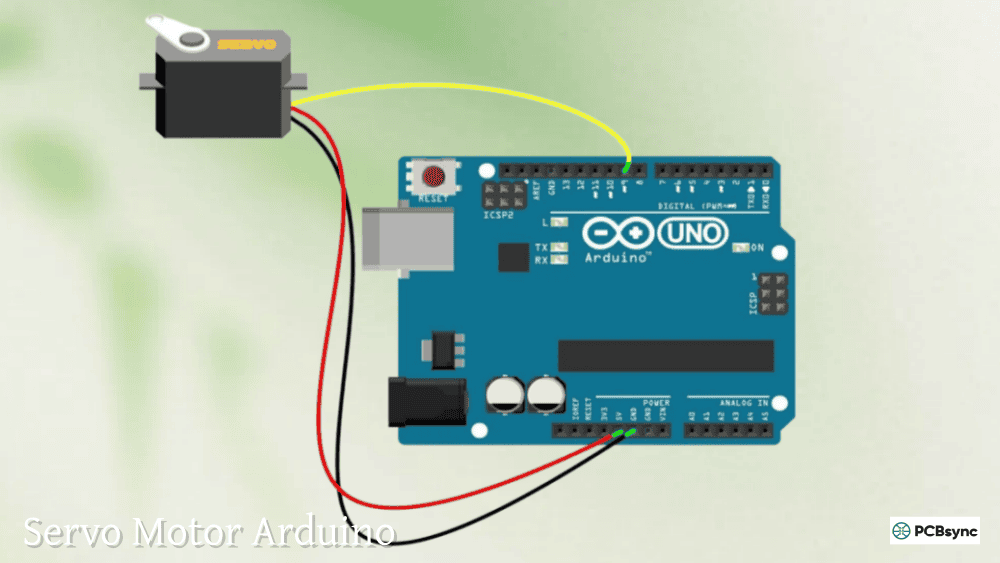
Project 2: Bluetooth-Controlled Servo Motor
Servo control is where Bluetooth really shines. You can precisely position a servo from 0-180 degrees using a smartphone slider.
Key code additions:
#include <Servo.h>
Servo myServo;
void setup() {
myServo.attach(9);
bluetooth.begin(9600);
}
void loop() {
if (bluetooth.available()) {
int angle = bluetooth.parseInt();
if (angle >= 0 && angle <= 180) {
myServo.write(angle);
bluetooth.print(“Servo: “);
bluetooth.println(angle);
}
}
}
This forms the basis for robotic arm control, camera gimbals, and automated door locks.
Project 3: Bluetooth RC Car
Combining motor control with directional commands creates a smartphone-controlled vehicle.
Control scheme:
App Command
Action
‘F’
Forward
‘B’
Backward
‘L’
Turn Left
‘R’
Turn Right
‘S’
Stop
Many Bluetooth controller apps support accelerometer input, letting you “steer” the car by tilting your phone—a feature that adds serious fun factor to the project.
Project 4: Home Automation Control Panel
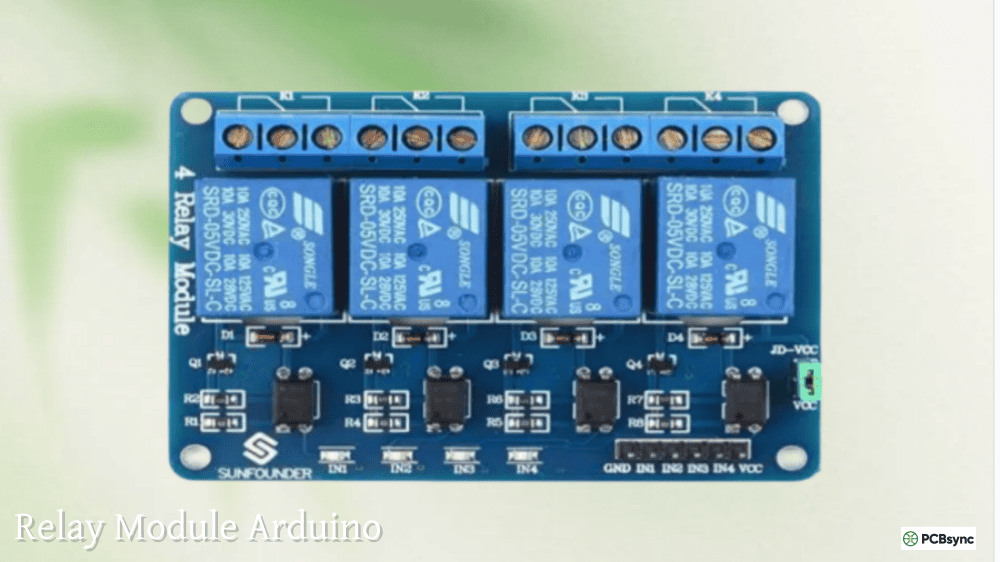
For smart home applications, you can control multiple relays to switch lights, fans, or appliances:
Multi-device control structure:
Command
Device
Action
‘A’
Relay 1
ON
‘a’
Relay 1
OFF
‘B’
Relay 2
ON
‘b’
Relay 2
OFF
…
…
…
Using uppercase for ON and lowercase for OFF is a common convention that makes the code logic straightforward while remaining human-readable for debugging.
iOS-Specific Considerations for Bluetooth Projects
If iOS support is essential for your project, here’s what you need to know:
Use BLE modules only. The HM-10 is the most common choice. It uses the CC2541 chip and works reliably with iOS devices from iPhone 4S onward.
Expect different connection behavior. BLE connections work through services and characteristics rather than simple serial streams. Apps like MicroBlue abstract this complexity, but if you’re building custom iOS apps with Swift or Objective-C, you’ll need to work with the Core Bluetooth framework.
Power consumption is lower but so is throughput. BLE is designed for periodic data transmission, not continuous streaming. For applications sending small commands (like button presses), this is perfect. For high-speed data logging, you may need to adjust your approach.
Consider the Arduino R4 WiFi or ESP32. Both have built-in BLE support, eliminating the need for external modules and simplifying the hardware design.
Troubleshooting Common Arduino Bluetooth App Control Issues
After helping countless makers debug their Bluetooth projects, I’ve compiled the most common problems and solutions:
Connection fails or drops repeatedly:
Check power supply—Bluetooth modules can be sensitive to voltage fluctuations
Ensure the module’s LED is blinking (indicating discoverable mode)
Move closer; initial pairing often requires proximity
Reset the module by power cycling
Data received is garbled or wrong:
Verify baud rates match (Arduino code and module configuration)
Check wiring—TX should go to RX and vice versa
Add delays between consecutive sends to prevent buffer overflow
App can’t find the Bluetooth module:
For Android: Make sure Location Services are enabled (required for Bluetooth scanning on newer Android versions)
For iOS: Confirm you’re using a BLE module, not Bluetooth Classic
Pair the device in phone settings first before opening the app
Commands work once then stop:
Add proper string termination in your Arduino code
Flush the serial buffer between reads
Check for timeout settings in your app
Useful Resources and Downloads
To help you get started quickly, here are the essential resources:
Arduino Libraries:
SoftwareSerial (built into Arduino IDE)
ArduinoBlue/MicroBlue library: Available through Arduino Library Manager
BlynkSimpleSerialBLE: For Blynk app integration
App Development Platforms:
MIT App Inventor: https://appinventor.mit.edu
Thunkable (iOS alternative to App Inventor): https://thunkable.com
Android Apps (Google Play Store):
Arduino Bluetooth Controller
Bluetooth Electronics
Roboremo
Bluetooth Serial Monitor
iOS Apps (App Store):
MicroBlue
BLExAR
LightBlue
nRF Connect
Documentation and Datasheets:
HC-05/HC-06 AT Command Reference
HM-10 Datasheet and Configuration Guide
MIT App Inventor Bluetooth Documentation
Frequently Asked Questions
Can I control Arduino with Bluetooth on iPhone?
Yes, but you need a Bluetooth Low Energy (BLE) module like the HM-10, HM-11, or AT-09. Standard Bluetooth Classic modules (HC-05, HC-06) don’t work with iOS due to Apple’s MFi restrictions. Apps like MicroBlue and BLExAR are designed specifically for Arduino BLE control on iOS.
What is the range of Bluetooth control for Arduino projects?
Most Bluetooth modules offer a range of approximately 10 meters (33 feet) in typical indoor environments with obstacles. In open spaces, the HC-05 and HM-10 can reach up to 30-100 meters depending on interference and line of sight. For longer range, you’d need to consider WiFi or RF alternatives.
Do I need to program my own app to control Arduino via Bluetooth?
No, you don’t need to create a custom app. There are many pre-built apps like Arduino Bluetooth Controller (Android) and MicroBlue (iOS/Android) that work out of the box. However, for customized interfaces or specific functionality, MIT App Inventor lets you create Android apps without traditional coding.
Why won’t my Bluetooth module connect to my phone?
Common causes include: the module needs to be paired in phone settings first, the baud rate is misconfigured, the module isn’t powered properly, or you’re trying to use a Bluetooth Classic module with an iPhone. For Android, also check that Location Services are enabled—it’s required for Bluetooth scanning on Android 6.0 and above.
Can I use Bluetooth and USB serial simultaneously on Arduino?
Yes, but with caveats. If you connect the Bluetooth module to pins 0 and 1 (hardware serial), you’ll have conflicts when uploading code—you must disconnect the Bluetooth module during uploads. Using SoftwareSerial on different pins (like 10 and 11) allows both USB debugging and Bluetooth communication to work simultaneously, which is much more practical for development.
Taking Your Arduino Bluetooth App Control Further
Once you’ve mastered basic Bluetooth control, the possibilities expand dramatically. You can create bidirectional systems where your Arduino sends sensor data back to your phone for real-time monitoring. You can integrate voice control using apps that convert speech to text commands. You can even chain multiple Arduinos together using HC-05 modules in master-slave configuration for complex distributed systems.
The combination of Arduino’s hardware flexibility and smartphone app interfaces creates a powerful platform for everything from educational projects to legitimate product prototypes. Whether you’re building a remote-controlled robot, a home automation system, or a data-logging sensor platform, Arduino Bluetooth app control provides the wireless foundation to bring your ideas to life.
Start simple, get comfortable with the basics, and then let your creativity drive the complexity. That’s always been the Arduino way, and Bluetooth connectivity just extends that philosophy into the wireless realm.
Inquire: Call 0086-755-23203480, or reach out via the form below/your sales contact to discuss our design, manufacturing, and assembly capabilities.
Quote: Email your PCB files to Sales@pcbsync.com (Preferred for large files) or submit online. We will contact you promptly. Please ensure your email is correct.
Notes: For PCB fabrication, we require PCB design file in Gerber RS-274X format (most preferred), *.PCB/DDB (Protel, inform your program version) format or *.BRD (Eagle) format. For PCB assembly, we require PCB design file in above mentioned format, drilling file and BOM. Click to download BOM template To avoid file missing, please include all files into one folder and compress it into .zip or .rar format.