Inquire: Call 0086-755-23203480, or reach out via the form below/your sales contact to discuss our design, manufacturing, and assembly capabilities.
Quote: Email your PCB files to Sales@pcbsync.com (Preferred for large files) or submit online. We will contact you promptly. Please ensure your email is correct.
Notes: For PCB fabrication, we require PCB design file in Gerber RS-274X format (most preferred), *.PCB/DDB (Protel, inform your program version) format or *.BRD (Eagle) format. For PCB assembly, we require PCB design file in above mentioned format, drilling file and BOM. Click to download BOM template To avoid file missing, please include all files into one folder and compress it into .zip or .rar format.
Arduino ADC: Analog to Digital Conversion Explained
When you’re designing circuits with Arduino boards, understanding the ADC becomes critical. As a PCB engineer working with embedded systems daily, I’ve learned that the Analog-to-Digital Converter is one of those features that looks simple on paper but has numerous gotchas in real-world applications.
What is Arduino ADC and Why Should You Care?
The Arduino ADC is a hardware feature built into the ATmega328P microcontroller that converts continuous analog voltage signals into discrete digital values. Think of it as a bridge between the analog world we live in and the digital domain that microcontrollers understand.
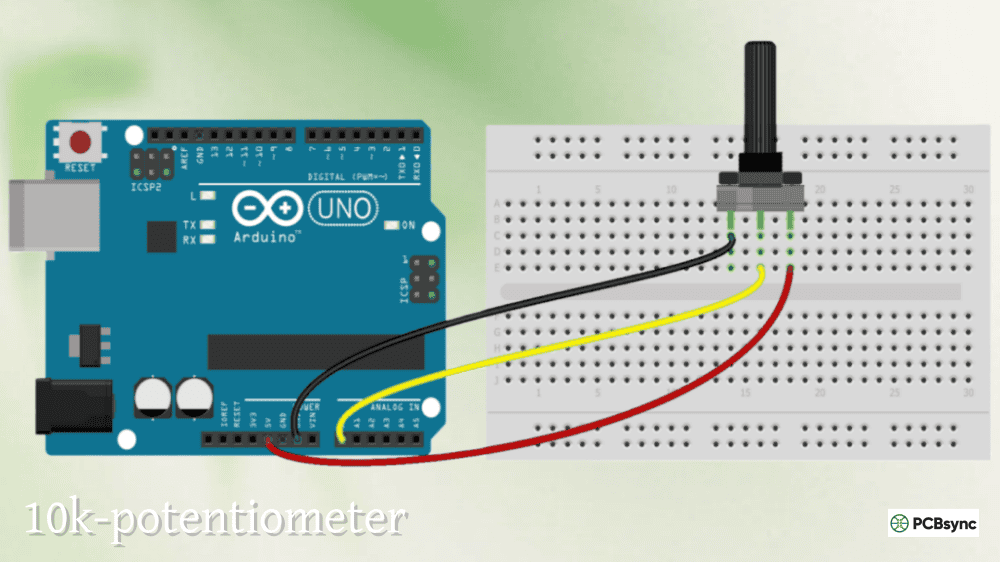
Without an ADC, your Arduino couldn’t read sensor outputs like temperature, light levels, pressure, or any other physical parameter that produces a varying voltage. The ADC samples the analog input and produces a digital number that your code can process.
Let me break down the key specifications that matter when you’re designing circuits:
Parameter
Arduino Uno (ATmega328P)
Arduino Due
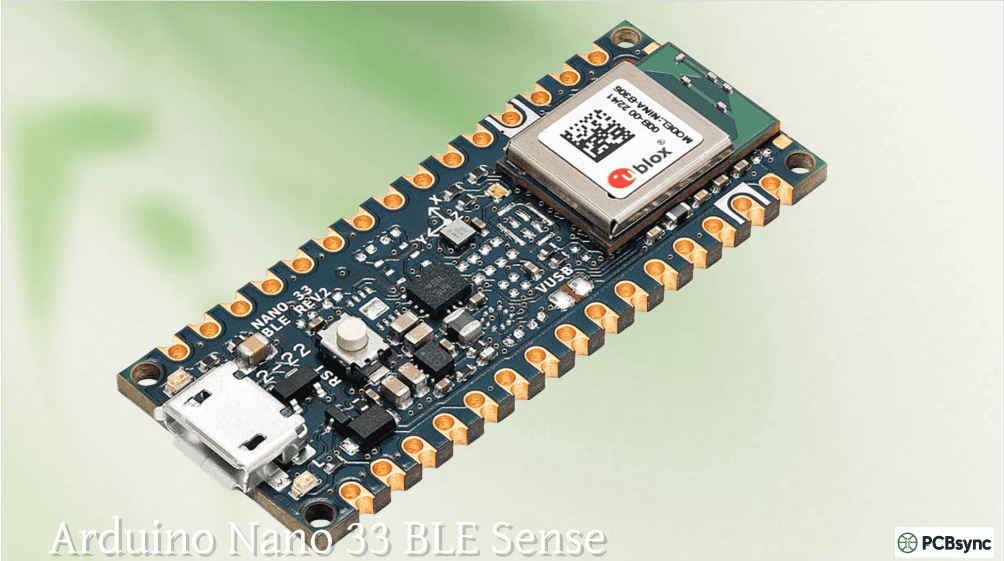
Arduino Nano 33
Resolution
10-bit (1024 levels)
12-bit (4096 levels)
12-bit (4096 levels)
Reference Voltage
5V (default)
3.3V
3.3V
Number of Channels
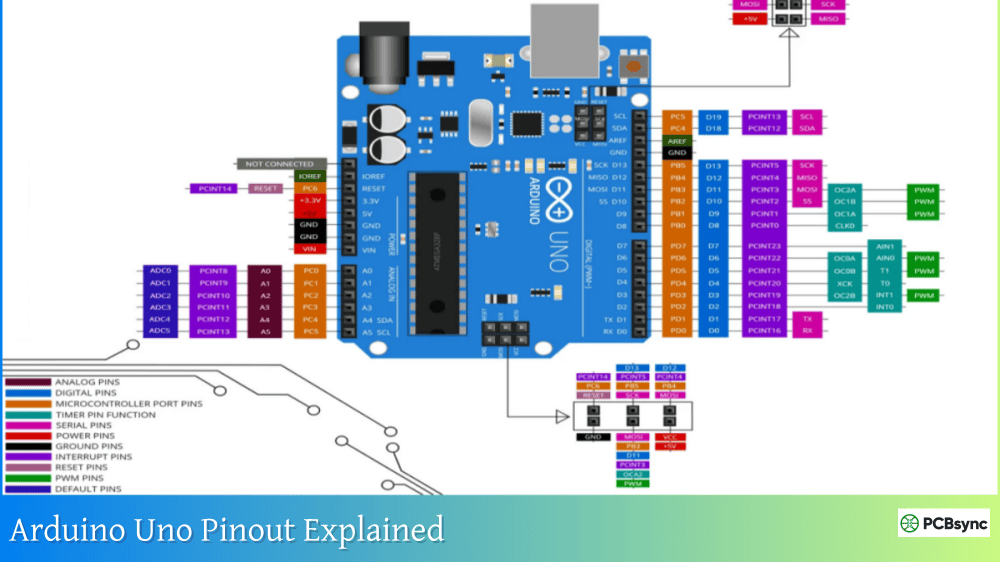
6 (A0-A5)
12 channels
8 channels
Conversion Time
~100 µs
~1 µs
~5 µs
Input Impedance
100 MΩ
100 MΩ
100 MΩ
Optimal Source Impedance
≤10 kΩ
≤10 kΩ
≤10 kΩ
Understanding 10-bit Resolution
The Arduino Uno’s 10-bit ADC means it divides the input voltage range into 2^10 = 1024 discrete levels. With a 5V reference, each digital step represents approximately 4.88 mV. Here’s the math that actually matters:
Voltage per Step (LSB) = VREF / 2^n
For Arduino Uno: LSB = 5V / 1024 = 4.88 mV
This resolution directly impacts measurement precision. You can’t reliably detect voltage changes smaller than one LSB.
How Arduino ADC Works: The Conversion Process
Successive Approximation Register (SAR) Method
The ATmega328P uses a SAR architecture, which works like a binary search algorithm. Here’s what happens during each conversion:
Sample Phase: The internal 14 pF capacitor charges to match the input voltage
Hold Phase: The capacitor disconnects from input and holds the sampled voltage
Conversion Phase: SAR compares the held voltage against reference levels
Output Phase: Digital value becomes available in ADC registers
The entire process takes 13 ADC clock cycles. With the default prescaler of 128 on a 16 MHz system clock, you get an ADC clock of 125 kHz, resulting in approximately 104 µs per conversion.
Input Multiplexer Architecture
The Arduino doesn’t have six separate ADCs. Instead, it uses a multiplexer to route one of the six analog inputs to a single ADC. This is why you can only read one analog channel at a time. The multiplexer switching adds minimal delay but it’s something to consider for time-critical applications.
Voltage Conversion Formulas: Getting It Right
The Correct Formula Debate
There’s confusion online about whether to divide by 1023 or 1024. According to the ATmega328P datasheet, the correct formula is:
ADC_Value = (VIN × 1024) / VREF
To convert back to voltage:
VIN = (ADC_Value × VREF) / 1024
Here’s why: The datasheet states “0x000 represents analog ground, and 0x3FF represents the selected reference voltage minus one LSB.” An ADC reading of 1023 represents 5V minus 4.88mV, not exactly 5V.
Practical Voltage Calculation Examples
ADC Value
Voltage (5V Ref)
Voltage (3.3V Ref)
Voltage (1.1V Ref)
0
0 V
0 V
0 V
256
1.25 V
0.825 V
0.275 V
512
2.5 V
1.65 V
0.55 V
768
3.75 V
2.475 V
0.825 V
1023
4.995 V
3.297 V
1.099 V
Using analogRead() Function
Basic Syntax
int sensorValue = analogRead(A0);
The analogRead() function handles all the heavy lifting. It configures the multiplexer, triggers the conversion, waits for completion, and returns the result.
Complete Code Example
const int sensorPin = A0;
void setup() {
Serial.begin(9600);
// Analog pins don’t need pinMode() configuration
}
void loop() {
// Read ADC value (0-1023)
int adcValue = analogRead(sensorPin);
// Convert to voltage
float voltage = (adcValue * 5.0) / 1024.0;
// Display results
Serial.print(“ADC: “);
Serial.print(adcValue);
Serial.print(” | Voltage: “);
Serial.print(voltage, 3);
Serial.println(” V”);
delay(500);
}
Voltage Reference Options: AREF Explained
Available Reference Sources
The Arduino ADC can use three different voltage references:
DEFAULT: Uses the operating voltage (5V or 3.3V)
INTERNAL: Uses the internal 1.1V reference
EXTERNAL: Uses an external voltage on the AREF pin
Setting Reference Voltage
analogReference(INTERNAL); // Use 1.1V reference
analogReference(DEFAULT); // Use 5V reference
analogReference(EXTERNAL); // Use external AREF voltage
Why AREF Matters for Precision
Using a lower reference voltage increases effective resolution. With a 1.1V reference instead of 5V, each ADC step represents only 1.07 mV instead of 4.88 mV. This gives you 4.5 times better voltage resolution for low-voltage signals.
Critical Warning: Never apply more than VREF + 0.5V to an analog input, or you risk damaging the microcontroller.
ADC Speed and Timing Considerations
ADC Clock Frequency
Prescaler
ADC Clock
Conversion Time
Max Sample Rate
128 (default)
125 kHz
104 µs
9.6 kHz
64
250 kHz
52 µs
19.2 kHz
32
500 kHz
26 µs
38.4 kHz
16
1 MHz
13 µs
76.9 kHz
The default prescaler of 128 provides the best accuracy. Going faster sacrifices precision because the sample-and-hold capacitor doesn’t have enough time to fully charge.
Practical Sampling Rate Limitations
Even though the hardware can convert faster, analogRead() includes overhead. In practice, expect maximum sample rates around 8-9 kHz with the standard Arduino library.
Input Impedance: The 10 kΩ Rule
Why Source Impedance Matters
The ATmega328P datasheet specifies optimal performance with source impedances below 10 kΩ. This limitation comes from the 14 pF sample-and-hold capacitor that must charge within the sampling period.
Time Constant Calculation: τ = R × C = 10 kΩ × 14 pF = 140 ns
The capacitor needs approximately 5τ (700 ns) to reach 99% of the input voltage. The default ADC clock provides 2 µs, which gives adequate margin.
Dealing with High Impedance Sensors
If your sensor has output impedance above 10 kΩ:
Add a buffer amplifier (op-amp follower)
Use a capacitor on the input (0.1 µF ceramic)
Reduce ADC clock speed (increase prescaler)
Take multiple readings (discard the first)
Noise Reduction Techniques
Common Noise Sources
In my PCB designs, I’ve traced ADC noise to these sources:
You can achieve higher resolution through oversampling. To gain n extra bits, you need to oversample by 4^n times:
Extra Bits
Oversampling Factor
Samples Needed
1 bit
4x
4 samples
2 bits
16x
16 samples
3 bits
64x
64 samples
4 bits
256x
256 samples
Implementation
long oversample(int pin, int extraBits) {
int samples = 1 << (2 * extraBits); // 4^n
long sum = 0;
for(int i = 0; i < samples; i++) {
sum += analogRead(pin);
}
// Decimation: divide by 2^n
return sum >> extraBits;
}
This technique only works if you have sufficient noise in your system to dither the ADC. For very clean signals, you may need to intentionally add noise.
This is normal behavior! Remember, the ADC only has 1024 discrete levels. If your signal varies slowly, you’ll see stepped changes rather than smooth transitions.
Practical Application Examples
Reading Temperature with LM35
// LM35: 10mV per degree Celsius
const int tempPin = A0;
float readTemperature() {
int adcValue = readAverageADC(tempPin, 10);
float voltage = (adcValue * 5.0) / 1024.0;
float temperature = voltage * 100.0; // LM35 scale factor
Digital Signal Processing Guide: Steven W. Smith’s free online book
PCB Layout Guidelines: IPC-2221 standards for analog circuit design
Arduino Forum: Community support at forum.arduino.cc
Frequently Asked Questions
Q1: Why do my analog readings fluctuate even with a steady input?
This is typically caused by ADC noise, which comes from several sources including power supply variations, electromagnetic interference, and thermal noise. The solution involves both hardware measures (proper grounding, decoupling capacitors, shielded cables) and software filtering (averaging multiple samples, exponential smoothing). For most applications, averaging 16-32 samples provides a good balance between noise reduction and response time.
Q2: Can I read voltages higher than 5V with Arduino ADC?
Never apply more than 5V directly to Arduino analog inputs as it will damage the microcontroller. Instead, use a voltage divider to scale down the input voltage. For example, to measure 0-15V, use a 2:1 divider (two equal resistors) to reduce it to 0-7.5V, then add a 5.1V zener diode for protection, or use a dedicated voltage divider with appropriate resistor values that bring the maximum input down to exactly 5V.
Q3: How do I improve resolution beyond 10 bits?
Several approaches exist: (1) Use oversampling and decimation to gain 2-4 extra bits, (2) Switch to an external ADC like the ADS1115 which provides 16-bit resolution, (3) Use a lower AREF voltage to increase sensitivity over a smaller range, or (4) Use differential measurement techniques. For most precision applications, an external ADC is the most reliable solution.
Q4: Why are A4 and A5 pins sometimes unavailable?
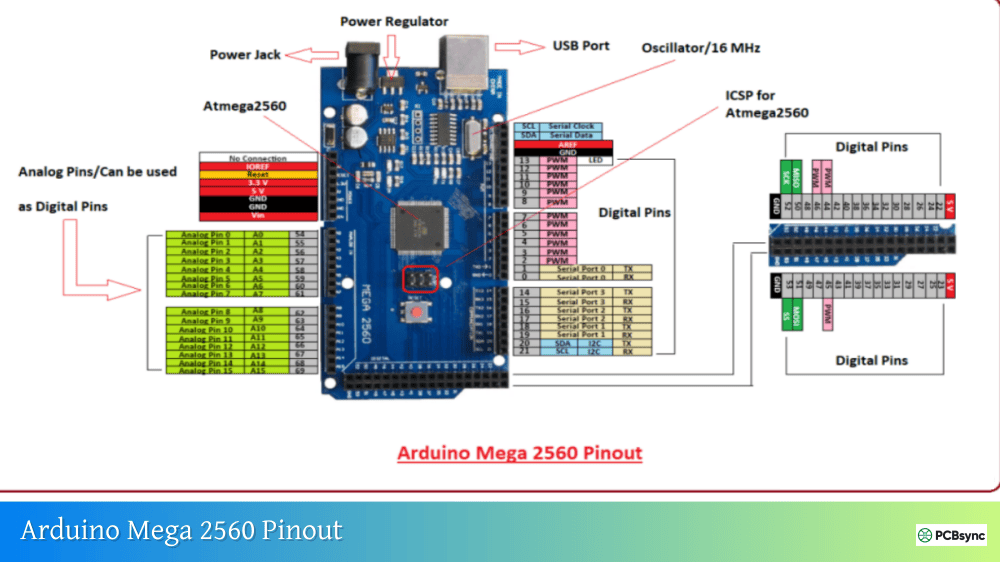
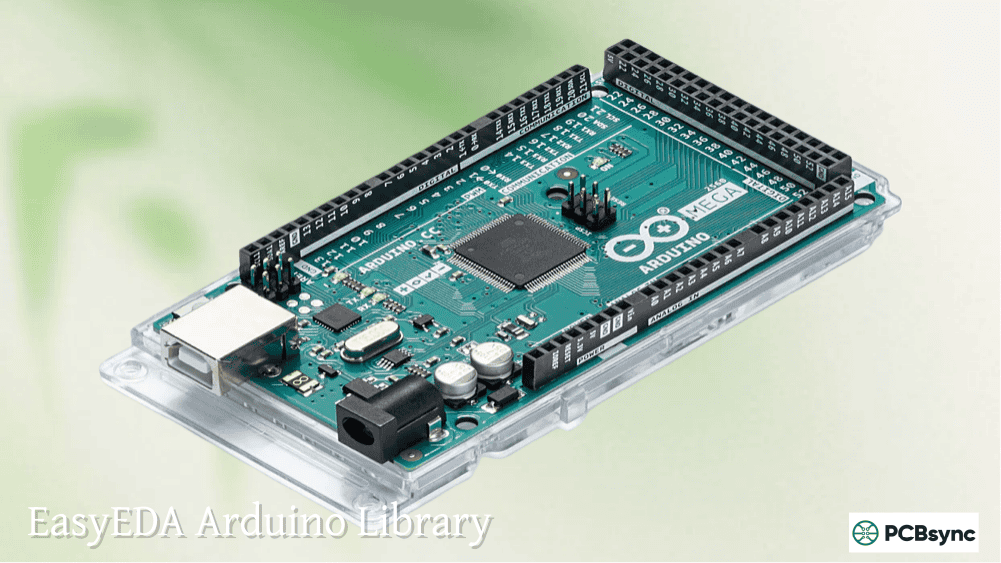
Pins A4 and A5 are shared with the I2C interface (SDA and SCL). When you use Wire.h library or any I2C devices, these pins become dedicated to I2C communication and cannot be used for analog input. If you need all six analog inputs plus I2C, consider using software I2C on different pins or switching to Arduino Mega which has more analog pins.
Q5: What’s the fastest sample rate I can achieve with Arduino ADC?
The theoretical maximum is around 77 kHz with prescaler set to 16, but this sacrifices accuracy. With the Arduino library’s analogRead() function, practical maximum is 8-9 kHz due to overhead. For applications requiring faster sampling (like audio processing), you need to directly manipulate ADC registers or use interrupt-driven free-running mode, which can achieve near-theoretical speeds at the cost of increased complexity.
Inquire: Call 0086-755-23203480, or reach out via the form below/your sales contact to discuss our design, manufacturing, and assembly capabilities.
Quote: Email your PCB files to Sales@pcbsync.com (Preferred for large files) or submit online. We will contact you promptly. Please ensure your email is correct.
Notes: For PCB fabrication, we require PCB design file in Gerber RS-274X format (most preferred), *.PCB/DDB (Protel, inform your program version) format or *.BRD (Eagle) format. For PCB assembly, we require PCB design file in above mentioned format, drilling file and BOM. Click to download BOM template To avoid file missing, please include all files into one folder and compress it into .zip or .rar format.