Inquire: Call 0086-755-23203480, or reach out via the form below/your sales contact to discuss our design, manufacturing, and assembly capabilities.
Quote: Email your PCB files to Sales@pcbsync.com (Preferred for large files) or submit online. We will contact you promptly. Please ensure your email is correct.
Notes: For PCB fabrication, we require PCB design file in Gerber RS-274X format (most preferred), *.PCB/DDB (Protel, inform your program version) format or *.BRD (Eagle) format. For PCB assembly, we require PCB design file in above mentioned format, drilling file and BOM. Click to download BOM template To avoid file missing, please include all files into one folder and compress it into .zip or .rar format.
After designing wireless communication systems for everything from home automation to industrial telemetry, I can confidently say that the 433MHz RF module Arduino combination remains one of the most practical entry points into wireless electronics. These modules cost less than a coffee at your local shop, yet they’ve powered countless commercial products I’ve shipped. Unlike more complex solutions requiring extensive RF engineering knowledge, 433MHz RF module Arduino implementations let you build working wireless systems in an afternoon. The real challenge isn’t getting them to work—it’s understanding their limitations and optimizing performance for your specific application.
The 433MHz frequency band falls within the ISM (Industrial, Scientific, Medical) spectrum allocation—a license-free zone that government regulators worldwide reserve for low-power radio applications. This regulatory freedom explains why garage door openers, weather stations, wireless doorbells, and countless consumer devices cluster around this frequency. When you work with 433MHz RF module Arduino systems, you’re operating in a crowded but legally accessible radio neighborhood.
The typical 433MHz transmitter-receiver pair uses ASK (Amplitude Shift Keying) modulation. Think of ASK as morse code for radio waves—the carrier wave turns on for binary 1 and off for binary 0. This simple modulation scheme keeps circuit complexity minimal and costs low, though it makes these modules susceptible to interference from motors, fluorescent lights, and other electrical noise sources.
Common 433MHz RF Modules in Arduino Projects
The FS1000A transmitter paired with the corresponding XY-MK-5V or similar receiver dominates hobby electronics. These modules feature SAW (Surface Acoustic Wave) resonators tuned precisely to 433.92 MHz. The SAW resonator acts like a miniature mechanical filter, ensuring the radio transmits and receives on the correct frequency without complex tuning circuits.
Inside the transmitter, you’ll find minimal circuitry—essentially just the SAW oscillator, a switching transistor, and passive components. Apply 5V to the data input pin and the module broadcasts a 433MHz carrier wave. Remove voltage and the carrier stops. This on-off keying directly implements the ASK modulation I mentioned earlier.
The receiver proves slightly more sophisticated. Beyond the SAW resonator and RF tuned circuit that filters unwanted signals, it includes operational amplifiers for signal amplification, a PLL (Phase Lock Loop) circuit for bit synchronization, and a comparator that converts the amplified RF signal back into clean digital logic levels.
Technical Specifications That Matter
Parameter
Transmitter (FS1000A)
Receiver (XY-MK-5V)
Notes
Operating Voltage
3-12V
5V
Higher voltage increases transmit power
Operating Current
4mA @ 3V, 40mA @ 12V
4-5mA
Transmitter current scales with voltage
Frequency
433.92 MHz
433.92 MHz
ISM band center frequency
Modulation
ASK/OOK
ASK/OOK
Amplitude Shift Keying
Data Rate
<10 Kbps typical
<10 Kbps typical
Lower rates improve reliability
Range (Open Field)
100-200m @ 12V
100-200m @ 12V
With proper antennas
Range (Indoor)
20-50m typical
20-50m typical
Heavily environment dependent
The voltage-dependent transmit power characteristic deserves emphasis. Running the transmitter at 3V yields perhaps 4mW output power, while 12V operation delivers 25mW or more. That power difference translates directly to range—you might achieve 20 meters at 3V but 100+ meters at 12V with identical antennas and environment.
Wiring 433MHz RF Module Arduino Connections
The minimal pin count makes these modules remarkably easy to connect. Unlike SPI or I2C peripherals requiring multiple control signals, 433MHz RF modules need only power and a single data line.
Transmitter Wiring to Arduino
Transmitter Pin
Arduino Connection
Function
VCC
5V (or up to 12V external)
Power supply
GND
GND
Ground reference
DATA/ATAD
Digital Pin 12
Data input
ANT
17.3cm wire antenna
Antenna connection
Connect the transmitter’s VCC to Arduino’s 5V for basic operation. For extended range, use an external 9-12V power supply connected to both Arduino’s Vin and the transmitter’s VCC. The DATA pin accepts digital signals—typically you’ll connect this to pin 12 since the RadioHead library uses this pin by default, though any digital pin works with proper configuration.
Most FS1000A modules label one pin as “DATA” and another as “ATAD”—these are functionally identical, both serving as the data input. This redundancy exists for PCB layout convenience; connect either one.
Receiver Wiring Configuration
Receiver Pin
Arduino Connection
Function
VCC
5V
Power supply (5V only)
GND
GND
Ground reference
DATA (either center pin)
Digital Pin 11
Data output
ANT
17.3cm wire antenna
Antenna connection
The receiver requires 5V operation—exceeding this voltage damages the module. Notice the receiver typically provides two data output pins in the center position. These connect internally to the same point, so use either one. This design accommodates different PCB routing requirements without needing separate module variants.
Pin 11 serves as the default receiver data connection in most Arduino libraries. The RadioHead library specifically expects this configuration, though you can override it in code if needed.
Antenna Design: The Range Multiplier
Without antennas, expect communication over perhaps one meter maximum. The antenna determines your practical range more than any other factor—good antennas easily triple or quadruple your working distance compared to no antenna at all.
Calculating Proper Antenna Length
The wavelength λ (lambda) of 433.92 MHz equals approximately 69 centimeters, calculated using λ = c/f where c is the speed of light (3×10^8 m/s) and f is frequency in Hz. Most 433MHz RF module Arduino implementations use quarter-wave antennas: λ/4 = 69cm / 4 = 17.25cm.
A simple straight wire cut to 17.3cm (close enough to 17.25cm) and soldered to the antenna pad creates an effective monopole antenna. Use solid-core wire (22-24 AWG) positioned vertically for best omnidirectional coverage. Stranded wire works but tends to droop over time.
Advanced Antenna Configurations
Coil-loaded antennas reduce the physical length while maintaining electrical resonance. Wind approximately 17-20 turns of 24 AWG enameled wire around a 5mm diameter form (like a plastic bolt or pen body). This creates a helical antenna roughly 3-4cm tall that performs comparably to the full 17cm straight wire—perfect when enclosure size constraints prohibit longer antennas.
Ground plane antennas improve performance by adding radial elements. Solder four 17cm wires to the ground plane around the antenna base, extending outward at 45° angles. This creates a directional antenna with gain, particularly effective for fixed gateway installations.
Dipole antennas consist of two quarter-wave elements (17cm each) with the center feedpoint connected to the module. While theoretically balanced, practical implementations often use coaxial cable with the center conductor as one element and the shield as the other. This provides about 2dBi gain compared to a simple monopole.
From experience deploying hundreds of nodes, I recommend starting with the simple 17cm wire antenna. Only move to complex designs when space constraints demand it or after exhausting other range optimization opportunities.
Programming 433MHz RF Module Arduino Systems
The RadioHead library, developed by Mike McCauley, provides reliable wireless communication with automatic error detection through CRC (Cyclic Redundancy Check) verification. This error checking is essential—remember, 433MHz ASK modulation offers no built-in data integrity mechanisms.
Installing the RadioHead Library
Open Arduino IDE and navigate to Sketch → Include Library → Manage Libraries. Search for “RadioHead” and install the library by Mike McCauley (AirSpayce). The library supports numerous RF modules beyond just 433MHz, making it a versatile addition to your Arduino toolkit.
#include <SPI.h> // Required by RadioHead but not actually used
RH_ASK rf_driver;
void setup() {
Serial.begin(9600);
if (!rf_driver.init()) {
Serial.println(“RF driver init failed”);
while (1);
}
Serial.println(“433MHz Transmitter Ready”);
}
void loop() {
const char *msg = “Hello from Arduino!”;
rf_driver.send((uint8_t *)msg, strlen(msg));
rf_driver.waitPacketSent();
Serial.println(“Message sent”);
delay(2000); // Transmit every 2 seconds
}
The code creates an RH_ASK object representing the ASK radio driver. The init() function configures the hardware—it returns false if initialization fails, allowing error detection during development. The send() function transmits data as a byte array, while waitPacketSent() blocks until transmission completes.
Notice we include SPI.h despite not using SPI communication. The RadioHead library depends on this header for internal timing functions, so omitting it causes compilation errors.
Receiver Code Structure
#include <RH_ASK.h>
#include <SPI.h>
RH_ASK rf_driver;
void setup() {
Serial.begin(9600);
if (!rf_driver.init()) {
Serial.println(“RF driver init failed”);
while (1);
}
Serial.println(“433MHz Receiver Ready”);
}
void loop() {
uint8_t buf[RH_ASK_MAX_MESSAGE_LEN];
uint8_t buflen = sizeof(buf);
if (rf_driver.recv(buf, &buflen)) {
// Message received with good checksum
Serial.print(“Received: “);
Serial.println((char*)buf);
Serial.print(“RSSI: “);
Serial.println(rf_driver.lastRssi(), DEC);
}
}
The receiver continuously polls for incoming messages with recv(). When valid data arrives (CRC verified), the function returns true and populates the buffer. The lastRssi() method provides received signal strength indication—useful for optimizing antenna placement and troubleshooting range issues.
The buffer size RH_ASK_MAX_MESSAGE_LEN typically equals 67 bytes, though you should verify this in your library version. Attempting to receive messages exceeding this length results in truncation.
Real-World 433MHz RF Module Arduino Applications
Wireless Sensor Networks
Agricultural and environmental monitoring systems benefit tremendously from 433MHz RF module Arduino implementations. Deploy sensor nodes throughout greenhouses, fields, or warehouses with each node transmitting temperature, humidity, soil moisture, or other parameters to a central gateway.
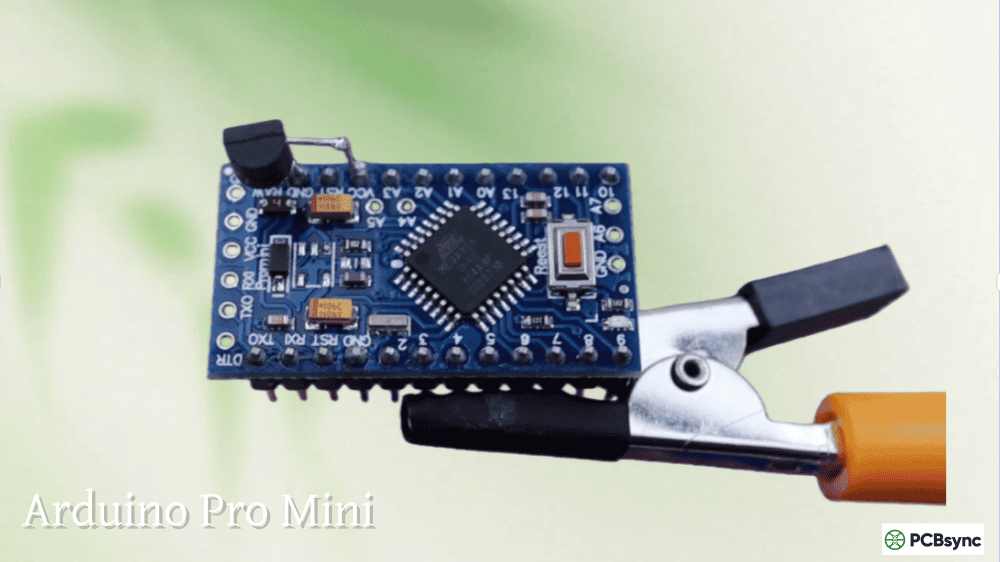
A typical sensor node consists of an Arduino Pro Mini (3.3V version for low power), a 433MHz transmitter, sensors, and batteries. The Arduino wakes periodically (every 5-30 minutes), reads sensors, transmits data, then sleeps. With careful power management, coin cell batteries power these nodes for 6-12 months.
The gateway uses an Arduino Uno or Mega with a 433MHz receiver, Ethernet shield, or ESP8266 WiFi module. It receives transmissions from all sensor nodes and forwards data to cloud platforms like ThingSpeak, Blynk, or custom servers for visualization and analysis.
Home Automation Control Systems
Wireless light switches, remote-controlled outlets, and motorized blinds commonly use 433MHz RF module Arduino designs. The transmitter side might include buttons or a small touchscreen interface, while receivers control relays switching AC power or DC motors.
For reliable home automation, implement acknowledgment protocols. After sending a “light on” command, the transmitter listens for a brief confirmation from the receiver. No acknowledgment within 500ms triggers retransmission up to three times. This dramatically improves reliability in electrically noisy home environments where motors, microwaves, and other appliances interfere with 433MHz signals.
Security and Alarm Systems
Door/window sensors transmit “open” or “closed” states to a central monitoring unit. PIR motion sensors trigger alarms when detecting movement. Gas leak detectors immediately broadcast emergency alerts. The 433MHz RF module Arduino combination provides reliable communication throughout typical homes without requiring wired connections.
For security applications, implement simple encryption or rolling codes to prevent replay attacks. While 433MHz ASK modulation is inherently insecure (anyone with a receiver can intercept transmissions), basic countermeasures deter casual attackers. Store a secret key on both transmitter and receiver, then include a hash of the message and key with each transmission. The receiver verifies the hash before acting on commands.
Wireless Remote Controls
Custom remote controls for robotics, RC vehicles, drones, or industrial equipment leverage 433MHz RF module Arduino systems. Map joystick positions or button states to data packets transmitted continuously while the operator manipulates controls. The receiver decodes these packets and controls motors, servos, or other actuators accordingly.
For real-time control applications, minimize transmission latency by sending shorter packets (10-20 bytes) at higher rates (10-20Hz). This creates responsive control feel compared to infrequent longer transmissions.
Troubleshooting Common 433MHz RF Module Problems
No Reception Despite Transmission
Symptom: The transmitter appears to send (confirmed via Serial prints), but the receiver never detects messages.
Solutions: First, verify both modules use matching data rates in the RH_ASK constructor: RH_ASK rf_driver(2000, 11, 12, 10, false) where 2000 is the bit rate. Mismatched rates prevent communication even though both modules operate on 433MHz. Second, confirm antennas are connected—modules without antennas rarely communicate beyond 1-2 meters even sitting adjacent. Third, check power supply voltage under load. The receiver especially requires stable 5V; voltage sag during reception corrupts data. Add 100-470µF capacitors across power pins.
Intermittent or Unreliable Communication
Symptom: Messages occasionally arrive correctly but frequently fail or contain corrupted data.
Solutions: Reduce the bit rate from the default 2000bps to 1000bps or even 500bps. Lower rates increase transmission time but dramatically improve noise immunity and range. The RadioHead library constructor’s first parameter sets this: RH_ASK rf_driver(1000, 11, 12, 10, false). Also verify you’re calling rf_driver.waitPacketSent() after each transmission—omitting this causes the next loop iteration to start before transmission completes, corrupting data. Finally, check for electrical noise sources near the modules. Motors, switching power supplies, and fluorescent lights generate interference in the 433MHz band. Relocate modules or add ferrite beads to nearby cables.
Limited Range Achievement
Symptom: Communication works at close range (1-5 meters) but fails beyond this despite expecting 50-100 meter range.
Solutions: Verify antenna length—measure precisely 17.3cm. Even 1-2cm deviation significantly impacts performance. Increase transmitter voltage to 9-12V using an external power supply rather than Arduino’s 5V output. Position antennas vertically and ensure line-of-sight when possible. Test outdoors in an open field to establish baseline maximum range without walls or obstacles. Indoor range typically measures 25-50% of outdoor range due to signal absorption and multipath interference. Consider upgrading to better receiver modules like the RXB6, RXB8, or superheterodyne receivers which offer 10-20dB better sensitivity than the basic modules.
Extending Range Through Advanced Techniques
Power Amplification
The standard FS1000A transmitter outputs approximately 10-25mW depending on supply voltage. External RF power amplifiers boost output to 100mW-1W, doubling or tripling range. These amplifiers use transistors like the 2N5109 configured as Class A RF amplifiers with impedance matching networks.
However, exceed local regulations carefully. Most regions limit ISM band transmission to 10-25mW for unlicensed operation. Higher power requires specific certifications and licensing. Always verify legal limits in your jurisdiction before implementing power amplification.
Improved Receiver Sensitivity
Replace the basic receiver with a superheterodyne design like the RXB6 or RXB8. These modules use intermediate frequency mixing to achieve -114dBm or better sensitivity compared to -105dBm typical for super-regenerative receivers. That 9dB improvement roughly doubles practical range.
The RXB6 module costs $1-2 more than basic receivers but drops into existing designs with identical pinout. From a systems engineering perspective, investing in better receivers provides more reliable range improvement than transmitter amplification.
Directional Antennas for Fixed Links
Point-to-point links between fixed locations benefit from directional antennas at both ends. Yagi antennas provide 6-12dBi gain, effectively multiplying transmit power by 4-15× in the antenna’s favored direction. A 3-element Yagi for 433MHz measures approximately 60cm long—manageable for fixed installations.
Build simple Yagi antennas from metal tape on plastic substrate or purchase commercial units. Align both antennas pointing toward each other for maximum range. I’ve achieved 400+ meter communication using 10mW transmitters with dual Yagi antennas in suburban environments with buildings and trees between endpoints.
Supports multiple modulation schemes and countless RF modules
VirtualWire Library: Predecessor to RadioHead, still widely used
Now superseded by RadioHead but many tutorials reference it
Compatible code structure makes migration straightforward
RCSwitch Library: Specialized for decoding/encoding common 433MHz protocols
Perfect for cloning remote controls
Supports PT2262, EV1527, and similar encoding chips
GitHub: https://github.com/sui77/rc-switch
Hardware Resources and Datasheets
Resource
Description
Application
FS1000A Transmitter Datasheet
Operating specs and characteristics
Design and troubleshooting
XY-MK-5V Receiver Datasheet
Sensitivity and pinout
Circuit design
RXB6/RXB8 Specifications
Superheterodyne receiver details
Upgrade planning
Antenna Design Calculator
Quarter-wave length for any frequency
Custom frequency projects
Link Budget Calculator
Range prediction tool
Deployment planning
Example Projects and Code Repositories
Arduino Project Hub 433MHz Section: Dozens of projects with complete code and schematics including weather stations, door sensors, wireless keyboards, and remote controls.
GitHub Search “433MHz Arduino”: Hundreds of repositories containing working examples for specific applications. Filter by stars to find well-maintained projects.
Instructables 433MHz Projects: Step-by-step tutorials with photos showing physical construction alongside code. Particularly useful for beginners seeing complete implementations.
Testing and Development Tools
RTL-SDR Radio: $25 USB software-defined radio receiver that displays the 433MHz spectrum. Invaluable for verifying your transmitter is actually broadcasting and for identifying interference sources. Pair with SDR# software (Windows) or GQRX (Linux/Mac) to visualize the RF environment around your project.
Logic Analyzer: Capture and decode the digital data stream between Arduino and RF modules. Essential for debugging timing issues and protocol problems. Many Arduino-compatible logic analyzers cost under $10.
RF Signal Strength Meter: Handheld devices showing received signal strength help optimize antenna placement and identify dead zones during installation.
Practical Deployment Guidelines from Field Experience
Based on deploying commercial products using 433MHz RF module Arduino systems, these practices improve reliability:
Always test at your deployment site before finalizing designs. RF propagation varies dramatically with environment—open fields, urban areas, and industrial facilities all behave differently. What works on your bench might fail in the actual installation location.
Implement watchdog timers in both transmitter and receiver code. Occasionally the RadioHead library or Arduino hangs due to timing edge cases or cosmic rays flipping bits. Watchdog timers automatically reset the system after 8 seconds without activity, maintaining uptime in unattended installations.
Log transmission statistics including packet count, error rate, and RSSI. This data identifies degrading performance before complete failure. If a sensor node’s error rate gradually increases from 1% to 10%, you know to replace batteries or clear obstructions before it stops working entirely.
Design modular systems where modules can be individually tested. A wireless thermometer with integrated transmitter, sensor, and battery is difficult to troubleshoot when it fails. Separating these functions with standardized interfaces allows component-level diagnosis and repair.
Account for battery voltage decay in remote sensors. As batteries discharge, transmitter power decreases and range shrinks. Test your system at minimum operating voltage (typically 3.0-3.3V for alkaline batteries) to ensure adequate margin. Consider battery monitors that trigger low-battery alerts before communication fails.
Use consistent packet structures with version numbers. Define a standard format for all messages including message type, sender ID, data fields, and CRC. Include a protocol version field so future firmware updates can maintain backward compatibility with older nodes.
Frequently Asked Questions
Q: Can I use 433MHz RF modules for two-way communication between Arduinos?
A: Yes, but you need a transmitter and receiver at both ends—four modules total. One Arduino uses a transmitter to send while the other uses its receiver to listen, then they reverse roles for the response. The RadioHead library supports this configuration, though you’ll need to implement a protocol defining when each side transmits versus receives. For true bidirectional communication, consider modules with built-in transceivers like the nRF24L01 which simplify two-way communication with automatic acknowledgments and retries.
Q: What’s the maximum data rate I can achieve with 433MHz RF modules?
A: The RadioHead library defaults to 2000 bits per second (2 Kbps), which balances reliability and speed for most applications. You can increase this to 4000 or even 8000 bps, but higher rates dramatically reduce range and noise immunity. Above 10 Kbps, communication becomes very unreliable with basic ASK modules. For high-bandwidth applications, consider alternative technologies—WiFi, Bluetooth, or LoRa modules better suit high data rate requirements. The 433MHz ASK modules excel at low data rates over long distances, not high-speed communication.
Q: Why do I get different messages than what I transmitted?
A: This indicates interference or noise corrupting your transmissions. The RadioHead library includes CRC error detection—messages with incorrect checksums are automatically discarded. If you’re receiving garbled data, either you’re not using RadioHead’s error detection (perhaps using raw Serial communication with the modules), or you’re reading data while a transmission is still in progress. Ensure you call rf_driver.waitPacketSent() after transmitting and check rf_driver.recv() return value before processing received data. Also verify no other 433MHz devices nearby are transmitting on the same frequency—garage door openers, weather stations, and wireless doorbells can interfere.
Q: Is 433MHz communication secure? Can others intercept my data?
A: No, basic 433MHz ASK modulation provides zero security. Anyone within range with a compatible receiver can intercept your transmissions. For non-sensitive data like temperature readings, this rarely matters. For security-critical applications controlling door locks or alarms, implement encryption at the application layer. Use libraries like AES128 to encrypt data before transmission and decrypt at the receiver. Also consider authentication schemes where the receiver only acts on commands containing valid cryptographic signatures. However, recognize that determined attackers can still jam your communications or conduct replay attacks. For genuine security requirements, use protocols designed for security like LoRaWAN or cellular connectivity rather than basic 433MHz modules.
Q: Can I use these modules in the United States, Europe, and Asia without modifications?
A: The 433MHz frequency is legal in most regions but not everywhere, and regulations vary. In the United States, 433MHz is permitted for low-power devices under FCC Part 15. Europe allows 433.92 MHz under ETSI EN 300.220. However, some Asian countries restrict or prohibit 433MHz usage—Japan particularly discourages it. Australia and New Zealand permit 433MHz but with specific power limitations. Always verify local regulations before deploying 433MHz systems, especially for commercial products. If you need worldwide operation, consider the 2.4 GHz ISM band which is nearly universally available, though it requires different modules than the 433MHz ones discussed here. Check your country’s telecommunications authority website for current ISM band regulations.
Conclusion
The 433MHz RF module Arduino combination provides accessible wireless communication for countless applications from hobby projects to commercial products. While these modules lack the sophistication of newer technologies like LoRa or WiFi, their simplicity, cost-effectiveness, and adequate performance for low-data-rate applications ensure continued relevance.
Success with 433MHz RF module Arduino systems requires understanding their limitations and working within them. They excel at infrequent transmission of small data packets over moderate distances. They struggle with high data rates, continuous streaming, or electrically noisy environments. Proper antenna design, careful power supply engineering, and robust software protocols transform these cheap modules from frustrating curiosities into reliable wireless links.
Whether you’re building a backyard weather station, wirelessly controlling robots, or deploying sensor networks across agricultural fields, the techniques and knowledge shared here provide the foundation for successful implementations. Start with simple point-to-point projects, master the basics, then scale to more complex multi-node systems with confidence.
The democratization of wireless technology through affordable components like 433MHz RF modules enables experimentation and innovation that would have required industrial budgets just decades ago. Embrace these tools, understand their characteristics, and build the wireless systems you envision.
Inquire: Call 0086-755-23203480, or reach out via the form below/your sales contact to discuss our design, manufacturing, and assembly capabilities.
Quote: Email your PCB files to Sales@pcbsync.com (Preferred for large files) or submit online. We will contact you promptly. Please ensure your email is correct.
Notes: For PCB fabrication, we require PCB design file in Gerber RS-274X format (most preferred), *.PCB/DDB (Protel, inform your program version) format or *.BRD (Eagle) format. For PCB assembly, we require PCB design file in above mentioned format, drilling file and BOM. Click to download BOM template To avoid file missing, please include all files into one folder and compress it into .zip or .rar format.