Inquire: Call 0086-755-23203480, or reach out via the form below/your sales contact to discuss our design, manufacturing, and assembly capabilities.
Quote: Email your PCB files to Sales@pcbsync.com (Preferred for large files) or submit online. We will contact you promptly. Please ensure your email is correct.
Notes: For PCB fabrication, we require PCB design file in Gerber RS-274X format (most preferred), *.PCB/DDB (Protel, inform your program version) format or *.BRD (Eagle) format. For PCB assembly, we require PCB design file in above mentioned format, drilling file and BOM. Click to download BOM template To avoid file missing, please include all files into one folder and compress it into .zip or .rar format.
Voltage Divider Calculator: Formula & Circuit Design
When you’re staring at a fresh PCB layout in Altium or KiCad, the voltage divider is often the first “building block” you reach for. Whether you’re scaling a 12V rail down for a 3.3V ADC input or setting the feedback loop on a switching regulator, getting the math right is only half the battle.
As engineers, we know that a voltage divider on paper is an ideal tool, but on a physical board, factors like loading effects, thermal drift, and quiescent current can turn a simple circuit into a debugging nightmare.
This guide covers the core formulas, the practical design trade-offs, and the “gotchas” that separate a hobbyist circuit from a professional-grade PCB design.
A voltage divider is a passive linear circuit that produces an output voltage ($V_{out}$) that is a fraction of its input voltage ($V_{in}$). In its simplest form, it consists of two resistors connected in series.
The fundamental principle is Ohm’s Law: because the same current flows through both resistors, the voltage drops across them are proportional to their resistance values.
The Essential Voltage Divider Formula
To calculate the output voltage across the “bottom” resistor ($R_2$), we use the standard voltage divider equation:
$$V_{out} = V_{in} \cdot \frac{R_2}{R_1 + R_2}$$
Where:
$V_{in}$: The source voltage applied to the series pair.
$R_1$: The “top” resistor connected to the input source.
$R_2$: The “bottom” resistor connected to the ground.
$V_{out}$: The voltage measured across $R_2$.
Solving for Resistor Values
Often, you know your $V_{in}$ and your desired $V_{out}$, and you need to find the right resistor ratio. You can rearrange the formula to solve for $R_1$ if you have a specific $R_2$ in mind (usually based on available stock):
If you just plug numbers into a voltage divider calculator, you might miss the physical realities of the circuit. In professional PCB design, we have to balance three conflicting requirements: Precision, Power, and Impedance.
1. The Loading Effect (The Most Common Mistake)
A voltage divider assumes that no current is being “tapped off” from the $V_{out}$ node. However, if you connect $V_{out}$ to a load (like a sensor or a low-impedance ADC), that load acts as a resistor in parallel with $R_2$. This lowers the effective resistance of the bottom leg and causes $V_{out}$ to drop below your calculated value.
Rule of Thumb: To maintain 99% accuracy, the input impedance of your load should be at least 10 to 100 times larger than the value of $R_2$.
2. Quiescent Current vs. Noise Immunity
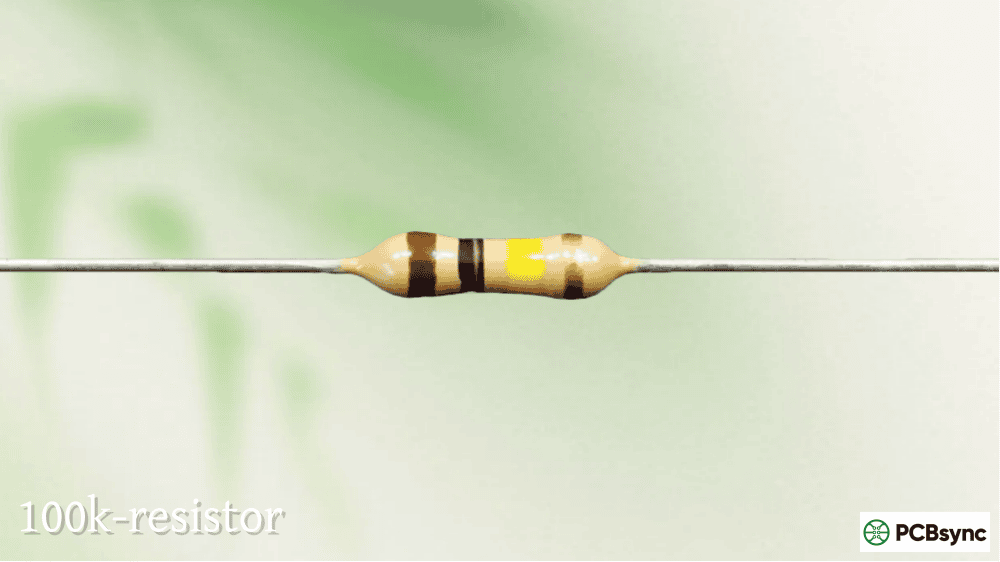
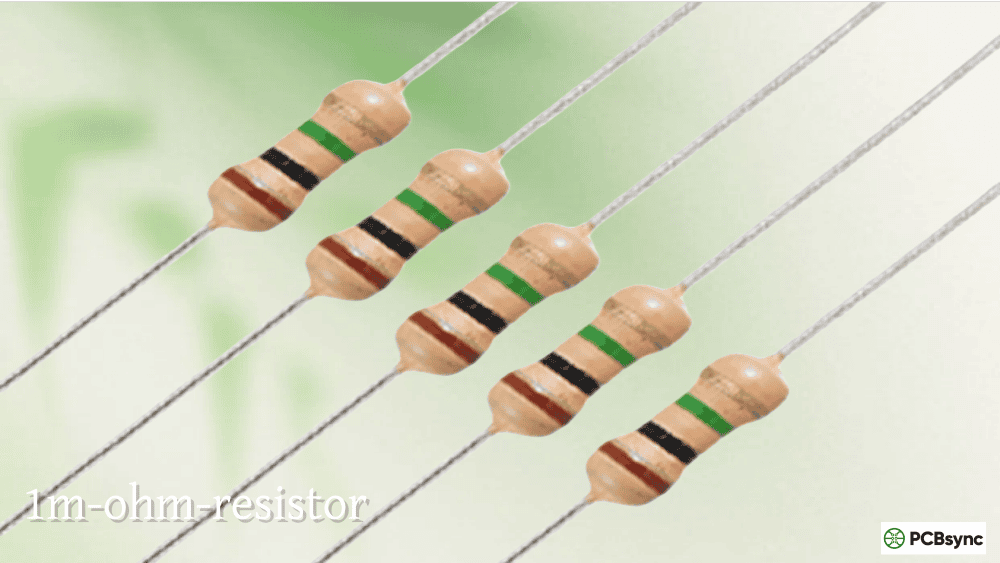
High Resistance (e.g., 1MΩ): Good for battery-powered devices to minimize “waste” current (leakage). However, high-impedance nodes are “antennas” for EMI/EMC noise and can lead to instability in high-speed circuits.
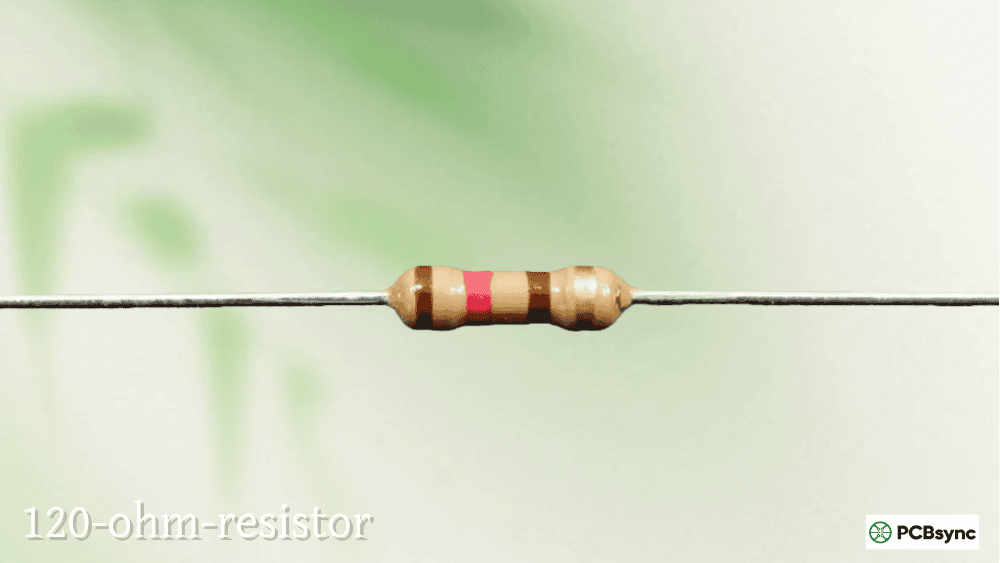
Low Resistance (e.g., 100Ω): Excellent noise immunity and high speed, but it draws significant current and generates heat ($P = V^2 / R$).
3. Power Dissipation and Thermal Management
Don’t forget to check the power rating of your SMD resistors (usually 1/10W or 1/16W for 0603 packages).
Parameter
Formula
Impact on Design
Total Current
$I = V_{in} / (R_1 + R_2)$
Affects battery life and thermal load.
Power at $R_1$
$P_{R1} = I^2 \cdot R_1$
Ensure this is < 50% of the resistor’s rating.
Tolerance
$V_{error} \approx Tol_{R1} + Tol_{R2}$
Use 0.1% or 1% resistors for precision analog.
Practical Applications in Circuit Design
Logic Level Shifting
One of the most common uses for voltage dividers is interfacing a 5V microcontroller (like an older Arduino) with a 3.3V sensor.
Vin: 5V
Target Vout: 3.3V
Selection: $R_1 = 1.7k\Omega$, $R_2 = 3.3k\Omega$ (or the closest standard E24 values like 1.8k and 3.3k).
Battery Voltage Monitoring
Microcontrollers cannot measure 12V or 24V directly on their pins. A voltage divider scales the battery voltage down to a range (e.g., 0-3V) that the ADC can handle.
Pro-Tip: When monitoring batteries, use high-value resistors (100kΩ+) and add a 0.1μF capacitor at the ADC pin to provide a “charge reservoir” for the ADC’s sampling capacitor.
Setting Voltage Regulator Outputs
Switching regulators (Buck/Boost) use a voltage divider in the feedback loop to set the output voltage. The “FB” (Feedback) pin usually targets a specific internal reference voltage (like 0.6V or 1.21V).
Quick Reference: Standard Resistor Ratios for Common Tasks
1. Can I use a voltage divider to power a motor or LED?
No. A voltage divider is meant for signals, not power. As soon as the load (motor/LED) draws significant current, the output voltage will collapse due to the loading effect. Use a voltage regulator (LDO or Buck converter) for power tasks.
2. Why is my measured $V_{out}$ lower than the calculated value?
This is almost always due to the input impedance of your multimeter or microcontroller. A standard multimeter has ~10MΩ impedance; if your divider uses 1MΩ resistors, the meter itself significantly alters the circuit.
3. What is the best resistor tolerance for voltage dividers?
For general logic shifting, 5% is fine. For ADC sensing or voltage regulators, 1% is the industry standard. For high-precision instrumentation, 0.1% thin-film resistors are used to minimize ratio drift over temperature.
4. How do I calculate a divider with three or more resistors?
The formula expands. The voltage across any resistor $R_n$ in a series string is:
$$V_{Rn} = V_{in} \cdot \frac{R_n}{R_{total}}$$
Where $R_{total}$ is the sum of all resistors in the series.
5. Can I use capacitors in a voltage divider?
Yes, in AC circuits, these are called capacitive voltage dividers. They work based on reactance ($X_C = 1 / (2\pi fC)$). They are commonly used in high-voltage sensing where DC power loss must be avoided.
Next Step: Would you like me to calculate the specific resistor values for your project based on the standard E24/E96 series to minimize your error?
Inquire: Call 0086-755-23203480, or reach out via the form below/your sales contact to discuss our design, manufacturing, and assembly capabilities.
Quote: Email your PCB files to Sales@pcbsync.com (Preferred for large files) or submit online. We will contact you promptly. Please ensure your email is correct.
Notes: For PCB fabrication, we require PCB design file in Gerber RS-274X format (most preferred), *.PCB/DDB (Protel, inform your program version) format or *.BRD (Eagle) format. For PCB assembly, we require PCB design file in above mentioned format, drilling file and BOM. Click to download BOM template To avoid file missing, please include all files into one folder and compress it into .zip or .rar format.