Inquire: Call 0086-755-23203480, or reach out via the form below/your sales contact to discuss our design, manufacturing, and assembly capabilities.
Quote: Email your PCB files to Sales@pcbsync.com (Preferred for large files) or submit online. We will contact you promptly. Please ensure your email is correct.
Notes: For PCB fabrication, we require PCB design file in Gerber RS-274X format (most preferred), *.PCB/DDB (Protel, inform your program version) format or *.BRD (Eagle) format. For PCB assembly, we require PCB design file in above mentioned format, drilling file and BOM. Click to download BOM template To avoid file missing, please include all files into one folder and compress it into .zip or .rar format.
Rotary Potentiometer: Engineering Insights into Working Principles & Industrial Applications
As a PCB engineer, I’ve seen many designers treat the rotary potentiometer as a simple “volume knob.” But if you’re designing high-fidelity audio equipment, industrial control panels, or precision medical instruments, you know it’s much more than that. It is a critical analog transducer that bridges the gap between human mechanical input and electronic control.
A rotary potentiometer is a three-terminal variable resistor where the resistance is changed by rotating a shaft. Unlike a fixed resistor, it allows for a dynamic voltage output, making it the standard choice for any interface requiring a range of values rather than a simple on/off state.
In this guide, we’ll look past the basic hobbyist tutorials and dive into the technical nuances of track materials, taper curves, and integration strategies for modern circuit design.
The Core Working Principle of a Rotary Potentiometer
The fundamental physics of a rotary potentiometer relies on the relationship between the length of a resistive element and its total resistance ($R = \rho \frac{L}{A}$).
Internally, the device contains a circular resistive track. Two terminals are connected to the ends of this track, while a third terminal (the wiper) is attached to a rotating shaft. As the shaft turns, the wiper slides along the resistive material.
The Voltage Divider Model
In 90% of engineering applications, we use the potentiometer as a voltage divider. When you apply a stable voltage ($V_{in}$) across the two outer pins, the wiper pin provides an output voltage ($V_{out}$) proportional to its angular position.
From a signal integrity perspective, the “sweet spot” for a rotary potentiometer is often 10k ohms. This value is low enough to drive the input of an Analog-to-Digital Converter (ADC) without causing significant impedance mismatch, yet high enough to minimize current consumption ($I = V/R$).
Anatomy and Component Breakdown
Understanding the bill of materials (BOM) for a potentiometer helps in selecting the right part for harsh environments.
1. The Resistive Track
The material of the track dictates the life expectancy and noise performance of the unit:
Carbon Composition: Most common and cost-effective. Good for general consumer electronics but prone to “crackle” (noise) as it wears.
Cermet (Ceramic-Metal): Highly stable with a low temperature coefficient. Ideal for “set-and-forget” trimmers on a PCB.
Conductive Plastic: The gold standard for professional audio and industrial sensing. It offers ultra-smooth rotation and a lifespan of millions of cycles.
Wire-wound: Used primarily in high-power applications where the resistor needs to dissipate significant heat.
2. The Wiper
The wiper is typically a precious metal brush or a carbon contact. In precision engineering, “Contact Resistance Variation” (CRV) is the metric we watch. A high CRV means the signal will jump or “jitter” as you turn the knob.
3. The Bushing and Shaft
The mechanical interface matters. For a PCB-mounted design, you must choose between “D-shaft,” “Knurled,” or “Plain” shafts to match your chosen knob’s internal diameter and set-screw type.
Types of Rotary Potentiometers
Not every rotary potentiometer is designed for the same task. We categorize them by their mechanical travel and their electrical taper.
Single-Turn vs. Multi-Turn
Single-Turn: Usually offers roughly 270° to 300° of rotation. Ideal for user interfaces where quick adjustments are needed.
Multi-Turn: These use a helical track and can rotate 3, 5, or 10 full circles. We use these in calibration circuits where sub-ohm precision is required.
Understanding Resistance Tapers
The “Taper” is the relationship between the mechanical position and the resistance percentage.
Taper Type
Label
Description
Best Application
Linear
B
Resistance changes at a constant rate.
Voltage division, sensors, light dimmers.
Logarithmic
A
Resistance changes slowly at first, then rapidly.
Audio volume (mimics human ear perception).
Anti-Log
C
The inverse of the log taper.
Specialized signal processing and EQ filters.
Dual-Gang and Switched Pots
Dual-Gang: Two independent potentiometer tracks controlled by a single shaft. Essential for stereo audio where you must adjust the Left and Right channels simultaneously.
Concentric: Two shafts in one (inner and outer), allowing two different parameters to be adjusted in the same footprint.
Switched: Includes an integrated SPST or DPDT switch at the beginning of the rotation (the “click” when you turn an old radio on).
Key Applications in Modern Electronics
1. Human-Machine Interface (HMI)
Even in the age of touchscreens, the rotary potentiometer remains the most intuitive way to control parameters like brightness, speed, and volume. The physical “hard stop” provides tactile feedback that a digital slider cannot replicate.
2. Position Sensing and Feedback
In robotics, a potentiometer can be coupled to a gear or joint to act as a position sensor. By reading the voltage at the wiper, the controller knows the exact angle of the robotic arm.
3. Audio Signal Processing
In the analog signal chain, potentiometers are used in voltage-controlled amplifiers (VCAs), gain stages, and passive crossovers. Here, “Noise Floor” and “Channel Matching” are the critical metrics.
4. Calibration and Trimming
On a PCB, “Trimpots” are used to fine-tune voltage regulators or op-amp offset voltages during the final testing phase of manufacturing.
Engineering Selection: How to Choose the Right Pot
If you’re writing a specification for a new product, don’t just put “10k Pot” on the BOM. Consider these electrical and mechanical constraints:
Rotational Life
Are you designing a volume knob that will be turned 50 times a day, or a calibration pot turned once a year?
Standard: 10,000 to 50,000 cycles.
High-End: 1,000,000+ cycles (Conductive Plastic).
Power Rating
Most rotary pots are rated for 0.05W to 0.5W. If you exceed this, the resistive track will delaminate or burn. For higher power, you should be looking at Rheostats, not potentiometers.
Tolerance and Linearity
A standard pot has a resistance tolerance of ±20%. If your circuit depends on the absolute resistance value (and not just the ratio), you will need to specify a precision pot with ±5% or better.
Total Resistance Choice
1k – 5k: Good for low-noise applications but increases power consumption.
10k: The industry standard for microcontrollers (Arduino/ESP32).
100k+: Used in high-impedance tube amplifiers but very susceptible to picking up 60Hz hum and EMI.
As parts age, they develop predictable failure modes. Here is how we diagnose them:
1. The “Dead Spot”
If the output signal drops to zero at a specific point in the rotation, the resistive track has likely been physically scratched or worn away at that spot.
Solution: Replace the unit. Cleaning will not fix a physical break in the track.
2. Scratchy Audio (Static)
This is caused by dust and oxidation buildup on the contact point of the wiper.
Solution: Use a non-residue contact cleaner. Rotate the shaft 20-30 times while wet to “scrub” the track.
3. Thermal Drift
In high-precision circuits, the resistance might change as the device heats up.
Solution: Switch from a carbon track to a Cermet or Wire-wound track with a better Temperature Coefficient of Resistance (TCR).
Useful Resources for Designers
Bourns Potentiometer Catalog: The industry standard for mechanical and electrical specifications.
ALPS Alpine Technical Data: Excellent resources for audio-grade component selection.
Octopart: A meta-search engine for checking the availability and lead times of different potentiometer series.
IEEE Component Standards: For understanding the environmental testing protocols for variable resistors.
Frequently Asked Questions (FAQs)
1. Can I use a rotary potentiometer to control a motor speed directly?
Generally, no. A potentiometer is a low-power signal device. To control a motor, the potentiometer should provide a signal to a PWM controller or a MOSFET. Running motor current through the wiper will burn the track instantly.
2. What is the difference between a Potentiometer and a Rotary Encoder?
A potentiometer is analog; it provides a variable voltage. A rotary encoder is digital; it provides a series of pulses as it turns and can rotate infinitely without stops.
3. How do I wire a potentiometer for an Arduino?
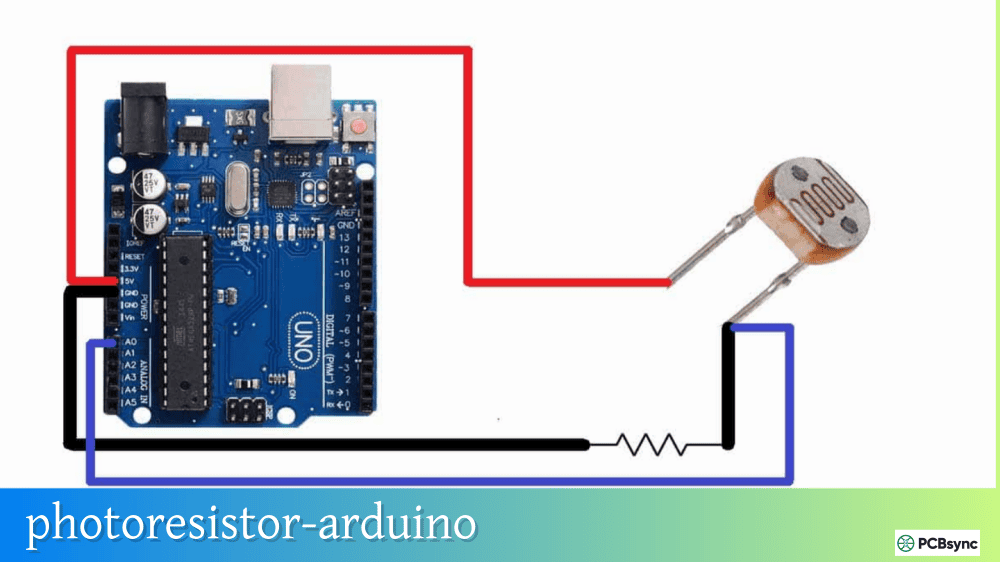
Connect Pin 1 to GND, Pin 3 to 5V, and Pin 2 (the wiper) to an analog input pin (like A0). This creates a 0-5V signal that the Arduino’s ADC can read.
4. Why are some pots so much more expensive than others?
Cost is driven by the track material (conductive plastic vs. carbon), the seal rating (IP67 for water resistance), and the mechanical precision (ball bearings vs. plastic bushings).
5. What does “Ganged” mean?
“Ganged” means multiple resistive tracks are stacked on top of each other, allowing one shaft to control multiple independent circuits simultaneously.
Final PCB Layout Tips
When placing a rotary potentiometer on your board, keep these “Engineer’s Rules” in mind:
Mechanical Stress: Ensure the mounting nut is tightened to the chassis, not just the PCB. This prevents the solder joints from cracking when a user turns the knob too hard against the stop.
Analog Grounding: Keep the analog signal traces away from high-speed digital lines (like SPI or I2C) to prevent noise injection into the wiper signal.
Bypass Capacitors: I always recommend a 100nF capacitor between the wiper and ground to filter out high-frequency “chatter” as the wiper moves.
By selecting the right taper, material, and resistance, you ensure that your user interface feels professional and remains reliable for the life of the product.
Inquire: Call 0086-755-23203480, or reach out via the form below/your sales contact to discuss our design, manufacturing, and assembly capabilities.
Quote: Email your PCB files to Sales@pcbsync.com (Preferred for large files) or submit online. We will contact you promptly. Please ensure your email is correct.
Notes: For PCB fabrication, we require PCB design file in Gerber RS-274X format (most preferred), *.PCB/DDB (Protel, inform your program version) format or *.BRD (Eagle) format. For PCB assembly, we require PCB design file in above mentioned format, drilling file and BOM. Click to download BOM template To avoid file missing, please include all files into one folder and compress it into .zip or .rar format.