Inquire: Call 0086-755-23203480, or reach out via the form below/your sales contact to discuss our design, manufacturing, and assembly capabilities.
Quote: Email your PCB files to Sales@pcbsync.com (Preferred for large files) or submit online. We will contact you promptly. Please ensure your email is correct.
Notes: For PCB fabrication, we require PCB design file in Gerber RS-274X format (most preferred), *.PCB/DDB (Protel, inform your program version) format or *.BRD (Eagle) format. For PCB assembly, we require PCB design file in above mentioned format, drilling file and BOM. Click to download BOM template To avoid file missing, please include all files into one folder and compress it into .zip or .rar format.
As a PCB engineer, I’ve seen countless designs where a board is cluttered with dozens of 0603 or 0402 discrete resistors. While discrete components have their place, relying on them for high-density digital buses or precision analog stages is often a “rookie” move. This is where the resistor network (or resistor array) becomes the secret weapon in your layout toolkit.
A resistor network isn’t just a handful of resistors crammed into one plastic housing. It is a strategically engineered component designed to improve thermal tracking, reduce parasitic inductance, and—most importantly—save your sanity during the pick-and-place assembly process.
In this guide, we will break down the engineering logic behind resistor networks, the various internal configurations you’ll encounter, and the precise criteria you need to use when selecting them for your next bill of materials (BOM).
What is a Resistor Network?
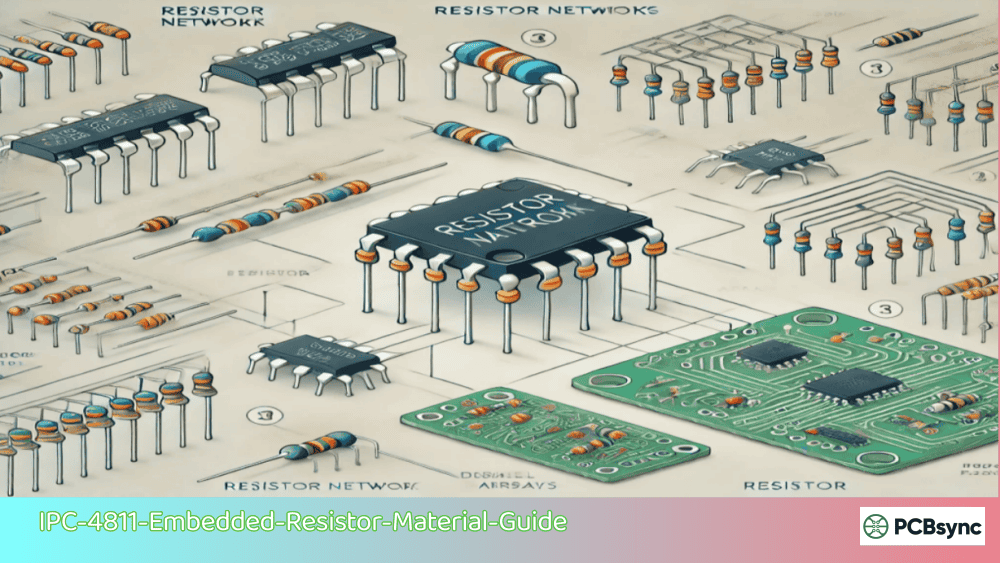
A resistor network is a single integrated package containing multiple resistive elements. These elements can be connected in various internal configurations—some sharing a common terminal and others completely isolated.
The Engineering Advantage
From a hardware perspective, the primary draw of a network over discrete resistors is matching. Because the resistors in a network are fabricated on the same ceramic or silicon substrate at the same time, they share almost identical electrical characteristics.
If the ambient temperature on your PCB rises, every resistor in the network drifts in the same direction at the same rate. This “TCR Tracking” (Temperature Coefficient of Resistance) is nearly impossible to achieve with discrete resistors from different manufacturing batches.
Choosing the right resistor network starts with the internal schematic. You can’t just grab an “8-pin network” and hope for the best; the internal “circuit type” is what dictates its function.
1. Isolated Resistor Networks
In this configuration, each resistor is completely independent. An 8-pin package would typically contain four individual resistors.
Best for: Terminating high-speed differential pairs or providing gate resistors for multiple MOSFETs where crosstalk must be minimized.
2. Bussed (Common) Resistor Networks
One end of every resistor is tied to a single “common” pin (usually Pin 1, marked by a dot).
Best for: Pull-up or pull-down resistors for microcontrollers and FPGA I/O banks. You tie the common pin to $V_{CC}$ or $GND$, saving you from routing dozens of individual traces to a power plane.
3. Dual-Terminator (Thevenin) Networks
These are specialized networks containing pairs of resistors connected in series between two common rails ($V_{CC}$ and $GND$), with the junction brought out to a pin.
Best for: Proper bus termination in legacy systems like SCSI or high-speed PECL logic.
4. R-2R Ladder Networks
A very specific arrangement of “R” and “2R” resistance values.
Best for: Simple, low-cost Digital-to-Analog Converters (DACs).
Configuration Summary Table
Network Type
Internal Connections
Typical Pin Count
Primary Use Case
Isolated
Independent elements
4, 8, 16
Signal damping, MOSFET gates
Bussed
All share one common pin
6, 8, 10
Pull-up/Pull-down resistors
Dual Terminator
Two resistors per pin
16, 20
High-speed bus termination
R-2R Ladder
Specific binary ratios
10, 16
Discrete DAC circuits
Critical Selection Criteria for Engineers
When you’re scrolling through DigiKey or Mouser, don’t just filter by resistance. To ensure your design doesn’t fail in the field, you need to look at these “Pro” specs:
1. TCR Tracking (The “Killer” Spec)
As mentioned, the absolute Temperature Coefficient of Resistance (TCR) tells you how much the value drifts ($ppm/°C$). However, for a resistor network, the TCR Tracking is what matters. A network might have an absolute TCR of $100\ ppm/°C$, but a tracking TCR of only $5\ ppm/°C$. This means the ratio between the resistors stays almost perfect, even if the absolute values drift.
2. Power Dissipation (Per Element vs. Per Package)
This is a common trap. A network might be rated for 0.5W total, but each individual resistor might only handle 0.063W. If you run one resistor at 0.4W, you will melt the package, even though you are below the “Total Power” limit.
3. Package Style (SIP vs. DIP vs. SMD)
SIP (Single In-line Package): Through-hole, stands vertically. Great for saving board space but terrible for vibration-prone environments.
DIP (Dual In-line Package): The classic “chip” look. Easy to hand-solder for prototypes.
SMD (Surface Mount): The industry standard. Look for “Convex” vs “Concave” terminations. Convex is generally easier to inspect visually after soldering.
4. Crosstalk and Parasitics
In high-frequency designs ($>100\ MHz$), the capacitive coupling between adjacent resistors in a network can introduce noise. If you’re working with ultra-fast signals, isolated discrete resistors or specialized high-frequency thin-film networks are mandatory.
Real-World Applications
Pull-Up Resistors for Data Buses
If you have an $I^2C$ bus or an 8-bit data bus, using a bussed resistor network is a no-brainer. It cleans up the layout and ensures all lines have a consistent pull-up strength.
Op-Amp Gain Stages
For an inverting amplifier, the gain is defined by the ratio $R_{f} / R_{in}$. Using a matched resistor pair in a single SOT-23 or SOIC package ensures that your gain stays stable even as the equipment heats up.
LED Current Limiting
When driving an 8-segment display, a resistor network ensures every segment has the exact same brightness because the resistance values are matched far better than random $5\%$ discrete chips.
Vishay/Dale Resistor Guide: The industry bible for film and network technologies.
TI Precision Labs: Excellent video series on why resistor matching matters for analog signal chains.
Ultra Librarian / SnapEDA: Essential for downloading verified CAD footprints for 16-pin SOIC networks.
EIA Standard E-Series Tables: Database for standard resistance values (E24, E96, etc.).
Frequently Asked Questions (FAQs)
1. Why use a resistor network instead of 4 individual resistors?
Aside from saving PCB space, the resistors in a network are thermally coupled. If one gets hot, they all get hot, maintaining their relative resistance ratios. It also reduces your BOM line items and “pick-and-place” costs.
2. What is the difference between a resistor array and a resistor network?
In modern terminology, they are mostly interchangeable. However, an “array” often refers to a simple set of identical resistors (like a 4x10k isolated pack), while a “network” can imply more complex internal interconnections like dividers or ladders.
3. Can I use a resistor network for high-power applications?
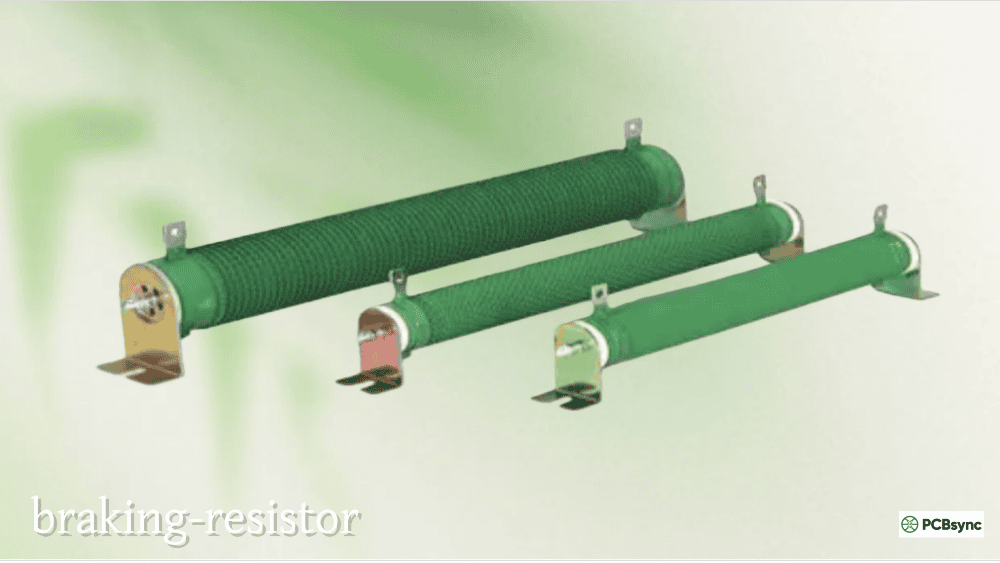
Generally, no. Most networks are designed for signal-level currents (milliamps). If you need to dissipate several watts, you should stick to discrete wire-wound or power-film resistors with dedicated heat sinks.
4. What happens if one resistor in the network fails?
If one element goes “open,” the entire package usually needs to be replaced. This is the one downside of networks—you can’t just swap a single tiny resistor; you have to desolder the whole multi-pin component.
5. Are resistor networks more expensive?
On a “per-resistor” basis, they are slightly more expensive than the cheapest 0402 chips. However, when you factor in the reduced cost of assembly (one “pick” instead of eight) and the smaller PCB size, the resistor network often results in a lower total system cost.
Inquire: Call 0086-755-23203480, or reach out via the form below/your sales contact to discuss our design, manufacturing, and assembly capabilities.
Quote: Email your PCB files to Sales@pcbsync.com (Preferred for large files) or submit online. We will contact you promptly. Please ensure your email is correct.
Notes: For PCB fabrication, we require PCB design file in Gerber RS-274X format (most preferred), *.PCB/DDB (Protel, inform your program version) format or *.BRD (Eagle) format. For PCB assembly, we require PCB design file in above mentioned format, drilling file and BOM. Click to download BOM template To avoid file missing, please include all files into one folder and compress it into .zip or .rar format.