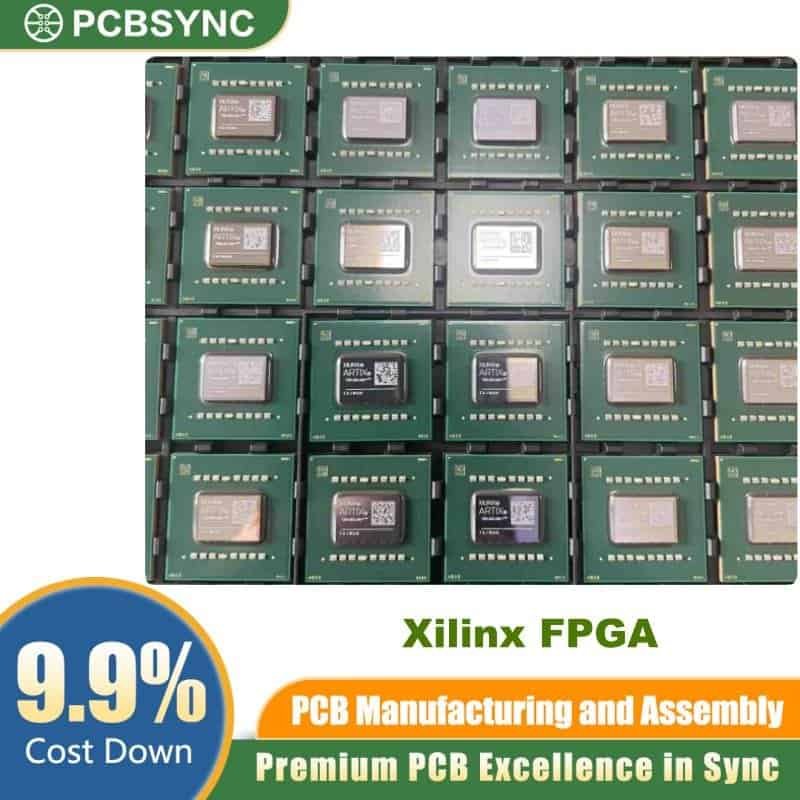
Overview of XC5210-4PC84C Field Programmable Gate Array
The XC5210-4PC84C is a versatile Field Programmable Gate Array (FPGA) from AMD Xilinx’s XC5200 family, designed to deliver exceptional performance for complex digital circuit implementations. This SRAM-based reprogrammable logic device features 1,296 logic cells organized within an advanced VersaBlock architecture, making it an ideal solution for industrial automation, telecommunications, and embedded system applications.
As part of the renowned Xilinx FPGA product line, the XC5210-4PC84C combines flexibility with robust performance characteristics, enabling engineers to implement custom logic functions with minimal time-to-market.
Key Specifications and Technical Features
Core Performance Specifications
| Specification |
Details |
| Part Number |
XC5210-4PC84C |
| Manufacturer |
AMD (formerly Xilinx Inc.) |
| Product Family |
XC5200 FPGA Series |
| Logic Cells |
1,296 Cells |
| Gate Count |
16,000 Gates |
| Speed Grade |
-4 (Standard Performance) |
| Package Type |
84-Pin PLCC (Plastic Leaded Chip Carrier) |
| User I/O Pins |
65 I/O Pins |
| Operating Voltage |
5V |
| Operating Temperature |
0°C to +85°C (Commercial Grade) |
| Technology Node |
0.5μm CMOS Process |
| Architecture |
SRAM-Based Reprogrammable |
Advanced Architectural Features
| Feature |
Description |
| VersaBlock Logic Module |
Enhanced logic density with integrated local interconnect |
| VersaRing I/O Interface |
Flexible I/O configuration for diverse interface requirements |
| Local Interconnect Matrix (LIM) |
Optimized routing resources for reduced propagation delays |
| Direct Connect Routing |
Fast neighbor-to-neighbor CLB connections |
| 3-State Buffers |
On-chip bus implementation capability |
| Block RAM |
Integrated memory resources for data storage |
| Configuration Options |
Multiple programming modes including serial and parallel |
Detailed Product Description
What Makes the XC5210-4PC84C Unique?
The XC5210-4PC84C represents a significant advancement in FPGA technology from the late 1990s era, incorporating lessons learned from three previous generations of Xilinx FPGA families. Despite being classified as a legacy component not recommended for new designs, this device continues to serve critical roles in maintaining existing systems and applications where proven reliability is paramount.
The device’s VersaBlock architecture creates a “sea of logic cells” approach, where each Configurable Logic Block (CLB) is surrounded by two types of local interconnect. This hierarchical routing structure minimizes the use of general-purpose interconnect resources, resulting in faster implementation speeds and more predictable timing characteristics.
Package and Pin Configuration
The 84-pin PLCC package (PC84C designation) provides a compact footprint suitable for space-constrained applications. The package features:
- 50 User I/O Pins for application-specific connections
- 34 Additional Pins dedicated to configuration, power supply, and ground
- J-Lead Package Style for reliable surface-mount assembly
- Ceramic or Plastic Options depending on application requirements
Speed Grade Analysis
The -4 speed grade indicates standard performance characteristics within the XC5200 family. While not the fastest variant (which would be -3), the -4 grade offers an excellent balance between performance and cost-effectiveness for applications that don’t require maximum clock frequencies.
| Speed Grade |
Maximum Frequency |
Typical Applications |
| -3 |
Highest (Premium) |
Time-critical signal processing |
| -4 |
Standard |
General-purpose digital design |
| -5/-6 |
Lower Cost |
Cost-sensitive applications |
Application Areas and Use Cases
Industrial Control Systems
The XC5210-4PC84C excels in industrial automation environments where its reprogrammable nature allows for:
- Custom protocol implementations
- Motor control algorithms
- Sensor interface circuits
- PLC (Programmable Logic Controller) expansion modules
Telecommunications Equipment
Telecommunications applications benefit from the FPGA’s capabilities in:
- Protocol conversion and bridging
- Custom interface development
- Signal conditioning circuits
- Legacy system maintenance and upgrades
Embedded System Integration
Embedded designers utilize this FPGA for:
- Hardware acceleration of specific algorithms
- Custom peripheral interfaces
- Glue logic replacement
- Prototyping and proof-of-concept development
Legacy System Support
Many existing installations rely on the XC5210-4PC84C for:
- Replacement parts for critical infrastructure
- Long-term product lifecycle support
- Maintaining operational continuity
- Avoiding costly redesign projects
Design and Development Support
Software Compatibility
The XC5210-4PC84C is supported through Xilinx’s development tools, including:
| Tool/Method |
Purpose |
Platform Support |
| ABEL |
Design entry and synthesis |
DOS/Windows |
| Schematic Capture |
Graphical design entry |
Workstation/PC |
| VHDL |
Hardware description language |
Multi-platform |
| Verilog HDL |
Alternative HDL synthesis |
Multi-platform |
| XACTstep |
Timing analysis and place & route |
Workstation/PC |
Configuration Methods
The device supports multiple configuration approaches:
- Serial Configuration Mode – Minimal pin count, ideal for microcontroller-based systems
- Parallel Configuration Mode – Faster configuration for quick reconfiguration scenarios
- Express Mode – Accelerated configuration for daisy-chain applications
- Master/Slave Modes – Flexible multi-device configuration topologies
Comparison with Related Products
XC5200 Family Variants
| Part Number |
Logic Cells |
I/O Pins |
Package |
Speed Grade |
| XC5202 |
324 |
– |
Various |
-3 to -6 |
| XC5204 |
648 |
– |
Various |
-3 to -6 |
| XC5206 |
972 |
– |
Various |
-3 to -6 |
| XC5210 |
1,296 |
65 |
84-PLCC |
-4 |
| XC5215 |
1,620 |
– |
Various |
-5 to -6 |
Procurement and Availability Considerations
Current Market Status
While the XC5210-4PC84C is classified as “not recommended for new designs” by AMD Xilinx, the component remains available through:
- Authorized Distributors maintaining legacy inventory
- Electronic Component Brokers specializing in obsolete parts
- Aftermarket Suppliers supporting long-lifecycle products
- Direct Manufacturer Stock (limited quantities)
Quality and Authenticity Verification
When sourcing XC5210-4PC84C units, ensure:
- Genuine AMD/Xilinx Components – Verify manufacturer markings and date codes
- Proper Storage Conditions – Components should be moisture-barrier packaged
- Traceability Documentation – Request certificates of conformance
- Warranty Coverage – Minimum 12-month warranty from reputable suppliers
Installation and Implementation Guidelines
PCB Design Recommendations
For optimal performance when designing with the XC5210-4PC84C:
| Design Aspect |
Recommendation |
| Power Supply Decoupling |
0.1μF and 10μF capacitors near each power pin |
| Signal Integrity |
Controlled impedance traces for high-speed signals |
| Thermal Management |
Adequate airflow or heatsink for continuous operation |
| Configuration Circuit |
Follow Xilinx application notes for mode selection |
| I/O Standards |
Compatible with TTL and 5V CMOS logic levels |
Programming and Configuration Best Practices
- Initial Device Programming – Use Xilinx-compatible programmers
- Configuration Data Security – Implement readback protection if required
- Power Sequencing – Follow recommended power-up sequences
- In-System Programming – Design JTAG access for field updates
Technical Support and Resources
Documentation and Datasheets
Essential resources for working with the XC5210-4PC84C include:
- Product Datasheet – Complete electrical specifications
- User Guide – Detailed architecture description
- Application Notes – Design best practices
- Reference Designs – Example implementations
- Errata Documents – Known issues and workarounds
Alternative and Cross-Reference Parts
For new designs or modernization projects, consider these alternatives:
- Modern Xilinx FPGAs – Artix, Spartan, or Kintex families
- Altera/Intel Alternatives – Cyclone or MAX series
- Lattice Solutions – iCE40 or MachXO families
- CPLD Alternatives – For simpler logic implementations
Frequently Asked Questions
What is the difference between XC5210-4PC84C and XC5210-5PC84C?
The primary difference lies in the speed grade. The -4 variant offers better performance (faster timing) compared to the -5 variant, making it suitable for applications requiring higher clock frequencies or tighter timing constraints.
Is the XC5210-4PC84C RoHS compliant?
As a legacy product from the 1990s era, original production units are not RoHS compliant. However, some suppliers may offer RoHS-compatible variants or substitutes for applications requiring environmental compliance.
Can the XC5210-4PC84C be used in automotive applications?
The commercial temperature grade (0°C to +85°C) makes this device suitable for some automotive applications. However, for critical automotive systems, industrial-grade (-40°C to +85°C) or automotive-qualified components are recommended.
What development tools are required?
Legacy Xilinx ISE software (version 8.2i or earlier) is typically required. Modern Vivado tools do not support the XC5200 family. The software runs on Windows, Linux, and older Unix workstations.
How long will the XC5210-4PC84C remain available?
As a discontinued product, availability depends on existing distributor inventory and aftermarket stock. For long-term projects, consider purchasing lifetime quantities or planning migration to current-generation FPGAs.
Conclusion: When to Choose the XC5210-4PC84C
The XC5210-4PC84C FPGA remains a valuable component for:
- Legacy System Maintenance – Supporting existing installations
- Replacement Applications – Direct drop-in replacements
- Educational Projects – Learning FPGA fundamentals
- Cost-Sensitive Designs – Budget-constrained applications
- Proven Designs – Where reliability history is critical
While not recommended for new product development, the XC5210-4PC84C continues to serve important roles in maintaining operational systems worldwide. Its robust architecture, proven reliability, and availability through aftermarket channels ensure continued support for applications where redesign costs exceed component availability concerns.
For modern development projects, explore the current Xilinx FPGA portfolio, which offers significantly enhanced performance, lower power consumption, and advanced features while maintaining the programmable logic flexibility that made the XC5200 family successful.