Inquire: Call 0086-755-23203480, or reach out via the form below/your sales contact to discuss our design, manufacturing, and assembly capabilities.
Quote: Email your PCB files to Sales@pcbsync.com (Preferred for large files) or submit online. We will contact you promptly. Please ensure your email is correct.
Notes: For PCB fabrication, we require PCB design file in Gerber RS-274X format (most preferred), *.PCB/DDB (Protel, inform your program version) format or *.BRD (Eagle) format. For PCB assembly, we require PCB design file in above mentioned format, drilling file and BOM. Click to download BOM template To avoid file missing, please include all files into one folder and compress it into .zip or .rar format.
500 Ohm Resistor: Complete Guide to Color Code, Specifications & Practical Applications
I’ve been working with resistors for over 15 years as a PCB design engineer, and the 500 ohm resistor remains one of those components that shows up constantly across different projects. Whether you’re building a sensor interface, designing a current-limiting circuit, or working on industrial 4-20mA loops, understanding this resistor inside and out will save you debugging time and prevent costly design mistakes.
In this guide, I’ll walk you through everything you need to know about the 500 ohm resistor, from reading its color bands to selecting the right type for your specific application.
A 500 ohm resistor is a passive electronic component that provides exactly 500 ohms of electrical resistance to current flow. This fixed resistance value makes it useful for controlling current levels, dividing voltages, and protecting sensitive components in your circuits.
Here’s something most articles won’t tell you: the 500 ohm value sits in an interesting spot on the E-series scale. It’s not part of the common E24 series (which includes standard 5% tolerance values like 470Ω and 510Ω), but it is available in the E96 series for precision 1% applications. This means when you’re sourcing components, you’ll typically find 500 ohm resistors in the precision category.
Key Specifications of the 500 Ohm Resistor
Specification
Common Values
Resistance
500Ω (exactly)
Tolerance
±1%, ±2%, ±5%, ±10%
Power Rating
1/8W, 1/4W, 1/2W, 1W, 2W, 5W+
Temperature Coefficient
50-250 ppm/°C (typical)
Package Types
Axial (through-hole), SMD (0402-2512)
Composition
Carbon film, Metal film, Wirewound, Thick film, Thin film
500 Ohm Resistor Color Code Explained
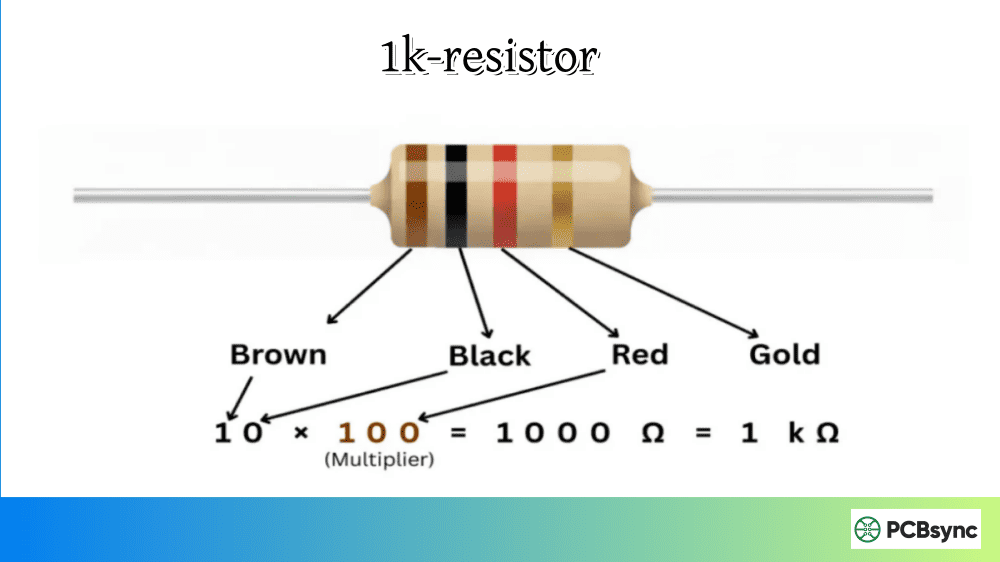
Reading resistor color codes is fundamental for any engineer or hobbyist. The 500 ohm resistor color code follows the international standard defined in IEC 60062, using colored bands to indicate the resistance value and tolerance.
4-Band 500 Ohm Resistor Color Code
The most common configuration you’ll encounter on through-hole resistors uses four bands:
Band Position
Color
Value
1st Band (First Digit)
Green
5
2nd Band (Second Digit)
Black
0
3rd Band (Multiplier)
Brown
×10
4th Band (Tolerance)
Gold
±5%
Reading: 5 + 0 = 50 × 10 = 500Ω ±5%
With a 5% tolerance, your actual resistance will fall between 475Ω and 525Ω.
5-Band 500 Ohm Resistor Color Code (Precision)
Five-band resistors offer greater precision with three significant digits:
Band Position
Color (±5% Tolerance)
Color (±1% Tolerance)
1st Band
Green
Green
2nd Band
Black
Black
3rd Band
Black
Black
4th Band (Multiplier)
Black
Black
5th Band (Tolerance)
Gold
Brown
Reading: 5 + 0 + 0 = 500 × 1 = 500Ω
The key difference here is the extra significant digit and the tighter tolerance options available with 5-band resistors.
6-Band 500 Ohm Resistor Color Code
For applications requiring temperature stability, 6-band resistors add a temperature coefficient indicator:
Band
Color
Meaning
1st-5th
Green-Black-Black-Black-Gold
500Ω ±5%
6th Band
Black
250 ppm/K
6th Band
Brown
100 ppm/K
6th Band
Red
50 ppm/K
Quick Color Reference Table
For rapid identification, here’s the complete color-to-number reference you’ll need:
Color
Digit Value
Multiplier
Tolerance
Black
0
×1
–
Brown
1
×10
±1%
Red
2
×100
±2%
Orange
3
×1,000
–
Yellow
4
×10,000
–
Green
5
×100,000
±0.5%
Blue
6
×1,000,000
±0.25%
Violet
7
–
±0.1%
Gray
8
–
±0.05%
White
9
–
–
Gold
–
×0.1
±5%
Silver
–
×0.01
±10%
Types of 500 Ohm Resistors
Choosing the right resistor type for your application matters more than most engineers realize. I’ve seen projects fail simply because someone grabbed a carbon composition resistor for a precision measurement circuit. Here’s what you need to know about each type:
Through-Hole Resistors
Through-hole 500 ohm resistors come in two main configurations:
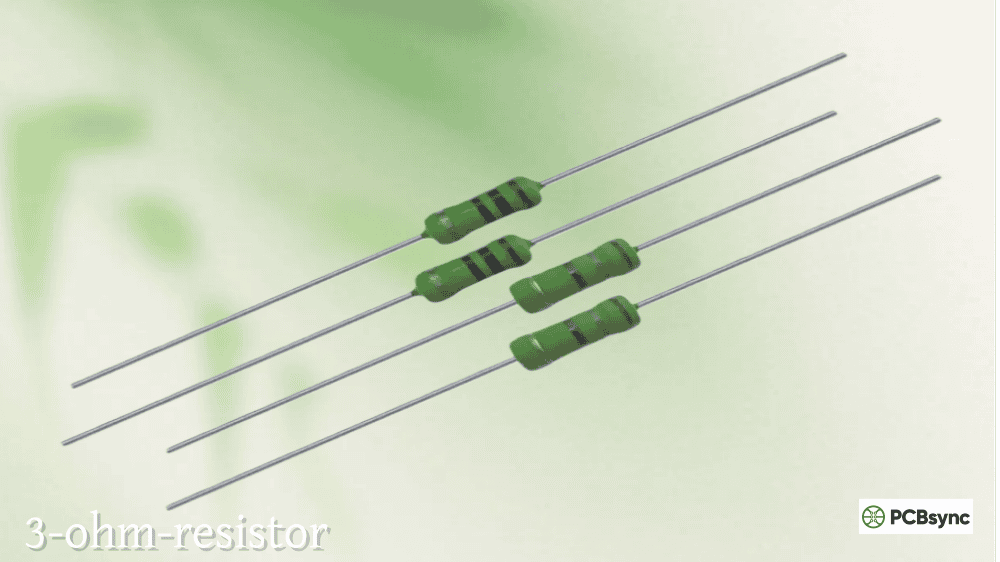
Axial Lead Resistors: These are the classic cylindrical resistors with leads extending from both ends. They’re perfect for prototyping, hand soldering, and applications where you need easy replacement. Power ratings typically range from 1/8W to 2W for standard sizes.
Radial Lead Resistors: Both leads exit from the same end, which can save board space in certain PCB layouts. Less common but useful for specific mounting requirements.
Surface Mount Resistors (SMD)
Modern electronics predominantly use surface mount 500 ohm resistors. The package size directly affects power handling capability:
Package Size
Dimensions (mm)
Typical Power Rating
0201
0.6 × 0.3
1/20W (0.05W)
0402
1.0 × 0.5
1/16W (0.063W)
0603
1.6 × 0.8
1/10W (0.1W)
0805
2.0 × 1.25
1/8W (0.125W)
1206
3.2 × 1.6
1/4W (0.25W)
2010
5.0 × 2.5
1/2W (0.5W)
2512
6.4 × 3.2
1W
By Construction Material
Metal Film Resistors: My go-to choice for most precision applications. They offer excellent stability, low noise, and tight tolerances (down to ±0.1%). Temperature coefficients of 25-100 ppm/°C make them suitable for measurement circuits.
Carbon Film Resistors: Cost-effective option for general-purpose applications. Higher noise and wider tolerances (±5% typical), but perfectly adequate for LED current limiting or basic voltage dividers.
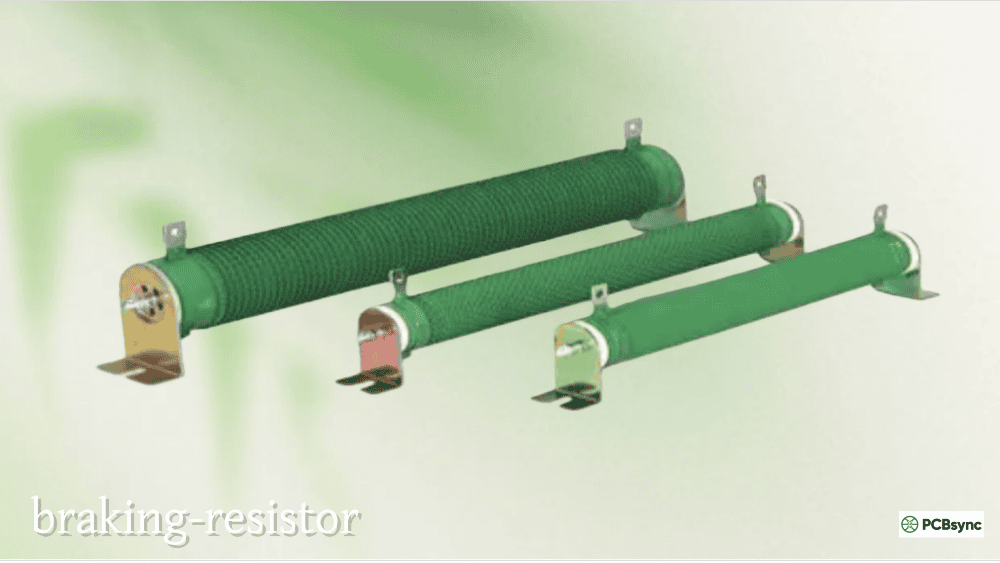
Wirewound Resistors: When you need to dissipate serious power (5W and above), wirewound is your answer. The 500 ohm wirewound resistors handle surge currents well and maintain accuracy under load. Watch out for inductance in high-frequency applications, though.
Thick Film Resistors: The dominant technology for SMD resistors. Good balance of cost, accuracy, and availability. Most 0603 and 0805 500 ohm resistors you’ll find are thick film.
Thin Film Resistors: Premium option for precision applications. Tighter tolerances and better temperature stability than thick film, but at a higher price point.
Common Applications for 500 Ohm Resistors
Over the years, I’ve used 500 ohm resistors in dozens of different circuit configurations. Here are the applications where they really shine:
Industrial 4-20mA Current Loop Conversion
This is where the 500 ohm resistor truly earns its keep. In industrial automation, 4-20mA current loops are standard for transmitting sensor data. A 500 ohm resistor converts this current signal to a voltage:
Voltage calculation using Ohm’s Law (V = I × R):
At 4mA: V = 0.004A × 500Ω = 2V
At 20mA: V = 0.020A × 500Ω = 10V
This produces a clean 2-10V signal that’s directly compatible with most ADC inputs and PLCs. The precision of your 500 ohm resistor directly affects measurement accuracy here, so I always specify 1% tolerance or better for these applications.
Current Limiting for LEDs and Components
A 500 ohm resistor limits current effectively in many LED circuits. For a typical 5V supply with a 2V red LED:
Current = (5V – 2V) / 500Ω = 6mA
This provides a conservative current level that works for indicator LEDs while extending their lifespan significantly.
Voltage Divider Circuits
When paired with another 500 ohm resistor, you get a perfect 50% voltage divider. Combine it with other values to create precise reference voltages for comparators, ADC inputs, or bias networks.
Audio Equipment and Impedance Matching
In audio circuits, 500 ohm resistors appear in:
Headphone amplifier output networks
Microphone preamp biasing
Line-level signal conditioning
Feedback networks in op-amp stages
Sensor Interface Circuits
Temperature sensors, pressure transducers, and other analog sensors often require precise load resistors for proper operation. A 500 ohm resistor can set the operating point or provide signal conditioning.
Pull-Up and Pull-Down Configurations
While not the most common value for pull-up resistors, 500 ohms works well in scenarios requiring faster rise times or when interfacing with lower-impedance bus systems.
IEC 60062: International standard for resistor color codes
EIA E-series: Standard resistor value definitions
Frequently Asked Questions
What is the color code for a 500 ohm resistor?
A 4-band 500 ohm resistor with ±5% tolerance has the color code: Green-Black-Brown-Gold. For a 5-band precision resistor with ±1% tolerance, the code is: Green-Black-Black-Black-Brown. The green band represents 5, black represents 0, brown is the ×10 multiplier, and the final band indicates tolerance.
Is 500 ohms a standard resistor value?
The 500 ohm value is not part of the common E24 series (5% tolerance), where the nearest values are 470Ω and 510Ω. However, 500 ohms is available in the E96 series used for precision 1% tolerance resistors. Many manufacturers still produce 500 ohm resistors due to industrial demand, especially for 4-20mA current loop applications.
How do I create 500 ohms if I can’t find one?
The easiest method is connecting two 1kΩ resistors in parallel, which gives exactly 500Ω. Alternatively, use two 250Ω resistors in series. Both approaches use common E24 values that are readily available at any electronics supplier.
What power rating do I need for a 500 ohm resistor?
Calculate the power using P = I²R or P = V²/R, then choose a resistor rated at least 2× your calculated value for reliability. For example, with 10mA current flow, power dissipation is 50mW, so a 1/8W (125mW) resistor provides adequate margin. For industrial applications with 20mA current, the power reaches 200mW, requiring at least a 1/2W rating.
Can I use a 470 ohm or 510 ohm resistor instead of 500 ohms?
In many applications, yes. A 470Ω resistor is 6% lower than 500Ω, and 510Ω is 2% higher. For current limiting or general voltage division where small variations are acceptable, either works fine. However, for precision measurement circuits or when interfacing with equipment calibrated for exactly 500Ω, stick with the specified value.
Final Thoughts
The 500 ohm resistor may seem like a simple component, but understanding its color code, selecting the right type, and knowing its applications separates good designs from great ones. Whether you’re converting industrial current loops, protecting LEDs, or building precision measurement circuits, this guide should give you the foundation to use 500 ohm resistors confidently in your projects.
Remember to always verify your resistors before installation, derate for power, and consider temperature effects in precision applications. And when in doubt, check the datasheet—it’s there for a reason.
Inquire: Call 0086-755-23203480, or reach out via the form below/your sales contact to discuss our design, manufacturing, and assembly capabilities.
Quote: Email your PCB files to Sales@pcbsync.com (Preferred for large files) or submit online. We will contact you promptly. Please ensure your email is correct.
Notes: For PCB fabrication, we require PCB design file in Gerber RS-274X format (most preferred), *.PCB/DDB (Protel, inform your program version) format or *.BRD (Eagle) format. For PCB assembly, we require PCB design file in above mentioned format, drilling file and BOM. Click to download BOM template To avoid file missing, please include all files into one folder and compress it into .zip or .rar format.