Inquire: Call 0086-755-23203480, or reach out via the form below/your sales contact to discuss our design, manufacturing, and assembly capabilities.
Quote: Email your PCB files to Sales@pcbsync.com (Preferred for large files) or submit online. We will contact you promptly. Please ensure your email is correct.
Notes: For PCB fabrication, we require PCB design file in Gerber RS-274X format (most preferred), *.PCB/DDB (Protel, inform your program version) format or *.BRD (Eagle) format. For PCB assembly, we require PCB design file in above mentioned format, drilling file and BOM. Click to download BOM template To avoid file missing, please include all files into one folder and compress it into .zip or .rar format.
270 Ohm Resistor: Complete Guide to Color Code & Applications
Last week during a client board bring-up, we had intermittent LED brightness issues across a panel of 50 indicator LEDs. The schematic called for 270 ohm resistors, but someone in procurement had substituted 220Ω parts to “save inventory space.” That 50Ω difference—less than 20%—was enough to overdrive the LEDs and reduce their expected lifespan from 50,000 hours to maybe 10,000. This is why I’m particular about resistor values, especially the mid-range ones like 270Ω that get less attention than the “standard” 10kΩ or 100Ω everybody knows.
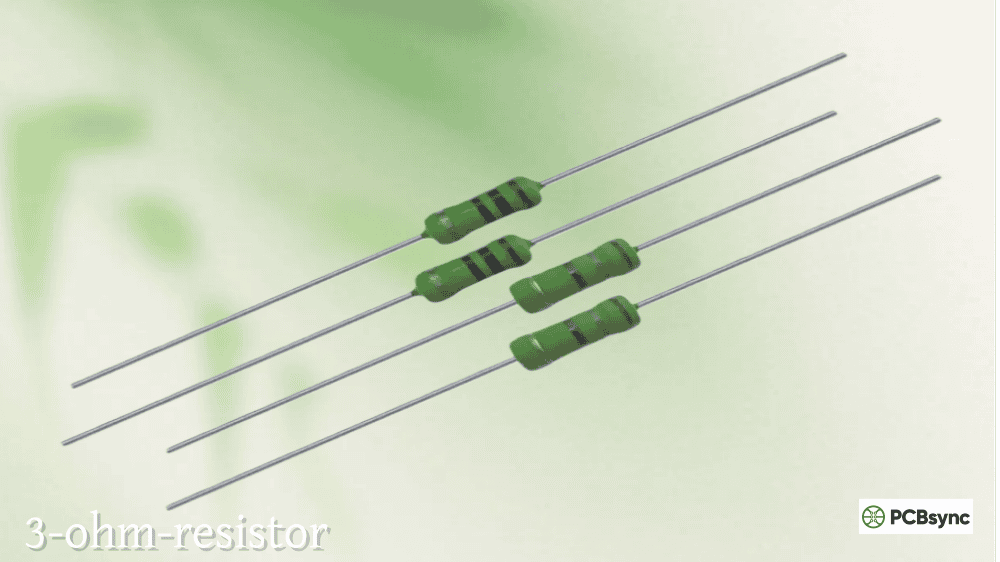
A 270 ohm resistor provides exactly 270Ω of resistance to current flow in a circuit. It’s a standard E12 and E24 series value, sitting between 220Ω and 330Ω in the progression. While it might seem like just another resistor value, the 270 ohm resistor has carved out specific niches in electronic design where its resistance value hits a sweet spot for common applications.
The 270Ω value isn’t random—it’s mathematically positioned in the logarithmic spacing of standard resistor values. This spacing ensures that designers have appropriate resistance choices across every decade without requiring infinite variety. The E12 series provides 12 values per decade with approximately 10% spacing, making 270Ω a natural choice between its neighbors.
Practical Resistance Range
At 270Ω, you’re working in a range that’s:
Low enough to allow meaningful current flow (tens of milliamps)
High enough to provide significant voltage drop
Perfect for LED current limiting with 5V supplies
Ideal for low-to-medium impedance signal conditioning
Calculate the current through a 270 ohm resistor at 5V: I = V/R = 5V / 270Ω = 18.5mA. That’s in the sweet spot for driving standard indicator LEDs without additional circuitry.
Decoding the 270 Ohm Resistor Color Code
Being able to instantly recognize resistor color codes saves countless hours during assembly, debugging, and repair work. The 270 ohm resistor has a distinctive color pattern you’ll learn to spot immediately.
4-Band 270 Ohm Color Code
Band Position
Color
Meaning
Value
1st Band
Red
First Digit
2
2nd Band
Violet
Second Digit
7
3rd Band
Brown
Multiplier
×10
4th Band
Gold
Tolerance
±5%
The standard color sequence is Red-Violet-Brown-Gold. Reading left to right: Red (2) and Violet (7) give you “27”, multiply by Brown (10) to get 270Ω, and Gold indicates ±5% tolerance (256.5Ω to 283.5Ω).
Here’s a pro tip from the field: The violet band on 270Ω resistors can look purple, blue, or even grayish depending on the manufacturer and lighting conditions. I’ve seen experienced techs misread violet as blue (6) and think they had a 260Ω resistor. When in doubt, measure with a multimeter—it takes two seconds and prevents expensive mistakes.
5-Band Precision 270 Ohm Code
Band Position
Color
Meaning
Value
1st Band
Red
First Digit
2
2nd Band
Violet
Second Digit
7
3rd Band
Black
Third Digit
0
4th Band
Black
Multiplier
×1
5th Band
Brown
Tolerance
±1%
For precision applications, the 5-band version (Red-Violet-Black-Black-Brown) provides ±1% tolerance: 267.3Ω to 272.7Ω. This tighter spec matters in precision analog circuits, instrumentation, and audio applications where component matching affects performance.
I stock both ±5% and ±1% tolerances. For LED current limiting and general purpose work, ±5% is perfectly adequate. Save the expensive ±1% parts for circuits where tolerance actually impacts functionality—like precision current sources, matched transistor biasing, or high-quality audio stages.
6-Band High-Reliability Code
Band Position
Color
Meaning
Value
1st Band
Red
First Digit
2
2nd Band
Violet
Second Digit
7
3rd Band
Black
Third Digit
0
4th Band
Black
Multiplier
×1
5th Band
Brown
Tolerance
±1%
6th Band
Red
Temp Coefficient
50 ppm/°C
The 6-band version adds temperature coefficient data—the red band indicates 50 ppm/°C. Over a 100°C temperature swing, your 270Ω resistor might drift by approximately ±1.35Ω. For automotive electronics operating from -40°C to +125°C, this temperature stability becomes critical to reliable operation.
Technical Specifications and Power Ratings
Power Handling Capabilities
Understanding power ratings prevents the most common resistor failure mode: thermal damage.
Power Rating
Max Continuous Current
Voltage at Max Power
Typical Application
1/8W (0.125W)
21mA
5.8V
Low-power indicators
1/4W (0.25W)
30mA
8.2V
Standard LED circuits
1/2W (0.5W)
43mA
11.6V
Higher current LEDs
1W
61mA
16.4V
Power indicator circuits
2W
86mA
23.2V
Industrial/automotive
Here’s the critical calculation you must do every time: Power = I² × R. If you’re running 25mA through a 270 ohm resistor, that’s P = (0.025)² × 270 = 0.169W. You need at least a 1/4W resistor, but I’d use 1/2W for safety margin.
Real-world failure story: I once debugged a production run where 1/4W resistors were browning and failing after a few months. Turned out the LED manufacturer changed specs—the new LEDs ran at 25mA instead of 20mA. That extra 5mA pushed power dissipation from 0.108W to 0.169W. The 1/4W resistors were running at 68% of rating continuously. Added heat from enclosure pushed them over the edge. We switched to 1/2W parts and the problem disappeared.
Standard Package Types
Package
Size
Power Rating
When to Use
0402 SMD
1.0mm × 0.5mm
1/16W
Ultra-compact designs
0603 SMD
1.6mm × 0.8mm
1/10W
General purpose SMD
0805 SMD
2.0mm × 1.25mm
1/8W
Hand-solderable SMD
1206 SMD
3.2mm × 1.6mm
1/4W
Moderate power, easy rework
Through-hole
6mm × 2.5mm
1/4W – 2W
Prototyping, high power
For production PCBs, I default to 0805 for most applications—small enough for decent board density, large enough for reliable hand assembly during prototyping. The 1206 package gives better power handling and survives rework better when you need to swap components.
Primary Applications in Circuit Design
LED Current Limiting: The Primary Use Case
This is where 270 ohm resistors shine (pun intended). Let’s work through real-world calculations for different scenarios:
Standard Red LED with 5V Supply:
LED forward voltage: 2.0V
Voltage across resistor: 5V – 2V = 3V
Current through LED: I = 3V / 270Ω = 11.1mA
Power dissipation: P = 3V × 0.0111A = 33mW
Perfect for low-brightness indicators. The LED runs well below its typical 20mA maximum rating, extending lifespan significantly. A 1/4W resistor handles this easily.
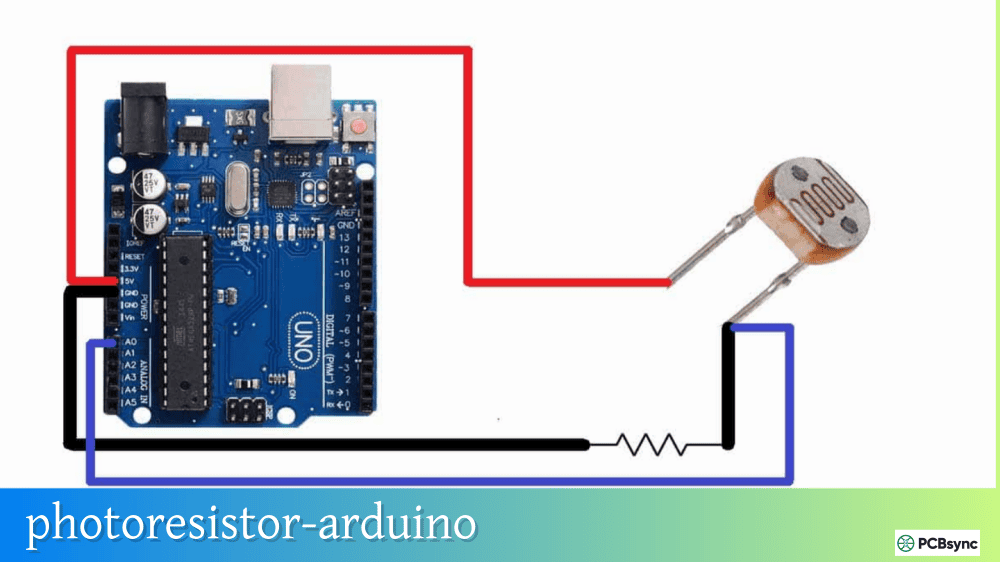
Arduino/Microcontroller Indicator (5V): This is the classic maker/hobbyist application. With a typical red or green LED dropping 2V, the 270Ω resistor limits current to about 11mA—well within both the LED specification (usually 20mA max) and the microcontroller output pin capability (typically 20-40mA max per pin).
Blue/White LED with 5V Supply:
LED forward voltage: 3.2V (blue/white LEDs have higher Vf)
Voltage across resistor: 5V – 3.2V = 1.8V
Current through LED: I = 1.8V / 270Ω = 6.7mA
Power dissipation: P = 1.8V × 0.0067A = 12mW
Blue and white LEDs need more forward voltage, so you get less current with the same resistor. The LED will be dimmer than with a red LED, but it’s still adequate for an indicator. If you need more brightness, drop to 220Ω or 180Ω.
Multiple LEDs from 12V:
Two red LEDs in series: 2 × 2V = 4V total LED drop
Voltage across resistor: 12V – 4V = 8V
Current: I = 8V / 270Ω = 29.6mA
Power: P = 8V × 0.0296A = 237mW
Now you need a 1/2W or 1W resistor. The higher voltage drop means significant heat generation. I’d use a 1W resistor here for thermal margin.
Voltage Divider Networks
The 270 ohm resistor works well in low-impedance dividers where you need minimal loading effects and can tolerate higher power consumption.
Close to 3.3V logic level. The divider draws I = 12V / 370Ω = 32mA, dissipating 0.39W total. This is acceptable for always-on reference voltages but wasteful for battery-powered designs.
For battery-powered applications, I’d use higher values (like 27kΩ and 10kΩ) to reduce quiescent current, accepting the higher output impedance.
Signal Conditioning and Biasing
The 270 ohm resistor finds use in various analog signal conditioning applications:
Transistor base resistor: When biasing a small-signal transistor for switching applications, 270Ω provides adequate base current without excessive power waste. For a 5V logic signal driving an NPN transistor:
Base current: I = (5V – 0.7V) / 270Ω = 15.9mA
This provides strong saturation for collector currents up to ~150mA (with typical β of 100)
Pull-up/pull-down in specialized applications: While 10kΩ is more common for general digital logic, 270Ω pull-ups find use in:
Fast-switching circuits where lower resistance reduces RC time constants
LED-coupled outputs where the pull-up drives an LED
High-noise environments where stronger pull-ups improve noise immunity
Trade-off: A 270Ω pull-up to 5V draws 18.5mA continuously—that’s 93mW wasted. Only use where speed or drive strength justifies the power cost.
Audio and Impedance Matching
In audio circuits, 270 ohm resistors serve various purposes:
Headphone impedance padding: Some audio sources need load resistors to properly drive high-impedance headphones or prevent oscillation with certain capacitive loads.
Microphone biasing: Electret microphones often use resistor values in the 220Ω to 470Ω range for biasing and signal coupling.
Attenuator networks: In combination with other values, 270Ω resistors can form precision attenuators for audio level control.
Material Types and Quality Selection
Carbon Film vs Metal Film Comparison
Property
Carbon Film
Metal Film
Typical Tolerance
±5%
±1%
Temperature Coefficient
±350 ppm/°C
±50 to ±100 ppm/°C
Noise Level
Higher
Lower
Cost
$
$$
Best Applications
LED limiting, general purpose
Audio, precision, instrumentation
For basic LED current limiting and non-critical circuits, carbon film 270 ohm resistors are cost-effective and perfectly adequate. For audio applications, low-noise analog circuits, or precision instrumentation, invest in metal film variants.
Through-Hole vs Surface Mount
Through-hole advantages:
Easy to prototype and modify
Better power dissipation for higher wattage
Simpler to hand-solder
Lower assembly cost for small quantities
SMD advantages:
Smaller board footprint
Lower cost at volume
Better high-frequency performance (less lead inductance)
Compatible with automated assembly
I keep both types in stock. For prototyping, through-hole is faster. For production beyond a few dozen units, SMD makes more sense economically.
Common Design Mistakes and Solutions
Incorrect Power Rating Selection
Mistake: Using 1/4W resistors for all applications without calculating actual dissipation.
Solution: Always calculate P = I²R or P = V²/R. Apply at least 50-100% safety margin. If you calculate 0.15W, use a 1/2W resistor minimum.
Tolerance Mismatches
Mistake: Using ±5% resistors in circuits requiring matched components.
Solution: For voltage dividers, current mirrors, or differential amplifiers, specify ±1% or better. For LED limiting, ±5% is fine—LED manufacturing tolerance exceeds this anyway.
Substitution Without Analysis
Mistake: Substituting 220Ω or 330Ω for 270Ω because “it’s close enough.”
Solution: Calculate the actual impact. A 220Ω substitution increases current by 23%. A 330Ω substitution decreases current by 18%. Determine if your circuit can tolerate this before substituting.
Temperature Effects Ignored
Mistake: Selecting resistors without considering operating temperature range.
Solution: For automotive, industrial, or outdoor applications, check the temperature coefficient. Standard ±350 ppm/°C carbon film can drift 10% over a 100°C range.
Practical Troubleshooting Tips
Visual Inspection
Thermally stressed resistors show these signs:
Darkening or discoloration (brown, black marks)
Cracking of the body
Delamination of the coating
Burning smell
Physical deformation
Any of these indicates the resistor exceeded its power rating and should be replaced with a higher wattage part.
Electrical Testing
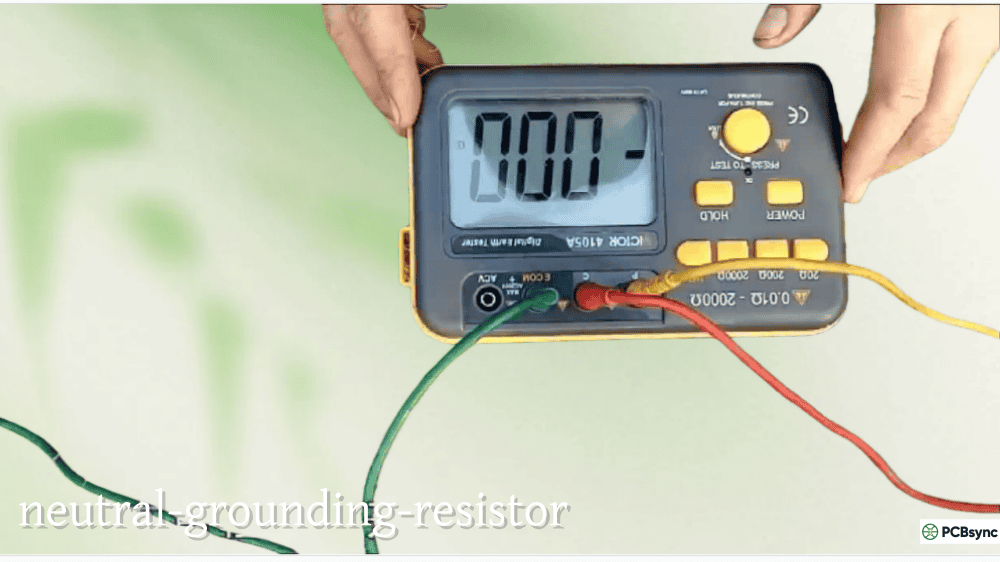
Use a multimeter to verify:
Resistance within tolerance (256.5Ω to 283.5Ω for ±5%)
No drift indicating thermal damage
Proper circuit voltages around the resistor
If a 270Ω resistor measures 310Ω or 240Ω, it’s failed or damaged. Replace it and investigate why it failed.
What’s the exact color code for a 270 ohm resistor?
The standard 4-band 270 ohm resistor color code is Red-Violet-Brown-Gold. Red (2), Violet (7), Brown (×10), Gold (±5%). This represents 27 × 10 = 270Ω with ±5% tolerance (256.5Ω to 283.5Ω). For precision ±1% resistors, the 5-band code is Red-Violet-Black-Black-Brown, where the extra black band provides a third significant digit and the final brown band indicates ±1% tolerance.
Can I use 220Ω or 330Ω instead of 270Ω for LED current limiting?
It depends on your requirements. Using 220Ω increases current by about 23% (from ~11mA to ~14mA with a red LED at 5V), making the LED brighter but running it harder. This might slightly reduce lifespan but is generally acceptable. Using 330Ω decreases current by about 18% (to ~9mA), making the LED dimmer but potentially extending lifespan. For most indicator applications, either substitution works. For critical brightness requirements or longevity-sensitive applications, stick with the specified value.
How do I calculate the correct resistor value for my LED?
Use the formula: R = (Vsupply – Vled) / Iled. First, find the LED’s forward voltage (Vf) from its datasheet—typically 2V for red, 2.2V for green, 3.2V for blue/white. Then determine desired current (typically 10-20mA for indicators). For example, with a 5V supply, red LED (2V), and 15mA target: R = (5V – 2V) / 0.015A = 200Ω. Choose the nearest standard value, which would be 220Ω. The 270Ω value works well for lower-brightness indicators where ~11mA is adequate.
What power rating do I need for my 270 ohm resistor?
Calculate power using P = I²R or P = V²/R. For example, with 20mA through the resistor: P = (0.02A)² × 270Ω = 0.108W. You need at least a 1/4W (0.25W) resistor. However, I recommend oversizing by 50-100% for reliability—use a 1/2W resistor for this application. Always consider ambient temperature and enclosure effects. In a sealed box or high-temperature environment, derate further. Resistors running near their limit get hot, drift in value, and fail prematurely.
Why does my 270 ohm resistor look different from what I expected?
Resistor color bands can vary in appearance due to manufacturing differences, aging, and lighting conditions. The violet band in particular can appear purple, blue-violet, or even pinkish depending on the manufacturer. Some carbon film resistors have tan bodies, while metal film resistors often have blue bodies. The color code system is standardized (IEC 60062), but the exact pigments used vary. When in doubt, measure with a multimeter. A reading between 256.5Ω and 283.5Ω confirms it’s a 270Ω ±5% resistor, regardless of visual appearance.
Conclusion
The 270 ohm resistor might not get the glory of specialty RF components or precision op-amps, but it’s a fundamental workhorse in everyday electronics. From LED indicators on Arduino projects to professional panel indicators in industrial equipment, this mid-range value fills a specific and important role.
After two decades of PCB design and production troubleshooting, I’ve learned that success comes from respecting the “simple” components as much as the complex ones. A $0.005 resistor chosen incorrectly can cause as much grief as a $50 FPGA designed wrong—actually, more grief, because resistor problems are often subtle and intermittent.
Keep good stock of 270Ω resistors in your commonly used packages. I maintain 1/4W through-hole, 1/2W through-hole, and 0805 SMD in both ±5% and ±1% tolerances. With these four variants, I can handle 95% of design requirements without waiting for parts.
And always—always—calculate power dissipation before selecting a resistor. That extra minute of calculation saves hours of debugging later when resistors start browning or LEDs fail prematurely. Because in electronics, the devil truly is in the details.
Inquire: Call 0086-755-23203480, or reach out via the form below/your sales contact to discuss our design, manufacturing, and assembly capabilities.
Quote: Email your PCB files to Sales@pcbsync.com (Preferred for large files) or submit online. We will contact you promptly. Please ensure your email is correct.
Notes: For PCB fabrication, we require PCB design file in Gerber RS-274X format (most preferred), *.PCB/DDB (Protel, inform your program version) format or *.BRD (Eagle) format. For PCB assembly, we require PCB design file in above mentioned format, drilling file and BOM. Click to download BOM template To avoid file missing, please include all files into one folder and compress it into .zip or .rar format.