Inquire: Call 0086-755-23203480, or reach out via the form below/your sales contact to discuss our design, manufacturing, and assembly capabilities.
Quote: Email your PCB files to Sales@pcbsync.com (Preferred for large files) or submit online. We will contact you promptly. Please ensure your email is correct.
Notes: For PCB fabrication, we require PCB design file in Gerber RS-274X format (most preferred), *.PCB/DDB (Protel, inform your program version) format or *.BRD (Eagle) format. For PCB assembly, we require PCB design file in above mentioned format, drilling file and BOM. Click to download BOM template To avoid file missing, please include all files into one folder and compress it into .zip or .rar format.
200 Ohm Resistor: Color Code & Circuit Applications Guide
200 ohm resistor guide: color code charts, SMD codes, LED current calculations, and practical applications. Essential reference for electronics projects.
The 200 ohm resistor occupies an interesting position in the standard resistor value series. While not as commonly reached for as the 220Ω sitting next to it in the parts drawer, this value proves itself invaluable for specific circuit calculations where the math demands it.
I find myself using a 200 ohm resistor particularly when driving multiple LEDs from 12V supplies or when I need precise current limiting that doesn’t quite fit the more common E12 values. It’s one of those resistors that earns its place through specific applications rather than general popularity.
A 200 ohm resistor provides exactly 200 ohms of electrical resistance. This value belongs to the E24 series of preferred resistor values, making it available from most suppliers though perhaps not as universally stocked as E12 series components like 220Ω.
The resistance falls into a useful mid-range that works well for LED current limiting from higher voltage supplies, voltage divider circuits, and current sensing applications. At 200 ohms, the component balances between limiting current effectively while not creating excessive voltage drops in many common configurations.
Key Specifications of 200 Ohm Resistors
Parameter
Typical Value
Notes
Resistance
200 Ω
E24 standard value
Common Tolerances
±5%, ±1%
Gold or Brown tolerance band
Power Ratings
1/8W, 1/4W, 1/2W, 1W, 2W
Varies by application
Temperature Coefficient
50-250 ppm/K
Depends on construction
Maximum Voltage
200-500V
Based on power rating
Operating Temperature
-55°C to +155°C
Standard range
200 Ohm Resistor Color Code
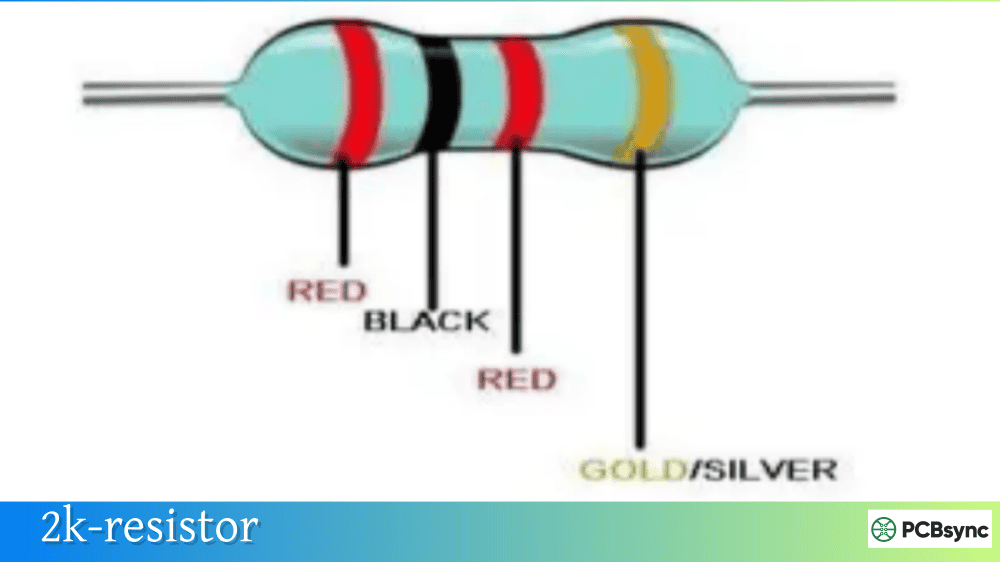
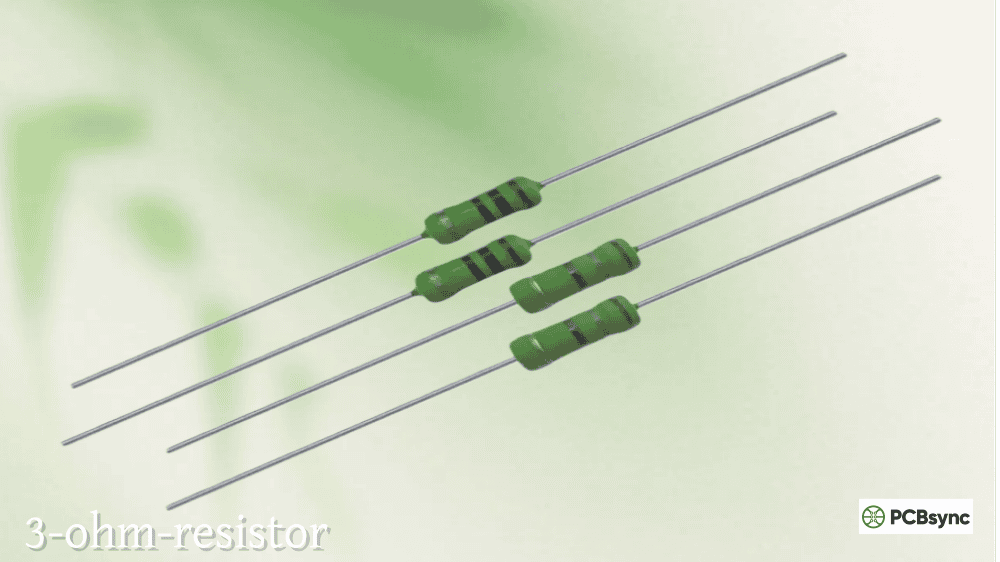
Identifying a 200 ohm resistor by its color bands follows the standard color code system. The Red-Black-Brown pattern is distinctive and relatively easy to spot.
4-Band 200 Ohm Resistor Color Code
The standard 4-band configuration you’ll find on most carbon film resistors:
Band Position
Color
Value
Meaning
1st Band
Red
2
First significant digit
2nd Band
Black
0
Second significant digit
3rd Band
Brown
×10
Multiplier
4th Band
Gold
±5%
Tolerance
Reading it: Red-Black-Brown-Gold gives you 20 × 10 = 200Ω with ±5% tolerance.
With a ±5% tolerance, your actual resistance falls between 190Ω and 210Ω. This tolerance range overlaps slightly with neighboring values, which matters less for LED circuits but becomes important in precision applications.
5-Band 200 Ohm Resistor Color Code
For precision metal film resistors with tighter tolerance:
Band Position
Color
Value
Meaning
1st Band
Red
2
First significant digit
2nd Band
Black
0
Second significant digit
3rd Band
Black
0
Third significant digit
4th Band
Black
×1
Multiplier
5th Band
Brown
±1%
Tolerance
The 5-band code Red-Black-Black-Black-Brown represents 200 × 1 = 200Ω with ±1% tolerance.
6-Band 200 Ohm Resistor Color Code
When temperature stability matters for your circuit:
Band Position
Color
Value
Meaning
1st Band
Red
2
First significant digit
2nd Band
Black
0
Second significant digit
3rd Band
Black
0
Third significant digit
4th Band
Black
×1
Multiplier
5th Band
Brown
±1%
Tolerance
6th Band
Brown
100 ppm/K
Temperature coefficient
Complete Color Code Reference Chart
Color
Digit
Multiplier
Tolerance
Black
0
×1
–
Brown
1
×10
±1%
Red
2
×100
±2%
Orange
3
×1,000
–
Yellow
4
×10,000
–
Green
5
×100,000
±0.5%
Blue
6
×1,000,000
±0.25%
Violet
7
–
±0.1%
Gray
8
–
±0.05%
White
9
–
–
Gold
–
×0.1
±5%
Silver
–
×0.01
±10%
SMD 200 Ohm Resistor Markings
Surface mount 200 ohm resistors use numerical marking systems. Understanding these codes prevents costly mistakes during board assembly or repair work.
3-Digit SMD Code
A 200 ohm resistor in 3-digit format is marked 201.
Breaking it down:
First two digits (20) = significant figures
Third digit (1) = number of zeros to add = one zero
Result: 20 + one zero = 200Ω
Critical Warning: The SMD code 200 does NOT mean 200 ohms. Code 200 represents 20Ω (20 with zero zeros). This confusion causes real problems on production lines.
4-Digit SMD Code
Precision SMD resistors use 2000 for 200 ohms:
First three digits (200) = significant figures
Fourth digit (0) = multiplier = ×1
Result: 200 × 1 = 200Ω
EIA-96 Code
For 1% tolerance SMDs, the EIA-96 system marks 200Ω as 01B:
01 = code for 100 in the lookup table
B = multiplier of ×10…
Wait, that’s not quite right. Let me clarify: 200Ω in EIA-96 is actually 03B:
03 = code for 200 (since E96 includes 200 as a standard value)
B = multiplier of 1
SMD Marking System
Code for 200Ω
Typical Tolerance
3-Digit
201
±5%
4-Digit
2000
±1%
EIA-96
03B
±1%
SMD Package Sizes and Power Ratings
Package
Dimensions (mm)
Typical Power Rating
0201
0.6 × 0.3
1/20W (0.05W)
0402
1.0 × 0.5
1/16W (0.063W)
0603
1.6 × 0.8
1/10W (0.1W)
0805
2.0 × 1.25
1/8W (0.125W)
1206
3.2 × 1.6
1/4W (0.25W)
2010
5.0 × 2.5
1/2W (0.5W)
2512
6.3 × 3.2
1W
Circuit Applications for 200 Ohm Resistors
The 200 ohm resistor finds practical use across various electronic circuits. Its specific value makes it ideal for certain calculations that don’t fit neatly into more common E12 values.
LED Current Limiting Applications
One of the most practical uses for a 200 ohm resistor is driving multiple red LEDs in parallel from a 12V supply.
The calculation: For 5 red LEDs in parallel at 10mA each from 12V:
Total current needed: 50mA
Voltage drop across resistor: 12V – 2V (LED) = 10V
Resistance: 10V / 0.05A = 200Ω
This works out exactly to a 200 ohm resistor, making it perfect for automotive LED indicator clusters or 12V LED signage.
LED Current with 200 Ohm Resistor at Various Voltages
Supply Voltage
LED Type
Forward Voltage
Current
Notes
5V
Red
2.0V
15mA
Good brightness
5V
Green
2.2V
14mA
Solid illumination
5V
Blue
3.2V
9mA
Moderate
9V
Red
2.0V
35mA
Maximum rated
12V
Red
2.0V
50mA
Multiple LEDs in parallel
12V
White
3.2V
44mA
Overdrive single LED
Voltage Divider Circuits
A 200 ohm resistor pairs well with other standard values for precise voltage division:
R1
R2 (200Ω)
Vin
Vout
Ratio
100Ω
200Ω
5V
3.33V
0.667
200Ω
200Ω
5V
2.5V
0.5
300Ω
200Ω
5V
2.0V
0.4
800Ω
200Ω
5V
1.0V
0.2
1kΩ
200Ω
5V
0.83V
0.167
Common Circuit Applications
Application
Purpose
Configuration
LED current limiting
Control current to LEDs
Series with LED(s)
12V LED arrays
Drive multiple parallel LEDs
Single resistor, parallel LEDs
Voltage dividers
Create reference voltages
With other resistors
Audio circuits
Signal conditioning
In amplifier feedback
Motor speed sensing
Current measurement
Series with motor
Pull-up/pull-down
Set logic levels
To supply or ground
Transistor biasing
Set operating point
Base or collector circuit
Current sensing
Monitor current flow
Measure voltage drop
Power Dissipation Calculations
Proper power rating selection prevents resistor failure and potential circuit damage.
Power Dissipation in Various Scenarios
Scenario
Voltage Drop
Current
Power
Minimum Rating
5V LED circuit
3V
15mA
45mW
1/8W
9V LED circuit
7V
35mA
245mW
1/2W
12V 5-LED parallel
10V
50mA
500mW
1W
24V industrial
22V
110mA
2.42W
5W
Always select a resistor rated for at least twice the calculated power dissipation to ensure reliable long-term operation.
Power Rating Selection Guide
Calculated Power
Recommended Rating
Derating Factor
< 62mW
1/8W (125mW)
2×
63-125mW
1/4W (250mW)
2×
126-250mW
1/2W (500mW)
2×
251-500mW
1W
2×
501-1000mW
2W
2×
200 Ohm vs. Neighboring Resistor Values
Understanding when to use a 200 ohm resistor versus adjacent values helps optimize your designs.
Resistor Value
12V LED Current (2V Vf)
E-Series
Availability
180Ω
55.6mA
E24
Common
200Ω
50mA
E24
Common
220Ω
45.5mA
E12, E24
Very common
240Ω
41.7mA
E24
Common
270Ω
37mA
E12, E24
Very common
The 200 ohm resistor fits perfectly when calculations demand exactly 50mA from 12V with a 2V LED drop. Using 220Ω would reduce current to 45.5mA, which might affect brightness in critical applications.
Different construction methods suit different applications:
Resistor Types Comparison
Type
Tolerance
Temp Coefficient
Best Applications
Carbon Film
±5%
±200-500 ppm/K
General purpose, prototyping
Metal Film
±1%, ±0.1%
±50-100 ppm/K
Precision circuits, audio
Thick Film SMD
±1-5%
±100-200 ppm/K
Production PCBs
Thin Film SMD
±0.1-1%
±25-50 ppm/K
High precision
Wirewound
±1-5%
±20-100 ppm/K
High power, precision
Metal Oxide
±5%
±300 ppm/K
High temperature
For most LED current limiting applications, a standard carbon film 200 ohm resistor works fine. Audio circuits and precision voltage references benefit from metal film construction.
How to Measure and Verify a 200 Ohm Resistor
Verification prevents circuit problems from incorrectly identified components.
Multimeter Measurement Steps
Set multimeter to resistance mode (Ω)
Select 200Ω or 2kΩ range
Zero the meter leads if possible
Touch probes to each resistor lead
Compare reading to expected value
A 200 ohm resistor with 5% tolerance should read between 190Ω and 210Ω. For 1% tolerance, expect 198Ω to 202Ω.
The 4-band 200 ohm resistor color code is Red-Black-Brown-Gold. Red represents 2, Black represents 0, Brown is the ×10 multiplier, and Gold indicates ±5% tolerance. Calculate: 20 × 10 = 200 ohms. For 5-band precision resistors with ±1% tolerance, the code is Red-Black-Black-Black-Brown.
What is the SMD code for a 200 ohm resistor?
A 200 ohm resistor in SMD format uses the 3-digit code 201 (20 with one zero added). Don’t confuse this with code 200, which actually means 20 ohms. For 4-digit precision SMD resistors, look for 2000. The EIA-96 code used on some 1% resistors is 03B. Always verify with a multimeter when in doubt.
Can I use a 220 ohm resistor instead of 200 ohm?
In most applications, yes. A 220Ω resistor can substitute for a 200 ohm resistor with minor effects. The 10% higher resistance reduces current by about 9%. In LED circuits, this means slightly dimmer output but longer LED lifespan. For precision voltage dividers or calibration circuits, the difference matters more and substitution isn’t recommended.
What applications commonly use 200 ohm resistors?
A 200 ohm resistor is commonly used for driving multiple parallel LEDs from 12V supplies (calculating to exactly 50mA for 5 LEDs), voltage divider circuits requiring specific ratios, audio signal conditioning, transistor biasing networks, and current sensing applications. It’s particularly useful when E12 values like 180Ω or 220Ω don’t provide the exact current needed.
What power rating do I need for a 200 ohm resistor?
The required power rating depends on your circuit’s voltage and current. For typical 5V LED circuits with 15mA current, the power dissipation is about 45mW, so a 1/8W or 1/4W 200 ohm resistor suffices. For 12V circuits driving 50mA through multiple LEDs, power reaches 500mW, requiring a 1W resistor. Always choose a rating at least twice your calculated dissipation for reliability.
Summary
The 200 ohm resistor serves as a valuable component when circuit calculations demand its specific value. While the neighboring 220Ω might be more commonly stocked, the 200 ohm value proves essential for applications like driving exactly 50mA through parallel LED arrays from 12V supplies.
With its distinctive Red-Black-Brown-Gold color code for 4-band versions and SMD marking of 201, identifying this resistor becomes straightforward with practice. Remember the critical distinction: SMD code 200 means 20Ω, not 200Ω.
Keep a selection of 200 ohm resistors in various power ratings for projects where precision current control matters. Whether you’re designing automotive LED indicators, building voltage dividers, or setting up audio signal paths, this E24 series value earns its place in your component collection.
Inquire: Call 0086-755-23203480, or reach out via the form below/your sales contact to discuss our design, manufacturing, and assembly capabilities.
Quote: Email your PCB files to Sales@pcbsync.com (Preferred for large files) or submit online. We will contact you promptly. Please ensure your email is correct.
Notes: For PCB fabrication, we require PCB design file in Gerber RS-274X format (most preferred), *.PCB/DDB (Protel, inform your program version) format or *.BRD (Eagle) format. For PCB assembly, we require PCB design file in above mentioned format, drilling file and BOM. Click to download BOM template To avoid file missing, please include all files into one folder and compress it into .zip or .rar format.