Inquire: Call 0086-755-23203480, or reach out via the form below/your sales contact to discuss our design, manufacturing, and assembly capabilities.
Quote: Email your PCB files to Sales@pcbsync.com (Preferred for large files) or submit online. We will contact you promptly. Please ensure your email is correct.
Notes: For PCB fabrication, we require PCB design file in Gerber RS-274X format (most preferred), *.PCB/DDB (Protel, inform your program version) format or *.BRD (Eagle) format. For PCB assembly, we require PCB design file in above mentioned format, drilling file and BOM. Click to download BOM template To avoid file missing, please include all files into one folder and compress it into .zip or .rar format.
47K Resistor: Color Code & Uses – A Circuit Designer’s Field Guide
Last week, I was debugging a customer’s fire alarm panel that kept triggering false alarms. After three hours of troubleshooting, the culprit? Someone had substituted a 4.7k resistor for the specified 47k end-of-line resistor. That tiny orange band versus red band difference caused $15,000 worth of unnecessary site visits. If you’re working with electronics, getting your 47k resistor identification right isn’t academic – it’s mission-critical.
I’ve been designing circuits professionally for fifteen years, and the 47k resistor has appeared in probably 70% of my designs. It’s one of those “Goldilocks” values – not too high, not too low – that works beautifully for a surprising range of applications. Let me share what actually matters when you’re specifying, identifying, and using these components in real products.
A 47k resistor provides 47,000 ohms (47 kiloohms) of resistance. In the E12 series of standard resistor values, 47k sits between 39k and 56k, making it readily available and inexpensive. At a practical level, this value creates a nice middle ground: high enough impedance to keep current consumption low, but low enough to maintain reliable signal levels in most digital and analog circuits.
The math is straightforward. With a 5V supply across a 47k resistor, you get roughly 0.106mA of current draw – barely noticeable in most power budgets. Bump that to 12V automotive systems, and you’re still only at 0.255mA. This efficiency makes the 47k resistor particularly attractive for battery-powered designs where every microamp counts.
Decoding the 47K Resistor Color Code
Reading resistor color codes becomes automatic after you’ve populated enough boards, but the 47k value has some distinctive features worth noting.
Standard 4-Band Color Code
The most common 47k resistor you’ll encounter uses four colored bands:
Band Position
Color
Meaning
Value
1st Band
Yellow
First Digit
4
2nd Band
Violet
Second Digit
7
3rd Band
Orange
Multiplier
× 1,000
4th Band
Gold
Tolerance
±5%
Calculation: 47 × 1,000 = 47,000Ω (47kΩ)
With ±5% tolerance (the gold band), your actual measured resistance can range from 44.65kΩ to 49.35kΩ. For most applications – pull-ups, voltage dividers, timing circuits – this variance is perfectly acceptable.
Recognition tip: Yellow-Violet-Orange is visually distinctive. Once you’ve identified a few, you’ll spot them instantly in a parts bin. The violet band in particular stands out – it’s the only purple/blue-ish band in the standard color code, making 47k and 4.7k easy to differentiate (4.7k uses Red for the multiplier instead of Orange).
5-Band Precision Color Code
For tighter-tolerance applications, 5-band resistors provide more precision:
Band Position
Color
Meaning
Value
1st Band
Yellow
First Digit
4
2nd Band
Violet
Second Digit
7
3rd Band
Black
Third Digit
0
4th Band
Red
Multiplier
× 100
5th Band
Brown/Gold
Tolerance
±1% / ±5%
Calculation: 470 × 100 = 47,000Ω (47kΩ)
The brown tolerance band (±1%) narrows your range to 46.53kΩ to 47.47kΩ. I spec 1% tolerance 47k resistors for precision op-amp feedback networks and audio circuits where component matching affects performance.
3-Band Resistors (Older Stock)
Occasionally you’ll find 3-band resistors marked Yellow-Violet-Orange with no tolerance band. These default to ±20% tolerance – essentially “we guarantee it’s somewhere between 38k and 56k.” I don’t use these in production anymore since 5% tolerance parts cost essentially the same, but they’re fine for non-critical hobbyist work.
Color Code Comparison Table
Here’s a quick reference comparing 47k with values that look similar:
Resistance
4-Band Code
Key Difference
4.7kΩ
Yellow-Violet-Red-Gold
Red multiplier (×100)
47kΩ
Yellow-Violet-Orange-Gold
Orange multiplier (×1,000)
470kΩ
Yellow-Violet-Yellow-Gold
Yellow multiplier (×10,000)
Notice how only the third band changes – this exponential progression is why misreading that single band can give you a component 10x or 100x off from what you need.
Real-World Applications for 47K Resistors
After thousands of hours at the bench and in production, these are the applications where I consistently reach for 47k resistors.
Digital Circuit Pull-Up and Pull-Down Resistors
The 47k resistor works well as pull-up or pull-down resistors in digital circuits, though it’s at the upper end of the useful range. Here’s when I choose 47k over more common values like 10k:
Advantages of 47k for pull-ups:
Ultra-low power consumption: ~0.07mA at 3.3V, ~0.11mA at 5V
Perfect for battery-powered IoT devices where sleep mode current matters
Works well with high-impedance CMOS inputs (100kΩ+)
Reduces bus capacitance loading in multi-drop configurations
When NOT to use 47k pull-ups:
Fast I2C communication (400kHz Fast-mode or 1MHz Fast-mode Plus)
Circuits with significant trace capacitance (>50pF)
TTL logic requiring source current (use 4.7k instead)
Reset lines that need fast transitions
I typically use 47k pull-ups on:
Configuration jumpers that are read once at startup
Low-speed serial communication lines
Battery-monitor circuits where standby current is critical
Secondary reset or enable pins on power management ICs
Voltage Divider Networks
The 47k resistor excels in voltage divider applications where you need to scale down a voltage for ADC measurement or reference generation.
Example: Battery monitoring circuit
Let’s say you’re monitoring a 12V lead-acid battery with a microcontroller that has a 3.3V ADC:
This configuration gives you about 242mV per volt of battery voltage at the ADC input. With a 10-bit ADC (1024 steps) and 3.3V reference, you get roughly 13mV resolution per ADC count – more than adequate for battery monitoring.
Critical design note: Always consider the input impedance of whatever you’re feeding with the divider. Most modern microcontroller ADCs have input impedances >10MΩ, so a 62kΩ divider is fine. Older ADCs or op-amps with lower input impedance will load the divider and affect your reading.
Transistor Biasing Circuits
In analog circuits, 47k resistors frequently appear in transistor bias networks. The value provides adequate base current for small-signal transistors while limiting power dissipation.
For a basic NPN switching circuit:
Base resistor: 47kΩ
Supply voltage: 5V
Base-emitter voltage (Vbe): ~0.7V
Base current: (5V – 0.7V) / 47kΩ = 91μA
With a typical β (current gain) of 100-300 for small-signal transistors, this base current can switch several milliamps of collector current – perfect for LED indicators, relay drivers, or logic-level signals.
Fire Alarm and Security System End-of-Line Resistors
Here’s an application I see constantly in commercial installations: the 47k resistor as an end-of-line (EOL) termination in fire alarm systems. Fire alarm control panels continuously monitor detection zones by measuring resistance.
How it works:
Normal condition: Panel measures ~47kΩ (EOL resistor)
Wire short: Panel measures near 0Ω (alarm condition)
The 47k value is industry-standard per NFPA 72 code. Some panels use different values (e.g., 4.7k for older addressable systems), but 47k is by far the most common in conventional zones.
Pro tip: If you’re servicing fire alarms, always keep genuine 47k resistors rated for the application. I’ve seen technicians use general-purpose resistors that failed during the annual inspection because they weren’t rated for the operating temperature range or couldn’t handle the brief surge when the panel pulses the zone.
Audio Circuit Applications
In audio electronics, 47k resistors appear frequently in several roles:
Input impedance matching: Many guitar pedal designs use 47k as a standard input impedance for buffering stages. This value prevents loading the guitar pickup (which typically has 5-10kΩ output impedance) while maintaining good signal transfer.
Op-amp feedback networks: For non-inverting op-amp configurations, 47k feedback resistors combined with lower-value input resistors create gains in the 10-20x range – common for mic preamps and line-level amplification.
Tone control circuits: Passive tone controls often use 47k resistors in combination with capacitors to create simple high-pass or low-pass filters without significantly loading the signal.
Sensor Signal Conditioning
When interfacing analog sensors (light sensors, thermistors, potentiometers) to microcontroller ADCs, 47k resistors form the backbone of many conditioning circuits.
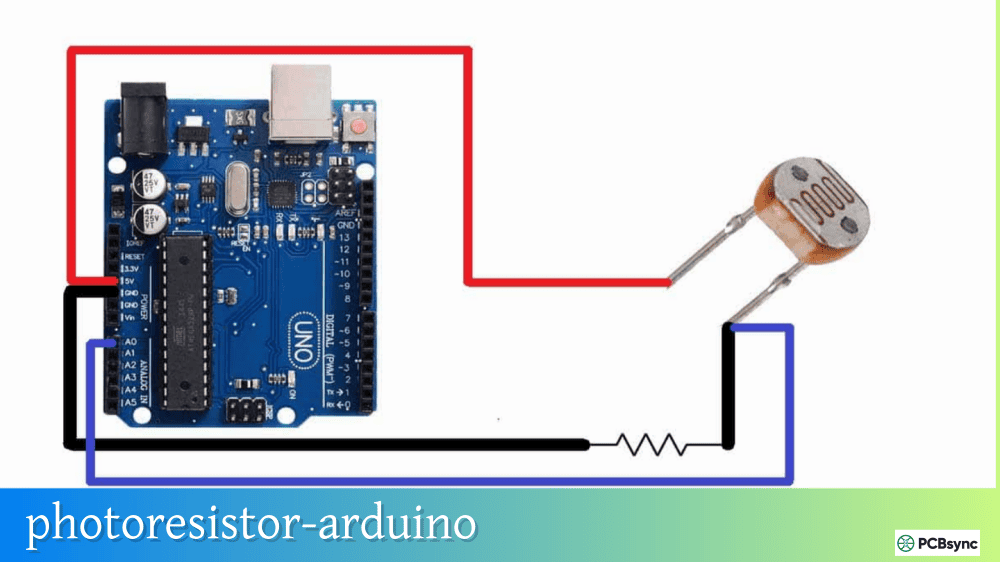
Light-dependent resistor (LDR) circuit:
47k resistor in series with LDR
Junction connected to ADC input
As light increases, LDR resistance decreases
Output voltage changes proportionally
The high resistance minimizes current consumption while providing adequate voltage swing for accurate ADC readings.
Technical Specifications That Matter
Power Rating Selection
Standard power ratings for 47k resistors:
Power Rating
Package Type
Maximum Voltage
Typical Use
1/8W (0.125W)
0805 SMD
125V
Signal level, pull-ups
1/4W (0.25W)
Through-hole
343V
General purpose, voltage dividers
1/2W (0.5W)
Larger axial
485V
Higher voltage applications
1W
High-power packages
686V
Voltage dividers in power supplies
Power calculation example: In a 24V system using a 47k pull-up:
P = V²/R = (24V)² / 47,000Ω = 0.012W (12mW)
A 1/8W (125mW) resistor provides 10x safety margin
Even in a 120V AC circuit (rare for resistive applications), you’d only see:
P = (120V)² / 47,000Ω = 0.306W
Use a 1/2W or 1W resistor for safety
Tolerance and When It Matters
Tolerance
Color Band
Actual Range
Application
±20%
None
37.6k – 56.4k
Obsolete, avoid
±10%
Silver
42.3k – 51.7k
Non-critical only
±5%
Gold
44.65k – 49.35k
Standard choice
±1%
Brown
46.53k – 47.47k
Precision analog, matched pairs
±0.1%
Violet
46.953k – 47.047k
Instrumentation, metrology
When to use tighter tolerance:
Precision voltage references where ratio accuracy affects output
Audio circuits where component matching reduces distortion
Timing circuits where RC constants determine frequency
Medical devices or test equipment requiring calibration
For standard digital pull-ups, voltage dividers feeding 10-bit ADCs, or bias networks, ±5% is perfectly adequate and costs the same as ±10% in modern manufacturing.
Temperature Coefficient
The temperature coefficient (tempco) describes how resistance changes with temperature:
Carbon film: 200-500 ppm/°C (parts per million per degree Celsius)
Metal film: 50-100 ppm/°C (my standard specification)
Practical impact: A metal film 47k resistor at 50 ppm/°C:
Over 50°C temperature change: 47kΩ × 50ppm × 50°C = 117.5Ω shift
Percentage change: 0.25%
For most applications, this is negligible compared to tolerance. It matters in precision references, oven-controlled circuits, or outdoor equipment experiencing extreme temperature swings.
Surface Mount vs. Through-Hole Options
SMD Package Selection
For production boards, I typically specify:
Package
Dimensions
Power
Hand-Solder Difficulty
Cost Multiplier
0402
1.0×0.5mm
1/16W
Very difficult
1.0x
0603
1.6×0.8mm
1/10W
Difficult
1.1x
0805
2.0×1.25mm
1/8W
Moderate
1.0x
1206
3.2×1.6mm
1/4W
Easy
1.2x
My go-to choice: 0805 for production, 1206 for prototypes I’ll hand-solder. The marginal cost difference is irrelevant compared to assembly reliability.
Package marking note: Most SMD resistors aren’t marked with value – you rely on tape-and-reel labeling during assembly. This is why pick-and-place verification and first-article inspection are critical. I’ve seen entire production runs where someone loaded 4.7k instead of 47k because the reels looked identical.
Through-Hole Considerations
Axial lead resistors remain my choice for:
Breadboard prototyping and development
High-reliability aerospace/military applications
Manual assembly by technicians
Educational kits and maker projects
Repairs where SMD rework isn’t practical
Standard 1/4W through-hole 47k resistors cost about 1-2 cents in volume and are bulletproof. The leads provide mechanical strain relief that SMD parts can’t match.
This is the most common error I see. The color codes differ by only one band:
4.7k: Yellow-Violet-Red-Gold
47k: Yellow-Violet-Orange-Gold
Always double-check the multiplier band. In critical applications (fire alarms, EOL resistors, precision references), verify with a multimeter before installation.
Using 47k Pull-Ups on Fast I2C Buses
Standard-mode I2C (100kHz) works fine with 47k pull-ups. Fast-mode (400kHz) gets marginal. Fast-mode Plus (1MHz) won’t work reliably.
The problem is RC time constant: 47kΩ × 100pF (typical bus capacitance) = 4.7μs. At 400kHz, your bit period is only 2.5μs – not enough time for the signal to rise cleanly.
Solution: For Fast-mode I2C, use 4.7k pull-ups. For Fast-mode Plus, go to 2.2k or lower.
Ignoring Power Rating in Voltage Dividers
I’ve seen burned-out resistors in production because someone didn’t calculate actual power dissipation. In a 100V voltage divider with two 47k resistors in series:
Total resistance: 94kΩ
Current: 100V / 94kΩ = 1.06mA
Power per resistor: I²R = (0.00106A)² × 47,000Ω = 0.053W
A 1/16W (0.0625W) resistor is marginal. A 1/8W resistor provides adequate margin. A 1/4W resistor is bulletproof.
Overlooking Input Impedance Effects
When using a 47k voltage divider to feed an op-amp input, the op-amp’s input impedance matters. Most modern op-amps have input impedances in the gigaohm range, so no problem. But older devices or poorly-designed input stages might have input impedances as low as 1MΩ.
A 1MΩ input impedance in parallel with the 15kΩ lower leg of a divider changes your ratio and introduces measurement error. Always check the datasheet.
Testing and Verification
Using a Digital Multimeter
To verify a 47k resistor:
Set your DMM to the 200kΩ range (or auto-range)
Touch probes to each lead (polarity doesn’t matter for resistors)
Read the displayed value
Expected readings:
±5% tolerance: 44.65kΩ to 49.35kΩ
±1% tolerance: 46.53kΩ to 47.47kΩ
Measurement tips:
Don’t touch the metal probe tips – your body resistance (~100kΩ to 1MΩ) will skew high-value resistor readings
For 47k and above, use a quality meter – cheap meters have poor accuracy in this range
If measuring in-circuit, be aware that parallel paths affect the reading
In-Circuit Testing Considerations
Testing resistors while installed on a PCB can be tricky because other components in parallel affect the measurement. For a 47k pull-up resistor connected to a microcontroller GPIO pin:
Power off the circuit
Measure resistance from the resistor to VCC
You’ll see ~47kΩ if nothing else is connected
If other components are present, your reading will be lower
If you suspect a failed resistor, the most reliable method is desoldering one end and measuring it out of circuit.
Always download and archive datasheets for any resistors used in production. Manufacturers occasionally discontinue lines or change specifications. Having the original datasheet protects you during product lifecycle management.
Frequently Asked Questions
Can I use two 22k resistors in series to make 47k?
Yes, but why would you? Two resistors in series create issues:
Takes up more board space (2x the footprint)
Costs more (2x the component cost)
Reduces reliability (two components to fail instead of one)
Increases assembly time and labor cost
The only legitimate reason is if you absolutely don’t have 47k in stock and need to finish a prototype. For production, just order the right value.
What’s the difference between a 47k resistor and a 47 ohm resistor?
This seems obvious, but I’ve seen beginners confuse them. A 47Ω resistor is 47 ohms (no “k”). A 47kΩ resistor is 47,000 ohms. They look completely different:
47Ω: Yellow-Violet-Black-Gold (or Yellow-Violet-Gold-Gold for 5-band)
47kΩ: Yellow-Violet-Orange-Gold
Using 47Ω where you need 47kΩ will likely damage your circuit due to excessive current flow.
How do I measure a 47k resistor that’s already soldered on a board?
Measuring in-circuit is challenging because parallel paths affect the reading. Best practices:
Power off the circuit completely
Discharge any capacitors (wait 60 seconds or use a discharge tool)
Measure with a DMM – you’ll get a reading lower than the actual resistor value if other components are in parallel
If the reading is significantly lower than expected, the resistor might be fine – parallel components are pulling it down
For accurate measurement, desolder one leg and measure out of circuit
Can a 47k resistor go bad, and how can I tell?
Resistors do fail, though it’s less common than other components. Failure modes:
Open circuit: Most common. Resistor measures infinite ohms. Usually caused by thermal stress, overcurrent, or physical damage.
Drift: Resistance shifts out of tolerance. Common in carbon composition resistors exposed to heat. Metal film resistors are more stable.
Intermittent contact: Rare, but I’ve seen it with mechanical stress on the leads.
Visual signs of failure:
Discoloration or burn marks
Cracked body
Lifted leads (for through-hole)
Delamination (for SMD)
Is there any difference between a metal film and carbon film 47k resistor for digital pull-ups?
For basic digital pull-up applications, the difference is minimal. Both will work fine. However, metal film resistors offer:
Better tolerance (±1% available vs. ±5% typical for carbon)
Lower temperature coefficient (50 ppm/°C vs. 200+ ppm/°C)
Less noise (lower Johnson noise)
Better long-term stability
Since metal film and carbon film resistors now cost essentially the same in volume, I specify metal film as my default for everything. There’s no downside and it provides better specs.
Closing Thoughts from the Lab
The 47k resistor might seem like just another component in your BOM, but choosing and implementing it correctly separates reliable products from field failures. Whether you’re pulling up an I2C line, dividing a voltage for an ADC input, or terminating a fire alarm zone, understanding the nuances – color code, power rating, tolerance, temperature stability – makes the difference between a design that works and one that doesn’t.
After years of debugging customer boards, I’ve learned that resistor selection errors are often the hardest to catch in testing because they’re intermittent or only manifest under specific conditions. A 4.7k instead of 47k might work fine on the bench but fail in production when temperature rises or supply voltage varies.
My advice: build a well-organized parts library (both physical and in your ECAD tool), always verify color codes with a multimeter during prototyping, and spec proper margins on power ratings. That 47k resistor costs a fraction of a cent, but specifying it incorrectly can cost thousands in rework and field returns.
Keep a variety pack of through-hole 47k resistors (both ±5% and ±1%) in your lab drawer, maintain proper stock of 0805 SMD packages for production, and you’ll be equipped for the vast majority of situations where this workhorse component is the right choice.
Inquire: Call 0086-755-23203480, or reach out via the form below/your sales contact to discuss our design, manufacturing, and assembly capabilities.
Quote: Email your PCB files to Sales@pcbsync.com (Preferred for large files) or submit online. We will contact you promptly. Please ensure your email is correct.
Notes: For PCB fabrication, we require PCB design file in Gerber RS-274X format (most preferred), *.PCB/DDB (Protel, inform your program version) format or *.BRD (Eagle) format. For PCB assembly, we require PCB design file in above mentioned format, drilling file and BOM. Click to download BOM template To avoid file missing, please include all files into one folder and compress it into .zip or .rar format.