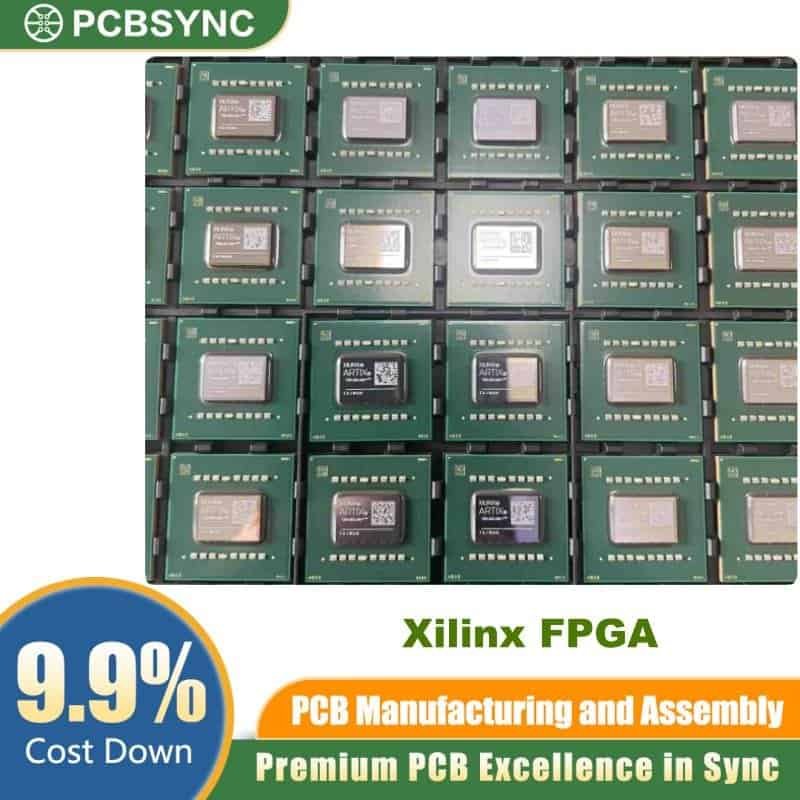
Overview of XC5215-6PQ160C Field Programmable Gate Array
The XC5215-6PQ160C is a powerful Field Programmable Gate Array (FPGA) from the renowned XC5200 family, originally manufactured by Xilinx and now available through Rochester Electronics. This advanced programmable logic device delivers exceptional performance with 23,000 gates, 1,936 logic cells, and operates at speeds up to 83MHz, making it an ideal solution for complex digital design projects requiring flexibility and reliability.
Built on proven 0.5μm three-layer metal CMOS process technology, the XC5215-6PQ160C represents a cost-effective solution for engineers and designers seeking robust FPGA capabilities. The device comes in a compact 160-pin PQFP (Plastic Quad Flat Pack) package, offering excellent I/O density and thermal performance for demanding applications. This Xilinx FPGA solution continues to serve legacy systems and specialized applications where proven reliability is paramount.
Technical Specifications and Key Features
Core Architecture Specifications
| Parameter |
Specification |
| Part Number |
XC5215-6PQ160C |
| Manufacturer |
Originally Xilinx, Currently Rochester Electronics (AMD) |
| Product Category |
Field Programmable Gate Array (FPGA) |
| FPGA Family |
XC5200 Series |
| Logic Gates |
23,000 gates (23K) |
| Logic Cells |
1,936 cells |
| Maximum Operating Frequency |
83 MHz |
| Process Technology |
0.5μm CMOS (Three-layer metal) |
| Supply Voltage |
5V |
| Package Type |
160-Pin PQFP (Plastic Quad Flat Pack) |
| Temperature Grade |
Commercial (C Grade: 0°C to +70°C) |
| Architecture Type |
SRAM-based reprogrammable |
Advanced Feature Set
| Feature Category |
Description |
| VersaBlock Logic Module |
Optimized logic cell architecture for efficient design implementation |
| VersaRing I/O Interface |
Innovative I/O structure providing high logic-to-I/O ratio |
| Programmable Interconnect |
Rich hierarchy of routing resources for design flexibility |
| Output Slew-Rate Control |
Programmable control to maximize performance and reduce noise |
| Zero Hold Time |
Simplified system timing with zero flip-flop hold time for input registers |
| Reprogrammability |
SRAM-based architecture allows unlimited reconfiguration |
| Register/Latch Rich |
Abundant sequential logic resources for complex state machines |
XC5215-6PQ160C Package and Pin Configuration
Package Dimensions and Physical Characteristics
| Physical Parameter |
Value |
| Package Style |
PQFP (Plastic Quad Flat Pack) |
| Total Pin Count |
160 pins |
| Pin Pitch |
Standard PQFP spacing |
| Package Height |
Low-profile design for space-constrained applications |
| Lead Form |
Gull-wing leads for reliable surface mount assembly |
| Mounting Type |
Surface Mount Technology (SMT) |
| RoHS Compliance |
Varies by manufacturing batch (verify with supplier) |
The 160-pin PQFP configuration provides optimal I/O density while maintaining manageable board layout requirements. The gull-wing lead design ensures reliable solder joints and facilitates both automated and manual inspection processes during PCB assembly.
Performance Characteristics and Operating Parameters
Electrical Specifications
The XC5215-6PQ160C operates at a core voltage of 5V, typical for the XC5200 family generation. The “-6” speed grade designation indicates this device is optimized for maximum performance within the product line, achieving clock frequencies up to 83MHz. This speed grade makes the XC5215-6PQ160C suitable for applications requiring moderate to high-speed digital signal processing and control logic.
Temperature and Environmental Ratings
The “C” suffix in the part number denotes Commercial temperature grade operation (0°C to +70°C), making this FPGA appropriate for:
- Consumer electronics applications
- Industrial control systems with temperature-controlled environments
- Laboratory and test equipment
- Educational and development platforms
- Telecommunications equipment in climate-controlled facilities
Application Areas for XC5215-6PQ160C
Primary Applications
The XC5215-6PQ160C excels in various digital design applications including:
- Digital Signal Processing (DSP): Implementing custom DSP algorithms for audio, video, and communications
- Control Systems: Industrial automation and process control logic
- Protocol Conversion: Interface bridging between different communication standards
- Legacy System Maintenance: Replacement component for existing designs
- Educational Projects: FPGA learning and prototyping in academic settings
- Embedded Systems: Custom logic implementation for specialized embedded applications
- Glue Logic: Complex system interconnection and timing management
- State Machine Implementation: Complex sequential logic designs
Industry Sectors
- Telecommunications and networking equipment
- Industrial automation and control
- Medical device instrumentation
- Aerospace and defense (legacy systems)
- Consumer electronics
- Test and measurement equipment
- Broadcasting and video processing
Design Tools and Development Support
Compatible Software Environments
The XC5215-6PQ160C is supported by comprehensive Xilinx design tools:
- Xilinx ISE (Integrated Software Environment): Primary design suite for XC5200 family
- ABEL: Hardware description language support
- Schematic Capture: Traditional graphical design entry
- VHDL Synthesis: Industry-standard hardware description language
- Verilog HDL: Alternative HDL for design entry
- Platform Support: Compatible with both PC and workstation environments
Programming and Configuration
The SRAM-based architecture of the XC5215-6PQ160C requires configuration after each power-up, typically accomplished through:
- Serial PROM devices
- Parallel PROM configuration
- JTAG boundary scan programming
- Microprocessor-based configuration
- In-system programmability options
Comparison with Similar FPGA Devices
XC5200 Family Members
| Part Number |
Logic Cells |
Gates |
Primary Difference |
| XC5202 |
256 |
3,000 |
Entry-level device |
| XC5204 |
484 |
6,000 |
Mid-range capacity |
| XC5210 |
900 |
10,000 |
Increased logic resources |
| XC5215 |
1,936 |
23,000 |
High-end performance |
| XC5220 |
Higher |
Higher |
Maximum family capacity |
The XC5215-6PQ160C represents the upper tier of the XC5200 family, offering substantial logic resources for complex designs while maintaining the family’s proven architecture and design methodology.
Procurement and Availability Information
Current Market Status
The XC5215-6PQ160C is classified as a mature/legacy product with the following considerations:
- Lifecycle Status: Mature product, available through Rochester Electronics
- Original Manufacturer: Xilinx (now AMD)
- Current Source: Rochester Electronics (authorized manufacturer)
- Availability: Stock levels vary; recommended to verify current inventory
- Lead Times: May require extended lead times for volume orders
- Pricing: Request quote from authorized distributors
Quality and Authenticity
When sourcing XC5215-6PQ160C devices:
- Purchase only from authorized distributors (DigiKey, Mouser, Newark, etc.)
- Verify date codes and lot traceability
- Request Certificates of Conformance for critical applications
- Be aware of counterfeit risks in secondary markets
- Consider Rochester Electronics as the authorized source for continued manufacturing
Design Considerations and Best Practices
Power Supply Design
For reliable XC5215-6PQ160C operation:
- Provide clean, well-regulated 5V supply
- Implement adequate decoupling capacitors (0.1μF and 10μF recommended)
- Use proper PCB power plane design
- Consider inrush current during configuration
- Plan for adequate thermal management
PCB Layout Guidelines
- Maintain proper clearances around PQFP package
- Use appropriate pad sizes for reliable solder joints
- Implement proper ground plane for signal integrity
- Consider signal routing for high-speed I/O pins
- Plan for JTAG access for programming and debugging
- Provide thermal vias if required for heat dissipation
Signal Integrity Considerations
- Use programmable slew-rate control to minimize EMI
- Implement proper termination for high-speed signals
- Consider impedance matching for critical signal paths
- Plan adequate decoupling for I/O banks
- Utilize built-in features for noise reduction
Migration and Alternative Solutions
Upgrade Paths
For new designs or system upgrades, consider:
- Modern Xilinx (AMD) FPGAs: Artix-7, Spartan-7 families offer significantly higher performance
- Pin-Compatible Alternatives: Check with Rochester Electronics for available options
- Functional Equivalents: Evaluate current FPGA offerings with similar gate counts
Legacy System Support
For maintaining existing XC5215-6PQ160C-based systems:
- Rochester Electronics provides authorized manufacturing
- Keep spare inventory for critical applications
- Document configuration and design files thoroughly
- Consider long-term supply agreements for mission-critical systems
- Evaluate re-design feasibility for future-proofing
Frequently Asked Questions About XC5215-6PQ160C
Q: Is the XC5215-6PQ160C still being manufactured?
Yes, Rochester Electronics has authorization to manufacture XC5215-6PQ160C devices, ensuring continued availability for legacy systems and replacement needs.
Q: What development tools do I need?
The Xilinx ISE design suite is the primary development environment. Older versions specifically support the XC5200 family. VHDL and Verilog HDL synthesis tools are also compatible.
Q: Can I use this FPGA in new designs?
While technically possible, modern FPGA families offer significantly better performance, power efficiency, and features. The XC5215-6PQ160C is primarily recommended for legacy system maintenance and specific applications where proven design continuity is essential.
Q: What is the difference between XC5215-6PQ160C and XC5215-6PQ160I?
The suffix “C” indicates Commercial temperature grade (0°C to +70°C), while “I” denotes Industrial temperature grade (-40°C to +85°C). Choose based on your operating environment requirements.
Q: How do I program the XC5215-6PQ160C?
As an SRAM-based FPGA, it requires configuration after each power-up. Common methods include serial PROM, JTAG programming, or microprocessor-based configuration.
Conclusion: XC5215-6PQ160C FPGA for Reliable Digital Design
The XC5215-6PQ160C represents a proven, reliable FPGA solution with substantial logic resources and robust performance characteristics. With 23,000 gates, 1,936 logic cells, and operation up to 83MHz, this device continues to serve applications requiring established, field-tested technology.
While newer FPGA families offer enhanced capabilities, the XC5215-6PQ160C remains valuable for legacy system maintenance, educational applications, and situations where design continuity and proven reliability are paramount. Rochester Electronics’ authorized manufacturing ensures ongoing availability for critical applications.
For engineers working with existing XC5215-6PQ160C designs or evaluating FPGAs for specialized applications, this device delivers the combination of adequate performance, manageable complexity, and supply chain continuity needed for long-term project success. Whether maintaining legacy systems or implementing educational projects, the XC5215-6PQ160C provides a solid foundation for FPGA-based digital design.