Inquire: Call 0086-755-23203480, or reach out via the form below/your sales contact to discuss our design, manufacturing, and assembly capabilities.
Quote: Email your PCB files to Sales@pcbsync.com (Preferred for large files) or submit online. We will contact you promptly. Please ensure your email is correct.
Notes: For PCB fabrication, we require PCB design file in Gerber RS-274X format (most preferred), *.PCB/DDB (Protel, inform your program version) format or *.BRD (Eagle) format. For PCB assembly, we require PCB design file in above mentioned format, drilling file and BOM. Click to download BOM template To avoid file missing, please include all files into one folder and compress it into .zip or .rar format.
15 Ohm Resistor: Complete Guide for Engineers and Hobbyists
As someone who has spent years designing PCBs and troubleshooting circuits, I can tell you that understanding specific resistor values is fundamental to successful electronics work. The 15 ohm resistor is one of those components that shows up more often than you might expect, particularly in current limiting applications and LED circuits. This guide covers everything you need to know about this standard E24 series value.
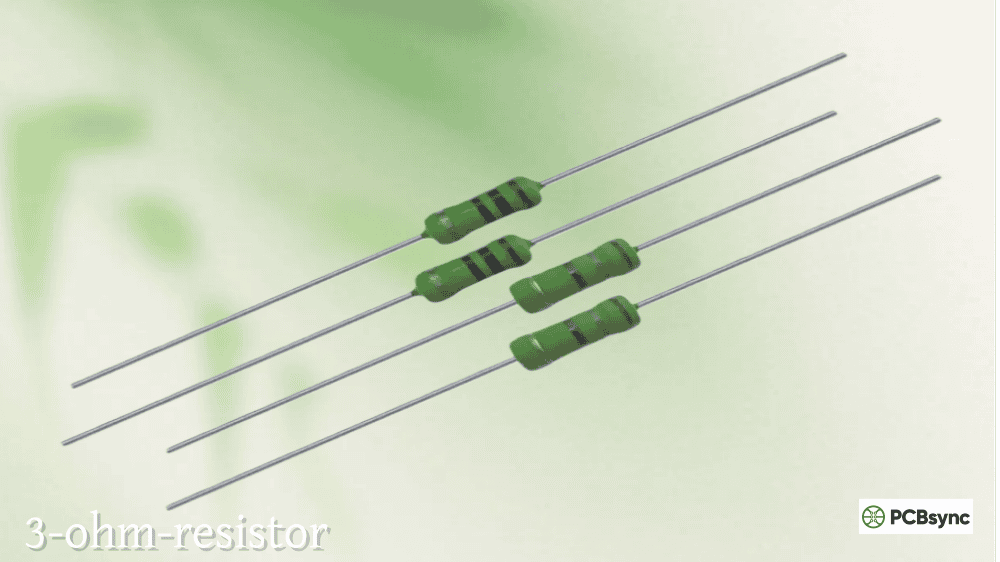
A 15 ohm resistor is a passive electronic component that provides exactly 15 ohms of resistance to electrical current flow. This value belongs to the E24 series of preferred numbers, which means it is a standard value readily available from virtually every electronics supplier worldwide.
The “15” indicates the resistance in ohms (Ω), and this particular value sits between 12Ω and 18Ω in the standard E24 progression. When you are working on projects involving moderate current levels with low-voltage supplies, you will frequently reach for a 15 ohm resistor because it offers an excellent balance between current limitation and power efficiency.
Why 15 Ohms Is a Standard Value
The E-series system was developed to provide logarithmically spaced resistance values that cover any possible requirement while minimizing the number of different values manufacturers need to produce. The E24 series specifically targets 5% tolerance resistors and includes 24 values per decade.
E-Series
Values Per Decade
Typical Tolerance
Common Use
E6
6
±20%
Basic applications
E12
12
±10%
General purpose
E24
24
±5%
Standard circuits
E96
96
±1%
Precision applications
The number 15 appears in all major E-series, making the 15 ohm resistor universally available. Whether you need through-hole components for prototyping or SMD packages for production boards, you will find this value in stock.
15 Ohm Resistor Color Code
Identifying a 15 ohm resistor by its color bands is straightforward once you understand the system. The color code follows international standards defined in IEC 60062.
4-Band Color Code
For standard through-hole resistors with 5% or 10% tolerance, the color bands read as follows:
Band
Color
Value
1st Band
Brown
1
2nd Band
Green
5
3rd Band (Multiplier)
Black
×1
4th Band (Tolerance)
Gold or Silver
±5% or ±10%
So a 15 ohm resistor displays Brown-Green-Black-Gold for 5% tolerance versions.
5-Band Color Code
Precision resistors use five bands for greater accuracy. A 1% tolerance 15 ohm resistor shows:
Band
Color
Value
1st Band
Brown
1
2nd Band
Green
5
3rd Band
Black
0
4th Band (Multiplier)
Gold
×0.1
5th Band (Tolerance)
Brown
±1%
The sequence is Brown-Green-Black-Gold-Brown. That gold multiplier band indicates division by 10, giving us 150 × 0.1 = 15Ω.
SMD Marking Codes
Surface mount resistors use numerical codes rather than colors due to their small size:
Package Size
Marking
Interpretation
0603 and larger
150
15 × 10^0 = 15Ω
0402 (3-digit)
15R or 150
15 ohms
Precision (EIA-96)
15X
Lookup required
Common Applications for 15 Ohm Resistors
Through my experience designing everything from simple hobby circuits to complex industrial controls, I have used 15 ohm resistors in numerous applications.
LED Current Limiting
This is probably the most common use I encounter. When you need to drive an LED from a 5V supply and want approximately 200mA of current, a 15 ohm resistor does the job nicely.
Here is the calculation for a typical high-brightness LED with 2V forward voltage:
R = (Vsupply – Vled) / I = (5V – 2V) / 0.2A = 15Ω
The math works out perfectly, which is why you see this resistor value specified in countless LED driver circuits.
Automotive LED Load Resistors
If you have ever converted your car’s turn signals to LEDs, you know about hyperflash problems. Many automotive 50-watt load resistors are rated at 15 ohms specifically because they simulate the load of a standard 21W incandescent bulb on a 12V system.
Audio Crossover Networks
Speaker crossover designers frequently use 15 ohm resistors for impedance matching and L-pad attenuators. The value works well with standard 4Ω and 8Ω speaker impedances for creating specific attenuation levels.
Current Sensing
Lower-power current sensing applications sometimes use a 15 ohm resistor when you need measurable voltage drops without excessive power dissipation. At 100mA, you get a clean 1.5V signal that most ADCs handle easily.
Specifications and Available Types
Power Ratings
The power your resistor must handle is critical. Using the wrong wattage leads to overheating, drift, and eventual failure. Here are typical ratings by package type:
Package Type
Typical Power Rating
Dimensions
0402 SMD
1/16W (0.0625W)
1.0mm × 0.5mm
0603 SMD
1/10W (0.1W)
1.6mm × 0.8mm
0805 SMD
1/8W (0.125W)
2.0mm × 1.25mm
1206 SMD
1/4W (0.25W)
3.2mm × 1.6mm
1/4W Through-Hole
0.25W
~6mm × 2mm
1/2W Through-Hole
0.5W
~9mm × 3mm
1W Through-Hole
1W
~12mm × 4mm
5W Wirewound
5W
~22mm × 8mm
For a 15 ohm resistor, calculate power dissipation using P = I²R or P = V²/R before selecting your package.
Resistor Technologies
Different construction methods suit different applications:
Carbon Film: Inexpensive, good for general use. Temperature coefficient around 200-500 ppm/°C.
Metal Film: Better stability and lower noise. Temperature coefficient typically 50-100 ppm/°C. My go-to choice for analog circuits.
Metal Oxide Film: Excellent for higher power applications with good pulse handling capability.
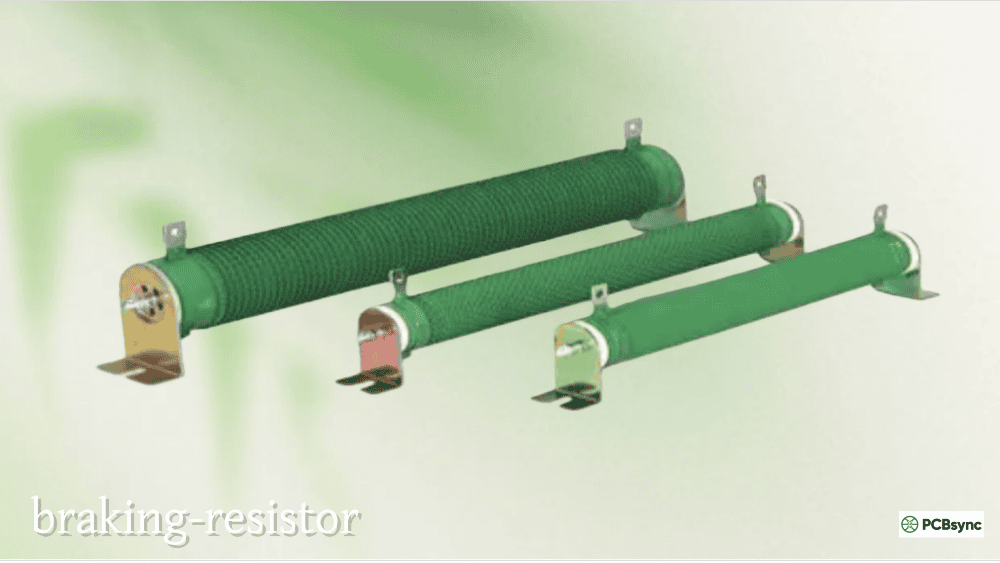
Wirewound: Best for high-power applications, but introduces inductance that can cause problems in high-frequency circuits.
Thick Film SMD: Standard for surface mount production. Adequate for most digital and general analog work.
Thin Film SMD: Superior precision and stability when you need it.
Calculating Circuit Requirements
Using Ohm’s Law with 15 Ohm Resistors
Every circuit calculation involving resistors starts with Ohm’s Law: V = I × R
Given Values
Formula
Example with 15Ω
Voltage and Resistance
I = V/R
I = 12V/15Ω = 0.8A
Current and Resistance
V = I × R
V = 0.1A × 15Ω = 1.5V
Voltage and Current
R = V/I
Confirms R = 1.5V/0.1A = 15Ω
Power Dissipation Examples
Understanding power dissipation prevents smoke and burned boards:
Voltage Across 15Ω
Current
Power Dissipated
1.5V
100mA
0.15W
3.0V
200mA
0.6W
5.0V
333mA
1.67W
12V
800mA
9.6W
Notice how quickly power increases with voltage. A 12V supply across a 15 ohm resistor demands a beefy 10W component with proper heatsinking.
Creating Non-Standard Values
Sometimes you need close to 15 ohms but not exactly. Here is how to combine standard values:
Series Combinations Resulting in ~15Ω
Configuration
Calculation
Result
10Ω + 4.7Ω
10 + 4.7
14.7Ω
12Ω + 3.3Ω
12 + 3.3
15.3Ω
8.2Ω + 6.8Ω
8.2 + 6.8
15.0Ω
Parallel Combinations Resulting in ~15Ω
Configuration
Calculation
Result
22Ω ∥ 47Ω
(22×47)/(22+47)
14.99Ω
30Ω ∥ 30Ω
30/2
15.0Ω
18Ω ∥ 82Ω
(18×82)/(18+82)
14.76Ω
Tolerance and Precision Considerations
The tolerance specification tells you how much the actual resistance may deviate from the marked value:
Tolerance
15Ω Actual Range
Color Code Band
±1%
14.85Ω to 15.15Ω
Brown
±2%
14.70Ω to 15.30Ω
Red
±5%
14.25Ω to 15.75Ω
Gold
±10%
13.50Ω to 16.50Ω
Silver
For current sensing or precision voltage dividers, always choose 1% tolerance parts. The cost difference is negligible for small quantities.
From my years of board layout experience, here are practical recommendations:
Footprint Selection
Match your footprint to the power requirements, not just the resistance. An 0805 package handles only 1/8W in typical conditions. Derating by 50% for elevated ambient temperatures means realistically expecting just 0.0625W continuous.
Thermal Management
For higher-power 15 ohm resistors, consider these approaches:
Use larger copper pours connected to the pads
Add thermal vias under high-power SMD resistors
Space power resistors away from heat-sensitive components
Consider forced airflow for assemblies exceeding 1W dissipation per resistor
Parasitic Considerations
Wirewound 15 ohm resistors can have significant inductance, sometimes several microhenries. This causes problems in:
Switching power supply feedback networks
High-frequency filter circuits
Fast digital signal termination
Stick with carbon or metal film for frequencies above a few hundred kilohertz.
Useful Resources for Engineers
Here are reliable sources for datasheets, calculations, and purchasing:
A standard 4-band 15 ohm resistor with 5% tolerance has the color code Brown-Green-Black-Gold. Brown represents 1, Green represents 5, Black is the multiplier (×1), and Gold indicates ±5% tolerance. For 10% tolerance versions, the fourth band is Silver instead of Gold.
Can I use a 15 ohm resistor for LED circuits?
Absolutely. The 15 ohm resistor is excellent for LED applications, particularly when driving LEDs from 5V supplies at around 200mA. Calculate using R = (Vsupply – Vled)/I to confirm it suits your specific LED and supply voltage. Always verify the power rating meets or exceeds your calculated dissipation.
What wattage 15 ohm resistor do I need?
Calculate power using P = V²/R where V is the voltage across the resistor. For a 15 ohm resistor with 3V across it, power equals 3²/15 = 0.6W. Choose a resistor rated at least 1.5 to 2 times your calculated value for reliable operation. This means selecting a 1W resistor for this example.
How do I identify a 15 ohm SMD resistor?
Surface mount 15 ohm resistors typically display “150” (meaning 15 × 10^0) or “15R” on larger packages. The three-digit code works like this: the first two digits are significant figures (15), and the third digit is the number of zeros to add (0 zeros). Some precision resistors use the EIA-96 alphanumeric code system.
Are 15 ohm resistors common in electronics kits?
Yes, 15 ohms is a standard E24 value included in most resistor assortment kits. Since it belongs to the E6, E12, and E24 series, manufacturers always stock it. You will find this value in starter kits, replacement assortments, and professional component inventories. If your local supplier is out of stock, any major distributor carries multiple options.
Final Thoughts
The 15 ohm resistor exemplifies why standardization matters in electronics. This single value handles LED current limiting at common voltages, provides sensible load impedances for testing, and offers a convenient middle-ground resistance for countless applications.
Whether you are prototyping your first LED blinker or designing production hardware, understanding resistor specifications, color codes, and application requirements saves time and prevents failures. Keep a variety of 15 ohm resistors in different packages and power ratings in your parts inventory, and you will reach for them more often than you might expect.
Inquire: Call 0086-755-23203480, or reach out via the form below/your sales contact to discuss our design, manufacturing, and assembly capabilities.
Quote: Email your PCB files to Sales@pcbsync.com (Preferred for large files) or submit online. We will contact you promptly. Please ensure your email is correct.
Notes: For PCB fabrication, we require PCB design file in Gerber RS-274X format (most preferred), *.PCB/DDB (Protel, inform your program version) format or *.BRD (Eagle) format. For PCB assembly, we require PCB design file in above mentioned format, drilling file and BOM. Click to download BOM template To avoid file missing, please include all files into one folder and compress it into .zip or .rar format.