Inquire: Call 0086-755-23203480, or reach out via the form below/your sales contact to discuss our design, manufacturing, and assembly capabilities.
Quote: Email your PCB files to Sales@pcbsync.com (Preferred for large files) or submit online. We will contact you promptly. Please ensure your email is correct.
Notes: For PCB fabrication, we require PCB design file in Gerber RS-274X format (most preferred), *.PCB/DDB (Protel, inform your program version) format or *.BRD (Eagle) format. For PCB assembly, we require PCB design file in above mentioned format, drilling file and BOM. Click to download BOM template To avoid file missing, please include all files into one folder and compress it into .zip or .rar format.
10 Ohm Resistor: Color Code, Specifications & Uses
If you’ve ever worked on a breadboard or designed a PCB, you’ve probably reached for a 10 ohm resistor at some point. This low-value component sits right in that sweet spot where you need meaningful current limiting without creating massive voltage drops. After years of designing circuits, I can tell you that understanding this component properly will save you debugging headaches down the road.
In this guide, I’ll walk you through everything you need to know about the 10 ohm resistor, from reading its color bands correctly to selecting the right type for your specific application.
A 10 ohm resistor is a passive electronic component that provides exactly 10 ohms of electrical resistance. This means when current flows through it, the component opposes that flow with a specific, predictable level of resistance. Using Ohm’s Law (V = IR), you can calculate that pushing 1 amp through a 10 ohm resistor creates a 10-volt drop across it.
The 10 ohm value falls into the low-resistance category, which makes it particularly useful for applications requiring higher current flow while still providing some level of protection or sensing capability. Unlike high-value resistors that might be in the kilohm or megohm range, a 10 ohm resistor allows relatively substantial current to pass while dissipating manageable amounts of power.
10 Ohm Resistor Color Code
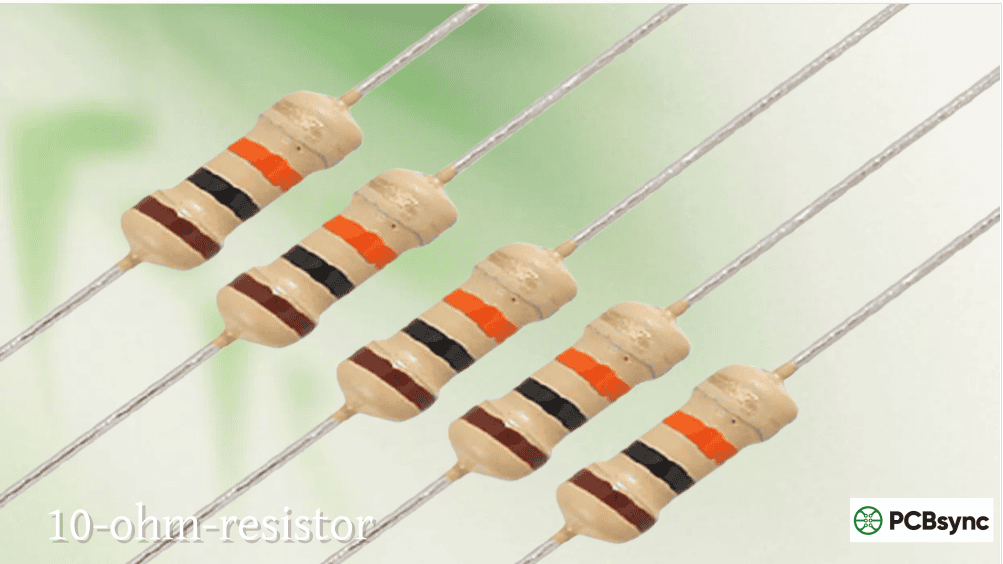
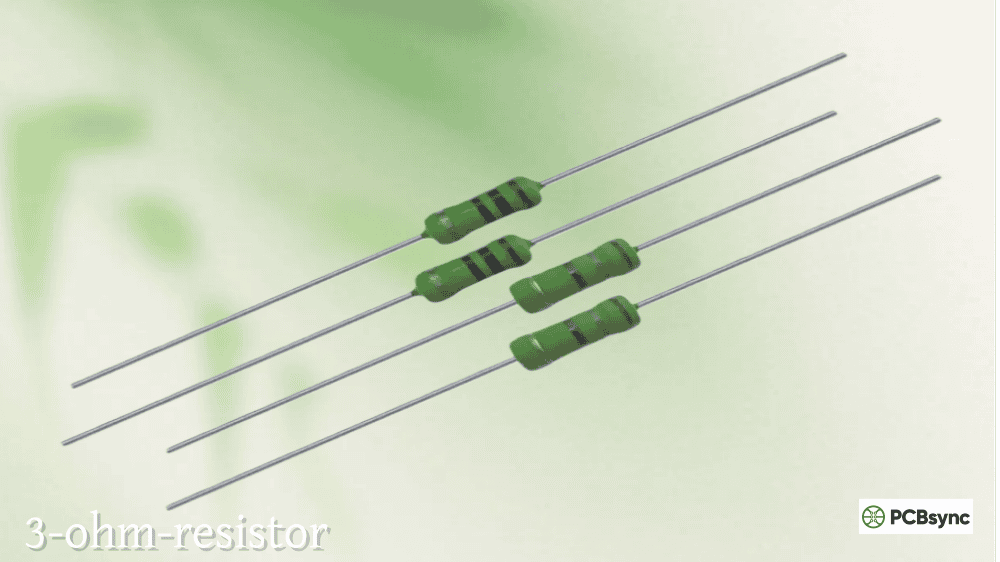
Reading resistor color codes is one of those fundamental skills every electronics enthusiast needs. For a 10 ohm resistor, the color bands follow a specific pattern depending on whether you’re looking at a 3-band, 4-band, 5-band, or 6-band resistor.
4-Band 10 Ohm Resistor Color Code
The most common type you’ll encounter is the 4-band version. Here’s how to read it:
Band
Color
Value/Function
1st Band
Brown
1 (first digit)
2nd Band
Black
0 (second digit)
3rd Band
Black
×1 (multiplier)
4th Band
Gold/Silver
±5% or ±10% (tolerance)
So the calculation works out to: 10 × 1 = 10Ω
Color Code Variations by Band Type
Resistor Type
Color Sequence
Tolerance
3-Band
Brown-Black-Black
±20%
4-Band (5%)
Brown-Black-Black-Gold
±5%
4-Band (10%)
Brown-Black-Black-Silver
±10%
5-Band (1%)
Brown-Black-Black-Gold-Brown
±1%
5-Band (5%)
Brown-Black-Black-Gold-Gold
±5%
6-Band
Brown-Black-Black-Gold-Gold-Black
±5%, 250 ppm/K
Understanding Tolerance
The tolerance band tells you how much the actual resistance might vary from the stated 10 ohm value. With a ±5% tolerance (gold band), your resistor’s actual value falls somewhere between 9.5Ω and 10.5Ω. For precision applications, you’ll want to reach for a 1% tolerance resistor, which keeps you within 9.9Ω to 10.1Ω.
10 Ohm Resistor Specifications
When selecting a 10 ohm resistor for your project, you need to consider more than just the resistance value. Here are the key specifications that matter:
Power Rating
Power rating determines how much heat your resistor can safely dissipate without damage. Common power ratings include:
Power Rating
Typical Package
Max Current at 10Ω
Recommended Use
1/8W (0.125W)
0402 SMD
~112mA
Low-power signal circuits
1/4W (0.25W)
0805 SMD, Through-hole
~158mA
General prototyping
1/2W (0.5W)
Through-hole
~224mA
Medium current applications
1W
Larger through-hole
~316mA
Power circuits
2W
Wire-wound/Chassis
~447mA
High-power applications
Pro tip: Always derate your resistor. Running at 50-75% of the rated power keeps temperatures manageable and extends component life significantly.
Temperature Coefficient (TCR)
TCR tells you how much the resistance changes with temperature. For a 10 ohm resistor:
Resistor Type
Typical TCR
Temperature Stability
Carbon Composition
±1000 ppm/°C
Poor
Carbon Film
±200-500 ppm/°C
Moderate
Metal Film
±25-100 ppm/°C
Good
Wirewound
±20-200 ppm/°C
Good to Excellent
Thin Film
±5-25 ppm/°C
Excellent
For precision current sensing applications, you’ll want metal film or thin film resistors with low TCR values.
Voltage Rating
While you might not immediately think about voltage ratings for low-value resistors, it matters. Most standard 1/4W resistors have a maximum working voltage around 200-250V. At 10 ohms, you’re unlikely to hit voltage limits before power limits, but it’s worth checking datasheets for specialized applications.
Types of 10 Ohm Resistors
Different construction types offer different advantages. Here’s what you’ll commonly find:
Carbon Film Resistors
These are your everyday workhorses, offering decent stability at low cost. They work well for general-purpose applications where ±5% tolerance is acceptable. Expect some noise in audio circuits though.
Metal Film Resistors
When you need tighter tolerances (1% or better) and lower noise, metal film is the way to go. These are my go-to for analog signal paths and precision circuits. The temperature coefficient is also significantly better than carbon film.
Wirewound Resistors
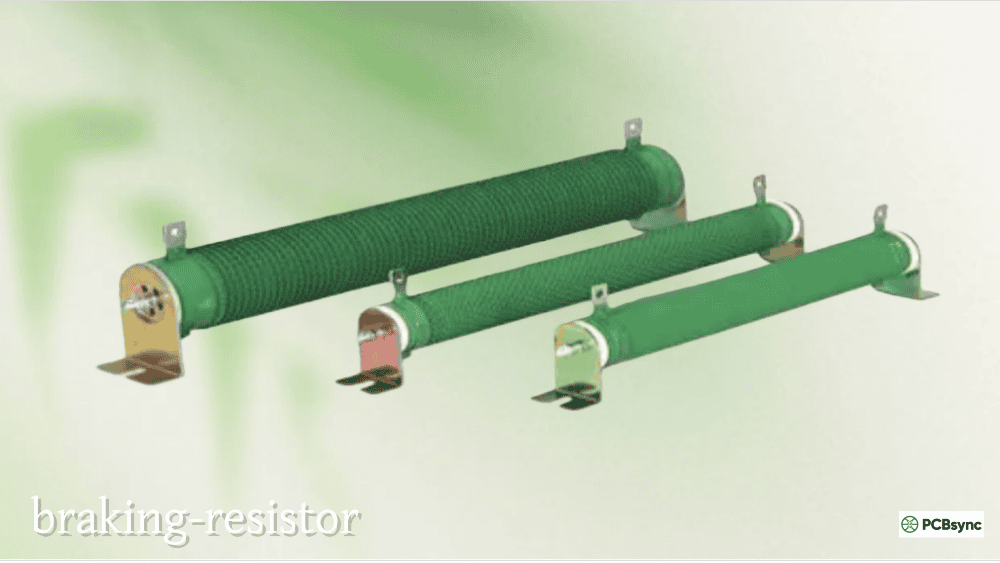
For high-power applications, wirewound resistors handle the heat better than any other type. A 10 ohm wirewound power resistor can dissipate several watts when properly mounted to a heatsink. The downside? They’re inductive, so keep them away from high-frequency circuits.
SMD Chip Resistors
Surface mount 10 ohm resistors come in standardized packages from tiny 0201 up to larger 2512 sizes. The package size directly correlates with power handling:
Here’s where things get practical. Let me share some real-world uses I’ve implemented in my designs:
Current Limiting for LEDs
In high-voltage LED circuits, a 10 ohm resistor works well for current limiting. At 5V with a forward drop of approximately 2V across the LED, you’re looking at (5V – 2V) / 10Ω = 300mA. That’s perfect for driving high-brightness indicator LEDs or small LED strips.
Current Sensing
This is where low-value resistors really shine. Place a 10 ohm resistor in series with your load, measure the voltage across it, and you can calculate current precisely. With 100mA flowing through, you get a clean 1V signal that’s easy to read with an ADC.
Pull-Down Resistors in Digital Circuits
While higher values like 10kΩ are more common for pull-ups/pull-downs, a 10 ohm resistor creates a strong pull-down that’s less susceptible to noise in electrically harsh environments. Just watch your current consumption.
Snubber Circuits
In switching power supplies and motor drives, RC snubber networks often use 10 ohm resistors paired with capacitors to suppress voltage spikes and reduce ringing.
Impedance Matching
Audio circuits sometimes use 10 ohm resistors for impedance matching between stages or at speaker outputs where you need to present a specific load impedance.
Voltage Dividers
When you need to divide down a voltage while handling higher currents, low-value resistor pairs do the job. A 10Ω/20Ω divider gives you 1/3 of the input voltage while allowing substantial current flow.
Calculating Power Dissipation
Before you drop that 10 ohm resistor into your circuit, run these numbers:
Power = I² × R or Power = V² / R
For example:
200mA through a 10 ohm resistor: (0.2)² × 10 = 0.4W — you need at least a 1/2W resistor
5V across a 10 ohm resistor: 25 / 10 = 2.5W — you need a power resistor
Here’s a quick reference table:
Current (mA)
Voltage Drop (V)
Power (W)
Minimum Rating
50
0.5
0.025
1/8W
100
1.0
0.1
1/4W
200
2.0
0.4
1/2W
300
3.0
0.9
1W
500
5.0
2.5
5W
How to Test a 10 Ohm Resistor
A digital multimeter is your best friend here. Set it to the resistance setting and measure across the leads. You should read somewhere between 9.5Ω and 10.5Ω for a ±5% tolerance resistor. If you’re getting wildly different values, the resistor may be damaged or you’re measuring it while it’s still in-circuit with parallel paths.
For in-circuit testing, remember that parallel resistances will always give you a lower reading than the actual resistor value. Desolder at least one leg for accurate measurements.
Selecting the Right 10 Ohm Resistor for Your Project
When choosing a 10 ohm resistor, ask yourself these questions:
What’s the maximum current? This determines your power rating.
How precise does it need to be? This determines tolerance (5%, 1%, 0.1%).
Is it in a temperature-sensitive application? Consider TCR specifications.
What frequency is the circuit operating at? Avoid wirewound for RF applications.
What’s the mounting method? Through-hole for prototyping, SMD for production.
Useful Resources for Working with Resistors
Here are some tools and databases I use regularly:
Component Databases and Calculators:
DigiKey Resistor Color Code Calculator: digikey.com/en/resources/conversion-calculators/conversion-calculator-resistor-color-code
What current flows through a 10 ohm resistor at 5V?
Using Ohm’s Law (I = V/R), a 10 ohm resistor with 5V across it passes 500mA of current. At this current level, the resistor dissipates 2.5W, so you’d need at least a 3W or 5W power resistor to handle this safely.
Can I use two 20 ohm resistors in parallel instead of one 10 ohm?
Yes, two equal resistors in parallel give you half the resistance of either one. Two 20Ω resistors in parallel yield 10Ω total. As a bonus, each resistor only handles half the power, so two 1/4W resistors in parallel can safely dissipate 1/2W total.
What’s the difference between a 10 ohm and 10K ohm resistor?
The difference is massive. A 10 ohm resistor has a resistance of 10Ω, while a 10K (10 kilohm) resistor has 10,000Ω. At 5V, a 10 ohm resistor passes 500mA, while a 10K resistor only passes 0.5mA. Make sure you read the color code correctly: brown-black-black-gold is 10Ω, but brown-black-orange-gold is 10KΩ.
Why would I choose a wirewound 10 ohm resistor over a film type?
Wirewound resistors excel at handling high power levels and offer excellent long-term stability. Choose wirewound when your application requires dissipating more than 1-2 watts, or when you need very precise resistance values that remain stable over time. However, avoid wirewound for high-frequency applications due to their inherent inductance.
How do I know if my 10 ohm resistor is damaged?
Signs of damage include visible burn marks, cracked body, discoloration, or a reading that’s significantly off from the expected value. A healthy 10 ohm resistor with ±5% tolerance should measure between 9.5Ω and 10.5Ω. If you’re reading open circuit (infinite resistance) or drastically different values, replace the component.
Final Thoughts
The 10 ohm resistor might seem like a simple component, but selecting the right one for your application requires understanding color codes, power ratings, tolerances, and temperature characteristics. Whether you’re limiting current through an LED, sensing current in a motor driver, or building a snubber network, this versatile value has a place in countless circuit designs.
Keep a variety of 10 ohm resistors in your parts bin. Having through-hole types for prototyping and SMD versions in common packages like 0805 and 1206 will cover most of your needs. For power applications, consider keeping a few wirewound or high-wattage versions on hand.
Now that you understand how to read, select, and apply 10 ohm resistors properly, you’re better equipped to design circuits that work reliably from the first prototype through production.
Inquire: Call 0086-755-23203480, or reach out via the form below/your sales contact to discuss our design, manufacturing, and assembly capabilities.
Quote: Email your PCB files to Sales@pcbsync.com (Preferred for large files) or submit online. We will contact you promptly. Please ensure your email is correct.
Notes: For PCB fabrication, we require PCB design file in Gerber RS-274X format (most preferred), *.PCB/DDB (Protel, inform your program version) format or *.BRD (Eagle) format. For PCB assembly, we require PCB design file in above mentioned format, drilling file and BOM. Click to download BOM template To avoid file missing, please include all files into one folder and compress it into .zip or .rar format.