Inquire: Call 0086-755-23203480, or reach out via the form below/your sales contact to discuss our design, manufacturing, and assembly capabilities.
Quote: Email your PCB files to Sales@pcbsync.com (Preferred for large files) or submit online. We will contact you promptly. Please ensure your email is correct.
Notes: For PCB fabrication, we require PCB design file in Gerber RS-274X format (most preferred), *.PCB/DDB (Protel, inform your program version) format or *.BRD (Eagle) format. For PCB assembly, we require PCB design file in above mentioned format, drilling file and BOM. Click to download BOM template To avoid file missing, please include all files into one folder and compress it into .zip or .rar format.
As someone who’s designed hundreds of PCB boards over the years, I can tell you that the 4.7 k ohm resistor is one of those components you’ll reach for again and again. Whether you’re building your first Arduino project or designing a professional I2C bus, understanding this workhorse resistor inside and out will save you hours of debugging time. In this guide, I’ll walk you through everything from reading the color bands to calculating optimal pull-up configurations—the practical stuff they don’t always teach in textbooks.
A 4.7 kilo ohm resistor (also written as 4.7kΩ, 4k7, or 4700Ω) is a passive electronic component with a resistance value of 4,700 ohms. The “k” stands for kilo, meaning 1,000, so 4.7k simply means 4.7 × 1,000 = 4,700 ohms.
This specific resistance value sits in a sweet spot that makes it incredibly versatile. It’s low enough to provide decent current flow and fast signal rise times, yet high enough to minimize power consumption. That balance is exactly why you’ll find the 4.7 k ohm resistor specified in countless reference designs and application notes, particularly for I2C pull-up applications.
Key Specifications of 4.7K Resistors
Parameter
Typical Value
Notes
Resistance
4,700Ω (4.7kΩ)
Nominal value
Common Tolerances
±1%, ±5%, ±10%
5% most common for general use
Power Rating (THT)
1/4W (0.25W), 1/8W
Match to your circuit requirements
Power Rating (SMD)
0402 to 2512 packages
Based on package size
Max Voltage (1/4W)
~34V
Calculated from P = V²/R
Temperature Coefficient
50-250 ppm/°C
Varies by resistor type
4.7K Ohm Resistor Color Code: How to Read It
Reading resistor color codes becomes second nature with practice, but even experienced engineers occasionally need a refresher. The 4.7 k ohm resistor uses a straightforward color band system that tells you everything you need to know at a glance.
4-Band Resistor Color Code for 4.7K
The most common through-hole 4.7kΩ resistors use four color bands:
Band Position
Color
Value/Meaning
1st Band
Yellow
First digit: 4
2nd Band
Violet (Purple)
Second digit: 7
3rd Band
Red
Multiplier: ×100
4th Band
Gold or Silver
Tolerance: ±5% or ±10%
Calculation: 47 × 100 = 4,700Ω = 4.7kΩ
The sequence Yellow-Violet-Red-Gold is what you’re looking for. I’ve trained myself to instantly recognize this pattern—it’s worth committing to memory since you’ll encounter it constantly.
5-Band Resistor Color Code for 4.7K (High Precision)
For tighter tolerance applications, 5-band resistors add an extra significant digit:
Band Position
Color
Value/Meaning
1st Band
Yellow
First digit: 4
2nd Band
Violet
Second digit: 7
3rd Band
Black
Third digit: 0
4th Band
Brown
Multiplier: ×10
5th Band
Brown
Tolerance: ±1%
Calculation: 470 × 10 = 4,700Ω = 4.7kΩ
The 5-band sequence is Yellow-Violet-Black-Brown-Brown for a 1% tolerance 4.7 kilo ohm resistor.
Quick Color Code Reference Table
Color
Digit Value
Multiplier
Tolerance
Black
0
×1
—
Brown
1
×10
±1%
Red
2
×100
±2%
Orange
3
×1,000
—
Yellow
4
×10,000
—
Green
5
×100,000
±0.5%
Blue
6
×1,000,000
±0.25%
Violet
7
×10,000,000
±0.1%
Gray
8
—
±0.05%
White
9
—
—
Gold
—
×0.1
±5%
Silver
—
×0.01
±10%
SMD Resistor Code for 4.7K
Surface mount resistors use numeric codes instead of color bands. For a 4.7k SMD resistor, the marking is 472:
First two digits (47): Significant figures
Third digit (2): Number of zeros to add, or multiplier (10²)
Result: 47 × 10² = 4,700Ω
For high-precision 4-digit SMD codes, you might see 4701 (470 × 10¹ = 4,700Ω) on 1% tolerance parts.
Quick tip: When you see “472” on a tiny chip resistor, think “47 followed by 2 zeros” = 4,700.
Understanding Tolerance and Its Impact
The tolerance band determines how much the actual resistance can deviate from the stated value. Here’s what that means in practice for a 4.7 k ohm resistor:
Tolerance
Range (Ω)
Best For
±1%
4,653 – 4,747
Precision circuits, sensors, amplifiers
±5%
4,465 – 4,935
General purpose, pull-ups, current limiting
±10%
4,230 – 5,170
Non-critical applications, prototyping
For most pull-up resistor applications, a 5% tolerance 4.7 kilo ohm resistor works perfectly fine. The I2C spec allows for a fairly wide range of pull-up values, so the variation won’t cause issues. However, if you’re designing a precision voltage divider or sensor interface, spring for the 1% tolerance parts—the small cost difference is worth the predictability.
4.7K Resistor as a Pull-up Resistor
This is where the 4.7 k ohm resistor really shines. Pull-up (and pull-down) resistors are essential in digital circuits to ensure signal lines rest at a known logic state when not actively driven.
Why 4.7K is Ideal for Pull-ups
Pull-up resistors connect a signal line to VCC (usually 3.3V or 5V), ensuring the line reads HIGH when nothing else is driving it. The 4.7 kilo ohm resistor hits a practical sweet spot for several reasons:
Fast rise times: Lower resistance values charge bus capacitance more quickly, enabling sharper signal transitions
Reasonable current draw: At 5V, a 4.7kΩ pull-up draws about 1mA when pulled low—acceptable for most applications
Reliable logic levels: Provides strong enough pull-up to overcome noise and ensure clean HIGH states
Widely available: Stocked by every distributor, in every package size
I2C Pull-up Resistor Applications
The most common application for 4.7K pull-up resistors is on I2C (Inter-Integrated Circuit) communication buses. I2C uses an open-drain architecture where devices can only pull lines LOW—they rely on external resistors to pull lines back to HIGH.
Standard I2C configuration:
One 4.7kΩ resistor on SDA (data line) to VCC
One 4.7kΩ resistor on SCL (clock line) to VCC
This configuration works reliably for most I2C setups at standard (100kHz) and fast mode (400kHz) speeds with moderate bus capacitance.
Calculating Optimal Pull-up Values
The I2C specification provides formulas to determine the acceptable pull-up resistor range:
For a 5V system: Rp(min) = (5V – 0.4V) / 3mA ≈ 1.5kΩ
Maximum resistance (for acceptable rise time):
Rp(max) = tr / (0.8473 × Cb)
Where tr = rise time (1000ns for standard mode) and Cb = bus capacitance.
For a typical setup with 100pF bus capacitance: Rp(max) ≈ 11.8kΩ
The 4.7 k ohm resistor falls comfortably within this range, making it a safe default choice.
Pull-up Resistor Selection Guide
I2C Speed Mode
Typical Capacitance
Recommended Pull-up
Standard (100kHz)
Up to 400pF
4.7kΩ – 10kΩ
Fast (400kHz)
Up to 400pF
2.2kΩ – 4.7kΩ
Fast Plus (1MHz)
Up to 550pF
1kΩ – 2.2kΩ
High Speed (3.4MHz)
Up to 100pF
Custom calculation
When to adjust from 4.7kΩ:
Go lower (2.2kΩ – 3.3kΩ): Long wire runs, multiple devices, high-speed operation, noisy environments
Go higher (10kΩ): Battery-powered devices where minimizing current draw is critical, single-device short traces
Other Common Applications for 4.7K Resistors
Beyond pull-ups, the 4.7 kilo ohm resistor serves many purposes in circuit design.
Voltage Dividers
A voltage divider with two resistors can scale down voltages for ADC inputs or level shifting. Pairing a 4.7kΩ resistor with a 10kΩ resistor creates approximately a 3:1 division ratio.
Example: Converting 5V logic to 3.3V tolerant levels using 4.7kΩ (top) and 10kΩ (bottom) creates a voltage divider that outputs approximately 3.4V—close enough for most 3.3V inputs.
LED Current Limiting
While not the most common choice for LEDs, a 4.7 k ohm resistor can limit current for indicator LEDs in low-power applications:
At 5V with typical 2V LED forward voltage: I = (5V – 2V) / 4.7kΩ ≈ 0.64mA (dim but visible)
At 3.3V with typical 2V LED forward voltage: I = (3.3V – 2V) / 4.7kΩ ≈ 0.28mA (very dim)
This works for status indicators where brightness isn’t critical, but you’ll want lower values (220Ω – 1kΩ) for standard brightness.
Transistor Biasing
The 4.7 k ohm resistor is commonly used in transistor biasing networks to set the operating point of BJT amplifiers, ensuring linear operation and minimizing distortion.
RC Timing Circuits
Combined with capacitors, a 4.7kΩ resistor creates predictable timing elements:
Engineers often debate whether to use 4.7kΩ, 10kΩ, or 47kΩ for pull-ups. Here’s a practical comparison:
Parameter
4.7kΩ
10kΩ
47kΩ
Current at 5V
1.06mA
0.5mA
0.1mA
Rise time
Faster
Medium
Slower
Noise immunity
Better
Good
Lower
Power consumption
Higher
Medium
Lower
Best for
I2C, fast signals
General pull-ups
Ultra-low power
My recommendation: Start with 4.7kΩ for I2C and signals where speed matters. Use 10kΩ for general-purpose pull-ups on slower digital inputs. Reserve 47kΩ for battery-powered applications where every microamp counts.
Common Mistakes and How to Avoid Them
After reviewing countless designs (including my own early mistakes), here are pitfalls to watch for:
Mistake 1: Using 10kΩ for Fast I2C
A 10kΩ pull-up often works at 100kHz but causes communication failures at 400kHz due to slow rise times. Use 4.7kΩ or lower for fast-mode I2C.
Mistake 2: Forgetting Multiple Pull-ups Add in Parallel
If multiple I2C devices each have their own pull-up resistors, they combine in parallel. Three devices with 4.7kΩ pull-ups each result in an effective pull-up of about 1.57kΩ, which might be too strong. Check your breakout boards and disable extra pull-ups when necessary.
Mistake 3: Ignoring Bus Capacitance
Longer I2C traces and more devices increase bus capacitance, requiring stronger (lower value) pull-ups. Measure with an oscilloscope to verify clean signal edges.
Mistake 4: Confusing 4.7K with 47K
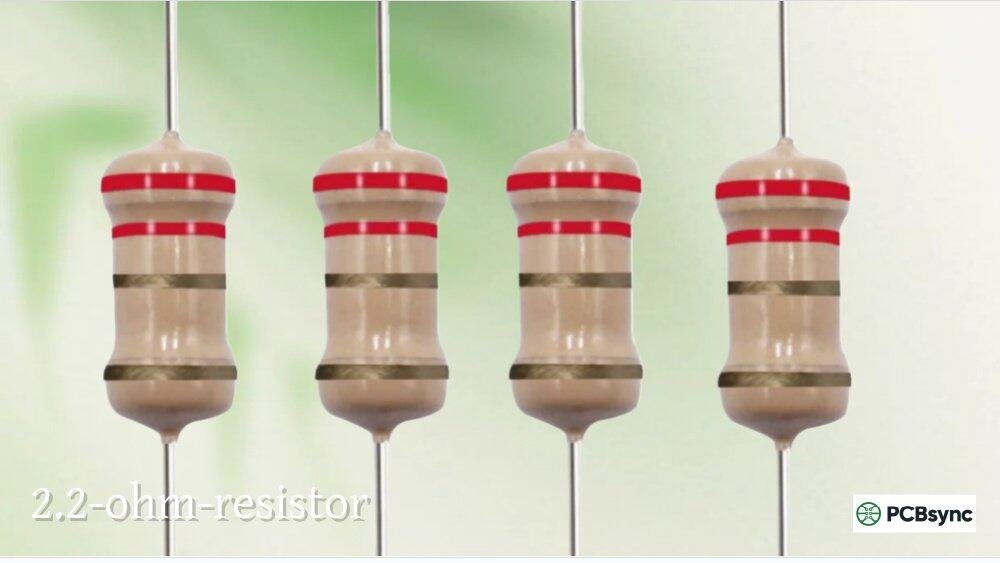
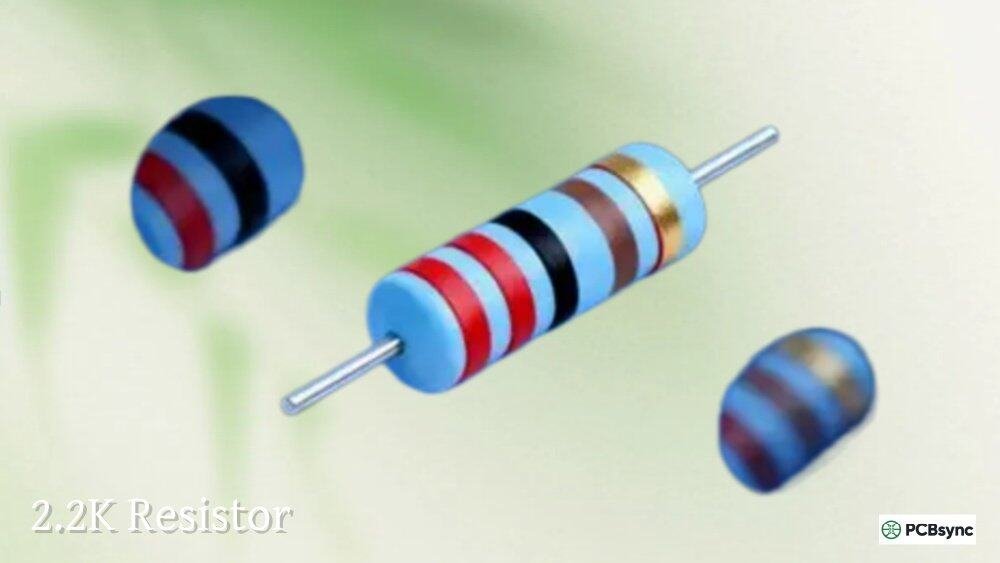
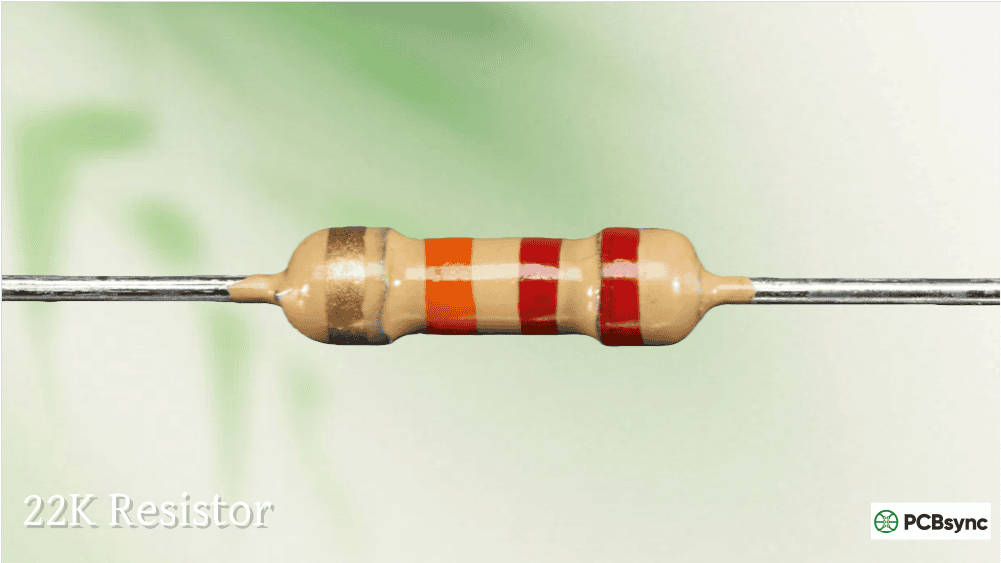
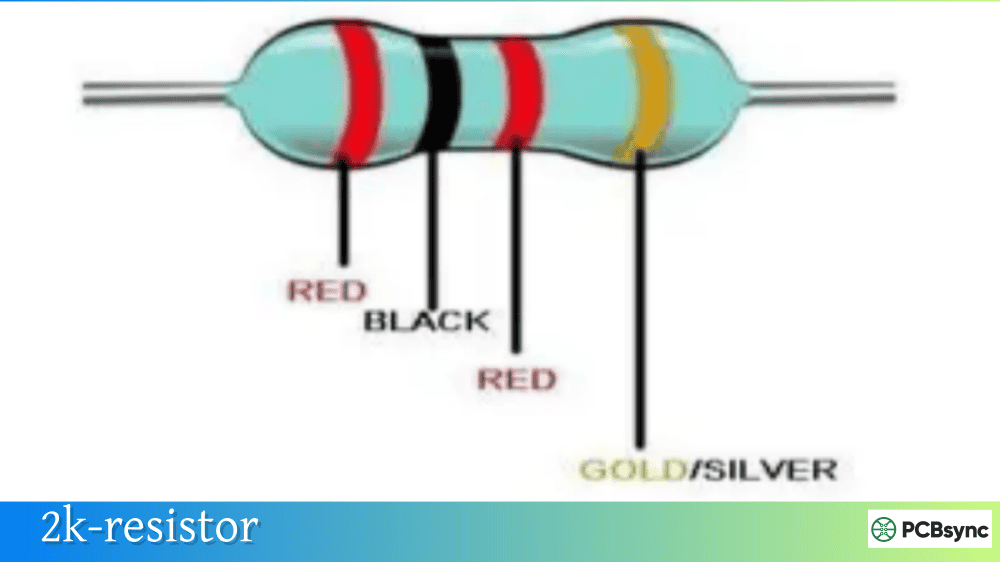
The color codes are similar (Yellow-Violet-Red vs Yellow-Violet-Orange). Always double-check the multiplier band—a 47kΩ resistor where you intended 4.7kΩ can cause subtle, hard-to-debug issues.
Useful Resources and Tools
Here are tools and databases I regularly use when working with resistors:
Search “Resistor Color Code Calculator” in your app store — Several free apps use your phone camera to identify resistor values
Frequently Asked Questions (FAQs)
What is the color code for a 4.7K ohm resistor?
The 4-band color code for a 4.7K ohm resistor is Yellow-Violet-Red-Gold (for 5% tolerance). Yellow represents the digit 4, violet represents 7, red is the multiplier (×100), and gold indicates ±5% tolerance. This gives you 47 × 100 = 4,700 ohms or 4.7kΩ. For 5-band precision resistors (1% tolerance), the sequence is Yellow-Violet-Black-Brown-Brown.
What is the difference between 4.7K and 47K resistors?
The main difference is the resistance value—4.7kΩ (4,700 ohms) versus 47kΩ (47,000 ohms). The 47K resistor has 10 times higher resistance, meaning it allows 10 times less current to flow for the same voltage. This affects their suitability for different applications. In color code terms, the 4.7K uses a red multiplier band (×100) while the 47K uses an orange multiplier band (×1,000). The 4.7 kilo ohm resistor is preferred for I2C pull-ups due to faster rise times, while 47K might be used for ultra-low power applications.
Why is 4.7K commonly used for I2C pull-up resistors?
The 4.7K resistor is popular for I2C pull-ups because it provides an excellent balance between signal rise time and power consumption. I2C buses use open-drain outputs that require external pull-ups to return to HIGH state. A 4.7kΩ resistor charges the bus capacitance fast enough for reliable 100kHz and 400kHz operation while drawing only about 1mA at 5V when the line is pulled low. It falls safely within the I2C specification’s recommended range (typically 1.5kΩ to 10kΩ for standard setups).
Can I use a 10K resistor instead of 4.7K for pull-ups?
Yes, in many cases a 10kΩ resistor works fine as a pull-up, especially for standard-mode (100kHz) I2C or general digital inputs. However, 10kΩ may cause issues with fast-mode I2C (400kHz) due to slower rise times, particularly with longer wire runs or multiple devices adding bus capacitance. The higher resistance also provides slightly weaker noise immunity. If you’re experiencing intermittent communication errors, switching from 10kΩ to 4.7kΩ often resolves the problem. For battery-powered devices where current consumption is critical, 10kΩ saves about half the quiescent current.
What does 472 mean on an SMD resistor?
The code “472” on an SMD (surface mount) resistor indicates a 4.7K ohm resistance value. The marking system works like this: the first two digits (47) are the significant figures, and the third digit (2) tells you how many zeros to add, acting as a multiplier (10²). So 472 means 47 × 10² = 47 × 100 = 4,700 ohms = 4.7kΩ. This 3-digit code system is standard for 5% tolerance SMD resistors. Higher precision 1% resistors may use a 4-digit code (4701) or the EIA-96 alphanumeric system.
Summary
The 4.7 k ohm resistor is a fundamental component that every electronics engineer and hobbyist should understand thoroughly. Its versatility in pull-up configurations, particularly for I2C buses, makes it an essential part of any component kit. Remember the Yellow-Violet-Red-Gold color code (or 472 for SMD), understand when to adjust values based on your specific application requirements, and always verify critical designs with an oscilloscope when possible.
Whether you’re building your first sensor project or designing production PCBs, having solid fundamentals with components like the 4.7 kilo ohm resistor will serve you well throughout your engineering career.
Inquire: Call 0086-755-23203480, or reach out via the form below/your sales contact to discuss our design, manufacturing, and assembly capabilities.
Quote: Email your PCB files to Sales@pcbsync.com (Preferred for large files) or submit online. We will contact you promptly. Please ensure your email is correct.
Notes: For PCB fabrication, we require PCB design file in Gerber RS-274X format (most preferred), *.PCB/DDB (Protel, inform your program version) format or *.BRD (Eagle) format. For PCB assembly, we require PCB design file in above mentioned format, drilling file and BOM. Click to download BOM template To avoid file missing, please include all files into one folder and compress it into .zip or .rar format.