Inquire: Call 0086-755-23203480, or reach out via the form below/your sales contact to discuss our design, manufacturing, and assembly capabilities.
Quote: Email your PCB files to Sales@pcbsync.com (Preferred for large files) or submit online. We will contact you promptly. Please ensure your email is correct.
Notes: For PCB fabrication, we require PCB design file in Gerber RS-274X format (most preferred), *.PCB/DDB (Protel, inform your program version) format or *.BRD (Eagle) format. For PCB assembly, we require PCB design file in above mentioned format, drilling file and BOM. Click to download BOM template To avoid file missing, please include all files into one folder and compress it into .zip or .rar format.
2 Ohm Resistor: Complete Guide to Color Code & Practical Applications
In my years designing audio equipment and power electronics, few resistor values come up as often as the 2 ohm resistor. This low-value component sits at a sweet spot for speaker crossover networks, impedance matching, and inrush current limiting. Whether you’re building a DIY speaker system or designing protection circuits, understanding how to identify and properly apply a 2 ohm resistor will save you from costly mistakes.
This guide covers everything from reading the color code correctly to selecting the right type for your specific application.
A 2 ohm resistor is a passive electronic component that provides exactly 2 ohms of electrical resistance to current flow. This relatively low resistance value places it in the category of components used for power applications rather than signal-level circuits.
The 2Ω value is part of the E24 standard resistor series, meaning it’s widely available from virtually every manufacturer. You’ll find it in everything from cheap carbon film versions for hobby projects to precision wirewound types designed specifically for high-end audio crossovers.
What makes the 2 ohm resistor particularly useful is its relationship to common speaker impedances. Since most speakers are rated at 4Ω or 8Ω, a 2 ohm resistor provides convenient ratios for impedance matching, signal attenuation, and Zobel network design.
Key Specifications of the 2 Ohm Resistor
Specification
Common Values
Resistance
2Ω (nominal)
Standard Series
E6, E12, E24
Tolerance Options
±0.1%, ±0.5%, ±1%, ±2%, ±5%, ±10%
Power Ratings
1/4W, 1/2W, 1W, 2W, 5W, 10W, 20W, 25W+
Temperature Coefficient
15-250 ppm/°C
RKM Code Notation
2R0
Package Types
Axial, radial, SMD, chassis mount
Construction Types
Carbon film, metal film, wirewound, metal oxide
2 Ohm Resistor Color Code Explained
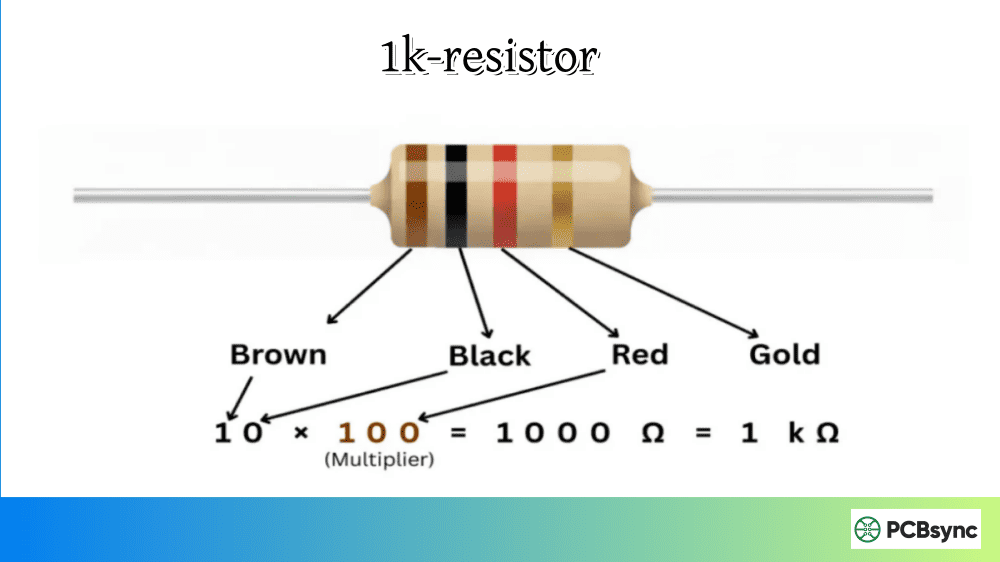
Reading the 2 ohm resistor color code requires understanding how low-value resistors use the Gold multiplier band (×0.1). This trips up many people because Gold typically appears only as a tolerance indicator on higher-value resistors.
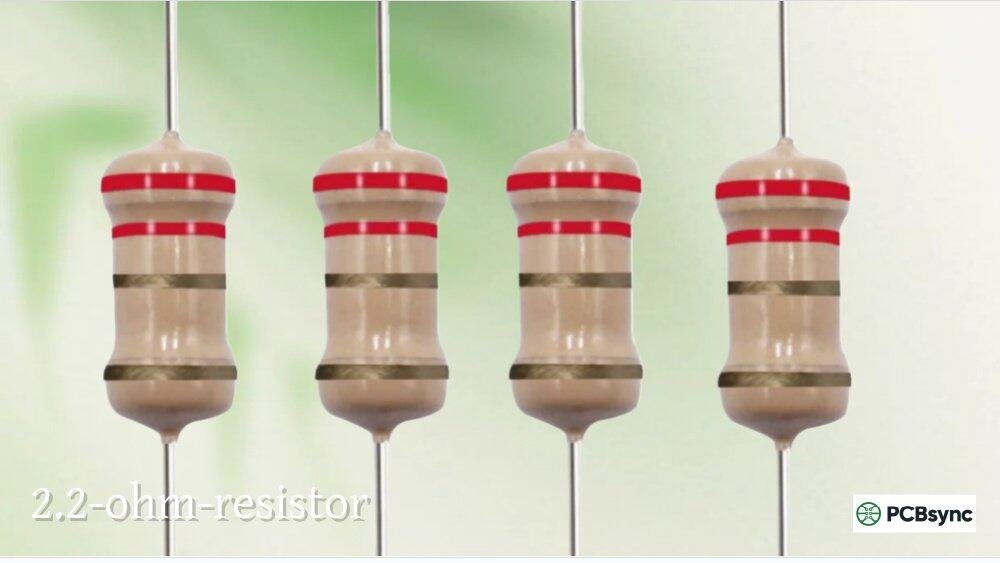
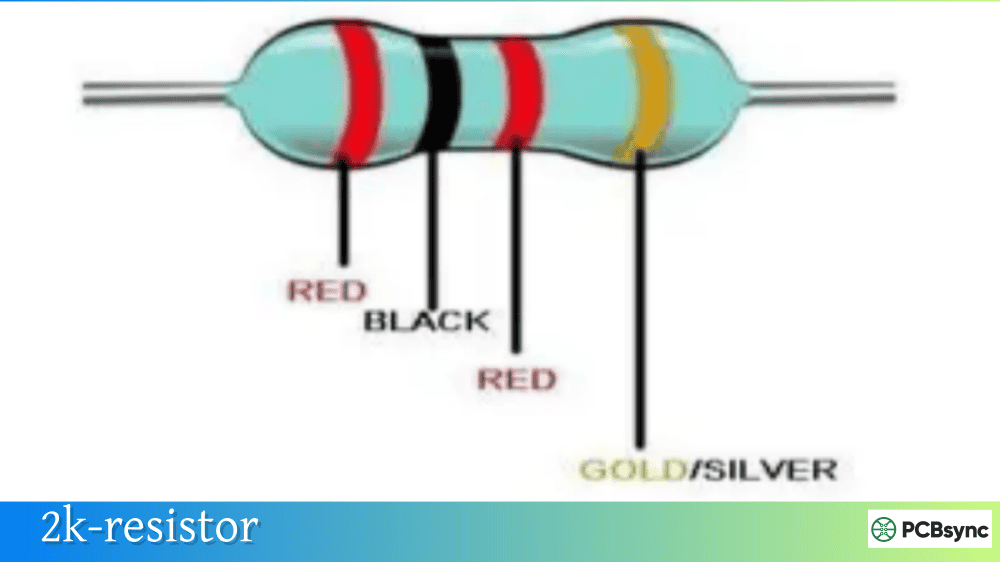
4-Band 2 Ohm Resistor Color Code
The standard 4-band configuration for a 2 ohm resistor is:
Band Position
Color
Meaning
1st Band (First Digit)
Red
2
2nd Band (Second Digit)
Black
0
3rd Band (Multiplier)
Gold
×0.1
4th Band (Tolerance)
Gold
±5%
Calculation: 2 + 0 = 20 × 0.1 = 2Ω ±5%
The key to reading this correctly is recognizing that the Gold band in the third position is the multiplier (×0.1), not the tolerance. The gap before the fourth band helps identify the reading direction.
5-Band 2 Ohm Resistor Color Code (Precision)
For precision applications requiring tighter tolerances, 5-band resistors add a third significant digit:
Band Position
Color
Meaning
1st Band
Red
2
2nd Band
Black
0
3rd Band
Black
0
4th Band (Multiplier)
Silver
×0.01
5th Band (Tolerance)
Brown
±1%
Calculation: 2 + 0 + 0 = 200 × 0.01 = 2Ω ±1%
6-Band 2 Ohm Resistor Color Code
For temperature-critical applications like precision audio:
Band
Color Sequence
Meaning
Bands 1-5
Red-Black-Black-Silver-Gold
2Ω ±5%
6th Band (TCR)
Brown
100 ppm/K
Understanding the Multiplier Bands for Low-Ohm Values
Multiplier Color
Multiplier Value
Example (20 base)
Black
×1
20 × 1 = 20Ω
Gold
×0.1
20 × 0.1 = 2Ω
Silver
×0.01
200 × 0.01 = 2Ω
Complete Color Code Reference
Color
Digit Value
Multiplier
Tolerance
Black
0
×1
–
Brown
1
×10
±1%
Red
2
×100
±2%
Orange
3
×1,000
–
Yellow
4
×10,000
–
Green
5
×100,000
±0.5%
Blue
6
×1,000,000
±0.25%
Violet
7
–
±0.1%
Gray
8
–
±0.05%
White
9
–
–
Gold
–
×0.1
±5%
Silver
–
×0.01
±10%
Types of 2 Ohm Resistors
Choosing the right 2 ohm resistor type depends heavily on your application. A cheap carbon film might work fine for a breadboard experiment, but it would be completely wrong for a high-end speaker crossover.
Carbon Film 2 Ohm Resistors
Best for: General purpose, non-critical applications, prototyping
Carbon film resistors are the most affordable option. They’re fine for basic current limiting and voltage division where noise and precision aren’t critical. However, they have relatively high temperature coefficients and can introduce noise in audio circuits.
Specification
Typical Value
Power Rating
1/4W to 2W
Tolerance
±5% to ±10%
TCR
200-500 ppm/°C
Noise
Higher (not ideal for audio)
Cost
Low
Metal Film 2 Ohm Resistors
Best for: Precision applications, low-noise circuits, measurement
Metal film resistors offer better stability, lower noise, and tighter tolerances than carbon film. They’re suitable for most applications except high-power scenarios.
Specification
Typical Value
Power Rating
1/8W to 2W
Tolerance
±0.1% to ±1%
TCR
25-100 ppm/°C
Noise
Low
Cost
Moderate
Wirewound 2 Ohm Resistors
Best for: Audio crossovers, high-power applications, precision current sensing
Wirewound resistors are the gold standard for audio applications. High-quality versions feature non-inductive construction, low noise, and excellent stability. They handle high power while maintaining tight tolerances.
Specification
Typical Value
Power Rating
1W to 100W+
Tolerance
±0.1% to ±5%
TCR
20-80 ppm/°C
Inductance
Low (non-inductive types)
Cost
Higher
SMD 2 Ohm Resistors
For PCB designs requiring surface mount components:
Package Size
Power Rating
Max Current (2Ω)
0402
1/16W (0.063W)
177mA
0603
1/10W (0.1W)
224mA
0805
1/8W (0.125W)
250mA
1206
1/4W (0.25W)
354mA
2010
1/2W (0.5W)
500mA
2512
1W
707mA
2 Ohm Resistor Applications
Speaker Crossover Networks
This is where the 2 ohm resistor really shines. In speaker crossover design, 2 ohm resistors serve multiple critical functions.
L-Pad Attenuator Circuits: When you need to reduce tweeter output to match woofer sensitivity, L-pad networks using 2 ohm resistors provide precise level control while maintaining proper impedance for the crossover.
Zobel Networks: A Zobel network (also called an impedance compensation network) flattens the rising impedance of a speaker at high frequencies. A typical Zobel for an 8Ω speaker might use a 2 ohm resistor in combination with a capacitor.
Signal Attenuation: When tweeters are more efficient than woofers, a simple series resistor can reduce the signal level. A 2 ohm resistor in series with an 8Ω tweeter reduces output by approximately 2dB.
Impedance Matching in Audio Systems
Audio amplifiers perform best when driving their designed load impedance. A 2 ohm resistor can modify the effective impedance seen by an amplifier:
Configuration
Result
2Ω in series with 4Ω speaker
6Ω total load
2Ω in series with 8Ω speaker
10Ω total load
2Ω in parallel with 4Ω speaker
1.33Ω total load
Warning: Adding resistance in series with a speaker affects the amplifier’s damping factor and can alter frequency response. Use this technique judiciously.
Inrush Current Limiting
When power supplies charge large filter capacitors at startup, the initial current surge can trip breakers or damage components. A 2 ohm resistor in series with the power input limits this inrush current to manageable levels.
Calculation Example: For a 120V AC supply with a 2Ω series resistor, peak inrush current is limited to approximately 85A (based on peak voltage of 170V), compared to potentially hundreds of amps without limiting.
In practice, a relay often bypasses the resistor after startup to avoid continuous power dissipation.
Power Dissipation and Heat Management
When using a 2 ohm resistor for power applications, proper thermal management is essential.
Current
Power Dissipated
Recommended Rating
250mA
0.125W
1/2W minimum
500mA
0.5W
1W minimum
1A
2W
5W minimum
2A
8W
20W minimum
3A
18W
50W minimum
Always apply at least a 2× derating factor. If your calculation shows 5W dissipation, use at least a 10W resistor.
Audio-Grade 2 Ohm Resistor Selection
For speaker crossover applications, audio-grade resistors offer specific benefits:
Feature
Benefit
Non-inductive construction
Prevents high-frequency signal distortion
Non-magnetic materials
Eliminates magnetic interference
Tight tolerance (1%)
Ensures accurate crossover response
Low TCR
Maintains consistency during operation
Welded connections
Reduces contact resistance
Gold-plated leads
Prevents oxidation
Companies like Dayton Audio, Mills, and Mundorf produce resistors specifically designed for crossover use.
Dayton Audio: DNR and DPR series precision resistors
Mills: MRA series non-inductive wirewound
Mundorf: MResist series for high-end audio
Jantzen Audio: Superes and Cross-Cap series
Technical References
IEC 60062: Color code standard for resistors
IEC 60063: E-series preferred values
Frequently Asked Questions
What is the color code for a 2 ohm resistor?
A 4-band 2 ohm resistor has the color code Red-Black-Gold-Gold. The first Red band represents 2, Black represents 0, the first Gold band is the ×0.1 multiplier, and the second Gold indicates ±5% tolerance. For precision 5-band versions with ±1% tolerance, the code is Red-Black-Black-Silver-Brown.
Can I use a 2 ohm resistor in speaker crossovers?
Yes, 2 ohm resistors are commonly used in speaker crossover networks for L-pad attenuators, Zobel impedance compensation networks, and tweeter level adjustment. For audio applications, choose non-inductive wirewound resistors with tight tolerances (±1% or better) to maintain crossover accuracy and prevent signal distortion.
What power rating do I need for a 2 ohm resistor?
Calculate power using P = I² × R (which becomes P = I² × 2 for a 2 ohm resistor). For example, at 1A current, power dissipation is 2W. Always apply a 2× derating factor, so a 1A application should use at least a 5W resistor. In speaker crossovers, 10W resistors are commonly specified even for moderate power levels.
Why does my 2 ohm resistor have two gold bands?
This is normal for low-value resistors below 10Ω. The third band (Gold) indicates a ×0.1 multiplier, which converts the base value of 20 to 2 ohms. The fourth band (also Gold in ±5% tolerance versions) indicates tolerance. Look for the gap before the final band to identify the reading direction correctly.
What’s the difference between standard and audio-grade 2 ohm resistors?
Audio-grade 2 ohm resistors are optimized for speaker crossover applications. They feature non-inductive wirewound construction to prevent high-frequency distortion, non-magnetic materials to avoid interference, tighter tolerances (typically ±1%), lower temperature coefficients for stability, and premium connections like gold-plated leads. Standard resistors work for general electronics but can introduce noise and frequency-dependent behavior in audio circuits.
Final Thoughts
The 2 ohm resistor is a workhorse component in audio and power electronics. Its value makes it particularly well-suited for speaker crossover networks, where it appears in L-pads, Zobel networks, and attenuation circuits. For these applications, invest in quality wirewound resistors with non-inductive construction and tight tolerances.
For power applications like inrush current limiting, focus on adequate power rating with proper derating. A resistor that runs too hot will drift in value and eventually fail.
When reading the color code, remember that Red-Black-Gold gives you 2 ohms, not 20 ohms. The Gold multiplier band (×0.1) is what brings the value down to the low-ohm range.
Keep a selection of 2 ohm resistors in various power ratings in your parts bin. From 1/4W metal film for prototyping to 10W or 20W wirewound types for crossover work, having the right component on hand saves time and ensures your projects perform as designed.
Inquire: Call 0086-755-23203480, or reach out via the form below/your sales contact to discuss our design, manufacturing, and assembly capabilities.
Quote: Email your PCB files to Sales@pcbsync.com (Preferred for large files) or submit online. We will contact you promptly. Please ensure your email is correct.
Notes: For PCB fabrication, we require PCB design file in Gerber RS-274X format (most preferred), *.PCB/DDB (Protel, inform your program version) format or *.BRD (Eagle) format. For PCB assembly, we require PCB design file in above mentioned format, drilling file and BOM. Click to download BOM template To avoid file missing, please include all files into one folder and compress it into .zip or .rar format.