Inquire: Call 0086-755-23203480, or reach out via the form below/your sales contact to discuss our design, manufacturing, and assembly capabilities.
Quote: Email your PCB files to Sales@pcbsync.com (Preferred for large files) or submit online. We will contact you promptly. Please ensure your email is correct.
Notes: For PCB fabrication, we require PCB design file in Gerber RS-274X format (most preferred), *.PCB/DDB (Protel, inform your program version) format or *.BRD (Eagle) format. For PCB assembly, we require PCB design file in above mentioned format, drilling file and BOM. Click to download BOM template To avoid file missing, please include all files into one folder and compress it into .zip or .rar format.
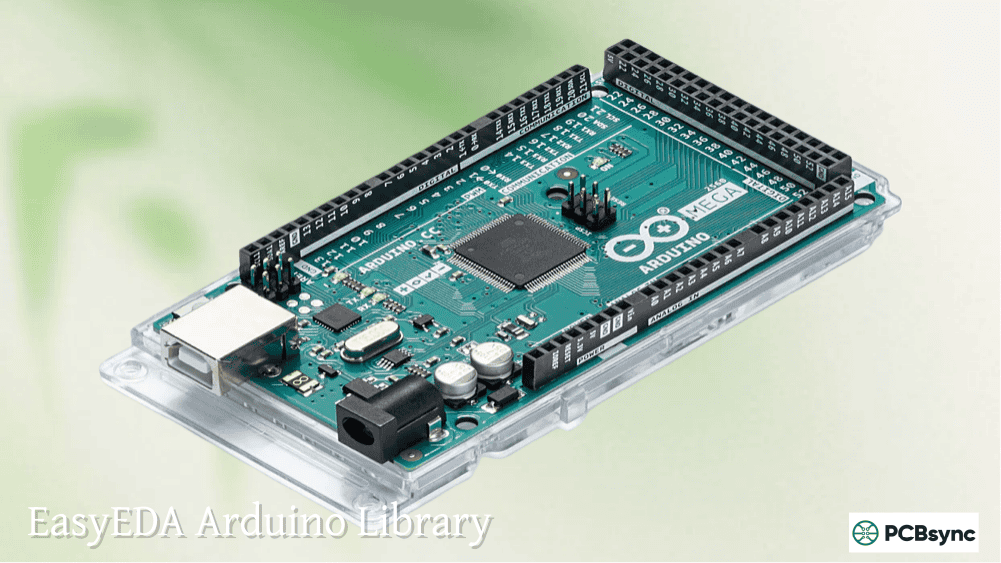
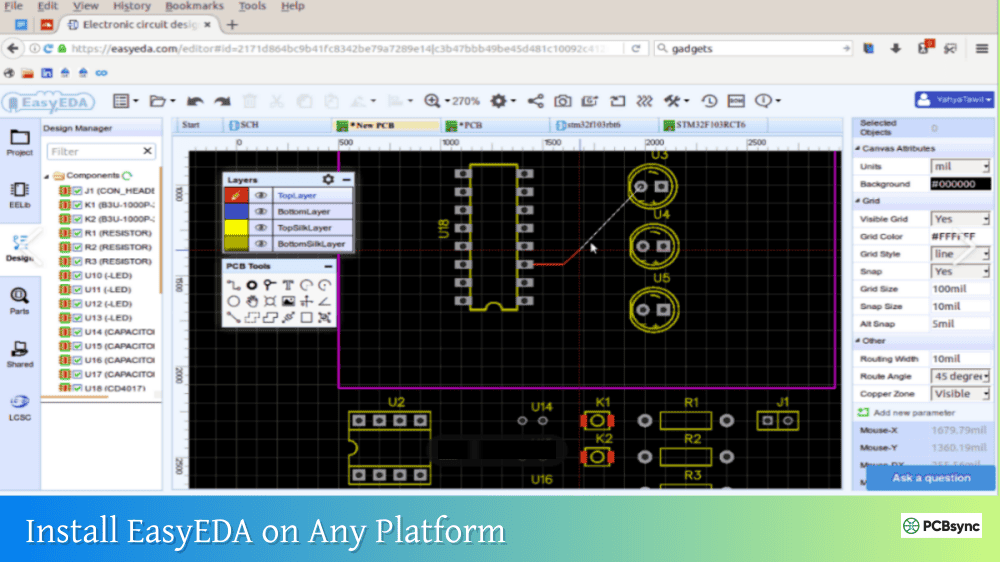
EasyEDA Arduino Library: Design Custom Shields for Uno, Mega & Nano
As someone who has designed over 40 custom Arduino shields in the past seven years, I can tell you that the EasyEDA Arduino workflow has completely revolutionized how makers and engineers approach PCB design. Gone are the days of expensive software licenses and frustrating learning curves. Today, anyone with basic electronics knowledge can design and manufacture professional-quality shields using free, browser-based tools.
This comprehensive guide walks you through everything needed to design custom shields for Arduino Uno, Mega, and Nano using EasyEDA’s extensive component library and integrated manufacturing services.
When I started designing shields back in 2017, I used Eagle CAD. It worked, but creating accurate Arduino footprints was tedious and error-prone. The Arduino Uno EasyEDA library changed everything for me. Here’s why this combination works so well:
Massive Community Library: EasyEDA’s user-contributed component library contains hundreds of Arduino-related parts. Search for “Arduino Uno” and you’ll find complete shield templates with verified footprints ready to use. No more spending hours creating pin headers from scratch.
Cloud-Based Convenience: Your designs are saved online, accessible from any computer. I’ve made last-minute design changes from hotel rooms before production deadlines. Try doing that with desktop-only software.
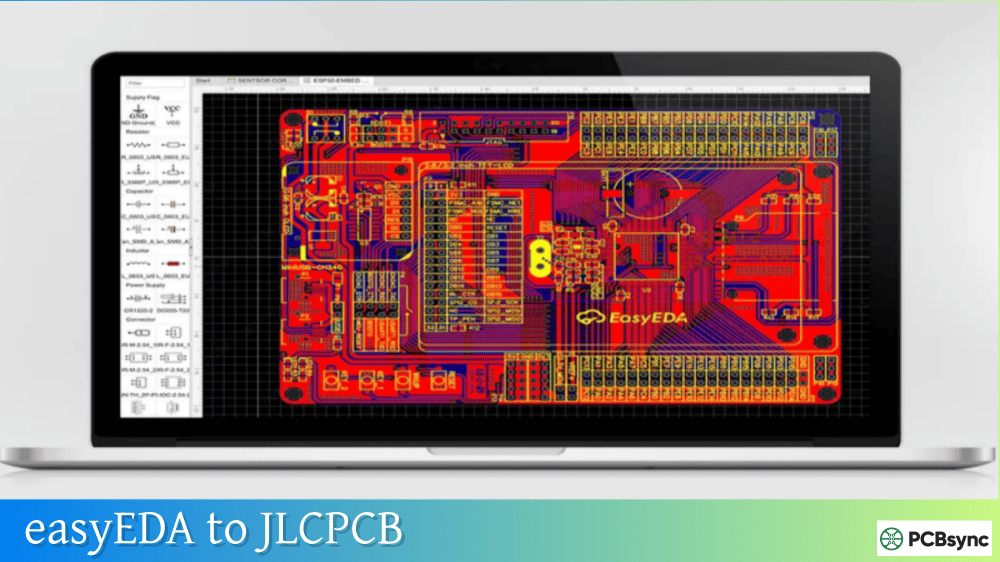
Direct JLCPCB Integration: Since EasyEDA and JLCPCB are sister companies, ordering manufactured PCBs takes literally one click. The Gerber files are generated automatically in the correct format.
Zero Cost: Unlike Altium ($355/year) or even Eagle’s paid tiers, EasyEDA Arduino design capabilities are completely free. For hobbyists and startups, this matters enormously.
Understanding Arduino Board Specifications
Before you can design a shield, you must understand the physical and electrical specifications of your target board. Getting dimensions wrong by even a millimeter means your shield won’t fit.
Arduino Uno R3 Specifications
The Arduino Uno remains the most popular board for shield development. Here are the critical specifications:
Specification
Value
Notes
Board Dimensions
68.6mm × 53.4mm
2.7″ × 2.1″
Digital I/O Pins
14 (D0-D13)
6 provide PWM
Analog Input Pins
6 (A0-A5)
10-bit resolution
Operating Voltage
5V
Logic level
Input Voltage
7-12V
Via barrel jack
DC Current per Pin
20mA
40mA absolute max
Header Pitch
2.54mm
Standard 0.1″
The Critical Pin Spacing Issue: The distance between digital pins D7 and D8 is 160 mil (4.064mm), not the standard 100 mil (2.54mm) used elsewhere. This was reportedly a layout mistake in the original Arduino design that became a permanent “feature.” Every Arduino EasyEDA shield template must account for this quirk.
Arduino Mega 2560 Specifications
The Arduino Mega EasyEDA workflow follows similar principles but with an expanded form factor:
Specification
Value
Notes
Board Dimensions
101.6mm × 53.4mm
4″ × 2.1″
Digital I/O Pins
54
15 provide PWM
Analog Input Pins
16
A0-A15
Serial Ports
4
Hardware UART
I2C Location
Pins 20-21
Different from Uno
SPI Location
Pins 50-53
Different from Uno
The Mega maintains the same core header positions as the Uno for basic shield compatibility, plus extended headers for the additional I/O. Shields designed for Uno will work on Mega, but not vice versa.
Arduino Nano Specifications
The Nano uses a completely different form factor—it’s a DIP-style module that plugs into a carrier board rather than having shields stack on top:
Specification
Value
Notes
Board Dimensions
45mm × 18mm
Compact form factor
Pin Configuration
2×15 pins
30 total
Pin Pitch
2.54mm
Standard throughout
Row Spacing
15.24mm
600 mil DIP-style
Operating Voltage
5V
Same as Uno
Finding Arduino Components in EasyEDA Library
The strength of EasyEDA Arduino Uno design lies in its extensive component library. Here’s how to find and evaluate the right parts.
Search Strategy for Best Results
Different search terms yield different results. Use this guide:
Search Term
Results Type
Best Use Case
“Arduino Uno Shield”
Complete shield templates
Starting new shield projects
“Arduino Uno R3”
Full board footprints
Carrier board designs
“Arduino Uno Header”
Individual connectors
Custom configurations
“Arduino Mega Shield”
Mega-sized templates
Large I/O projects
“Arduino Mega 2560”
Mega board footprints
Reference designs
“Arduino Nano”
Nano module footprints
Embedded projects
“Arduino Nano Carrier”
Nano breakout templates
Custom carrier boards
Evaluating Library Components
Not all community-contributed parts are reliable. Before using any component, verify these criteria:
Check for Both Symbol and Footprint: Some parts only include schematic symbols without PCB footprints, or vice versa. You need both. Click “Open in Editor” to verify.
Review Usage Count: Parts with higher “Open in Editor” counts have been tested by more users. A count above 5 generally indicates reliability.
Verify Dimensions: Compare the footprint against official Arduino documentation. Even popular parts sometimes have errors.
Check Pin Labels: Ensure pins are labeled correctly (D0-D13, A0-A5, etc.) and match the official pinout.
Look for 3D Models: Parts with 3D models help verify clearances and visualize the final product.
Step-by-Step: Designing an Arduino Uno Shield
Let me walk you through a complete Arduino Uno EasyEDA shield design from start to finish. This process applies to Mega and Nano designs with appropriate modifications.
Phase 1: Project Setup
Create a New Project:
Log into EasyEDA (register free if needed)
Click “+ New Project” in the left panel
Name your project descriptively: “Motor_Driver_Shield_v1”
Click “New Schematic” to begin
Set Up Your Workspace:
Enable grid snapping (10mil or 0.254mm works well)
Set appropriate zoom level (usually 100-200%)
Familiarize yourself with keyboard shortcuts (W for wire, R for resistor, etc.)
Phase 2: Schematic Design
Place the Arduino Shield Template:
Press “L” or click the library icon
Search “Arduino Uno Shield”
Select a well-rated template with both schematic symbol and PCB footprint
Click to place in your schematic
The template should display all Arduino pins organized logically: digital pins (D0-D13), analog pins (A0-A5), power pins (5V, 3.3V, GND, VIN), and special pins (RESET, IOREF, AREF).
Add Your Circuit Components:
Now add the components that define your shield’s functionality. For a motor driver example:
Search for your motor driver IC (L298N, TB6612FNG, DRV8833)
Include connectors for motor outputs and external power
Add any indicator LEDs and current-limiting resistors
Important consideration: If you plan to use JLCPCB’s SMT assembly service, select components from the LCSC library marked “JLCPCB Assembled.” This ensures the parts are available for automated assembly.
Wire the Circuit:
Click on a component pin to start a wire
Route to the destination pin
Wires connecting at junctions automatically create net connections
Name important nets for clarity (right-click → Set Net Name)
Add Component Values: Double-click each component to set appropriate values:
Resistors: “10K”, “220R”, “4.7K”
Capacitors: “100nF”, “10uF”, “1000uF”
ICs: Full part number like “L298N” or “TB6612FNG”
Phase 3: PCB Layout
Convert Schematic to PCB:
Save your schematic
Click “Design” → “Convert to PCB” or use the toolbar button
EasyEDA creates a new PCB file with all components placed outside the board outline
Blue “ratlines” show the connections that need routing
Define the Board Outline:
This step is critical for Arduino EasyEDA shields:
Switch to the “BoardOutline” layer in the Layers panel
Delete the default rectangular outline
Draw your new outline matching Arduino dimensions
For a standard Uno shield:
Width: 53.4mm (2.1″)
Length: 68.6mm (2.7″) or shorter if components allow
Use the Arc tool for rounded corners (typically 3mm radius)
Position the Headers:
The Arduino header positions must be exact. Use these coordinates (with board origin at lower-left corner):
Header
Function
Position Notes
J1 (8-pin)
Power
Lower edge, includes IOREF, RESET, 3.3V, 5V, GND, GND, VIN
J2 (6-pin)
Analog
Adjacent to J1, includes A0-A5
J3 (8-pin)
Digital Low
Upper edge, includes D0-D7
J4 (10-pin)
Digital High
Adjacent to J3, includes D8-D13 plus SCL, SDA, AREF, GND
Remember: The gap between J3 and J4 is 160 mil (4.064mm), not 100 mil!
Place Your Components:
Drag components into their intended positions
Keep related components together
Place decoupling capacitors close to IC power pins
Orient components for easy hand soldering if needed
Maintain clearance from header positions
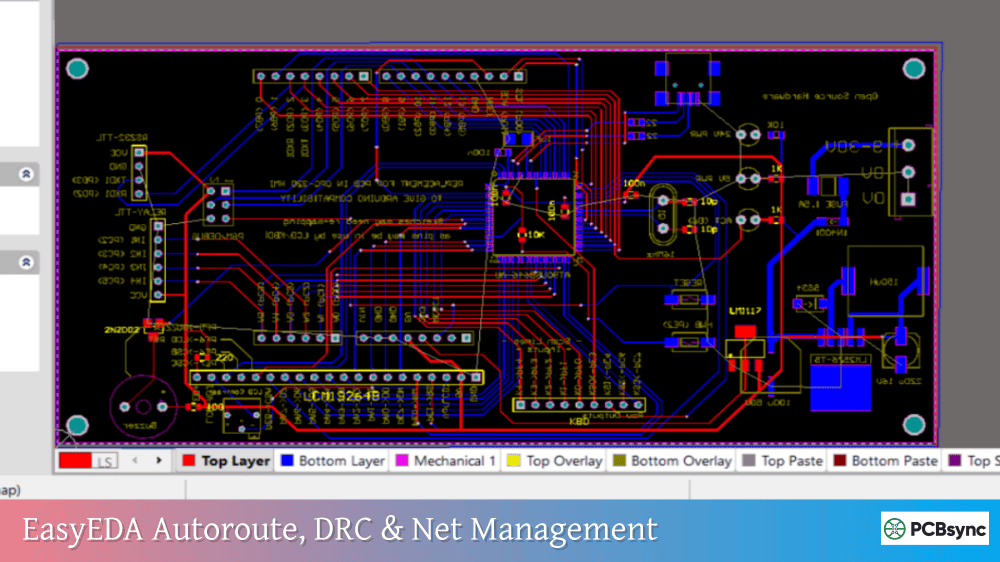
Route the Traces:
You can use EasyEDA’s auto-router or route manually:
Auto-routing:
Click “Route” → “Auto Route”
Review results and fix any issues
Auto-routing works well for simple designs
Manual routing (recommended for critical signals):
Select the “Track” tool
Click on a pad to start routing
Click to create corners
Double-click to finish
Routing Guidelines for Shields:
Signal Type
Recommended Trace Width
Notes
Power (5V, VIN)
20-40 mil (0.5-1mm)
Handle higher currents
Ground
20-40 mil
Use ground plane when possible
Digital signals
10-12 mil (0.25-0.3mm)
Standard signal routing
Analog signals
10-12 mil
Keep short, away from noise
High-speed signals
10 mil
Consider impedance matching
Add Ground Plane:
Select the bottom layer
Use “Copper Area” tool
Draw around the board outline
Set the net to “GND”
The plane automatically connects to all GND pads
Phase 4: Finishing Touches
Add Silkscreen:
Project name and version
Pin labels for connectors
Component orientation markers
Your name or company logo
Add Mounting Holes: Standard Arduino shields have mounting holes at specific locations. If your template doesn’t include them:
Verify no interference with Arduino USB/power connectors
Confirm overall appearance
Designing Arduino Mega Shields
The Arduino Mega EasyEDA process is similar to Uno shields with these key differences:
Extended Form Factor
The Mega shield extends 33mm beyond the Uno’s length to accommodate additional headers:
Area
Pins
Function
Standard (Uno-compatible)
D0-D13, A0-A5
Basic I/O
Extended Digital
D22-D53
Additional digital I/O
Extended Analog
A6-A15
Additional analog inputs
Communication
Pins 14-21
Serial1-3, I2C
Communication Pin Differences
Be aware that some communication interfaces are in different locations:
Interface
Arduino Uno
Arduino Mega
I2C SDA
A4
Pin 20
I2C SCL
A5
Pin 21
SPI MOSI
Pin 11
Pin 51
SPI MISO
Pin 12
Pin 50
SPI SCK
Pin 13
Pin 52
SPI SS
Pin 10
Pin 53
Shields designed for Mega-specific features won’t work on Uno. For maximum compatibility, design for Uno pinout when possible.
Designing Arduino Nano Carrier Boards
Arduino Nano “shields” are actually carrier boards—the Nano plugs into the carrier rather than the other way around.
Nano Form Factor Approach
Search EasyEDA for “Arduino Nano” to find appropriate footprints. The Nano uses standard 600-mil DIP spacing, making footprint creation straightforward.
Design Approach:
Place female headers (2×15 pin, 2.54mm pitch, 15.24mm row spacing)
Route from header pins to your circuit
Add any required power regulation (Nano can be powered via USB, VIN, or 5V pin)
Nano Pin Mapping Reference
Pin
Function
Special Features
D0
Digital I/O
RX (Serial)
D1
Digital I/O
TX (Serial)
D2-D12
Digital I/O
D3,5,6,9,10,11 have PWM
D13
Digital I/O
Built-in LED
A0-A5
Analog Input
Also usable as digital
A6-A7
Analog Input
Input only
VIN
Power Input
7-12V
5V
Power
Regulated output/input
3.3V
Power
Limited current
GND
Ground
Multiple pins
RST
Reset
Active low
REF
Reference
For ADC reference
Common Design Mistakes and Solutions
After reviewing hundreds of forum posts and troubleshooting my own designs, here are the most frequent issues:
Mistake 1: Incorrect Header Spacing
The Problem: Shield doesn’t fit on Arduino due to wrong spacing between D7-D8 headers.
The Solution: Always use verified shield templates from the EasyEDA library. If creating custom headers, ensure the 160-mil gap is correct.
Mistake 2: Height Clearance Issues
The Problem: Tall components block USB connector or prevent shield stacking.
The Solution: Keep components under 10mm in areas that overlap the Arduino. Check 3D preview before manufacturing.
Mistake 3: Insufficient Power Traces
The Problem: Voltage drops or overheating on power connections.
The Solution: Use 20-40 mil traces for power. For motor shields, use even wider traces or copper pours.
Mistake 4: Missing Decoupling Capacitors
The Problem: Noise issues, erratic behavior, IC failures.
The Solution: Add 100nF ceramic capacitors near every IC’s power pins. Add bulk capacitors (10-100uF) at power entry points.
Mistake 5: No Pass-Through for Stacking
The Problem: Shield blocks access to unused Arduino pins.
The Solution: Use stackable headers that pass signals through to the next shield.
Search for these highly-used templates in EasyEDA:
“Arduino Uno Shield Template”
“Arduino Uno R3 Shield”
“Arduino Mega Shield”
“Arduino Nano Breakout”
“Arduino Proto Shield”
Frequently Asked Questions
Can I design a shield that works on both Arduino Uno and Mega?
Yes, absolutely. Since the Arduino Mega maintains backward compatibility with Uno shields, any shield designed for the Uno footprint will work on Mega. The core header positions (D0-D13, A0-A5, power) are identical on both boards. However, you won’t have access to the Mega’s extended I/O pins (D22-D53, A6-A15) unless you design specifically for the larger Mega form factor. For maximum compatibility, I recommend designing for the Uno footprint and adding Mega-specific features only when necessary.
Why doesn’t my shield fit properly on my Arduino?
The most common cause is incorrect spacing between the D7-D8 digital headers. This gap must be 160 mil (4.064mm), not the standard 100 mil (2.54mm) used elsewhere on the board. Other possible causes include incorrect overall dimensions, wrong pin pitch (should be 2.54mm), or using a pre-R3 template on an R3 board. Always use verified templates from the EasyEDA library and double-check dimensions against official Arduino documentation before manufacturing.
How do I add JLCPCB SMT assembly to my shield design?
First, select components from the LCSC library that have “JLCPCB Assembled” designation when designing your schematic. When you’re ready to order, generate the Gerber files as normal, then also export the BOM (Bill of Materials) and CPL (Component Placement List) files from EasyEDA’s Fabrication menu. During JLCPCB checkout, enable SMT assembly and upload these files. The system will match your components and show pricing. Stick to “Basic” parts when possible to minimize assembly fees—each unique “Extended” part adds $3 to your order.
What’s the difference between EasyEDA Standard and Pro editions for shield design?
EasyEDA Standard is completely free and handles most Arduino shield designs perfectly. It supports up to 300 devices or 1000 pads per design, includes simulation capabilities, and has full access to the community library. EasyEDA Pro is also free but offers advanced features like support for 3000+ devices, more rigorous design constraints, hierarchical schematics, and better team collaboration tools. For typical Arduino shields with under 50 components, Standard edition is more than sufficient. Use Pro if you’re designing complex multi-sheet projects or need advanced verification features.
How do I create a custom component if I can’t find it in the library?
EasyEDA makes custom component creation straightforward. Go to “Library” → “New Component” and create the schematic symbol by placing pins and drawing the outline. Then create the corresponding PCB footprint with accurate pad dimensions and spacing—measure your actual component or use the datasheet. Link the symbol and footprint together, and save to your personal library. For Arduino-specific components, measure carefully against official Arduino boards, as even small errors compound across multiple pins. Once created, your custom parts can be reused in future projects and even shared with the community.
Advanced Tips for Professional Results
Design for Manufacturing (DFM)
Follow these guidelines for reliable manufacturing:
Parameter
Minimum
Recommended
Trace Width
6 mil
10 mil
Trace Spacing
6 mil
10 mil
Via Hole
0.3mm
0.4mm
Via Diameter
0.6mm
0.8mm
Pad Size
1.2mm
1.5mm
Silkscreen Width
4 mil
6 mil
Thermal Management
For shields with power components (motor drivers, voltage regulators):
Use thermal vias under power pads
Add copper pours for heat spreading
Consider component placement for airflow
Derate current capacity at high temperatures
Signal Integrity
For shields with high-speed or sensitive signals:
Keep analog and digital signals separated
Route sensitive signals away from power traces
Use ground planes for return paths
Consider adding filtering at signal entry points
Real-World Shield Project Examples
To help solidify these concepts, here are practical project ideas at different skill levels that demonstrate Arduino EasyEDA design principles.
Beginner Project: LED Matrix Shield
Objective: Create an 8×8 LED matrix display shield for Arduino Uno.
Key Learning Points:
Current-limiting resistor calculations
Multiplexing concepts for LED control
Basic trace routing for moderate pin counts
Silkscreen labeling for orientation
Components Required:
8×8 LED matrix module or 64 individual LEDs
8× current-limiting resistors (typically 220Ω)
8× NPN transistors for row driving (optional)
Pin headers for Arduino connection
This project teaches fundamental shield design without complex power considerations.
Intermediate Project: Motor Driver Shield
Objective: Design a dual H-bridge motor driver shield capable of driving two DC motors or one stepper motor.
Key Learning Points:
Power trace sizing for motor currents
Flyback diode placement for inductive loads
Separate power input for motors
Heat dissipation considerations
Components Required:
L298N or TB6612FNG motor driver IC
Flyback diodes (if using L298N)
Decoupling capacitors (100nF + 100uF)
Screw terminals for motor connections
Separate power input connector
This Arduino Uno EasyEDA project introduces power electronics concepts critical for robotics applications.
Advanced Project: Data Logger Shield
Objective: Create a comprehensive data logging shield with SD card storage, real-time clock, and sensor inputs.
Key Learning Points:
Multiple communication protocols (SPI for SD, I2C for RTC)
Battery backup circuit design
Level shifting considerations
File system requirements
Components Required:
SD card socket (SPI interface)
DS3231 RTC module (I2C)
CR2032 battery holder
Multiple sensor connectors
Status LEDs
This project demonstrates how to integrate multiple subsystems on a single Arduino EasyEDA shield.
Testing and Debugging Your Shield
Pre-Manufacturing Verification
Before ordering PCBs, perform these checks:
Electrical Review Checklist:
All required connections present (no missing ratlines)
No unintended shorts between nets
Power and ground properly connected
Decoupling capacitors near every IC
Pull-up/pull-down resistors where needed
Mechanical Review Checklist:
Board outline matches Arduino dimensions
Headers at correct positions
Component heights won’t interfere with stacking
Mounting holes aligned (if included)
Text readable and correctly oriented
DRC Verification:
No clearance violations
No unrouted connections
No floating copper
Minimum trace widths met
Post-Manufacturing Testing
When your shields arrive, follow this systematic testing procedure:
Visual Inspection:
Check for manufacturing defects (shorts, opens, missing copper)
Verify silkscreen legibility
Confirm component footprints match your parts
Continuity Testing (before soldering):
Test for shorts between power rails (5V-GND, 3.3V-GND)
Power the shield without connecting to Arduino—check for overheating
Connect to Arduino and run a basic test sketch
Verify each I/O function individually
Test under expected operating conditions
Version Control and Documentation
Professional development requires good documentation habits:
Project Documentation Essentials
Document
Contents
When to Create
Schematic PDF
Complete circuit diagram
After schematic finalized
BOM Spreadsheet
All components with values and part numbers
Before ordering
Pin Mapping
Which Arduino pins your shield uses
During design
Assembly Notes
Special soldering instructions
Before assembly
Test Procedure
Steps to verify functionality
Before testing
Revision History
Changes between versions
Each revision
EasyEDA Project Organization
Keep your designs organized:
Use descriptive names: “Motor_Shield_v2.1” not “shield_final_final”
Add project descriptions: Note target Arduino and key features
Create folders: Group related schematics and PCBs
Archive each version: Before major changes, save a copy
Export regularly: Keep local backups of critical projects
Conclusion
The EasyEDA Arduino ecosystem has democratized PCB design for the maker community. Whether you’re creating your first Arduino Uno EasyEDA shield or designing complex Arduino Mega EasyEDA expansion boards, the tools are accessible, the libraries are extensive, and the manufacturing path is straightforward.
My advice for beginners: start with a simple project. Design a basic shield with a few LEDs and buttons, go through the complete workflow, and get physical boards in your hands. The learning from that first project is invaluable, and the cost is minimal—often under $10 for your first batch.
For experienced designers, EasyEDA offers enough capability to replace expensive commercial tools for many applications. The community library grows daily, team collaboration features support professional workflows, and the direct JLCPCB integration streamlines manufacturing.
The Arduino ecosystem continues to evolve with new boards like the Uno R4 and Nano ESP32, and the EasyEDA library keeps pace with community-contributed templates for each new platform. Whatever shield you’re imagining, the tools to build it are ready and waiting.
Inquire: Call 0086-755-23203480, or reach out via the form below/your sales contact to discuss our design, manufacturing, and assembly capabilities.
Quote: Email your PCB files to Sales@pcbsync.com (Preferred for large files) or submit online. We will contact you promptly. Please ensure your email is correct.
Notes: For PCB fabrication, we require PCB design file in Gerber RS-274X format (most preferred), *.PCB/DDB (Protel, inform your program version) format or *.BRD (Eagle) format. For PCB assembly, we require PCB design file in above mentioned format, drilling file and BOM. Click to download BOM template To avoid file missing, please include all files into one folder and compress it into .zip or .rar format.