Inquire: Call 0086-755-23203480, or reach out via the form below/your sales contact to discuss our design, manufacturing, and assembly capabilities.
Quote: Email your PCB files to Sales@pcbsync.com (Preferred for large files) or submit online. We will contact you promptly. Please ensure your email is correct.
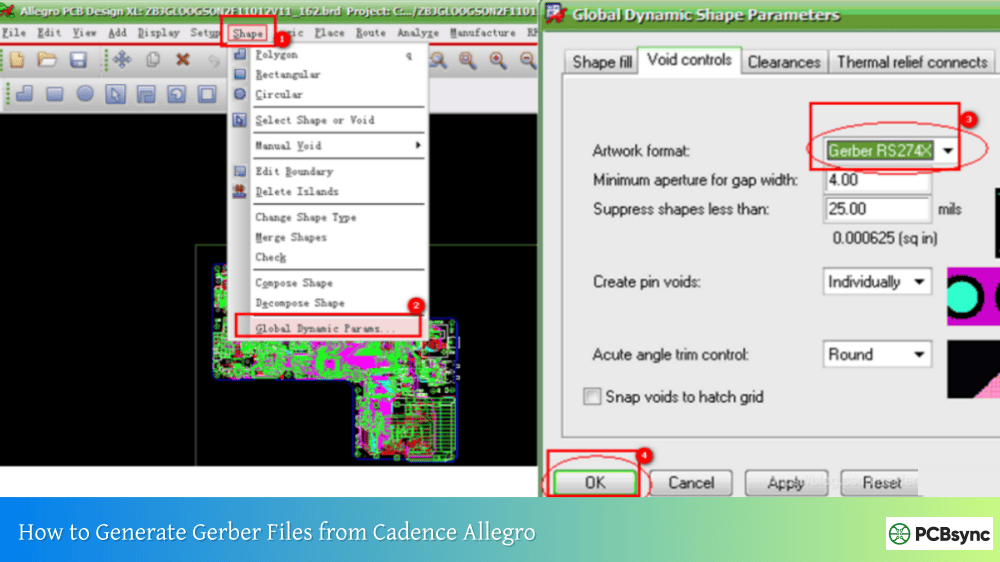
Notes: For PCB fabrication, we require PCB design file in Gerber RS-274X format (most preferred), *.PCB/DDB (Protel, inform your program version) format or *.BRD (Eagle) format. For PCB assembly, we require PCB design file in above mentioned format, drilling file and BOM. Click to download BOM template To avoid file missing, please include all files into one folder and compress it into .zip or .rar format.
How to View Gerber Files with GerbView: Complete Guide for PCB Engineers
Every PCB engineer knows that moment of anxiety right before sending Gerber files to a fab house. Did I include all the layers? Are the drill holes aligned? Is the solder mask correct? After years of working with PCB designs, I’ve learned that verifying Gerber files before manufacturing isn’t optional—it’s essential. GerbView has become my go-to tool for this critical pre-production check, and in this guide, I’ll walk you through everything you need to know about viewing Gerber files with GerbView effectively.
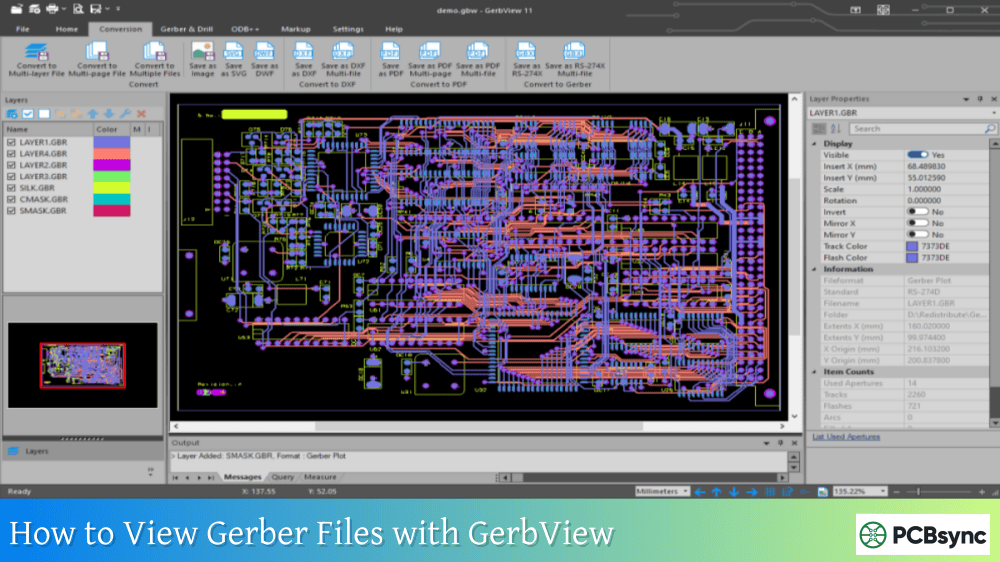
GerbView is a specialized software application designed to view, inspect, and verify Gerber files before PCB manufacturing. The term “GerbView” actually refers to two different software tools that share the same name: KiCad’s GerbView (a free, open-source viewer bundled with KiCad) and Software Companions’ GerbView (a commercial viewer with advanced features). Both serve the same fundamental purpose—letting you see exactly what the PCB manufacturer will produce from your files.
Why PCB Engineers Need a Gerber Viewer
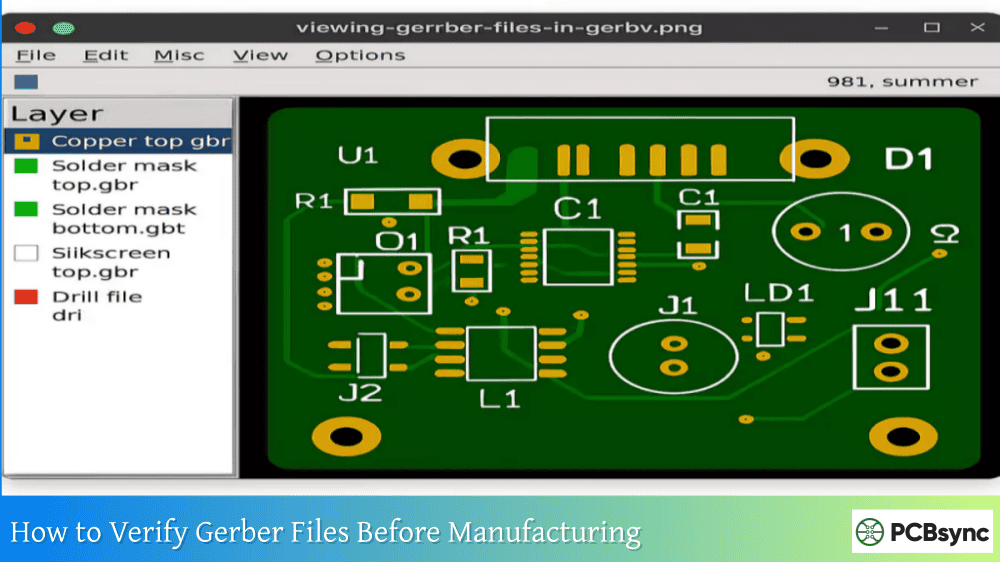
Gerber files are the industry-standard format for PCB fabrication, but they’re essentially flat vector graphics that describe each layer of your board. Without a proper viewer, you’re sending manufacturing data blind. A dedicated Gerber viewer like GerbView allows you to catch errors that could cost hundreds or thousands of dollars in scrapped boards, verify layer alignment and registration, check drill file accuracy against copper layers, inspect solder mask openings and silkscreen placement, and measure distances and clearances before committing to production.
KiCad GerbView: Free Gerber File Viewer
KiCad’s GerbView is bundled free with the KiCad EDA suite and provides solid functionality for viewing and inspecting Gerber files. Even if you don’t use KiCad for design, you can install it just to access GerbView.
Opening Gerber files in KiCad’s GerbView is straightforward. First, launch GerbView from the KiCad project manager or directly from your applications menu. Then follow these steps:
Step 1: Load Gerber Files Navigate to File → Open Gerber File(s) or use the keyboard shortcut. Select all the Gerber files from your project folder. You can select multiple files at once—GerbView will load each into a separate layer.
Step 2: Load Drill Files After loading Gerbers, go to File → Open Excellon Drill File(s). Select your drill files (.drl). These will overlay on the Gerber data so you can verify hole placement.
Step 3: Organize Layer Display Use the Layers Manager panel on the right side to control visibility and colors. Click checkboxes to show or hide specific layers. Change colors by clicking the color swatch for easier differentiation.
KiCad GerbView Navigation Controls
Action
Method
Zoom in
Mouse wheel up or + key
Zoom out
Mouse wheel down or – key
Pan view
Middle mouse button + drag
Fit to screen
Home key or View → Zoom to Fit
Zoom to selection
Shift + drag box
KiCad GerbView Key Features
Layers Manager The Layers tab displays all loaded Gerber and drill layers. An arrow indicates the currently active layer, and checkboxes control visibility. You can load up to 32 files simultaneously, which covers even the most complex multilayer boards.
D-Code Display The Items tab lets you toggle the display of D-Codes (aperture identifiers) on the canvas. This helps identify which apertures are used for specific features when troubleshooting.
Measure Tool Access the measurement tool to check distances between any two points. This is invaluable for verifying clearances, trace widths, and hole-to-pad distances.
Show Source View the raw Gerber file content in a text editor directly from GerbView. Useful when you need to debug aperture definitions or understand unusual rendering.
KiCad GerbView Display Modes
KiCad GerbView offers three rendering modes for different inspection needs:
Mode
Best For
Notes
Raw Mode
Basic viewing
Layers drawn in load order; may show artifacts with negative layers
Stacked Mode
Accurate rendering
Each layer buffered before display; eliminates negative layer artifacts
Transparency Mode
Layer comparison
Blends all layers with transparency; active layer on top
For most inspection work, I recommend Transparency Mode because it lets you see how layers interact without constantly toggling visibility.
Software Companions GerbView: Professional Features
Software Companions’ GerbView is a commercial application with advanced capabilities beyond basic viewing. While KiCad’s GerbView handles inspection well, the commercial version adds powerful conversion, comparison, and markup features.
How to View Gerber Files with Software Companions GerbView
Step 1: Download and Install Download the evaluation version from gerbview.com. The 30-day trial includes full functionality. Installation is straightforward on Windows 7 through 11.
Step 2: Open Your Files Launch GerbView and use File → Open to load Gerber files. The software auto-detects file types and loads them into the workspace. You can also drag and drop files directly into the application window.
Step 3: Configure the Workspace GerbView uses a workspace concept where all loaded files exist together. Set workspace size to match your board dimensions or a standard paper size. Adjust layer colors and visibility using the layer panel.
Step 4: Inspect Your Design Use the zoom and pan tools to examine details. The measurement tool snaps to pads and tracks for precise readings.
Advanced Features in Commercial GerbView
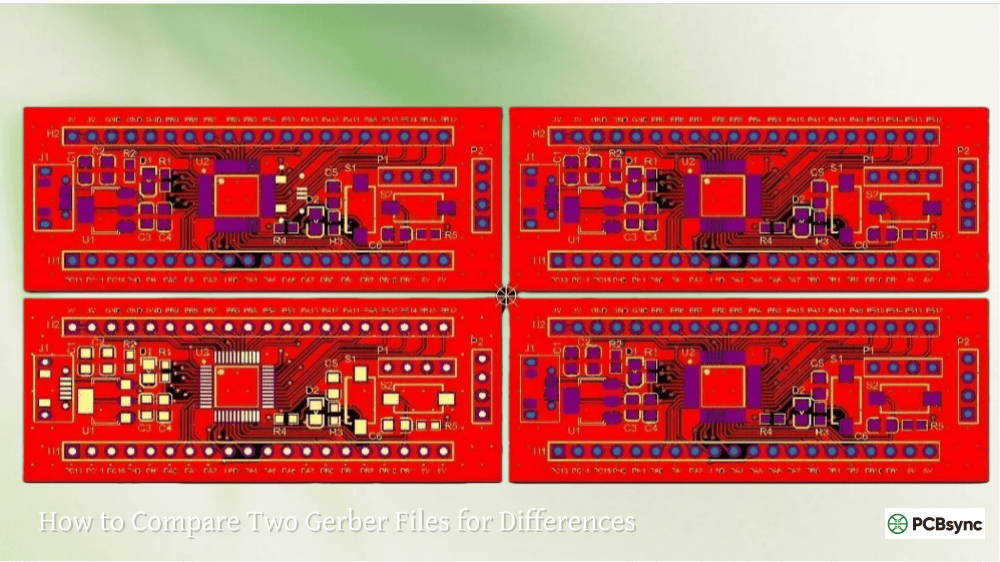
Compare Gerber Files The Compare Layers feature overlays two versions of a design and highlights differences automatically. This catches unintended changes between revisions before they become manufacturing problems.
To compare files, load both versions into separate layers, select the Compare Layers tool from the Home tab, choose the two layers to compare, and enable “Only Show Differences” to isolate changes.
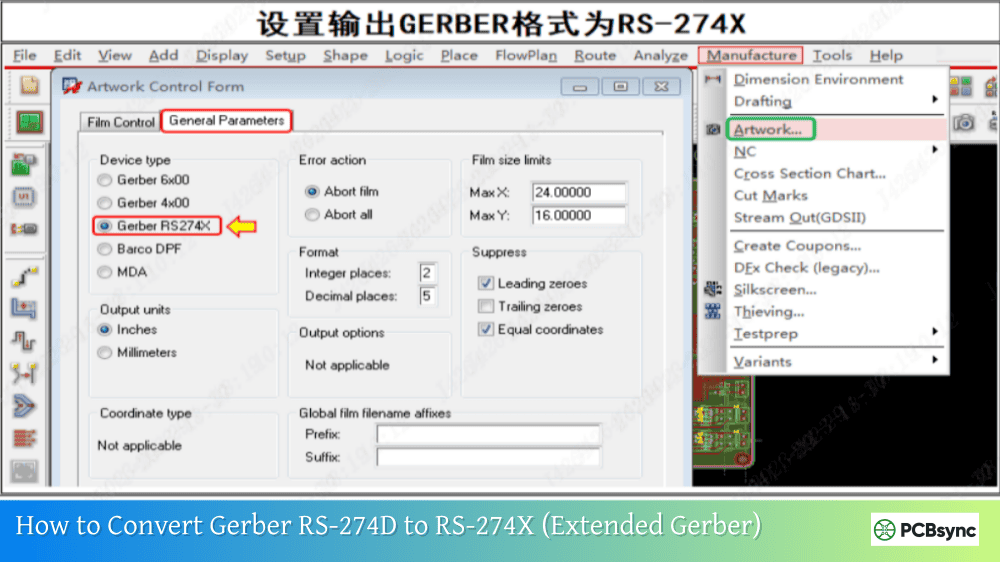
Convert Legacy Gerber Files If you work with older designs, you’ll encounter RS-274D files that lack embedded aperture data. GerbView converts these to modern RS-274X format, reducing manufacturing errors caused by aperture mismatches.
Markup and Annotation Add text, arrows, QR codes, barcodes, and images directly to layers. Annotations can be “burned in” to become permanent parts of the Gerber data—useful for adding version numbers or tracking codes.
Create Layered PDFs Export your entire design as a multi-layered PDF where each Gerber file becomes a selectable layer. Reviewers can toggle layers in Adobe Acrobat without needing specialized CAD software.
Step-by-Step Gerber File Inspection Workflow
Whether you use KiCad’s free GerbView or the commercial version, following a systematic inspection workflow catches errors before they become expensive problems.
Pre-Manufacturing Gerber Verification Checklist
Check Item
What to Look For
Layer count
All required layers present and loaded
Board outline
Edge.Cuts layer shows correct board dimensions
Copper layers
All traces connected, no broken nets
Solder mask
Openings align with pads, no unintended coverage
Silkscreen
Text readable, not overlapping pads
Drill holes
PTH and NPTH holes in correct locations
Paste layers
Stencil openings match SMD pads
Detailed Inspection Process
1. Verify Board Outline Start by examining the board outline layer (typically Edge.Cuts in KiCad). Measure dimensions against your design specification. Check that cutouts and slots are present and correctly positioned.
2. Check Copper Layer Alignment Toggle between top and bottom copper layers. Verify that vias connect correctly between layers. Look for unintended copper that might cause shorts.
3. Inspect Drill Files Load drill files and overlay them on copper layers. Confirm that holes center properly on pads. Verify hole sizes match your design intent—especially for mounting holes and component leads.
4. Verify Solder Mask Display solder mask layers against copper. Confirm that pad openings provide adequate clearance. Check that solder mask dams between fine-pitch pads are sufficient for your fab house’s capabilities.
5. Review Silkscreen Examine silkscreen for readability. Ensure reference designators don’t overlap solder mask openings. Verify that polarity marks and pin 1 indicators are present and correctly positioned.
Common Gerber File Problems to Watch For
Problem
Symptoms in Viewer
Solution
Missing apertures
Invisible or incorrectly sized features
Re-export with RS-274X format
Wrong units
Design appears at wrong scale
Check export settings (mm vs inches)
Inverted polarity
Copper/mask appears negative
Verify layer polarity settings
Missing outline
No board boundary visible
Add Edge.Cuts to export list
Drill offset
Holes misaligned with pads
Check drill file origin settings
GerbView vs Other Gerber Viewers
Several Gerber viewers compete for engineers’ attention. Here’s how GerbView compares:
Gerber Viewer Comparison
Feature
KiCad GerbView
SW Companions GerbView
gerbv (Open Source)
Price
Free
$295+ (perpetual)
Free
Platform
Windows, Mac, Linux
Windows
Windows, Linux, Mac
RS-274X Support
Yes
Yes
Yes
RS-274D Support
No
Yes
No
ODB++ Support
No
Yes
No
PDF Import
No
Yes
No
File Comparison
No
Yes
No
Measurement Tool
Yes
Yes (snap-to-pad)
Yes
Export to PDF
No
Yes (layered)
Yes (single page)
Max Layers
32
Unlimited
Unlimited
Markup/Annotation
No
Yes
Limited
When to Use Each Viewer
KiCad GerbView works best for quick verification of files exported from any CAD tool, basic inspection before sending to fab, checking drill alignment, and situations where you need a free, reliable viewer.
Software Companions GerbView excels when you need to convert between formats (especially RS-274D to RS-274X), compare design revisions, create documentation with layered PDFs, work with ODB++ files, or add annotations and markup to manufacturing data.
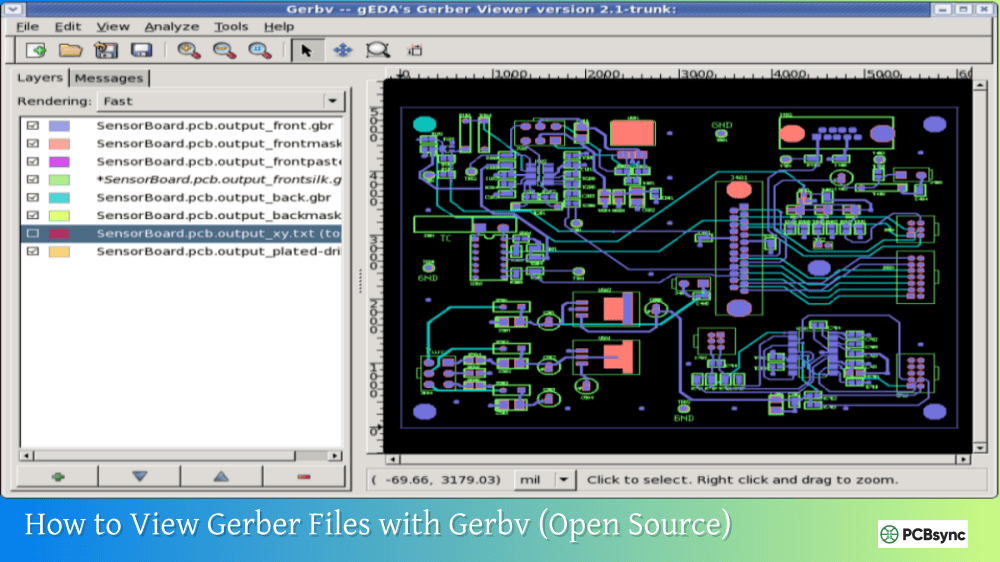
gerbv (Open Source) is ideal when you need a lightweight, portable viewer (standalone .exe), work primarily on Linux systems, want basic viewing without installation overhead, or need to integrate Gerber viewing into custom tools (via libgerbv library).
Read more How to convert PCB Files in different Design software:
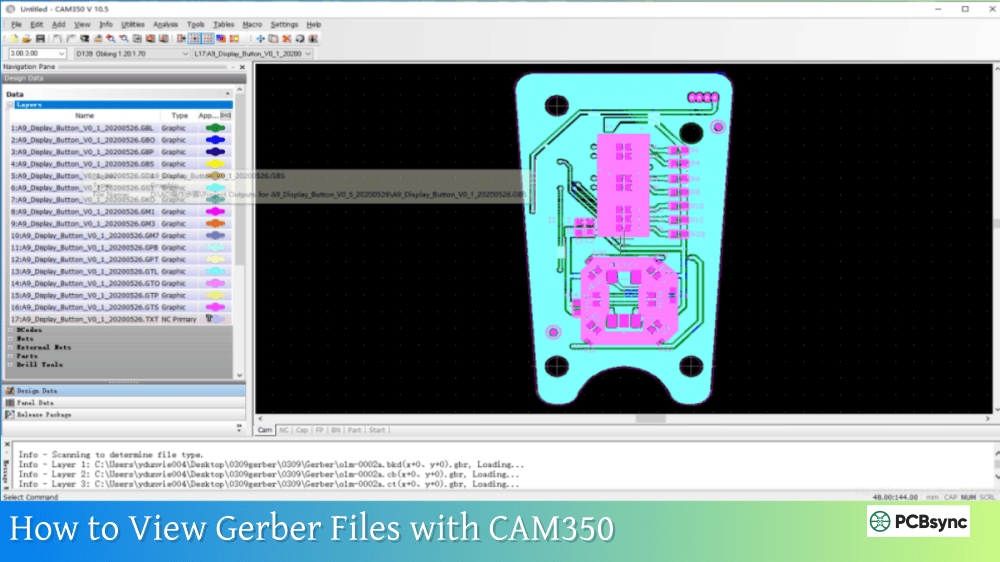
KiCad’s GerbView is primarily a viewer with very limited editing capability—you can delete objects but not add or modify them. Software Companions’ GerbView offers more editing through its markup feature, allowing you to add text, shapes, and annotations that can be “burned in” as permanent Gerber data. However, neither is a full Gerber editor. For significant modifications, you should return to your original PCB design software and re-export the Gerber files. If you only have Gerbers without source files, tools like FAB 3000 or CAM350 provide more comprehensive editing capabilities.
Why won’t GerbView display my Gerber files correctly?
The most common cause is that your files are in the older RS-274D format, which lacks embedded aperture information. KiCad’s GerbView and gerbv only support RS-274X (Extended Gerber) format. Check your CAD export settings and ensure you’re generating RS-274X output. Other causes include incorrect unit settings (mixing millimeters and inches), corrupted file downloads, or non-standard Gerber extensions that the viewer doesn’t recognize. Software Companions’ GerbView can read RS-274D files if you provide an aperture file, and it can convert them to RS-274X for use with other viewers.
How do I check if my drill holes align with pads in GerbView?
Load both your copper layer Gerber files and Excellon drill files into GerbView. In KiCad GerbView, use File → Open Excellon Drill File(s) after loading Gerbers. The drill holes will display as overlays on the copper layers. Zoom in on vias and through-hole pads—the drill markers should center precisely on the pads. If you see consistent offset, your drill file origin likely differs from your Gerber origin. Return to your CAD software and verify that all exports use the same coordinate reference point. In Software Companions’ GerbView, you can use the Align feature to manually correct misaligned files before sending to manufacturing.
What’s the difference between KiCad GerbView and Software Companions GerbView?
Despite sharing the same name, these are completely different products. KiCad GerbView is free, open-source software included with the KiCad EDA suite—it’s excellent for basic viewing and inspection but lacks advanced features. Software Companions’ GerbView is commercial software ($295+) with professional capabilities including format conversion (RS-274D to RS-274X, ODB++ to Gerber), file comparison between revisions, PDF import/export, layered PDF creation, and extensive markup tools. Choose KiCad GerbView for routine verification tasks; choose Software Companions’ GerbView if you need conversion capabilities or work with legacy/varied file formats.
Can I convert my Gerber files to other formats using GerbView?
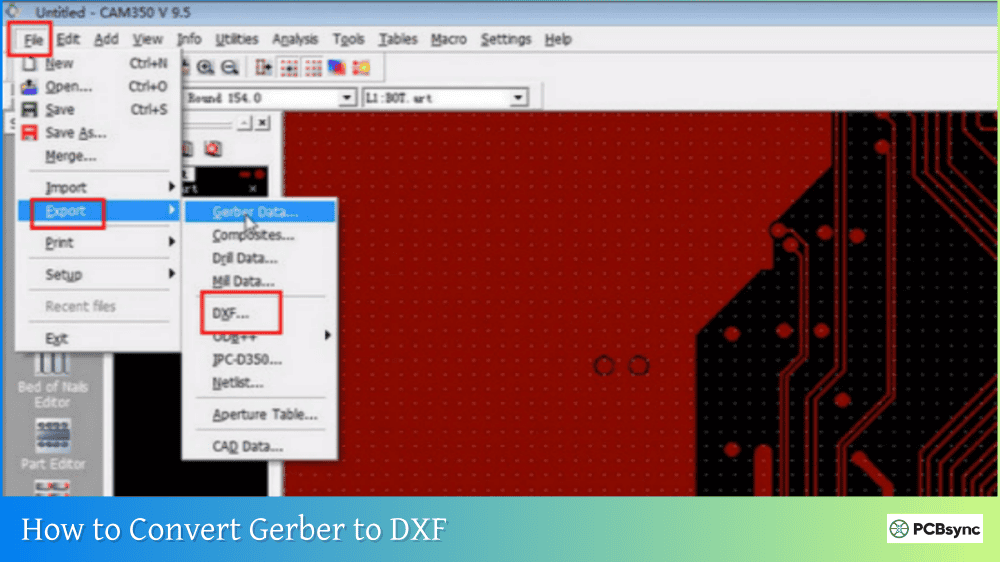
KiCad’s GerbView has limited export capability—you can export to a KiCad PCB project, but this is intended for recovery scenarios rather than general conversion. Software Companions’ GerbView excels at format conversion, supporting output to DXF, DWF, PDF (single or layered), various image formats (TIFF, PNG, JPEG), SVG, and of course RS-274X Gerber. It can also convert ODB++ projects to individual Gerber files and recover vector data from PDF files back to editable Gerber or DXF. The gerbv open-source viewer can export to PNG, PDF, SVG, and PostScript formats but doesn’t create other CAD formats.
Best Practices for Gerber File Verification
After years of sending boards to fabrication, I’ve developed habits that consistently catch problems before they become expensive mistakes.
Always verify immediately after export. Don’t wait until you’re ready to order—check Gerbers right after generating them while the design is fresh in your mind.
Use a different viewer than your CAD tool’s built-in option. If your design software has a Gerber preview, it might mask export errors because it’s rendering from the same engine. An independent viewer like GerbView shows exactly what the fab house will receive.
Check every layer, every time. It’s tempting to spot-check only the layers you modified, but export settings can affect all layers. A systematic review takes minutes but saves weeks of delay from re-spins.
Keep layer colors consistent. Develop a personal color scheme (red for top copper, blue for bottom, green for solder mask, etc.) and apply it consistently. Your brain learns to spot anomalies faster with familiar visual patterns.
Measure critical dimensions. Don’t assume the numbers are right—use the measurement tool to verify board outline dimensions, mounting hole positions, and connector footprint spacing against your mechanical requirements.
Viewing Gerber files with GerbView before manufacturing isn’t glamorous work, but it’s the difference between prototype success and costly rework. Whether you choose KiCad’s free viewer or invest in the commercial Software Companions version, the few minutes spent on verification will repay themselves many times over.
Inquire: Call 0086-755-23203480, or reach out via the form below/your sales contact to discuss our design, manufacturing, and assembly capabilities.
Quote: Email your PCB files to Sales@pcbsync.com (Preferred for large files) or submit online. We will contact you promptly. Please ensure your email is correct.
Notes: For PCB fabrication, we require PCB design file in Gerber RS-274X format (most preferred), *.PCB/DDB (Protel, inform your program version) format or *.BRD (Eagle) format. For PCB assembly, we require PCB design file in above mentioned format, drilling file and BOM. Click to download BOM template To avoid file missing, please include all files into one folder and compress it into .zip or .rar format.