Inquire: Call 0086-755-23203480, or reach out via the form below/your sales contact to discuss our design, manufacturing, and assembly capabilities.
Quote: Email your PCB files to Sales@pcbsync.com (Preferred for large files) or submit online. We will contact you promptly. Please ensure your email is correct.
Notes: For PCB fabrication, we require PCB design file in Gerber RS-274X format (most preferred), *.PCB/DDB (Protel, inform your program version) format or *.BRD (Eagle) format. For PCB assembly, we require PCB design file in above mentioned format, drilling file and BOM. Click to download BOM template To avoid file missing, please include all files into one folder and compress it into .zip or .rar format.
How to View Gerber Files with Gerbv (Open Source): Complete PCB Engineer’s Guide
When I first started working with PCB designs back in the early 2000s, finding a reliable Gerber viewer that didn’t cost hundreds of dollars was nearly impossible. Then I discovered Gerbv—an open-source Gerber viewer that’s been my trusted tool for nearly two decades. Gerbv remains one of the most lightweight, portable, and reliable ways to view Gerber files without spending a dime. This guide covers everything you need to know about using Gerbv to view Gerber files effectively.
Gerbv is a free, open-source Gerber file viewer originally developed as part of the gEDA project—an umbrella organization dedicated to producing free software tools for electronic design. Unlike commercial alternatives that can cost hundreds or thousands of dollars, Gerbv provides professional-grade viewing capabilities at no cost, with source code available for anyone to inspect, modify, or improve.
Gerbv Key Features Overview
The software has earned trust among PCB engineers worldwide because it handles the essential viewing tasks reliably. Gerbv displays RS-274X (Extended Gerber) files with full aperture macro support up to 10 levels of recursion. It reads Excellon drill files and CSV pick-and-place files with automatic file type detection. The Cairo rendering engine enables semi-transparent layer display, making stackup visualization intuitive.
Feature
Description
Gerber Format
RS-274X (Extended Gerber) only
Drill Files
Excellon format supported
Pick-and-Place
CSV format with XYRS data
Layer Limit
Unlimited simultaneous layers
Export Formats
PNG, PDF, SVG, PostScript
Platforms
Linux, Windows, macOS, Unix
License
GNU GPL v2.0
One important limitation to understand upfront: Gerbv does not support older RS-274D files, which lack embedded aperture information. If you have legacy RS-274D files, you’ll need to convert them to RS-274X format first or use a different viewer.
Downloading and Installing Gerbv
Gerbv’s installation varies by operating system. The Windows version is particularly convenient—it’s a portable standalone executable requiring no installation.
Windows Installation
Step 1: Navigate to the SourceForge download page at sourceforge.net/projects/gerbv/files/gerbv/
Step 2: Download the latest Windows binary. The portable version is approximately 11 MB compressed and requires no installation.
Step 3: Extract the archive to any folder. The gerbv.exe file runs immediately without setup.
The Windows version is truly portable—it leaves no registry entries or configuration files on your system. You can run it from a USB drive, making it perfect for quick verification on any Windows machine.
Linux Installation
Most major Linux distributions include Gerbv in their standard repositories, making installation straightforward:
Distribution
Installation Command
Ubuntu/Debian
sudo apt-get install gerbv
Fedora/RHEL
sudo dnf install gerbv
Arch Linux
sudo pacman -S gerbv
openSUSE
sudo zypper install gerbv
Gerbv is also included in the Fedora Electronics Lab live CD for those wanting a complete electronics design environment.
Building from Source
For developers or users wanting the latest features, building from source is straightforward:
Step 1: Download the source tarball from the official repository.
Step 2: Extract and enter the directory: gzip -dc gerbv-x.x.x.tar.gz | tar xf –
Step 3: Configure the build: ./configure
Step 4: Compile: make
Step 5: Install: sudo make install
The build requires GTK+ and Cairo libraries. Configure options include –enable-debug for development builds and –enable-unit-mm to set millimeters as the default coordinate unit.
Opening Gerber Files in Gerbv
Loading files into Gerbv follows an intuitive workflow, whether you use the graphical interface or command line.
Loading Files via GUI
Step 1: Launch Gerbv from your applications menu or by running the executable.
Step 2: Navigate to File → Open Layer(s) or press Ctrl+O.
Step 3: Select your Gerber files. You can select multiple files at once using Shift+Click or Ctrl+Click.
Step 4: Click Open. Gerbv automatically detects whether each file is a Gerber, drill, or pick-and-place file.
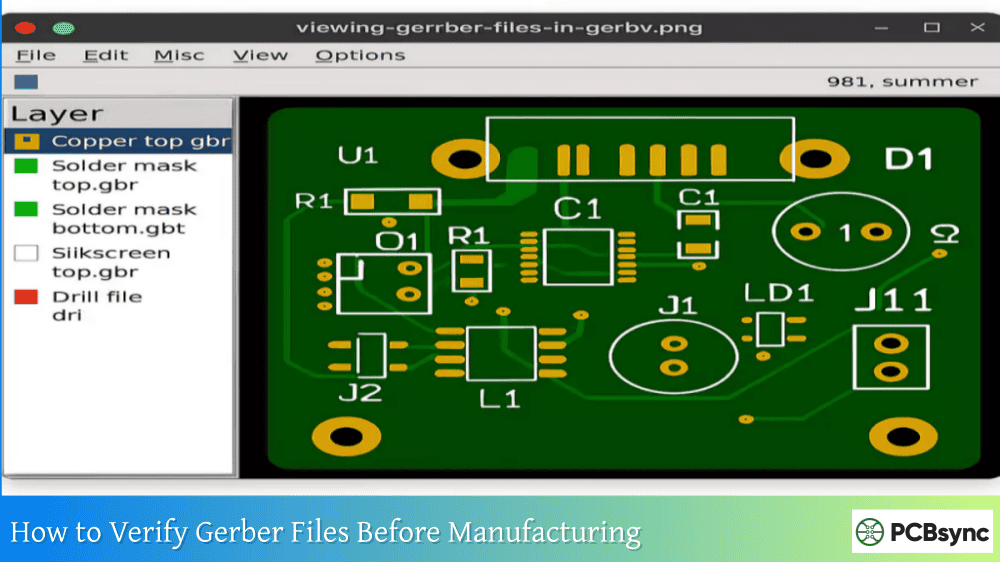
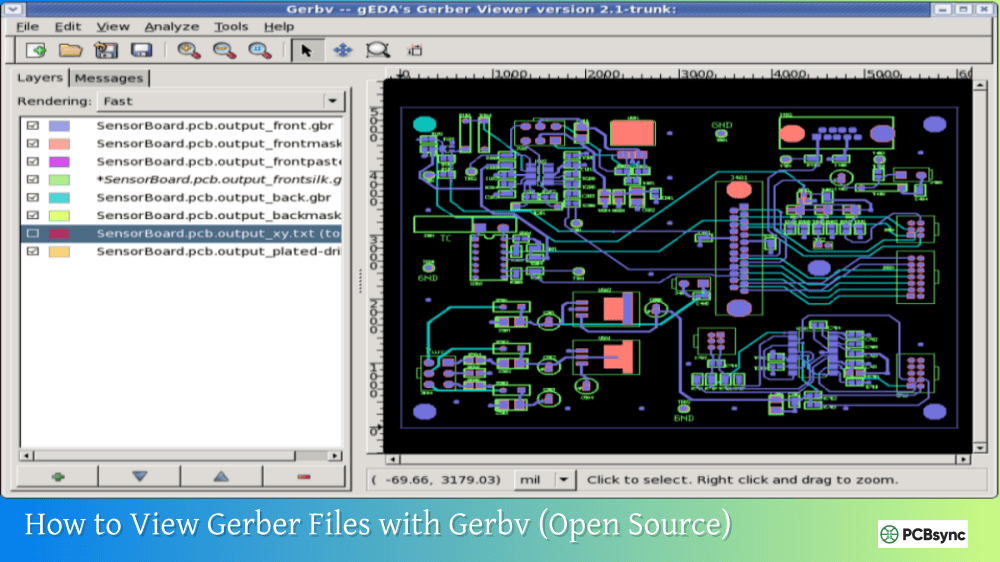
Each loaded file appears as a separate layer in the layer panel on the right side of the window. The layers stack on top of each other, simulating how the physical board layers align.
Loading Files via Command Line
Gerbv’s command-line interface enables scripting and batch processing:
gerbv file1.gbr file2.gbr drill.drl
You can use wildcards to load multiple files:
gerbv *.gbr *.drl
Command-line options allow setting colors and export parameters:
Option
Description
Example
-b
Background color (hex)
-b #000000
-f
Foreground/layer color
-f #FF0000
-p
Load project file
-p myproject.gvp
-x
Export format
-x png
-o
Output filename
-o output.png
Navigating and Viewing Layers
Gerbv provides intuitive navigation controls that any CAD user will recognize.
Pan and Zoom Controls
Action
Method
Pan
Press and drag left mouse button, or middle mouse button
Zoom In
Press Z key, or right-click, or mouse wheel up
Zoom Out
Press Shift+Z, or Shift+right-click, or mouse wheel down
Fit to Window
Press F key
Zoom by Outline
Select Zoom Tool, drag rectangle around region
The status bar at the bottom displays your current cursor position in the same coordinate system as the original Gerber file. If your design has its origin at the board center, Gerbv will show (0,0) at that same location.
Layer Visibility and Ordering
The layer panel on the right side of the window controls how layers display. Each layer appears with a checkbox, color swatch, and filename tooltip (visible when hovering).
Toggle Layer Visibility: Click the checkbox next to any layer to show or hide it. You can also use keyboard shortcuts—press Ctrl plus the layer number on your numeric keypad.
Change Layer Order: Drag and drop layers in the layer panel to change the stackup order. Upper layers in the list appear on top of lower layers.
Layer Rendering Modes: Right-click a layer for rendering options. The default “copy” mode draws upper layers over lower ones. Alternative modes include AND, OR, XOR, and INVERT for specialized comparison views.
Layer Color Configuration
Customizing layer colors helps distinguish different PCB layers at a glance. Right-click any layer and select “Change Color” to access the color picker.
For semi-transparent viewing (Cairo builds only), you can specify alpha values in the color code. Use hex format #RRGGBBAA where AA represents opacity (00 = fully transparent, FF = fully opaque).
Using the Measurement Tool
Accurate measurements are essential for verifying your PCB design. Gerbv includes a straightforward measurement tool that supports multiple units.
Taking Measurements
Step 1: Select the Measure tool from the Tools menu or toolbar.
Step 2: Click on the first point of interest.
Step 3: Click on the second point. Gerbv displays the distance in the status bar.
Measurements remain visible on screen until you zoom, pan, or press Escape. This lets you take multiple measurements and compare them before clearing the display.
Measurement Units
Unit
Abbreviation
Usage
Inches
in
Traditional US/Imperial
Millimeters
mm
Metric standard
Mils
mil
1/1000 inch, common in PCB
Switch units through the View menu or configure your default unit during build with –enable-unit-mm.
Analyzing Gerber File Properties
Gerbv provides tools to analyze your Gerber files beyond simple viewing—useful when troubleshooting manufacturer issues.
Viewing Layer Information
Right-click any layer and select “Properties” to see detailed information about the file, including coordinate format and detected settings, aperture definitions and usage counts, layer statistics (element count, bounds), and any parsing warnings or errors.
Analyzing Apertures
Select Analyze → Analyze Visible Gerber Layers to generate a report on aperture usage across all visible layers. This report helps verify that aperture macros parsed correctly, identify unusual or potentially problematic apertures, and count element types (pads, traces, polygons).
Validating Drill Files
When loading Excellon drill files, Gerbv checks for duplicate tool definitions—a common error when manually editing drill files. If duplicates exist, Gerbv exits immediately with an error message. This aggressive error handling prevents manufacturing holds caused by ambiguous tool definitions.
If your drill file lacks embedded tool definitions, Gerbv assigns default diameters based on tool numbers. You’ll see console warnings when this happens. For accurate display, provide a separate tools file using the -t command-line option.
Exporting Gerber Views
Gerbv exports your layer views to several common formats, enabling documentation and sharing with team members who don’t have Gerber viewers.
Export Formats Supported
Format
Extension
Best For
PNG
.png
Raster images, web, documentation
PDF
.pdf
Print-quality output, sharing
SVG
.svg
Scalable vector graphics
PostScript
.ps
High-quality printing
RS-274X
.gbr
Modified Gerber output
Excellon
.drl
Modified drill output
Exporting via GUI
Step 1: Configure your view with desired layers visible and colors set.
Step 2: Navigate to File → Export → [format].
Step 3: Choose your output filename and location.
Step 4: Set resolution (for PNG) or other format-specific options.
Command-Line Export
For batch processing or scripting, command-line export is powerful:
gerbv -x png -o output.png -D 300 -a file1.gbr file2.gbr
Export Option
Description
-x format
Output format (png/pdf/ps/svg)
-o filename
Output filename
-D dpi
Resolution in dots per inch
-a
Export all layers visible
-B border
Border percentage around image
-W WxH
Output window size in pixels
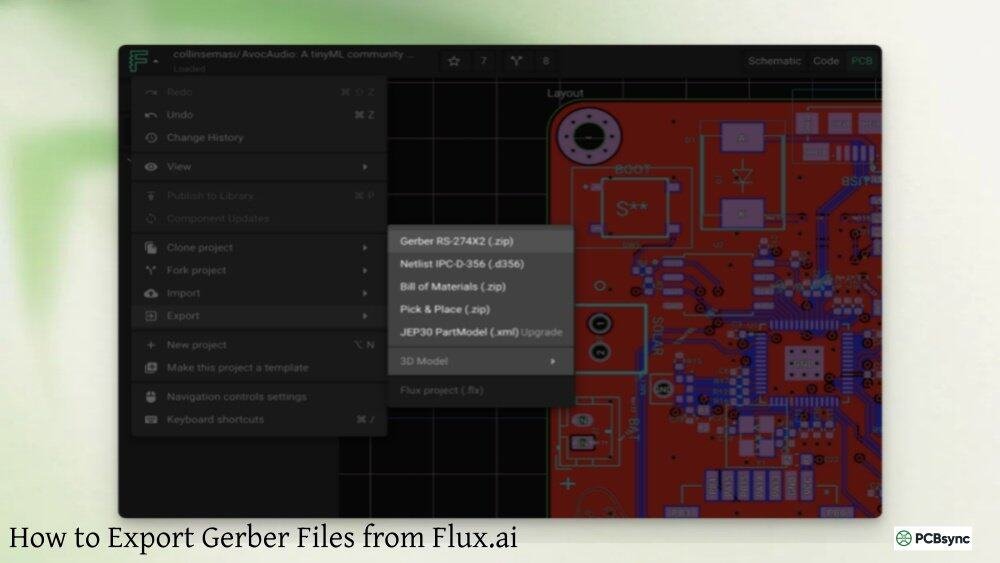
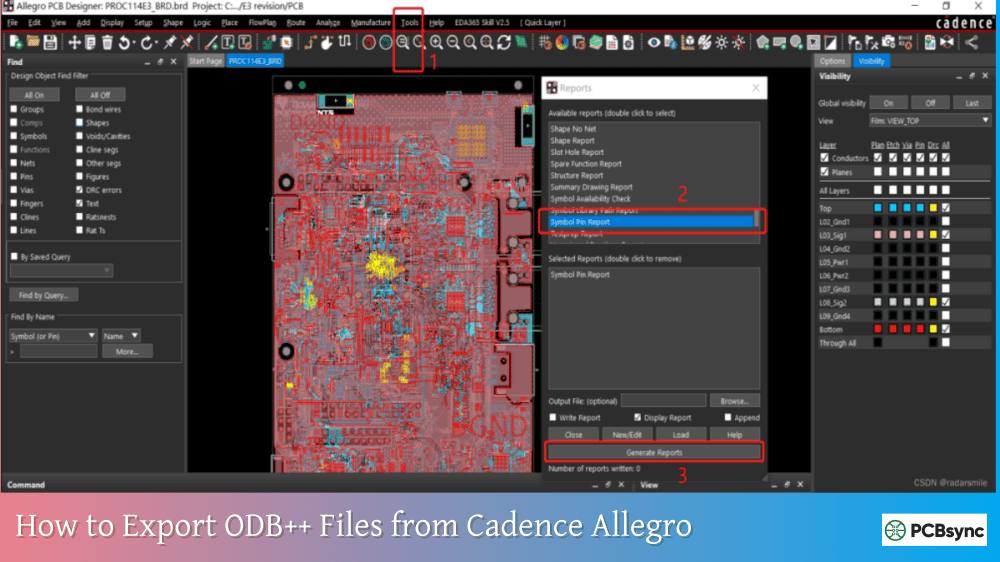
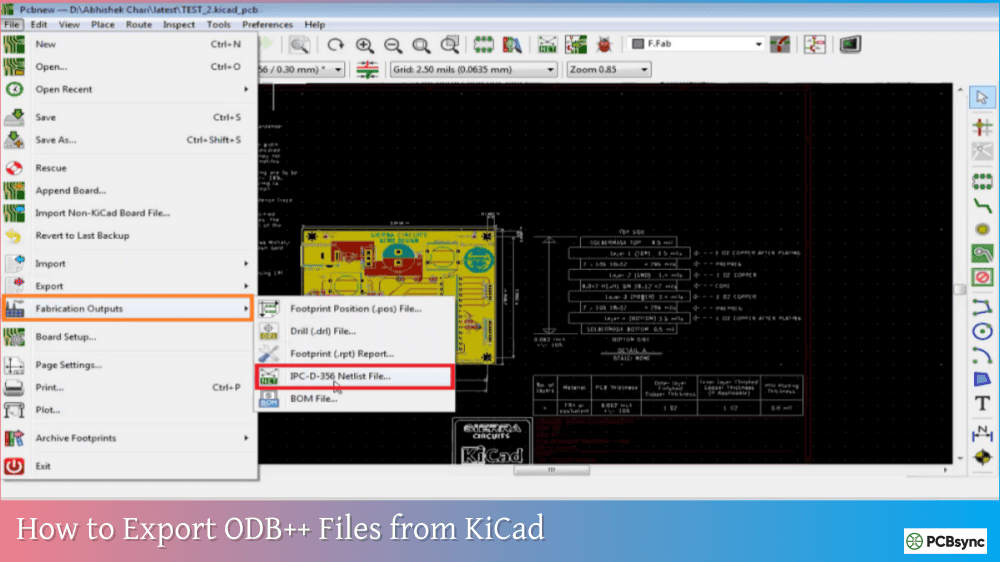
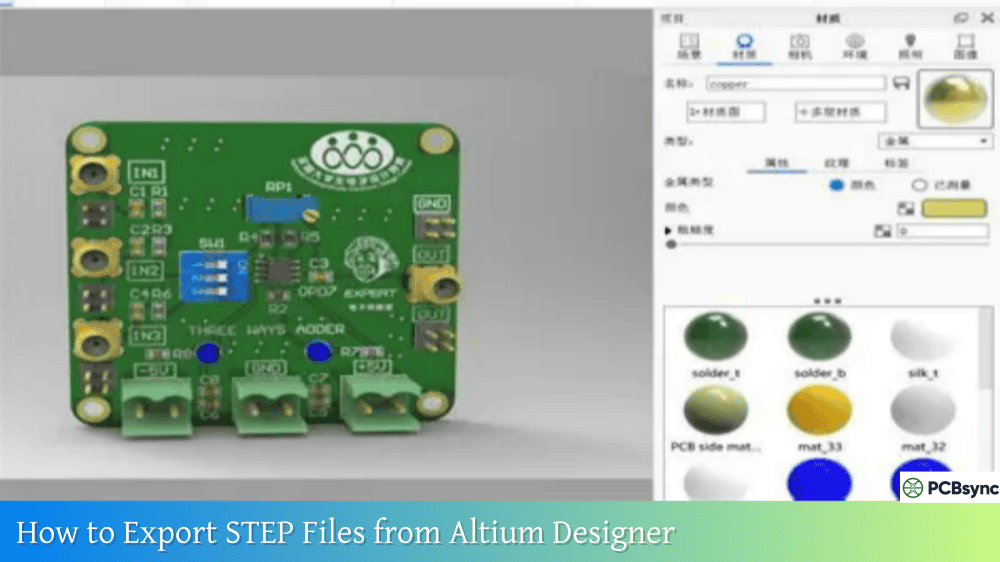
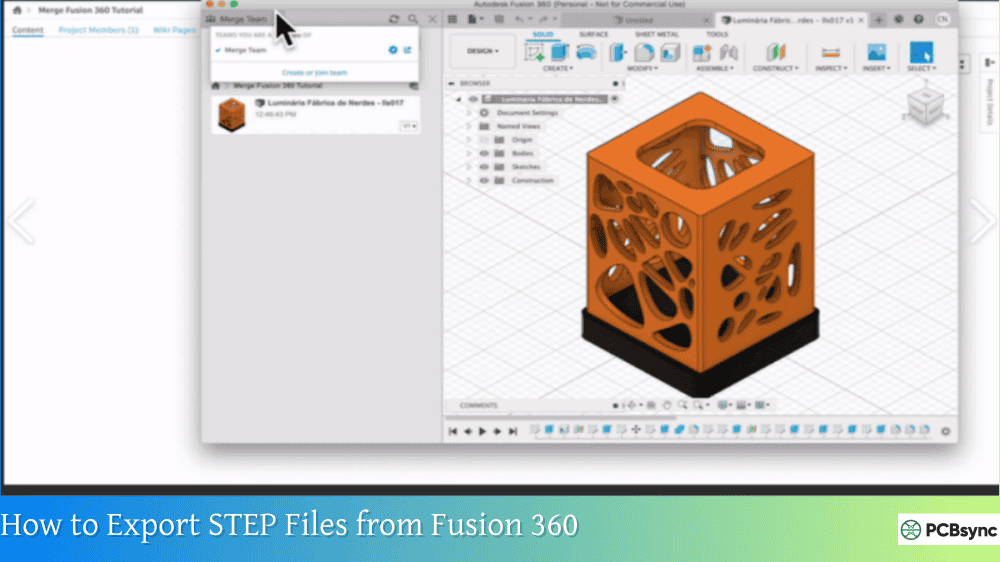
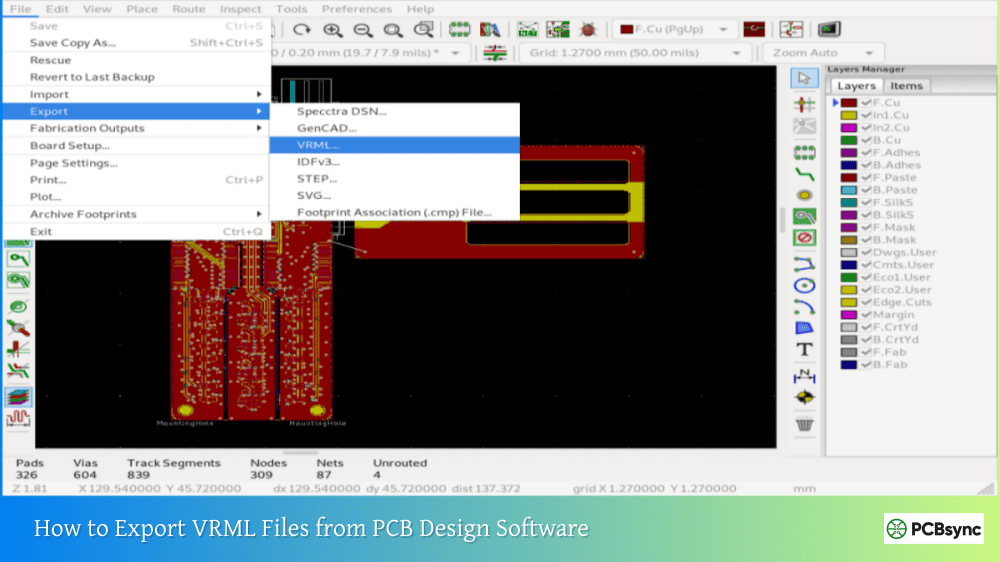
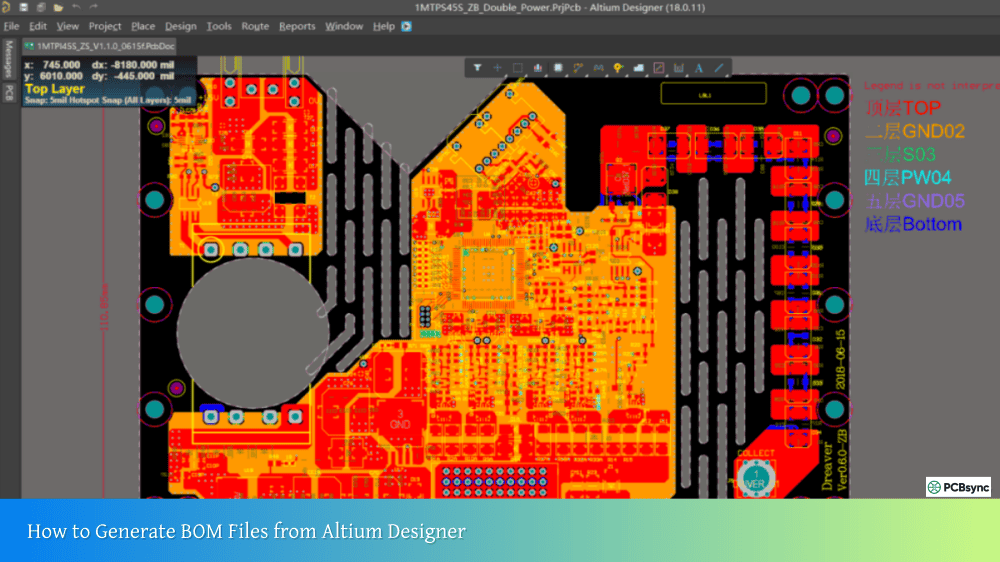
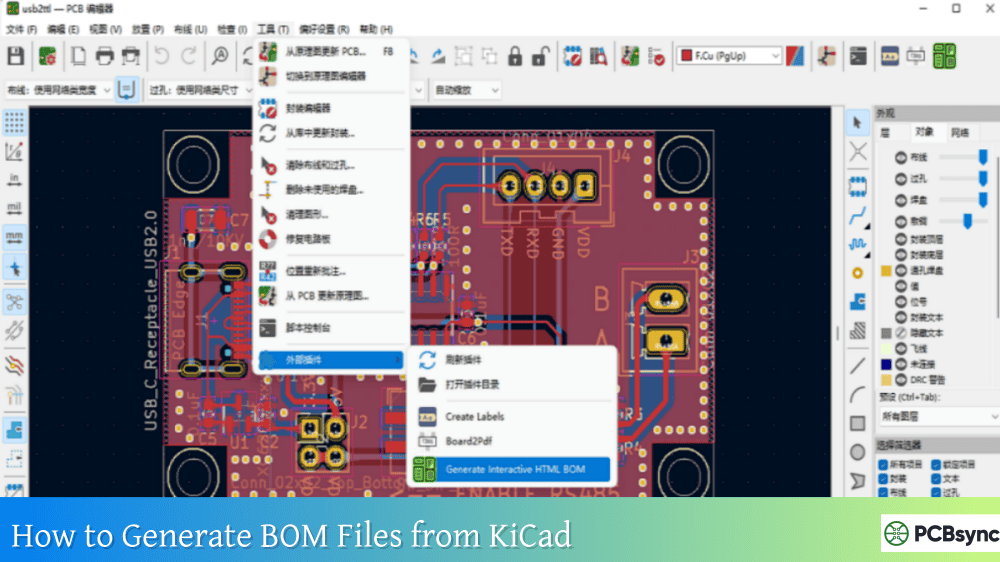
Read more How to convert PCB Files in different Design software:
For designs you review repeatedly, Gerbv’s project files save your complete session configuration.
Creating a Project
Step 1: Load all your Gerber and drill files.
Step 2: Arrange layer order using drag and drop.
Step 3: Set layer colors to your preferences.
Step 4: Adjust background color if desired.
Step 5: Select File → Save Project As and choose a location.
Project files use the .gvp extension and are actually Scheme programs interpreted by Gerbv’s built-in TinyScheme interpreter. They store layer filenames, colors, visibility states, stackup order, and background color.
Project File Limitations
One important constraint: project files must reside in the same directory as the Gerber files they reference. If you move your Gerber files, you’ll need to update or recreate the project file.
Gerbv vs Other Gerber Viewers
How does Gerbv compare to other popular Gerber viewers?
Feature
Gerbv
ViewMate
KiCad GerbView
Price
Free
Free (limited)
Free
Open Source
Yes
No
Yes
Platform
Linux/Win/Mac
Windows
Linux/Win/Mac
RS-274X
Yes
Yes
Yes
RS-274D
No
Yes
No
Export to PNG
Yes
Print only
No
Export to PDF
Yes
No
No
Semi-transparent
Yes (Cairo)
No
Yes
Portable (no install)
Yes (Windows)
No
No
File Size
~11 MB
~50 MB
Part of KiCad
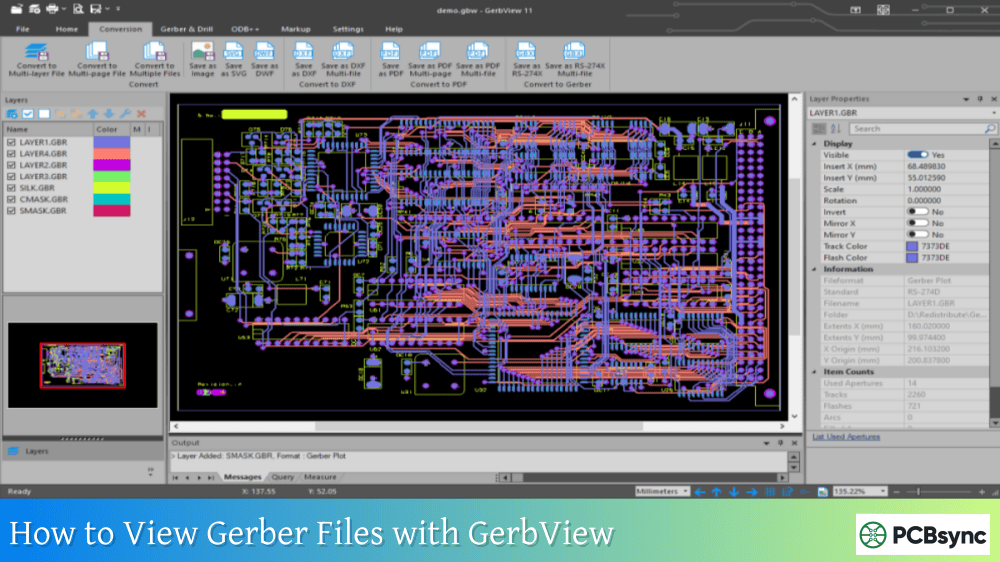
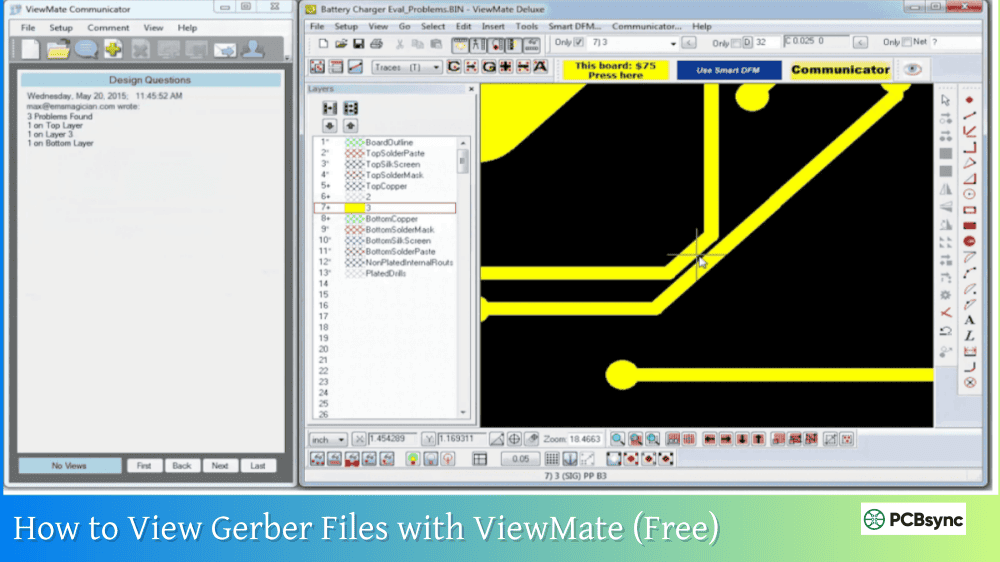
Gerbv’s strengths lie in its portability, lightweight footprint, and export capabilities. Its main limitation is lack of RS-274D support—if you work with legacy files, ViewMate or commercial tools may serve you better.
The most common cause is that your files are in RS-274D format rather than RS-274X. Gerbv explicitly supports only RS-274X files, which contain embedded aperture information. Check your CAD software’s export settings and ensure you’re generating Extended Gerber (RS-274X) output. You can verify the format by opening the file in a text editor—RS-274X files contain aperture definitions within the file itself, typically starting with %ADD (aperture definition) commands. If you have RS-274D files with a separate aperture file, you’ll need to use a different viewer like ViewMate that supports the older format, or convert your files to RS-274X.
How do I make layers semi-transparent in Gerbv?
Semi-transparent rendering requires a Gerbv build that uses the Cairo rendering engine—this is standard in most modern distributions. To set transparency, right-click on a layer and select “Change Color.” In the color dialog, you can either use the alpha/opacity slider or specify a hex color with alpha value in #RRGGBBAA format. For example, #FF000080 creates a 50% transparent red. The transparency feature is particularly useful for visualizing how inner layers align with outer layers, or for checking drill registration against copper pads. If transparency doesn’t seem to work, verify your Gerbv version was built with Cairo support.
Can Gerbv edit Gerber files?
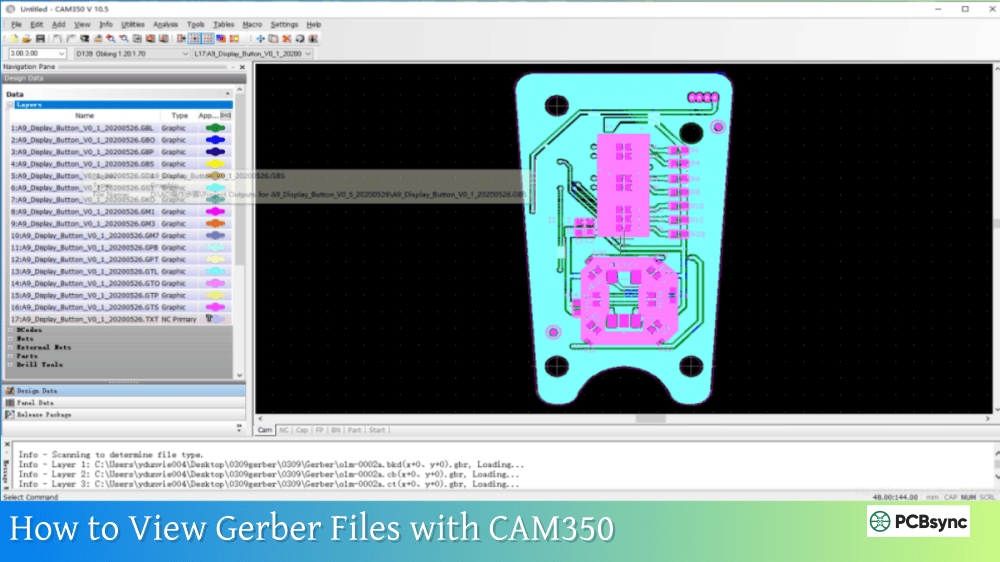
Gerbv’s editing capabilities are intentionally limited. When built with Cairo, you can delete individual objects from layers, but you cannot add or modify elements. For more extensive editing, you should return to your original PCB design software and re-export the Gerber files. The limited editing is useful for removing unwanted artifacts, alignment marks, or test features before sending files to manufacturing. To delete an object, select it with the pointer tool and press Delete. Gerbv can then export the modified layer as a new RS-274X file through File → Export → RS-274X Merged. However, for anything beyond simple deletions, professional CAM software like CAM350 or Genesis provides comprehensive editing capabilities.
How do I align layers that have different origins?
Gerbv includes a layer alignment feature for files exported with different coordinate origins. Select one element on each of the two layers you want to align, then right-click and choose “Align Layers” from the context menu. Gerbv calculates the offset needed to align the selected elements and adjusts the layer position accordingly. This is particularly useful when combining files from different CAD tools or when drill files have a different origin than copper layers. After alignment, you can save the configuration as a project file to preserve the layer positions for future sessions.
Why do my drill holes appear at the wrong size?
Excellon drill files don’t always contain explicit tool diameter definitions. When tool definitions are missing, Gerbv attempts to derive diameters from tool numbers, which rarely produces correct results. You’ll see console warnings when this happens. The solution is to provide a separate tools file using the -t command-line option: gerbv -t tools.txt design.drl. The tools file should contain tool-to-diameter mappings in a format Gerbv recognizes. Alternatively, check your CAD software’s drill export settings—most modern tools can embed tool definitions directly in the Excellon file header, which Gerbv will read correctly.
Best Practices for Using Gerbv
After years of using Gerbv for pre-production verification, I’ve developed habits that consistently catch issues before they become expensive problems.
Keep Gerbv portable. On Windows, I maintain a copy of Gerbv on a USB drive alongside my standard Gerber output package. This ensures I can verify files on any machine, even in manufacturing facilities where installing software isn’t permitted.
Create consistent project files. For designs I review multiple times during development, I create a .gvp project file with my preferred color scheme right away. This saves time and ensures I’m always viewing layers in the same configuration.
Use semi-transparency for registration checks. Enable transparency on copper layers and overlay them with drill files. Any systematic offset between holes and pads becomes immediately visible, helping catch export origin mismatches before manufacturing.
Export documentation images. Use Gerbv’s PNG export to create images for design reviews, manufacturing instructions, or assembly documentation. The command-line export makes it easy to script consistent image generation for every design revision.
Verify layer polarity. Right-click each layer and check the polarity setting. Negative layers (like solder mask) should display as clearances rather than filled areas. Incorrect polarity interpretation can make your design look completely wrong in the viewer.
Gerbv has served the PCB design community faithfully for over two decades. Its combination of zero cost, cross-platform support, and reliable rendering makes it an essential tool in any electronics engineer’s toolkit. While it lacks some advanced features of commercial viewers, for straightforward Gerber verification, few tools match its simplicity and effectiveness.
Inquire: Call 0086-755-23203480, or reach out via the form below/your sales contact to discuss our design, manufacturing, and assembly capabilities.
Quote: Email your PCB files to Sales@pcbsync.com (Preferred for large files) or submit online. We will contact you promptly. Please ensure your email is correct.
Notes: For PCB fabrication, we require PCB design file in Gerber RS-274X format (most preferred), *.PCB/DDB (Protel, inform your program version) format or *.BRD (Eagle) format. For PCB assembly, we require PCB design file in above mentioned format, drilling file and BOM. Click to download BOM template To avoid file missing, please include all files into one folder and compress it into .zip or .rar format.