Inquire: Call 0086-755-23203480, or reach out via the form below/your sales contact to discuss our design, manufacturing, and assembly capabilities.
Quote: Email your PCB files to Sales@pcbsync.com (Preferred for large files) or submit online. We will contact you promptly. Please ensure your email is correct.
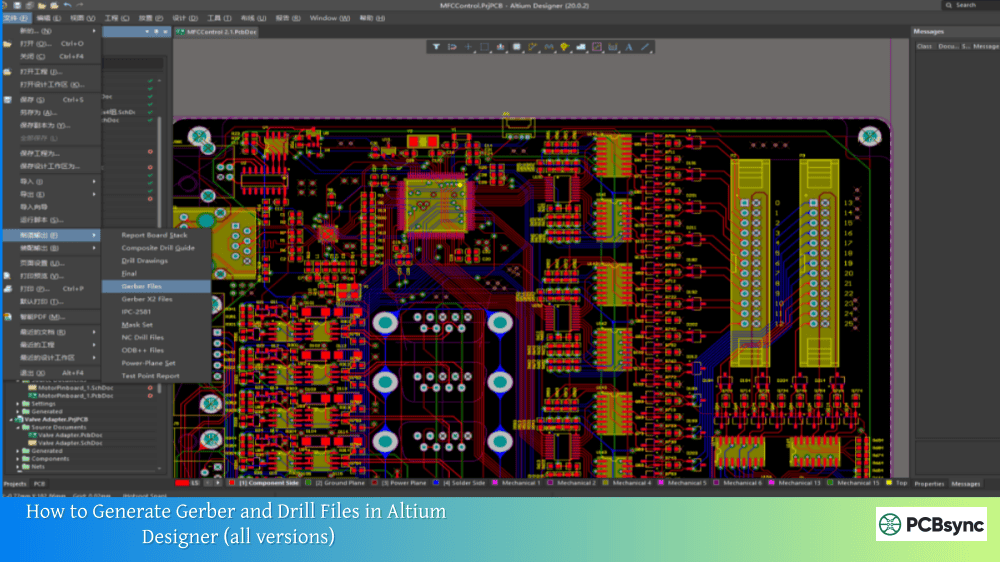
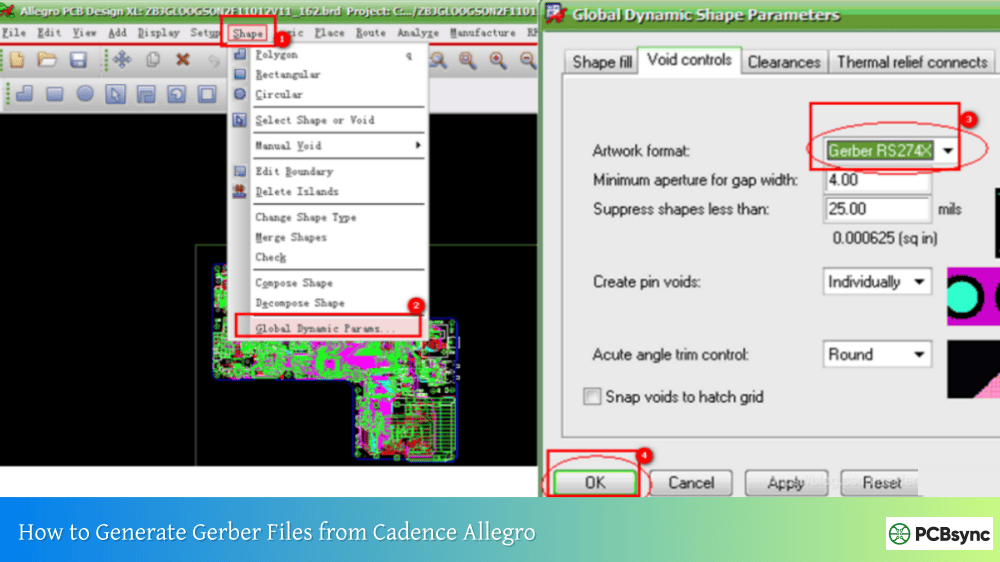
Notes: For PCB fabrication, we require PCB design file in Gerber RS-274X format (most preferred), *.PCB/DDB (Protel, inform your program version) format or *.BRD (Eagle) format. For PCB assembly, we require PCB design file in above mentioned format, drilling file and BOM. Click to download BOM template To avoid file missing, please include all files into one folder and compress it into .zip or .rar format.
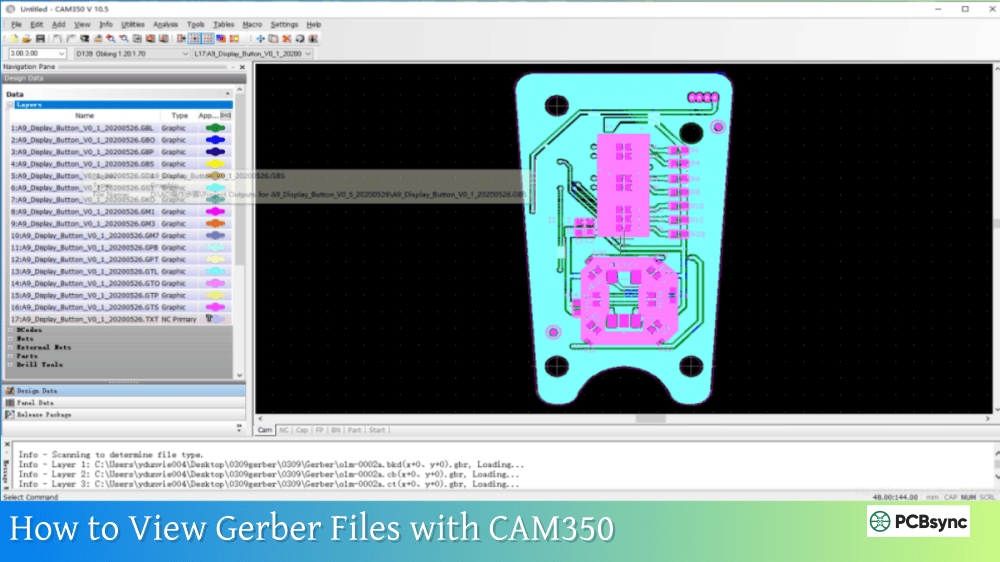
How to View Gerber Files with CAM350: Complete PCB Engineer’s Guide
If you’ve spent any time in PCB manufacturing or worked closely with fabrication houses, you’ve almost certainly encountered CAM350. This industry-standard CAM software has been the backbone of PCB pre-production workflows for decades, and for good reason. While basic Gerber viewers let you see your files, CAM350 takes things to an entirely different level—offering professional-grade viewing, editing, DFM analysis, and manufacturing preparation all in one package. This guide walks you through everything you need to know about using CAM350 to view Gerber files effectively.
CAM350, now part of the Siemens Valor product family, is a professional CAM (Computer-Aided Manufacturing) software designed specifically for the PCB industry. Unlike simple Gerber viewers that only display files, CAM350 provides a complete suite of tools to import, view, analyze, edit, and export design data for manufacturing. The software bridges the gap between PCB design and fabrication, ensuring designs translate into manufacturable products.
Point-to-point, object-to-object, distance, area calculations
What sets CAM350 apart from free viewers is its intelligence. The software doesn’t just display Gerber artwork—it understands the data contextually. CAM350 can identify nets, pads, traces, vias, and component footprints, enabling sophisticated analysis that simple viewers cannot perform.
CAM350 Configuration Tiers
CAM350 comes in various configurations to match different workflow needs:
For most engineers focused on viewing and basic verification, the entry-level configurations provide more than adequate functionality.
Importing Gerber Files into CAM350
CAM350 offers two primary methods for loading Gerber files: AutoImport for streamlined loading and manual import for precise control.
Using AutoImport for Quick Loading
The AutoImport feature is the fastest way to load a complete Gerber package. CAM350 automatically identifies file types and assigns layers appropriately.
Step 1: Launch CAM350 and navigate to File → Import → AutoImport.
Step 2: In the AutoImport dialog, click “Choose Directory” and navigate to the folder containing your Gerber files.
Step 3: CAM350 scans the directory and identifies all recognized file types. Review the file list to ensure all expected files appear.
Step 4: Click “Finish” to complete the import. CAM350 loads all files and assigns them to appropriate layers based on file extensions and content analysis.
Importing Drill Files Separately
Drill files often require separate handling for correct interpretation. After loading Gerber layers:
Step 1: Go to File → Import → Drill Data.
Step 2: Click the browse button and navigate to your drill file (typically .drl, .exc, or .ncd extension).
Step 3: In the import options, select the correct format settings. For most modern files, choose “Leading” zero suppression and verify the coordinate format matches your CAD tool’s output.
Once files are loaded, CAM350 provides comprehensive tools for examining your design.
Layer Management
The layer panel displays all loaded files with color-coded indicators. Each layer can be controlled independently for visibility, color, and rendering mode.
Toggle Layer Visibility: Click the visibility checkbox next to any layer to show or hide it. Multiple layers can be displayed simultaneously to check alignment and registration.
Change Layer Colors: Right-click a layer and select “Change Color” to assign distinctive colors that help differentiate copper, mask, silkscreen, and drill layers.
Reorder Layers: Navigate to Edit → Layers → Reorder to arrange layers in the correct stackup sequence. Proper layer ordering is essential for accurate 3D visualization and analysis.
Zoom and Pan Controls
Action
Method
Pan
Click and drag with middle mouse button
Zoom In
Mouse wheel up, or View → Zoom → In
Zoom Out
Mouse wheel down, or View → Zoom → Out
Fit to Window
View → Zoom → Fit, or press Home key
Zoom to Selection
Draw rectangle while holding Shift
Previous View
View → Previous View
Overlay Modes for Layer Comparison
CAM350 excels at displaying multiple layers simultaneously. Use overlay modes to verify alignment between layers:
Standard Overlay: Upper layers draw on top of lower layers, showing the complete stackup view.
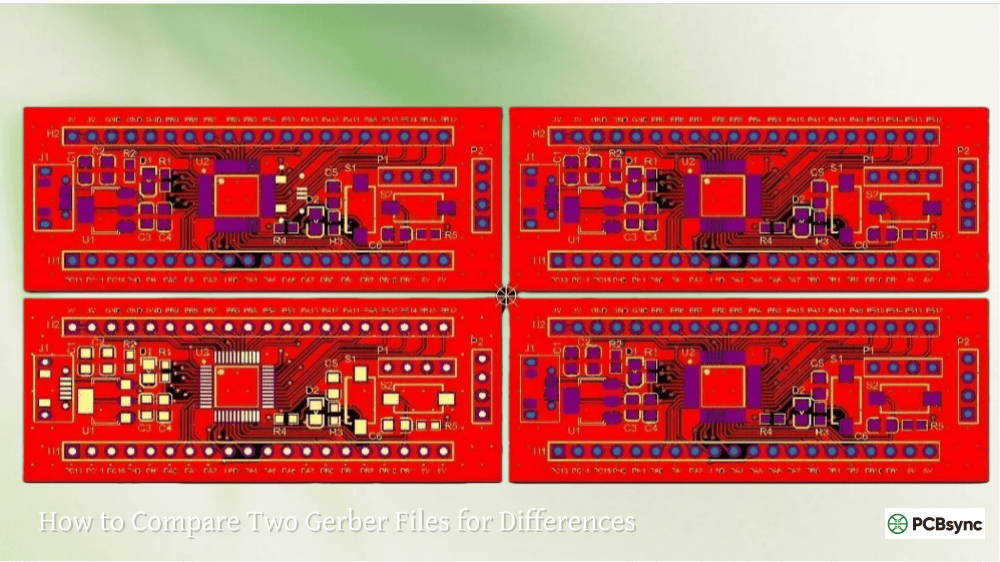
XOR Mode: Highlights differences between layers—identical features cancel out, leaving only unique content visible. Perfect for comparing design revisions.
Transparency Mode: Blends layers with adjustable opacity, allowing visualization of internal layers through external ones.
Measuring Distances and Dimensions
Accurate measurement is critical for manufacturing verification. CAM350 provides sophisticated measurement tools that go beyond basic point-to-point distance.
Using the Measurement Tool
Access measurement functions through Info → Measure in the menu:
Measurement Type
Description
Use Case
Point-to-Point
Distance between two clicked locations
General measurements
Object-to-Object
Shortest distance between two elements
Clearance verification
Object-to-Edge
Distance from element to board edge
Edge clearance checks
Center-to-Center
Distance between pad or via centers
Pitch verification
Step 1: Select the desired measurement type from Info → Measure.
Step 2: Click on the first point or object.
Step 3: Click on the second point or object.
Step 4: The measurement result displays in the status bar and information window.
Querying Element Properties
Beyond measurement, CAM350 can provide detailed information about any design element. Use Info → Query or simply press ‘Q’ while hovering over an element to see:
Properties displayed include D-code and aperture information, element type (pad, trace, polygon), layer assignment, X/Y coordinates, size and dimensions, net assignment (if netlist is loaded), and drill tool information (for holes).
Running DFM Analysis in CAM350
Design for Manufacturability analysis is where CAM350 truly differentiates itself from basic viewers. The DFM tools identify potential manufacturing problems before files go to production.
Basic DFM Checks
Even entry-level CAM350 configurations include essential DFM capabilities:
CAM350’s Streams methodology organizes DFM checks into logical groups:
Step 1: Navigate to Analysis → DFM → Streams.
Step 2: Select a predefined stream or create a custom analysis sequence.
Step 3: Configure parameters for each check type based on your manufacturer’s capabilities.
Step 4: Execute the stream. CAM350 highlights violations directly on the design.
Step 5: Review results using the navigation tools to jump between error locations.
Design Analyzer for Fabrication Quoting
The Design Analyzer extracts key manufacturing parameters automatically:
Parameter
What It Measures
Board Dimensions
Overall size and shape
Layer Count
Number of copper layers
Minimum Trace Width
Smallest conductor width
Minimum Spacing
Smallest gap between conductors
Minimum Hole Size
Smallest drill diameter
Via Types
Through, blind, buried, laser via technologies
Copper Weight
Estimated copper density
Aspect Ratio
Board thickness to minimum hole ratio
This information helps fabricators provide accurate quotes and identifies features requiring advanced manufacturing capabilities.
Editing and Modifying Gerber Data
CAM350 is not just a viewer—it’s a full Gerber editor. Common editing tasks include correcting design errors before fabrication, adding or removing features, panelizing designs for production, and optimizing drill data.
Common Edit Operations
Operation
Menu Path
Use Case
Delete Element
Edit → Delete
Remove unwanted features
Move Element
Edit → Move
Reposition design elements
Copy Element
Edit → Copy
Duplicate features
Change D-Code
Edit → Change → D-Code
Modify aperture assignment
Add Pad
Insert → Pad
Insert new pad features
Add Trace
Insert → Trace
Draw new conductor paths
Layer Alignment
When Gerber files from different sources have misaligned origins:
Step 1: Navigate to Edit → Layers → Align.
Step 2: Select the reference layer (typically the most accurate).
Step 3: Click on a reference point in the reference layer.
Step 4: Select the layer to align.
Step 5: Click on the corresponding point in that layer.
Step 6: CAM350 calculates and applies the offset to align the layers.
Setting the Origin
For proper coordinate system alignment:
Navigate to Edit → Change → Origin → Datum Coordinate and click on the desired origin location (typically lower-left corner of the board outline).
Read more How to convert PCB Files in different Design software:
After viewing, analyzing, or editing, export your data in appropriate formats.
Gerber Export
Step 1: Go to File → Export → Gerber Data.
Step 2: Select the export path and configure filenames for each layer.
Step 3: Choose the Gerber format (RS-274X recommended for modern workflows).
Step 4: Set coordinate format (typically 2,4 imperial or 3,3 metric).
Step 5: Click OK to generate the Gerber files.
Drill Data Export
Step 1: Navigate to File → Export → Drill Data.
Step 2: Select output format (Excellon is most common).
Step 3: Configure coordinate format to match your Gerber export settings.
Step 4: Assign tool tables if required by your manufacturer.
Step 5: Export the drill file.
CAM350 vs Free Gerber Viewers
Understanding when CAM350’s capabilities are necessary versus when free viewers suffice helps make informed decisions.
Feature
CAM350
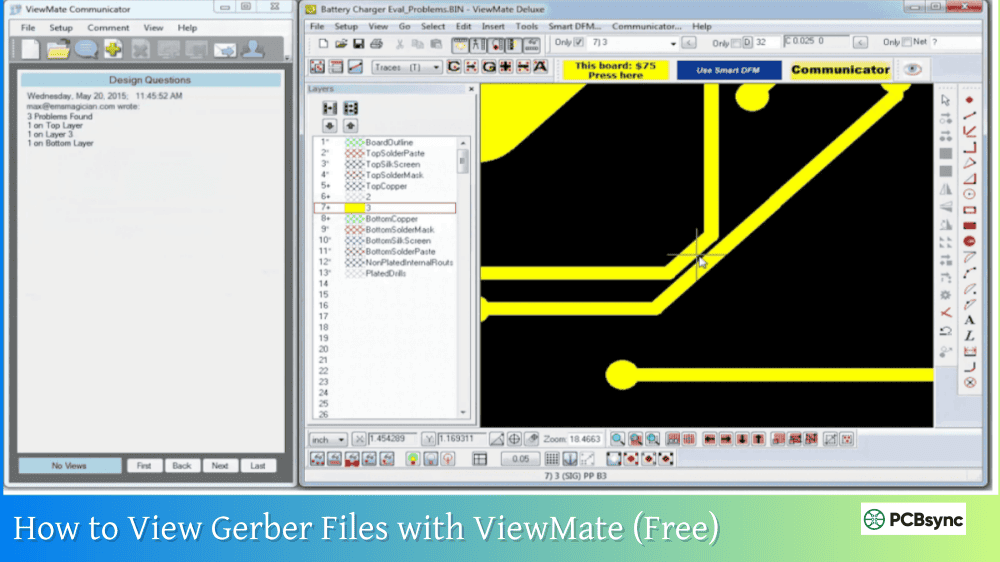
ViewMate (Free)
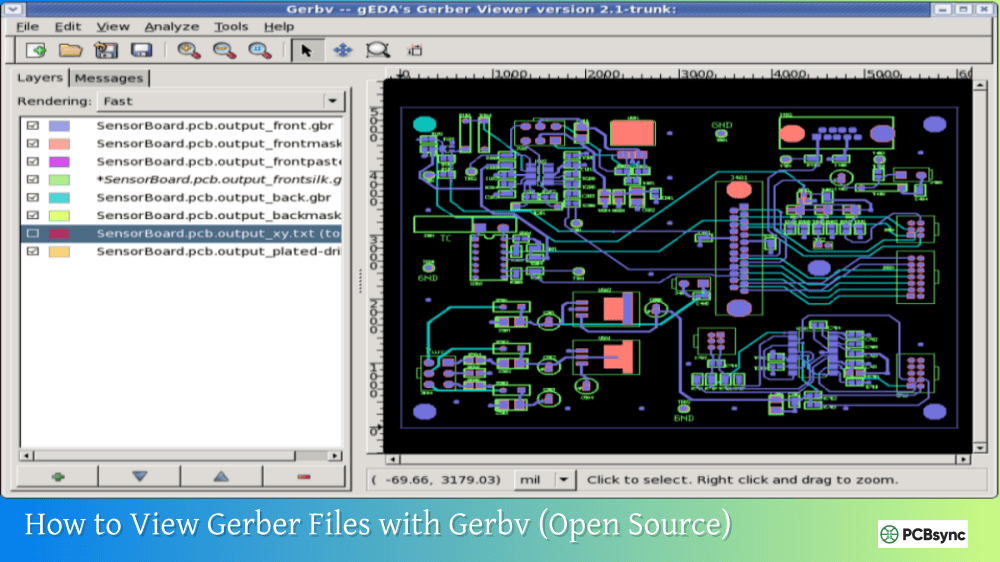
Gerbv (Free)
View Gerber
Yes
Yes
Yes
View Drill Files
Yes
Yes
Yes
Measurement
Advanced
Basic
Basic
DFM Analysis
Comprehensive
No
No
Gerber Editing
Full
Limited
Limited
Panelization
Yes
No
No
3D Visualization
Yes
No
No
Netlist Comparison
Yes
No
No
Reverse Engineering
Yes
No
No
Price
Commercial
Free
Free
For simple verification before ordering prototypes, free viewers often suffice. CAM350 becomes essential when you need to edit files, run DFM checks, prepare production panels, or reverse engineer designs from Gerber back to intelligent CAD data.
Useful Resources for CAM350 Users
Official Resources
Resource
URL
Description
Siemens CAM350
eda.sw.siemens.com/pcb/valor/cam350
Official product page
DownStream Technologies
downstreamtech.com/products/cam350
Detailed feature documentation
CAMvu Free Viewer
downstreamtech.com/products/viewers
Free viewer for CAM350 databases
Video Tutorials
Siemens support portal
Training videos and webinars
Alternative CAM Software
Software
Developer
Notes
Genesis 2000
Orbotech/KLA
Industry standard for fabricators
InCAM
Ucamco
Gerber format creator’s own CAM tool
FAB 3000
Numerical Innovations
Cost-effective alternative
CircuitCAM
LPKF
Focused on prototyping
Community and Support
Resource
URL
Siemens Support Center
support.sw.siemens.com
PCB Design Forums
Various online communities
Training Programs
Contact Siemens or resellers
Frequently Asked Questions
Is CAM350 free to use?
No, CAM350 is commercial software with custom pricing based on configuration and license type. However, Siemens offers free trials for evaluation, and the CAMvu viewer is available at no cost for viewing CAM350 database files. For organizations doing occasional Gerber verification without editing or DFM needs, free viewers like ViewMate or Gerbv may be sufficient. CAM350’s value becomes apparent when you need advanced analysis, editing, or manufacturing preparation capabilities that free tools cannot provide.
How do I fix drill holes that appear offset from pads in CAM350?
Drill offset problems typically stem from coordinate format mismatches between Gerber and drill exports. In CAM350, first verify the coordinate format settings used during import match your CAD tool’s export settings. Navigate to Edit → Layers → Align to manually align drill layers with copper. Select a reference pad on the copper layer, then click the corresponding drill hole. CAM350 calculates the offset and aligns the layers. If systematic offset exists across all holes, check whether leading/trailing zero suppression settings match between file types. Most modern CAD tools export in 2,4 format (imperial) or 3,3 format (metric)—ensure consistency.
Can CAM350 convert Gerber files back to editable CAD formats?
Yes, CAM350’s Reverse Engineering feature converts non-intelligent Gerber data back into an intelligent format with nets, pads, traces, vias, and component footprints identified. The process analyzes the Gerber artwork, identifies patterns that represent standard PCB features, and reconstructs connectivity information. While not perfect—some design intent may be lost in the original Gerber export—reverse engineering enables significant recovery of design intelligence. The resulting data can be exported to formats compatible with PCB CAD tools like PADS, Allegro, or others, enabling design modifications that would be impossible to make accurately in raw Gerber.
What’s the difference between CAM350 and DFMStream?
CAM350 and DFMStream are related products from the same family, both now under Siemens Valor. CAM350 focuses on general CAM operations including viewing, editing, and manufacturing preparation. DFMStream emphasizes comprehensive DFM/DFA/DFT analysis with advanced checking capabilities. In practice, they share significant functionality, and higher-tier CAM350 configurations include DFMStream analysis features. For engineers primarily concerned with design verification before manufacturing, the DFMStream-focused configurations provide the most relevant analysis tools. For fabricators preparing data for production, CAM350’s editing, panelization, and NC editing features become more important.
How does CAM350’s 3D visualization help with Gerber viewing?
CAM350’s 3D visualization renders your PCB stackup as a three-dimensional model, showing how the finished board will look. This helps identify issues that are difficult to spot in 2D layer views: layer registration problems become obvious when copper doesn’t align through the stackup, drill-to-copper relationships are easier to verify, and overall board construction becomes intuitive to review. The 3D view is particularly valuable for complex multilayer designs where understanding the relationship between blind/buried vias and internal layers matters. You can rotate, zoom, and section the 3D model to examine any aspect of the design from any angle.
Best Practices for Using CAM350
Years of working with CAM350 in production environments have taught me several habits that consistently improve results.
Always verify import completeness. After AutoImport, check that all expected layers loaded correctly. Missing files are the most common source of manufacturing problems, and catching them during CAM review prevents costly delays.
Set the origin consistently. Before any analysis or editing, establish the datum coordinate at a logical location (typically lower-left board corner). Consistent origins make layer alignment predictable and measurement results meaningful.
Use layer templates. If you regularly work with similar designs, create layer color and ordering templates. Consistent visual presentation helps your brain spot anomalies faster.
Run DFM before every production release. Even if your design passed DRC in your CAD tool, CAM350’s DFM analysis catches issues specific to manufacturing processes. A few minutes of DFM analysis can prevent days of production delays.
Save projects, not just exports. CAM350’s native .CAM file format preserves your complete session including layer assignments, colors, and analysis results. Export Gerber only when you need to send files elsewhere.
Document changes meticulously. When editing Gerber files in CAM350, maintain records of every modification. This audit trail proves invaluable when troubleshooting manufacturing issues later.
CAM350 represents the professional standard for PCB CAM software, and its capabilities extend far beyond simple Gerber viewing. Whether you’re a designer verifying files before ordering prototypes or a CAM engineer preparing production data, mastering CAM350 pays dividends in reduced errors, faster turnaround, and higher manufacturing yields.
Inquire: Call 0086-755-23203480, or reach out via the form below/your sales contact to discuss our design, manufacturing, and assembly capabilities.
Quote: Email your PCB files to Sales@pcbsync.com (Preferred for large files) or submit online. We will contact you promptly. Please ensure your email is correct.
Notes: For PCB fabrication, we require PCB design file in Gerber RS-274X format (most preferred), *.PCB/DDB (Protel, inform your program version) format or *.BRD (Eagle) format. For PCB assembly, we require PCB design file in above mentioned format, drilling file and BOM. Click to download BOM template To avoid file missing, please include all files into one folder and compress it into .zip or .rar format.