Inquire: Call 0086-755-23203480, or reach out via the form below/your sales contact to discuss our design, manufacturing, and assembly capabilities.
Quote: Email your PCB files to Sales@pcbsync.com (Preferred for large files) or submit online. We will contact you promptly. Please ensure your email is correct.
Notes: For PCB fabrication, we require PCB design file in Gerber RS-274X format (most preferred), *.PCB/DDB (Protel, inform your program version) format or *.BRD (Eagle) format. For PCB assembly, we require PCB design file in above mentioned format, drilling file and BOM. Click to download BOM template To avoid file missing, please include all files into one folder and compress it into .zip or .rar format.
How to Import Altium Files into EasyEDA: Complete Guide for PCB Engineers
Moving designs between EDA platforms is a reality most PCB engineers face at some point. Whether you’re collaborating with a team using different tools, working with reference designs from semiconductor vendors, or transitioning to a more cost-effective solution, knowing how to import Altium files into EasyEDA can save hours of manual recreation work.
Altium Designer is widely regarded as an industry-standard PCB design tool, and many engineers have years of designs locked in its proprietary format. EasyEDA offers a path to work with these designs in a free, browser-based environment with direct manufacturing integration. The catch? The import process requires specific file preparation that trips up many first-time users.
This guide covers everything you need to successfully import Altium Designer schematics, PCB layouts, and component libraries into EasyEDA, including the ASCII format requirement that causes most import failures.
Before diving into the technical process, understanding common migration scenarios helps frame the workflow decisions you’ll make.
Cost reduction motivates many transitions. Altium Designer subscriptions represent a significant investment, especially for freelancers, startups, or hobbyists. EasyEDA provides professional-grade features at no cost, making it attractive for those who can’t justify enterprise-level licensing.
Manufacturing integration appeals to production-focused engineers. EasyEDA connects directly to JLCPCB and LCSC, enabling one-click PCB ordering with pre-verified design rules. The integrated parts library shows real-time stock and pricing, streamlining the path from design to production.
Reference design utilization creates frequent import needs. Many semiconductor manufacturers publish reference designs in Altium format. Engineers using other tools need conversion paths to leverage this verified design data rather than recreating boards from scratch.
Team collaboration sometimes requires format flexibility. When project partners use different tools, the ability to exchange design files becomes critical. EasyEDA’s import capabilities enable engineers to receive Altium designs and continue development without purchasing additional licenses.
Understanding Altium File Types for EasyEDA Import
Altium Designer uses several file formats, and EasyEDA handles each differently. Understanding these distinctions prevents confusion during the import process.
*Library files cannot be imported directly. You must place library components onto a schematic or PCB, save in ASCII format, then extract libraries during import.
Critical requirement: EasyEDA only imports Altium files saved in ASCII format. The standard binary format that Altium uses by default will not import. This is the single most common cause of import failures.
Preparing Altium Files for Import into EasyEDA
Proper preparation is essential for successful imports. Most problems stem from skipping these steps or not understanding the ASCII format requirement.
Converting Altium Files to ASCII Format
Altium Designer stores files in binary format by default. EasyEDA cannot read this format directly, so you must convert to ASCII before import.
For Schematic Files (.SchDoc):
Open the schematic in Altium Designer
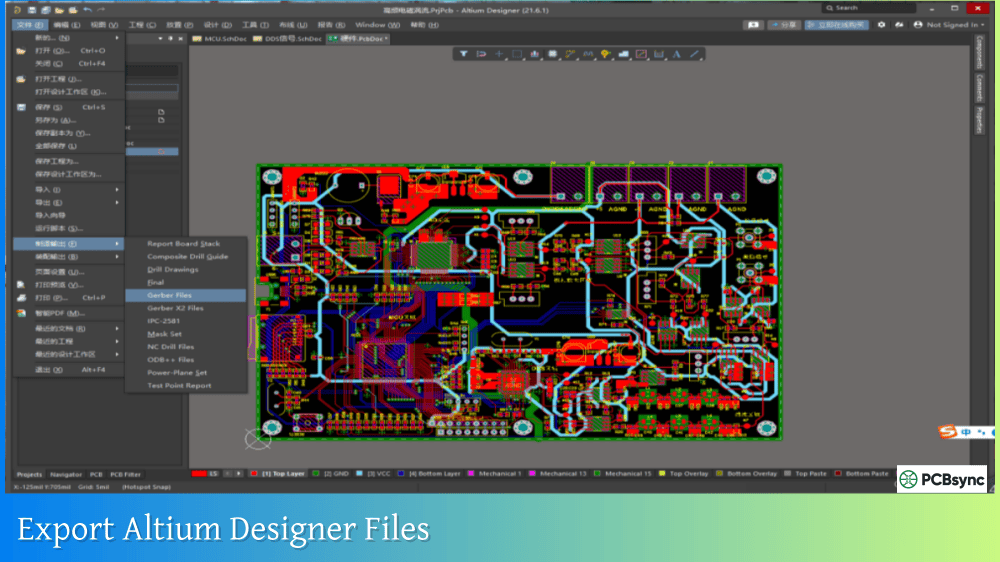
Go to File → Save Copy As
In the “Save as type” dropdown, select Advanced Schematic ASCII (*.SchDoc)
Choose a destination and click Save
For PCB Files (.PcbDoc):
Open the PCB layout in Altium Designer
Go to File → Save Copy As
In the “Save as type” dropdown, select PCB ASCII File (*.PcbDoc)
Choose a destination and click Save
Important note: The ASCII conversion must happen within Altium Designer. There’s no reliable third-party tool to convert binary Altium files to ASCII. If you don’t have access to Altium, you’ll need someone with a license to perform this conversion.
Handling Library Files
EasyEDA doesn’t support direct import of Altium library files (.SchLib, .PcbLib, .IntLib). To get your libraries into EasyEDA, use this workaround:
Create a new schematic in Altium Designer
Place all the library components you need onto the schematic
Save the schematic in ASCII format
During import in EasyEDA, select “Extract library files”
The extracted symbols and footprints will be added to your EasyEDA library
For footprint libraries, the same process applies but using a PCB document instead of a schematic.
Pre-Import Checklist
Run through these items before attempting any import:
Files saved in ASCII format (not binary)
All required library components placed on schematics/PCBs if library extraction is needed
File size under 100MB (larger files may fail or take very long)
Units set to imperial mils in Altium (reduces grid alignment issues)
Grid settings at 100mil for standard designs
No non-ASCII characters in component names or net labels (can cause garbled text)
Chinese or special characters removed or converted to standard ASCII
Reducing File Size for Large Designs
Files exceeding 100MB often fail to import or cause timeout errors. To reduce file size:
Open the PCB in Altium Designer
Select all polygon pours
Change copper fill type to “No Fill” temporarily
Save as ASCII
After import to EasyEDA, rebuild the copper pours
This technique removes the computed fill data, which is regenerated after import anyway.
Step-by-Step Process to Import Altium Files into EasyEDA
EasyEDA offers two editions: Standard and Professional. Both support Altium imports, but the process and capabilities differ slightly.
Importing Altium Files in EasyEDA Standard Edition
Method 1: Direct Import
Open EasyEDA Standard at easyeda.com
Navigate to File → Open → Altium
Select your ASCII-format .SchDoc or .PcbDoc file
Choose your import option:
Import File: Imports the design only
Import File and Extract Libs: Imports design plus extracts component libraries
Wait for processing to complete
Review the imported design
Method 2: Import Menu
Go to File → Import → Altium Designer
Browse to your ASCII file
Select import options
Click Import and wait for completion
Import Order Recommendation: When importing both schematic and PCB from the same project:
First, import the PCB and extract footprints
Then import the schematic
The schematic will automatically link to previously extracted footprints
This sequence ensures proper symbol-footprint associations.
Importing Altium Files in EasyEDA Pro Edition
EasyEDA Pro offers enhanced import capabilities and better handling of complex designs.
Open EasyEDA Pro at pro.easyeda.com
From the Start Page, click Import Altium
Select your ASCII files (you can import multiple files as a ZIP archive)
Configure import options:
Via Solder Mask: Choose “All covered” or “Follow original setting”
Board Outline Source: Select Keepout layer or Mechanical Layer 1
Click OK to begin import
Monitor progress and review results
ZIP Archive Import: For complex projects with multiple files, compress the ASCII schematic and PCB files together into a ZIP archive before import. This keeps related files linked during the import process.
Using the EasyEDA Pro Format Converter
For batch conversions or when direct import fails, the Format Converter tool provides an alternative path:
Download the Format Converter from the EasyEDA Pro documentation
Install and launch the converter
Select Altium Designer as the source format
Point to your source file directory
Specify the output directory
For binary files, provide the path to your Altium Designer executable
Select projects to convert and click Next
Import the converted files into EasyEDA Pro
The Format Converter handles both ASCII and binary formats when the original Altium software is available on the same machine.
Understanding EasyEDA Import Options
Several configuration options affect how your Altium design imports into EasyEDA.
Via Solder Mask Settings
Option
Description
When to Use
All covered with oil
Forces all vias to be tented (solder mask extension -1000)
When you want all vias covered regardless of original design
Follow original setting
Preserves the solder mask parameters from Altium
When original via settings are important to maintain
Board Outline Source
Option
Description
Result
From Keepout layer
Uses Keepout layer shapes as board outline
Closed shapes become board outline; keepout remains keepout
From Mechanical Layer 1
Uses Mechanical Layer 1 as board outline
Keepout layer converts to forbidden area
Most Altium designers use the Keepout layer for board outlines, so this is the default setting. Change it only if your design uses Mechanical Layer 1 for the board shape.
Component ID Reset
After import, schematic-to-PCB synchronization may not work correctly due to component ID mismatches. To fix this:
Open the imported schematic
Go to Design → Reset Component ID
Open the imported PCB
Go to Design → Reset Component ID
Try updating PCB from schematic again
Read more How to convert PCB Files in different Design software:
Common Altium to EasyEDA Import Problems and Solutions
Even with proper preparation, issues arise. Here are the problems I encounter most frequently.
“File Not ASCII Format” Error
Symptom: Import fails with message indicating the file is not in ASCII format.
Cause: The file was saved in Altium’s default binary format.
Solution: Re-save the file from Altium Designer using “Save Copy As” and selecting the ASCII format option. There’s no workaround without access to Altium Designer.
Chinese Characters Appear as Garbled Text or Underscores
Symptom: Component names, net labels, or attributes show strange characters or underscores where text should be.
Cause: Character encoding mismatch. Altium versions below AD17 save ASCII files with GBK2312 encoding instead of UTF-8.
Solution:
Open the ASCII file in Notepad or another text editor
Save As with UTF-8 encoding
Retry the import
Alternatively, open the file in Notepad, find garbled text, and manually correct or remove problematic characters before import.
Wires and Pins Not Aligned to Grid
Symptom: After import, schematic wires don’t connect properly or pins appear offset from grid points.
Cause: The original Altium design used metric units or non-standard grid settings.
Solution:
Before exporting from Altium, set units to imperial mils (View → Switch Unit)
Set grid to 100mil
Select all (Ctrl+A)
Use Edit → Align → Snap to Grid
Save as ASCII and retry import
Missing Footprint Associations
Symptom: Schematic imports successfully but components show no footprint when converting to PCB.
Cause: Footprints weren’t extracted during import, or the import sequence was incorrect.
Solution:
Import the PCB file first, selecting “Extract library files”
Then import the schematic file
If associations are still broken, use Design → Reset Component ID on both documents
Import Timeout or Failure on Large Files
Symptom: Import hangs at progress indicator or fails with timeout error.
Make a minor change to the schematic (add a component)
Try Update PCB from schematic
Verify the change propagates correctly
If synchronization fails, reset component IDs and retry
Tips for Successful Altium to EasyEDA Migration
Based on handling numerous migrations, these practices produce the best results.
Always work with copies: Never modify your original Altium files during the export process. Keep originals intact for reference and retry attempts.
Import in the correct sequence: PCB first (with footprint extraction), then schematic. This ensures proper library linkage.
Don’t round-trip files: Avoid exporting from EasyEDA back to Altium and re-importing. Each conversion can lose subtle details, and repeated conversions compound these losses.
Check encoding carefully: Character encoding issues cause more problems than any other single factor. When in doubt, open ASCII files in a text editor and look for garbled characters before importing.
Use EasyEDA Pro for complex designs: Pro handles edge cases better than Standard and offers the Format Converter for batch operations.
Document your layer mappings: Keep notes on which Altium layers map to which EasyEDA layers for your specific design. This speeds up troubleshooting and future imports.
Useful Resources for Altium to EasyEDA Migration
These resources provide additional help when standard import steps don’t solve your problem.
If you don’t have access to Altium Designer for ASCII conversion:
Flex-ES: https://flex-es.com – Professional file conversion services for various EDA formats
FAQs About Importing Altium Files into EasyEDA
Can I import Altium binary files directly into EasyEDA without converting to ASCII?
No, EasyEDA requires Altium files in ASCII format. Binary format files will fail to import with an error message. You must use Altium Designer’s “Save Copy As” function to create ASCII versions of your schematic (.SchDoc) and PCB (.PcbDoc) files before importing. If you don’t have access to Altium Designer, you’ll need someone with a license to perform this conversion, or use a professional file conversion service.
How do I import Altium component libraries (.SchLib or .PcbLib) into EasyEDA?
EasyEDA doesn’t support direct import of Altium library files. The workaround is to place the library components onto a schematic or PCB document in Altium, save that document in ASCII format, then select “Extract library files” during the EasyEDA import process. The extracted symbols and footprints will be added to your EasyEDA personal library where you can reuse them in future projects.
What’s the maximum file size EasyEDA can import?
EasyEDA Standard supports files up to 100MB. EasyEDA Pro supports files up to 1GB, though very large files may experience long processing times or timeouts. For oversized files, reduce file size by temporarily removing copper pour fill data in Altium before saving to ASCII. The fill data regenerates when you rebuild copper pours in EasyEDA after import.
Why do special characters appear as underscores after import?
Unsupported characters, including Chinese text, non-ASCII symbols, and garbled encoding data, are automatically converted to underscores during import. This happens most often with files saved from Altium versions below AD17, which use GBK2312 encoding instead of UTF-8. To fix this, open the ASCII file in a text editor, convert encoding to UTF-8, correct any remaining garbled text manually, then retry the import.
Can I synchronize my imported schematic with the imported PCB?
Yes, but you must follow the correct import sequence and may need to reset component IDs. Import the PCB file first with footprint extraction enabled, then import the schematic. If synchronization still fails, use Design → Reset Component ID on both the schematic and PCB documents. This reassigns unique identifiers that enable EasyEDA to match schematic symbols with their PCB footprints.
Final Thoughts on Migrating from Altium to EasyEDA
Importing Altium files into EasyEDA requires more preparation than some engineers expect, primarily due to the ASCII format requirement. Once you understand this constraint and establish a reliable workflow, migrations become straightforward.
The key is treating the process as a deliberate conversion rather than a simple file open. Prepare your files properly in Altium, follow the correct import sequence, and verify results thoroughly before proceeding with design work.
For engineers without Altium Designer access, the ASCII requirement presents a real barrier. If you regularly receive Altium files from collaborators, establishing a relationship with someone who can perform the ASCII conversion—or using a conversion service—becomes necessary.
Once your designs are in EasyEDA, you gain access to a capable design environment with excellent manufacturing integration. The import effort pays off through streamlined PCB ordering and access to extensive, verified component libraries. For many engineers, this trade-off makes the migration worthwhile despite the initial learning curve.
Start with a simpler design to learn the import process before tackling your most complex projects. The experience you gain on a straightforward board will make migrating larger designs much smoother.
Inquire: Call 0086-755-23203480, or reach out via the form below/your sales contact to discuss our design, manufacturing, and assembly capabilities.
Quote: Email your PCB files to Sales@pcbsync.com (Preferred for large files) or submit online. We will contact you promptly. Please ensure your email is correct.
Notes: For PCB fabrication, we require PCB design file in Gerber RS-274X format (most preferred), *.PCB/DDB (Protel, inform your program version) format or *.BRD (Eagle) format. For PCB assembly, we require PCB design file in above mentioned format, drilling file and BOM. Click to download BOM template To avoid file missing, please include all files into one folder and compress it into .zip or .rar format.