Inquire: Call 0086-755-23203480, or reach out via the form below/your sales contact to discuss our design, manufacturing, and assembly capabilities.
Quote: Email your PCB files to Sales@pcbsync.com (Preferred for large files) or submit online. We will contact you promptly. Please ensure your email is correct.
Notes: For PCB fabrication, we require PCB design file in Gerber RS-274X format (most preferred), *.PCB/DDB (Protel, inform your program version) format or *.BRD (Eagle) format. For PCB assembly, we require PCB design file in above mentioned format, drilling file and BOM. Click to download BOM template To avoid file missing, please include all files into one folder and compress it into .zip or .rar format.
How to Generate NC Drill Files in EasyEDA: Complete Guide for PCB Engineers
EasyEDA handles drill file generation differently than most traditional PCB design tools. Instead of requiring a separate export step, EasyEDA automatically generates NC drill files as part of its unified Fabrication Output process. This approach simplifies the workflow considerably, but it also means the drill export options are less obvious to users who learned PCB design on other platforms.
After using EasyEDA for numerous projects ranging from simple breakout boards to more complex multilayer designs, I have found that understanding how drill files work within this ecosystem prevents the confusion that sends many users to the forums looking for answers. This guide covers everything you need to know about generating NC drill files in EasyEDA that manufacturers will accept without revision requests.
EasyEDA exports drill data in standard Excellon format, the industry-standard format accepted by virtually all PCB manufacturers worldwide. The software automatically generates properly formatted files with embedded tool definitions, eliminating the common problem of missing tool tables.
When you generate fabrication output in EasyEDA, the system creates separate drill files for plated and non-plated holes. This automatic separation helps manufacturers process your board correctly since plated holes require electroplating while non-plated holes skip this step.
What EasyEDA Drill Files Contain
Element
Description
Example
Header
Format declarations and metadata
M48, METRIC or INCH
Tool Table
Drill bit size definitions
T1C0.300 (0.3mm drill)
Coordinates
X and Y hole positions
X015000Y010000
Tool Changes
Commands to switch drill bits
T01, T02
End Command
Program termination
M30
EasyEDA generates clean, well-formatted Excellon files that include all necessary information in the header section. Most manufacturer CAM systems parse these files correctly without requiring manual intervention.
EasyEDA Standard vs EasyEDA Pro Drill Capabilities
Feature
EasyEDA Standard
EasyEDA Pro
Through-hole vias
Supported
Supported
Blind/buried vias
Not supported
Supported
Separate PTH/NPTH files
Automatic
Automatic
Drill table placement
Not available
Available
Custom coordinate format
Limited
Full control
Slot holes
Via solid region
Multiple methods
EasyEDA Standard focuses on simpler two-layer and four-layer designs where through-hole vias handle all layer transitions. For complex multilayer boards requiring blind or buried vias, EasyEDA Pro provides the additional capabilities needed.
Generating NC Drill Files in EasyEDA Standard
The drill file generation process in EasyEDA Standard is straightforward because it bundles drill export with the overall Gerber generation workflow.
Step-by-Step Fabrication Output Process
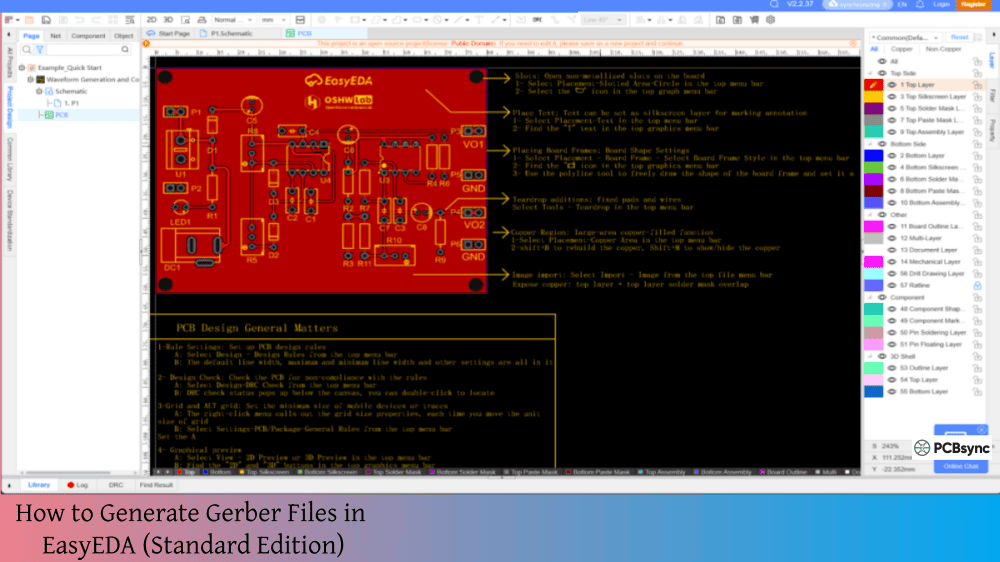
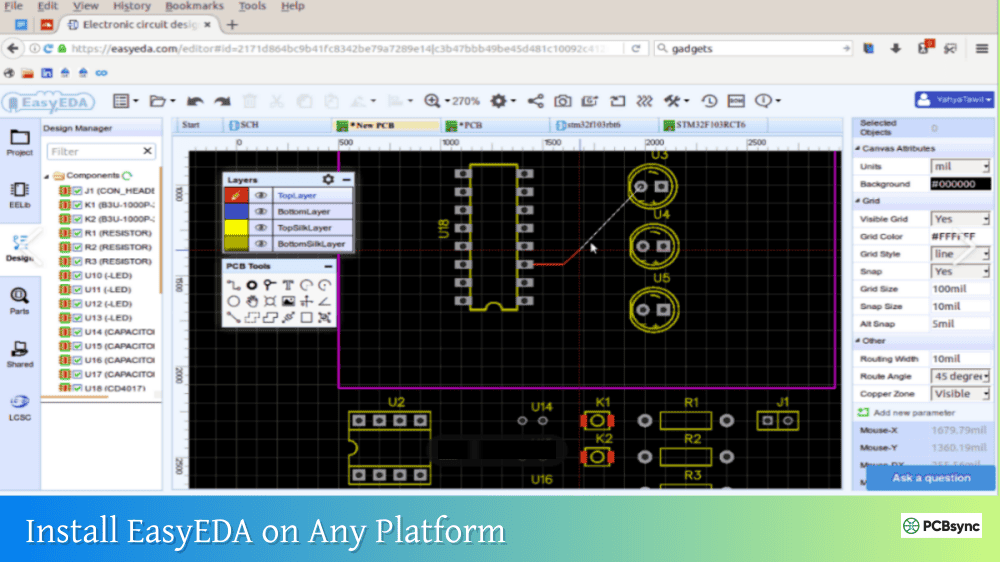
Open your completed PCB design in the EasyEDA PCB Editor. Before generating output, run Design Rules Check (DRC) to verify your design has no errors that could cause manufacturing problems.
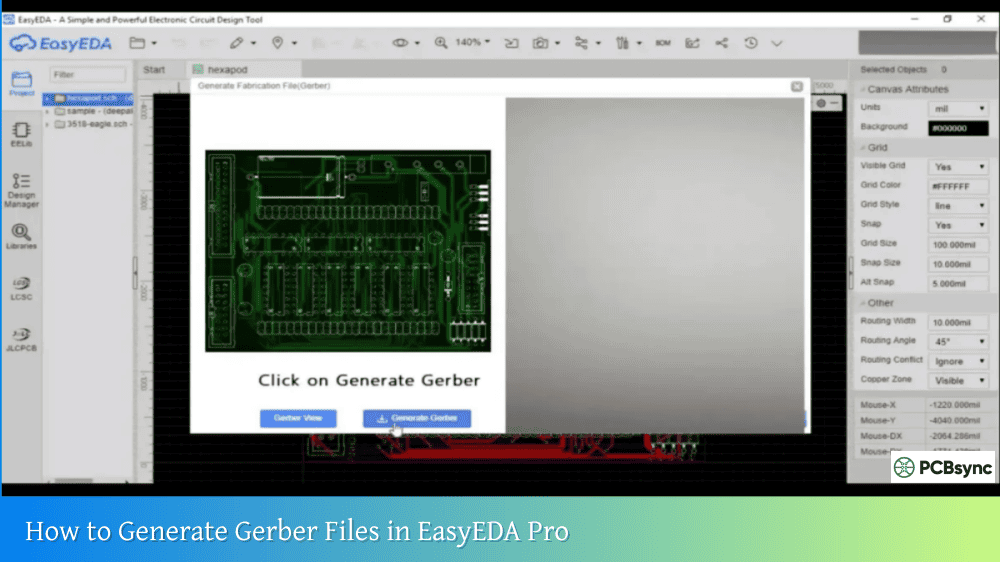
Navigate to the top menu and click Fabrication → Fabrication Output or use the Fabrication Output button in the toolbar. EasyEDA opens a dialog showing preview options and export settings.
The Fabrication Output dialog displays a visual preview of your board along with layer selection options. EasyEDA automatically selects all necessary layers for manufacturing, including the drill layers.
Click Generate Gerber to create the complete fabrication package. EasyEDA generates a ZIP archive containing all Gerber files plus the drill files.
The drill files appear in the ZIP archive alongside the Gerber layers. EasyEDA automatically names them clearly so manufacturers can identify which file contains which hole types.
Understanding the Automatic PTH and NPTH Separation
EasyEDA automatically separates holes into two categories during export:
Hole Type
Output File
Typical Uses
Plated Through Hole (PTH)
Drill_PTH_Through.DRL
Component pads, vias
Non-Plated Through Hole (NPTH)
Drill_NPTH_Through.DRL
Mounting holes, slots
This separation happens based on the Plated attribute you set for each pad or hole in your design. Pads with Plated set to “Yes” appear in the PTH file. Pads with Plated set to “No” appear in the NPTH file.
The Hole tool in EasyEDA creates non-plated holes by default, which is correct for mounting holes and mechanical features. Vias and component pads are plated by default.
Drill File Format Settings in EasyEDA
EasyEDA uses sensible default format settings that work with most manufacturers. Understanding these settings helps when troubleshooting compatibility issues.
Default Coordinate Format
Unit System
Format
Resolution
Example
Metric (mm)
3:3
0.001mm
X015000Y010000
Imperial (inch)
2:4
0.0001 inch
X1500Y1000
Large boards
4:2
0.01mm
X01500Y01000
EasyEDA automatically selects the appropriate format based on your design units and board size. For most designs under 100mm, the default 3:3 metric format works correctly.
When your PCB size exceeds the range that 3:3 format can represent, EasyEDA automatically switches to 4:2 format. This prevents coordinate overflow issues that could cause holes to appear in wrong locations.
EasyEDA Pro Format Customization
EasyEDA Pro provides additional control over drill file format settings:
Setting
Options
Recommendation
Unit
mm or inch
Match your design units
Integer digits
3, 4, or 5
Default usually works
Decimal digits
3, 4, 5, or 6
Higher = more precision
Zero suppression
Leading or Trailing
Leading is most compatible
In EasyEDA Pro, access these settings through the custom configuration option when exporting Gerber files. You can create multiple configurations for different manufacturers.
Working with Different Hole Types
EasyEDA provides several methods for creating holes in your PCB design. Each method affects how the hole appears in the drill file.
Creating Plated Through Holes
Plated through holes connect copper on multiple layers and include electroplated barrel walls. In EasyEDA, these come from:
Source
Default Plating
Drill File
Via tool
Plated
PTH.DRL
Pad (multi-layer)
Plated
PTH.DRL
Pad (Plated: Yes)
Plated
PTH.DRL
Vias placed using the Via tool are always plated and always appear in the PTH drill file. Component pads set to Multi-Layer are also plated by default.
Creating Non-Plated Through Holes
Non-plated holes have bare substrate walls without copper plating. Use these for mounting hardware and mechanical features:
Method
Result
Drill File
Hole tool
NPTH round hole
NPTH.DRL
Solid Region (Type: NPTH)
NPTH cutout/slot
NPTH.DRL or GKO
Pad (Plated: No)
NPTH hole
NPTH.DRL
The Hole tool on the PCB toolbar creates simple non-plated round holes. For mounting holes, this is the quickest approach.
Creating Slot Holes
Slot holes require special handling in EasyEDA since the standard Hole tool only creates round holes:
Method
Steps
Output Location
Solid Region
Draw region, set Type to NPTH
Board outline (GKO) if >6.5mm
Convert Track
Draw track, right-click “Convert to NPTH”
NPTH.DRL
Slot Pad
Create pad with Hole Shape: Slot
PTH.DRL or NPTH.DRL
For circular slots with diameter 6.5mm or less, EasyEDA includes them in the NPTH drill file. Larger slots and non-circular shapes appear in the board outline file (GKO) instead, and manufacturers route these with a milling operation.
Verifying Drill Files Before Manufacturing
Never submit drill files without verification. EasyEDA provides built-in tools for checking your files, and several external viewers offer additional verification capabilities.
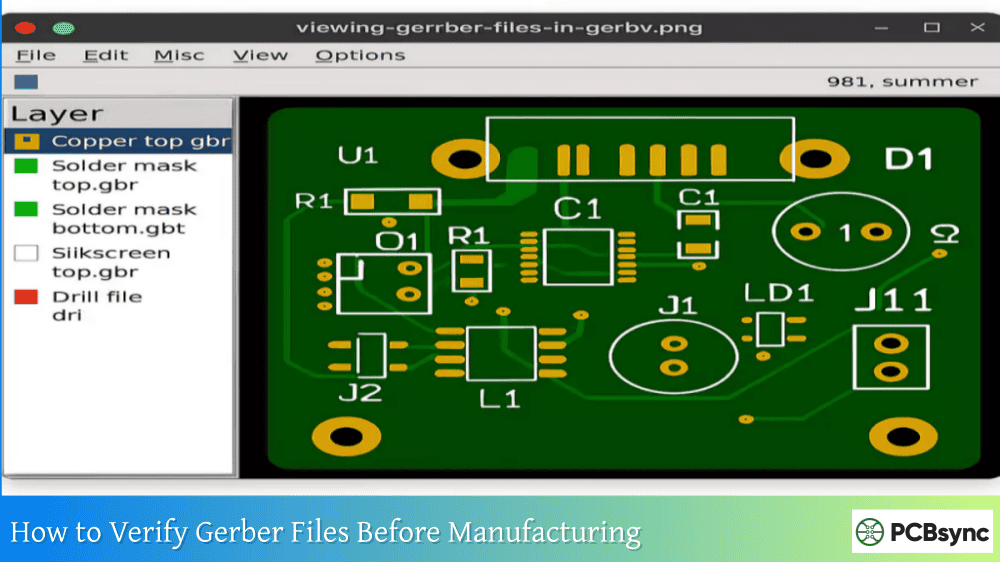
Using the EasyEDA Gerber Viewer
EasyEDA includes an online Gerber viewer that performs basic DFM (Design for Manufacturability) checks:
Go to gerber-viewer.easyeda.com
Upload your Gerber ZIP file
Review the rendered board image
Check that drill holes align with pads
The viewer shows top and bottom photo-realistic previews and highlights potential issues like missing layers or alignment problems.
Recommended External Gerber Viewers
Viewer
Platform
Key Features
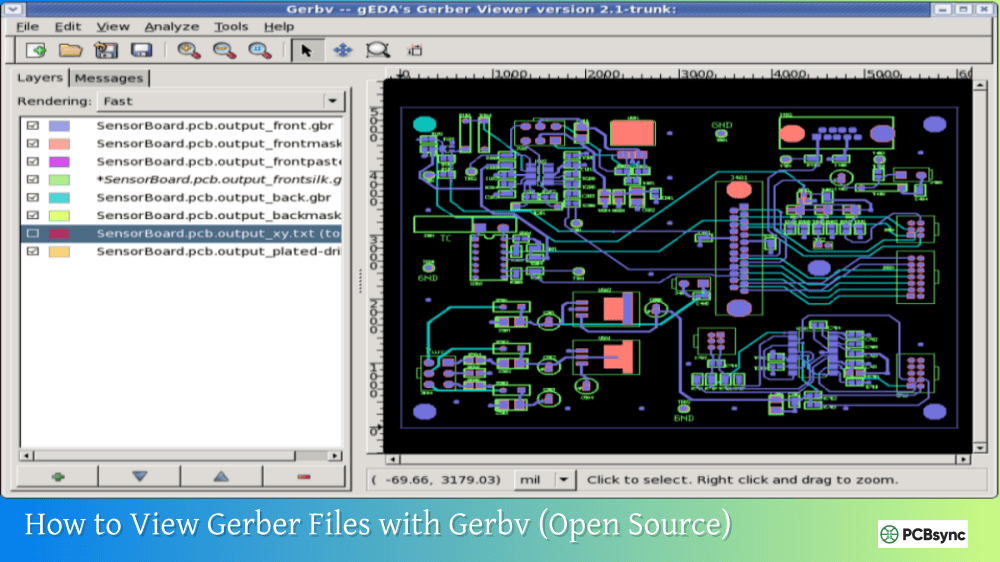
Gerbv
Windows, Linux, macOS
Free, open source, reliable
FlatCAM
Windows, Linux, macOS
CNC output, measurement tools
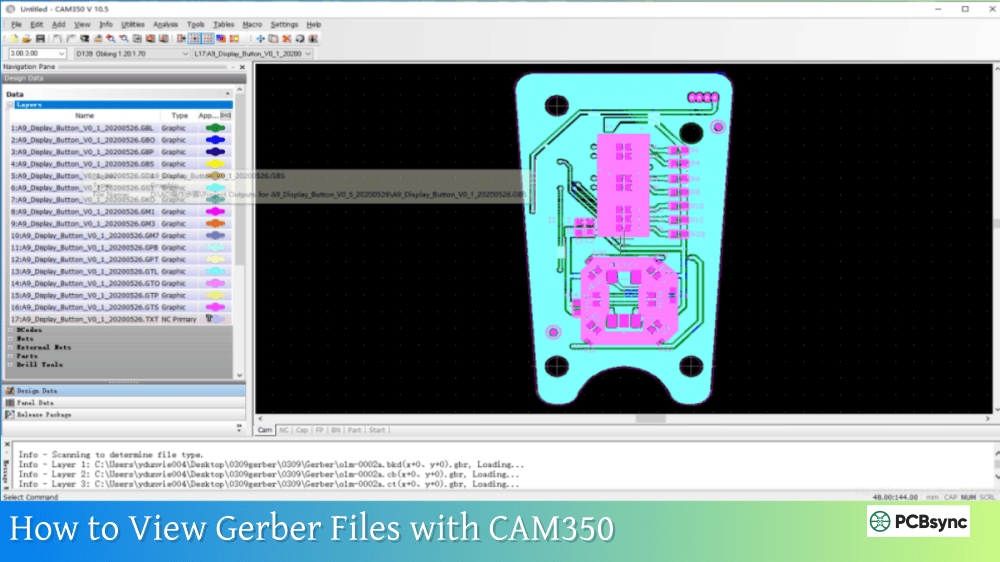
CAM350
Windows
Industry standard, DFM checks
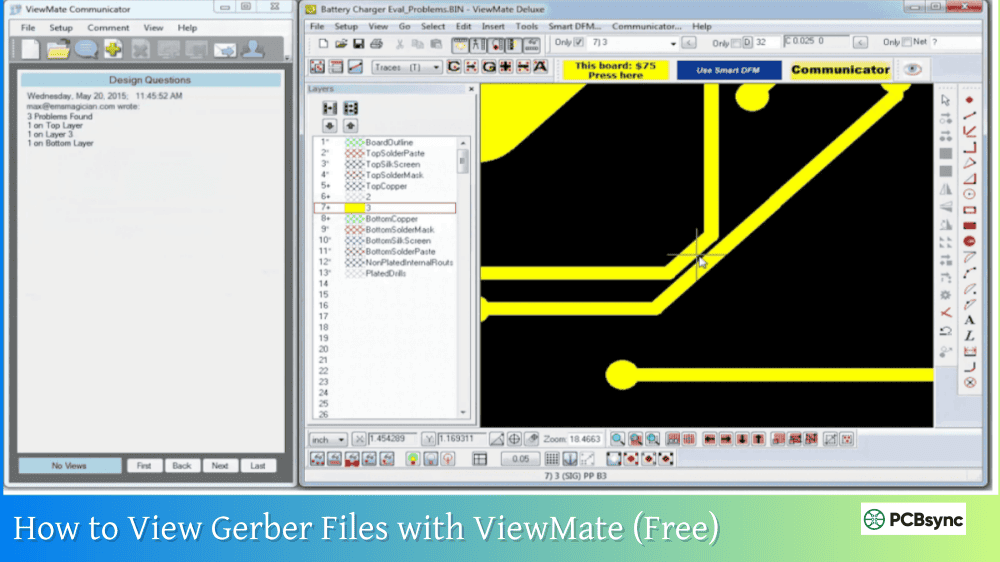
ViewMate
Windows
Professional features, free version
GerberLogix
Windows
Quick preview, basic DFM
Load both your Gerber files and drill files together in a viewer. Enable layer transparency and zoom into pad locations to verify drill hits center correctly on copper features.
Common Verification Checks
Check
What to Look For
Problem Indicator
Alignment
Drills centered on pads
Offset holes visible
Hole count
Total matches design
Missing or extra holes
Tool sizes
Correct diameters listed
Wrong sizes in tool table
Scale
Proper 1:1 size
Board appears too large/small
Separation
PTH and NPTH correct
Mounting holes in wrong file
A systematic visual check catches most export errors before they reach manufacturing.
Troubleshooting Common EasyEDA Drill Problems
Experience with EasyEDA has revealed several recurring issues that users encounter during drill file generation.
Problem: Drill Layer Misaligned in Viewer
When drill holes appear offset from copper pads in a Gerber viewer, the issue is usually coordinate format mismatch rather than an actual alignment problem.
Cause
Solution
Viewer format setting wrong
Change viewer digits setting from 3 to 4
Large board auto-format
Viewer may need 4:2 format setting
Mixed unit files
Ensure viewer uses correct units
In Gerbv specifically, right-click the DRL layer, select “Edit File Format”, and change the digits setting. This often resolves apparent misalignment that does not actually exist in the data.
Problem: Empty or Missing Drill Files
If your Gerber ZIP contains no drill files or the files appear empty:
Cause
Solution
No holes in design
Verify pads have hole diameters set
All holes filtered
Check pad Plated settings
Export incomplete
Re-run Fabrication Output
Open your PCB design and check that component pads have proper hole diameter values. Pads with zero hole diameter do not generate drill hits.
Problem: Manufacturer Cannot Read Drill File
If your manufacturer reports format issues:
Issue
Solution
Unsupported extension
Rename .DRL to .TXT or .EXC
Format mismatch
Ask manufacturer for required format
Missing tool table
EasyEDA embeds tools; may need extraction
Most manufacturers accept EasyEDA’s default output. Some local manufacturers may require specific file extensions or separate tool table files.
Problem: Slots Not Appearing in Drill File
Slots created using Solid Region may appear in the board outline file instead of the drill file:
Slot Size
Output Location
Manufacturer Handling
≤6.5mm diameter circular
NPTH.DRL
Drilled normally
>6.5mm or non-circular
GKO (outline)
Routed/milled
This behavior is intentional. Larger cutouts require routing rather than drilling, so EasyEDA places them in the board outline. Most manufacturers handle this correctly, including JLCPCB.
File Organization for Manufacturing
Proper file organization prevents confusion when submitting to manufacturers.
Standard EasyEDA Output Package
File Category
Extensions
Count
Copper layers
.GTL, .GBL, .G1, .G2
2-8
Solder mask
.GTS, .GBS
2
Silkscreen
.GTO, .GBO
2
Board outline
.GKO
1
Drill files
.DRL
2
Paste mask
.GTP, .GBP
2
EasyEDA packages everything into a single ZIP file that you can upload directly to most PCB manufacturers.
Read more How to convert PCB Files in different Design software:
Direct integration, accepts EasyEDA output natively
PCBWay
Standard Excellon format works
OSH Park
Accepts .DRL extension
Seeed Fusion
Standard format compatible
iTead Studio
May prefer .TXT extension for drill
JLCPCB has deep integration with EasyEDA since they share the same parent company. You can order boards directly from within EasyEDA without downloading files manually.
Advanced Drill Features in EasyEDA Pro
EasyEDA Pro offers additional capabilities for complex designs requiring advanced drill features.
Placing a Drill Table
EasyEDA Pro can generate a drill table showing all hole sizes with identifying symbols:
Go to Top Menu → Place → Drill Table
Configure table parameters
Click to place the table on your PCB
The drill table automatically counts PTH and NPTH holes by size and assigns symbol identifiers. This documentation helps manufacturers verify drill data.
Custom Export Configurations
EasyEDA Pro supports saving multiple export configurations:
Configuration Option
Purpose
File naming
Custom prefixes/suffixes
Layer selection
Include/exclude specific layers
Precision settings
Adjust integer/decimal digits
Unit selection
Force mm or inch output
You can create configurations for different manufacturers and switch between them quickly. Configurations sync to your account for access across devices.
Handling Blind and Buried Vias
EasyEDA Pro supports blind and buried vias that connect specific layer pairs:
Via Type
Layer Connection
Drill File
Through
All layers (1 to N)
Standard PTH.DRL
Blind top
Layer 1 to inner layer
Separate file per pair
Blind bottom
Inner layer to bottom
Separate file per pair
Buried
Inner to inner only
Separate file per pair
Each layer pair generates its own drill file since manufacturing requires drilling at different stages of the fabrication process.
Useful Resources for EasyEDA Users
Official EasyEDA Resources
Resource
URL
EasyEDA Standard Docs
docs.easyeda.com
EasyEDA Pro Docs
prodocs.easyeda.com
EasyEDA Forum
easyeda.com/forum
Gerber Viewer
gerber-viewer.easyeda.com
JLCPCB Help
jlcpcb.com/help
Gerber Viewer Downloads
Tool
Source
Gerbv
gerbv.github.io
FlatCAM
flatcam.org
ViewMate
pentalogix.com
Component and Footprint Libraries
Library
Description
LCSC
Integrated component database with footprints
EasyEDA Libraries
Built-in extensive library
SnapEDA
Third-party footprints (integrated in EasyEDA)
Frequently Asked Questions
Why does EasyEDA generate two separate drill files?
EasyEDA automatically creates separate files for plated (PTH) and non-plated (NPTH) holes because these require different manufacturing processes. Plated through holes need electroplating to create conductive barrel walls, while non-plated holes are simply drilled without additional processing. Separating these into distinct files helps manufacturers route each hole type to the correct production step. The files are named Drill_PTH_Through.DRL and Drill_NPTH_Through.DRL to clearly identify their contents.
How do I export just the drill file without Gerber files?
EasyEDA does not provide a separate drill-only export function. The Fabrication Output process always generates the complete set of manufacturing files together in a single ZIP archive. This design choice ensures you never accidentally send incomplete manufacturing packages to fabricators. If you need only the drill file, simply extract the .DRL files from the downloaded ZIP archive. The drill files are self-contained Excellon format files that work independently of the Gerber layers.
Why do my drill holes appear offset when I view the Gerber files?
Drill offset in Gerber viewers is almost always a coordinate format mismatch between the viewer settings and the actual file format, not a real alignment problem. EasyEDA uses 3:3 format by default for metric units. If your viewer expects a different format, holes appear scaled or offset incorrectly. In Gerbv, right-click the DRL layer, select “Edit File Format”, and adjust the digits setting (try changing from 3 to 4). The underlying data is correct; only the viewer interpretation needs adjustment.
Can I create slot holes in EasyEDA Standard?
Yes, EasyEDA Standard supports slot holes through several methods. For plated slots, create a pad and set Hole Shape to “Slot” in the properties panel. For non-plated slots, use the Solid Region tool with Type set to “NPTH”, or draw a track and right-click to select “Convert to NPTH”. Note that circular slots 6.5mm or smaller appear in the NPTH drill file, while larger or non-circular slots appear in the board outline file (GKO) and are manufactured by routing rather than drilling.
Does EasyEDA support blind and buried vias?
EasyEDA Standard only supports through vias that span all layers of your PCB. For designs requiring blind vias (connecting outer layer to inner layer) or buried vias (connecting inner layers only), you need EasyEDA Pro. The Pro version handles the additional complexity of generating separate drill files for each layer pair, which manufacturers need since blind and buried vias are drilled at different stages of the multilayer lamination process.
Best Practices for Reliable Drill Export
Following consistent practices ensures manufacturers receive usable files every time.
Before Generating Output
Run DRC to verify all holes have proper clearances. Check that component pads have correct hole diameters assigned. Verify mounting holes are set to non-plated if that is your intent.
During Export
Use the Fabrication Output button rather than individual layer exports. Let EasyEDA generate the complete package automatically. Do not manually edit the resulting files unless you have specific manufacturer requirements.
After Export
Load both Gerber and drill files into a viewer to verify alignment. Check that the hole count matches your expectations. Verify slot holes appear either in the drill file or board outline as expected for their size.
Upload the complete ZIP to your manufacturer without extracting files. Most manufacturers prefer the original archive since it preserves file associations and prevents accidental file substitution.
Generating NC drill files in EasyEDA becomes routine once you understand that the process is integrated into the overall fabrication output workflow. The software produces clean, manufacturer-ready Excellon files that work with virtually any PCB fabrication house worldwide.
Inquire: Call 0086-755-23203480, or reach out via the form below/your sales contact to discuss our design, manufacturing, and assembly capabilities.
Quote: Email your PCB files to Sales@pcbsync.com (Preferred for large files) or submit online. We will contact you promptly. Please ensure your email is correct.
Notes: For PCB fabrication, we require PCB design file in Gerber RS-274X format (most preferred), *.PCB/DDB (Protel, inform your program version) format or *.BRD (Eagle) format. For PCB assembly, we require PCB design file in above mentioned format, drilling file and BOM. Click to download BOM template To avoid file missing, please include all files into one folder and compress it into .zip or .rar format.