Inquire: Call 0086-755-23203480, or reach out via the form below/your sales contact to discuss our design, manufacturing, and assembly capabilities.
Quote: Email your PCB files to Sales@pcbsync.com (Preferred for large files) or submit online. We will contact you promptly. Please ensure your email is correct.
Notes: For PCB fabrication, we require PCB design file in Gerber RS-274X format (most preferred), *.PCB/DDB (Protel, inform your program version) format or *.BRD (Eagle) format. For PCB assembly, we require PCB design file in above mentioned format, drilling file and BOM. Click to download BOM template To avoid file missing, please include all files into one folder and compress it into .zip or .rar format.
How to Generate Gerber Files in EasyEDA Pro: Complete Professional Guide
If you’ve been working with EasyEDA Pro, you’ve probably noticed it’s a completely different beast compared to the Standard Edition. The Professional Edition was rebuilt from the ground up with a WebGL-based engine that handles complex designs with tens of thousands of pads without breaking a sweat. But when it comes time to generate Gerber files for manufacturing, the advanced features can feel overwhelming if you’re not familiar with the workflow.
I’ve used EasyEDA Pro extensively for multilayer boards and designs requiring tight constraints. This guide covers everything from the basic export process to the powerful custom configuration options that make EasyEDA Pro particularly effective for professional PCB manufacturing.
Understanding EasyEDA Pro and Its Gerber Generation Capabilities
EasyEDA Pro represents a significant evolution from the Standard Edition. While both versions generate industry-standard RS-274X Gerber files, the Pro version offers considerably more control over the export process. You can create up to 20 custom Gerber configurations, select specific layers for export, adjust coordinate precision, and even mirror layers for specific manufacturing requirements.
The most important thing to understand is that EasyEDA Pro generates Gerber files through your browser, just like the Standard Edition. However, the configuration options and pre-export checks are far more sophisticated. The tool automatically detects flying leads (unconnected nets), performs DRC validation, and warns you about potential manufacturing issues before you commit to an export.
Before generating Gerber files, EasyEDA Pro provides several verification tools that help ensure your design is manufacturing-ready. Skipping these steps is asking for trouble.
Running Design Rule Check (DRC)
EasyEDA Pro features a comprehensive DRC system with multiple severity levels: fatal errors, errors, warnings, and informational messages. Only fatal errors prevent Gerber export entirely. Errors and warnings can be reviewed and, if appropriate, ignored.
To run DRC in EasyEDA Pro:
Navigate to Design → Check DRC from the top menu
Alternatively, use the DRC panel at the bottom of the editor
Click the Check DRC button
Review all errors in the DRC results panel
The DRC checks for clearance violations, track width issues, via diameter problems, drill diameter violations, and net length constraints. Each error can be clicked to locate and highlight the problematic area on your PCB.
EasyEDA Pro also offers Check DRC (Custom) which allows you to select specific rules to check, rather than running the complete rule set. This is useful when you need targeted verification of specific design aspects.
Using 2D and 3D Preview
One of EasyEDA Pro’s standout features is its integrated preview system. Before generating Gerbers, always use the preview function to visually verify your design.
Access 2D Preview:
Click the 2D Preview icon in the top toolbar
Or navigate to View → 2D Preview
Access 3D Preview:
Click the 3D Preview icon in the top toolbar
Or navigate to View → 3D Preview
The 2D preview renders your board similar to how it will appear after manufacturing, including solder mask color. This is your last chance to catch visual issues like misaligned silkscreen or incorrect copper pour before generating production files.
Checking for Flying Leads
Flying leads are unconnected nets in your PCB design. EasyEDA Pro automatically checks for these when you initiate Gerber export. However, you can proactively verify connectivity through the Design Manager panel, which displays all nets and their connection status.
When you export Gerbers, EasyEDA Pro will prompt you about any detected flying leads:
Click Yes to review unconnected nets (the tool will locate each one)
Click No to proceed with export despite unconnected nets
You can disable this automatic check in system settings if you prefer to manage connectivity verification manually.
Step-by-Step Gerber Generation in EasyEDA Pro
With your design verified, let’s walk through the complete Gerber export process.
Step 1: Access the Export Dialog
Navigate to the Gerber export function using one of these methods:
Method 1: Top Menu → File → Export → PCB Fabrication File (Gerber)
Method 2: Click the Gerber export icon in the toolbar
This opens the Export Production File dialog, which provides significantly more options than the Standard Edition.
Step 2: Choose Export Mode
EasyEDA Pro offers two export modes:
One-Click Export: This uses default settings to export all layers and primitives, excluding the drilling table and independent drilling information files. It’s the fastest option for standard boards.
Custom Configuration: This gives you full control over:
Which layers to export
Layer mirroring options
Drilling information inclusion
Coordinate precision settings
File naming conventions
For most production boards, I recommend using Custom Configuration at least once to ensure the output matches your manufacturer’s requirements.
Step 3: Configure Custom Export Settings
If using Custom Configuration, you’ll have access to these options:
Configuration Management:
Create up to 20 different export configurations
Double-click configuration names to rename them
Export/Import configurations for reuse across projects
Configurations sync to cloud storage for access on any device
Unit Selection: Choose between millimeters (mm) and inches for the exported Gerber and drill files. The default is mm, which I recommend for precision.
Coordinate Format (Precision): Set the integer and decimal digit count for drill file coordinates:
Unit
Default Format
Integer:Decimal
Millimeters
3:5
3 integer, 5 decimal
Inches
2:6
2 integer, 6 decimal
For very large boards exceeding the coordinate range, EasyEDA Pro automatically switches to 4:2 format.
Layer Selection: Select which layers to include in the export. For a standard 2-layer board, ensure these are selected:
Top copper (TopLayer)
Bottom copper (BottomLayer)
Top solder mask (TopSolderMaskLayer)
Bottom solder mask (BottomSolderMaskLayer)
Top silkscreen (TopSilkscreenLayer)
Bottom silkscreen (BottomSilkscreenLayer)
Board outline (BoardOutlineLayer)
For multilayer boards, add all inner copper layers.
Layer Mirroring: EasyEDA Pro allows mirroring specific layers during export. This is rarely needed for standard manufacturing but can be useful for special processes.
Drilling Information: Options to include:
Drilling table (human-readable hole summary)
Independent drilling information files
PTH (plated through-hole) data
NPTH (non-plated through-hole) data
Step 4: Set File Name
EasyEDA Pro allows you to modify the output file name before export. This is useful for version control and project organization. The generated file will be a ZIP archive containing all selected Gerber and drill files.
Step 5: Generate and Download
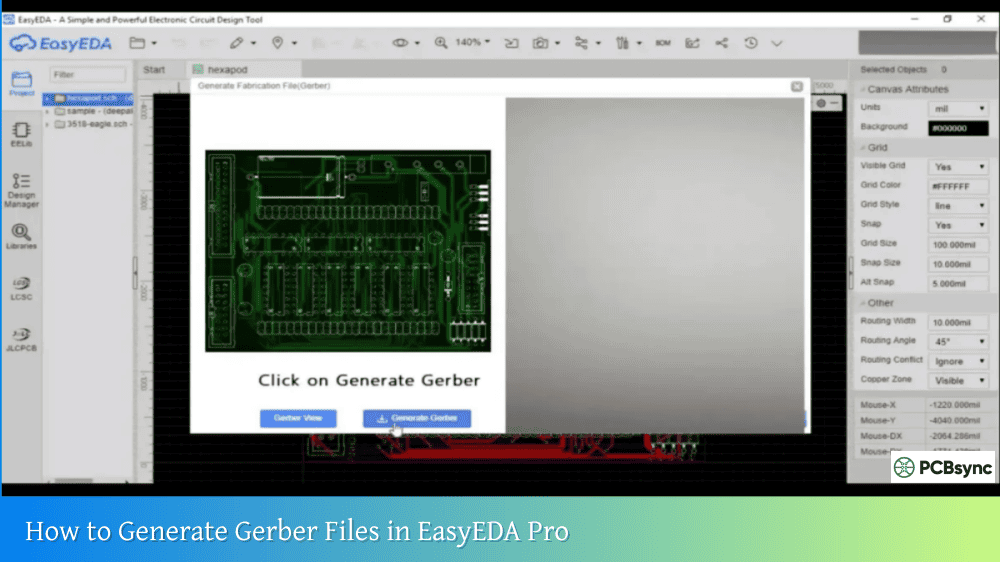
Click the Export button to generate your Gerber files. The files are generated by your browser and must be downloaded using your browser’s native download function.
Important: Do not use third-party download managers. The Gerber archive may not generate correctly if intercepted by external download tools.
The ZIP file downloads to your browser’s default download location. The archive contains all selected layers as individual Gerber files plus drill files in Excellon format.
Understanding EasyEDA Pro Drill File Handling
EasyEDA Pro handles drill files with particular attention to manufacturing precision. Here’s what you need to know.
Coordinate Format and Alignment Issues
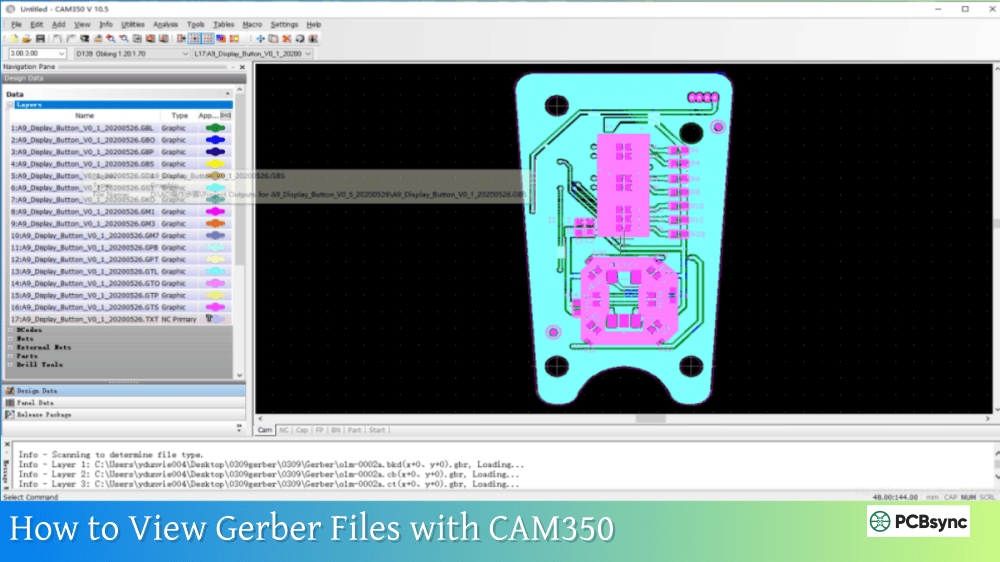
If you view your Gerber files in tools like CAM350 and notice drill holes appear offset from pads, the issue is almost always a coordinate format mismatch. EasyEDA Pro defaults to:
3:5 format for millimeters (3 integer digits, 5 decimal digits)
2:6 format for inches (2 integer digits, 6 decimal digits)
When viewing in external tools, configure the import settings to match these formats. Alternatively, use Custom Export to set the precision to match your viewer’s expected format (commonly 3:3 for mm or 2:4 for inches).
Slot Handling
EasyEDA Pro handles circular slots based on diameter:
≤6.5mm diameter: Output to NPTH drilling file
>6.5mm diameter or non-circular: Output to board outline (GKO) file
This behavior ensures slots are manufactured correctly regardless of the manufacturer’s process.
Separate PTH and NPTH Files
EasyEDA Pro generates separate drill files for plated and non-plated holes by default. This gives manufacturers clear instructions about which holes require copper plating on the inner walls.
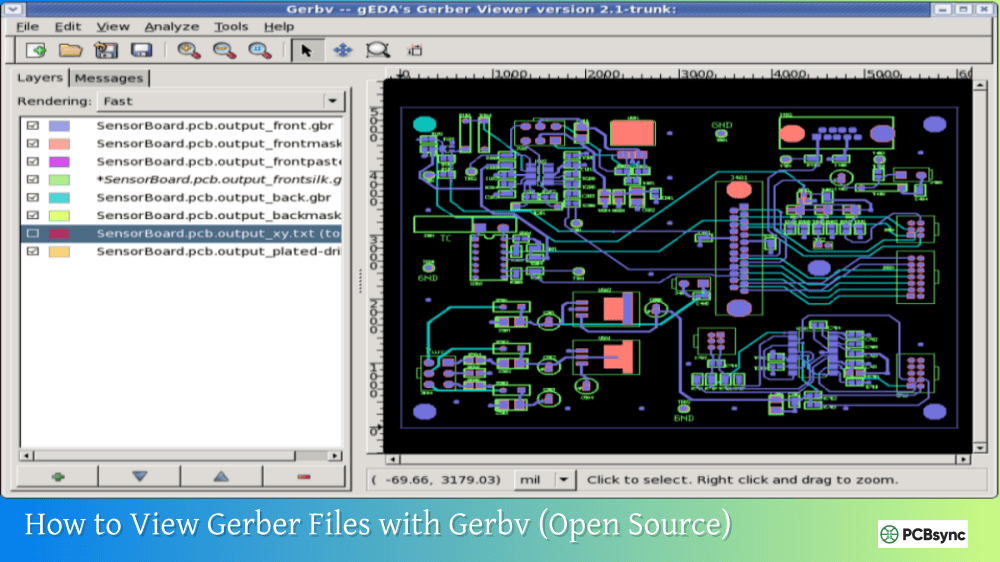
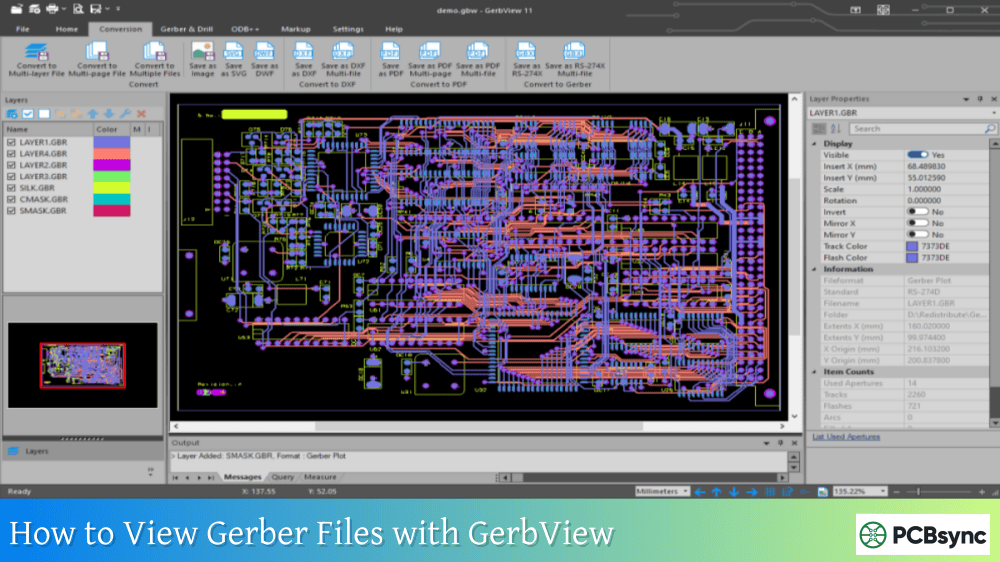
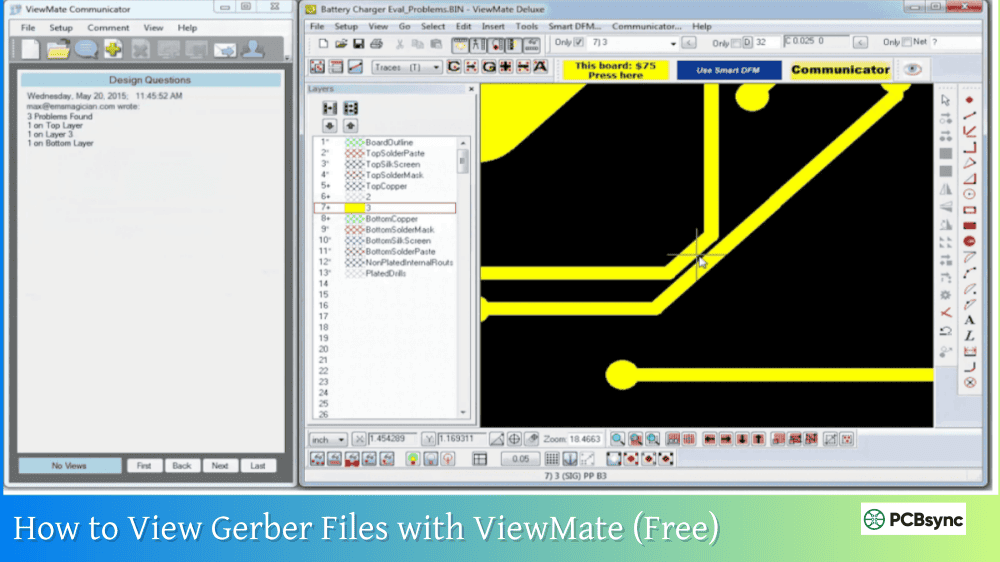
Verifying EasyEDA Pro Gerber Files
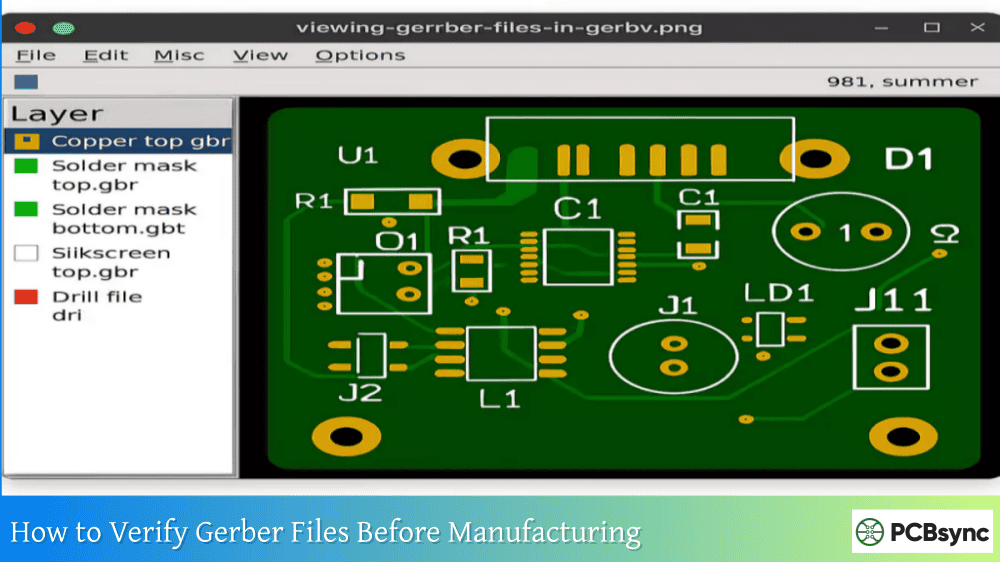
Never send Gerber files to a manufacturer without verification. EasyEDA Pro generates standard RS-274X files that can be verified in any compatible viewer.
EasyEDA Pro vs Standard Edition: Gerber Export Comparison
Understanding the differences helps you leverage EasyEDA Pro’s advantages.
Feature
Standard Edition
Pro Edition
Custom Configurations
No
Up to 20
Layer Selection
Basic
Full control
Layer Mirroring
No
Yes
Coordinate Precision
Fixed (3:3)
Adjustable
Configuration Export/Import
No
Yes
Cloud Sync Configurations
No
Yes
Flying Lead Detection
Basic
Automatic with navigation
Drill Table Option
No
Yes
File Name Customization
Limited
Full
The Pro edition’s configuration management is particularly valuable for engineers working with multiple manufacturers, each requiring slightly different output settings.
Common EasyEDA Pro Gerber Issues and Solutions
Even with EasyEDA Pro’s robust export system, issues can occur. Here are the most common problems and their solutions.
Drill Holes Offset in Viewer
Symptom: Drill holes appear shifted from pad centers when viewing in external tools.
Cause: Coordinate format mismatch between export and viewer settings.
Solution: In your Gerber viewer, set the drill file format to match EasyEDA Pro’s output (3:5 for mm, 2:6 for inches). Or use Custom Export to adjust the format to match your viewer’s default (commonly 3:3 for mm).
Flying Leads Warning
Symptom: Export prompts about unconnected nets.
Cause: Routes are incomplete or nets are intentionally unconnected.
Solution: Click “Yes” to review each unconnected net. Fix genuine routing issues. For intentionally unconnected nets, click “No” to proceed. Disable automatic checking in system settings if this becomes disruptive.
Export Button Missing or Grayed Out
Symptom: Cannot access Gerber export function.
Cause: You may be in the wrong editor (Footprint Editor or Schematic Editor instead of PCB Editor).
Solution: Ensure you have a PCB document open in the PCB Editor. Gerber export is only available from the PCB Editor.
Large File Takes Too Long
Symptom: Export seems to hang on complex designs.
Cause: Browser processing limits, especially with large copper pours.
Solution: Be patient. EasyEDA Pro handles complex designs well, but generation can take time. If it consistently fails, try exporting in a browser with more available memory or close other tabs.
Download Fails
Symptom: Gerber ZIP doesn’t download or is corrupt.
Cause: Third-party download manager interference.
Solution: Use your browser’s native download function only. Disable download managers temporarily. Try a different browser (Chrome typically works best).
Can I use EasyEDA Pro Gerber files with any PCB manufacturer?
Yes, EasyEDA Pro generates industry-standard RS-274X Gerber files and Excellon drill files that are compatible with virtually all PCB manufacturers worldwide. While EasyEDA Pro integrates seamlessly with JLCPCB for one-click ordering, you can download the Gerber ZIP and upload it to any fabricator’s website, including PCBWay, OSH Park, Seeed Studio, or local manufacturers. The output format is universal.
What’s the difference between One-Click Export and Custom Configuration?
One-Click Export uses default settings to quickly export all standard layers without the drilling table or independent drill information files. It’s fast and works well for typical boards. Custom Configuration gives you full control over which layers to export, coordinate precision, file naming, layer mirroring, and drilling information. Use Custom Configuration when working with specific manufacturer requirements, multilayer boards, or when you need drill tables for documentation.
How do I fix drill hole alignment issues when viewing in CAM350?
This is almost always a coordinate format mismatch. EasyEDA Pro defaults to 3:5 format (millimeters) or 2:6 format (inches). In CAM350 or your viewer, adjust the drill file import settings to match. Alternatively, use Custom Export in EasyEDA Pro to change the coordinate format to what your viewer expects (commonly 3:3 for mm or 2:4 for inches). The geometry is correct; only the interpretation differs.
Can I import EasyEDA Standard projects and export Gerbers from Pro?
Yes, EasyEDA Pro can import projects from the Standard Edition through the “Migrate Standard Edition” option on the start page, or via File → Import → EasyEDA (Standard). After importing, you’ll need to associate schematics and PCBs with a “Board” in Pro’s project structure. Once set up, you can generate Gerbers using Pro’s advanced export features. Note that some adjustments may be needed after migration, as the two editions have different internal data structures.
Why does EasyEDA Pro warn about flying leads when I export?
EasyEDA Pro automatically checks for unconnected nets (flying leads) before Gerber export as a safety feature. Flying leads often indicate incomplete routing that could result in a non-functional board. When prompted, click “Yes” to review each unconnected net—the tool will navigate to each location. If the unconnected nets are intentional (like test points or deliberately isolated pads), click “No” to proceed with export. You can disable this automatic check in system settings if you prefer to manage connectivity verification manually.
Final Thoughts
EasyEDA Pro’s Gerber generation capabilities represent a significant step up from the Standard Edition. The ability to create and save multiple export configurations, adjust coordinate precision, and receive automatic flying lead detection makes it a genuinely professional-grade tool.
The key to success is following a systematic approach: run DRC, verify with 2D/3D preview, address any warnings, then export with appropriate settings for your manufacturer. Taking these extra minutes before export can save days of delays when boards arrive at the fab house.
For teams working with multiple manufacturers or complex multilayer designs, invest time in setting up custom configurations that match each manufacturer’s requirements. Once configured, these settings sync to the cloud and are available wherever you work with EasyEDA Pro.
Inquire: Call 0086-755-23203480, or reach out via the form below/your sales contact to discuss our design, manufacturing, and assembly capabilities.
Quote: Email your PCB files to Sales@pcbsync.com (Preferred for large files) or submit online. We will contact you promptly. Please ensure your email is correct.
Notes: For PCB fabrication, we require PCB design file in Gerber RS-274X format (most preferred), *.PCB/DDB (Protel, inform your program version) format or *.BRD (Eagle) format. For PCB assembly, we require PCB design file in above mentioned format, drilling file and BOM. Click to download BOM template To avoid file missing, please include all files into one folder and compress it into .zip or .rar format.