Inquire: Call 0086-755-23203480, or reach out via the form below/your sales contact to discuss our design, manufacturing, and assembly capabilities.
Quote: Email your PCB files to Sales@pcbsync.com (Preferred for large files) or submit online. We will contact you promptly. Please ensure your email is correct.
Notes: For PCB fabrication, we require PCB design file in Gerber RS-274X format (most preferred), *.PCB/DDB (Protel, inform your program version) format or *.BRD (Eagle) format. For PCB assembly, we require PCB design file in above mentioned format, drilling file and BOM. Click to download BOM template To avoid file missing, please include all files into one folder and compress it into .zip or .rar format.
How to Generate Gerber Files from Quadcept: Complete PCB Engineer’s Guide
After working with various PCB design tools over the years, I’ve found that Quadcept strikes an interesting balance between professional-grade features and accessibility. The cloud-based licensing model means you can work from anywhere, but more importantly for this discussion, the Gerber export workflow is remarkably streamlined once you understand how the settings interact with each other.
This guide covers everything you need to know about generating manufacturing-ready Gerber files from Quadcept, including the less obvious settings that can save you from costly fabrication delays.
Before diving into Quadcept’s specific workflow, let’s briefly revisit what Gerber files actually do. These files serve as the universal communication standard between your PCB design and the manufacturer’s fabrication equipment.
Each Gerber file represents a single layer of your board design — copper layers, solder masks, silkscreen, board outline — as a 2D vector image that photoplotter machines can interpret. When combined with NC drill files, these documents provide everything a fabrication house needs to produce your physical board.
The RS-274X Format Standard
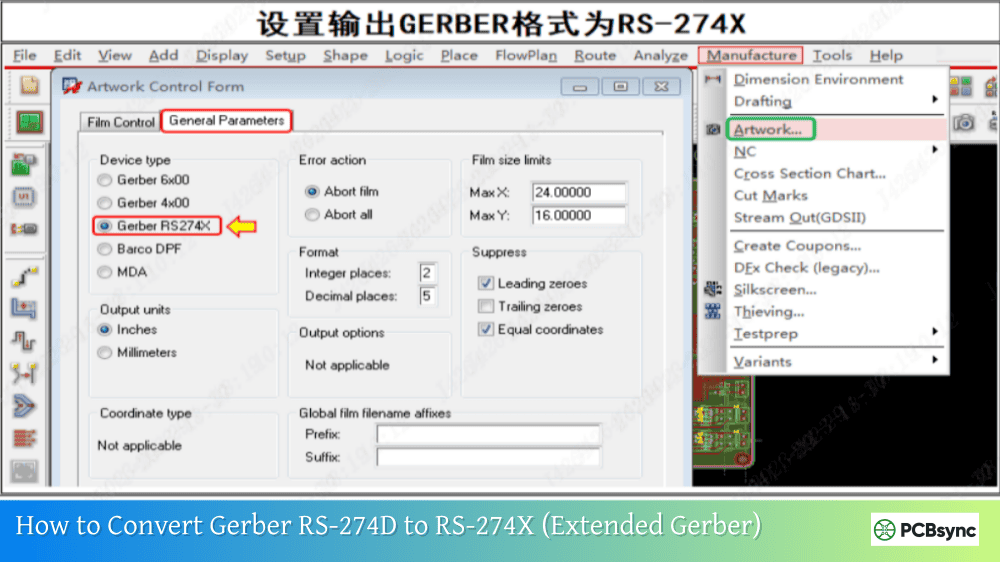
Quadcept outputs Gerber files in the RS-274X format (Extended Gerber), which is the current industry standard. This format embeds aperture definitions directly within each file, eliminating the separate aperture wheel files required by the obsolete RS-274D format.
RS-274X offers significant advantages for modern PCB production:
Self-contained files with embedded apertures
Support for complex polygon fills
Human-readable ASCII format for troubleshooting
Universal compatibility with CAM systems
Quadcept Overview: Cloud-Based PCB Design
Quadcept is a professional-grade EDA tool developed in Japan that has gained significant traction globally, with installations at major companies including Toyota, Sony, and Panasonic. The software operates on a cloud-based licensing model, meaning authentication happens over the network rather than through USB dongles.
Pre-Export Checklist: Before Generating Gerber Files
Rushing to export Gerber files before your design is truly complete is a common mistake that leads to rejected files and manufacturing delays. Take time to verify these elements before proceeding.
Design Verification Steps
Run DRC (Design Rule Check): Navigate to Project >> Run DRC/MRC or use the keyboard shortcut Ctrl + D. The DRC verifies electrical and spacing rules throughout your design.
Run MRC (Manufacturing Rule Check): Use Ctrl + M to execute the Manufacturing Rule Check. This Quadcept-specific feature checks for issues that would cause problems during fabrication, such as:
Trace widths below manufacturer minimums
Insufficient clearances for etching processes
Drill sizes outside acceptable ranges
Solder mask slivers that could fail during application
Verify Board Outline: Ensure your board outline is a continuous, closed shape. Open or overlapping outline segments will cause export failures or manufacturer confusion.
Check Layer Stack: Confirm your layer definitions match your intended board construction. Quadcept’s layer management allows complex stackups, but manufacturing files must accurately reflect your design intent.
Step-by-Step Guide: Generating Gerber Files from Quadcept
Step 1: Access PCB Settings for Gerber Configuration
Open your PCB document and navigate to the Gerber settings through one of these methods:
Method 1: Click the Gerber icon in the PCB Settings toolbar
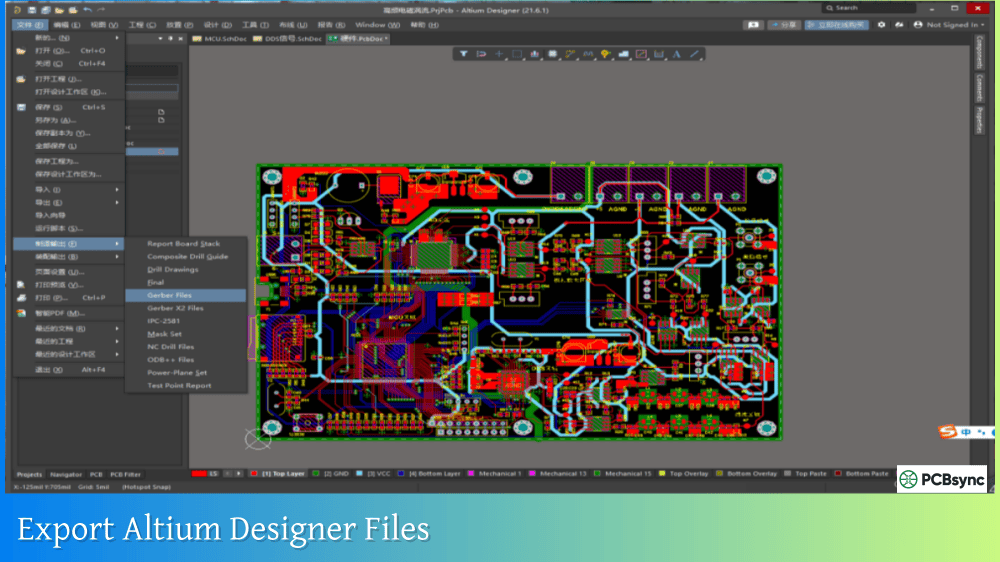
Method 2: Select Project >> Gerber >> Export Gerber from the menu
Method 3: Use the Batch Output function for comprehensive export
The Gerber section of the Settings dialog appears, allowing you to configure output layers and aperture information.
Step 2: Configure Layer Output Settings
The layer configuration screen displays all available layers in your design. For each layer you want to export, you’ll specify:
Display Layer Combinations: Quadcept allows you to save layer combinations for repeated use. This is particularly useful for multi-layer boards where you need consistent exports across revisions.
Layer-Specific Settings:
Layer Type
Typical Setting
Notes
Top Copper
Electric layer only
Component-side copper
Bottom Copper
Electric layer only
Solder-side copper
Inner Layers
Electric + Plane
For multilayer boards
Top Silkscreen
All silk objects
Reference designators
Top Solder Mask
Mask openings
Pad exposure areas
Bottom Solder Mask
Mask openings
Solder-side exposure
Board Outline
Outline layer
Manufacturing boundary
Pro Tip: Check the “Show Output Layers only” option to filter the display to layers actually being exported. This helps prevent accidental omission of required layers.
Step 3: Configure Aperture Settings
Apertures define the basic shapes used to draw features in your Gerber files. Quadcept handles aperture assignment automatically, but you can customize D-code assignments if your manufacturer has specific requirements.
Custom Apertures: Define non-standard shapes if needed
Aperture Table: Review all apertures used in your design
For most designs, the default automatic aperture assignment works correctly. Only modify these settings if your manufacturer specifically requests certain D-code configurations.
Step 4: Set File Format Options
Configure the output format settings to match your manufacturer’s requirements:
Coordinate Format: Most manufacturers accept the default format. Common options include 2:4 or 2:5 precision (integer:decimal digits).
Units: Select inches or millimeters based on your manufacturer’s preference. Ensure this setting matches your NC drill file units.
Offset Settings: The X/Y offset fields allow you to shift all objects by a specified distance. Leave at zero unless you have specific panelization requirements.
Mirror/Flip Options: Control layer orientation for manufacturing. Typically, you should NOT mirror Gerber outputs — the manufacturer handles orientation.
Step 5: Execute Gerber Export
With settings configured, execute the export using one of these methods:
Click the export icon in the Gerber settings screen
Select Project >> Gerber >> Export Gerber
Use Batch Output for comprehensive file generation
Quadcept saves all Gerber files to your specified output directory with appropriate file extensions.
Step 6: Verify Exported Files with Built-in Viewer
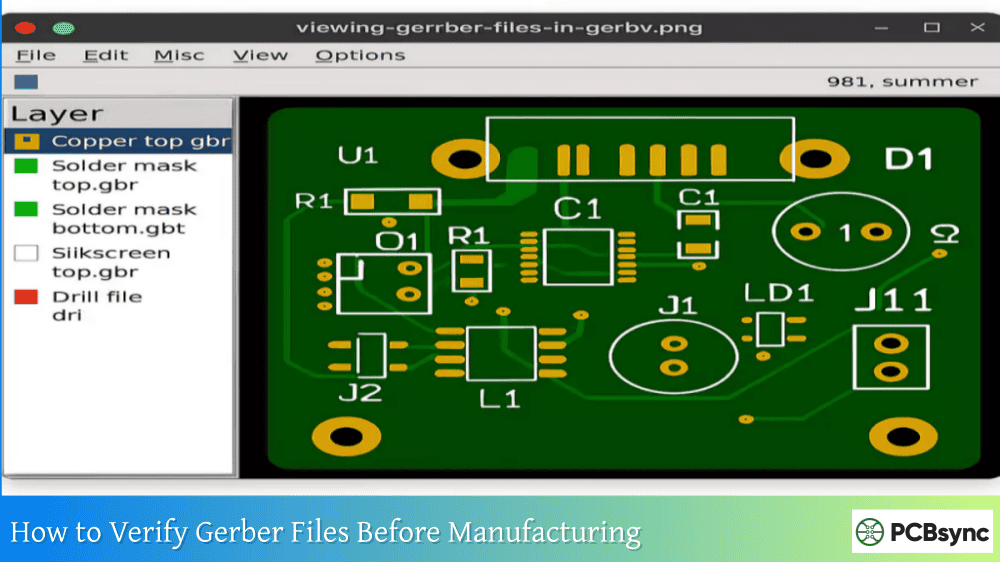
One of Quadcept’s conveniences is the integrated Gerber viewer. After export, Quadcept automatically opens the generated files for visual confirmation.
In the Gerber viewer, you can:
Toggle individual layer visibility
Change display colors for clarity
Verify layer registration (alignment)
Confirm feature accuracy
Never skip this verification step. Visual confirmation catches issues that automated checks might miss.
Generating NC Drill Files in Quadcept
Gerber files alone are insufficient for manufacturing — you also need NC drill files specifying hole locations and sizes.
NC Drill Export Process
Access NC drill settings through Project >> NC Drill >> Export NC Drill or via Batch Output.
Quadcept supports two NC drill formats:
Format
Description
Best For
RS-274X
Gerber-style drill format
Modern manufacturers
Excellon
Industry-standard drill format
Universal compatibility
Slot and Square Hole Handling
For Excellon format exports, Quadcept provides options for handling slots and square holes. Since standard drill files only describe round holes, non-circular apertures require special treatment:
Routed Slots: Defined as routing paths
Multiple Hits: Square holes approximated with overlapping drills
Separate Layer: Complex shapes on dedicated milling layer
Consult your manufacturer’s capabilities before selecting slot/square hole output options.
NC Drill Chart Generation
Quadcept can generate drill charts showing hole sizes, quantities, and locations. Two methods are available:
Auto Chart: Creates a standard drill chart automatically Custom Chart: Allows manual placement and formatting of drill information
Include drill charts with your manufacturing package for clear communication with the fabrication house.
Using Batch Output for Complete Manufacturing Package
For production-ready exports, Quadcept’s Batch Output function generates all manufacturing files simultaneously, reducing the risk of missing layers or mismatched settings.
Accessing Batch Output
Navigate to Project >> Batch Output to access the comprehensive export dialog.
Quadcept automatically generates a text file (.txt) containing:
Layer names and corresponding file names
Export settings summary
Special manufacturing notes
This memo provides valuable documentation for the manufacturer and for your own records.
Alternative: Exporting ODB++ Files from Quadcept
For manufacturers that accept it, ODB++ offers advantages over traditional Gerber files by combining all manufacturing data into a single intelligent file format.
ODB++ vs. Gerber Comparison
Aspect
Gerber Files
ODB++
File Count
Multiple files per layer
Single file package
Net Information
Not included
Embedded
Component Data
Separate file required
Included
Stack-up Info
External documentation
Embedded
Industry Adoption
Universal
Growing
Exporting ODB++ from Quadcept
Access ODB++ export through Project >> ODB++ >> Export ODB++.
Review silkscreen for legibility and pad clearance
Validate layer count matches order specifications
Include special instructions for non-standard features
Frequently Asked Questions
Can I generate Gerber files with the Quadcept trial version?
Yes, the trial version (limited to 100 pins and 4 layers) allows full Gerber export functionality. However, if your design exceeds these limits, the software enters viewer mode and export is disabled.
What happens to my Gerber files if my Quadcept license expires?
Your existing design files and previously exported Gerber files remain accessible. You can view and print Gerber data, but you cannot modify designs exceeding the 100-pin trial limit or generate new exports from locked projects.
Does Quadcept support Gerber X2 or X3 formats?
Quadcept primarily outputs RS-274X format Gerber files, which remain the most widely accepted standard. For enhanced data transfer, consider using ODB++ export, which provides similar benefits to newer Gerber formats.
How do I export files for a specific PCB manufacturer?
Most manufacturers accept standard RS-274X Gerber files and Excellon drill files. Check your manufacturer’s guidelines for specific requirements, then configure Quadcept’s export settings accordingly. Use Batch Output to ensure complete file packages.
Can I import Gerber files from other CAD tools into Quadcept?
Yes, Quadcept can open and view Gerber files from any source. The software supports converting design data from 13 different CAD formats, making it useful for legacy design migration.
Quadcept vs. Other PCB Design Tools for Gerber Export
Having used multiple PCB design platforms, I can offer some perspective on how Quadcept’s Gerber export compares to alternatives.
The integrated Manufacturing Rule Check (MRC) sets Quadcept apart from many competitors. While other tools focus primarily on electrical design rules, Quadcept explicitly checks for manufacturing constraints before you generate output files.
The automatic generation of manufacturing instruction memos is another thoughtful feature. Rather than manually documenting which file corresponds to which layer, Quadcept creates this reference automatically during export.
Considerations for Tool Selection
Quadcept’s subscription model ($99/month for PCB Designer) positions it between free tools like KiCad and premium solutions like Altium Designer. For engineers who need professional-grade manufacturing output without enterprise-level costs, this pricing makes sense.
The cloud-based licensing means you can work from multiple locations without transferring USB dongles, though it does require internet connectivity for license verification.
Advanced Topics: Multilayer Board Gerber Export
For complex multilayer designs, additional considerations apply when generating Gerber files.
Inner Layer Configuration
Quadcept handles inner copper layers (signal and plane) through the layer stack manager. When exporting Gerbers for multilayer boards:
Signal Layers: Export as positive images showing copper traces Plane Layers: Can export as positive (showing copper) or negative (showing clearances)
Verify with your manufacturer which format they prefer for plane layers. Most modern CAM systems handle either format correctly.
Blind and Buried Via Documentation
If your design uses blind or buried vias, ensure your NC drill export properly separates these into distinct files based on the layer spans they connect. Quadcept’s drill export settings allow configuration for:
Quadcept’s ODB++ export includes some of this information, but explicit stack-up drawings remain important for critical RF and high-speed designs.
Troubleshooting Quadcept Export Errors
Error: “Layer Not Found”
This occurs when the export configuration references a layer that doesn’t exist in your current design. Review your layer settings and remove references to unused layers.
Error: “Invalid Aperture Definition”
Usually indicates a custom aperture with incorrect parameters. Reset to default apertures and re-run the export. If a specific aperture is required, verify its dimensions are within valid ranges.
Error: “File Write Failed”
Check that your output directory exists and you have write permissions. Also verify sufficient disk space for the generated files.
Warning: “Objects Outside Board Outline”
While not preventing export, this warning indicates elements extend beyond your defined board boundary. Review silkscreen, copper pours, and component placement.
Conclusion: Streamlining Your Quadcept Manufacturing Workflow
Generating Gerber files from Quadcept is straightforward once you understand the relationship between layer configurations, export settings, and verification steps. The software’s built-in Gerber viewer and comprehensive Batch Output function significantly reduce the risk of missing or misconfigured files.
Key takeaways for reliable Gerber generation:
Run MRC before exporting — Quadcept’s Manufacturing Rule Check catches fabrication issues early
Use Batch Output — Generates complete manufacturing packages with consistent settings
Include drill files — Gerbers without NC drill data are incomplete
Document your settings — Save layer configurations for repeatable exports
The manufacturing memo feature automatically documents your export settings, creating a valuable reference for both you and your fabrication partner. Combined with systematic file naming and version control, these practices ensure smooth transitions from design to production.
Whether you’re prototyping a simple two-layer board or producing complex multilayer designs, Quadcept’s Gerber export capabilities provide the flexibility and verification tools needed for successful PCB manufacturing.
Inquire: Call 0086-755-23203480, or reach out via the form below/your sales contact to discuss our design, manufacturing, and assembly capabilities.
Quote: Email your PCB files to Sales@pcbsync.com (Preferred for large files) or submit online. We will contact you promptly. Please ensure your email is correct.
Notes: For PCB fabrication, we require PCB design file in Gerber RS-274X format (most preferred), *.PCB/DDB (Protel, inform your program version) format or *.BRD (Eagle) format. For PCB assembly, we require PCB design file in above mentioned format, drilling file and BOM. Click to download BOM template To avoid file missing, please include all files into one folder and compress it into .zip or .rar format.