Inquire: Call 0086-755-23203480, or reach out via the form below/your sales contact to discuss our design, manufacturing, and assembly capabilities.
Quote: Email your PCB files to Sales@pcbsync.com (Preferred for large files) or submit online. We will contact you promptly. Please ensure your email is correct.
Notes: For PCB fabrication, we require PCB design file in Gerber RS-274X format (most preferred), *.PCB/DDB (Protel, inform your program version) format or *.BRD (Eagle) format. For PCB assembly, we require PCB design file in above mentioned format, drilling file and BOM. Click to download BOM template To avoid file missing, please include all files into one folder and compress it into .zip or .rar format.
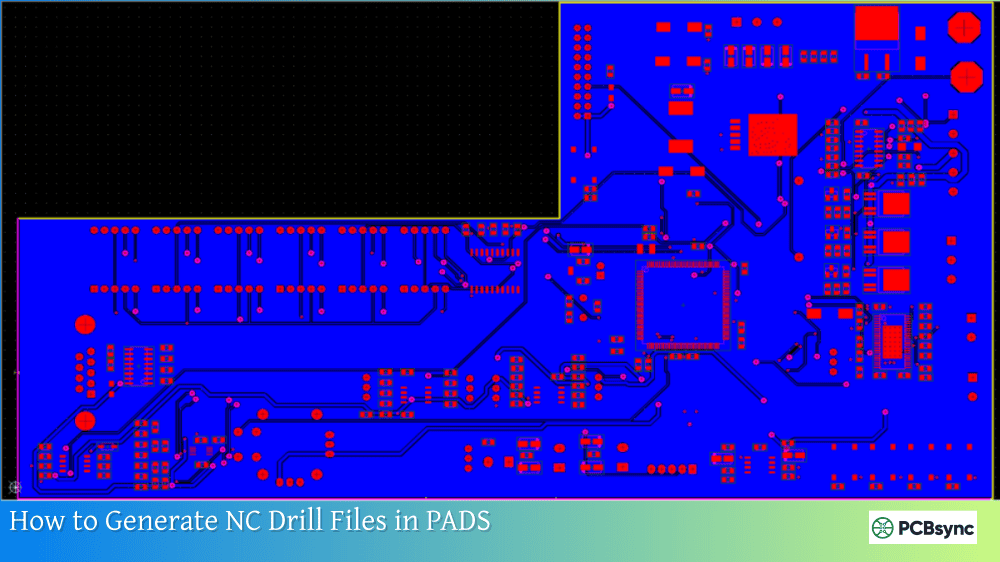
How to Generate Gerber and Drill Files from Mentor PADS: Complete Manufacturing Guide
Your PCB design is complete. You’ve spent weeks perfecting the layout, running design rule checks, and optimizing trace routing. Now comes the moment of truth: generating manufacturing files that your fabricator can actually use. If you’re working with Mentor PADS (now part of Siemens EDA), this guide walks you through every step of creating Gerber and drill files that won’t get rejected.
I’ve been using PADS for complex industrial designs since the early 2000s. The software has evolved considerably, but the fundamentals of generating clean manufacturing outputs remain consistent. What I’ve learned through trial and error (and more than a few rejected submissions) is that the difference between a smooth fabrication run and a frustrating back-and-forth with your manufacturer often comes down to how carefully you configure your CAM outputs.
This guide covers both PADS Layout and PADS Professional workflows, with practical tips that apply regardless of which version you’re running.
Before jumping into the PADS-specific workflow, let’s establish what we’re actually creating and why these files matter to your manufacturer.
What Are Gerber Files
Gerber files describe the copper patterns, solder mask openings, silkscreen graphics, and other visual elements of each PCB layer. The format originated with Gerber Scientific’s photoplotters and has become the universal standard for PCB fabrication data.
The current industry standard is Gerber RS-274X, commonly called Extended Gerber. This format embeds aperture definitions directly in the file, making it self-contained and eliminating the coordination errors that plagued older formats. You’ll also encounter Gerber X2, which adds metadata for automatic layer identification, though RS-274X remains more widely supported.
What Are Drill Files
While Gerber files handle the artwork, drill files (also called NC drill or Excellon files) tell CNC drilling machines where to place holes and what sizes to use. These files contain coordinates for every through-hole, via, and mounting hole in your design, along with tool definitions specifying drill diameters.
A complete manufacturing package requires both file types working together. Misalignment between Gerber artwork and drill locations is one of the most common causes of fabrication failures.
Preparing Your PADS Design for Manufacturing Output
Rushing straight to file generation without proper preparation is a recipe for rejected submissions. These verification steps take minutes but save days of rework.
Running Design Rule Checks
Open your design in PADS Layout and run a comprehensive DRC. Navigate to Tools and select Verify Design. Address all errors before proceeding since many manufacturers will reject designs with unresolved DRC violations.
Pay particular attention to clearance violations between copper features, minimum trace width violations, drill-to-copper clearance issues, and silkscreen overlapping solder mask openings. Even warnings deserve review. What PADS considers acceptable might fall outside your fabricator’s manufacturing capabilities.
Verifying Layer Stackup Configuration
Your layer stackup must accurately reflect the board you intend to manufacture. In PADS Layout, access the layer setup through Setup and then Layer Definition. Confirm that signal and plane layers are correctly designated, layer pairs for drilling are properly defined, and impedance-controlled layers are specified if your design requires them.
Checking Pad and Via Definitions
Review your padstack definitions to ensure they meet manufacturing requirements. Most standard fabrication processes require minimum drill sizes of 0.2mm (8 mils), minimum annular ring of 0.15mm (6 mils), and adequate thermal relief for plane connections.
Access padstack information through Setup and then Pad Stacks. Verify that your smallest features fall within your manufacturer’s capabilities.
Step-by-Step Guide to Generate Gerber Files from PADS Layout
PADS Layout uses a CAM (Computer-Aided Manufacturing) document system for generating outputs. Here’s the complete workflow.
Step 1: Accessing the CAM Output System
With your design open, navigate to File and select CAM. This opens the CAM Document dialog, which serves as the control center for all manufacturing outputs.
If this is your first time generating CAM files for this design, PADS may prompt you to create a new CAM document. Accept the default or specify a custom name for your output configuration.
Step 2: Adding Output Documents
In the CAM Document dialog, you’ll define each output layer as a separate “document.” Click Add to create a new output document.
For a typical 4-layer board, you’ll need to create documents for Top Copper, Bottom Copper, Inner Layer 1 (Ground), Inner Layer 2 (Power), Top Solder Mask, Bottom Solder Mask, Top Silkscreen, Bottom Silkscreen, Top Paste Mask, Bottom Paste Mask, Board Outline, and Drill Drawing.
Step 3: Configuring Document Properties
Select each document and click Properties to configure its settings.
For Device Type, select the appropriate Gerber format. Choose “Gerber RS-274X” for maximum compatibility. For older equipment (rarely needed today), RS-274D with a separate aperture file is available. For Document Type, select the layer category that matches your output. Options include Signal Layer, Solder Mask, Silk Screen, Paste Mask, and others.
For Layer Selection, choose which design layer(s) to include. For copper layers, select the corresponding signal or plane layer. For masks and silkscreen, PADS typically auto-assigns based on document type.
Step 4: Setting Gerber Format Parameters
Within the Properties dialog, configure the output format parameters. For Units, match your design units (typically inches or millimeters). For Number Format, use 2:5 (2 integer, 5 decimal places) for inch-based designs or 3:4 for metric designs. This provides 0.00001-inch or 0.0001mm resolution. Set Zero Suppression to “Leading” for most manufacturers. Set Coordinate Format to “Absolute” unless your fab house specifically requests incremental.
Step 5: Configuring Layer-Specific Content
Each document type requires specific layer content. For copper layers (Top and Bottom signals), include Traces on the corresponding layer, Pads (top and bottom shapes), Vias, Copper pours/planes, and any other copper features.
For solder mask, PADS automatically generates mask openings based on pad definitions. Verify that mask expansion settings match your manufacturer’s requirements (typically 2-4 mils larger than pads).
For silkscreen, include only the silkscreen layer content. Verify that text and graphics don’t overlap pad areas since PADS can clip silkscreen automatically if configured.
For paste mask, like solder mask, paste openings derive from pad definitions. Reduction settings for paste may differ from solder mask expansion.
Step 6: Output File Naming
Consistent file naming helps fabricators identify your layers correctly. In the Document Properties, set meaningful output names.
Layer
Recommended Filename
Extension
Top Copper
top_copper or pcbname.GTL
.GTL
Bottom Copper
bottom_copper or pcbname.GBL
.GBL
Inner Layer 1
inner1 or pcbname.G2
.G2
Inner Layer 2
inner2 or pcbname.G3
.G3
Top Solder Mask
top_mask or pcbname.GTS
.GTS
Bottom Solder Mask
bottom_mask or pcbname.GBS
.GBS
Top Silkscreen
top_silk or pcbname.GTO
.GTO
Bottom Silkscreen
bottom_silk or pcbname.GBO
.GBO
Top Paste
top_paste or pcbname.GTP
.GTP
Bottom Paste
bottom_paste or pcbname.GBP
.GBP
Board Outline
outline or pcbname.GKO
.GKO
Step 7: Generating the Gerber Files
Once all documents are configured, select the documents you want to generate (use Ctrl+click for multiple selection). Click Run to generate the output files.
PADS processes each document and creates the corresponding Gerber files in your specified output directory. Watch the message window for any warnings or errors during generation.
Generating NC Drill Files in PADS Layout
Drill file generation uses a separate but similar process within the CAM system.
Creating a Drill Output Document
In the CAM Document dialog, click Add to create a new document. Set the Device Type to “NC Drill” and the Document Type to “Drill Drawing” or “NC Drill.”
Configuring Drill Parameters
The drill document properties include several critical settings. For Units, match your Gerber output units for consistency. For Format, use 2:4 or 2:5 for inch-based designs. For Zero Suppression, “Leading” is standard for most equipment. For Output Mode, select “Absolute” coordinates.
Handling Multiple Drill Types
Modern PCBs often contain different hole types requiring separate processing. These include plated through-holes (PTH) for component leads and vias, non-plated through-holes (NPTH) for mounting holes, and blind and buried vias for HDI designs.
PADS allows you to generate separate drill files for each type. In the drill document properties, use the filtering options to include only specific hole types in each output file. For most standard boards, creating separate files for plated and non-plated holes is recommended.
Drill Tool Table
PADS generates a drill tool table listing all drill sizes used in your design. This table typically appears at the top of the drill file and includes tool numbers assigned to each drill size, drill diameters in the specified units, and hit counts showing how many holes use each tool.
Review this table carefully. Unusual drill sizes or excessive tool counts may indicate design issues worth addressing before fabrication.
PADS Professional CAM Workflow
If you’re using PADS Professional (the higher-end variant), the CAM output process differs slightly but follows similar principles.
Accessing Manufacturing Outputs in PADS Professional
In PADS Professional, manufacturing outputs are accessed through the Output Manager. Navigate to File, then Fabrication Outputs, then Output Manager.
The Output Manager provides a more visual interface for configuring outputs, with layer previews and real-time status indicators.
Configuring Output Jobs
PADS Professional uses “jobs” to organize related outputs. A typical manufacturing job includes all Gerber layers, drill files, and documentation needed for fabrication.
Create a new job or modify an existing template. Add output types for Gerber, NC Drill, IPC-D-356netlist (for electrical testing), and fabrication drawings.
Batch Generation
One advantage of PADS Professional is streamlined batch generation. Once your job is configured, a single click generates all outputs simultaneously, reducing the chance of missing files or inconsistent settings across outputs.
Read more How to convert PCB Files in different Design software:
Before sending files to your fabricator, verify your package includes everything needed.
Category
Required Files
Notes
Copper Layers
One Gerber per copper layer
Include all signal and plane layers
Solder Mask
Top and bottom mask Gerbers
Verify polarity (positive/negative)
Silkscreen
Top silk minimum; bottom optional
Check for pad overlap clipping
Paste Mask
Top and bottom for SMT boards
Required for stencil fabrication
Drill Files
PTH and NPTH separate
Include tool table
Board Outline
Mechanical layer Gerber
Critical for board dimensioning
Documentation
Fabrication notes, stackup
Specify materials, finish, tolerances
Verifying Gerber and Drill Files Before Submission
Never submit manufacturing files without independent verification. Loading your outputs in a separate Gerber viewer catches errors that are invisible within PADS.
Recommended Verification Steps
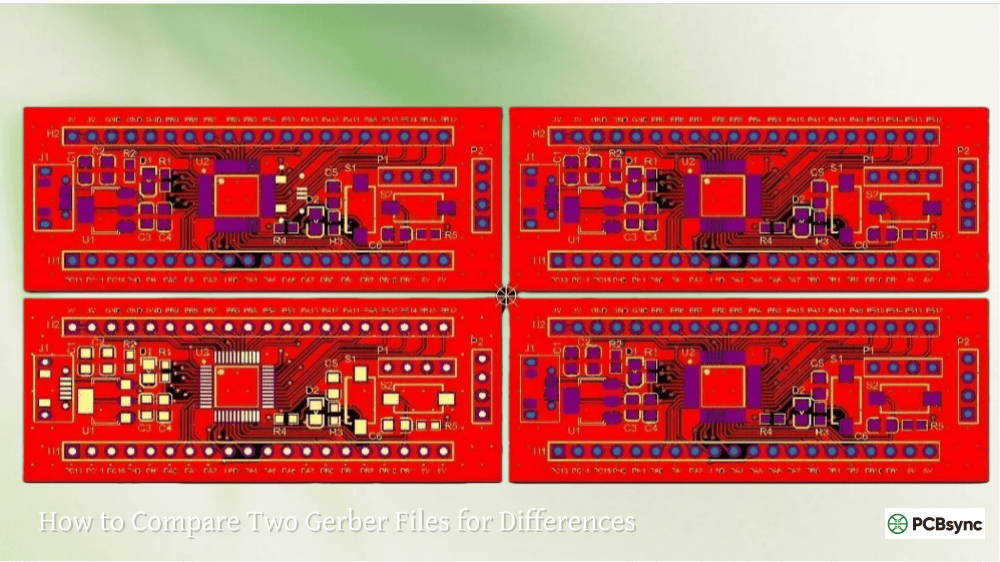
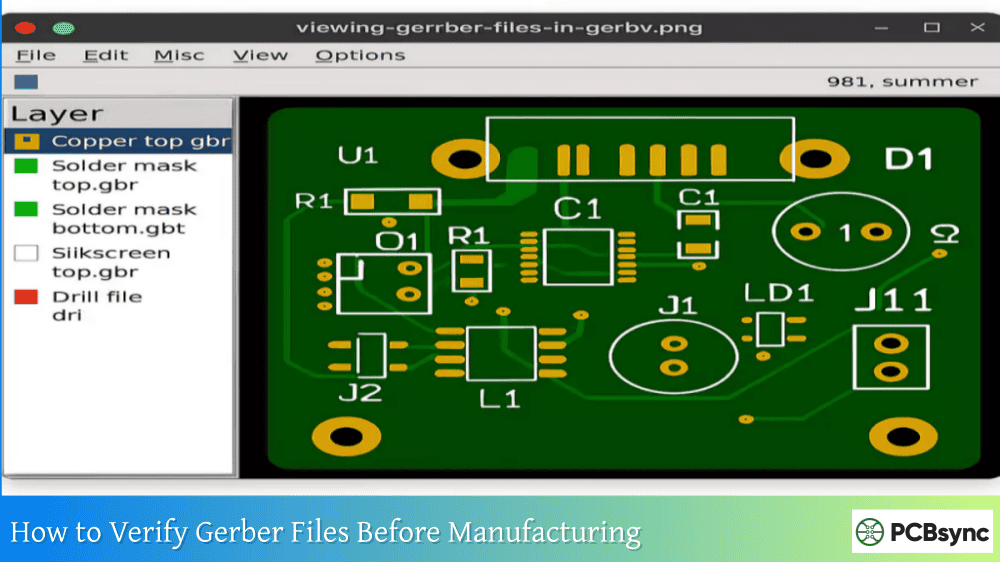
Start by loading all Gerber files in a viewer. Overlay layers to check alignment between copper, mask, and drill. Verify that pad centers align with drill hits. Check copper clearances around holes. Confirm board outline encompasses all features.
Then verify the drill file independently by loading it alongside copper Gerbers. Every drill hit should center on a pad or via. Look for drill hits outside the board outline or in unexpected locations.
Free Gerber Viewer Tools
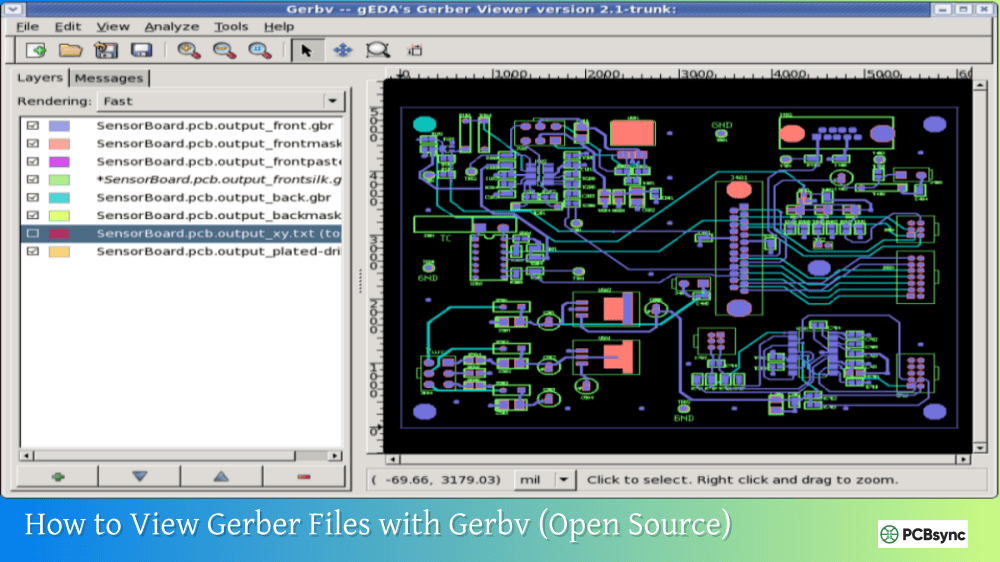
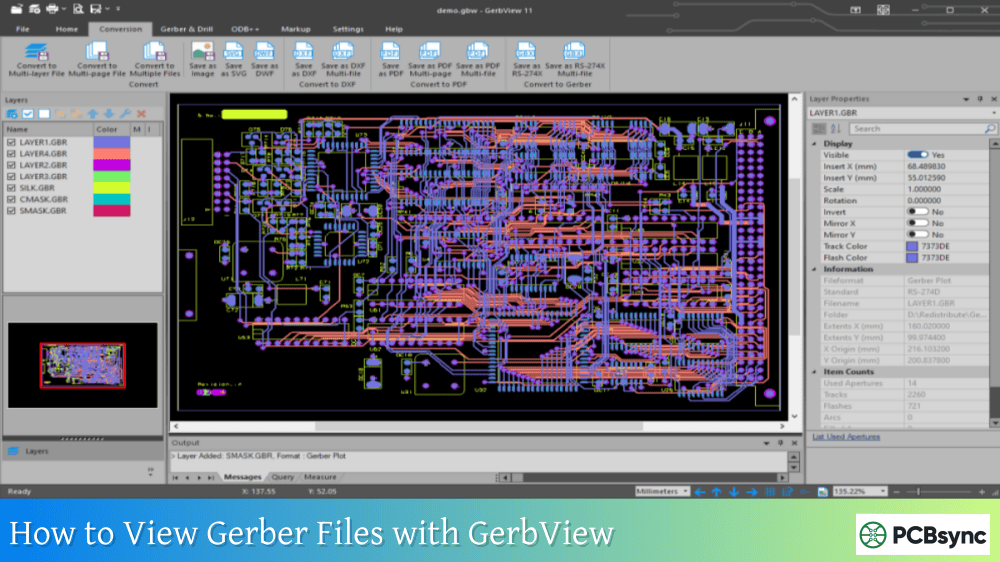
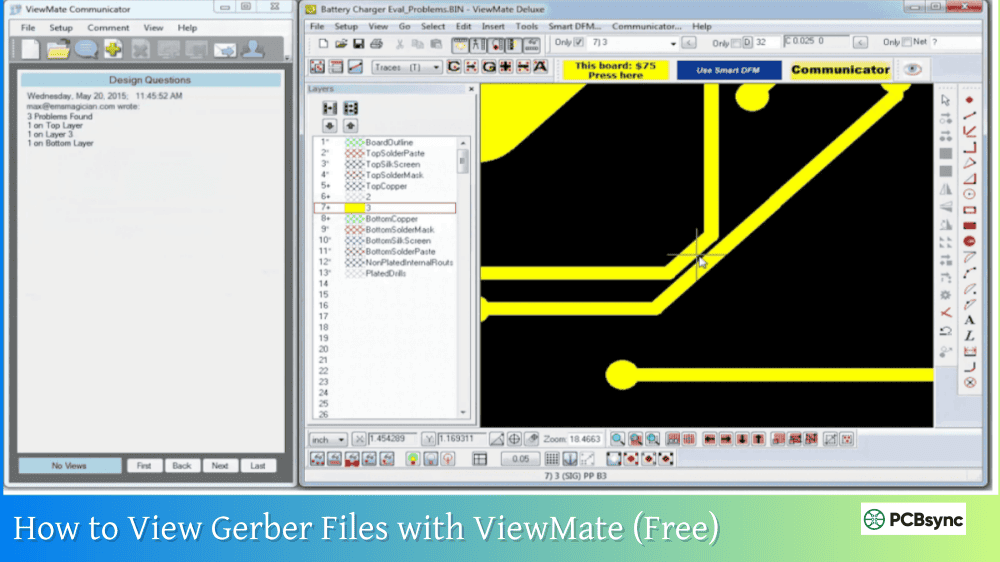
Several free tools are available for verification. GerbView comes with the KiCad suite and handles both Gerber and drill files. ViewMate from Pentalogix is a free Windows viewer with measurement tools. Ucamco’s Reference Gerber Viewer is an online tool from the Gerber format maintainers. ZofzPCB provides 3D visualization of assembled Gerber sets. Many PCB manufacturers also provide online viewers integrated with their quoting systems.
Troubleshooting Common PADS CAM Issues
Even experienced engineers encounter output problems. Here are solutions to issues I’ve seen repeatedly.
Missing Features in Gerber Output
When expected features don’t appear in your Gerber files, check that the correct layers are included in the document definition. Verify that features aren’t on unexpected layers in your design. Confirm that composite layers include all necessary sub-layers. Also check layer visibility settings which can affect CAM output in some PADS versions.
Drill-to-Pad Misalignment
If drill holes don’t center on pads in your viewer, ensure Gerber and drill outputs use identical origin points, verify both use the same units (inches versus millimeters), and check for any coordinate offset settings in either output.
Incorrect Solder Mask Openings
When mask openings appear wrong, review pad definition mask expansion settings and check global mask rules in the design rules. Verify that the mask Gerber polarity matches manufacturer expectations (positive means openings are drawn; negative means openings are clear).
Aperture Errors
If your fab house reports aperture problems, try regenerating with automatic aperture assignment. Clear any cached aperture tables from previous designs. Verify that custom apertures are properly defined.
Large File Sizes
Excessively large Gerber files may indicate issues. Check for redundant polygon pours that could be simplified. Verify that arc interpolation is enabled (reduces file size for curved features). Look for unnecessary precision in number formatting.
Best Practices for Manufacturing File Management
Good file management practices prevent costly mistakes and simplify communication with fabricators.
Version Control
Maintain clear version identification in your manufacturing packages. Include version numbers in directory names. Date-stamp your output directories. Keep a revision log documenting changes between versions.
Output Directory Organization
Create a consistent folder structure for manufacturing outputs. A typical structure includes a main fabrication folder containing a Gerber subfolder, a Drill subfolder, a Documentation subfolder (for stackup and notes), and a Review subfolder for viewer screenshots.
Manufacturer Communication
Different fabricators have different requirements. Before generating final outputs, confirm preferred Gerber format (RS-274X versus X2), preferred drill file format (Excellon version), any specific naming conventions they require, whether they want separate or combined drill files, and their preferred method for specifying stackup and finish requirements.
Useful Resources for PADS Users
The following resources provide additional support for PADS manufacturing output generation.
For official documentation, the Siemens PADS documentation is available through the Support Center at support.sw.siemens.com. PADS Layout User Guide covers CAM output in the Manufacturing Outputs chapter. The PADS Knowledge Base contains technical articles addressing specific output issues.
For Gerber format specifications, the official Gerber format documentation is maintained by Ucamco at ucamco.com/gerber. This includes both RS-274X and X2 specifications with detailed format descriptions.
For verification and viewer tools, ViewMate is available at pentalogix.com for free Gerber viewing. The KiCad GerbView tool is available at kicad.org. The Online Gerber Viewer from Ucamco can be found at gerber-viewer.ucamco.com.
For community support, the PADS user community forum is accessible through the Siemens Support Center. EDAboard.com hosts an active PADS-specific discussion forum. Reddit’s r/PrintedCircuitBoard community includes PADS users sharing experiences.
For training resources, Siemens offers official PADS training courses. LinkedIn Learning includes PADS courses for various skill levels. YouTube contains numerous tutorials on PADS manufacturing output generation.
Frequently Asked Questions
What Gerber format should I select in PADS for manufacturing?
Select Gerber RS-274X (Extended Gerber) for the best compatibility with fabricators worldwide. This format embeds aperture definitions directly in the file, eliminating the need for separate aperture lists and reducing the chance of miscommunication with your manufacturer. While PADS supports older RS-274D format, there’s rarely a reason to use it with modern fabrication equipment.
How do I generate separate drill files for plated and non-plated holes?
In the PADS CAM Document dialog, create two separate NC Drill documents. In each document’s properties, use the hole type filter to include only plated holes in one document and only non-plated holes in the other. Name the files clearly (such as “plated.drl” and “non-plated.drl”) so your fabricator can easily identify each type.
Why don’t my drill holes align with pads when viewed in a Gerber viewer?
This misalignment typically occurs when Gerber and drill files use different origin points or units. In PADS, ensure that both CAM documents reference the same origin (usually the board origin at 0,0). Verify that units settings match between Gerber documents and drill documents. Also check for any offset values that might have been inadvertently set in either output configuration.
Can I use the same CAM document settings for future designs?
Yes. PADS allows you to save CAM document configurations as templates. After configuring your outputs for one design, save the CAM document setup. For new designs with similar layer structures, load this template as a starting point. You’ll need to verify layer assignments match the new design, but format settings and naming conventions carry over.
What files should I include besides Gerber and drill outputs?
A complete manufacturing package should include a README or fabrication specification document listing board thickness, copper weight, surface finish requirements, solder mask color, silkscreen color, and any special manufacturing notes. Include a layer stackup drawing showing layer order and materials. For impedance-controlled designs, include the impedance specification with target values and tolerances. If your board requires assembly, include a centroid file (pick-and-place data) and bill of materials.
Final Thoughts
Generating Gerber and drill files from Mentor PADS becomes straightforward once you understand the CAM document workflow. The key is systematic preparation: verify your design rules, configure each output layer carefully, use consistent naming conventions, and always verify the output files in an independent viewer before submission.
Take time to establish a repeatable process. Save your CAM configurations as templates, document your standard settings, and build relationships with your fabricators so you understand their specific requirements. These investments in process pay dividends across every project.
If you encounter rejection notices or fabrication issues, don’t hesitate to contact your manufacturer’s CAM department. They review hundreds of design packages weekly and can often pinpoint issues immediately. A quick phone call or email before resubmitting saves everyone time.
Manufacturing output generation might feel like the finish line of PCB design, but it’s really the starting line for fabrication. Clean, well-organized files set the stage for boards that come back exactly as you intended them.
Inquire: Call 0086-755-23203480, or reach out via the form below/your sales contact to discuss our design, manufacturing, and assembly capabilities.
Quote: Email your PCB files to Sales@pcbsync.com (Preferred for large files) or submit online. We will contact you promptly. Please ensure your email is correct.
Notes: For PCB fabrication, we require PCB design file in Gerber RS-274X format (most preferred), *.PCB/DDB (Protel, inform your program version) format or *.BRD (Eagle) format. For PCB assembly, we require PCB design file in above mentioned format, drilling file and BOM. Click to download BOM template To avoid file missing, please include all files into one folder and compress it into .zip or .rar format.