Inquire: Call 0086-755-23203480, or reach out via the form below/your sales contact to discuss our design, manufacturing, and assembly capabilities.
Quote: Email your PCB files to Sales@pcbsync.com (Preferred for large files) or submit online. We will contact you promptly. Please ensure your email is correct.
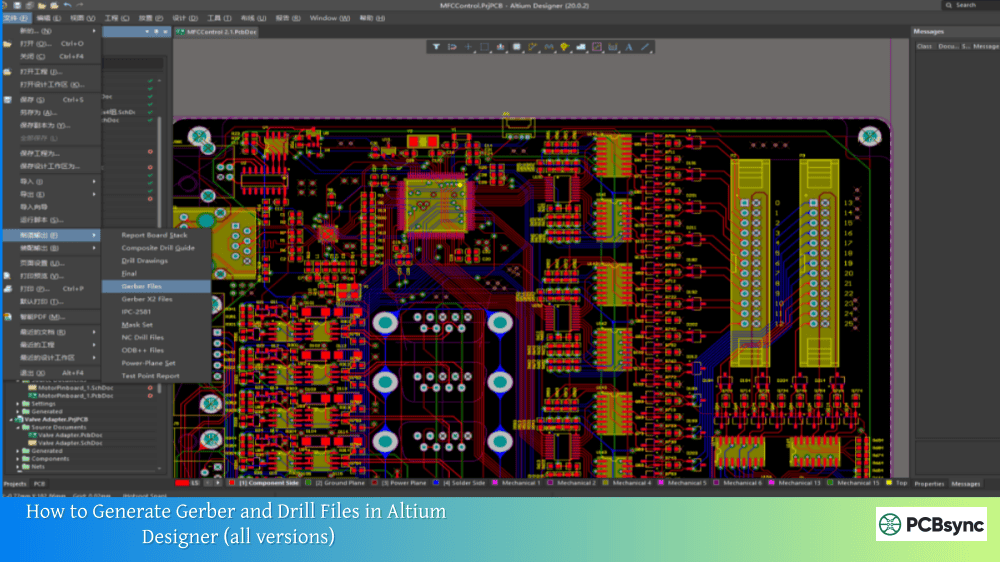
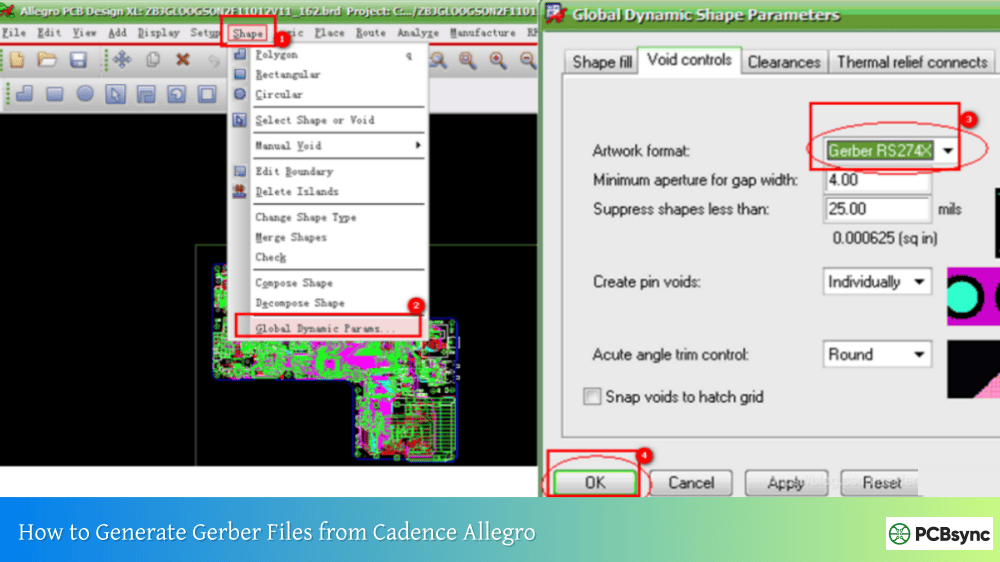
Notes: For PCB fabrication, we require PCB design file in Gerber RS-274X format (most preferred), *.PCB/DDB (Protel, inform your program version) format or *.BRD (Eagle) format. For PCB assembly, we require PCB design file in above mentioned format, drilling file and BOM. Click to download BOM template To avoid file missing, please include all files into one folder and compress it into .zip or .rar format.
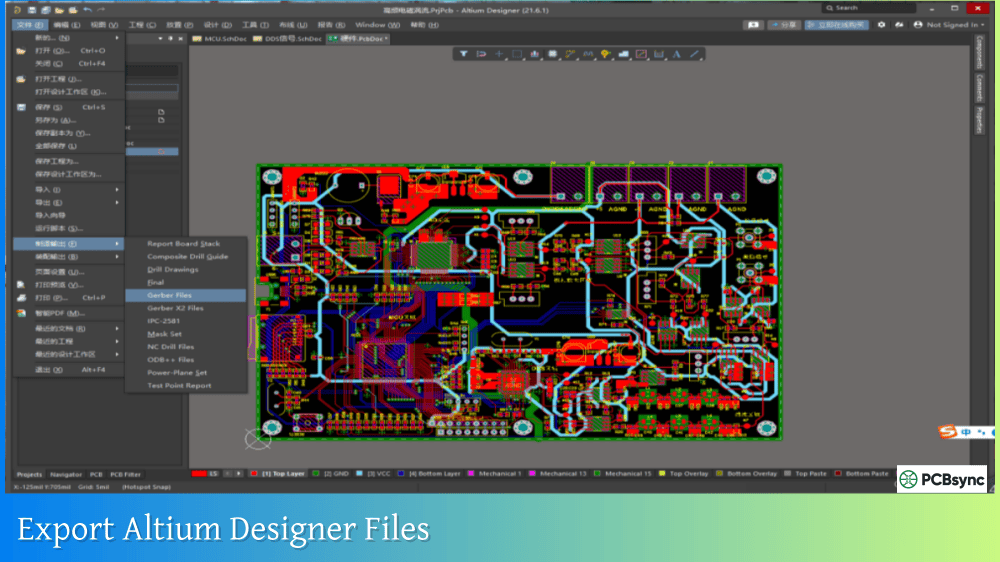
How to Export STEP Files from Altium Designer: Complete Guide for ECAD-MCAD Collaboration
After years of handing off PCB designs to mechanical engineers who then discover fit issues inside enclosures, I’ve learned that STEP file export from Altium Designer isn’t just a nice-to-have—it’s essential for any product where the board needs to fit inside something. This guide covers everything from basic export procedures to advanced Output Job configurations, troubleshooting common problems, and understanding when STEP files make sense versus other collaboration methods.
What Is a STEP File and Why Export from Altium Designer?
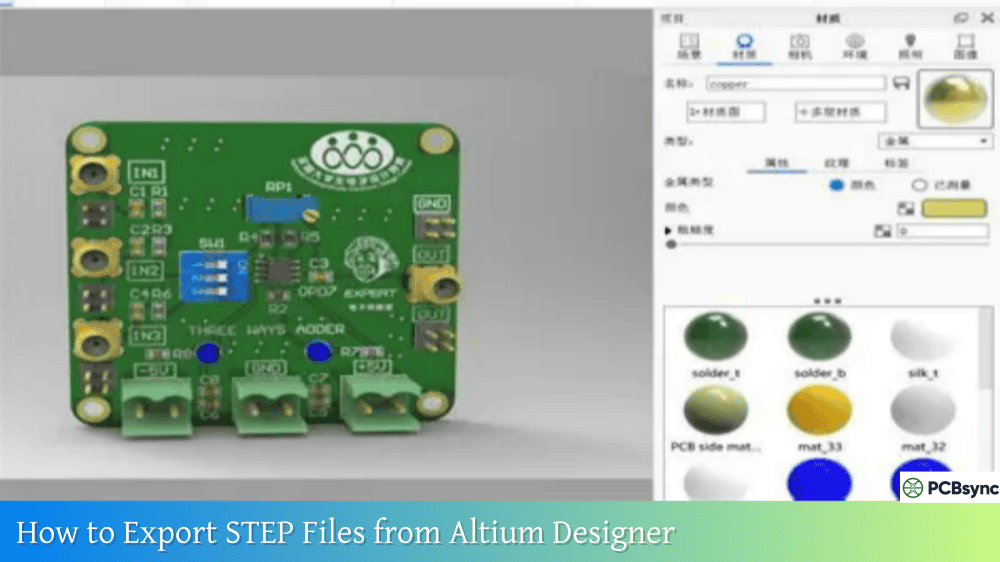
STEP (Standard for the Exchange of Product model data) is an ISO-standardized 3D file format (ISO 10303-21) that provides a universal way to transfer CAD data between different software applications. When you export a STEP file from Altium Designer, you’re creating a 3D representation of your PCB assembly that mechanical engineers can import into their MCAD tools—SolidWorks, Creo, Inventor, Fusion 360, or any other CAD software that supports the format.
The critical function here is clearance checking. When your PCB design must fit inside an enclosure with exposed connectors, switches, displays, and controls, the mechanical designer needs accurate 3D data to verify everything fits before committing to tooling. STEP files provide this with high dimensional accuracy, making them the standard handoff format between ECAD and MCAD worlds.
Understanding these limitations upfront prevents frustration. STEP exports focus on physical geometry for mechanical fit checking, not visual rendering of the complete board.
Enabling the STEP Exporter in Altium Designer
Before you can export STEP files, you need to ensure the STEP Exporter extension is enabled. This isn’t always activated by default during installation.
How to Enable STEP Export
Click the user button at the top right of Altium Designer
Select Extensions and Updates
Click the Installed tab
Click the Configure link under the Platform section
Locate STEP Exporter in the Importers/Exporters list
Check the box to enable it
Restart Altium Designer if prompted
If you don’t see the STEP export option in your File menu after following these steps, verify your Altium license includes this capability. Some legacy or limited licenses may not include 3D export features.
Step-by-Step Guide to Export STEP Files from Altium Designer
The basic export process is straightforward, but understanding each option ensures you get the right output for your mechanical team.
Method 1: Direct Export from PCB Editor
Open your PCB document in Altium Designer
Verify your design in 3D view (press 3 to switch to 3D mode)
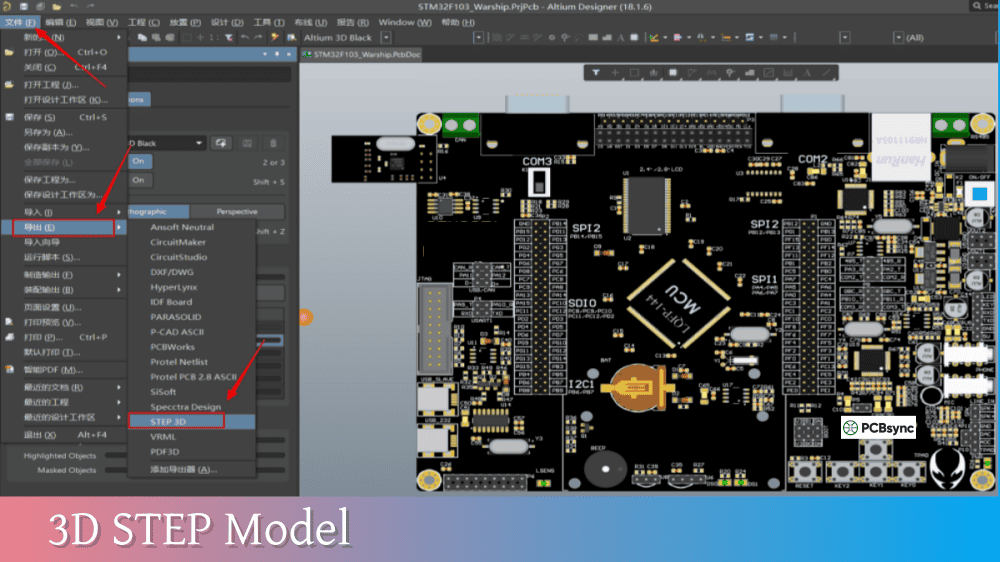
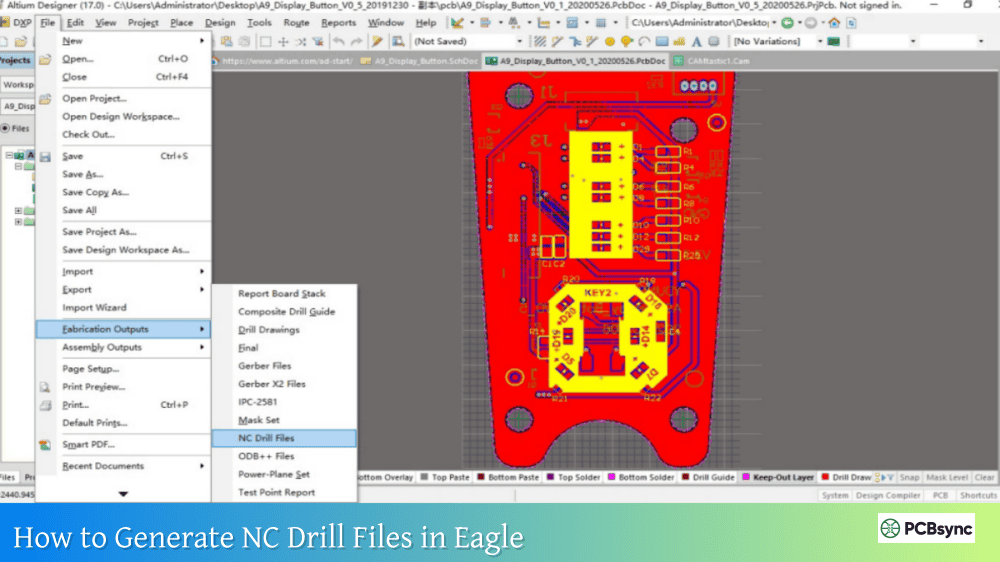
Navigate to File → Export → STEP 3D
Choose your save location and filename
Configure the Export Options dialog (detailed below)
Click OK to generate the file
Method 2: Export via Output Job File
For production workflows where consistency matters, use an Output Job file:
In the Projects panel, right-click your project
Select Add New to Project → Output Job File
In the OutJob editor, click Add New Export Output
Choose Export STEP → [PCB Document]
Double-click the new entry to configure export settings
Assign an output container and generate
The Output Job method offers additional options not available in direct export, including selective hole export by category (mechanical, electrical, free pads).
Understanding STEP Export Options in Altium Designer
The Export Options dialog controls what gets included in your STEP file. Making the right choices here directly impacts file size, export speed, and usefulness to your mechanical team.
Components With 3D Bodies Options
Option
Description
When to Use
Export All
Includes every component
Complete assembly for fit checking
Export Selected
Only selected components
Partial exports, specific areas
Pro tip: If you select “Export Selected” but have nothing selected in the PCB editor, the export will include only the bare board with no components. This is useful when mechanical engineers need just the board outline for initial enclosure design.
Pad Holes Options
Option
Description
File Size Impact
Export All
Every hole in the board
Larger files, slower export
Export Selected
Only selected holes
Smaller files, faster export
Through Output Job files, you get additional granularity:
Export Mechanical Component Pad Holes: Mounting holes and hardware
Export Electrical Component Pad Holes: Through-hole component pins
Export Free Pad Holes: Standalone vias and test points
3D Body Type Preferences
When components have both simple extruded bodies and STEP model bodies assigned:
Setting
Result
Best For
Prefer simple bodies
Uses extruded shapes
Smaller files, faster export
Prefer generic 3D models
Uses STEP models
Accurate component representation
Export both
Includes both types
Maximum compatibility
Export As Single Part Option
This setting significantly affects how your mechanical engineer works with the imported model:
Disabled (default): Exports as assembly with selectable components
Enabled: Exports as single solid part
Choose “Single Part” when you want to prevent mechanical engineers from accidentally moving components, or when your MCAD software has trouble with complex assemblies. Leave it disabled when they need to manipulate individual components.
Export Folded Board (Rigid-Flex Designs)
For rigid-flex PCBs, the Export Folded Board option lets you control the flex state:
Check Export Folded Board
Use the Rate slider to set fold percentage (0% flat to 100% fully folded)
The default matches your current Fold State setting in the PCB panel
This feature is essential for verifying rigid-flex boards fit correctly in their assembled configuration.
Coordinate System and Origin Considerations
STEP files exported from Altium Designer position the model relative to your PCB origin point. This matters because some MCAD applications handle the embedded location data differently.
Common Origin Issues
Model appears off-screen: The MCAD software didn’t process location data correctly
Model at unexpected position: Origin placement in Altium doesn’t match MCAD expectations
Components floating separately: Usually indicates “Export as Single Part” setting mismatch
Best Practice for Origin Placement
Before exporting, verify your PCB origin location:
In PCB editor, go to Edit → Origin → Set
Place origin at a logical reference point (board corner is typical)
Document the origin location for your mechanical team
Consistent origin placement across revisions prevents the “where did my board go?” moments that plague ECAD-MCAD collaboration.
Troubleshooting Common STEP Export Problems
Over years of exporting STEP files from Altium, I’ve encountered these issues repeatedly. Here’s how to solve them.
Missing Components in Exported STEP
Symptom: Some or all components don’t appear in the STEP file.
Causes and Solutions:
Cause
Solution
“Export Selected” enabled with nothing selected
Select components or choose “Export All”
Components lack 3D body definitions
Add 3D bodies to footprints in library
3D bodies not properly linked
Verify 3D body file paths in component properties
Corrupted Geometry in MCAD Application
Symptom: Surfaces appear broken, fillets become toroids, or geometry displays incorrectly after import into Creo, SolidWorks, or other MCAD software.
Solutions:
For PTC Creo users, add this line to your config.pro file:
intf_in_surf_boundary_pref xyz
For SolidWorks users:
Try importing as “Composite” rather than “Multi-body part”
Use the “Stitch” option during import to convert surfaces to solids
File Size Too Large
Symptom: STEP files are hundreds of megabytes, slow to export and import.
Solutions:
Use “Export Selected” to include only necessary components
Choose “Prefer simple bodies” for components where detail doesn’t matter
Export without pad holes for initial fit checks
Consider exporting only connector and tall component areas
Components Not Moving with Board
Symptom: When repositioning the imported board in MCAD, components stay at original location.
Cause: Usually indicates the STEP file was imported as multi-body part instead of assembly, or components aren’t properly grouped.
Solution: Re-export without “Export as Single Part” and import as assembly in MCAD.
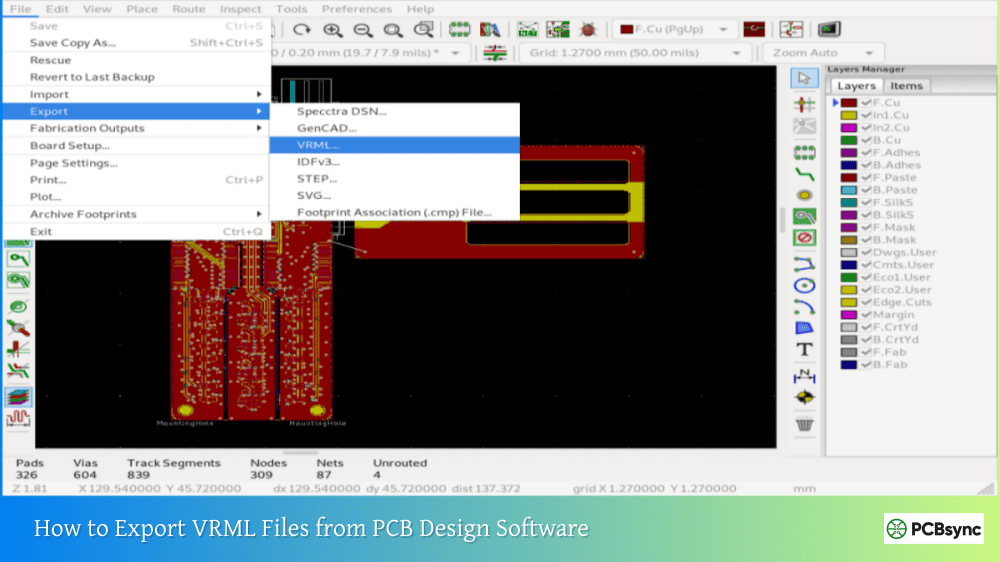
Read more How to convert PCB Files in different Design software:
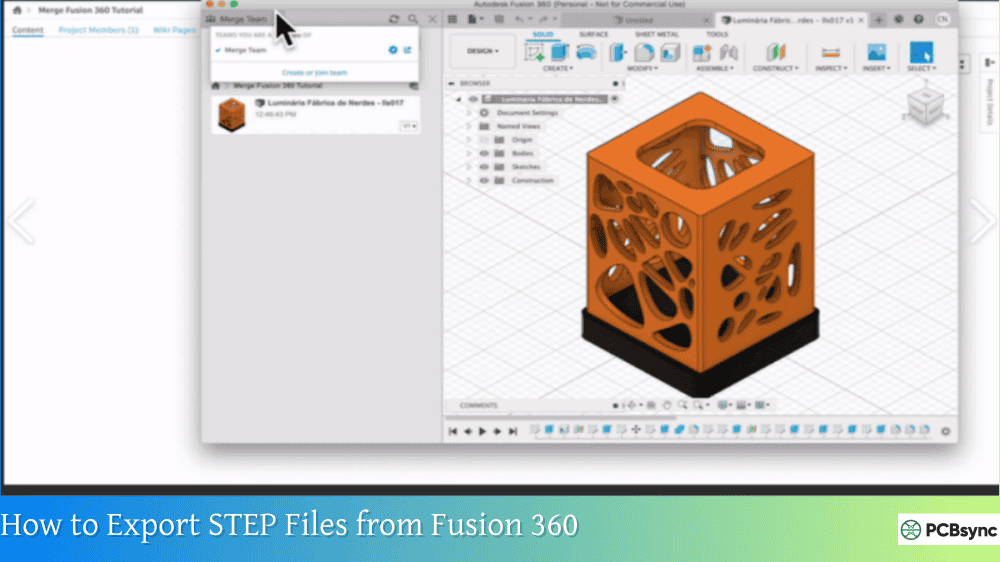
Working with SolidWorks, Creo, Inventor, Fusion 360, or NX
Alternative Export Formats from Altium Designer
STEP isn’t the only 3D export option. Depending on your MCAD software, other formats might work better.
Format
Extension
Best For
STEP AP214
.step, .stp
Universal compatibility (default)
Parasolid
.x_t, .x_b
SolidWorks (smaller files)
VRML
.wrl
Visualization, non-CAD applications
IDF
.emn, .emp
Legacy MCAD exchange
Parasolid tip: For SolidWorks users, Parasolid export often produces smaller files with better import results than STEP. Access via File → Export → PARASOLID.
Useful Resources for Altium STEP Export
Official Altium Documentation
Resource
Description
Link
STEP Export-Import Support
Official documentation
altium.com/documentation (search “STEP”)
Export Options Dialog
Detailed option explanations
altium.com/documentation
MCAD CoDesigner
Bi-directional collaboration
altium.com/documentation/altium-codesigner
3D Component Model Sources
Source
Description
Altium Content Vault
Built-in component library with 3D models
SnapEDA
Free 3D models, Altium format support
Ultra Librarian
Component models from manufacturers
3D ContentCentral
SolidWorks-hosted model library
GrabCAD
Community-contributed CAD models
STEP File Viewers (Free)
Tool
Platform
Notes
FreeCAD
Windows, Mac, Linux
Full CAD capability, open source
eDrawings
Windows, Mac
Free viewer from SolidWorks
Autodesk Viewer
Web-based
No installation required
3D-Tool
Windows
Free viewer with measurement tools
Frequently Asked Questions
Can I export copper traces and silkscreen in the STEP file?
No. Altium Designer’s STEP export includes only 3D body geometry—the board substrate, component bodies, and holes. Copper traces, silkscreen, and solder mask are not included. If you need trace visualization for marketing renders, consider using the 3D PDF export or third-party rendering tools that can process Altium’s native files.
Why is my STEP file so large?
Large STEP files typically result from detailed component models, especially connectors with complex geometry. Solutions include using “Export Selected” for specific components, choosing “Prefer simple bodies” in export options, or excluding pad holes. For initial fit checks, a simplified export is usually sufficient.
How do I export individual component STEP models from my library?
To extract individual 3D models: Create a simple PCB with just that component placed, export the entire board as STEP, then import into an MCAD tool like Fusion 360 where you can select and extract individual component models. Alternatively, if the component uses an embedded STEP model, you can find it in the component’s 3D body properties and access the original file.
Why do some components appear as simple boxes instead of detailed models?
Components display as extruded boxes when they have only simple 3D body definitions rather than STEP model bodies attached. To improve accuracy, assign proper 3D models to your library footprints. You can download STEP models from manufacturer websites, SnapEDA, or Ultra Librarian and link them to your footprints.
Can mechanical changes made in MCAD software be imported back into Altium?
Traditional STEP export is one-way only—changes in MCAD don’t flow back to Altium. For bi-directional collaboration, use Altium MCAD CoDesigner with supported MCAD software, or the IDX (Incremental Design Exchange) format for manual change exchange. Both methods allow mechanical engineers to propose board outline or component placement changes that electrical engineers can accept or reject.
Best Practices for STEP Export Workflow
Establishing consistent practices prevents the common mistakes that derail ECAD-MCAD collaboration.
Before Exporting
Verify all critical components have accurate 3D models assigned
Check that your board outline is properly defined with all cutouts
Confirm the PCB origin is at a logical, documented location
Switch to 3D view (press 3) and visually inspect the assembly
Naming Conventions
Use meaningful filenames that include project name, revision, and date:
ProjectName_Rev1.2_20250116.step
This prevents confusion when multiple STEP file versions exist and makes it easier for mechanical engineers to track which file corresponds to which design revision.
Communication with Mechanical Team
When sending STEP files, include a brief summary noting any limitations, origin location, and which components were included or excluded. This documentation prevents assumptions and reduces troubleshooting time.
Verifying Your STEP Export
Before sending files to your mechanical team, verify the export quality:
Import back into Altium: Place a 3D Body object, set it to “Generic” type, and import your STEP file to visually verify content
Use a free viewer: Open in FreeCAD or eDrawings to check geometry independent of Altium
Check file size: Unexpectedly small files might indicate missing components
Verify component count: Compare exported components against your BOM
Conclusion
Exporting STEP files from Altium Designer bridges the gap between electrical and mechanical design domains. While the process is straightforward—File → Export → STEP 3D—understanding the export options, coordinate system implications, and troubleshooting techniques makes the difference between smooth collaboration and frustrating back-and-forth with your mechanical team.
For simple, one-time handoffs, direct STEP export works perfectly. For complex products with frequent design iterations, consider investing in MCAD CoDesigner for bi-directional synchronization. Either way, maintaining accurate 3D models in your component libraries and establishing clear origin conventions with your mechanical team will save countless hours of rework.
The few minutes spent configuring export settings correctly pays dividends when your PCB drops into the enclosure model and everything fits on the first try.
Inquire: Call 0086-755-23203480, or reach out via the form below/your sales contact to discuss our design, manufacturing, and assembly capabilities.
Quote: Email your PCB files to Sales@pcbsync.com (Preferred for large files) or submit online. We will contact you promptly. Please ensure your email is correct.
Notes: For PCB fabrication, we require PCB design file in Gerber RS-274X format (most preferred), *.PCB/DDB (Protel, inform your program version) format or *.BRD (Eagle) format. For PCB assembly, we require PCB design file in above mentioned format, drilling file and BOM. Click to download BOM template To avoid file missing, please include all files into one folder and compress it into .zip or .rar format.