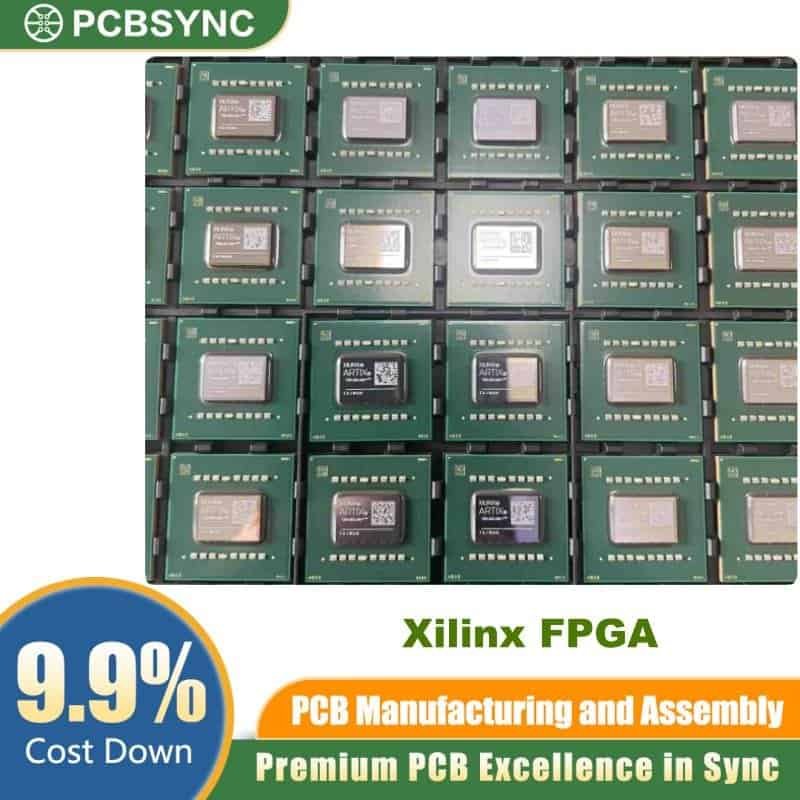
The XC2S200-6FGG786C is a high-performance Field-Programmable Gate Array (FPGA) from Xilinx’s renowned Spartan-II family. Designed to deliver a cost-effective solution for high-volume applications, this device combines the flexibility of programmable logic with the performance typically associated with ASICs. With 200,000 system gates and advanced architectural features, the XC2S200-6FGG786C is engineered to meet the rigorous demands of modern digital systems, offering a versatile platform for telecommunications, consumer electronics, and industrial control designs.
Key Features of the XC2S200-6FGG786C
The Spartan-II family is built on a proven 0.18-micron CMOS process, ensuring reliability and efficiency. The XC2S200-6FGG786C specifically offers a balance of logic density and I/O capability, making it an ideal choice for designers looking to optimize board space and power consumption without sacrificing performance.
-
High Logic Density: Features 200,000 system gates and 5,292 logic cells, providing ample resources for complex logic integration.
-
Advanced Memory: Includes 56 Kbits of dedicated Block RAM and up to 75 Kbits of distributed RAM for efficient data buffering and storage.
-
System Performance: Supports system speeds up to 200 MHz, driven by a -6 speed grade architecture.
-
Flexible Clocking: Equipped with four Digital Delay-Locked Loops (DLLs) for precise clock management and skew elimination.
-
Versatile I/O: Supports multiple I/O standards, including LVTTL, LVCMOS, and PCI, ensuring broad compatibility with peripheral devices.
-
Low Voltage Operation: Operates with a 2.5V core voltage, reducing overall power consumption while maintaining interface compatibility.
Technical Specifications
The following table outlines the core technical specifications of the XC2S200-6FGG786C, highlighting its capacity and operational parameters.
| Specification |
Detail |
| Part Number |
XC2S200-6FGG786C |
| Manufacturer |
Xilinx (AMD) |
| Family |
Spartan-II |
| System Gates |
200,000 |
| Logic Cells |
5,292 |
| Total Block RAM |
56 Kbits |
| CLB Array |
28 x 42 |
| Speed Grade |
-6 |
| Core Voltage |
2.5 V |
| Operating Temperature |
Commercial (0°C to 85°C) |
| Package |
FGG786 (Fine-Pitch Ball Grid Array) |
Architectural Advantages
The XC2S200-6FGG786C leverages the Spartan-II architecture to provide significant advantages in design flexibility. Its Configurable Logic Blocks (CLBs) are interconnected by a powerful routing hierarchy, allowing for fast signal propagation and predictable timing. This architecture supports unlimited reprogrammability, enabling engineers to upgrade designs in the field without hardware replacement—a distinct advantage over traditional mask-programmed ASICs.
Furthermore, the device integrates dedicated carry logic for high-speed arithmetic functions and cascade chains for wide-input functions. These features streamline the implementation of digital signal processing (DSP) tasks and complex state machines, reducing development time and cost.
Optimized for High-Volume Production
Designers choosing the Xilinx FPGA platform benefit from a solution tailored for scalability. The XC2S200-6FGG786C minimizes initial engineering costs and eliminates the long lead times associated with custom silicon. Its availability in the FGG786 package ensures compatibility with modern surface-mount assembly processes, facilitating streamlined manufacturing flows.
Applications
Due to its robust feature set and cost-efficiency, the XC2S200-6FGG786C is deployed across a wide range of industries. Common applications include:
-
Telecommunications: Network switching, protocol bridging, and data packet processing.
-
Consumer Electronics: DVD players, set-top boxes, and digital display controllers.
-
Industrial Automation: Motor control systems, sensor interfacing, and robotics.
-
Automotive: Infotainment systems and dashboard control modules.
Conclusion
The XC2S200-6FGG786C stands out as a reliable and versatile FPGA solution within the Spartan-II lineage. By offering a substantial gate count, flexible memory resources, and high-speed performance at a competitive price point, it empowers engineers to innovate and deliver superior electronic products. Whether for legacy system maintenance or new cost-sensitive designs, this device remains a critical component in the programmable logic landscape.