Inquire: Call 0086-755-23203480, or reach out via the form below/your sales contact to discuss our design, manufacturing, and assembly capabilities.
Quote: Email your PCB files to Sales@pcbsync.com (Preferred for large files) or submit online. We will contact you promptly. Please ensure your email is correct.
Notes: For PCB fabrication, we require PCB design file in Gerber RS-274X format (most preferred), *.PCB/DDB (Protel, inform your program version) format or *.BRD (Eagle) format. For PCB assembly, we require PCB design file in above mentioned format, drilling file and BOM. Click to download BOM template To avoid file missing, please include all files into one folder and compress it into .zip or .rar format.
How to Export Gerber Files from Flux.ai: Complete Manufacturing Guide
When I first started using Flux.ai for PCB design, what impressed me most wasn’t just the AI-powered features—it was how seamlessly the platform handles the transition from design to manufacturing. After years of wrestling with export settings in traditional EDA tools, having a browser-based platform that generates manufacturer-ready Gerber files in just a few clicks feels almost too good to be true.
Flux.ai has quickly become a go-to choice for over 300,000 hardware engineers, from hobbyists to Fortune 500 companies. The platform combines schematic capture, PCB layout, BOM management, and AI-assisted design in one browser-based package. But all those fancy features mean nothing if you can’t get your design into a manufacturer’s hands. That’s where Gerber export comes in.
Understanding Flux.ai as a Modern PCB Design Platform
Before diving into the export process, it helps to understand what makes Flux.ai different from traditional desktop EDA tools. This context explains why the Gerber export workflow is designed the way it is.
Flux.ai launched with a clear mission: make hardware design as accessible as software development. The platform secured $15 million in seed funding and has been continuously evolving, with Flux Copilot representing the industry’s first AI-powered hardware design assistant integrated into a PCB design tool.
One of Flux.ai’s strengths is its direct integration with popular PCB manufacturers. The platform includes pre-configured stackup templates for major fabrication houses:
Manufacturer
Integration Type
Key Benefit
JLCPCB
Pre-configured stackup
Direct compatibility
PCBWay
Pre-configured stackup
Optimized DRC rules
AISLER
DRC files and templates
European manufacturing
Seeed Studio
Full partnership
Free manufacturing campaigns
NextPCB
Template support
Streamlined ordering
OSH Park
Compatible export
Community-favorite service
What Gerber Files Does Flux.ai Export?
When you export manufacturing files from Flux.ai, you receive a complete package ready for any PCB fabricator. The platform generates industry-standard RS-274X Extended Gerber files along with all supporting documentation.
Getting clean manufacturing files starts with proper design preparation. Flux.ai includes several features that help ensure your design is ready for fabrication before you ever hit the export button.
Running Design Rule Checks
Flux.ai’s automated design rule checking validates your layout against manufacturer specifications. Before exporting, always run a DRC to catch potential issues.
Flux.ai simplifies DRC setup by providing pre-configured templates for popular manufacturers. When starting a new project, select the template matching your intended fabricator:
Navigate to the stackup settings in your project. Select from available manufacturer templates (JLCPCB, PCBWay, AISLER, etc.). The DRC rules automatically configure to match that manufacturer’s capabilities.
This approach eliminates the guesswork of setting minimum trace widths, drill sizes, and other parameters. You design to the manufacturer’s actual capabilities from the start.
Verifying Your BOM and Component Availability
One of Flux.ai’s standout features is real-time BOM management with live pricing and availability data. Before exporting for manufacturing, verify that all components are available.
The platform shows pricing and stock information in the top right corner of the interface. Components with availability issues are flagged, allowing you to find alternatives before committing to manufacturing.
Step-by-Step Guide to Export Gerber Files from Flux.ai
Now let’s walk through the actual process of exporting Gerber files from Flux.ai. The workflow is designed to be straightforward, with all manufacturing outputs accessible from a central export menu.
Step 1: Complete Your PCB Layout
Before exporting, ensure your design is complete. This includes all traces routed with no remaining airwires (ratsnest connections), copper pours properly filled, silkscreen elements positioned correctly, and the board outline properly defined.
In Flux.ai, you can verify completion by checking that no DRC errors remain and all schematic connections have been routed in the PCB view.
Step 2: Run Final Design Rule Check
Even if you’ve been running DRC throughout your design process, perform a final check before export. This catches any issues that might have been introduced during final edits.
Access the DRC function from the toolbar and review any warnings or errors. Address all critical errors before proceeding with export.
Step 3: Access the Export Menu
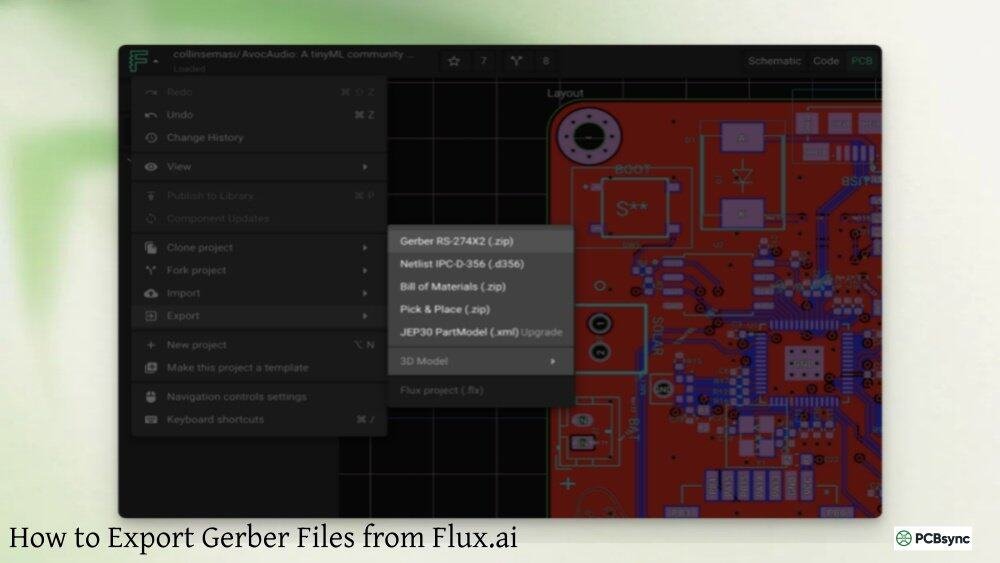
To export your design from Flux.ai, click the Flux logo in the upper left corner of the interface. This opens the main menu with project options. Navigate to the Export option to access all manufacturing file outputs.
Alternatively, you can access export functions from your project page when viewing your design.
Step 4: Select Gerber Export
From the export menu, select “Gerber” or “Gerber Format (RS-274X Extended)” depending on your interface version. Flux.ai will process your design and generate all necessary manufacturing files.
The export includes all copper layers, solder mask layers, silkscreen layers, board outline, and drill files in one package.
Step 5: Download the Manufacturing Package
After processing, Flux.ai provides a downloadable ZIP archive containing all your manufacturing files. Download this package and verify it contains all expected files.
The download typically includes Gerber files for each layer, Excellon drill file, and any additional outputs you’ve selected (BOM, pick and place, etc.).
Step 6: Export Additional Manufacturing Files
Beyond Gerber files, you’ll likely need additional files for assembly. From the same export menu, you can generate:
Bill of Materials (BOM): A complete component list with values, footprints, and reference designators. Flux.ai’s BOM includes real-time pricing data when available.
Pick and Place File: Component centroid data for automated assembly. This file contains X/Y coordinates, rotation, and layer information for each component.
IPC-D-356 Netlist: Test point data for electrical testing during manufacturing.
Understanding Flux.ai Export File Structure
When you download your Gerber package from Flux.ai, understanding the file structure helps when uploading to manufacturers or troubleshooting issues.
Typical Flux.ai Export Contents
Filename Pattern
Layer Type
Description
project_name.GTL
Top Copper
Component side traces and pads
project_name.GBL
Bottom Copper
Solder side traces and pads
project_name.G2
Inner Layer 2
Second copper layer (4+ layer boards)
project_name.G3
Inner Layer 3
Third copper layer (4+ layer boards)
project_name.GTS
Top Solder Mask
Mask openings on component side
project_name.GBS
Bottom Solder Mask
Mask openings on solder side
project_name.GTO
Top Silkscreen
Component labels and markings
project_name.GBO
Bottom Silkscreen
Bottom side markings
project_name.GKO
Board Outline
Physical board dimensions
project_name.DRL
Drill File
Hole locations and sizes
Working with AI Auto-Layout Before Export
Flux.ai’s AI Auto-Layout feature, powered by Flux Copilot, can automatically route your board before export. This is particularly useful for quickly generating manufacturable designs.
Using AI Auto-Layout
With AI Auto-Layout, Copilot handles the repetitive task of routing your board, delivering clean, human-like results. The process works as follows:
Complete your schematic and component placement. Invoke the AI Auto-Layout function. The AI iteratively improves the layout, showing multiple versions. Review and select your preferred version. Proceed with Gerber export.
Each option the AI generates is optimized for manufacturing, so you can be confident the resulting Gerber files will be manufacturable.
Verifying Gerber Files Before Manufacturing
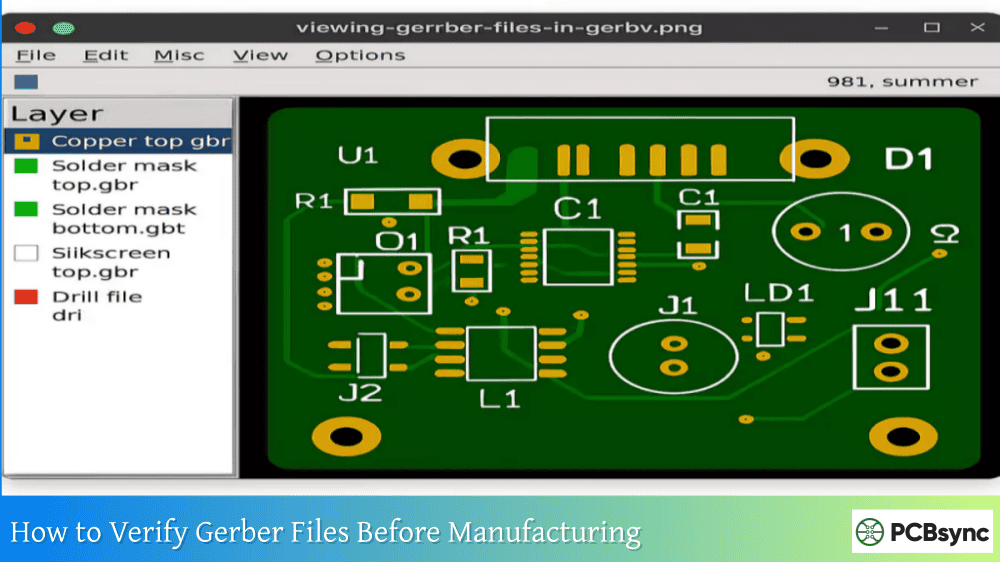
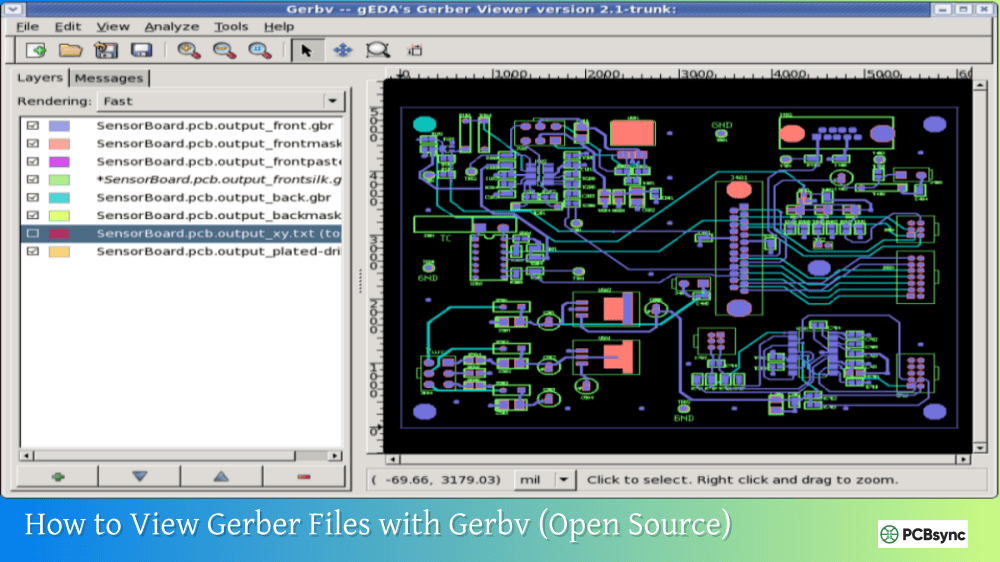
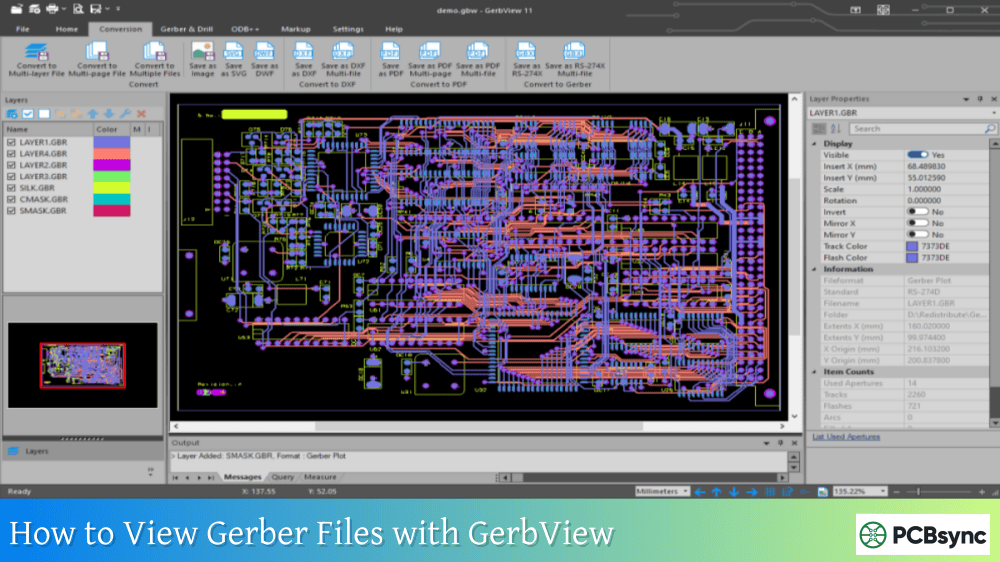
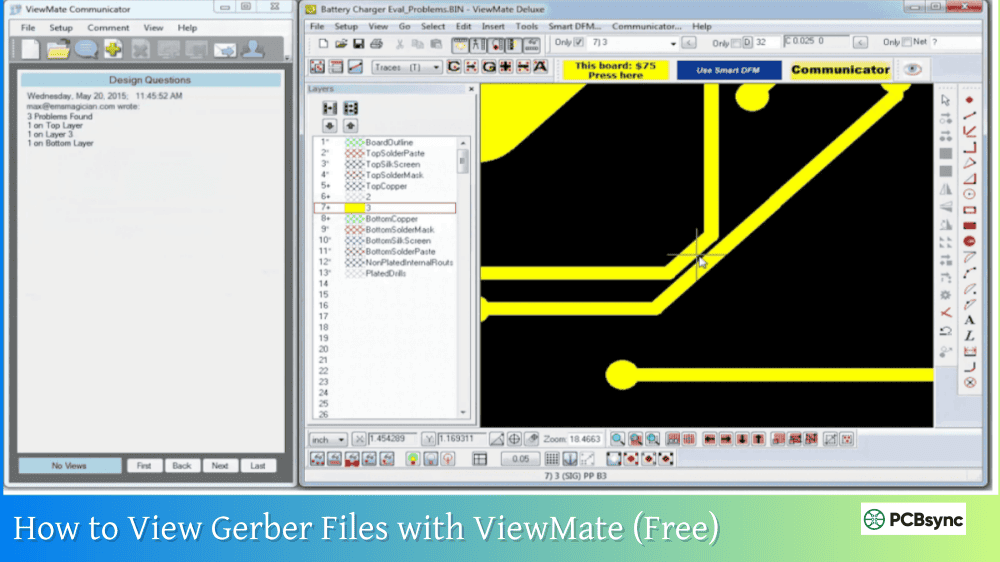
Never send Gerber files to a manufacturer without verification. Flux.ai generates standard RS-274X files that can be viewed in any Gerber viewer.
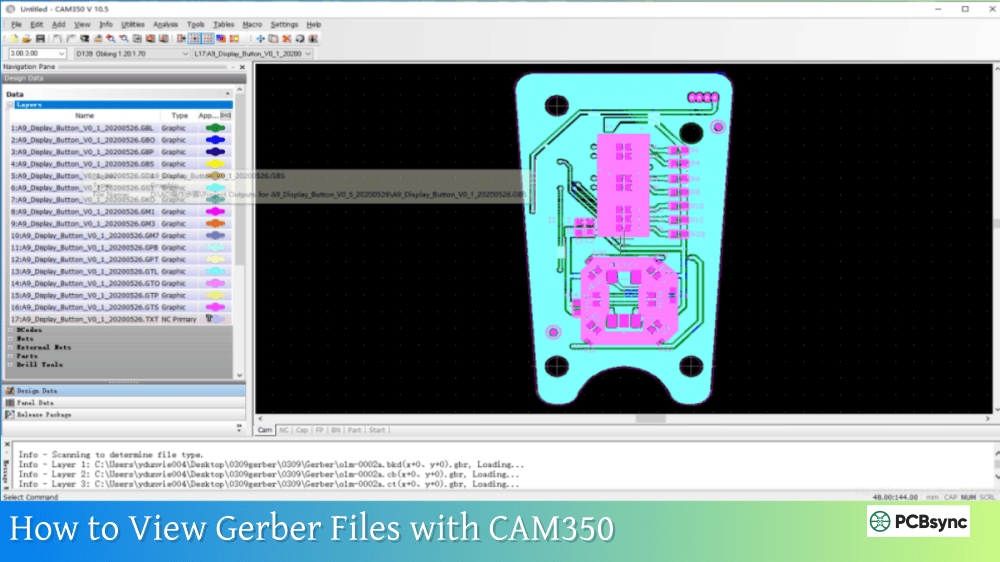
Recommended Gerber Viewers
Viewer
Platform
Cost
Features
Gerbv
Windows, Linux
Free
Open source, reliable
KiCad GerbView
Cross-platform
Free
Part of KiCad suite
Ucamco Reference Viewer
Online
Free
Official Gerber standard
ViewMate
Windows
Free
Industry standard
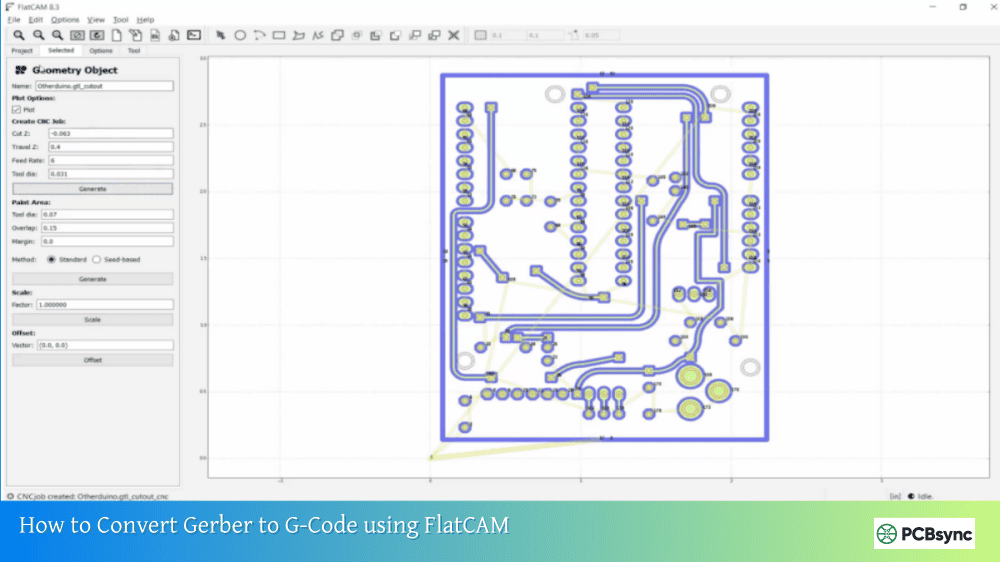
FlatCAM
Cross-platform
Free
CAM preparation capable
CAM350
Windows
Paid
Professional CAM tool
Verification Checklist
Check Item
What to Verify
Layer Count
All copper layers present
Board Outline
Closed shape, correct dimensions
Drill Alignment
Holes centered on pads
Solder Mask
Correct openings on all pads
Silkscreen
Readable, no pad overlap
Copper Pours
Properly filled areas
Minimum Features
Traces and spaces meet fab limits
Text Rendering
Fonts appear as expected
Addressing Text Rendering Issues
Some users have reported that text in Gerber files may render differently than expected on manufactured boards. This occurs because manufacturers parse Gerber text data and may substitute fonts.
To ensure text appears exactly as designed, consider these approaches:
Use simple, standard fonts when possible. Verify critical text in your Gerber viewer. For logos or custom text, some users request that Flux convert text to graphical elements.
Read more How to convert PCB Files in different Design software:
Once you’ve verified your Gerber files, uploading to manufacturers is straightforward. Here’s how to work with popular services:
JLCPCB
Download your Gerber ZIP from Flux.ai. Visit jlcpcb.com and click “Quote Now”. Upload the complete ZIP file. The system automatically identifies each layer. Review the preview and adjust options as needed. Complete your order.
PCBWay
Download your Gerber ZIP from Flux.ai. Visit pcbway.com and start a new quote. Upload your Gerber archive. PCBWay’s system parses the files automatically. Review manufacturability feedback. Proceed with ordering.
Seeed Studio Fusion
Flux.ai has a special partnership with Seeed Studio. Through the LED Remix Campaign and similar programs, Seeed offers free manufacturing for qualifying designs created in Flux.
Export Gerbers from Flux.ai using the one-click export. Upload to Seeed’s Fusion service. For qualifying projects, manufacturing and assembly may be free.
Troubleshooting Common Export Issues
Based on community feedback and forum discussions, here are common issues users encounter when exporting from Flux.ai and their solutions.
Export Error Messages
If you receive an error like “Oops! Flux couldn’t export this project to Gerber,” try these steps:
Check for incomplete routing or floating nets. Verify your board outline is a closed shape. Ensure all components have valid footprints. Try refreshing your browser and attempting the export again. Contact Flux support at mark@flux.ai if the issue persists.
Pick and Place Coordinate Issues
Some users have reported that pick and place exports reference component centers to the origin rather than the board’s bottom-left corner. If your manufacturer expects different referencing, you may need to adjust the coordinates manually in a spreadsheet before submission.
Missing Layers in Export
If layers appear missing from your export, verify they contain actual content in your design. Empty layers may not generate output files. Also confirm you’ve selected all necessary layers in the export dialog.
Flux Copilot for Manufacturing Preparation
Flux Copilot can assist with manufacturing preparation beyond just routing. The AI assistant offers several capabilities relevant to getting your design ready for production:
Copilot Manufacturing Capabilities
Capability
Description
Find Issues
Scans project for design problems
Create Test Plan
Generates verification procedures
Compare Components
Evaluates part alternatives
List Pin Functions
Documents IC connections
Design Analysis
Reviews for best practices
Before exporting, you can ask Copilot to review your design for potential manufacturing issues. This catches problems that might not be flagged by standard DRC but could cause issues in production.
Useful Resources for Flux.ai Users
Here are essential resources for working with Flux.ai and generating manufacturing files:
While Gerber is the primary manufacturing format, Flux.ai also supports exports to other EDA tools. This can be useful if you need to continue work in a different platform:
Note that some users have reported issues with KiCad schematic exports producing broken results in certain cases. Always verify exported files in the destination application.
Frequently Asked Questions
What Gerber format does Flux.ai export?
Flux.ai exports RS-274X Extended Gerber format, which is the current industry standard accepted by virtually all PCB manufacturers worldwide. This format includes embedded aperture definitions, making the files self-contained. The platform also exports Excellon drill files, pick and place data, BOM, and IPC-D-356 netlist files as part of the complete manufacturing package.
Can I use Flux.ai Gerber files with any PCB manufacturer?
Yes, the Gerber files generated by Flux.ai are industry-standard and compatible with essentially any PCB manufacturer globally. The platform includes pre-configured templates for popular services like JLCPCB, PCBWay, AISLER, and Seeed Fusion. Even if your preferred manufacturer isn’t listed, the standard RS-274X Gerber format works universally.
Do I need a paid subscription to export Gerber files from Flux.ai?
Flux.ai offers a two-week free trial when you sign up. After the trial, paid plans start at $15 per month for the Starter tier, $39 per month for Pro, and $49 per month for Teams. Each tier includes monthly AI credits. The ability to export Gerber files and other manufacturing outputs is included in the platform’s core functionality.
Why does my Gerber export show an error message?
If you receive an error when attempting Gerber export, common causes include incomplete routing with unconnected nets, an improperly defined board outline, components with missing or invalid footprints, or browser-related issues. Try running a design rule check to identify problems, ensure your board outline is a closed shape, and refresh your browser before attempting the export again. If issues persist, contact Flux support.
Can I export pick and place files for PCB assembly from Flux.ai?
Yes, Flux.ai provides pick and place file export for automated PCB assembly. These files contain the X/Y coordinates, rotation angles, and layer designation for each component. The export is available from the same menu where you access Gerber export. Note that some manufacturers expect specific coordinate references, so verify the format meets your assembly house’s requirements before submitting.
Conclusion
Exporting Gerber files from Flux.ai is designed to be a straightforward process that gets you from design to manufacturing quickly. The platform’s browser-based approach means you can access the export function from any device, and the pre-configured manufacturer templates help ensure your files are compatible with your chosen fabricator.
The key steps involve completing your design with proper DRC validation, accessing the export menu through the Flux logo, selecting the Gerber output option, and downloading the complete manufacturing package. The platform generates all the files you need—copper layers, solder masks, silkscreen, drill data, BOM, and pick and place—in industry-standard formats.
What sets Flux.ai apart is the integration of AI-powered design assistance with manufacturing preparation. Flux Copilot can help identify potential issues before you export, and the real-time BOM management ensures component availability before you commit to production.
Remember to always verify your exported Gerber files in an independent viewer before sending them for fabrication. This simple verification step catches potential issues before they become expensive manufacturing mistakes. With Flux.ai’s streamlined export process and standard file formats, you can move confidently from browser-based design to manufactured PCBs ready for your next project.
Whether you’re a startup founder prototyping a new product, a professional engineer working on complex multi-layer designs, or a hobbyist bringing personal projects to life, Flux.ai’s accessible platform and reliable Gerber export make the path from idea to manufactured PCB as smooth as possible.
Inquire: Call 0086-755-23203480, or reach out via the form below/your sales contact to discuss our design, manufacturing, and assembly capabilities.
Quote: Email your PCB files to Sales@pcbsync.com (Preferred for large files) or submit online. We will contact you promptly. Please ensure your email is correct.
Notes: For PCB fabrication, we require PCB design file in Gerber RS-274X format (most preferred), *.PCB/DDB (Protel, inform your program version) format or *.BRD (Eagle) format. For PCB assembly, we require PCB design file in above mentioned format, drilling file and BOM. Click to download BOM template To avoid file missing, please include all files into one folder and compress it into .zip or .rar format.