Inquire: Call 0086-755-23203480, or reach out via the form below/your sales contact to discuss our design, manufacturing, and assembly capabilities.
Quote: Email your PCB files to Sales@pcbsync.com (Preferred for large files) or submit online. We will contact you promptly. Please ensure your email is correct.
Notes: For PCB fabrication, we require PCB design file in Gerber RS-274X format (most preferred), *.PCB/DDB (Protel, inform your program version) format or *.BRD (Eagle) format. For PCB assembly, we require PCB design file in above mentioned format, drilling file and BOM. Click to download BOM template To avoid file missing, please include all files into one folder and compress it into .zip or .rar format.
How to Convert SVG to Gerber Files: The Complete Guide for PCB Art and Custom Graphics
If you’ve ever tried adding custom artwork, logos, or complex graphics to a PCB, you know the frustration. Standard PCB design tools weren’t built for artistic work. They handle rectangles and simple shapes just fine, but throw a detailed illustration at them and things get ugly fast.
That’s where SVG to Gerber conversion comes in. SVG (Scalable Vector Graphics) is the go-to format for designers and artists, while Gerber is what PCB manufacturers need. Bridging these two worlds opens up possibilities for PCB art, custom badges, decorative panels, and boards that actually look good.
I’ve spent years working on PCB projects that push beyond basic functionality into the realm of visual design. The #BadgeLife community, artistic PCB projects, and even simple logo placement all depend on getting SVG graphics into Gerber format reliably. This guide covers every method I’ve found that actually works.
Before diving into conversion methods, let’s understand what we’re working with. These two formats serve completely different purposes, and knowing their strengths helps you choose the right conversion approach.
What is an SVG File?
SVG stands for Scalable Vector Graphics. It’s an XML-based format that describes images using mathematical definitions of shapes, paths, and curves. Unlike raster images (PNG, JPG), SVG files scale infinitely without losing quality.
SVG files can contain:
Paths with bezier curves
Basic shapes (rectangles, circles, ellipses)
Text elements
Groups and layers
Gradients and patterns
Filters and effects
For PCB work, we primarily care about paths, shapes, and layers. The other features (gradients, filters, effects) don’t translate to physical manufacturing and need to be handled carefully during conversion.
What Makes Gerber Files Different
Gerber is the PCB industry’s standard manufacturing format. Each Gerber file represents exactly one layer of a circuit board and contains instructions for a photoplotter machine. The format deals in apertures (shapes) and coordinates, nothing more.
Gerber files work in absolute terms. There’s no “scale to fit” or resolution independence. Every coordinate is a specific location on the board, and every aperture is a defined shape that gets placed at those coordinates.
There are several scenarios where SVG to Gerber conversion becomes necessary or highly beneficial.
PCB Art and Badge Design
The #BadgeLife community has driven enormous innovation in artistic PCBs. Conference badges, art pieces, and decorative boards all require getting complex graphics onto copper, silkscreen, and solder mask layers. SVG provides the creative freedom; Gerber makes it manufacturable.
Custom Logos and Branding
Adding company logos to PCBs is common, but most logos exist as vector graphics (AI, EPS, SVG) rather than PCB-native formats. Converting SVG to Gerber lets you place precisely scaled logos on silkscreen or copper layers.
Complex Board Outlines
Standard PCB tools handle rectangular boards easily, but organic shapes, cutouts, and decorative outlines are much easier to design in vector software like Inkscape or Illustrator. SVG conversion brings those custom shapes into your PCB project.
Front Panel Design
Using PCBs as front panels for electronic projects is increasingly popular. SVG lets you design the panel graphics in familiar tools, then convert to Gerber for manufacturing with exposed copper lettering, mask openings, and detailed silkscreen.
SVG to Gerber Conversion Methods
There are several approaches to converting SVG files to Gerber format, ranging from direct conversion tools to workflows through PCB design software.
Method 1: Direct SVG to Gerber with Gerbolyze
Gerbolyze is the most powerful tool for converting SVG directly into Gerber files. Developed specifically for PCB art, it handles the full SVG specification and produces clean, manufacturable output.
What makes Gerbolyze special:
Processes SVG vector data losslessly (no rasterization step)
Supports complex paths with self-intersections and holes
Handles patterns, dashes, and transformations
Works with existing Gerber files from any PCB tool
Includes bitmap vectorization for embedded images
Installation:
pip install gerbolyze
Basic workflow:
Generate Gerber files from your PCB design tool
Create SVG template from those Gerbers
Edit the template in Inkscape, adding your artwork
Gerbolyze also provides an online interface at gerboweb for testing without installation.
Method 2: SVG to KiCad Footprint with svg2mod
The svg2mod tool converts Inkscape SVG drawings to KiCad footprint modules. This approach works well when you want to create reusable graphic elements that can be placed in multiple PCB projects.
svg2shenzhen is an Inkscape extension that exports drawings directly to KiCad PCB or footprint format. It’s particularly popular for badge design and full PCB artwork.
Installation:
Download from GitHub releases
Extract to Inkscape’s user extensions folder
Restart Inkscape
Access via Extensions menu
Workflow:
Use Extensions → Svg2Shenzhen → Prepare Document to set up layers
Draw your design on the appropriate layers
Use Extensions → Svg2Shenzhen → Export to export
Layer handling in svg2shenzhen:
Layer Name
Purpose
Notes
F.Cu
Front copper
Black areas become copper
B.Cu
Back copper
Black areas become copper
F.SilkS
Front silkscreen
Black areas print white
B.SilkS
Back silkscreen
Black areas print white
F.Mask
Front mask openings
Black areas remove mask
B.Mask
Back mask openings
Black areas remove mask
Edge.Cuts
Board outline
Path outlines only, no fill
Drill
Drill holes
Circles become drill holes
Special layer options:
F.Mask-invert: Draws mask where you want it (opposite of standard)
F.Mask-auto: Automatically generates mask from copper
Method 4: KiCad Native SVG Import
KiCad 6 and later include native SVG import capability, making it easier to bring vector graphics directly into your PCB layout.
For board outlines:
In PCB Editor, go to File → Import → Graphics
Select your SVG file
Choose Edge.Cuts as the target layer
Adjust scale and position
For artwork as footprints:
Open the Image Converter tool
Load your image (PNG works better than SVG here)
Configure output settings
Export to clipboard or footprint library
Place the footprint in your PCB
The native import handles simple SVGs well but may struggle with complex paths. For detailed artwork, the dedicated conversion tools often produce better results.
Method 5: SVG to DXF to Gerber Workflow
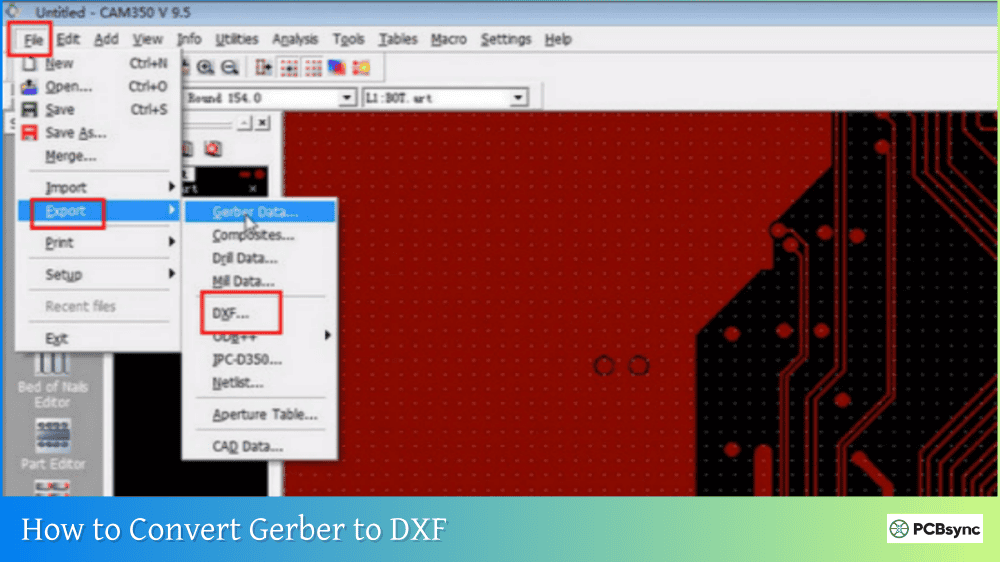
When direct SVG conversion isn’t working, converting through DXF format can help. This two-step process leverages the strong DXF support in most PCB tools.
Step 1: SVG to DXF in Inkscape
Open your SVG in Inkscape
Select all objects
Convert text to paths (Path → Object to Path)
Save As → DXF format
Choose appropriate DXF options (R14 for compatibility)
Step 2: DXF to Gerber Use your PCB software’s DXF import:
KiCad: File → Import → Graphics (select DXF)
Altium: File → Import → DXF
Eagle: Import DXF as package or board element
Then generate Gerber files normally from your PCB tool.
Method 6: Cenon for Direct Conversion
Cenon is a free vector graphics application (Mac/Linux) that can open SVG files and export directly to Gerber format. It’s one of the few tools offering true direct conversion.
Workflow:
Open SVG file in Cenon
Verify geometry imported correctly
Export as Gerber (File → Export → Gerber)
Cenon works well for simple geometries but doesn’t handle bezier curves. If your SVG contains curves, flatten them to line segments first in Inkscape.
Preparing SVG Files for Successful Conversion
The quality of your conversion depends heavily on how well the SVG is prepared. Follow these guidelines to avoid common problems.
Convert All Text to Paths
Gerber files don’t understand fonts. Any text in your SVG must be converted to paths before conversion.
In Inkscape:
Select text objects
Path → Object to Path
Verify the conversion looks correct
Flatten Complex Effects
Remove or rasterize any SVG features that don’t translate to manufacturing:
Gradients → Convert to solid colors or dithered patterns
Filters → Rasterize affected elements
Transparency → Flatten to opaque
Patterns → Expand to individual shapes
Use Proper Layer Structure
Name your layers according to the target PCB layers. Most conversion tools expect specific naming conventions:
Purpose
Common Layer Names
Top copper
F.Cu, Top, Copper_Top
Bottom copper
B.Cu, Bottom, Copper_Bottom
Top silkscreen
F.SilkS, TopSilk, Silk_Top
Board outline
Edge.Cuts, Outline, Border
Drill holes
Drill, Holes
Read more How to convert PCB Files in different Design software:
Troubleshooting Common SVG to Gerber Conversion Issues
Problem: Curves Appear Jagged
Cause: Insufficient line segment approximation
Solution: Increase precision settings in your conversion tool. In gerbolyze, this is automatic. In svg2mod, use the –precision flag with higher values.
Problem: Holes in Shapes Don’t Convert
Cause: Path winding direction issues or grouped objects
Solution:
Ungroup all objects before conversion
Use Path → Break Apart in Inkscape to separate compound paths
Verify inner and outer paths have opposite winding directions
Problem: Layer Mapping is Wrong
Cause: Layer names don’t match expected conventions
Solution: Rename Inkscape layers to match the tool’s expected names. Remember that Inkscape layer names and IDs are different. Use Object Properties (right-click) to set the actual ID.
Problem: Scale is Incorrect
Cause: Document units or DPI settings mismatch
Solution:
Set document units to mm in Inkscape
Use –factor flag in svg2mod to adjust scale
Verify dimensions against known references after conversion
Problem: Text Doesn’t Appear
Cause: Text wasn’t converted to paths
Solution: Select all text and use Path → Object to Path before exporting. Verify by trying to edit the text afterward; it should no longer be editable.
Frequently Asked Questions About SVG to Gerber Conversion
Can I Convert Any SVG File to Gerber Format?
Most SVG files can be converted, but results vary based on complexity. Simple shapes, paths, and solid fills convert reliably. SVG features like gradients, filters, masks, and embedded raster images require preprocessing. Gradients need to be converted to solid colors or dithered patterns. Filters and effects should be rasterized. The cleaner your SVG (paths and solid shapes only), the better your Gerber output will be.
What is the Best Free SVG to Gerber Converter?
Gerbolyze is the most capable free option, handling the full SVG specification and producing professional-quality output. For users already working in KiCad, svg2shenzhen provides an integrated Inkscape workflow that’s very beginner-friendly. If you only need simple conversions, Cenon offers straightforward SVG-to-Gerber export. Each tool has strengths: gerbolyze for complex artwork, svg2shenzhen for badge design, and svg2mod for creating reusable KiCad footprints.
How Do I Add SVG Artwork to an Existing PCB Design?
The recommended approach is using gerbolyze’s template system. First, export Gerbers from your PCB design tool. Then use gerbolyze to create an SVG template that shows your existing board. Add your artwork in Inkscape, positioning it relative to the board features. Finally, use gerbolyze to merge the artwork back into the Gerbers. This preserves your functional design while adding artistic elements. Alternative methods include importing SVG directly in KiCad 6+ or creating footprints with svg2mod.
Why Does My Converted Gerber Look Different from the SVG?
Several factors cause visual differences. Bezier curves get approximated with line segments, which may appear slightly different at high zoom. Colors don’t exist in Gerber format, so everything becomes dark (copper/ink present) or clear (no material). Transparency flattens to opaque. Fine details below your manufacturer’s minimum feature size may not reproduce accurately. Always verify converted Gerbers in a dedicated viewer and adjust your SVG if needed.
Do I Need to Create Drill Files Separately When Converting SVG?
Yes, in most cases. SVG files don’t inherently contain drill information in a format PCB manufacturers understand. If your design includes drill holes, you need to either create a separate Excellon drill file or use a tool like svg2shenzhen that can interpret circles on a “Drill” layer as hole definitions. For complex PCBs with plated vias and multiple hole sizes, it’s usually better to design the functional elements (including drills) in proper PCB software and only use SVG conversion for the artistic layers.
Best Practices for SVG to Gerber Conversion
After working on numerous PCB art projects, here are the practices that consistently produce good results:
Start with clean SVG files. Remove unnecessary elements, flatten groups where possible, and convert all text to paths. The simpler your input, the cleaner your output.
Use dedicated layers from the beginning. Don’t try to separate elements after the fact. Create your artwork with PCB layers in mind: copper, silkscreen, mask, and outline on separate layers with proper naming.
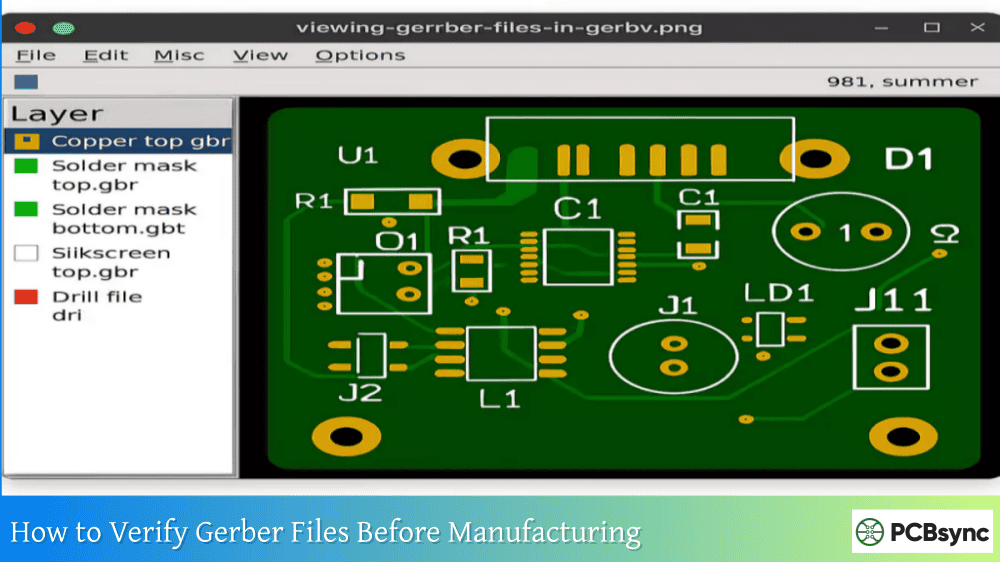
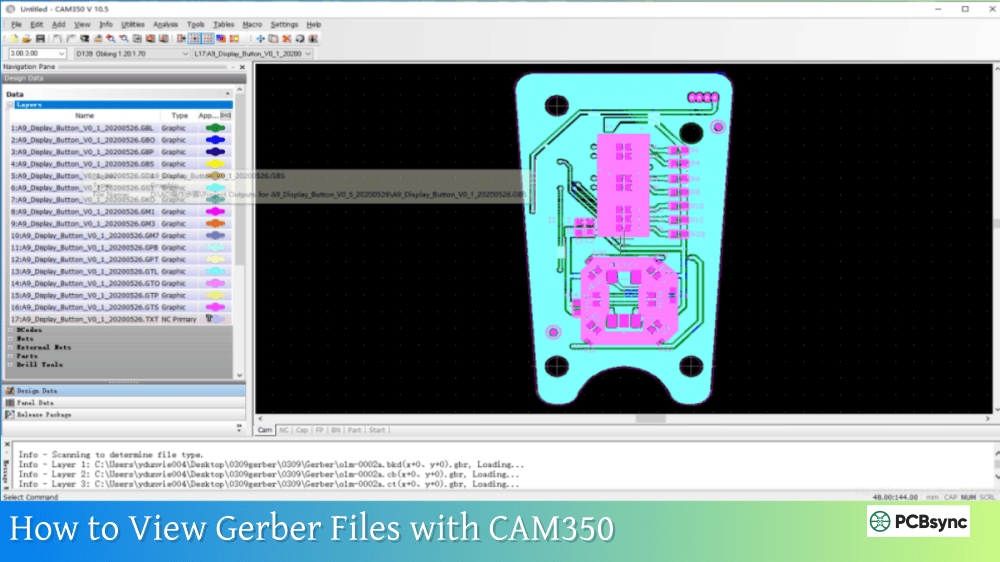
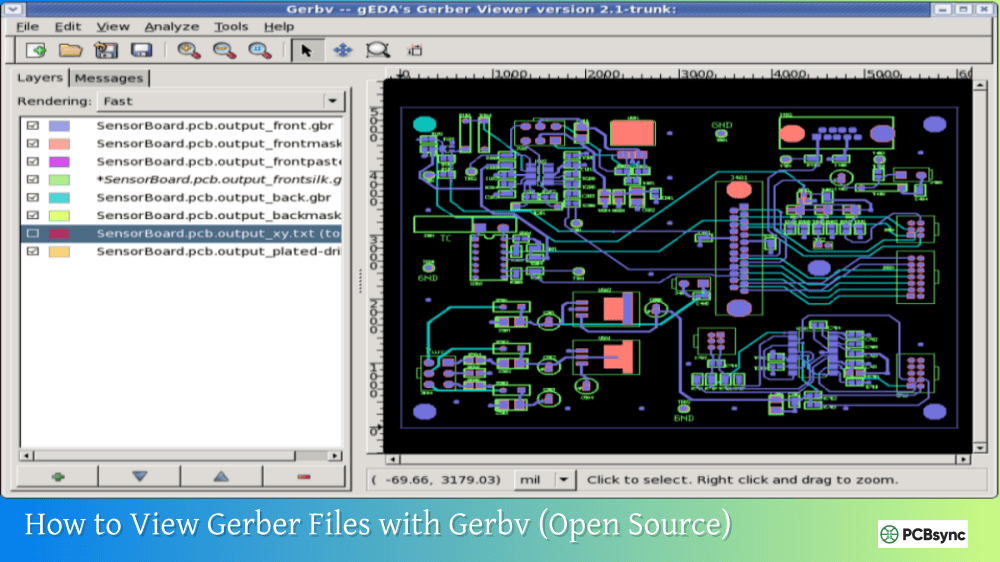
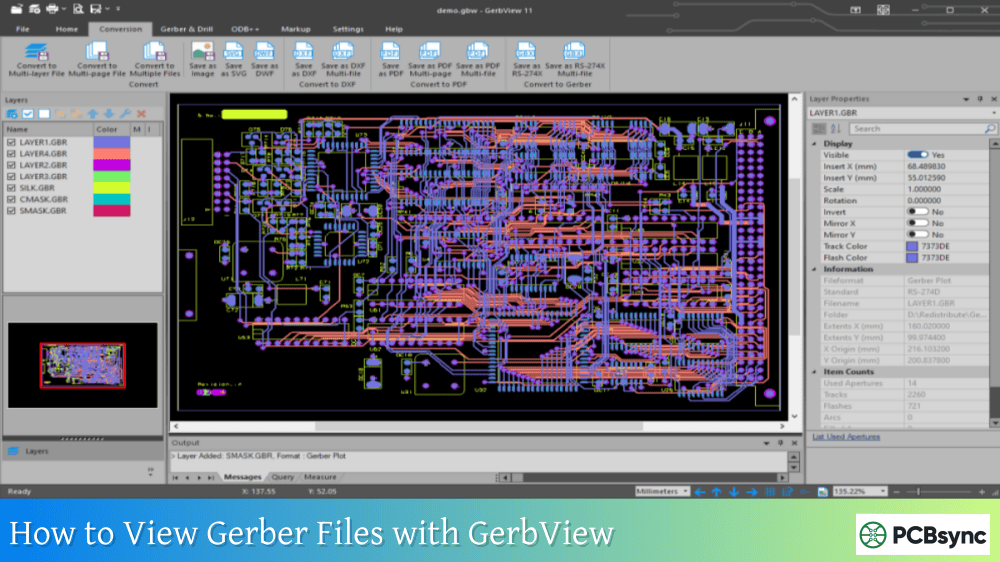
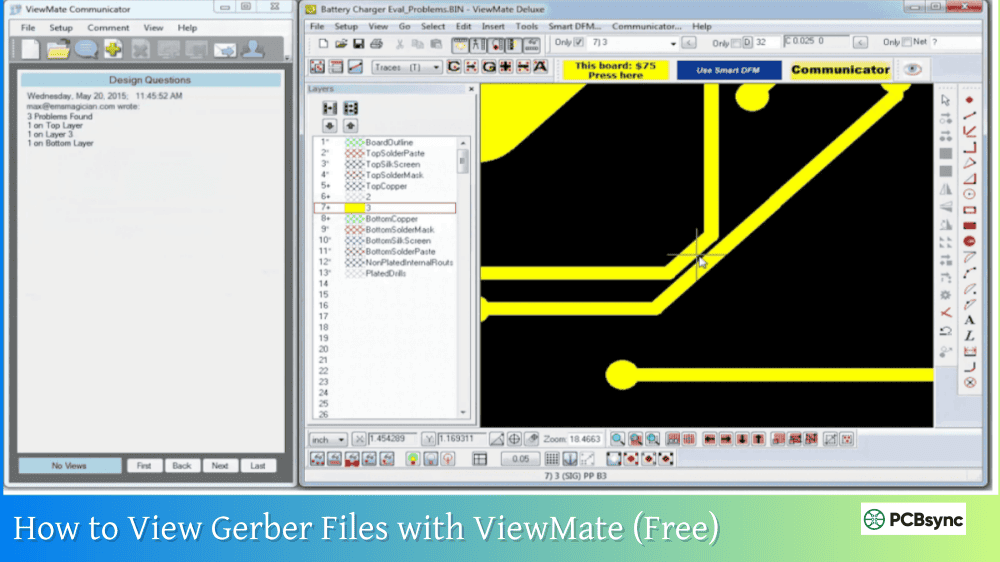
Verify at every step. Check your SVG in Inkscape before conversion. Check the converted output in a Gerber viewer. Compare against your original design. Catching problems early saves time and money.
Understand your manufacturer’s capabilities. Minimum trace width, silkscreen resolution, and solder mask registration vary between fabs. Design your artwork within these constraints.
Keep original files. Save your layered SVG files and intermediate conversions. When something needs adjustment, you’ll want to modify the source rather than starting over.
Test with a small order first. Before committing to a large production run, order a few prototype boards to verify the artwork reproduces as expected. Colors, registration, and fine details often look different on physical boards than on screen.
Conclusion
Converting SVG to Gerber files bridges the gap between artistic design tools and PCB manufacturing. Whether you’re creating conference badges, adding logos to products, or designing full-on PCB art, the techniques in this guide give you the tools to make it happen.
For most users, I recommend starting with gerbolyze for its comprehensive SVG support and professional output quality. If you’re working exclusively in KiCad, svg2shenzhen provides a streamlined workflow directly from Inkscape. Either way, the key is preparing your SVG files properly: clean paths, appropriate layers, and no unsupported features.
The PCB art community continues to push what’s possible with these techniques. With the right tools and preparation, your circuit boards can be functional and beautiful.
Inquire: Call 0086-755-23203480, or reach out via the form below/your sales contact to discuss our design, manufacturing, and assembly capabilities.
Quote: Email your PCB files to Sales@pcbsync.com (Preferred for large files) or submit online. We will contact you promptly. Please ensure your email is correct.
Notes: For PCB fabrication, we require PCB design file in Gerber RS-274X format (most preferred), *.PCB/DDB (Protel, inform your program version) format or *.BRD (Eagle) format. For PCB assembly, we require PCB design file in above mentioned format, drilling file and BOM. Click to download BOM template To avoid file missing, please include all files into one folder and compress it into .zip or .rar format.