Inquire: Call 0086-755-23203480, or reach out via the form below/your sales contact to discuss our design, manufacturing, and assembly capabilities.
Quote: Email your PCB files to Sales@pcbsync.com (Preferred for large files) or submit online. We will contact you promptly. Please ensure your email is correct.
Notes: For PCB fabrication, we require PCB design file in Gerber RS-274X format (most preferred), *.PCB/DDB (Protel, inform your program version) format or *.BRD (Eagle) format. For PCB assembly, we require PCB design file in above mentioned format, drilling file and BOM. Click to download BOM template To avoid file missing, please include all files into one folder and compress it into .zip or .rar format.
Lost your original PCB design files? It happens more often than any of us would like to admit. Hard drive failures, departed engineers who took their files, or legacy products from acquired companies where nobody knows where the CAD data went. If all you have left are Gerber or ODB++ manufacturing files, you’re not completely out of luck.
Reverse engineering Gerber and ODB++ files back into editable PCB design files is possible, though it comes with significant limitations. The process won’t give you back exactly what you started with, but it can produce a working PCB layout that you can modify, update, and use as the basis for future revisions.
This guide walks through the complete process of converting Gerber and ODB++ files back to PCB design files, covering the tools, techniques, and realistic expectations for what you’ll get at the end.
Understanding PCB Reverse Engineering from Manufacturing Files
Before diving into the how-to, it’s worth understanding what “reverse engineering” actually means in this context and why it’s fundamentally different from simply converting between file formats.
What is PCB Reverse Engineering?
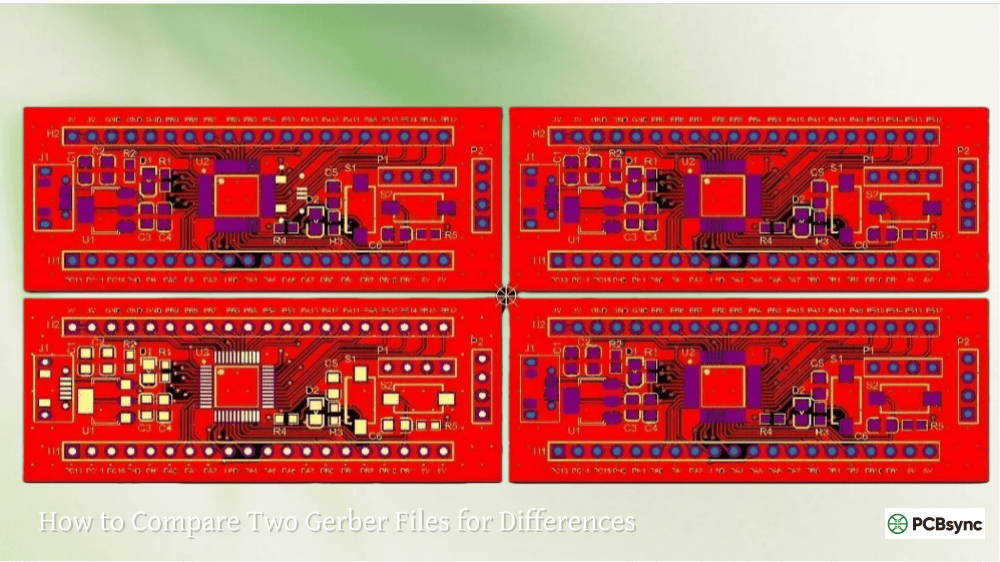
PCB reverse engineering from Gerber or ODB++ files means reconstructing an editable PCB layout from manufacturing output files. Gerber files contain only graphical layer data, essentially images of each PCB layer. They were designed to tell fabrication equipment where to put copper, solder mask, and silkscreen, not to store design intent or component relationships.
When you reverse engineer these files, you’re working backward from the manufacturing endpoint to recreate something resembling the original design source. The process extracts electrical connectivity (the netlist) by analyzing how copper features connect across layers through drill holes.
Why Gerber and ODB++ Reverse Engineering is Challenging
The core challenge is information loss. When a PCB design becomes Gerber files, significant data disappears:
Lost in Gerber files:
Component definitions (footprints become disconnected primitives)
Net names (electrical connections become anonymous)
Design rules and constraints
Schematic linkage
Layer stackup specifications
Via definitions (become simple drill holes)
Better preserved in ODB++:
Layer relationships and stackup
Some component information
Net connectivity (in most cases)
Drill data integration
ODB++ reverse engineering is generally more successful because the format retains more intelligent data than Gerber. However, neither format preserves the full design database that existed in the original EDA tool.
When to Use PCB Reverse Engineering
Understanding when reverse engineering makes sense helps set appropriate expectations.
Common Scenarios for Gerber to PCB Conversion
Scenario
Description
Success Rate
Lost design files
Original CAD data corrupted or missing
High for layout, manual work for components
Legacy product support
Need to modify boards from discontinued products
Moderate to high
Vendor transition
Switching EDA tools without native file access
High with proper tools
Emergency repairs
Quick modifications when source unavailable
Good for simple changes
Second-sourcing
Creating backup capability from manufacturing data
High for exact reproduction
When Not to Reverse Engineer
Reverse engineering isn’t always the best approach:
If you have the original schematic and BOM, redesigning from scratch may be faster than cleaning up reverse-engineered output
Complex multilayer boards with blind/buried vias require significant manual work after conversion
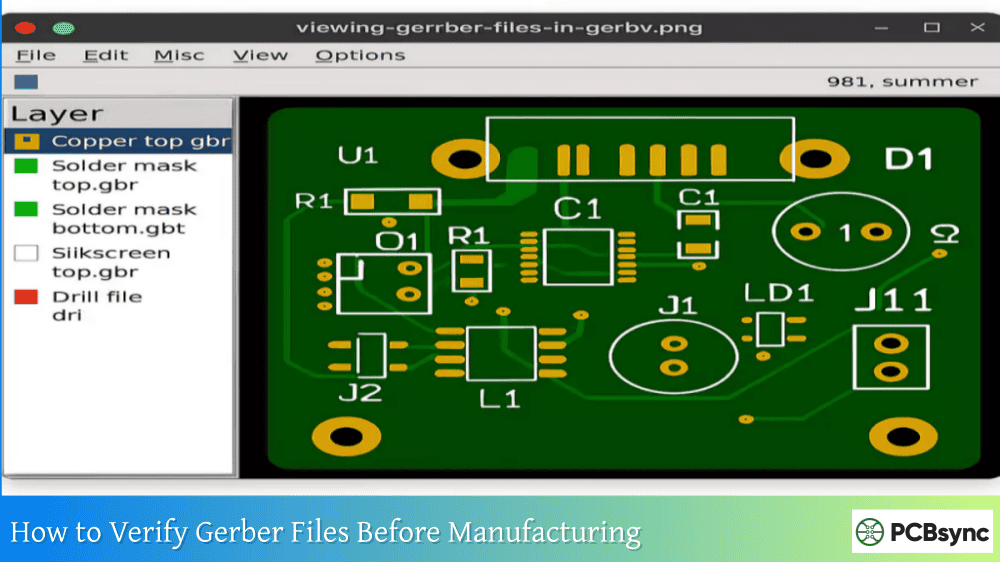
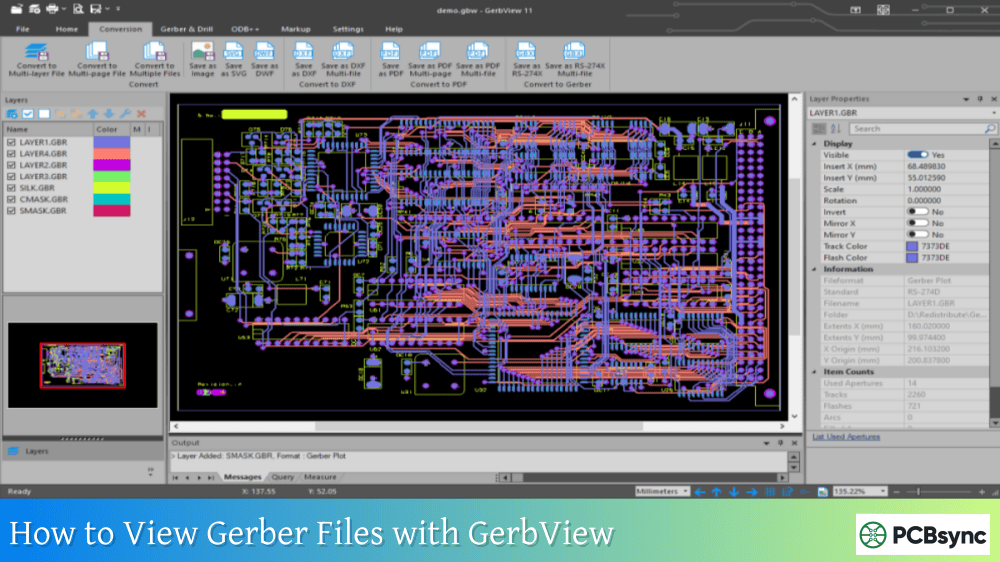
If you only need to view or verify files, use a Gerber viewer instead
For competitor analysis, be aware of intellectual property legal considerations
Software Tools for Gerber/ODB++ to PCB Conversion
Several professional tools support reverse engineering of manufacturing files. The quality of results varies significantly based on the tool and source file quality.
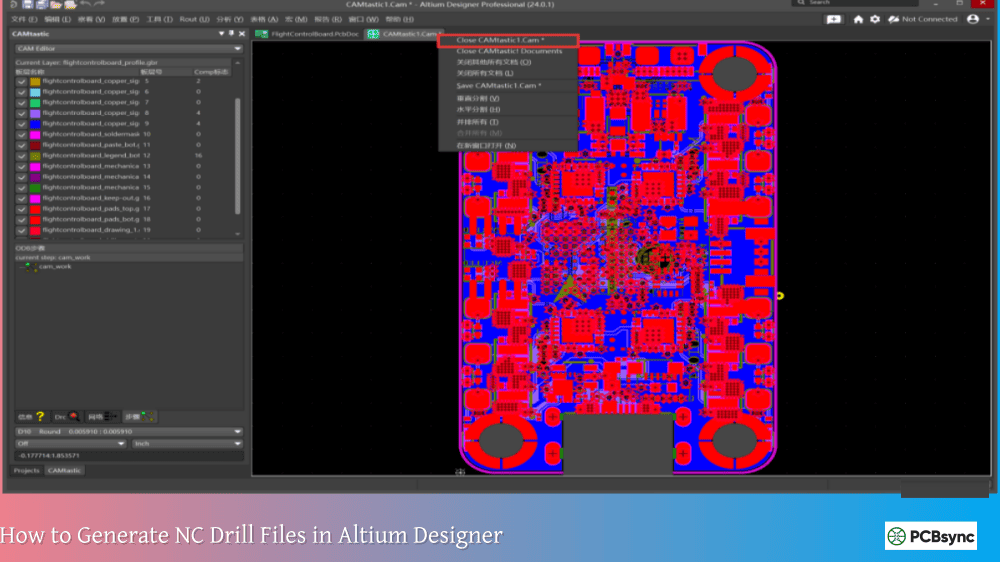
Altium Designer CAMtastic
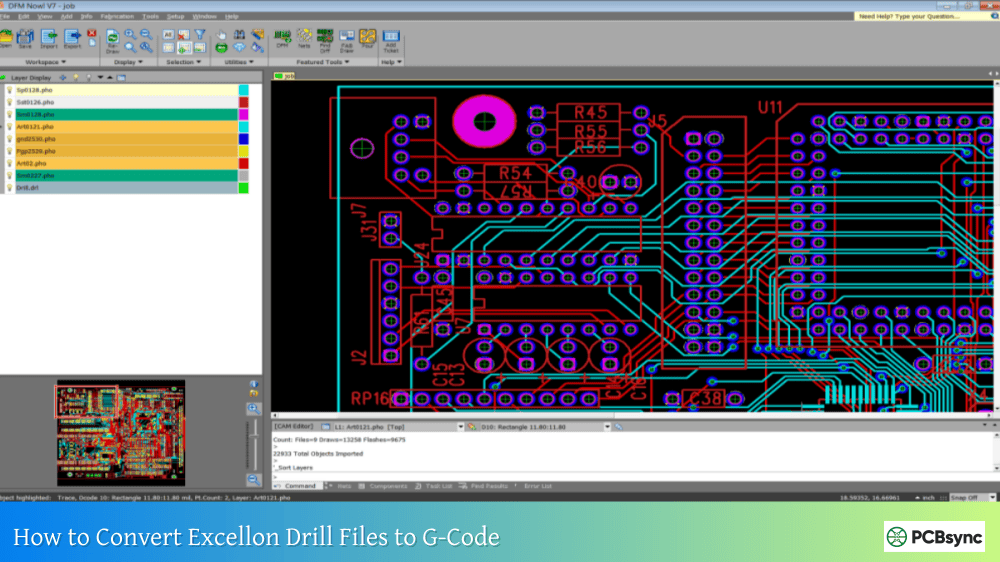
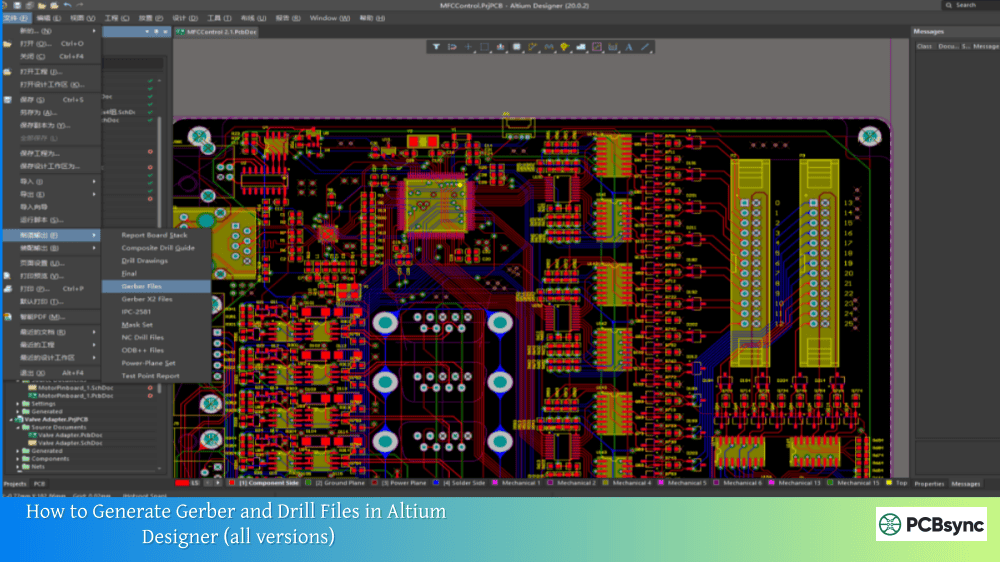
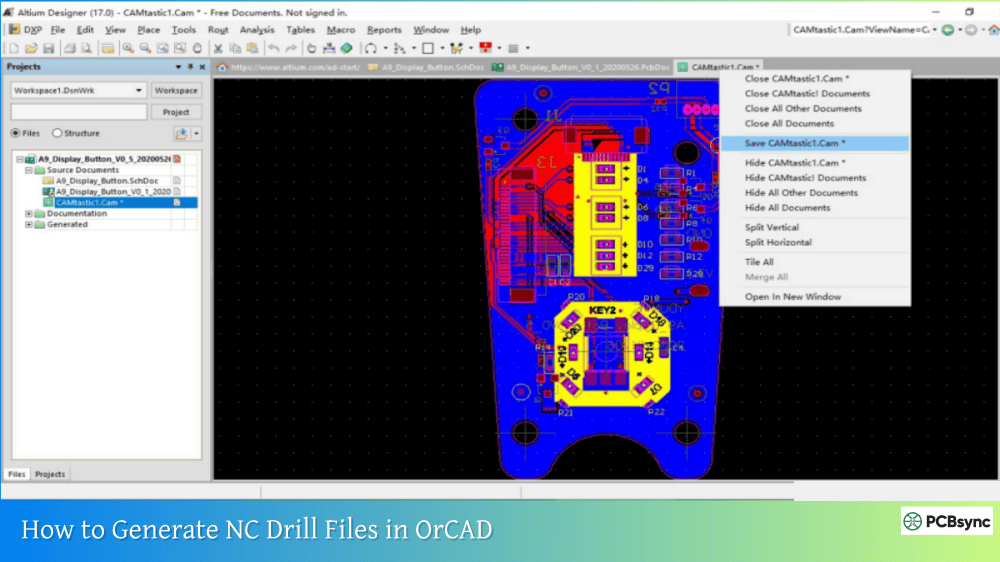
Altium’s built-in CAMtastic module is probably the most commonly used reverse engineering tool for individual engineers. It’s included with Altium Designer licenses and provides a complete workflow from Gerber import to PCB export.
Requires manual layer stack configuration for complex boards
Net names are auto-generated unless IPC netlist is available
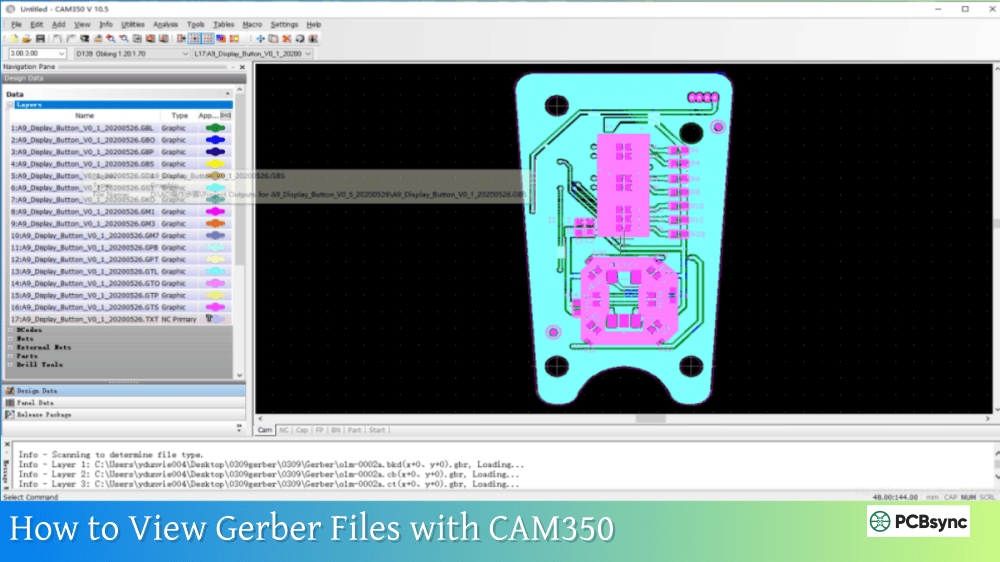
DownStream CAM350
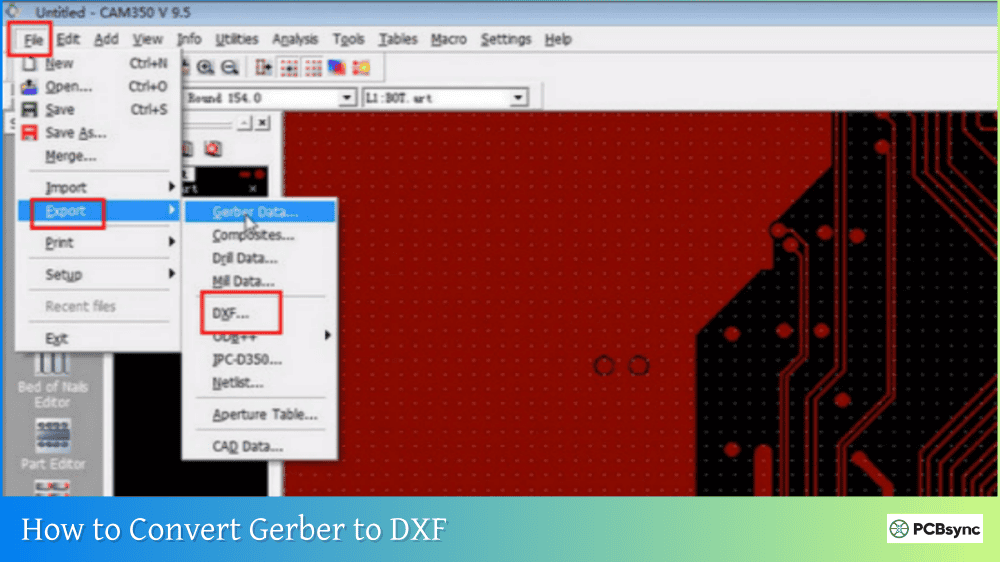
CAM350 is the industry standard for professional CAM operations and includes comprehensive reverse engineering capabilities in its higher-tier configurations.
Capabilities:
Full reverse engineering module available
Intelligent component recognition
Netlist extraction and verification
Export to multiple CAD formats
Limitations:
Expensive commercial software
Reverse engineering module is an add-on to base license
Learning curve for full capability utilization
FAB 3000
Numerical Innovations’ FAB 3000 handles ODB++ and Gerber import with export capabilities to editable formats.
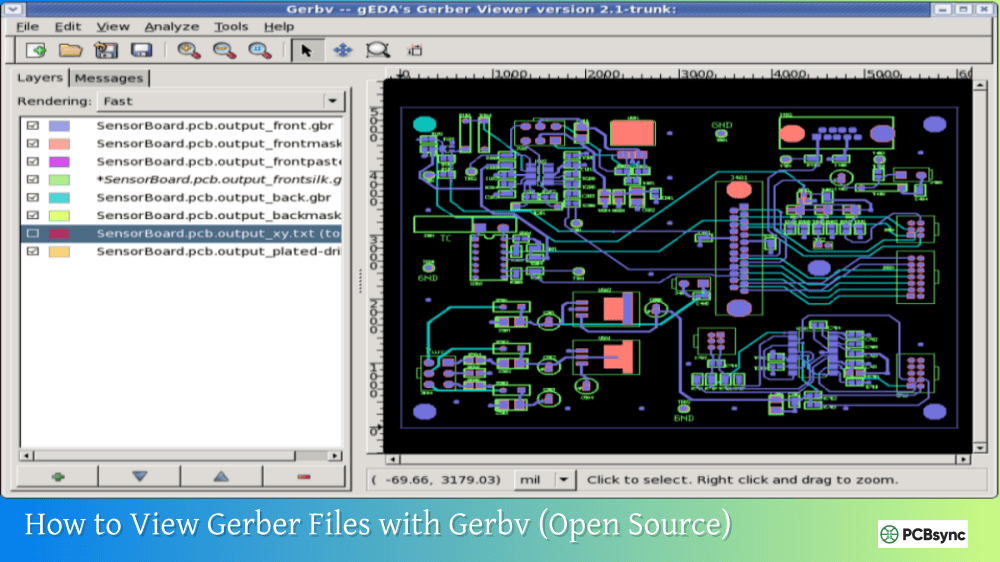
KiCad’s Gerber viewer can import Gerber files, and with some manual work, you can extract basic layer information. However, it lacks dedicated reverse engineering features.
Capabilities:
View and import Gerber files
Manual trace-over possible
Free and open source
Limitations:
No automated netlist extraction
No direct Gerber-to-PCB conversion
Requires significant manual effort
Software Comparison for PCB Reverse Engineering
Software
Gerber Import
ODB++ Import
Netlist Extract
PCB Export
Cost
Altium CAMtastic
Yes
Yes
Yes
Altium only
Included with Altium
CAM350
Yes
Yes
Yes
Multiple formats
High (commercial)
FAB 3000
Yes
Yes
Limited
Multiple formats
Moderate (subscription)
KiCad
View only
No
No
Manual only
Free
WISE VisualCAM
Yes
Yes
Yes
Multiple formats
Commercial
Step-by-Step Gerber to PCB Conversion Using Altium Designer
Here’s the detailed process for reverse engineering Gerber files using Altium Designer’s CAMtastic, which is the most accessible option for many engineers.
Bill of materials (helps identify components later)
The more files you have, the better your results. The NC Drill file is absolutely critical. Without drill data, you cannot extract a netlist because there’s no way to determine layer-to-layer connections.
Step 2: Create a New CAM Document
In Altium Designer:
File → New → CAM Document
This opens the CAMtastic environment
Step 3: Import Gerber Files
File → Import → Gerber
Navigate to your Gerber file folder
Select all Gerber files
Click Open
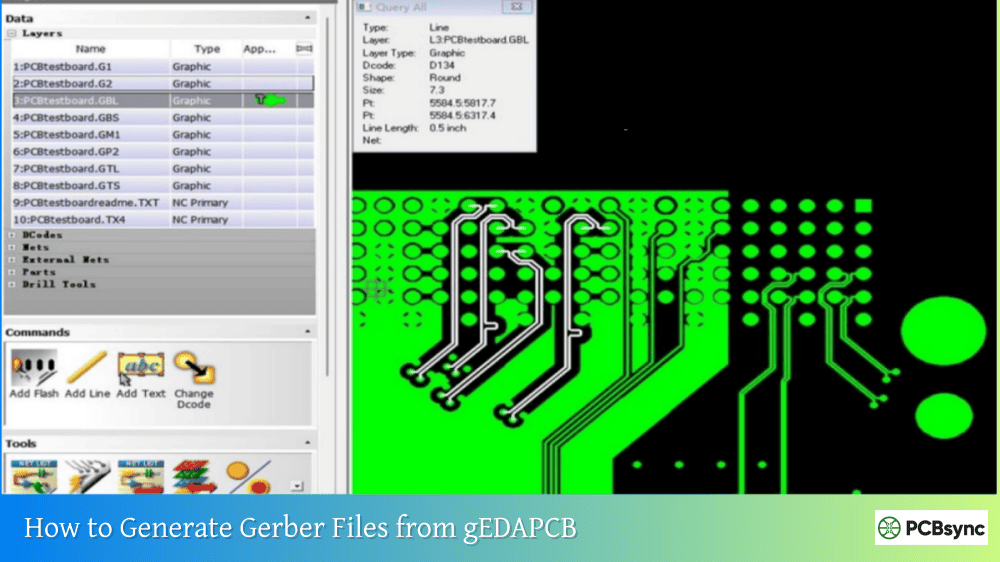
CAMtastic attempts to automatically assign layer types based on file extensions. Review these assignments carefully in the Layers Table (Tables → Layers).
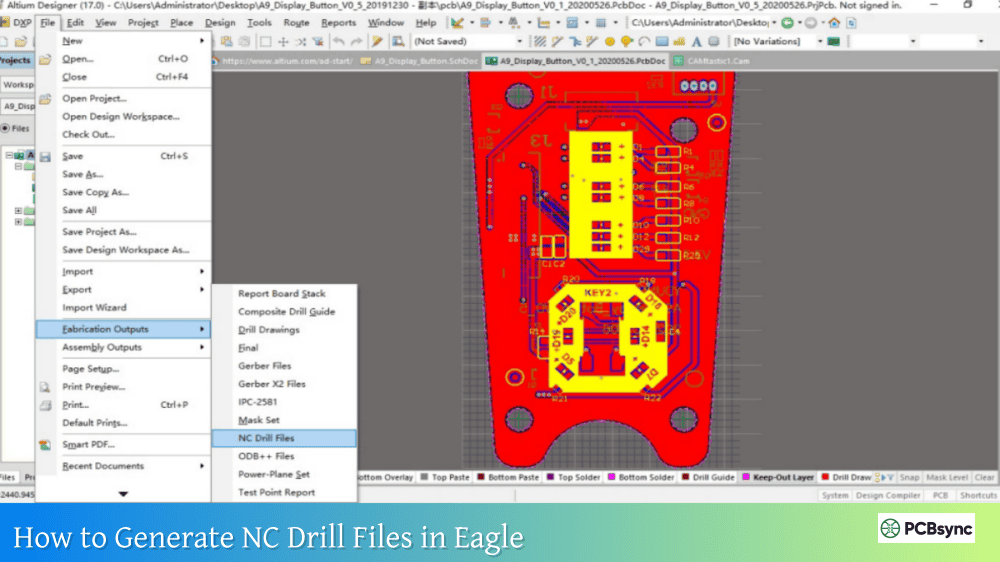
Step 4: Import NC Drill Files
File → Import → Drill
Select your drill file(s)
Verify drill format settings (units, coordinates)
This step is critical. If you skip it or if the drill file is missing, you cannot extract a netlist later.
Step 5: Import IPC Netlist (If Available)
If you have an IPC-D-356 netlist file:
File → Import → Netlist
Select the IPC file
This allows you to restore original net names and differentiate between vias and component pads.
Step 6: Configure Layer Types
Open the Layers Table (Tables → Layers) and verify each layer is correctly assigned:
File Type
Layer Assignment
Top copper (.gtl)
Top
Bottom copper (.gbl)
Bottom
Inner copper
Internal
Internal plane
Neg Plane or Pos Plane
Solder mask
Mask Top/Bottom
Silkscreen
Silk Top/Bottom
Board outline
Border
Drill file
Drill Top or specific drill span
Incorrect layer assignments will cause netlist extraction to fail or produce incorrect connectivity.
Step 7: Define Layer Order and Stackup
Tables → Layers Order
Set the physical order of all signal layers
Top layer is always Physical Order 1
Number subsequent layers according to actual stackup
For boards with blind and buried vias, you must also define Layer Sets:
Tables → Layer Sets
Create drill pairs for each via span
Associate the correct drill files with each span
Step 8: Extract the Netlist
Once layers are properly configured:
Tools → Netlist → Extract
Wait for extraction to complete
Review the extracted nets in the CAMtastic panel
The tool traces copper connectivity across layers using drill locations to determine layer-to-layer connections. Each connected copper network becomes a net.
Step 9: Rename Nets (If IPC Netlist Available)
If you imported an IPC netlist:
Tools → Netlist → Rename Nets
The extracted nets are renamed to match original names
Without the IPC netlist, nets receive auto-generated names like Net1, Net2, etc.
Step 10: Verify and Compare
Tools → Netlist → Compare
Check for discrepancies between extracted and imported netlists
Investigate and resolve any differences
Step 11: Export to PCB
File → Export → Export to PCB
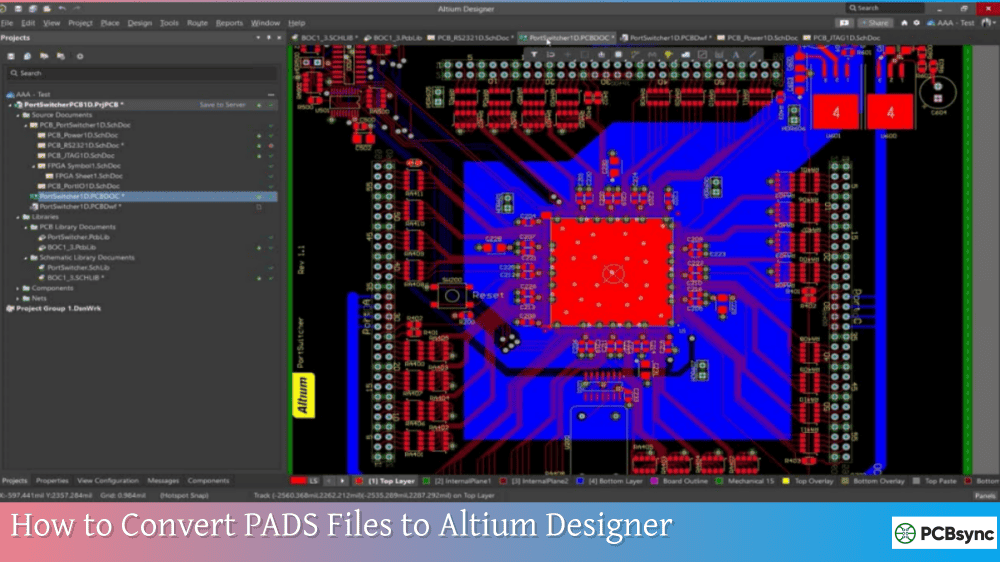
A new PCB document is created in Altium Designer
The exported PCB contains all copper geometry, drill holes, and extracted net connectivity. However, significant cleanup is still required.
Post-Conversion Cleanup and Limitations
The exported PCB file is not a finished design. Several issues require manual attention.
Components Become Primitives
Gerber files don’t contain component definitions. After conversion:
Footprints are broken into individual pads and traces
Component designators become plain text
No component-to-schematic linkage exists
To rebuild components:
Group related pads, traces, and silkscreen
Copy the group to a PCB library
Create a proper footprint
Replace the primitives with the new footprint in the PCB
This process is time-consuming for boards with many components.
Layer Pairs Must Be Recreated
Blind and buried via drill pairs are not automatically created from CAMtastic Layer Sets. You must manually define these in the Layer Stack Manager after export.
Split Planes Need Attention
Internal plane splits may not convert correctly. Each split region needs a closed polyline boundary. You may need to manually assign nets to plane regions.
Board Outline Verification
The board outline requires a closed polyline on a Border-type layer. If the outline isn’t properly closed, the board shape may be incorrect after export.
Read more How to convert PCB Files in different Design software:
If reverse engineering is too complex or time-consuming, several PCB service bureaus specialize in this work:
CADX Services (cadxservices.com)
Ex Dynamics (ex-dynamics.com)
Various PCB design service providers
Best Practices for Successful PCB Reverse Engineering
Based on years of experience with this process, these practices improve results:
Verify file completeness first. Before starting, open all Gerbers in a viewer and confirm every layer is present. Missing files mean incomplete results.
Get the drill file. Without NC Drill data, netlist extraction is impossible. If you don’t have it, you cannot reverse engineer connectivity.
Document the layer stackup. If you have any fabrication documentation, use it to correctly configure layer order. Wrong stackup configuration causes incorrect netlist extraction.
Start with ODB++ if available. ODB++ produces better results than Gerber with less manual configuration.
Import IPC netlist when possible. This preserves meaningful net names and improves via/pad differentiation.
Plan for manual cleanup. Budget time for post-conversion work, especially for component footprint recreation.
Verify critical nets. After conversion, manually trace power, ground, and critical signal nets to confirm correct connectivity.
Keep the original files. Don’t discard Gerber/ODB++ after conversion. You may need to reference them during cleanup.
Frequently Asked Questions About Gerber to PCB Conversion
Can I Convert Gerber Files to a Schematic?
No. Gerber files contain no component information, only copper geometry. You cannot automatically generate a schematic from Gerber files. If you need a schematic, you must either find the original or manually create one by tracing connections on the board and identifying components from the BOM or physical inspection.
Why Does the Export to PCB Option Stay Grayed Out?
The Export to PCB command requires a successfully extracted netlist. If it’s grayed out, check that:
You imported NC Drill files
Layer types are correctly assigned
Layer order is properly configured
You ran Tools → Netlist → Extract
Without netlist data, export is not possible.
Can I Reverse Engineer Gerber Files in KiCad?
KiCad does not have built-in Gerber-to-PCB reverse engineering. You can view Gerber files in KiCad’s Gerber viewer, but converting them to an editable KiCad PCB requires manual recreation or using another tool (like Altium) to convert first, then importing via an intermediate format.
How Accurate is the Converted PCB Compared to the Original?
The copper geometry and connectivity should be highly accurate if the process is done correctly. However, you lose:
Component definitions (footprints become primitives)
Original net names (unless IPC netlist was imported)
Design rules and constraints
Schematic linkage
Layer pair definitions
The board will function identically to the original, but the design database is fundamentally different.
Is It Legal to Reverse Engineer PCB Files?
Reverse engineering your own lost designs is generally fine. However, reverse engineering competitors’ products may raise intellectual property concerns depending on jurisdiction and purpose. If you’re uncertain, consult with legal counsel before proceeding with reverse engineering of third-party designs.
Conclusion
Converting Gerber or ODB++ files back to editable PCB design files is achievable with the right tools and patience. Altium Designer’s CAMtastic provides a capable workflow for most reverse engineering needs, while professional tools like CAM350 offer additional capabilities for complex projects.
The key to success is understanding what the process can and cannot do. You’ll get an accurate representation of the copper geometry and electrical connectivity. You won’t get back the exact original design with all its component definitions, design rules, and schematic linkage. Plan for manual cleanup work, especially for rebuilding component footprints.
For boards where the original CAD files are truly lost, reverse engineering offers a practical path forward. The converted design can be modified, updated, and used as the basis for future product revisions. It’s not perfect, but it’s far better than starting from scratch when manufacturing files are all you have left.
Whether you’re supporting legacy products, recovering from data loss, or transitioning between EDA platforms, PCB reverse engineering from Gerber and ODB++ files is a valuable capability that can save significant time and effort when the original design sources are unavailable.
Inquire: Call 0086-755-23203480, or reach out via the form below/your sales contact to discuss our design, manufacturing, and assembly capabilities.
Quote: Email your PCB files to Sales@pcbsync.com (Preferred for large files) or submit online. We will contact you promptly. Please ensure your email is correct.
Notes: For PCB fabrication, we require PCB design file in Gerber RS-274X format (most preferred), *.PCB/DDB (Protel, inform your program version) format or *.BRD (Eagle) format. For PCB assembly, we require PCB design file in above mentioned format, drilling file and BOM. Click to download BOM template To avoid file missing, please include all files into one folder and compress it into .zip or .rar format.