Inquire: Call 0086-755-23203480, or reach out via the form below/your sales contact to discuss our design, manufacturing, and assembly capabilities.
Quote: Email your PCB files to Sales@pcbsync.com (Preferred for large files) or submit online. We will contact you promptly. Please ensure your email is correct.
Notes: For PCB fabrication, we require PCB design file in Gerber RS-274X format (most preferred), *.PCB/DDB (Protel, inform your program version) format or *.BRD (Eagle) format. For PCB assembly, we require PCB design file in above mentioned format, drilling file and BOM. Click to download BOM template To avoid file missing, please include all files into one folder and compress it into .zip or .rar format.
If you’ve been in PCB manufacturing long enough, you’ve probably received that email from a fabricator asking for ODB++ instead of your standard Gerber package. More manufacturers are moving toward this intelligent data format because it streamlines their workflow and reduces errors. The challenge? Your design tool outputs Gerber, but your fab shop wants ODB++. This guide walks through everything you need to know about how to convert Gerber to ODB++, from understanding why this conversion matters to step-by-step processes using professional CAM tools.
Gerber files have served the PCB industry well for over 40 years, but they come with fundamental limitations. A Gerber file contains only graphical data—X-Y coordinates and aperture shapes. There’s no layer stackup definition, no drill information embedded, and no electrical connectivity data. This means fabricators must manually interpret your intent, increasing the risk of errors.
ODB++ addresses these limitations by packaging everything into a single, intelligent database structure. When a manufacturer requests ODB++, they’re looking for a complete data package that eliminates guesswork and accelerates their CAM process.
Converting Gerber to ODB++ isn’t a simple format translation. Gerber files lack the intelligence that ODB++ requires. When you convert, you’re not just changing file formats—you’re enriching the data with information that didn’t exist in the original Gerber package.
The conversion process essentially reconstructs the design intent from the individual Gerber files, adding the structural and relational data that ODB++ requires.
Methods to Convert Gerber to ODB++
Several professional CAM tools can perform Gerber to ODB++ conversion. The process requires defining layer types, establishing the stackup, and optionally extracting or importing netlist data.
Method 1: Using FAB 3000 (Recommended)
FAB 3000 by Numerical Innovations is one of the most capable tools for Gerber to ODB++ conversion. It handles the complete workflow from import through intelligent ODB++ export.
Step-by-Step Process:
Step 1: Import Gerber and Drill Files
Launch FAB 3000
Go to File → Import → AutoLoad
Select the folder containing your Gerber and drill files
FAB 3000 will auto-detect file types
Verify layer type assignments are correct
Step 2: Define Layer Types
Each layer must be assigned a type for ODB++ to understand its function:
If outline layer exists, assign it as “Outline” type
If missing, go to Tools → Border → Create Border
Use automatic detection or draw manually
Step 4: Extract Netlist (Optional but Recommended)
Adding netlist data makes the ODB++ intelligent:
Go to Tools → Nets → Netlist Extraction
FAB 3000 traces connectivity across layers
Verify extracted nets appear correctly
If you have an IPC-D-356 netlist, import it for named nets
Step 5: Generate Components (Optional)
For assembly data inclusion:
If you have a centroid (XY) file, import it
Or use Tools → Components → Generate from Netlist
Review component outlines and positions
Step 6: Export to ODB++
Go to File → Export → ODB++
Configure export settings:
Check “Optimize for Third-party software” if needed
Verify layer stackup order
Include/exclude optional data as required
Click Export and specify output location
Method 2: Using CAM350
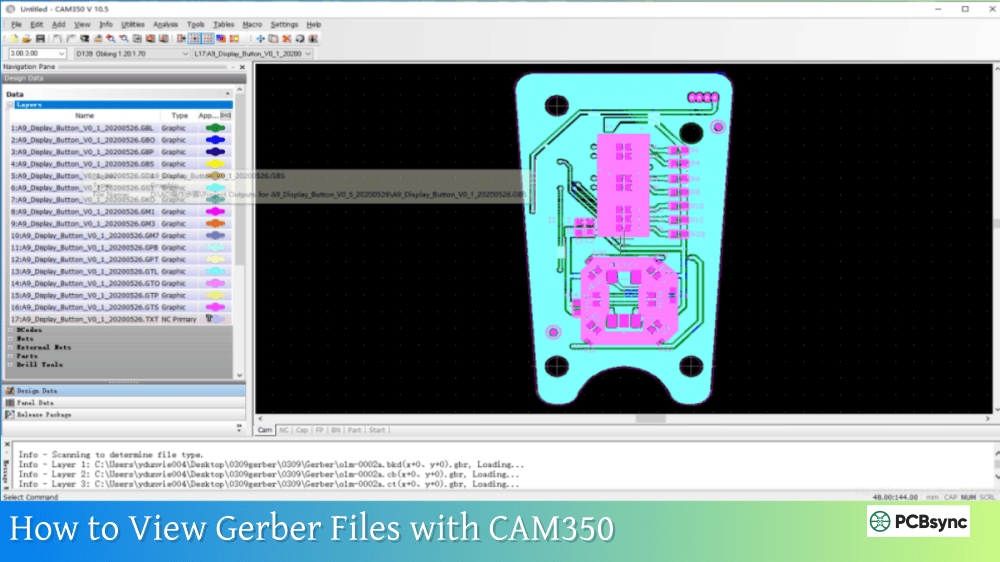
CAM350 by DownStream Technologies is another professional-grade option for Gerber to ODB++ conversion.
Step-by-Step Process:
Create new CAM document
Import Gerber files via File → Import → AutoImport
Import drill files via File → Import → Drill Data
Assign layer types in the Layers Table
Define layer stackup order
Configure drill layer sets for blind/buried vias
Extract netlist via Tools → Netlist → Extract
Export via File → Export → ODB++
CAM350 ODB++ Export Options:
Option
Description
Include Netlist
Embed extracted net data
Include Components
Add component placement data
Step Name
Define step name for ODB++ structure
Units
Set output units (inch/mm)
Compression
Create compressed .tgz archive
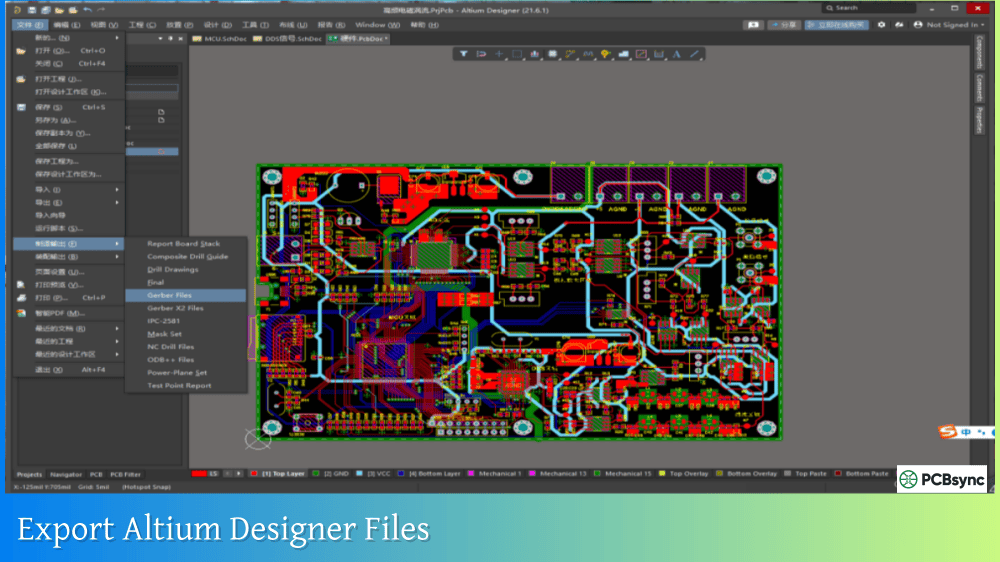
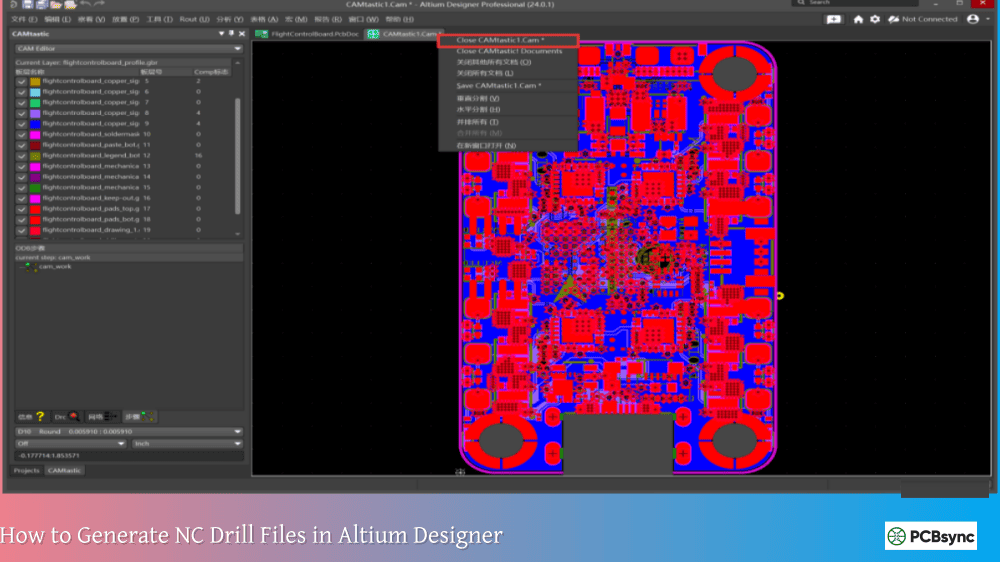
Method 3: Using Altium CAMtastic
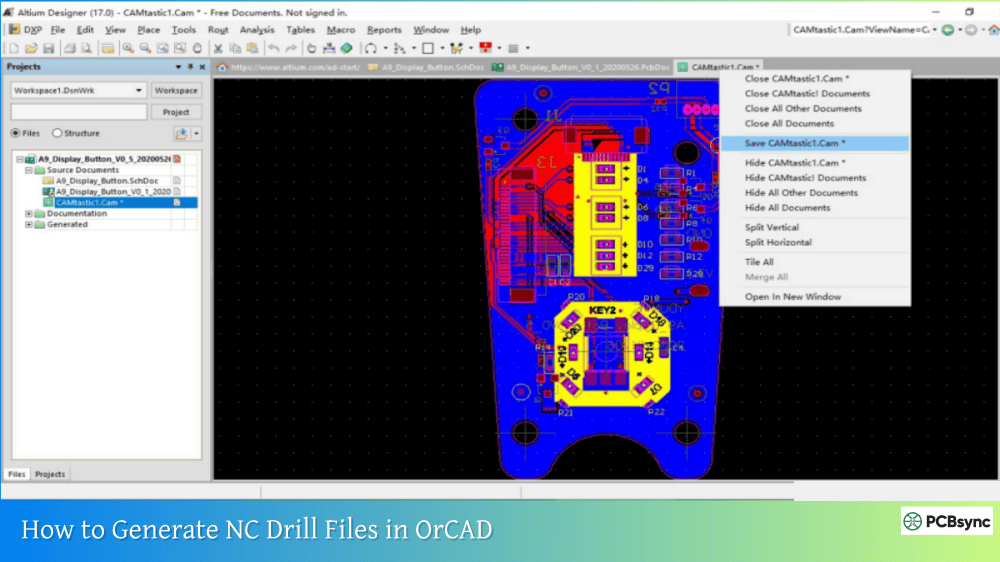
If you have Altium Designer, the integrated CAMtastic module can perform the conversion.
Step-by-Step Process:
Create new CAM document (File → New → CAM Document)
Import Gerber files (File → Import → Gerber)
Import drill files (File → Import → Drill)
Import IPC netlist if available
Assign layer types via Tables → Layer Type Detection
Define layer order via Tables → Layers Order
Configure drill pairs via Tables → Layers Sets
Extract netlist via Tools → Netlist → Extract
Export ODB++ via File → Export → ODB++
Method 4: Using Ucamco Reference Gerber Viewer
Ucamco (the Gerber format owner) offers tools that can work with Gerber X2/X3 files. While not a direct converter, properly attributed Gerber X2 files contain much of the intelligent data that ODB++ requires, making conversion more straightforward with compatible tools.
Configuring Layer Stackup for ODB++
The layer stackup is critical for ODB++ validity. This defines the physical arrangement of layers in the manufactured board.
Typical 4-Layer Stackup Example
Physical Order
Layer Name
Type
1
Top
Signal
2
Ground
Plane
3
Power
Plane
4
Bottom
Signal
Typical 6-Layer Stackup Example
Physical Order
Layer Name
Type
1
Top
Signal
2
Ground
Plane
3
Inner1
Signal
4
Inner2
Signal
5
Power
Plane
6
Bottom
Signal
Drill Layer Sets (Layer Pairs)
For boards with blind and buried vias, you must define which layers each drill file connects:
Drill File
Start Layer
End Layer
Via Type
drill_thru.drl
Top
Bottom
Through-hole
drill_blind_top.drl
Top
Layer 2
Blind
drill_blind_bot.drl
Layer 5
Bottom
Blind
drill_buried.drl
Layer 2
Layer 5
Buried
Adding Intelligence to Converted ODB++
Basic Gerber to ODB++ conversion creates a valid file, but you can add intelligence to make it more useful for manufacturing.
Netlist Extraction
Without a netlist, ODB++ is just organized artwork. With a netlist, manufacturers can:
Perform electrical DFM checks
Generate test programs automatically
Verify connectivity during fabrication
Extraction Process:
Ensure layer stackup is correctly defined
Define drill pairs (which layers each drill file connects)
Yes, but the quality of the output depends on the completeness of your input. At minimum, you need copper layers, solder mask, and drill files. For intelligent ODB++, you also need an IPC netlist or the ability to extract one, and optionally component placement data. Simple two-layer boards convert easily; complex multilayer designs with blind/buried vias require careful drill pair configuration.
Will the converted ODB++ be identical to native ODB++ from my CAD tool?
Not exactly. Native ODB++ from tools like Altium or Allegro contains design-level intelligence that’s lost when exporting to Gerber. Converted ODB++ will contain the geometric data accurately, but some metadata, attributes, and design intent information may be missing or reconstructed. For most manufacturing purposes, converted ODB++ works perfectly; for advanced DFM analysis, native export is preferred when available.
Why does my manufacturer specifically request ODB++ instead of Gerber?
Manufacturers prefer ODB++ because it dramatically reduces their CAM processing time. Studies show that processing ODB++ takes about 1 hour compared to 5+ hours for equivalent Gerber packages on complex boards. The integrated data structure eliminates file matching errors, stackup interpretation issues, and drill registration problems that plague Gerber-based workflows.
Do I need to include netlist data in the ODB++?
For bare board fabrication, netlist data is optional but recommended. It enables the fabricator to run electrical DFM checks and generate test programs. For assembly services (PCBA), netlist data becomes more important as it ties components to their electrical functions. If your manufacturer doesn’t request it specifically, basic ODB++ without netlist will work for fabrication.
What’s the difference between ODB++ and IPC-2581?
Both are intelligent data formats designed to replace Gerber. ODB++ was developed by Valor (now Siemens) and uses a hierarchical folder structure. IPC-2581 is an open standard from the IPC consortium using XML format. Both contain similar information—layer data, stackup, netlist, components, and manufacturing notes. ODB++ has wider adoption currently, but IPC-2581 is gaining traction as a vendor-neutral alternative. Many CAM tools support both formats.
Conclusion
Converting Gerber to ODB++ bridges the gap between legacy design outputs and modern manufacturing requirements. While Gerber files will continue to be used for years to come, the industry trend toward intelligent data formats is clear. Understanding how to perform this conversion ensures you can meet any manufacturer’s requirements without re-exporting from your original design tool.
The key to successful conversion is treating it as a data enrichment process, not just a format change. You’re adding structure (layer stackup), relationships (drill pairs), and intelligence (netlist) that didn’t exist in the original Gerber package. With the right CAM tool and careful attention to layer assignments and stackup configuration, you can generate professional-quality ODB++ from any Gerber file set.
Whether you’re responding to a fab shop request, preparing files for a new manufacturer, or simply modernizing your data delivery workflow, the ability to convert Gerber to ODB++ is an increasingly valuable skill in PCB engineering.
For teams working with multiple manufacturers across different regions, having the flexibility to deliver both Gerber and ODB++ ensures you’re never held back by format requirements. Start with simple conversions on straightforward designs to build confidence, then tackle more complex multilayer boards as your understanding of the ODB++ structure deepens. The investment in learning this workflow pays dividends in smoother manufacturing handoffs and fewer costly errors during production.
Inquire: Call 0086-755-23203480, or reach out via the form below/your sales contact to discuss our design, manufacturing, and assembly capabilities.
Quote: Email your PCB files to Sales@pcbsync.com (Preferred for large files) or submit online. We will contact you promptly. Please ensure your email is correct.
Notes: For PCB fabrication, we require PCB design file in Gerber RS-274X format (most preferred), *.PCB/DDB (Protel, inform your program version) format or *.BRD (Eagle) format. For PCB assembly, we require PCB design file in above mentioned format, drilling file and BOM. Click to download BOM template To avoid file missing, please include all files into one folder and compress it into .zip or .rar format.