Contact Sales & After-Sales Service

Contact & Quotation

  • Inquire: Call 0086-755-23203480, or reach out via the form below/your sales contact to discuss our design, manufacturing, and assembly capabilities.
  • Quote: Email your PCB files to Sales@pcbsync.com (Preferred for large files) or submit online. We will contact you promptly. Please ensure your email is correct.
Drag & Drop Files, Choose Files to Upload You can upload up to 3 files.

Notes:
For PCB fabrication, we require PCB design file in Gerber RS-274X format (most preferred), *.PCB/DDB (Protel, inform your program version) format or *.BRD (Eagle) format. For PCB assembly, we require PCB design file in above mentioned format, drilling file and BOM. Click to download BOM template To avoid file missing, please include all files into one folder and compress it into .zip or .rar format.


How to Convert Gerber to DXF: Complete Guide for PCB and Mechanical Integration

Modern product design rarely stays in one discipline. Your PCB layout needs to fit inside an enclosure, align with mounting holes, interface with connectors, and work alongside mechanical components. The problem? PCB designers speak Gerber while mechanical engineers speak DXF. If you’ve ever needed to share your board outline with a mechanical designer or prepare files for CNC routing, you know the challenge. This guide covers everything you need to know about how to convert Gerber to DXF, including the best tools, step-by-step methods, and tips for getting clean, usable results.

Why Convert Gerber to DXF?

Before jumping into the conversion process, let’s understand why this conversion matters. Gerber files are the standard for PCB manufacturing, containing precise vector data about copper layers, solder masks, silkscreen, and board outlines. But they exist in a specialized format that most mechanical CAD tools can’t read directly.

DXF (Drawing Exchange Format), developed by Autodesk, is the universal language of mechanical CAD. Nearly every CAD program, from AutoCAD to SolidWorks to Fusion 360, can import DXF files. Converting Gerber to DXF opens up a world of possibilities for cross-disciplinary collaboration.

Use CaseWhy DXF Is Needed
Enclosure designImport board outline to verify fit and clearances
Mechanical integrationCheck connector positions and mounting holes
CNC routing/millingMany CNC machines read DXF directly
Laser cuttingCreate fixtures, stencils, or enclosure cutouts
Assembly documentationGenerate accurate mechanical drawings
3D modelingImport PCB shape into SolidWorks or Fusion 360
Panel designCreate manufacturing panels with routing paths

Benefits of Converting Gerber to DXF

BenefitDescription
Universal compatibilityDXF works with virtually all CAD software
Editable geometryModify outlines, add features, adjust dimensions
Mechanical collaborationShare data with MCAD engineers directly
Manufacturing flexibilityCNC, laser, and water jet machines accept DXF
Archival valueLong-term storage in widely-supported format
DocumentationCreate accurate technical drawings and specs

Understanding Gerber and DXF Formats

To convert Gerber to DXF effectively, it helps to understand what makes these formats similar and where they differ.

Gerber Format Overview

Gerber files use vector commands to describe PCB features. The format is essentially a series of instructions: move to this coordinate, draw a line with this aperture, flash a pad here. Modern RS-274X (Extended Gerber) files embed aperture definitions, making them self-contained.

Gerber CharacteristicDescription
Data typeVector-based ASCII commands
Primary usePCB manufacturing
GeometryTraces, pads, polygons, arcs
Coordinate systemCartesian X-Y with configurable units
Layer structureOne file per layer typically
AperturesShape definitions for draws and flashes

DXF Format Overview

DXF also uses vector graphics, which is why Gerber-to-DXF conversion works well conceptually. However, DXF supports a much broader range of entity types designed for general mechanical drafting.

DXF CharacteristicDescription
Data typeASCII or binary vector format
Primary useMechanical CAD interchange
Entity typesLines, polylines, circles, arcs, text, blocks
Layer supportMultiple layers in single file
Line widthsSupported via LWPOLYLINE entities
3D capabilityCan contain 3D data (though 2D more common for PCB)

Key Conversion Considerations

When converting from Gerber to DXF, several translation decisions must be made:

Gerber ElementDXF Translation Options
Traces with widthPolylines with width, or outlined boundaries
Round padsCircles or filled polygons
Complex aperturesConverted to polyline outlines
ArcsArc entities or approximated polylines
Filled regionsHatched areas or boundary polylines
TextOften lost or converted to geometry

Methods to Convert Gerber to DXF

Several approaches exist for converting Gerber files to DXF format, from professional CAM software to free open-source tools.

Method 1: Using GerbView (Commercial with Trial)

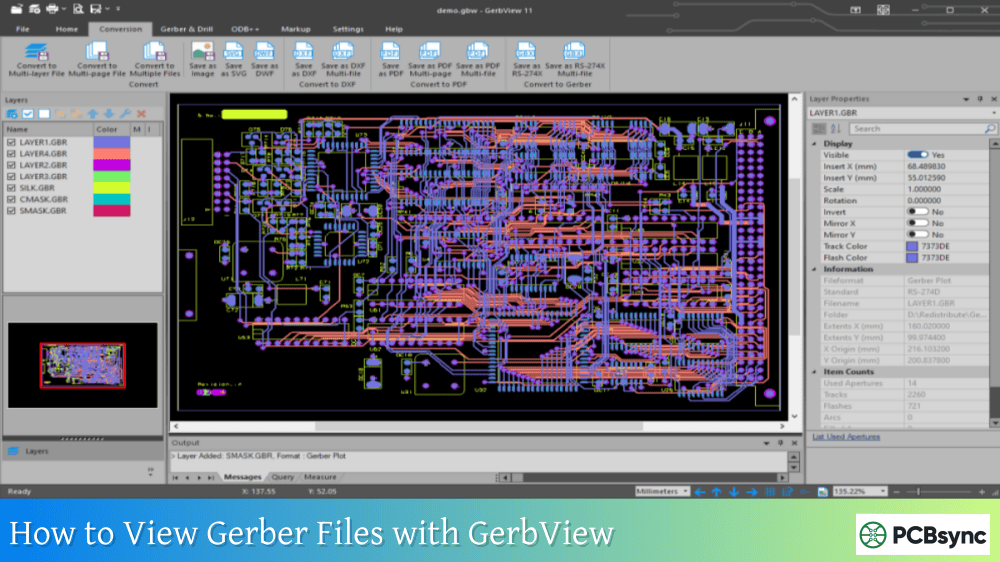
GerbView by Software Companions is one of the most capable tools for Gerber-to-DXF conversion. It handles RS-274D, RS-274X, and Gerber X2 formats and offers extensive output options.

Step-by-Step Process:

  1. Download and install GerbView (30-day free trial available)
  2. Launch GerbView and go to File → Add Layer
  3. Select the Gerber files you want to convert
  4. Load any Excellon drill files separately if needed
  5. Verify alignment and scale using the Measure tool
  6. Go to File → Export → DXF
  7. Configure output settings:
    1. File Units (Inch or Metric)
    1. Line Width handling
    1. Arc conversion options
    1. Pad representation (circles vs. polylines)
  8. Click Export to generate the DXF file

GerbView DXF Export Settings:

SettingOptionsRecommendation
File UnitsInch / MetricMatch your CAD software preference
Use Line WidthsYes / NoYes for accurate trace representation
Replace Arcs with LWPOLYLINEYes / NoYes if target CAD has arc issues
Output round Pads as CirclesYes / NoYes for cleaner mechanical drawings
Layer mappingPer file / CombinedPer file for complex designs

Method 2: Using ViewMate Pro (Commercial)

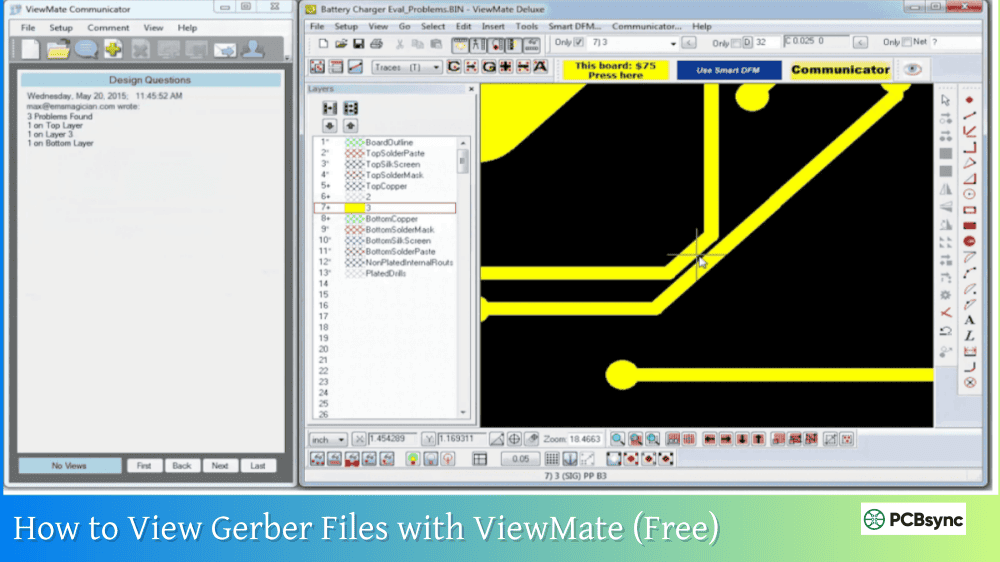
ViewMate Pro by PentaLogix includes robust DXF export capabilities alongside its Gerber viewing and editing features.

Step-by-Step Process:

  1. Download ViewMate Pro from pentalogix.com
  2. Import your Gerber files via File → Import → Gerber
  3. Import drill files via File → Import → Drill & Route
  4. Arrange layers and set visibility as needed
  5. Go to File → Export → DXF
  6. Configure export parameters
  7. Save the DXF file

ViewMate Pro handles complex apertures well and provides control over how Gerber elements translate to DXF entities.

Method 3: Using GBR2DXF from Artwork (Specialized Tool)

GBR2DXF by Artwork Conversion is a dedicated Gerber-to-DXF translator designed specifically for this conversion task.

Key Features:

FeatureDescription
Outline conversionConvert traces to polyline outlines
Layer mappingEach Gerber file becomes an AutoCAD layer
RS-274D supportWorks with legacy Gerber formats
RS-274X supportFull Extended Gerber support
Batch processingConvert multiple files at once

Step-by-Step Process:

  1. Install GBR2DXF from artwork.com
  2. Load your Gerber file(s)
  3. Configure aperture handling if using RS-274D
  4. Select output options:
    1. Polylines with width
    1. Outlined boundaries
    1. Circle representation
  5. Export to DXF

This tool is particularly useful when you need outlines rather than filled geometry, which is common for CNC routing applications.

Method 4: Using FlatCAM (Free/Open Source)

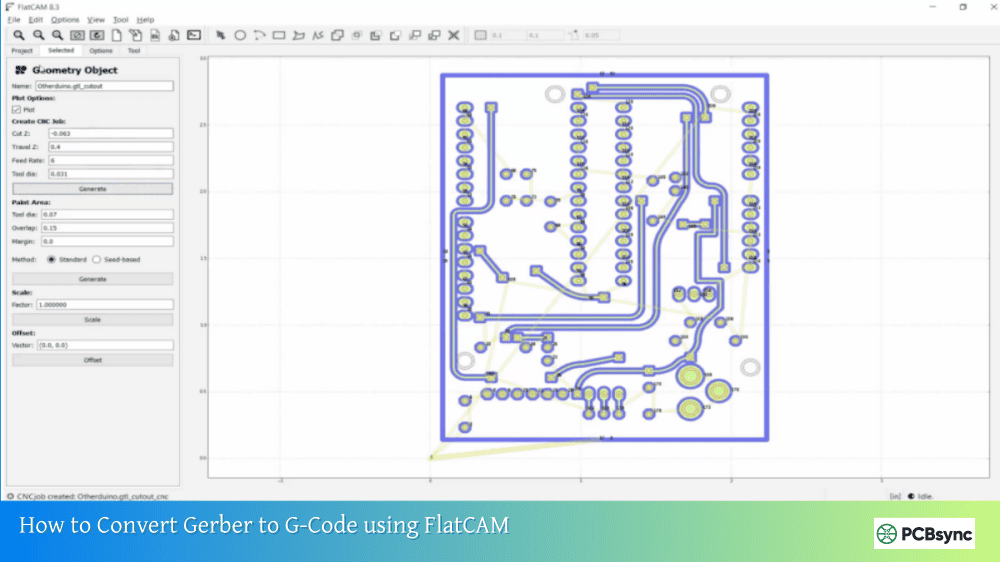
FlatCAM is an open-source tool primarily designed for CNC PCB milling, but it can also export to DXF format.

Step-by-Step Process:

  1. Download FlatCAM from flatcam.org
  2. Open your Gerber file via File → Open Gerber
  3. Import drill files via File → Open Excellon
  4. Perform any necessary geometry operations
  5. Go to File → Export → DXF
  6. Save the file

FlatCAM works well for board outlines and simple conversions but may have limitations with complex copper pours.

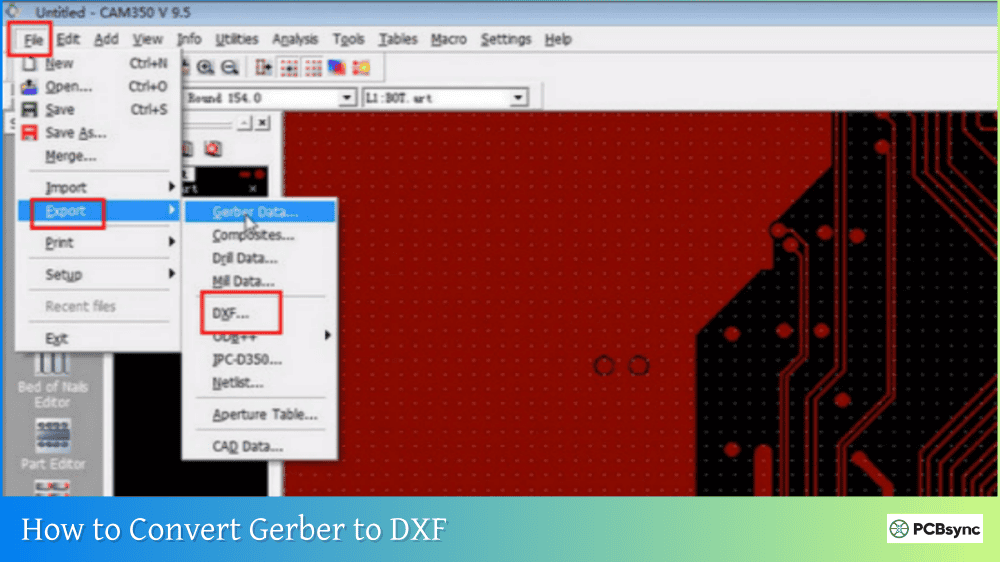
Method 5: Using CAM350 (Professional)

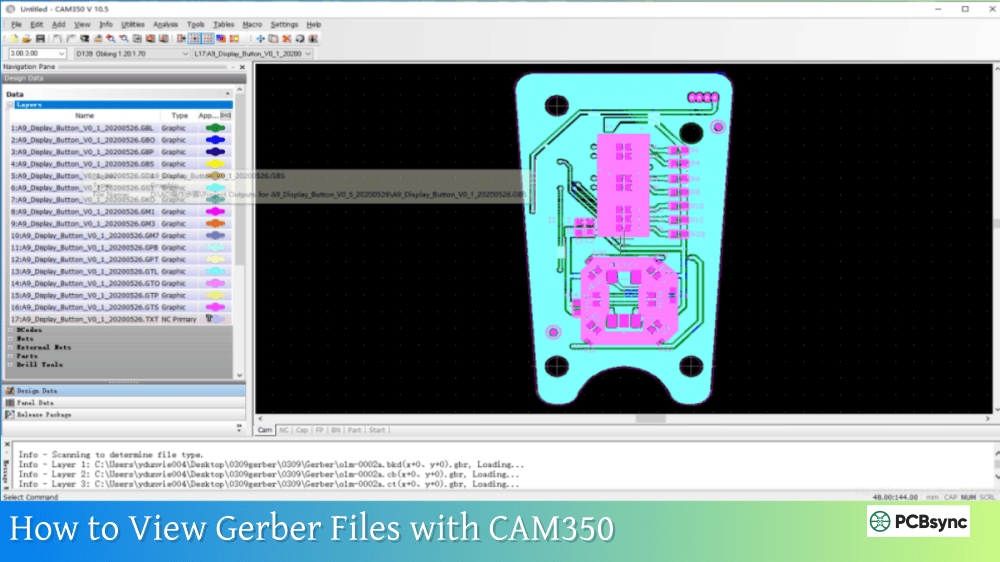
CAM350 by DownStream Technologies is professional-grade CAM software widely used in PCB manufacturing. Its DXF export is highly configurable.

Step-by-Step Process:

  1. Import Gerber files into CAM350
  2. Import drill data
  3. Verify layer setup and alignment
  4. Go to File → Export → DXF/DWG
  5. Configure export settings
  6. Generate the DXF file

Method 6: Using Altium Designer (If Available)

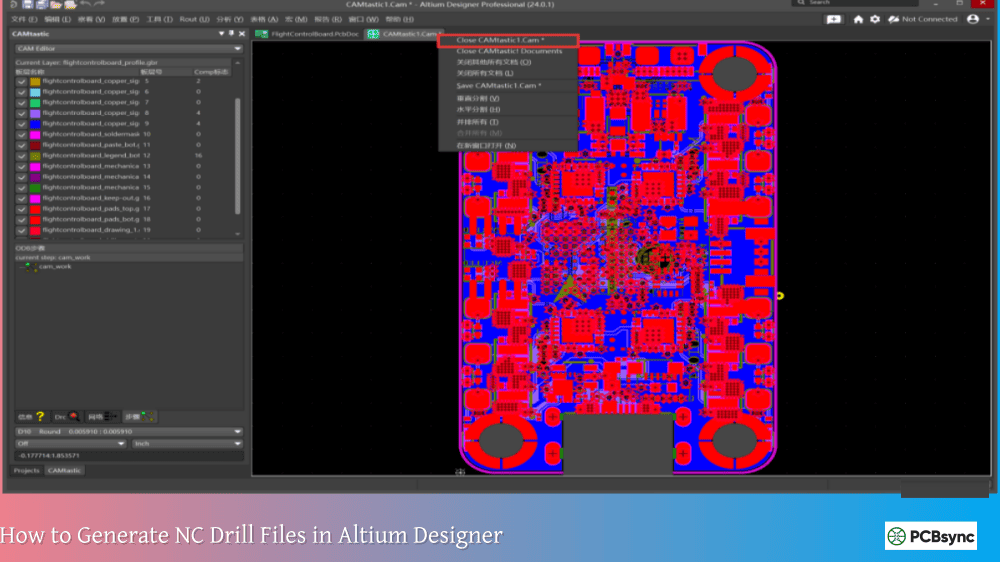
If you have access to Altium Designer, you can use its CAMtastic module to convert Gerber to DXF.

Step-by-Step Process:

  1. Open CAMtastic in Altium Designer
  2. Import Gerber files
  3. Go to File → Export → DXF
  4. Configure settings and export

This method is convenient if you’re already working in the Altium ecosystem.

Method 7: Using reaConverter (Batch Processing)

reaConverter offers batch conversion capabilities for converting multiple Gerber files to DXF.

reaConverter FeatureDescription
Batch processingConvert hundreds of files at once
Format supportGBR, GBS, CMP, SOL, and other Gerber variants
Output optionsDXF, DWG, PDF, PNG, and more
Command lineAutomation via command-line interface
WatermarkingAdd identification marks (optional)

Converting Specific Gerber Layers to DXF

Different Gerber layers serve different purposes when converted to DXF. Here’s guidance on which layers to convert for common use cases:

For Enclosure Design

Gerber LayerDXF Purpose
Board outline (Edge.Cuts)Primary enclosure cavity shape
Drill fileMounting hole locations and sizes
Component outlineClearance verification for tallest parts
Keepout zonesAreas requiring mechanical clearance

For CNC Routing

Gerber LayerDXF Purpose
Board outlineRouting path definition
Copper layersIsolation milling geometry
Drill fileDrilling operations
V-score or tab locationsPanel separation lines

For Mechanical Drawings

Gerber LayerDXF Purpose
Board outlineOverall dimensions
SilkscreenComponent identification
Assembly drawingReference for placement
Drill fileHole specification callouts

DXF Output Options Explained

When converting Gerber to DXF, several output options affect how the data appears in your CAD software.

Line Width Handling

OptionResultBest For
Preserve line widthsPolylines with width attributeAccurate trace representation
Convert to outlinesClosed polylines around trace boundariesCNC routing paths
Zero-width linesCenterlines onlySchematic-style drawings

Entity Type Selection

Gerber ElementDXF Entity Options
Circular padsCIRCLE or LWPOLYLINE
Rectangular padsLWPOLYLINE (closed)
TracesLWPOLYLINE with width
ArcsARC or approximated LWPOLYLINE
Filled regionsHATCH or boundary LWPOLYLINE

Layer Organization

Most conversion tools offer options for organizing DXF layers:

Organization MethodDescription
One layer per Gerber fileEach Gerber becomes a DXF layer
Combined layersAll geometry on single DXF layer
By apertureDifferent apertures on different layers
By entity typePads, traces, text on separate layers

Best Practices for Gerber to DXF Conversion

After years of converting Gerber files to DXF for various projects, I’ve developed practices that consistently produce good results.

Verify Units Before Conversion

The most common conversion problem is unit mismatch. Always verify:

Check PointAction
Source Gerber unitsCheck file header for MO (mode) command
Target DXF unitsMatch your CAD software preference
Scale verificationMeasure known dimensions after conversion

Simplify When Possible

Large copper pours create massive DXF files. For mechanical integration, you typically only need:

  • Board outline
  • Mounting holes
  • Connector cutouts
  • Height-restricted zones

Preserve Critical Geometry

Geometry TypeImportance
Board outlineCritical – defines enclosure cavity
Mounting holesCritical – mechanical fastening points
Connector openingsImportant – enclosure cutouts
Component heightsImportant for clearance checking
Copper areasUsually unnecessary for mechanical work

Document Your Conversion Settings

Keep records of:

  • Conversion software and version
  • Settings used
  • Source Gerber file names and dates
  • Any post-processing applied

Troubleshooting Common Conversion Issues

Problem: DXF File Shows Wrong Scale

Symptoms: Board appears 25.4x too large or too small

Cause: Inch/millimeter unit mismatch

Solution:

  • Check source Gerber units (look for %MOIN*% or %MOMM*%)
  • Set conversion tool to matching units
  • Verify with known dimensions

Problem: Traces Appear as Thin Lines

Symptoms: All traces are zero-width centerlines

Cause: Line width option disabled or not supported

Solution:

  • Enable “Use Line Widths” or equivalent option
  • Use “Convert to Outlines” for boundary representation
  • Check target CAD software supports LWPOLYLINE widths

Problem: Circles Appear as Polygons

Symptoms: Round pads are multi-sided shapes

Cause: Aperture approximation settings

Solution:

  • Enable “Output round Pads as Circles” option
  • Increase polygon approximation resolution
  • Some precision loss may be acceptable

Problem: Arcs Missing or Distorted

Symptoms: Curved elements don’t display correctly

Cause: Arc entity compatibility issues

Solution:

  • Enable arc-to-polyline conversion option
  • Check target CAD arc support
  • Increase polyline approximation points

Problem: File Size Extremely Large

Symptoms: DXF file is hundreds of megabytes

Cause: Complex copper pours converted to detailed geometry

Solution:

  • Convert only necessary layers (outline, drill)
  • Use outline mode instead of filled regions
  • Simplify complex polygons before export

Resources and Download Links

Commercial Software

ToolWebsiteTrial Available
GerbViewgerbview.comYes (30 days)
ViewMate Propentalogix.comDemo available
GBR2DXFartwork.comEvaluation
CAM350downstreamtech.comContact vendor
FAB 3000numericalinnovations.comDemo available
reaConverterreaconverter.comLimited free

Free/Open Source Software

ToolWebsitePlatform
FlatCAMflatcam.orgWindows, Linux, macOS
KiCad GerbViewkicad.orgWindows, Linux, macOS
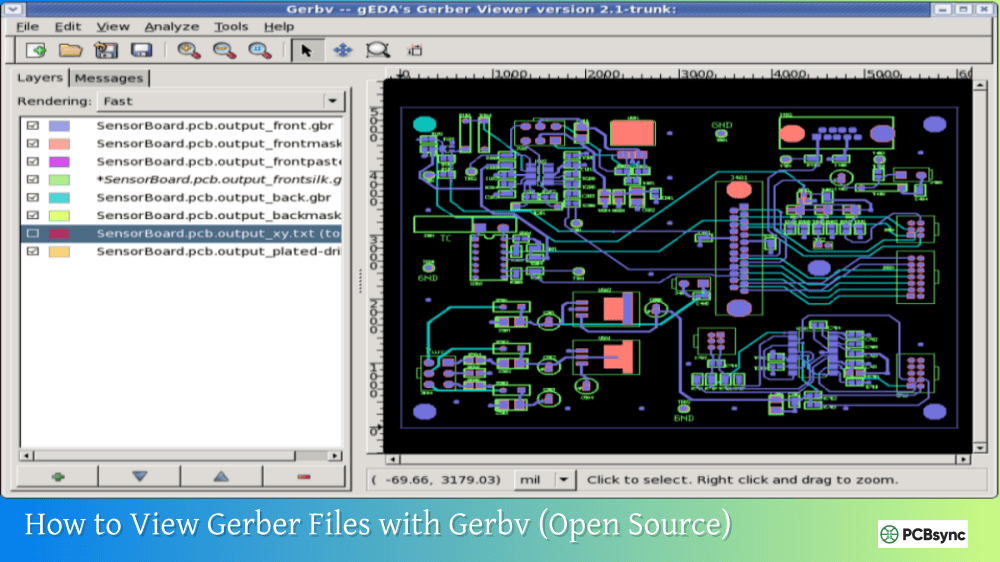
Gerbvgerbv.github.ioWindows, Linux, macOS

Online Resources

ResourceURLDescription
Ucamco Gerber Specucamco.comOfficial Gerber specification
DXF Referenceautodesk.comOfficial DXF documentation
Artwork FAQartwork.com/acad/faqConversion troubleshooting
Bay Area Circuits Guidebayareacircuits.comDXF/Gerber conversion guide

Frequently Asked Questions

Can I convert DXF back to Gerber?

Yes, but it requires careful attention to DXF entity types. Tools like EasyGerb, FAB 3000, and ACE 3000 can convert DXF to Gerber. For best results, use only simple entity types (polylines, circles, text) in your DXF and follow proper design guidelines for filled regions.

Which Gerber layer should I convert for enclosure design?

For enclosure design, convert the board outline layer (typically named Edge.Cuts, Board Outline, or similar) and the drill file. These give you the board shape and mounting hole locations, which are the primary concerns for mechanical fit.

Is the converted DXF suitable for CNC routing?

It depends on the conversion options used. For CNC routing, you typically want outline data (not filled regions) and may need to add tool compensation. Some tools like GBR2DXF and GBRUnion are specifically designed to produce CNC-ready output with proper tool offset considerations.

Will I lose any data converting Gerber to DXF?

Some Gerber-specific information may not transfer directly to DXF, including aperture definitions, net names (in X2/X3 files), and layer function metadata. However, all geometric data should convert accurately. The visual representation in DXF should match the original Gerber when viewed with appropriate settings.

What’s the best free tool for Gerber to DXF conversion?

FlatCAM offers the most complete free solution for basic Gerber to DXF conversion, especially if you’re also interested in CNC milling. For viewing and simple export, the combination of Gerbv for viewing and manual tracing in a CAD program works but is more labor-intensive. For professional results with complex files, commercial tools like GerbView typically produce better output.

Conclusion

Converting Gerber to DXF bridges the gap between PCB design and mechanical engineering. Whether you’re designing an enclosure, preparing files for CNC routing, or creating assembly documentation, the ability to move PCB data into mechanical CAD tools is invaluable.

The key to successful conversion is choosing the right tool for your specific needs and understanding the translation options. For professional work, tools like GerbView and ViewMate Pro offer the most control and best results. For hobbyist projects or occasional conversions, FlatCAM provides capable free functionality.

Remember to verify units, simplify geometry when appropriate, and always check the converted output against known dimensions before committing to manufacturing. With the right approach, Gerber-to-DXF conversion becomes a reliable step in your cross-disciplinary workflow, enabling seamless collaboration between PCB and mechanical design teams.

Leave a Reply

Your email address will not be published. Required fields are marked *

Contact Sales & After-Sales Service

Contact & Quotation

  • Inquire: Call 0086-755-23203480, or reach out via the form below/your sales contact to discuss our design, manufacturing, and assembly capabilities.

  • Quote: Email your PCB files to Sales@pcbsync.com (Preferred for large files) or submit online. We will contact you promptly. Please ensure your email is correct.

Drag & Drop Files, Choose Files to Upload You can upload up to 3 files.

Notes:
For PCB fabrication, we require PCB design file in Gerber RS-274X format (most preferred), *.PCB/DDB (Protel, inform your program version) format or *.BRD (Eagle) format. For PCB assembly, we require PCB design file in above mentioned format, drilling file and BOM. Click to download BOM template To avoid file missing, please include all files into one folder and compress it into .zip or .rar format.