Inquire: Call 0086-755-23203480, or reach out via the form below/your sales contact to discuss our design, manufacturing, and assembly capabilities.
Quote: Email your PCB files to Sales@pcbsync.com (Preferred for large files) or submit online. We will contact you promptly. Please ensure your email is correct.
Notes: For PCB fabrication, we require PCB design file in Gerber RS-274X format (most preferred), *.PCB/DDB (Protel, inform your program version) format or *.BRD (Eagle) format. For PCB assembly, we require PCB design file in above mentioned format, drilling file and BOM. Click to download BOM template To avoid file missing, please include all files into one folder and compress it into .zip or .rar format.
Working with AutoCAD for PCB design and then hitting a wall when your manufacturer asks for Gerber files? You’re in good company. About 10-15% of all PCB and RF layouts are still created in mechanical CAD tools like AutoCAD, and nearly every one of those designers eventually faces the same conversion challenge.
I’ve spent years helping engineers navigate this exact problem, and I can tell you that most conversion headaches stem from a fundamental mismatch between what AutoCAD can do and what Gerber files actually need. This guide covers everything you need to know about converting DWG files to Gerber format, from choosing the right tools to avoiding the mistakes that send boards back for rework.
Before we tackle conversion, let’s establish what we’re working with. Understanding DWG’s structure explains why conversion isn’t as straightforward as a simple “Save As” operation.
What is a DWG File?
DWG (short for “drawing”) is Autodesk’s native file format for AutoCAD, first introduced in the early 1980s. Unlike DXF (Drawing Exchange Format), which uses human-readable ASCII text, DWG stores data in binary format. This makes DWG files approximately 25% smaller than their DXF equivalents while maintaining complete fidelity to the original design.
The format supports an extensive range of entity types that make AutoCAD so powerful for mechanical and architectural work. You can create complex geometries including 3D objects, hatches, splines, regions, and sophisticated text formatting. This flexibility is exactly why many RF and microwave engineers choose AutoCAD over traditional EDA tools when they need geometric precision that dedicated PCB software can’t provide.
Why Engineers Design PCBs in AutoCAD
AutoCAD remains popular for electronic design in specific scenarios. RF and microwave circuits often require custom geometries that standard EDA tools struggle to handle. MEMS designs need precise mechanical features integrated with electrical components. Chemical milling artwork demands the geometric accuracy that AutoCAD delivers. Some companies have decades of legacy designs in DWG format that need occasional updates.
The problem arises when these designs need to go to manufacturing. PCB fabricators work with Gerber files, not DWG or DXF. And unlike architectural drawings that might print directly from AutoCAD, circuit boards require photoplotter-ready data that Gerber format provides.
What is a Gerber File and Why Manufacturers Require It
Gerber has been the industry standard for PCB manufacturing for over 35 years. Understanding why manufacturers insist on this format helps explain the conversion challenges.
The Gerber Format Explained
Gerber files are remarkably simple compared to DWG. Each file is essentially an ASCII text document containing X,Y coordinates paired with aperture definitions (shapes). There’s no ambiguity about interpretation. What the file describes is exactly what the photoplotter will image.
Each Gerber file represents a single PCB layer. A typical two-layer board might require six or more Gerber files: top copper, bottom copper, top solder mask, bottom solder mask, top silkscreen, and board outline. More complex boards add internal copper layers, additional silk layers, and paste masks.
Key Differences Between DWG and Gerber Files
Characteristic
DWG Format
Gerber Format
Data Structure
Binary with hundreds of entity types
ASCII text with X,Y coordinates and apertures
Dimensionality
2D and 3D support
Strictly 2D
Layer Handling
Flexible, user-defined layers
Strict PCB layer types (copper, mask, silk)
Text Support
TrueType fonts, complex formatting
Simple stroke fonts only
Fill Patterns
Complex hatches, gradients
Simple solid fills
File Size
Compact binary encoding
Larger but universal
Primary Use
Design and documentation
Manufacturing output
Why PCB Manufacturers Won’t Accept DWG Files
Most fabricators refuse to work directly with DWG files for several reasons. The format requires interpretation since the same visual result can be achieved using different entity types. A filled area might be a hatch, a region, or a closed polyline. Each requires different handling, and any misinterpretation leads to manufacturing errors.
Additionally, DWG files often contain non-manufacturing elements like dimension annotations, construction lines, and title blocks. Someone needs to identify and filter these out, adding time and introducing potential errors.
Gerber eliminates these problems. The format contains only manufacturing-relevant data with no interpretation required. What you see in a Gerber viewer is exactly what will be manufactured.
DWG to Gerber Conversion Methods
There are three primary approaches to converting DWG files to Gerber format, each with distinct advantages and limitations.
Method 1: Direct Conversion Using AutoCAD Plugins
The most streamlined approach uses plugins that add Gerber export capability directly within AutoCAD. This method keeps your entire workflow inside a single application.
EasyGerb by Numerical Innovations
EasyGerb is the most widely recommended AutoCAD plugin for Gerber export. It runs as an ARX application directly inside AutoCAD (versions 2013 through 2025 are supported), allowing you to select entities and generate Gerber files without leaving your familiar environment.
View and convert multiple formats, comparison tools
Viewing and verification
Commercial
reaConverter
Batch conversion, command-line support
Automated workflows
Commercial
FAB 3000 Workflow:
FAB 3000 provides the most comprehensive conversion and verification workflow:
Launch FAB 3000 and create a new project
Import your DWG file using File → Import → DWG
Configure import settings (units, layer mapping)
Review the imported design and verify accuracy
Assign layers to appropriate Gerber types
Run DFM checks to catch potential manufacturing issues
Export to Gerber RS-274X format
Method 3: DWG to DXF to Gerber Two-Step Conversion
Some workflows benefit from converting DWG to DXF first, then processing the DXF file. This approach provides an intermediate step where you can verify the data before final Gerber generation.
Why Use Two-Step Conversion:
DXF files are human-readable, making troubleshooting easier
Some converters handle DXF more reliably than DWG
Provides a checkpoint to catch problems early
Works with converters that only support DXF input
Exporting DXF from AutoCAD:
Open your DWG file in AutoCAD
Run AUDIT and PURGE to clean the drawing
Select File → Save As
Choose DXF format from the file type dropdown
Select the appropriate DXF version (AutoCAD 2010 DXF works broadly)
Save the file
The resulting DXF can then be processed by any DXF-to-Gerber converter.
Preparing Your DWG File for Successful Conversion
The quality of your conversion depends heavily on how your DWG file is structured. Following these preparation steps dramatically improves conversion success rates.
The Five Fundamental Entities for Gerber Conversion
Gerber files can only represent a limited set of geometric elements. For reliable conversion, build your DWG designs using these five entity types:
1. Polylines (LW Polylines)
Polylines are the workhorses of DWG to Gerber conversion, representing roughly 80% of typical PCB layouts. Use polylines with width for traces and tracks. Use closed, zero-width polylines to define filled area boundaries.
2. Circles
Circles translate directly to circular apertures in Gerber. Use them for round pads, via definitions, and circular features.
3. Text (SHX Fonts)
Stick fonts (AutoCAD’s SHX format) convert cleanly because they’re defined as stroke segments rather than filled shapes. Avoid TrueType fonts, which create complex filled geometries that may not convert correctly.
4. Blocks
Blocks let you create reusable components like standard pad shapes or via structures. They convert successfully when their internal entities follow the fundamental entity rules.
5. Inserts
Inserts are instances of blocks placed in your drawing. Use them for repetitive elements to keep your design organized and efficient.
DWG Entities That Cause Conversion Problems
Entity Type
Problem
Solution
Hatches
Complex fill algorithms don’t translate to Gerber
Redraw as closed polylines
Splines
Gerber only supports lines and arcs
Convert to polylines with arc approximation
3D Objects
Gerber is strictly 2D
Flatten to 2D or remove
TrueType Text
Creates filled shapes that may convert incorrectly
Switch to SHX fonts
Regions
Require complex boolean operations
Explode to polylines
Dimensions
Not manufacturing data
Move to non-exported layer or delete
Xrefs
External references may not import
Bind xrefs before conversion
Pre-Conversion Checklist for DWG Files
Before attempting conversion, verify these items in your DWG file:
Geometry Verification:
All manufacturing geometry uses supported entity types
No self-intersecting boundaries in filled areas
Polyline widths match intended trace widths
Circles are on appropriate layers for pads or drills
Layer Organization:
Each PCB layer on a separate AutoCAD layer
Clear, consistent layer naming
Non-manufacturing content (dimensions, notes) on excluded layers
Settings Verification:
Drawing units match your design intent (metric vs. imperial)
Design is positioned near the origin
LTSCALE is set appropriately for line types
AUDIT shows no errors
Step-by-Step DWG to Gerber Conversion Process
Here’s the complete workflow I use for reliable conversions:
Step 1: Clean Your DWG File
Open the file in AutoCAD and run these commands:
AUDIT (fix any errors)PURGE (remove unused elements)OVERKILL (remove duplicate geometry)
Review and delete any construction geometry, reference dimensions, or annotations that shouldn’t appear in manufacturing files.
Step 2: Organize Layers for Export
Create a clear layer structure that maps to Gerber output:
Troubleshooting Common DWG to Gerber Conversion Issues
Problem: Output Looks Nothing Like Original Design
Cause: Unsupported entity types filtered out during conversion
Solution: Identify which entities didn’t convert by comparing layer-by-layer. Redraw those elements using supported entity types (polylines, circles, SHX text).
Problem: Filled Areas Appear as Outlines
Cause: Hatches or improper boundary definitions
Solution: Replace hatches with closed polylines. Ensure boundary polylines have zero width and are continuous with no gaps.
Problem: Scale or Position is Wrong
Cause: Unit mismatch or incorrect origin setting
Solution: Verify units in both AutoCAD and converter settings. Position design near origin before export. Use reference dimensions to confirm scale.
Problem: Text is Missing or Garbled
Cause: TrueType fonts not supported by converter
Solution: Change all text to SHX (stick) fonts. Alternatively, explode text to polylines before conversion, though this loses editability.
Problem: Drill Holes Not Appearing
Cause: Circles not on designated drill layer, or drill export overlooked
Solution: Move all drill circles to a dedicated layer. Generate Excellon drill file separately from Gerber exports.
Useful Resources and Software Downloads
Conversion Software
Resource
URL
Notes
EasyGerb
numericalinnovations.com/collections/easygerb
AutoCAD plugin, demo available
FAB 3000
numericalinnovations.com
Full CAM software, 30-day trial
ACE 3000
numericalinnovations.com
2D/3D translator
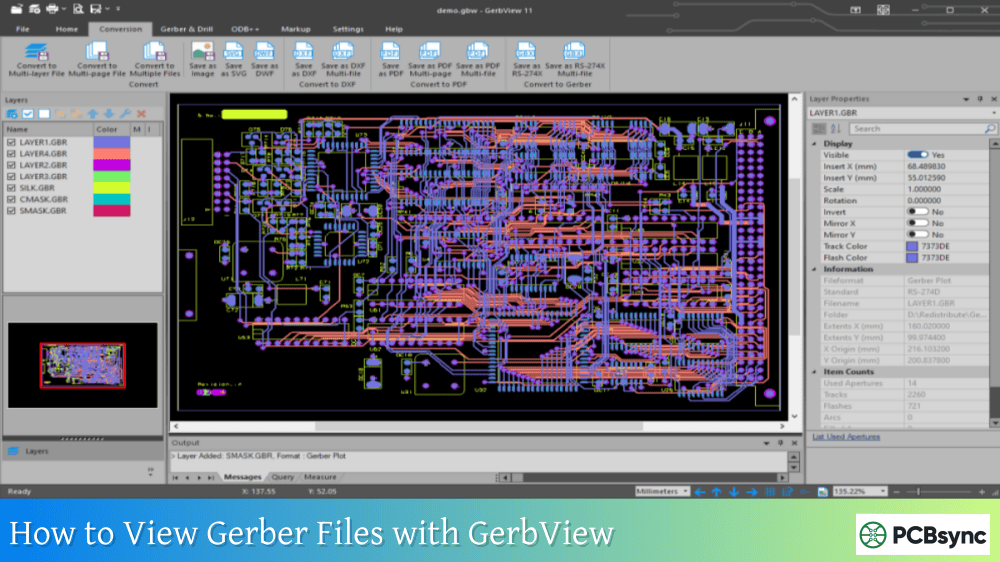
GerbView
gerbview.com
Viewer and converter, 30-day trial
reaConverter
reaconverter.com
Batch conversion tool
Free Gerber Viewers for Validation
Viewer
Platform
Features
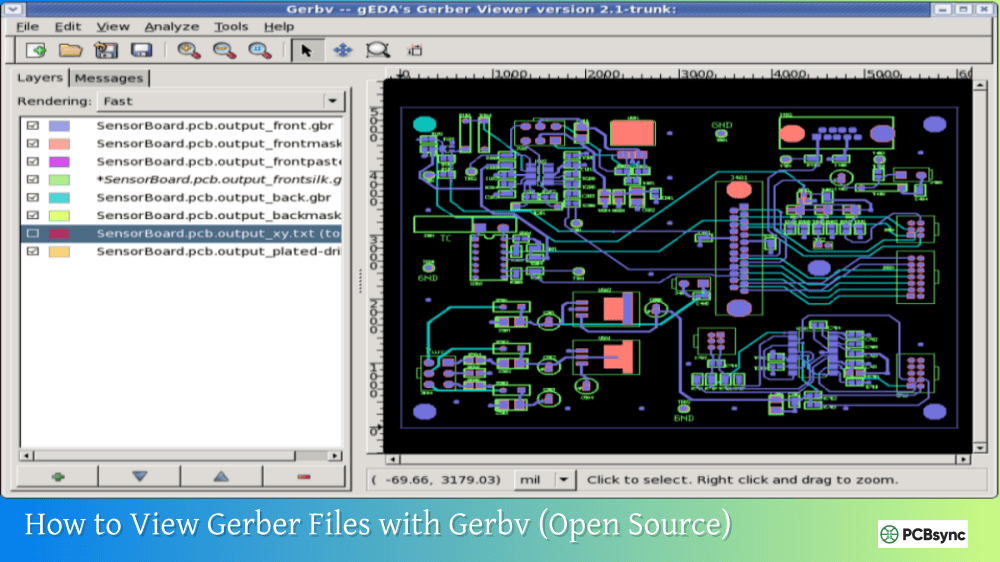
KiCad GerbView
Windows, Mac, Linux
Full-featured, open source
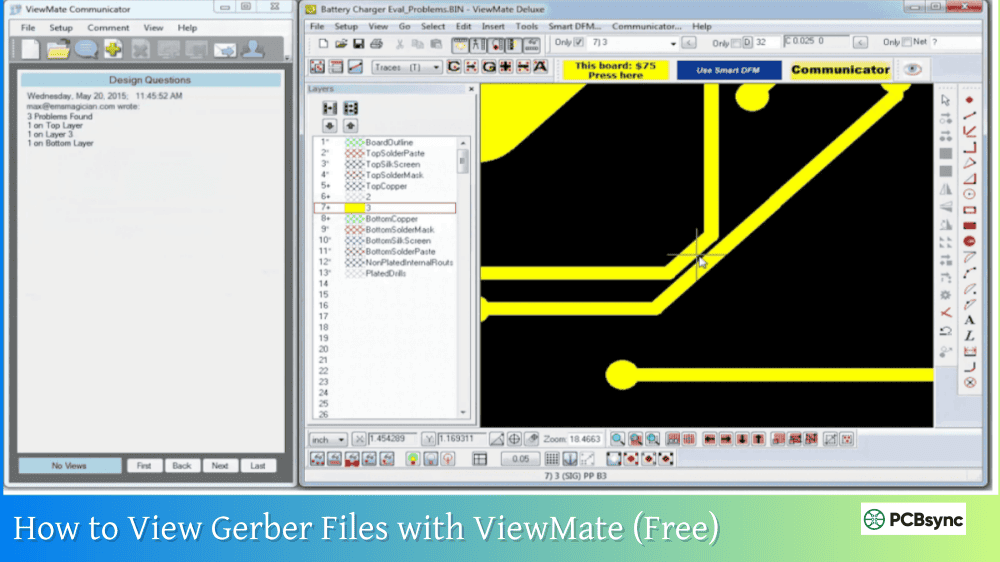
ViewMate Free
Windows
Basic viewing and measurement
ZofzPCB
Windows
3D visualization
PCB Preflight
Web
Online viewer with collaboration
Documentation and Guides
Gerber Format Specification: ucamco.com/en/gerber
Bay Area Circuits Conversion Guide: bayareacircuits.com/dxf-to-gerber-conversion-guide/
After handling hundreds of conversions, these practices consistently produce the best results:
1. Design with Conversion in Mind
If you know your DWG will eventually become Gerber files, use only the five fundamental entity types from the start. Retrofitting a complex design is far more work than building it correctly initially.
2. Keep Layers Strictly Organized
One AutoCAD layer should map to exactly one Gerber file. Mixing copper and silk on the same layer creates sorting headaches during conversion.
3. Work Near the Origin
Designs positioned far from the origin (X=2000mm, for example) often cause coordinate overflow or precision issues. Keep your geometry close to 0,0.
4. Maintain Unit Consistency
Decide on metric or imperial at the start and stick with it throughout design and conversion. Mixed units cause scaling errors that may not be obvious until boards come back wrong.
5. Document Your Layer Mapping
Keep a record of which AutoCAD layers map to which Gerber files. This makes revisions easier and reduces errors when you return to a project months later.
6. Always Verify Before Manufacturing
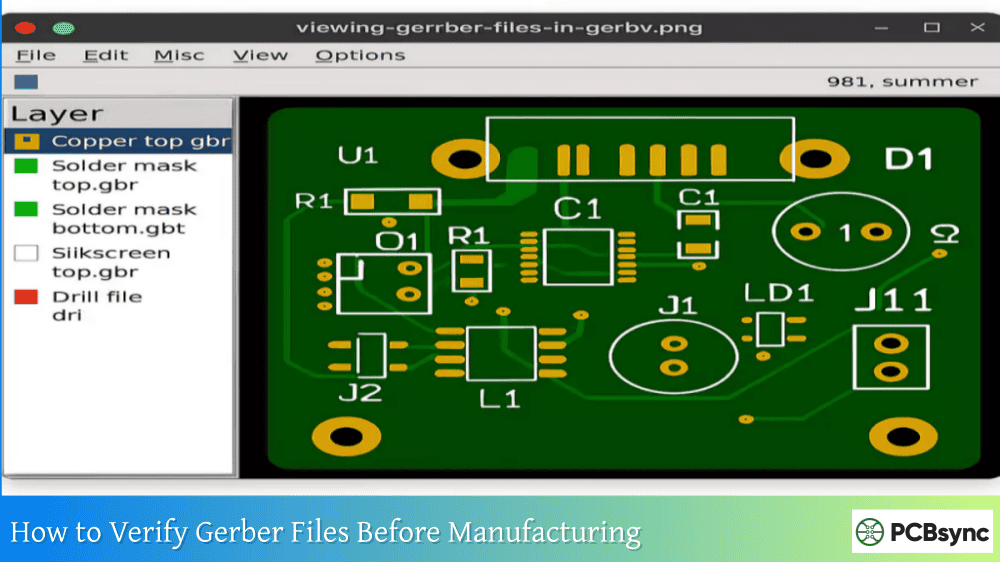
Load your Gerbers in a viewer, check dimensions, overlay layers to verify alignment. The few minutes spent checking can save weeks of manufacturing delays.
Frequently Asked Questions About DWG to Gerber Conversion
Can I Convert DWG to Gerber Directly in AutoCAD Without Plugins?
No, AutoCAD does not include native Gerber export capability. You must use either a third-party plugin like EasyGerb that runs inside AutoCAD, or standalone conversion software that imports DWG files. Some users export to DXF first and then convert the DXF to Gerber, but this still requires external software.
What is the Best Free DWG to Gerber Converter?
Truly free options for DWG to Gerber conversion are limited. Your best approach is to export DXF from AutoCAD (free within AutoCAD), then use a free or trial version of conversion software. KiCad can import DXF files and export Gerbers, though it requires manual layer setup. Most dedicated converters like FAB 3000 and EasyGerb offer trial periods that may be sufficient for occasional use.
Should I Convert DWG to DXF First Before Creating Gerber Files?
Converting to DXF first can be helpful for troubleshooting since DXF is human-readable text. However, direct DWG conversion typically produces better results because DWG is more compact and experiences fewer parsing errors. If your converter supports DWG import directly, use that. Reserve the two-step approach for situations where direct conversion fails.
Why Does My Manufacturer Refuse to Accept DWG Files?
PCB manufacturers require Gerber files because they provide unambiguous manufacturing instructions. DWG files require interpretation since they can contain hundreds of different entity types, non-manufacturing elements (dimensions, notes), and complex features that don’t translate to PCB fabrication. Gerber eliminates interpretation errors and provides data that photoplotters can process directly.
How Do I Handle Drill Holes When Converting DWG to Gerber?
Drill data must be exported separately in Excellon format, not as part of the Gerber files. In your DWG file, place all drill holes as circles on a dedicated layer. During conversion, generate the Excellon drill file from this layer while generating Gerber files from your other layers. Verify that drill coordinates align with your Gerber data using a viewer that displays both formats.
Conclusion
Converting DWG files to Gerber format is entirely achievable once you understand the fundamental differences between these formats. The key is preparation: structure your DWG files using the five fundamental entity types, organize your layers cleanly, and verify your output before sending to manufacturing.
Whether you choose a direct AutoCAD plugin like EasyGerb or standalone software like FAB 3000, the conversion process follows the same basic principles. Import your data, map layers to Gerber types, configure output settings, and validate the results.
Most conversion problems trace back to using unsupported entity types in the original DWG. If you’re starting a new design that will eventually need Gerber output, build it with conversion in mind from day one. If you’re working with legacy files, invest the time to simplify problematic entities before attempting conversion.
The extra effort spent on proper preparation pays dividends in faster manufacturing turnaround and fewer costly errors. A well-converted Gerber file set sails through fabrication without holds or questions, getting your boards built correctly the first time.
Inquire: Call 0086-755-23203480, or reach out via the form below/your sales contact to discuss our design, manufacturing, and assembly capabilities.
Quote: Email your PCB files to Sales@pcbsync.com (Preferred for large files) or submit online. We will contact you promptly. Please ensure your email is correct.
Notes: For PCB fabrication, we require PCB design file in Gerber RS-274X format (most preferred), *.PCB/DDB (Protel, inform your program version) format or *.BRD (Eagle) format. For PCB assembly, we require PCB design file in above mentioned format, drilling file and BOM. Click to download BOM template To avoid file missing, please include all files into one folder and compress it into .zip or .rar format.