Inquire: Call 0086-755-23203480, or reach out via the form below/your sales contact to discuss our design, manufacturing, and assembly capabilities.
Quote: Email your PCB files to Sales@pcbsync.com (Preferred for large files) or submit online. We will contact you promptly. Please ensure your email is correct.
Notes: For PCB fabrication, we require PCB design file in Gerber RS-274X format (most preferred), *.PCB/DDB (Protel, inform your program version) format or *.BRD (Eagle) format. For PCB assembly, we require PCB design file in above mentioned format, drilling file and BOM. Click to download BOM template To avoid file missing, please include all files into one folder and compress it into .zip or .rar format.
Converting PCB designs between different EDA tools is something most of us dread. After spending countless hours perfecting a board layout in DipTrace, the last thing you want is to recreate everything from scratch because a client needs Eagle files or your new employer standardized on KiCad. I’ve been through this process dozens of times over my 15 years in PCB design, and I’m going to walk you through the practical methods that actually work.
The reality is that direct DipTrace to KiCad conversion doesn’t exist natively. DipTrace doesn’t export to KiCad format, and KiCad can’t directly import DipTrace files. But there are workarounds that get the job done, and understanding them will save you hours of frustration.
Before diving into the how-to, let’s acknowledge why you’re probably here. The PCB design landscape has shifted dramatically in recent years. Autodesk announced they’re discontinuing Eagle, pushing many engineers toward KiCad. Meanwhile, DipTrace remains a solid commercial option but lacks the open-source flexibility that collaborative projects demand.
Common scenarios that require conversion include working with clients who standardized on a specific tool, contributing to open-source hardware projects that require KiCad files, legacy project maintenance where original designers used different software, and company mergers that consolidate on a single EDA platform.
Understanding File Format Compatibility
The fundamental challenge is that each EDA tool uses proprietary file formats. Here’s what you’re working with:
DipTrace can export to Eagle board format, which becomes our bridge to KiCad since KiCad has excellent Eagle import capabilities.
Method 1: DipTrace to Eagle to KiCad Conversion Path
This is the most reliable method for full project conversion. The process uses Eagle as an intermediary format since both DipTrace and KiCad have good Eagle compatibility.
Step 1: Export from DipTrace to Eagle Format
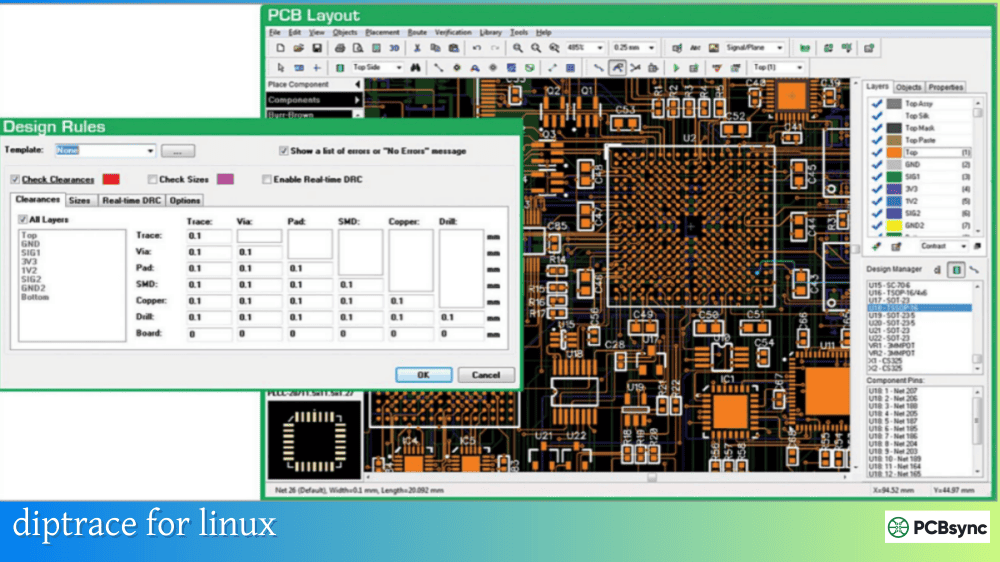
Open your DipTrace PCB Layout file and navigate to File, then Export, and select Eagle Board. Save the exported .brd file to a working directory. Note that this only exports the PCB layout, not the schematic. For schematic conversion, you’ll need the DipTrace Schematic module open and use File, Export, then choose DipTrace ASCII format.
Step 2: Import Eagle Files into KiCad
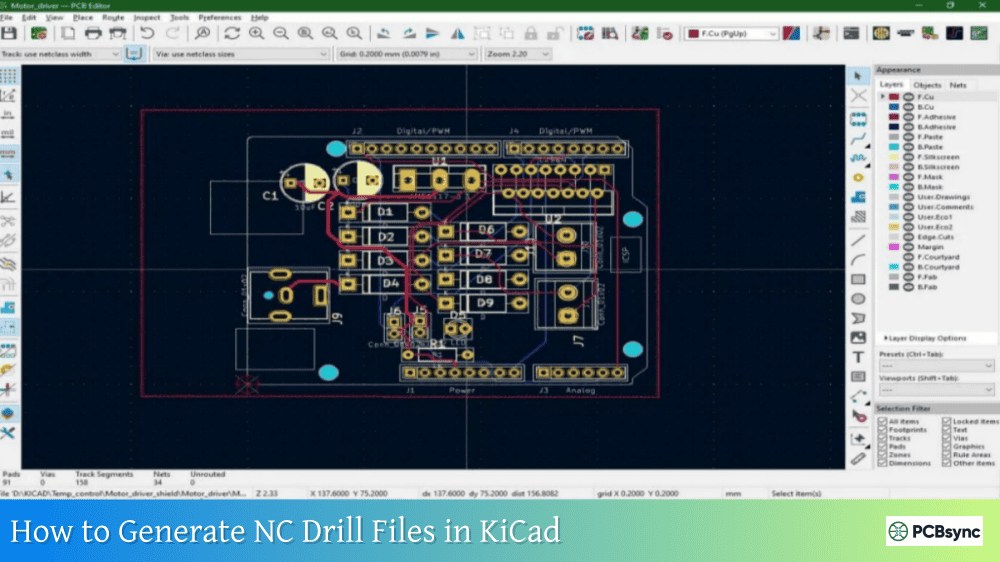
Launch KiCad and go to File, then Import Non-KiCad Project, and select EAGLE Project. Point to your exported .brd file. KiCad will automatically attempt to load any associated schematic file. Select your destination folder for the converted KiCad project files.
Step 3: Fix Common Import Issues
After importing, you’ll likely encounter several issues that need attention. Component positions may shift when you click Update PCB from Schematic. The workaround is to capture footprint positions before updating. In KiCad’s PCB editor, use Tools, then Scripting Console, and run a position capture script before clicking the update button.
Reference designators sometimes get swapped during schematic import. This particularly affects headers and connectors. Check your JP1, JP2, JP3 designations carefully since they’re known to shift during conversion.
Zone clearances often default incorrectly. Double-click any copper pour zones and verify the clearance value is set appropriately for your design, typically 0.3mm or greater for most standard boards.
Method 2: Using Netlist as an Intermediary
When visual conversion fails or produces too many errors, falling back to netlist transfer preserves electrical connectivity even if you lose physical layout.
Exporting Netlists from DipTrace
DipTrace Schematic can export netlists in multiple formats: Mentor, OrCAD, Tango, PADS, Accel, Allegro, P-CAD, Protel, and KiCad. Open your schematic in DipTrace and go to File, Export, then Netlist. Select the KiCad format if available, or use Protel format as a fallback since KiCad handles it well.
Importing Netlists into KiCad
In KiCad’s PCB editor, go to File, then Import, and select Netlist. Browse to your exported netlist file. KiCad will create component placements based on the netlist, though you’ll need to manually recreate your layout.
Netlist Format
DipTrace Export
KiCad Import
Notes
KiCad
Yes (newer versions)
Native
Best compatibility
Protel
Yes
Yes
Good fallback option
Allegro
Yes
Limited
May lose some data
P-CAD ASCII
Yes
No direct
Requires conversion
Method 3: Component Library Conversion
If you’re migrating workflows permanently, converting your component libraries saves time on future projects.
Converting DipTrace Libraries to KiCad
DipTrace can export libraries in Eagle XML format (.lbr files). From the DipTrace Component Editor, go to Library, then Export, and choose Eagle XML. KiCad can then import these Eagle libraries. In KiCad’s Symbol Editor, use File, Import, then Eagle Library. Repeat the process in the Footprint Editor for PCB patterns.
Building a Conversion Workflow
For organizations making a permanent switch, establish a systematic library conversion process. Start by exporting all DipTrace libraries to Eagle XML format. Import each library into KiCad and verify symbol and footprint accuracy. Create a mapping document that tracks original DipTrace part numbers to new KiCad library entries. Test converted components on a simple reference design before using them in production.
DipTrace to Eagle Direct Conversion
If your target is Eagle rather than KiCad, DipTrace provides more direct options.
Exporting PCB Layout to Eagle
From DipTrace PCB Layout, the File, Export, Eagle Board option creates a .brd file compatible with Eagle 7.x and later. Note that DipTrace doesn’t export schematics directly to Eagle format. You’ll need to use the ULP scripts included with DipTrace, typically found in C:\Program Files\DipTrace\Utils. Run Eagle_to_DipTrace_SCH.ulp from within Eagle to create ASCII files that DipTrace can import, but the reverse workflow requires manual effort.
Known Limitations
Export from DipTrace to Eagle doesn’t include silk screen layers in some versions, trace data occasionally fails to transfer completely, and custom pad shapes may not convert correctly. Always verify your exported design against the original before sending to fabrication.
Troubleshooting Common Conversion Problems
Issue: Blank Schematic After Import
When KiCad imports but shows no symbols, it’s typically a library path issue. The imported schematic references libraries that KiCad can’t find. Solution: Import component libraries first, then reimport the schematic.
Issue: Component Mismatch Between Schematic and PCB
Reference designators that don’t match between schematic and PCB cause ERC and DRC errors. In KiCad, use the Re-link footprints to schematic symbols based on their reference designators option when updating PCB from schematic.
Issue: Format is Incorrect Error in DipTrace
This error typically appears when importing KiCad 8.x files into DipTrace. DipTrace currently supports KiCad 7.x format. Export from KiCad 8 using the legacy format option, or wait for DipTrace to update their import filters.
Issue: Copper Pour Errors After Import
Imported zones often have incorrect settings. Check zone clearance values, verify zone fill priority, rebuild all copper pours after adjusting settings, and run DRC to identify any remaining issues.
Best Practices for Cross-Platform PCB Design
Based on years of migrating designs between platforms, here are practices that minimize conversion headaches.
During Initial Design
Use standard component packages whenever possible since custom footprints cause the most conversion problems. Keep hierarchical schematic structures simple because complex hierarchy often breaks during conversion. Document your design rules explicitly since they rarely transfer automatically. Save intermediate versions before major changes to give yourself rollback points.
Before Conversion
Run DRC in your source tool to fix issues before they compound during conversion. Export Gerber files from the original design as a reference. Create a BOM snapshot to verify component counts after conversion. Screenshot critical board areas for visual comparison.
After Conversion
Compare netlist connectivity between original and converted designs. Verify all copper pours regenerated correctly. Check via and pad sizes against your design rules. Run the target tool’s DRC with your standard rule set.
Tool-Specific Tips for Better Results
DipTrace Tips
Enable extended format options when exporting to maximize compatibility. Use the DipTrace ASCII format for intermediate debugging since it’s human-readable. Update to the latest version before attempting exports as format support improves regularly.
KiCad Import Tips
Use KiCad 7 or later for Eagle imports since earlier versions have significant limitations. Import PCB and schematic separately rather than as a project for better control. Save the imported project before clicking any update buttons.
Eagle Tips
When saving for KiCad import, use File, Save Copy for EAGLE 7.x rather than the native format. The legacy format imports more reliably into KiCad than the newer XML format.
Read more How to convert PCB Files in different Design software:
The KiCad official documentation at docs.kicad.org covers Eagle import procedures in detail. DipTrace tutorials at diptrace.com/support include step-by-step export guides. Eagle documentation is archived but still accessible through Autodesk’s knowledge base.
Community Resources
The KiCad.info forums have extensive threads on conversion troubleshooting with real-world solutions from engineers who’ve solved specific problems. The DipTrace forum community provides direct vendor support for export issues. GitHub repositories like eagle-to-kicad contain ULP scripts that automate conversion of Eagle libraries, schematics, and footprints.
Conversion Tools
FreeRouter at freerouting.org helps with autorouting after conversion when routing doesn’t transfer. Ultra Librarian provides cross-format component downloads that work in both DipTrace and KiCad. SnapEDA offers component libraries that can be downloaded in multiple formats simultaneously.
FAQs
Can I convert DipTrace directly to KiCad?
No, there’s no direct conversion path. DipTrace cannot export to KiCad format natively, and KiCad cannot import DipTrace files directly. The recommended approach is to export from DipTrace to Eagle format, then import the Eagle files into KiCad.
Will my routing be preserved during conversion?
It depends on the conversion method. Using the DipTrace to Eagle to KiCad path generally preserves routing, though you may need to regenerate copper pours and verify via connections. Netlist-based conversion loses all routing information entirely.
What version of KiCad should I use for importing Eagle files?
KiCad 7 or later provides the best Eagle import compatibility. When importing from Eagle 9.x, save the Eagle file in legacy 7.x format first since KiCad’s import plugin handles the older format more reliably than the newer XML format.
How do I handle custom footprints during conversion?
Custom footprints are the biggest challenge in any conversion. Export your DipTrace pattern libraries to Eagle format first, then import those libraries into KiCad before importing your project. This ensures KiCad can find the footprints when processing the design.
Is there any way to convert KiCad projects back to DipTrace?
Yes, DipTrace versions 5.x and later can import KiCad 7.x files directly. Go to File, Import, and select KiCad format. However, some users report issues with KiCad 8.x files, so export from KiCad using legacy format if you encounter import errors in DipTrace.
Conclusion
Converting DipTrace designs to Eagle or KiCad isn’t straightforward, but it’s manageable with the right approach. The Eagle intermediate format serves as the most reliable bridge between these platforms. Always verify your converted designs thoroughly before manufacturing since subtle errors in translation can cause expensive board respins.
For permanent migrations, invest time in converting your component libraries properly. The upfront effort pays off on every subsequent project. And remember that Gerber files remain the universal manufacturing format. When all else fails, you can always use your original Gerber output as a reference to verify your converted design matches the intended board.
The PCB design tool landscape continues evolving. KiCad’s open-source model and active development make it increasingly attractive, while DipTrace’s commercial support and intuitive interface keep it relevant for many workflows. Understanding how to move designs between these platforms gives you flexibility regardless of which tools your projects require.
Inquire: Call 0086-755-23203480, or reach out via the form below/your sales contact to discuss our design, manufacturing, and assembly capabilities.
Quote: Email your PCB files to Sales@pcbsync.com (Preferred for large files) or submit online. We will contact you promptly. Please ensure your email is correct.
Notes: For PCB fabrication, we require PCB design file in Gerber RS-274X format (most preferred), *.PCB/DDB (Protel, inform your program version) format or *.BRD (Eagle) format. For PCB assembly, we require PCB design file in above mentioned format, drilling file and BOM. Click to download BOM template To avoid file missing, please include all files into one folder and compress it into .zip or .rar format.