Inquire: Call 0086-755-23203480, or reach out via the form below/your sales contact to discuss our design, manufacturing, and assembly capabilities.
Quote: Email your PCB files to Sales@pcbsync.com (Preferred for large files) or submit online. We will contact you promptly. Please ensure your email is correct.
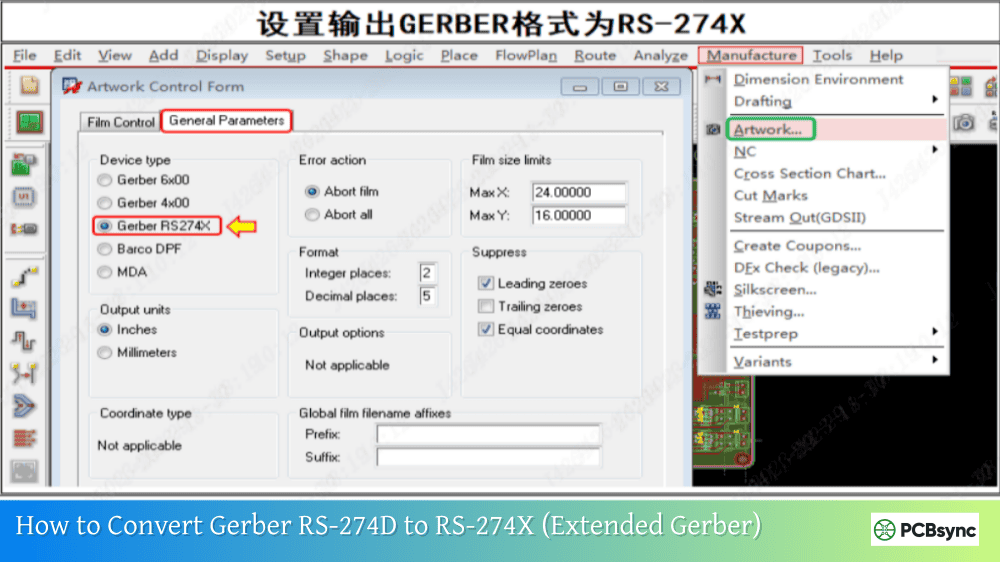
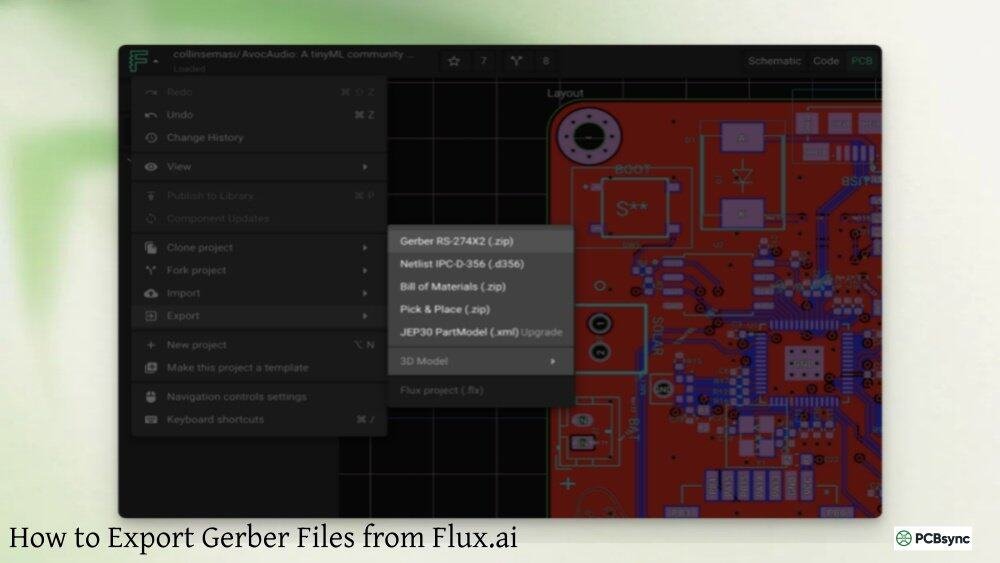
Notes: For PCB fabrication, we require PCB design file in Gerber RS-274X format (most preferred), *.PCB/DDB (Protel, inform your program version) format or *.BRD (Eagle) format. For PCB assembly, we require PCB design file in above mentioned format, drilling file and BOM. Click to download BOM template To avoid file missing, please include all files into one folder and compress it into .zip or .rar format.
Adobe Illustrator is one of the most powerful vector design tools available, and plenty of designers use it for PCB artwork, custom board shapes, and detailed graphics. The problem? Illustrator doesn’t speak Gerber. It can’t export the manufacturing files that PCB fabs need.
I’ve worked with countless designers who create beautiful artwork in Illustrator only to get stuck when it’s time to actually manufacture the board. The good news is there are several reliable methods to convert Illustrator files to Gerber format. Some are straightforward, others require intermediate steps, but all of them work.
This guide covers every practical approach to converting Adobe Illustrator files to Gerber, from direct conversion tools to multi-step workflows through PCB design software.
Understanding Adobe Illustrator and Gerber File Formats
Before diving into conversion methods, understanding what makes these formats different helps you choose the right approach and avoid common pitfalls.
What is an Adobe Illustrator File?
Adobe Illustrator’s native format (.ai) stores vector graphics using Adobe’s proprietary structure. It supports complex features including layers, bezier curves, gradients, transparency, text, and embedded images. Illustrator files are designed for visual design work, not manufacturing.
Illustrator can also export to several interchange formats that become important for PCB conversion:
PDF (Portable Document Format) – Preserves vector data and layers
SVG (Scalable Vector Graphics) – Open standard vector format
DXF (Drawing Exchange Format) – AutoCAD interchange format
EPS (Encapsulated PostScript) – Legacy vector format
What Makes Gerber Files Different
Gerber is the de facto standard for PCB manufacturing. Each Gerber file represents exactly one layer of a circuit board and contains instructions for photoplotter equipment. The format works in absolutes: specific coordinates paired with defined apertures (shapes).
A complete PCB manufacturing package typically includes:
Key Differences Between Illustrator and Gerber Formats
Characteristic
Adobe Illustrator
Gerber Format
Primary Purpose
Visual design, illustration
PCB manufacturing
Curves
Native bezier support
Approximated with line segments
Layers
Flexible, unlimited
One file per PCB layer
Colors
Full color, gradients
Single polarity (dark/clear)
Text
Editable fonts
Must be converted to paths
Transparency
Supported
Not supported
Effects
Filters, blends, masks
Geometry only
Why Designers Use Adobe Illustrator for PCB Work
Despite the conversion challenges, there are legitimate reasons why designers choose Illustrator for PCB-related work.
Complex Artwork and Graphics
Illustrator excels at creating detailed graphics that would be tedious or impossible in standard PCB tools. Conference badges, artistic boards, and decorative panels often start life in Illustrator because of its superior drawing tools.
Custom Board Outlines
Organic shapes, decorative edges, and complex cutouts are much easier to design in Illustrator than in most PCB software. The pen tool and pathfinder operations make shape creation intuitive for designers already familiar with the Adobe ecosystem.
Brand Assets and Logos
Company logos typically exist as Illustrator files. Converting these to Gerber allows placement on silkscreen or copper layers without redrawing from scratch.
RF and Antenna Design
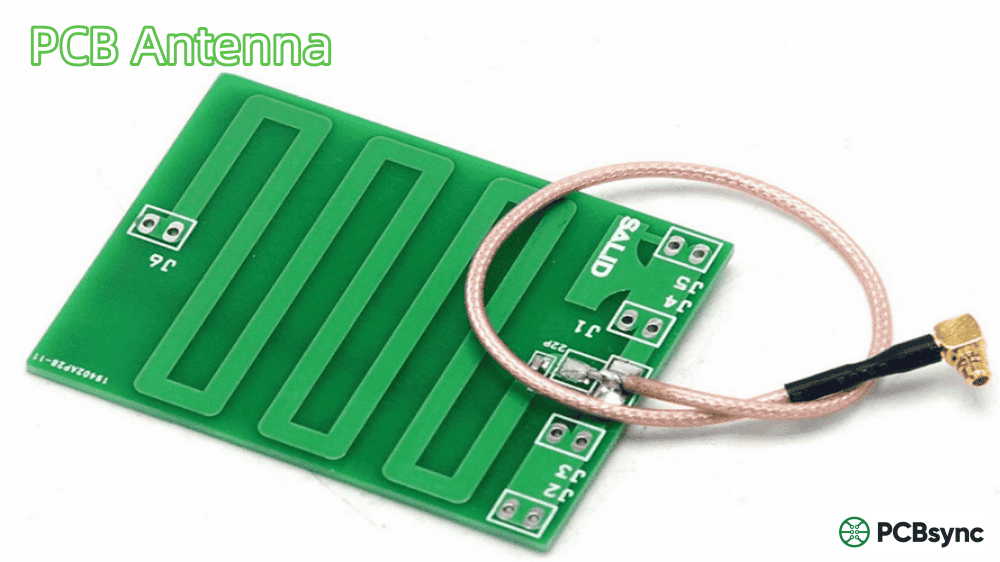
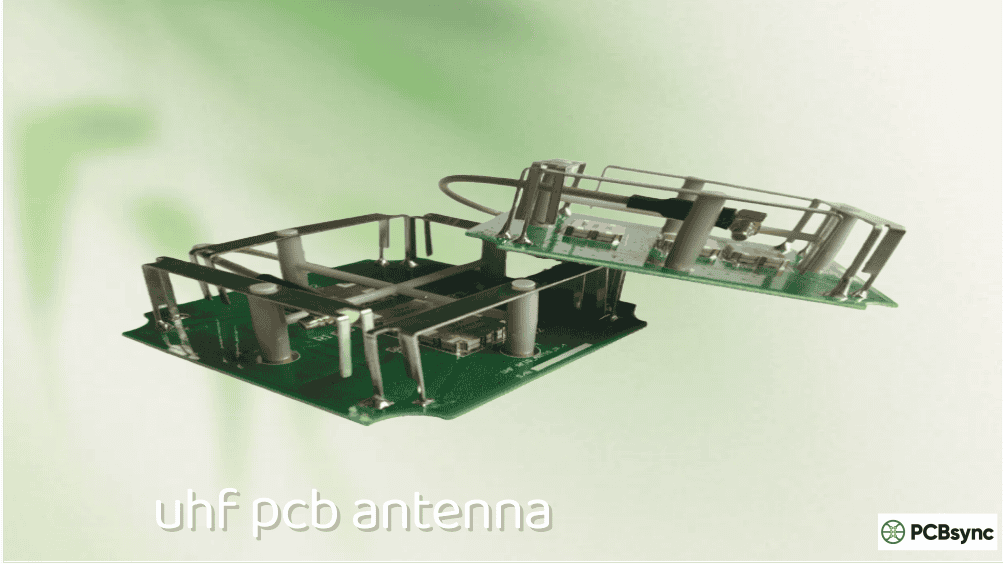
Some RF engineers prefer Illustrator’s precision tools for designing antenna patterns and microwave structures where aesthetic curve quality matters.
Adobe Illustrator to Gerber Conversion Methods
There are five main approaches to convert Illustrator files to Gerber format. Each has strengths depending on your specific needs.
Method 1: PDF Export with pdf2gerb Script
The pdf2gerb Perl script was specifically created for converting Adobe Illustrator designs to Gerber format. It’s free, open-source, and works directly with PDF files exported from Illustrator.
How it works:
The PDF and Gerber formats are structurally similar. Both use coordinate-based commands to move a “pen” and change line weights or apertures. pdf2gerb translates PDF commands to their Gerber equivalents.
Setting up your Illustrator file:
Create separate layers for each PCB layer (Top Copper, Bottom Copper, Silkscreen, Soldermask, Drill)
Use solid black for copper/ink present areas
For drill holes, draw a solid black circle (pad) with a solid white circle on top (hole)
The script generates Gerber and NC Drill files for each layer in the PDF.
Limitations:
Doesn’t handle bezier curves well (convert to straight segments first)
Requires careful layer setup in Illustrator
Command-line tool may intimidate non-technical users
Method 2: PDF/PostScript to Gerber with ACE 3000
ACE 3000 from Numerical Innovations is a professional CAD translator that handles PDF and PostScript files from Illustrator. This is the recommended commercial solution for production work.
Important note from Numerical Innovations: Using PDF/PostScript export from Illustrator works much better than DXF. Adobe’s DXF export creates problematic files with duplicate data that requires cleanup.
Method 3: DXF Export Through PCB Software
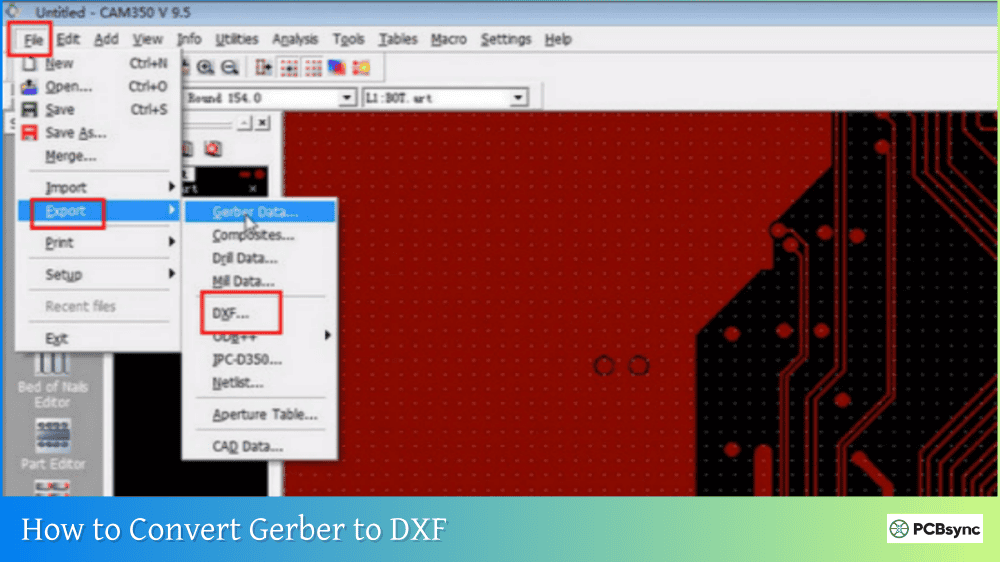
Illustrator can export to DXF format, which most PCB design tools can import. This creates a bridge between Illustrator and standard Gerber generation.
Step 1: Export DXF from Illustrator
Select artwork for export
File → Export → Export As → DXF
Choose AutoCAD R13/LT95 format for best compatibility
Check “Maximum editability” option
Position artwork at lower-left of artboard
Step 2: Import to PCB Software
Software
Import Method
KiCad
File → Import → Graphics (select DXF)
Eagle
Run ULP: import_dxf_polygons_v4.ulp
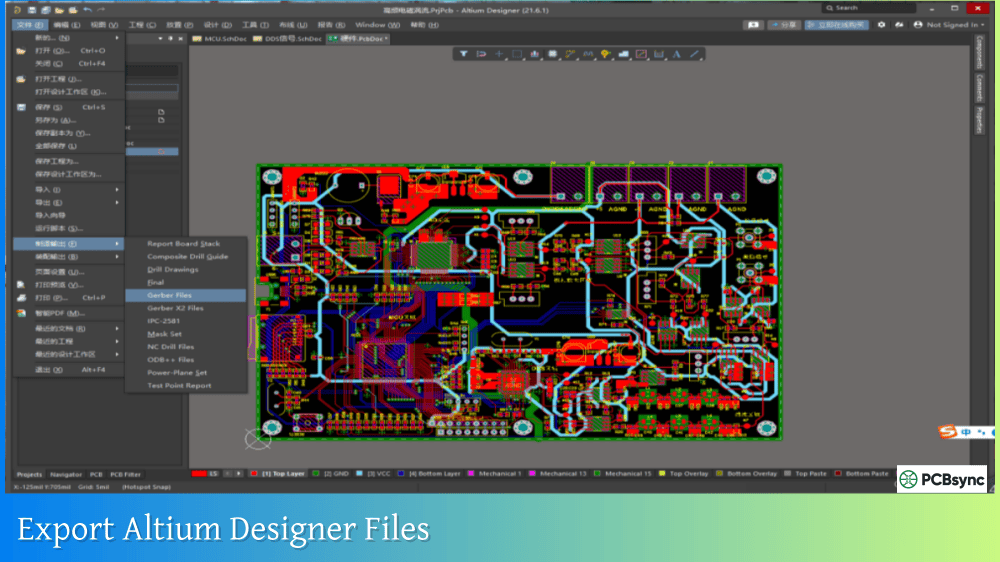
Altium
File → Import → DXF
DesignSpark
File → Import → DXF
Step 3: Generate Gerber Files
Once imported, use your PCB software’s standard Gerber export function.
Handling bezier curves:
DXF doesn’t preserve bezier curves well. Before exporting from Illustrator:
Select curved paths
Object → Path → Add Anchor Points (repeat as needed)
Object → Path → Simplify (check “Straight Lines”)
More anchor points before simplification means smoother curve approximation.
Method 4: SVG Export with Gerbolyze
Gerbolyze processes SVG files (which Illustrator exports) and renders them directly into Gerber format. It’s particularly good for artwork on existing PCB designs.
Workflow:
Export from Illustrator as SVG
Generate template from existing Gerbers: gerbolyze template –top template.svg gerber_dir
Open template in Illustrator, place your artwork
Merge artwork into Gerbers: gerbolyze paste –top template_edited.svg gerber_dir output_dir
Why this works well:
Gerbolyze handles the full SVG specification without rasterization. Vector data transfers losslessly to Gerber format. It’s tested with both KiCad and Altium Designer output.
Method 5: PNG Export Through KiCad Image Converter
For simpler graphics, exporting as high-resolution PNG and using KiCad’s bitmap converter provides an easy path.
Workflow:
Export from Illustrator as PNG (400+ DPI recommended)
Open KiCad Image Converter
Load PNG and configure settings
Export as KiCad footprint
Place footprint in PCB layout
Generate Gerber files from KiCad
Layer configuration in Image Converter:
Illustrator Element
KiCad Layer
Notes
Silkscreen graphics
F.SilkS or B.SilkS
Standard approach
Exposed copper areas
F.Cu or B.Cu
Requires editing layer in output file
Mask openings
F.Mask or B.Mask
Use “Negative” option
Preparing Adobe Illustrator Files for Conversion
Proper file preparation in Illustrator dramatically improves conversion success rates.
Convert All Text to Outlines
Gerber files don’t understand fonts. All text must be converted to paths.
Select text objects
Type → Create Outlines
Verify conversion by trying to edit the text
Flatten Transparency and Effects
Illustrator effects don’t translate to manufacturing:
Troubleshooting Common Illustrator to Gerber Issues
Problem: Curves Appear Jagged or Segmented
Cause: Bezier curves converted to too few line segments
Solution: Add more anchor points before simplifying curves, or use a tool like Gerbolyze that handles curves natively through SVG.
Problem: Elements Missing After Import
Cause: Unsupported Illustrator features (gradients, effects, clipping masks)
Solution: Flatten all effects and expand appearances (Object → Expand Appearance) before export.
Problem: Scale is Wrong in PCB Software
Cause: Unit mismatch between Illustrator and import settings
Solution:
Set Illustrator document to mm or inches
Match units in PCB software import dialog
Use reference dimension to verify after import
Problem: DXF Has Duplicate Geometry
Cause: Adobe’s DXF export includes both polylines and hatches
Solution: Use PDF/PostScript export instead of DXF, or clean up duplicates in PCB software before generating Gerber.
Problem: Fills Don’t Convert Properly
Cause: Illustrator fills not interpreted as solid regions
Solution: Use ACE 3000 or FAB 3000 for proper fill handling, or convert fills to outlined shapes in Illustrator.
Frequently Asked Questions About Illustrator to Gerber Conversion
Can Adobe Illustrator Export Gerber Files Directly?
No, Adobe Illustrator cannot export Gerber files natively. Illustrator is designed for visual design, not PCB manufacturing. You need to export from Illustrator in an intermediate format (PDF, SVG, or DXF) and then use conversion software or PCB design tools to generate Gerber output. The pdf2gerb script offers the closest thing to “direct” conversion by reading PDF files exported from Illustrator.
What is the Best Method to Convert Illustrator to Gerber?
For most users, exporting as PDF and using ACE 3000 provides the most reliable results with professional support. For free solutions, pdf2gerb works well for properly structured files, while the DXF-to-PCB-software workflow offers flexibility. For artwork being added to existing PCB designs, Gerbolyze through SVG export provides excellent quality. Choose based on your budget, technical comfort level, and specific requirements.
How Do I Handle Drill Holes When Converting from Illustrator?
Drill information requires special handling since Illustrator doesn’t natively understand hole data. With pdf2gerb, represent drills as a solid black circle (copper pad) with a solid white circle on top (the hole), both on a dedicated Drill layer. For other methods, you may need to create the Excellon drill file separately by listing hole coordinates and diameters, or use PCB software to add drill data after importing the graphics.
Why Does My Converted Gerber Look Different from the Illustrator File?
Several factors cause visual differences. Bezier curves get approximated with straight line segments. Colors don’t exist in Gerber (everything is dark or clear). Gradients and transparency can’t be represented. Fine details below the manufacturer’s minimum feature size won’t reproduce. Always verify converted files in a Gerber viewer and compare against your original design before ordering boards.
Should I Use DXF or PDF Export from Illustrator for Gerber Conversion?
PDF is generally the better choice for Gerber conversion. Adobe’s DXF export creates files with duplicate geometry (polylines with hatches on top) that require cleanup. PDF preserves vector data cleanly and works directly with tools like pdf2gerb and ACE 3000. Use DXF only when your target software specifically requires it and be prepared to remove duplicate elements.
Best Practices for Illustrator to Gerber Workflow
After handling many Illustrator-to-Gerber projects, these practices consistently produce the best results:
Start with the end in mind. Know which conversion method you’ll use before designing. This influences how you structure layers and handle curves.
Keep a separate “production” version. Maintain your original Illustrator file with all effects intact for future editing. Create a flattened, converted version specifically for Gerber export.
Use proper layer organization from the start. Creating correctly named layers during design is much easier than reorganizing later.
Test early and often. Don’t wait until the design is “done” to attempt conversion. Run test exports early to catch problems while they’re easy to fix.
Verify at every step. Check the DXF or PDF in another application. Check the import in your PCB software. Check the Gerber output in a viewer. Catching errors early saves time and money.
Document your workflow. Once you find a process that works, write it down. Conversion settings, layer names, and export options are easy to forget between projects.
Conclusion
Converting Adobe Illustrator files to Gerber format isn’t a single-click operation, but it’s definitely achievable with the right approach. Whether you use pdf2gerb for direct PDF conversion, ACE 3000 for professional results, or route through PCB design software via DXF, the key is proper file preparation in Illustrator.
The most common mistakes, including using unsupported effects, skipping text-to-outline conversion, and ignoring curve handling, are all avoidable with proper preparation. Take time to structure your Illustrator file correctly, and the conversion process becomes much more reliable.
For designers who regularly create PCB artwork in Illustrator, investing in a commercial tool like ACE 3000 pays off quickly in time savings and reduced frustration. For occasional conversions, the free pdf2gerb script or the DXF workflow through free PCB software provides capable alternatives.
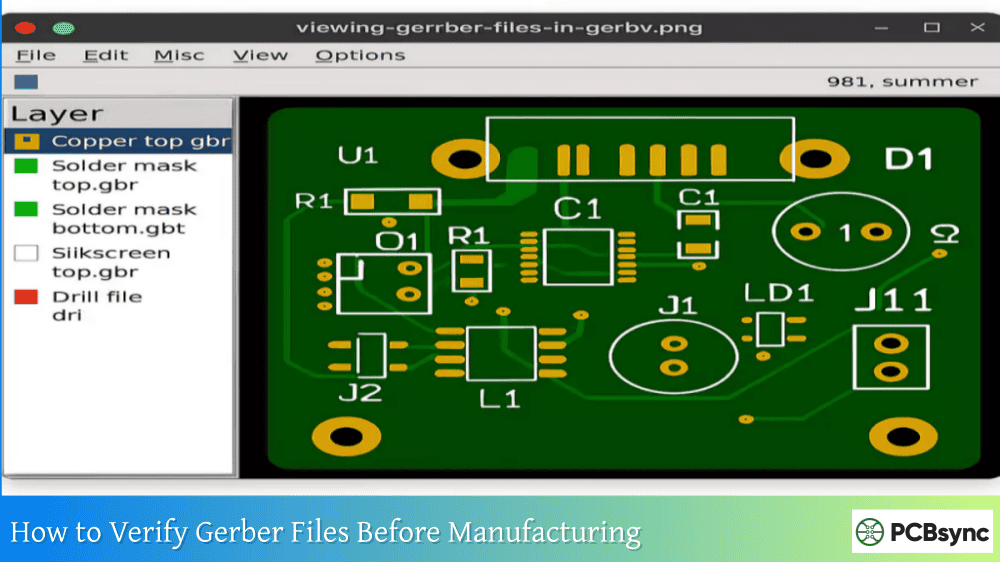
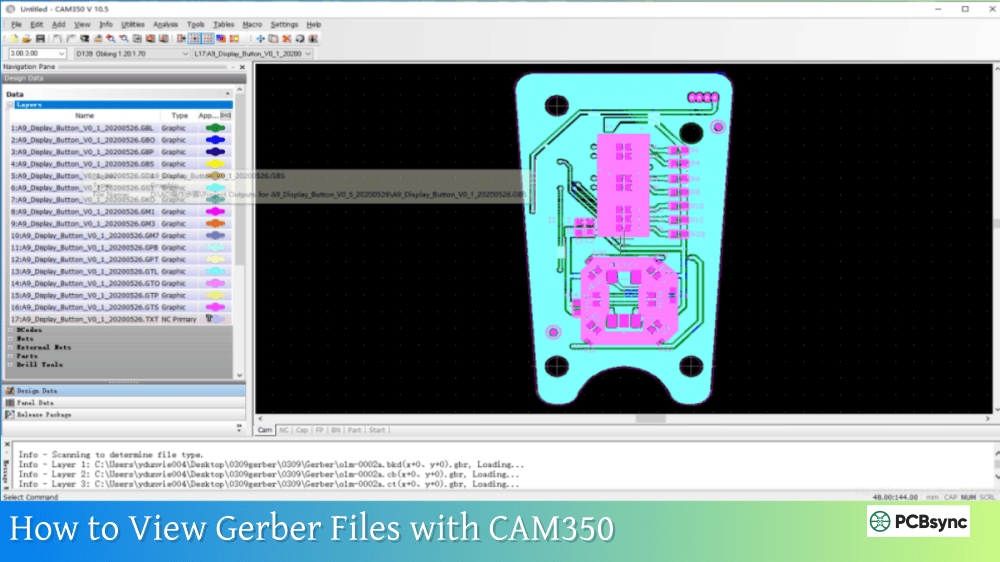
Whatever method you choose, always verify your Gerber output in a dedicated viewer before sending files to manufacturing. The few minutes spent checking saves days of waiting for incorrect boards.
Inquire: Call 0086-755-23203480, or reach out via the form below/your sales contact to discuss our design, manufacturing, and assembly capabilities.
Quote: Email your PCB files to Sales@pcbsync.com (Preferred for large files) or submit online. We will contact you promptly. Please ensure your email is correct.
Notes: For PCB fabrication, we require PCB design file in Gerber RS-274X format (most preferred), *.PCB/DDB (Protel, inform your program version) format or *.BRD (Eagle) format. For PCB assembly, we require PCB design file in above mentioned format, drilling file and BOM. Click to download BOM template To avoid file missing, please include all files into one folder and compress it into .zip or .rar format.