Inquire: Call 0086-755-23203480, or reach out via the form below/your sales contact to discuss our design, manufacturing, and assembly capabilities.
Quote: Email your PCB files to Sales@pcbsync.com (Preferred for large files) or submit online. We will contact you promptly. Please ensure your email is correct.
Notes: For PCB fabrication, we require PCB design file in Gerber RS-274X format (most preferred), *.PCB/DDB (Protel, inform your program version) format or *.BRD (Eagle) format. For PCB assembly, we require PCB design file in above mentioned format, drilling file and BOM. Click to download BOM template To avoid file missing, please include all files into one folder and compress it into .zip or .rar format.
After fifteen years of submitting PCB designs for manufacturing, I’ve learned that Gerber file errors are simultaneously the most frustrating and most preventable problems in the production process. That email from your fab house asking for corrections always seems to arrive when you’re already behind schedule. The good news is that nearly every common Gerber file error follows predictable patterns, and knowing what to look for means you can catch these problems before they delay your boards. This guide covers the errors manufacturers see most frequently and provides practical solutions for each.
Gerber files translate your PCB design into manufacturing instructions. This translation process involves multiple software settings, file format choices, and layer configurations—each representing an opportunity for something to go wrong. Unlike schematic errors that trigger DRC warnings, many Gerber export problems slip through unnoticed until a manufacturer tries to import your files.
Impact of Gerber Errors on Production
Error Type
Production Impact
Typical Delay
Missing files
Cannot proceed, order held
1-3 days
Wrong format
Import failure, manual conversion
1-2 days
Layer misalignment
Potential board failure, scrap
Complete respin
Drill errors
Holes in wrong locations
Complete respin
Incomplete outline
Manual interpretation required
1-2 days
Empty/corrupted files
Cannot determine intent
1-3 days
Understanding what can go wrong helps you implement verification steps that catch problems before submission.
Missing or Incomplete Gerber Files
The most common Gerber file error is simply not including all the necessary files in your submission. Every layer of your PCB requires its own Gerber file, and missing even one can halt production.
How to fix: Create a checklist for your specific layer count and verify every file exists before zipping. Open each file in a Gerber viewer to confirm it contains actual data—zero-byte files that appear in your folder won’t help the manufacturer.
Multilayer Board Additional Requirements
For boards with four or more layers, you need inner layer copper files plus potentially multiple drill files if using blind or buried vias.
Layer Count
Additional Files Required
4-layer
Inner layer 1, Inner layer 2
6-layer
Inner layers 1-4
8+ layers
All inner layers, stackup documentation
HDI boards
Multiple drill files per drill span
How to fix: Include a stackup document (PDF, Excel, or text file) that clearly identifies the order and purpose of each layer file. Without this information, manufacturers must guess at layer sequence.
Missing Board Outline
The board outline defines the physical boundary where your PCB will be routed from the panel. Without a clearly defined outline, manufacturers cannot determine where to cut your board.
Signs of Board Outline Problems
Problem
Symptom
Result
Missing outline file
No .GKO or similar in package
Production hold
Outline on wrong layer
Appears on silkscreen
Incorrect dimensions
Open outline
Gaps in boundary
Ambiguous board shape
Multiple outlines
Conflicting boundaries
Confusion over intent
How to fix in KiCad: Ensure all boundary geometry is on the Edge.Cuts layer. The outline must be a single closed shape—verify there are no gaps where line segments fail to meet.
How to fix in Eagle: Include both Layer 20 (Dimension) and Layer 46 (Milling) in your outline output. Internal cutouts often appear on the Milling layer and will be missed if you only export Dimension.
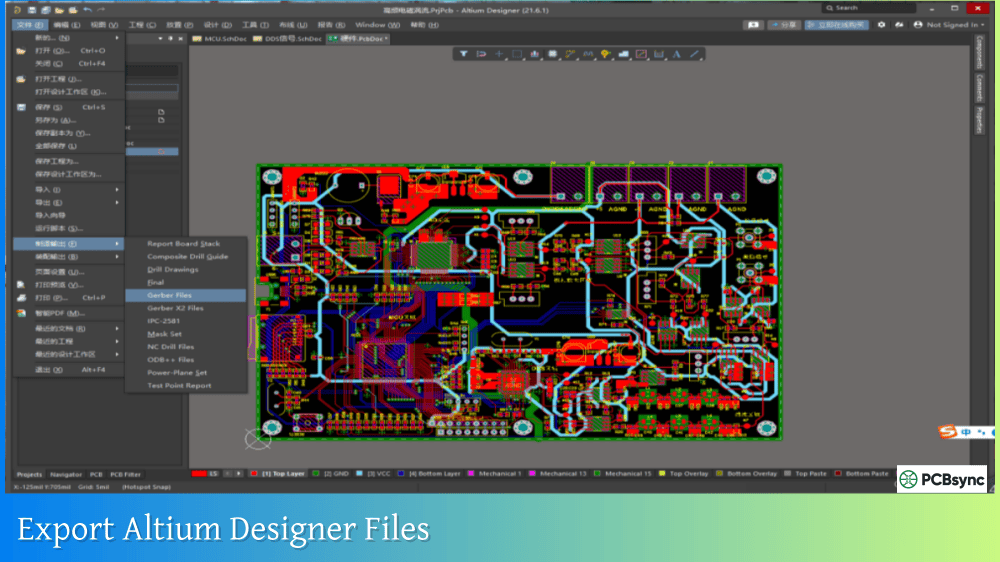
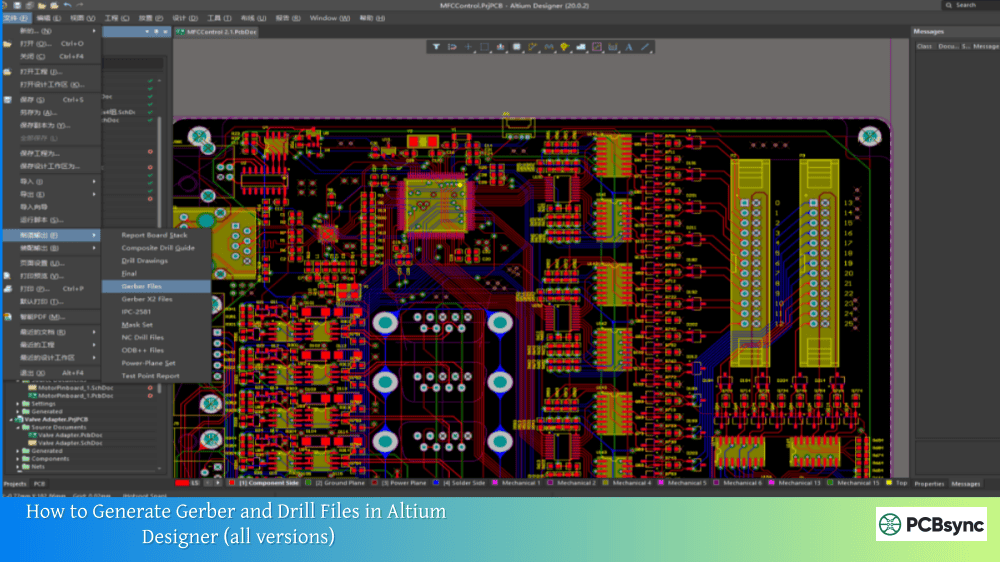
How to fix in Altium: Export the mechanical layer containing your board outline. Verify the Keep-Out layer matches your intended board boundary.
Missing or Incorrect Drill Files
Drill file problems rank among the most critical Gerber errors because they directly affect whether components can be mounted. A missing drill file means no holes—no vias, no through-hole components, no mounting holes.
Common Drill File Errors
Error
Cause
Consequence
Missing drill file
Separate export step forgotten
No holes drilled
Drill map instead of drill file
Wrong export option
Supplementary info only, not machinable
Wrong coordinate format
Settings mismatch
Holes in wrong locations
Wrong units
Inch vs. metric confusion
25.4x scaling error
Missing tool definitions
Incomplete header
Unknown hole sizes
Identifying the difference: A drill file (.DRL, .XLN) contains machine-readable NC code with coordinate data. A drill map is a visual reference document that cannot be used for manufacturing. If your file opens as an image rather than coordinate data, you exported the wrong thing.
How to fix coordinate format issues: Drill file headers should clearly specify the format. Look for lines indicating:
Leading or trailing zero suppression
Coordinate format (e.g., 2:4, 2:5, 3:3)
Units (INCH or METRIC)
If your header is incomplete or your CAD tool doesn’t include this information, specify it in a readme file. Most manufacturers assume 2:4 format with trailing zero suppression when not specified.
Drill-to-Copper Misalignment
One of the most frustrating problems occurs when drill holes don’t align with copper pads. This typically results from different origin settings between Gerber and drill export.
Symptoms:
Holes systematically offset from pad centers
Scaling appears correct but position is wrong
Problem affects all holes equally
How to fix:
Use the same coordinate origin for both Gerber and drill file export
In KiCad, enable “Use drill/place file origin” for both exports
In Eagle, verify your CAM job uses consistent origin settings
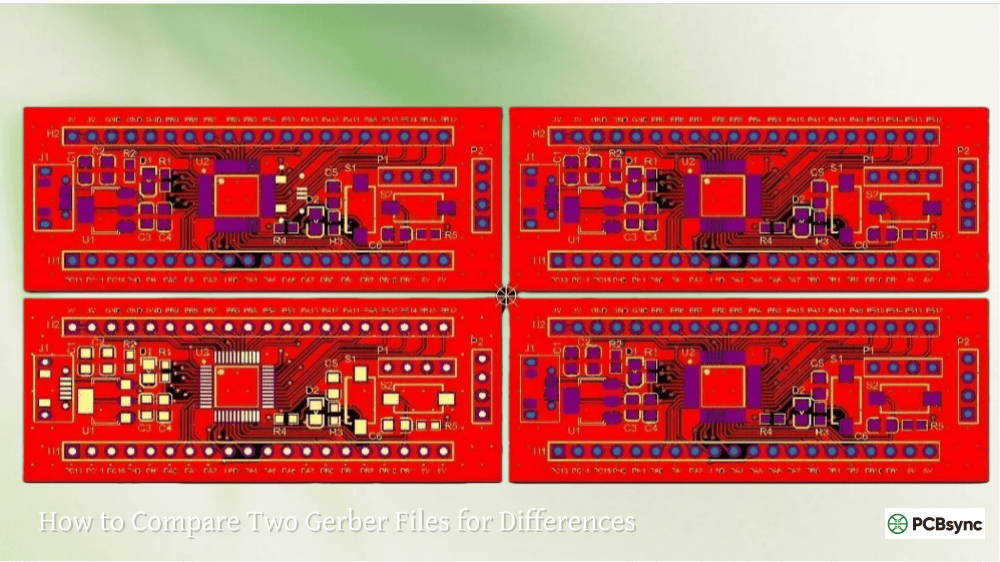
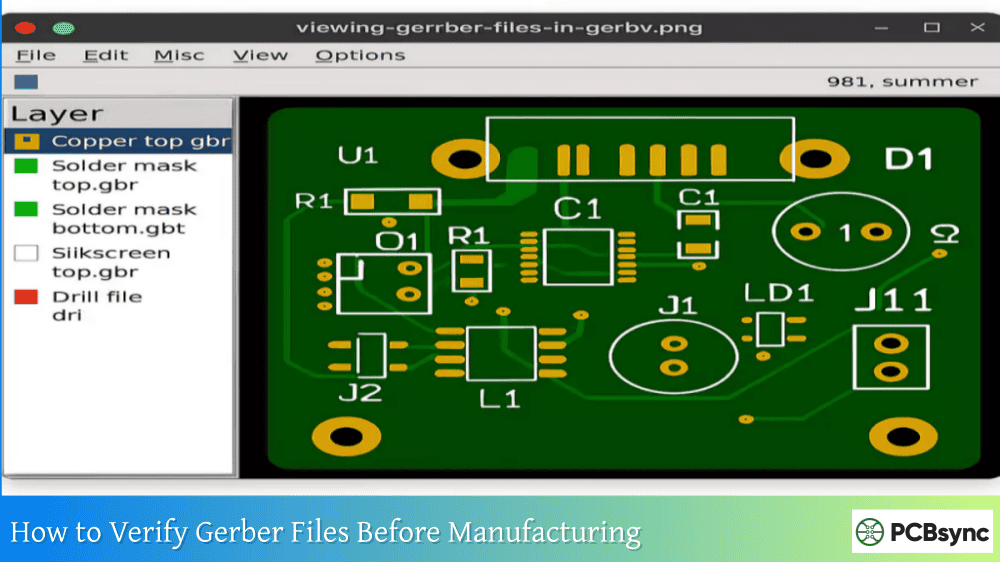
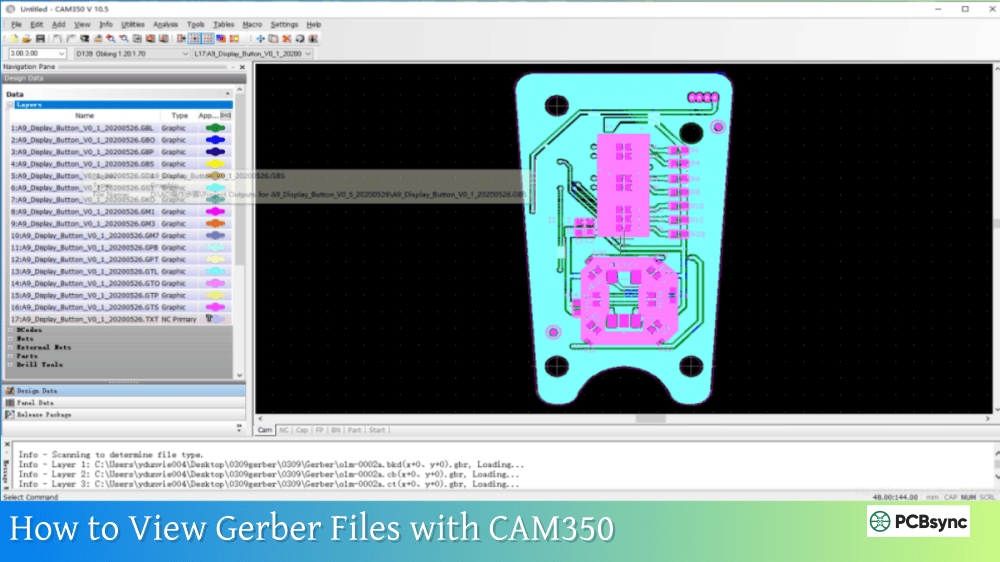
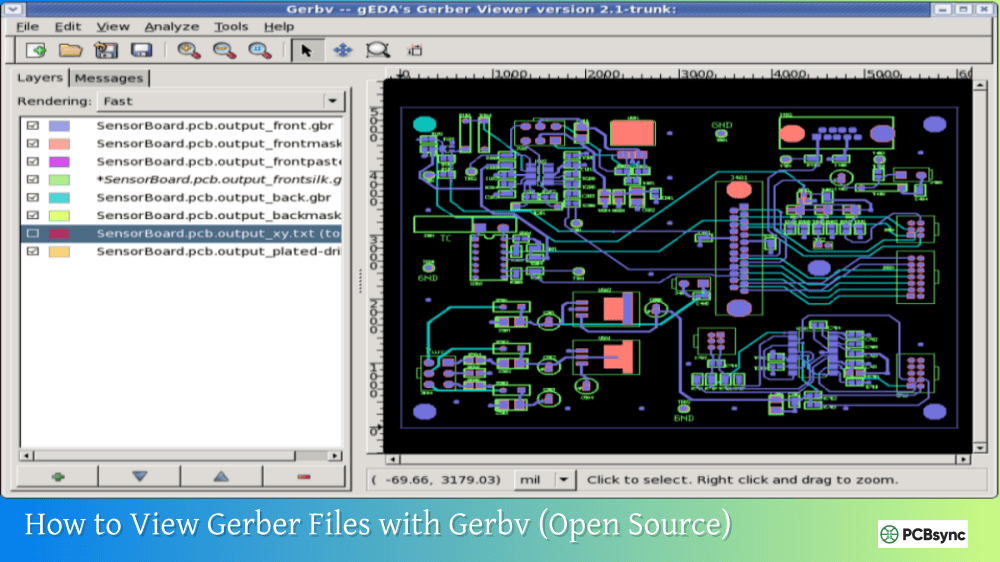
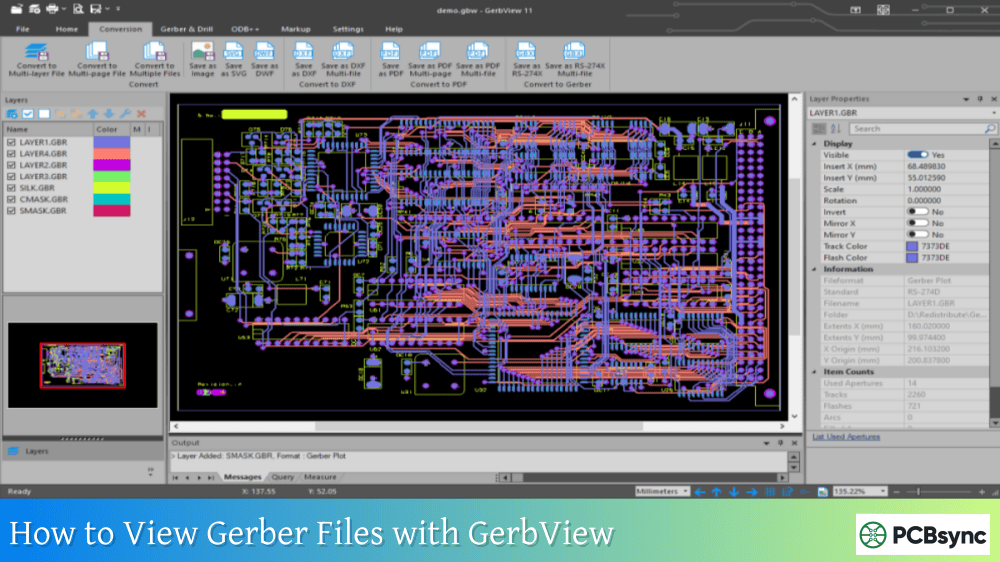
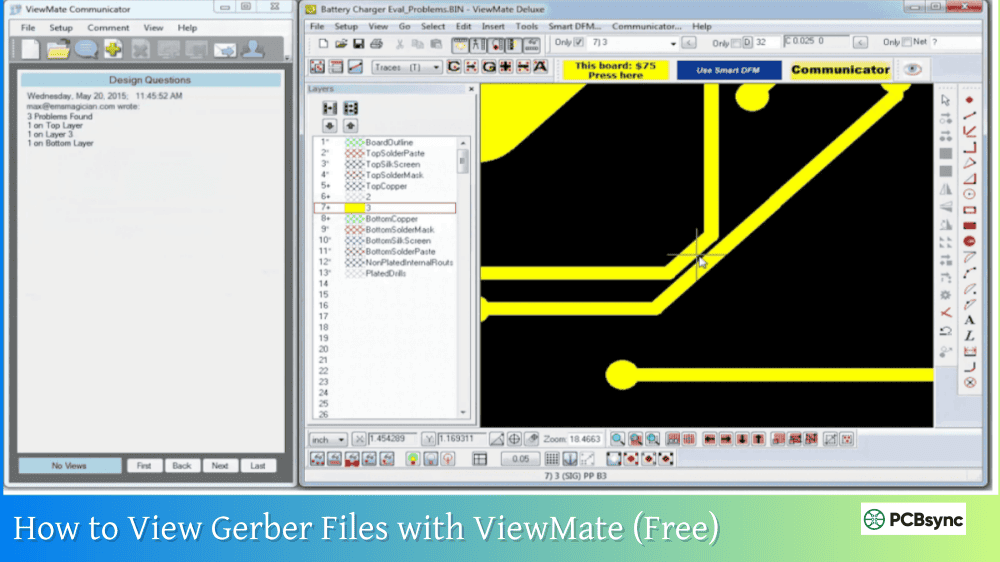
Open both files in a Gerber viewer and overlay them to verify alignment before submission
Obsolete or Wrong File Format
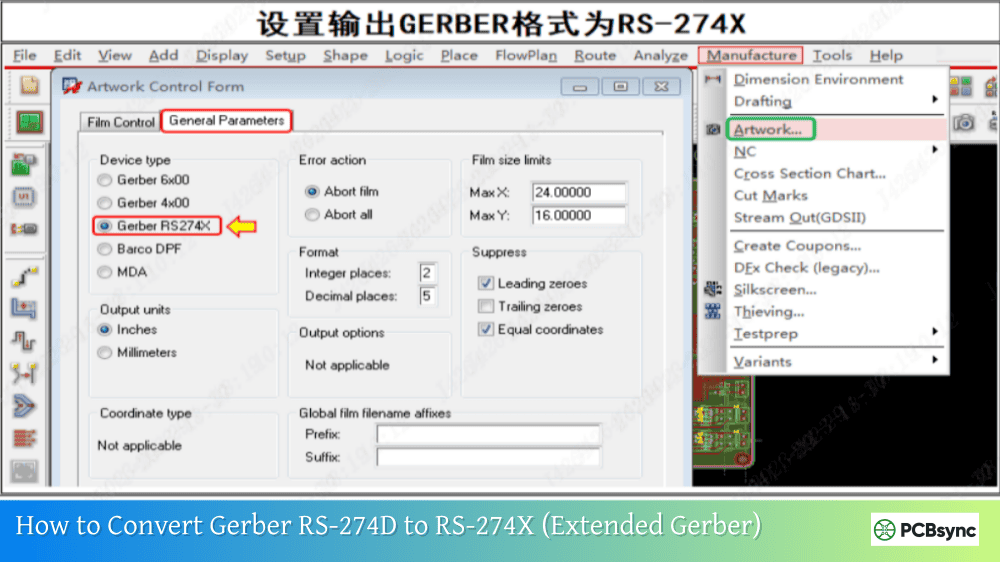
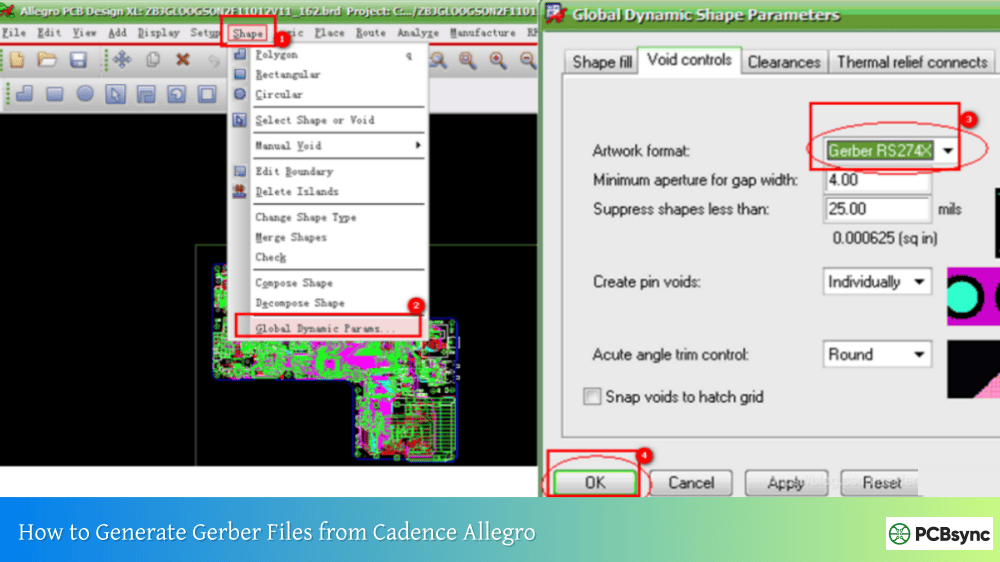
The industry standard format is RS-274X (Extended Gerber). Submitting files in older formats or manufacturer-specific formats causes import failures and delays.
Configure your CAD software to export RS-274X format
If your manufacturer rejects X2 files, disable extended attributes and re-export
Never submit native CAD files (.brd, .pcb, .kicad_pcb) unless specifically instructed—convert to Gerber first
Aperture List Problems
RS-274D files require a separate aperture list defining tool shapes and sizes. This external dependency creates opportunities for errors. RS-274X embeds aperture definitions within the file, eliminating this problem.
How to fix: If you must use RS-274D (you shouldn’t), ensure the aperture list format matches the Gerber file format and is included in your submission. Better solution: switch to RS-274X export.
Layer Misalignment Errors
When different layers of your PCB don’t align correctly in the Gerber files, the manufactured board won’t work. Traces might not connect to pads, solder mask might cover connections, and drill holes might miss their targets.
Causes of Layer Misalignment
Cause
Detection Method
Prevention
Different export origins
Overlay in viewer
Use consistent origin
Incremental vs. absolute coordinates
Check file headers
Force absolute mode
Different unit settings
Scaling appears wrong
Standardize on mm or inches
CAD software bugs
Appears after export
Update software, verify output
How to fix: Load all Gerber layers plus drill files into a viewer and overlay them. Toggle layers on and off to verify:
Copper pads align with drill holes
Solder mask openings expose the correct pads
Silkscreen doesn’t overlap pads
All layers share the same origin point
Consider adding fiducial marks to your design—these provide clear alignment references visible on multiple layers.
Solder Mask Errors
Solder mask problems affect solderability and board reliability. Common issues include missing openings over pads, excessive clearance, and incorrect polarity.
Common Solder Mask Problems
Problem
Visual Symptom
Manufacturing Result
Missing openings
Mask covers pads
Cannot solder components
Excessive clearance
Openings too large
Exposed copper between pads
Wrong polarity
File appears inverted
All copper exposed or covered
Empty mask file
No data exported
Manufacturer guesses intent
How to fix polarity issues: Solder mask Gerber files should be “positive”—the drawn areas represent where mask will be removed to expose copper. If your viewer shows solid mask covering everything or nothing, check your CAD export polarity setting.
Eagle 9.20+ specific fix: The CAM Processor defaults “Negative Polarity” checked for solder mask. Uncheck this option before processing.
How to fix empty solder mask files: Some CAD tools generate empty or malformed solder mask files when a layer has no exposed copper (vias only, tented). Verify your solder mask files contain valid Gerber commands, not just header information.
Silkscreen Problems
Silkscreen errors don’t prevent boards from functioning but create assembly problems and look unprofessional.
Silkscreen Issues and Fixes
Issue
Problem
Fix
Text on pads
Ink prevents soldering
Enable “subtract soldermask from silkscreen”
Missing designators
Components unidentified
Plot reference designators layer
Text too small
Illegible after printing
Minimum 0.8mm (32 mil) height
Bottom silkscreen missing
Only top exported
Manually add bottom silk output
Silkscreen extends past board
Prints on panel
Clip silkscreen to board outline
How to fix silkscreen on pads: Modern CAD tools include an option to automatically remove silkscreen from solder mask openings. In KiCad, enable “Subtract soldermask from silkscreen.” In Altium, this is handled by clearance rules.
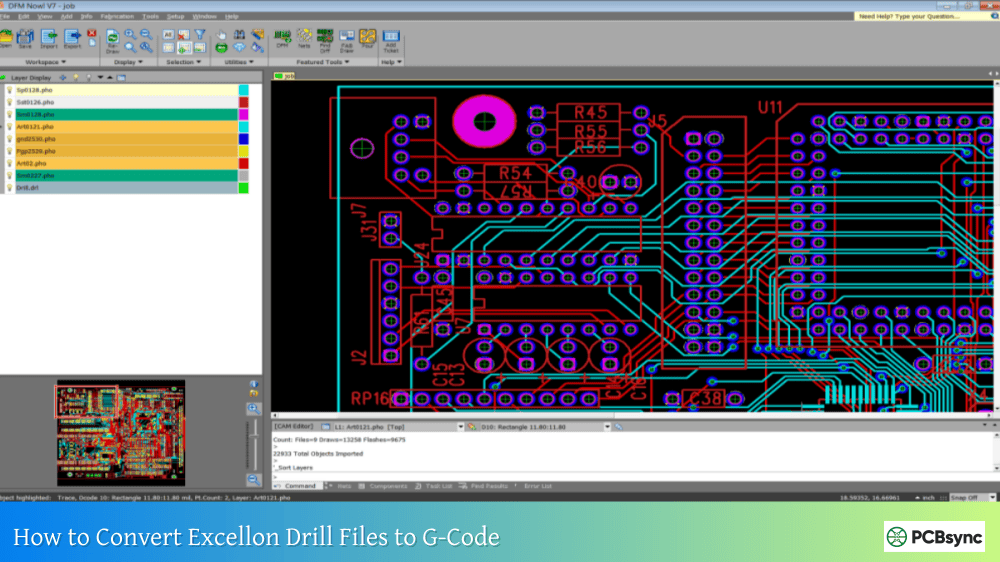
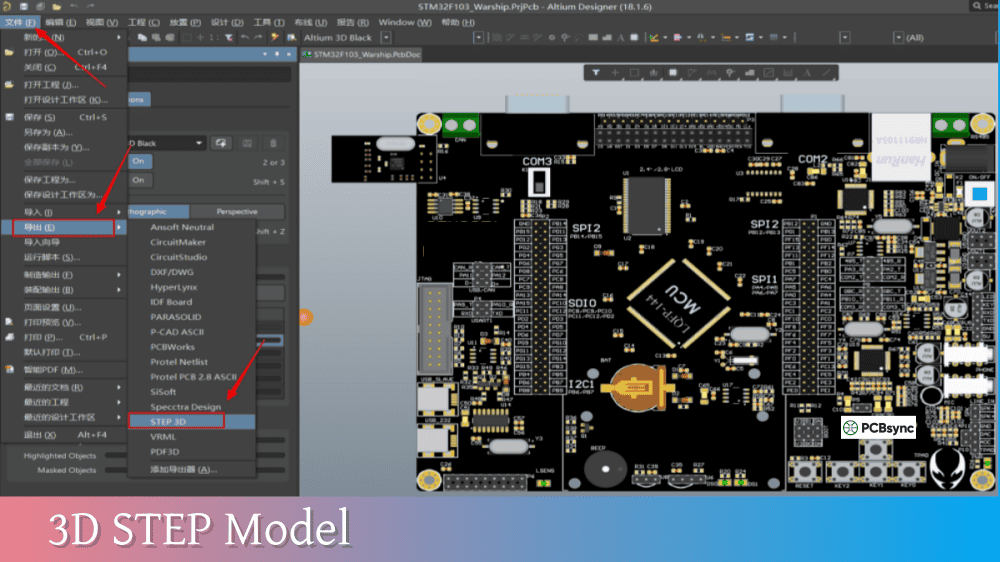
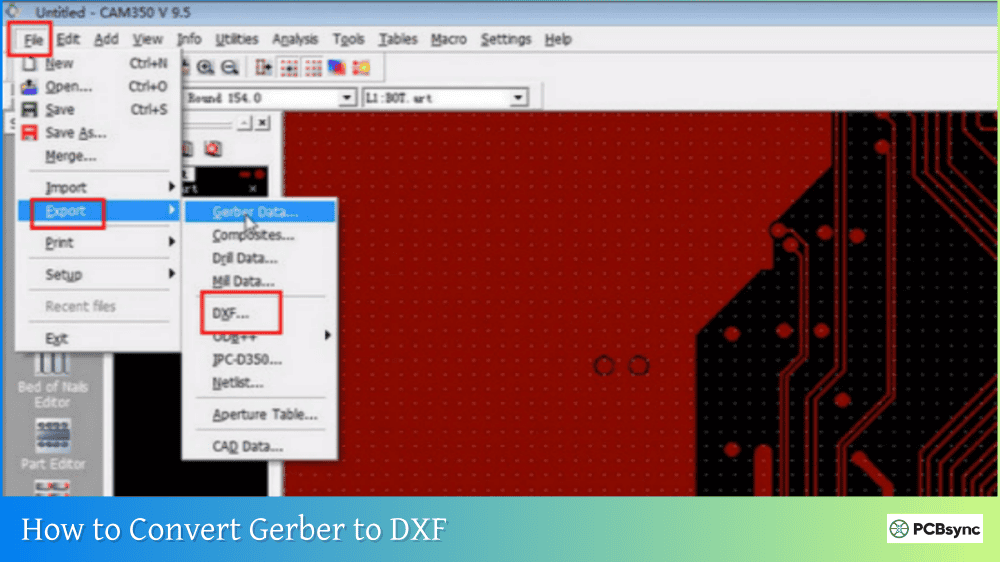
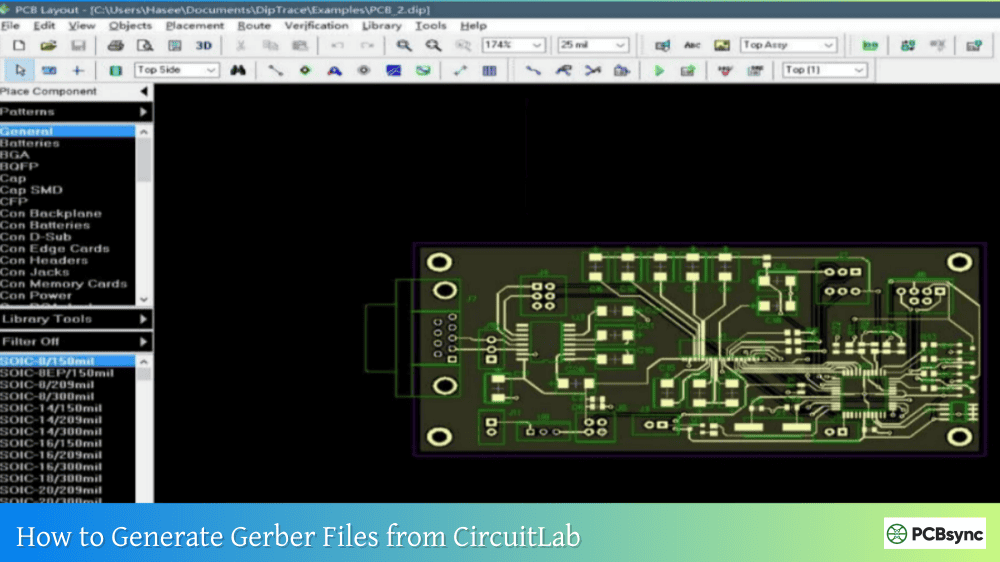
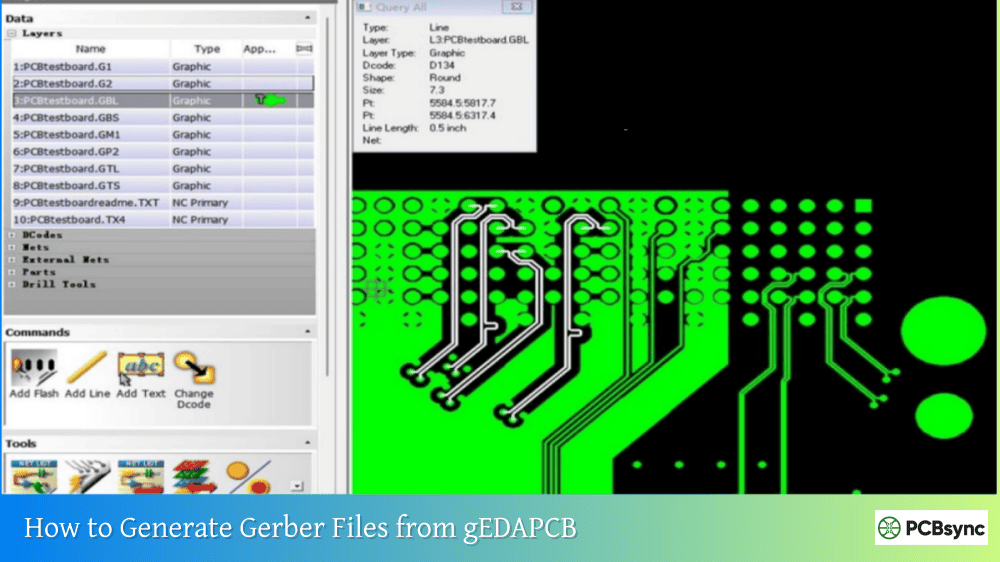
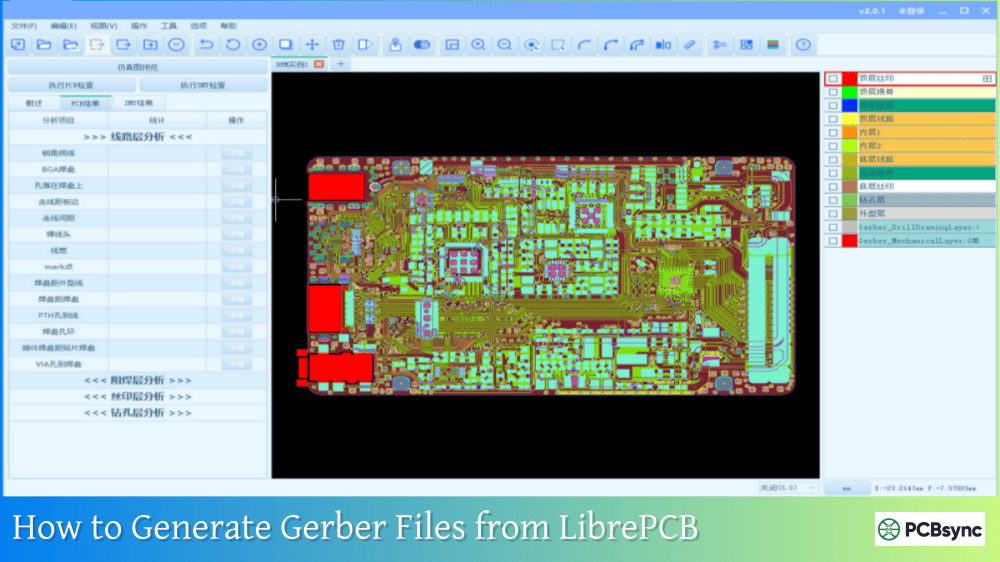
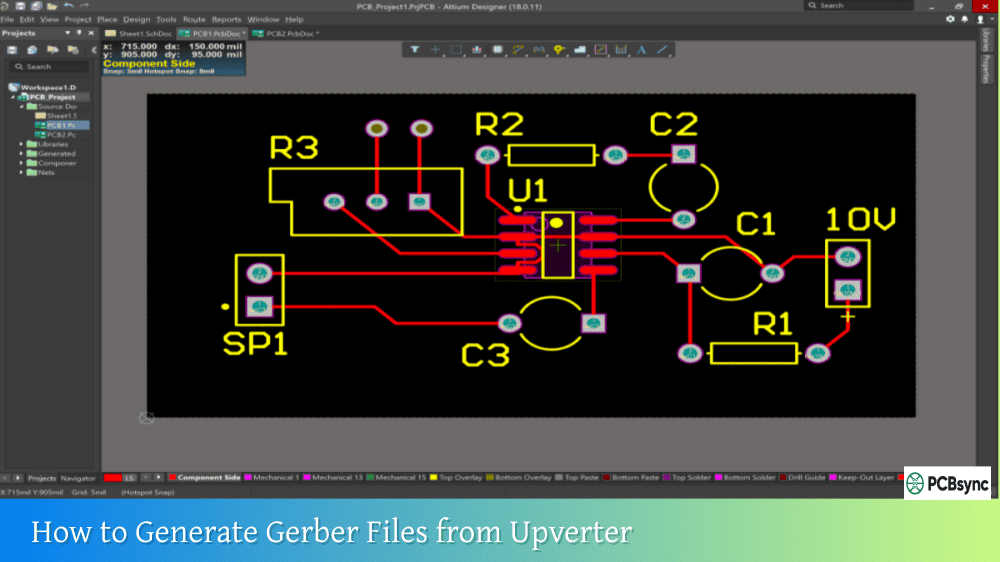
Read more How to convert PCB Files in different Design software:
Some CAD software exports surface mount pads as clusters of small vectors rather than single solid shapes. This phenomenon most commonly affects solder mask and paste mask layers.
Why it matters: Vectorized pads slow down CAM processing, may cause imaging problems during fabrication, and increase file sizes unnecessarily.
How to fix: Configure your CAD software to generate “flash pads” instead of “vector pads.” The exact setting location varies by tool:
In Altium, check the Gerber export options for pad generation method
In older Eagle versions, this may require CAM job modification
If stuck with vectorized files, ask your manufacturer if they can process them (most can, with extra time)
Composite Layer Errors
When CAD software splits a single copper layer into multiple Gerber files (one for pours, one for traces, one for pads), manufacturers must manually reconstruct the complete layer.
How to fix: Check your CAD export settings to ensure each physical layer exports as a single Gerber file. In some tools, this requires disabling “separate positive and negative” or similar options. Verify by loading your exported files—you should have exactly one file per physical layer.
Unclear File Naming
While not technically an error, unclear file names increase the risk of manufacturers misinterpreting your design.
File Naming Best Practices
Do
Don’t
Use Protel extensions (.GTL, .GBL)
Use generic extensions (.gbr for all)
Include layer description
Use numbers only (layer1.gbr)
Match your stackup document
Use your CAD tool’s cryptic defaults
Be consistent across projects
Change conventions randomly
How to fix: Enable “Protel filename extensions” in KiCad. In Eagle, use manufacturer-provided CAM jobs that include proper naming. Create or download a naming convention reference and follow it consistently.
How to Verify Your Gerber Files Before Submission
Prevention is easier than fixing problems after submission. Implement these verification steps before every order.
What should I do if my manufacturer says files are missing but I included everything?
First, verify your ZIP file actually contains all the files you think it does—occasionally files fail to add during compression. Check that none of your files are zero bytes (empty). If files are present and non-empty, the issue may be file recognition. Unclear naming can cause automated import systems to miss files. Ask your manufacturer which specific files they need, and either rename your files to match their expected naming convention or include a readme document mapping your file names to layer functions.
How do I fix drill files that show holes offset from pads?
Drill-to-pad misalignment almost always results from different coordinate origins between Gerber and drill exports. In your CAD software, ensure both exports use the same origin reference point (board origin, absolute origin, or aux axis origin—just make them match). Export both file types again with consistent settings. Before resubmitting, load the new files into a Gerber viewer and overlay the drill layer on a copper layer. Zoom in on several pads to verify holes are centered. If alignment is still off after matching origins, check for unit mismatches (inches vs. millimeters) which would cause 25.4x scaling errors.
Why does my solder mask appear inverted in the Gerber viewer?
Solder mask polarity confusion is common. The industry convention is “positive” polarity where drawn features in the Gerber file represent areas where mask will be removed (pad openings). If your viewer shows the entire board covered or entirely exposed, your CAD tool may have exported with inverted polarity. Check your export settings for a “negative” or “polarity” option and ensure it’s set for positive/normal output. Some Eagle versions default to negative polarity for solder mask—uncheck this option in the CAM Processor before export.
Can manufacturers fix minor Gerber errors, or do I need to regenerate files?
Many manufacturers can make minor corrections during their CAM review process, but this adds time and introduces risk. Issues like missing silkscreen layers, minor clearance violations, or silkscreen-on-pad problems can often be corrected. However, more significant problems—missing drill files, wrong formats, misaligned layers, incorrect outlines—require you to fix the source files and resubmit. Even when manufacturers can fix problems, they charge engineering fees for the time involved. Fixing errors yourself before submission is faster, cheaper, and ensures the corrections match your design intent.
What’s the difference between a drill file and a drill map?
A drill file contains NC (numerical control) code that directly programs drilling machines. It includes coordinate data for each hole location and tool definitions for each hole size. File extensions are typically .DRL, .XLN, or .NC. A drill map is a visual reference document showing hole locations and sizes in human-readable form—think of it as a diagram of your drill pattern. While useful for documentation, drill maps cannot be processed by manufacturing equipment. If your manufacturer requests a drill file and you provide a drill map, they cannot drill your board. When exporting from your CAD tool, select “Generate Drill File” or similar, not “Generate Drill Map” or “Generate Drill Drawing.”
Conclusion
Common Gerber file errors share one thing in common: they’re all preventable. Missing files result from incomplete checklists. Alignment errors come from inconsistent export settings. Format problems happen when export options aren’t verified. Every error in this guide can be caught before submission with systematic verification.
Build a personal verification routine: export your Gerbers, open them in a viewer, overlay all layers, verify alignment, run a DFM check, then submit. The few extra minutes this takes pays back in faster turnaround, fewer engineering questions, and boards that work correctly the first time.
When errors do slip through, respond quickly with corrected files. Provide context about what you changed so the manufacturer can verify the correction. And document what went wrong so you can add that specific check to your verification process for next time.
The goal isn’t perfection—it’s systematic improvement. Each error you catch teaches you what to check for, building toward a personal process that catches problems before they become expensive manufacturing delays.
Inquire: Call 0086-755-23203480, or reach out via the form below/your sales contact to discuss our design, manufacturing, and assembly capabilities.
Quote: Email your PCB files to Sales@pcbsync.com (Preferred for large files) or submit online. We will contact you promptly. Please ensure your email is correct.
Notes: For PCB fabrication, we require PCB design file in Gerber RS-274X format (most preferred), *.PCB/DDB (Protel, inform your program version) format or *.BRD (Eagle) format. For PCB assembly, we require PCB design file in above mentioned format, drilling file and BOM. Click to download BOM template To avoid file missing, please include all files into one folder and compress it into .zip or .rar format.