Inquire: Call 0086-755-23203480, or reach out via the form below/your sales contact to discuss our design, manufacturing, and assembly capabilities.
Quote: Email your PCB files to Sales@pcbsync.com (Preferred for large files) or submit online. We will contact you promptly. Please ensure your email is correct.
Notes: For PCB fabrication, we require PCB design file in Gerber RS-274X format (most preferred), *.PCB/DDB (Protel, inform your program version) format or *.BRD (Eagle) format. For PCB assembly, we require PCB design file in above mentioned format, drilling file and BOM. Click to download BOM template To avoid file missing, please include all files into one folder and compress it into .zip or .rar format.
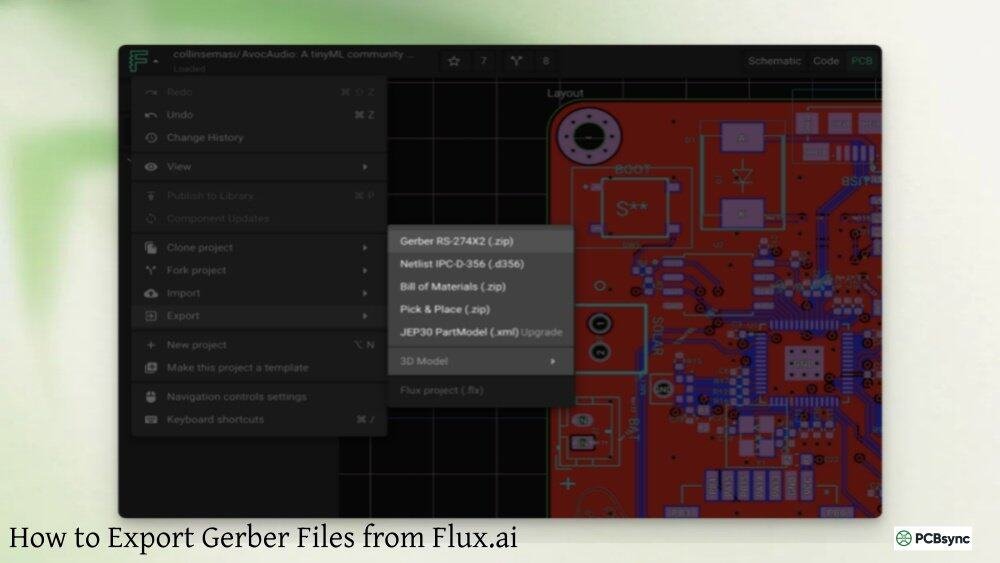
Getting Gerber file output settings wrong is one of the fastest ways to delay a PCB project. I’ve seen boards come back with misaligned drill holes, inverted solder masks, and features scaled to the wrong size—all because of incorrect export settings. The frustrating part is that these errors are entirely preventable. This guide covers the best practices for Gerber file output settings that ensure your designs translate correctly from CAD to fabrication every single time.
Your Gerber files are the manufacturing blueprint for your PCB. Every setting you choose during export—coordinate format, units, zero suppression, aperture handling—directly affects how the manufacturer interprets your design. Get these settings wrong, and features end up in the wrong locations, traces appear at incorrect widths, or layers simply don’t align.
The good news is that once you understand these settings and configure them correctly, you can save your export configuration and reuse it for every project.
Choosing the Right Gerber Format Version
Before adjusting any other settings, select the appropriate Gerber format version. This fundamental choice affects compatibility and data completeness.
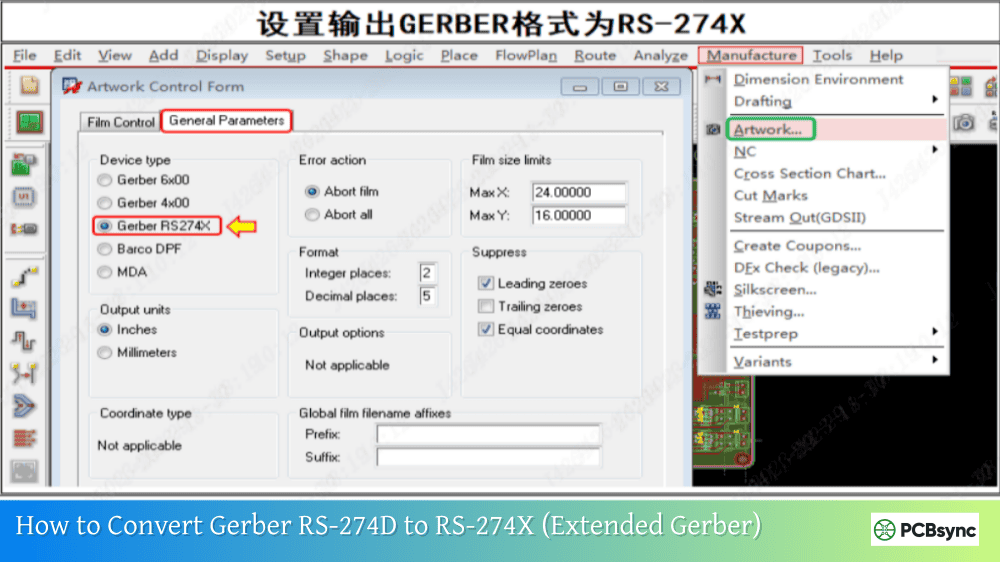
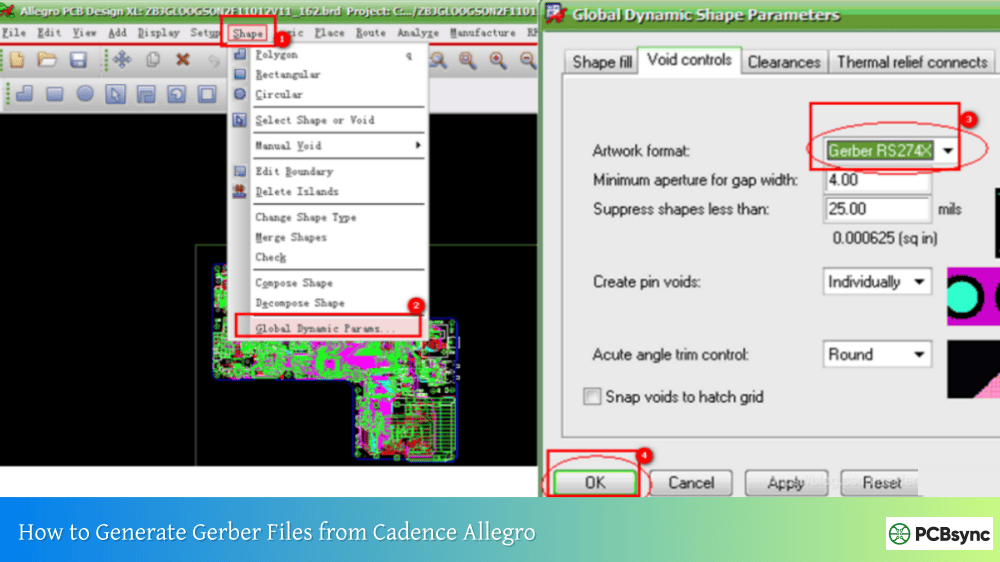
Best practice: Export in RS-274X format unless your manufacturer specifically requests Gerber X2. RS-274X is self-contained (no separate aperture files needed) and universally supported. If your CAD tool supports X2, you can export in both formats to maximize compatibility.
RS-274X vs RS-274D: Why It Matters
RS-274D required a separate aperture list file that defined all pad shapes and sizes. If this file was missing, mismatched, or corrupted, the Gerber data became unreadable—the manufacturer had no way to know what shapes to draw. RS-274X solved this by embedding aperture definitions directly in each Gerber file. Always verify your export uses “Embedded apertures (RS-274X)” rather than external aperture files.
Coordinate Format Settings
The coordinate format defines how numerical precision is expressed in your Gerber files. This setting must match between Gerber files and drill files to ensure proper alignment.
Understanding Coordinate Format Notation
Coordinate format is expressed as X:Y where X is integer digits and Y is decimal digits.
Format
Total Digits
Resolution (inches)
Resolution (mm)
Common Use
2:3
5
0.001″ (1 mil)
0.001mm
Legacy, low precision
2:4
6
0.0001″ (0.1 mil)
0.0001mm
Standard imperial
2:5
7
0.00001″ (0.01 mil)
0.00001mm
High precision imperial
3:3
6
N/A
0.001mm
Standard metric
4:5
9
N/A
0.00001mm
High precision metric
Best practice: Use 2:5 format for metric units or 2:4 format for imperial units. These provide sufficient precision for modern manufacturing tolerances including fine-pitch components and HDI designs. Always confirm your manufacturer supports your chosen format before exporting.
Matching Format Across All Files
A critical requirement: Gerber files and NC drill files must use the same coordinate format. If your Gerbers use 2:5 and your drill files use 2:4, drill holes will appear offset from their intended positions.
File Type
Recommended Format (Metric)
Recommended Format (Imperial)
Copper layers
2:5 or 4:5
2:4 or 2:5
Solder mask
2:5 or 4:5
2:4 or 2:5
Silkscreen
2:5 or 4:5
2:4 or 2:5
Board outline
2:5 or 4:5
2:4 or 2:5
NC drill files
Same as Gerbers
Same as Gerbers
Unit Settings: Inches vs Millimeters
Choose either inches or millimeters and use that unit consistently across all output files. Mixing units is a common source of manufacturing errors.
Unit Selection Guidelines
Scenario
Recommended Unit
Reason
Designs in metric CAD
Millimeters
Maintains native precision
Designs in imperial CAD
Inches
Maintains native precision
Working with Asian manufacturers
Millimeters
Preferred by most Asian fabs
Legacy designs from US sources
Inches
Matches original design intent
High-precision RF/microwave
Millimeters
Finer resolution available
Best practice: If your PCB design was created in millimeters, export Gerbers in millimeters. Converting units during export can introduce rounding errors, especially for features on non-standard grids.
Verifying Unit Consistency
Before sending files to manufacturing, verify unit consistency:
Open each Gerber file in a text editor
Look for the format statement (e.g., %MOIN*% for inches or %MOMM*% for millimeters)
Confirm all files use the same unit declaration
Verify drill files use matching units
Zero Suppression Settings
Zero suppression determines how coordinate numbers are formatted by removing unnecessary zeros. This setting must be interpreted correctly by the receiving CAM software.
Zero Suppression Options Explained
Setting
Effect
Example (coordinate 15.2500)
Suppress leading zeros
Removes zeros before significant digits
152500
Suppress trailing zeros
Removes zeros after significant digits
1525
Keep all zeros
No suppression
00152500
Explicit decimal
Uses actual decimal point
15.2500
Best practice: Use “Suppress leading zeros” for Gerber files—this is the most widely supported option. For drill files, match the zero suppression setting to your Gerber files. Some CAD tools default to trailing zero suppression, which can cause interpretation errors at the manufacturer.
Zero Suppression Format Statement
In RS-274X files, the format statement indicates zero suppression:
%FSLAX24Y24*% = Leading zeros suppressed, absolute coordinates, 2:4 format
%FSTAX24Y24*% = Trailing zeros suppressed, absolute coordinates, 2:4 format
Always verify this statement matches your intended setting.
Aperture Settings
Apertures define the shapes used to draw pads, traces, and other features. Proper aperture configuration ensures features render at correct sizes.
Essential Aperture Settings
Setting
Recommended Value
Purpose
Aperture format
Embedded (RS-274X)
Self-contained files
Flash apertures
Enabled
Discrete pads render correctly
Vector apertures
Avoid when possible
Can cause interpretation issues
Aperture matching tolerance
0.001mm or tighter
Prevents duplicate apertures
Best practice: Always enable “Embedded apertures (RS-274X)” in your export settings. This eliminates the need for separate aperture files and prevents aperture mismatch errors. Avoid using vector (drawn) apertures for pads—use flash apertures instead for cleaner, more reliable results.
Aperture Table Optimization
Some CAD tools generate excessive aperture definitions, creating unnecessarily large files. Configure your export to:
Merge identical apertures
Remove unused aperture definitions
Use standard aperture shapes when possible
Layer-Specific Output Settings
Different layer types require specific attention during export.
Critical: Solder mask polarity causes more manufacturing issues than almost any other setting. Verify your solder mask files show openings where pads should be exposed, not the inverse.
Silkscreen Settings
Setting
Value
Notes
Polarity
Positive (dark)
Drawn areas = ink applied
Clip to board outline
Recommended
Prevents ink outside board edge
Remove overlaps with pads
Recommended
Prevents solder issues
Board Outline Settings
Setting
Value
Notes
Line width
0.1mm or as specified
Defines routing path center
Closed contour
Required
Outline must form complete loop
Include cutouts
Yes
Internal routing paths
NC Drill File Output Settings
Drill files require their own careful configuration to match Gerber data.
Best practice: Check your manufacturer’s requirements. Many modern fabs accept merged PTH/NPTH files, which reduces the risk of forgetting to include one file. If separating, clearly name files to indicate plated vs. non-plated.
CAD-Specific Output Configuration
Different CAD tools have different default settings and export workflows.
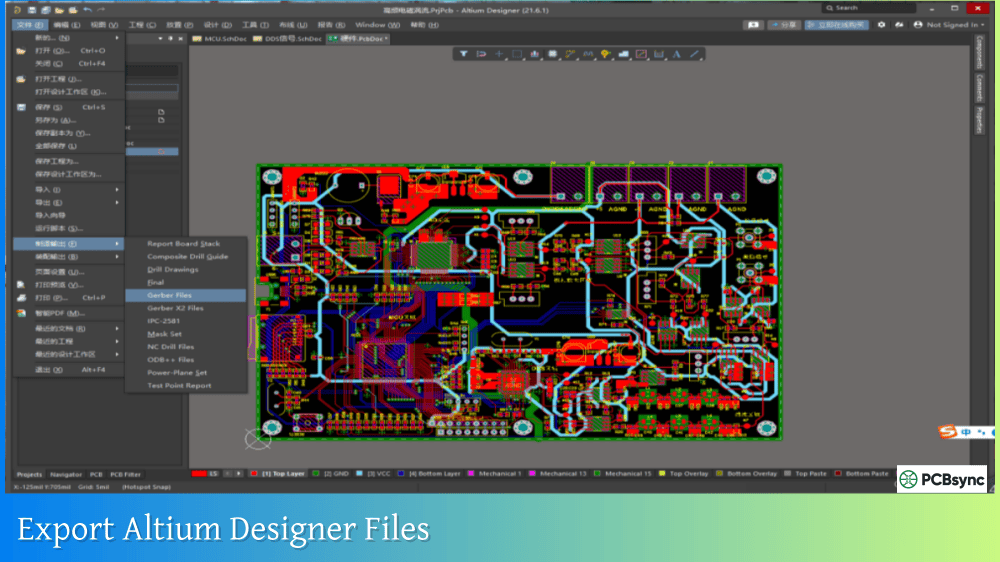
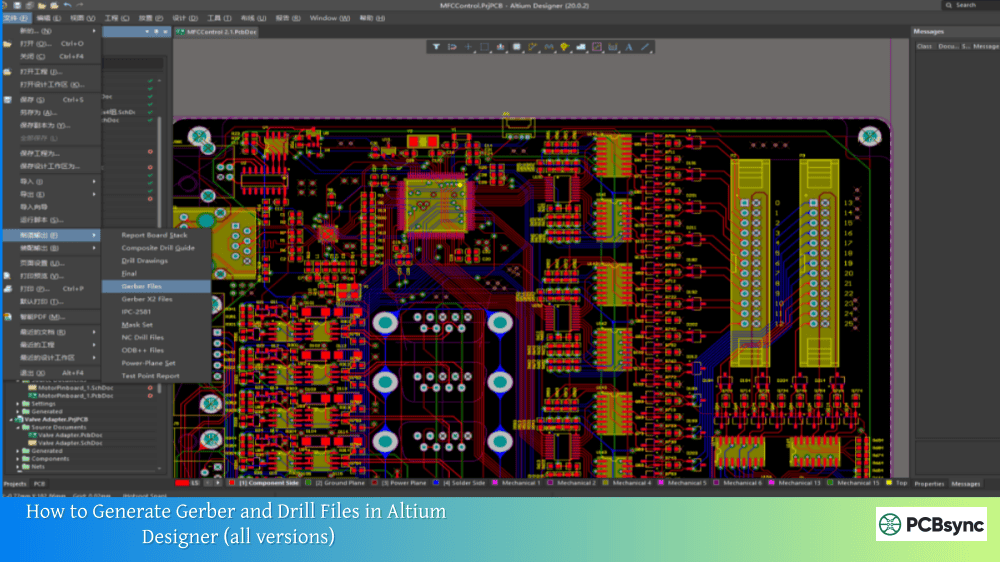
Altium Designer Settings
Setting
Location
Recommended Value
Format
General tab
2:5 (metric) or 2:4 (imperial)
Apertures
Apertures tab
Embedded apertures (RS-274X)
Zero suppression
General tab
Suppress leading zeros
Film size
Advanced tab
Match board dimensions + margin
Origin
General tab
Reference to relative origin
KiCad Settings
Setting
Location
Recommended Value
Plot format
Plot dialog
Gerber
Coordinate format
Plot dialog
4.6 (mm)
Use extended X2
Plot dialog
Enable if manufacturer supports
Subtract soldermask
Plot dialog
Enable
Drill format
Drill dialog
Excellon
Drill units
Drill dialog
Same as Gerber
Eagle Settings
Setting
Location
Recommended Value
Output format
CAM Processor
RS-274X
Wheel/apertures
CAM Processor
Embedded
Position offset
CAM Processor
0,0 or board origin
Optimize
CAM Processor
Enable
Pre-Export Checklist
Complete these checks before generating Gerber files.
What coordinate format should I use for high-density designs?
For HDI and fine-pitch designs (0.4mm pitch BGAs, 3/3 mil traces), use 2:5 format with metric units. This provides 0.00001mm resolution, sufficient for features down to 0.05mm (2 mil). The 2:4 format may not provide adequate precision for these designs. Always verify your manufacturer supports your chosen format—some budget services have equipment limitations that restrict format options.
Why do my drill holes appear offset from pads in the Gerber viewer?
This almost always indicates a mismatch between Gerber and drill file settings. Check three things: First, verify both files use the same units (inches or mm). Second, confirm the coordinate format matches (both should be 2:4 or both 2:5). Third, check zero suppression settings—if Gerbers use leading zero suppression and drill files use trailing, coordinates will be misinterpreted. Re-export both file types with identical settings.
Should I use Gerber X2 format instead of RS-274X?
Use Gerber X2 if your manufacturer supports it and your CAD tool exports it reliably. X2 adds layer function attributes that help CAM software automatically identify layer types (top copper, bottom solder mask, etc.), reducing manual interpretation and errors. However, RS-274X remains universally supported, so if you’re unsure about X2 compatibility, stick with RS-274X. Some engineers export both formats as a safeguard.
What’s the difference between leading and trailing zero suppression?
Zero suppression removes unnecessary zeros from coordinate numbers to reduce file size. Leading zero suppression removes zeros from the beginning (00152500 becomes 152500), while trailing suppression removes them from the end (15250000 becomes 1525). The receiving software must know which method was used to correctly interpret coordinates. Leading zero suppression is more common and widely supported—use it unless your manufacturer specifically requires trailing suppression.
How do I verify my solder mask polarity is correct?
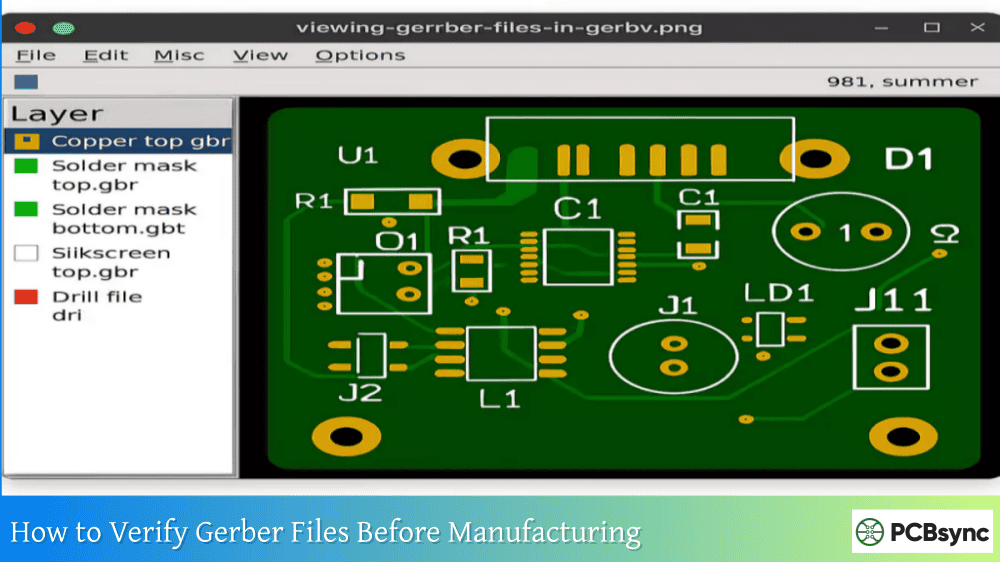
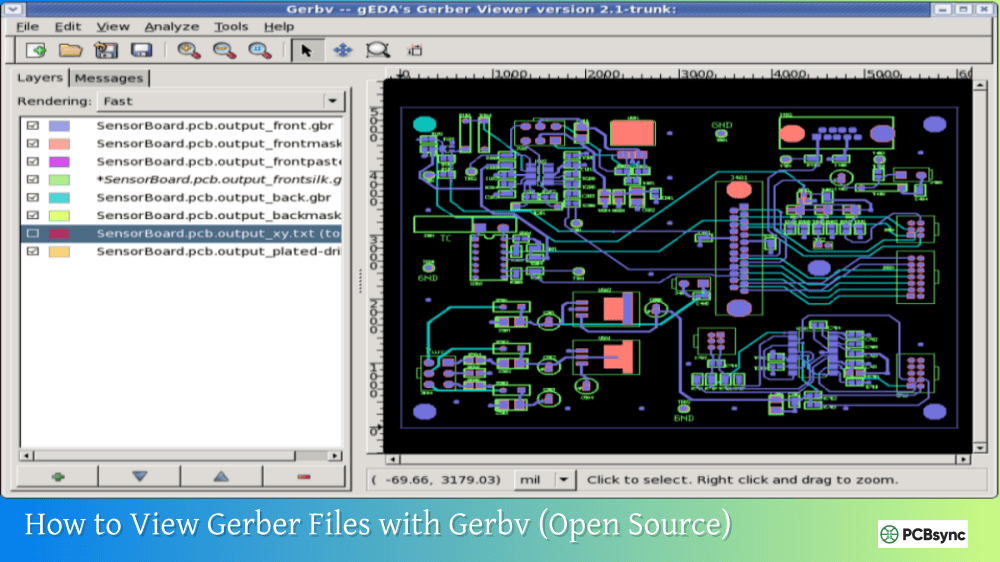
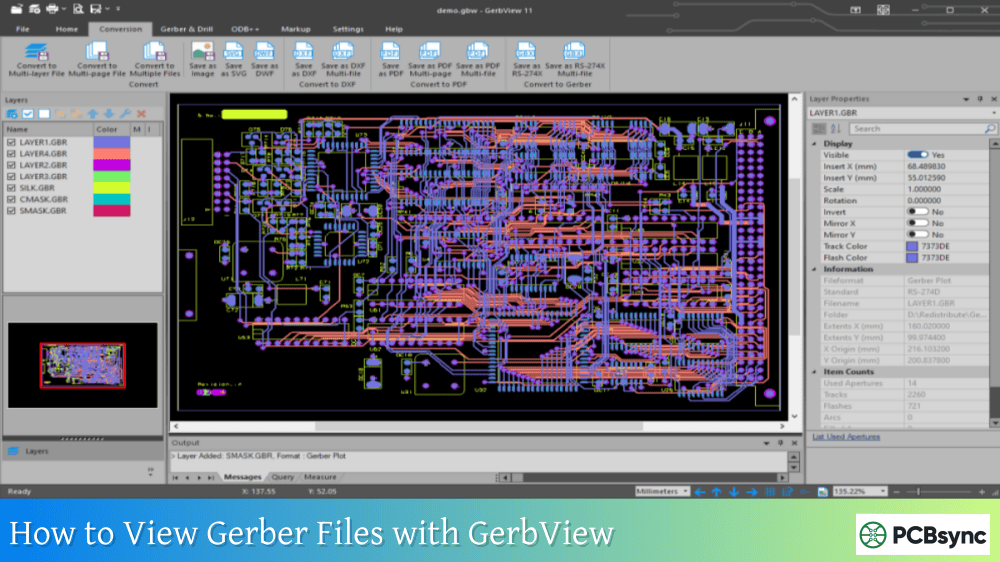
Open your solder mask Gerber file in a viewer and compare it to your copper layer. Pad locations should appear as openings (clear areas) in the solder mask, not as filled areas. If pads appear solid in the solder mask file, your polarity is inverted. Most CAD tools export solder mask as negative polarity (drawn areas = openings), but some viewers display this differently. The safest check is overlaying solder mask on copper—openings should exactly match pad locations where you want exposed copper.
Conclusion
Proper Gerber file output settings form the foundation of successful PCB manufacturing. The settings covered in this guide—format version, coordinate format, units, zero suppression, and aperture configuration—must be correct and consistent across all files. Get these right, and your boards will manufacture exactly as designed.
The most important takeaways: use RS-274X format with embedded apertures, maintain identical coordinate format and units between Gerber and drill files, use leading zero suppression, and always verify your output before sending to manufacturing. Save your export configuration once it’s working correctly, and you’ll eliminate this source of errors for future projects.
Take the extra time to verify your Gerber files in a viewer before every manufacturing order. The few minutes spent checking alignment, dimensions, and layer content can save days of delay and significant cost when problems are caught before fabrication instead of after.
Inquire: Call 0086-755-23203480, or reach out via the form below/your sales contact to discuss our design, manufacturing, and assembly capabilities.
Quote: Email your PCB files to Sales@pcbsync.com (Preferred for large files) or submit online. We will contact you promptly. Please ensure your email is correct.
Notes: For PCB fabrication, we require PCB design file in Gerber RS-274X format (most preferred), *.PCB/DDB (Protel, inform your program version) format or *.BRD (Eagle) format. For PCB assembly, we require PCB design file in above mentioned format, drilling file and BOM. Click to download BOM template To avoid file missing, please include all files into one folder and compress it into .zip or .rar format.