Inquire: Call 0086-755-23203480, or reach out via the form below/your sales contact to discuss our design, manufacturing, and assembly capabilities.
Quote: Email your PCB files to Sales@pcbsync.com (Preferred for large files) or submit online. We will contact you promptly. Please ensure your email is correct.
Notes: For PCB fabrication, we require PCB design file in Gerber RS-274X format (most preferred), *.PCB/DDB (Protel, inform your program version) format or *.BRD (Eagle) format. For PCB assembly, we require PCB design file in above mentioned format, drilling file and BOM. Click to download BOM template To avoid file missing, please include all files into one folder and compress it into .zip or .rar format.
RP2040 Explained: The Chip Behind Raspberry Pi Pico
When the RP2040 landed on my PCB design bench in early 2021, I wasn’t expecting much from a $1 microcontroller. After all, the embedded market is flooded with cheap silicon. But this chip changed my perspective on what’s possible at the entry-level price point. The rp2040 chip isn’t just another microcontroller. It’s Raspberry Pi’s first venture into custom silicon design, and they absolutely nailed it.
This deep dive explores the architecture, specifications, and unique capabilities that make the raspberry pi rp2040 stand out in a crowded market. Whether you’re evaluating it for a commercial product or your next hobby project, understanding what’s inside this tiny 7mm × 7mm package will help you leverage its full potential.
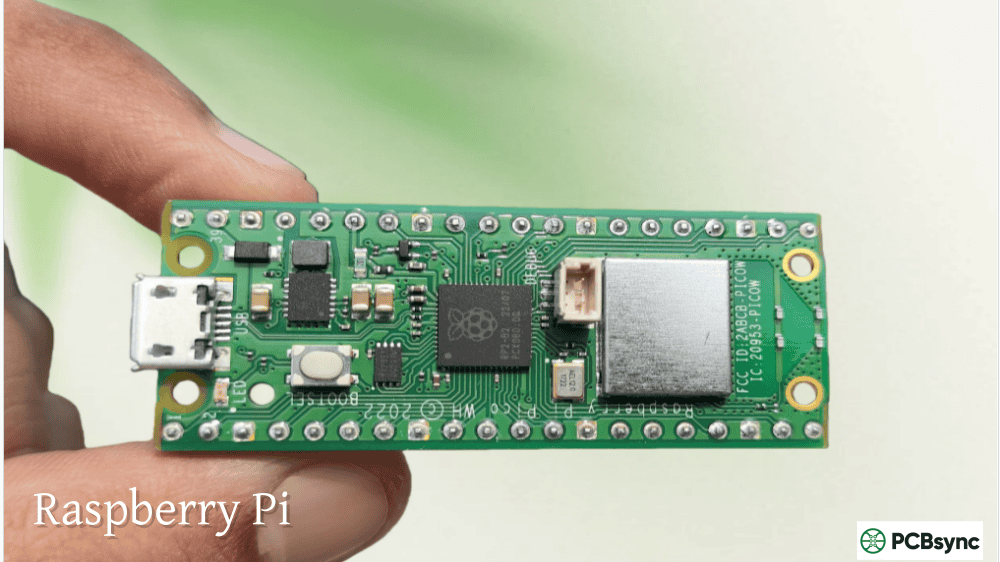
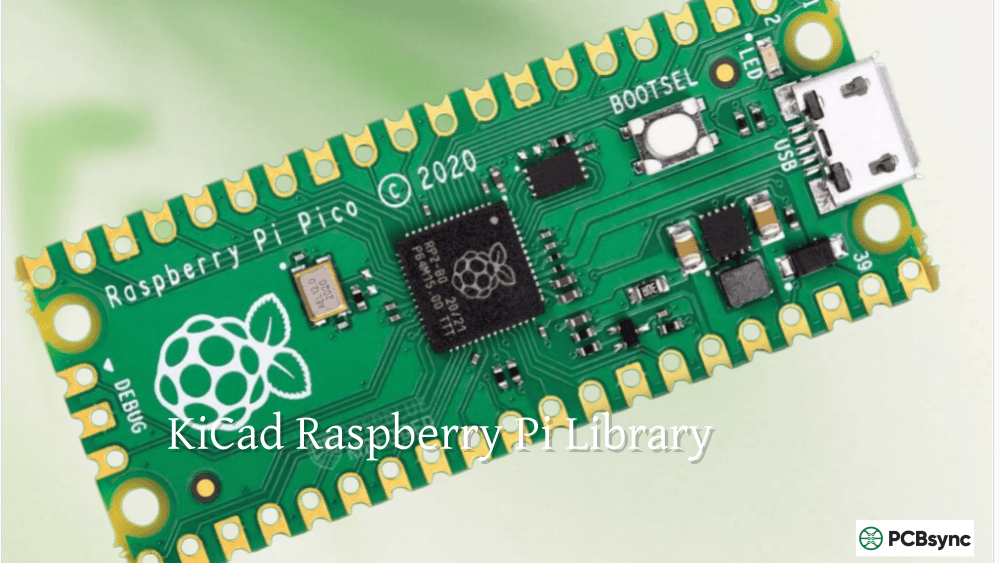
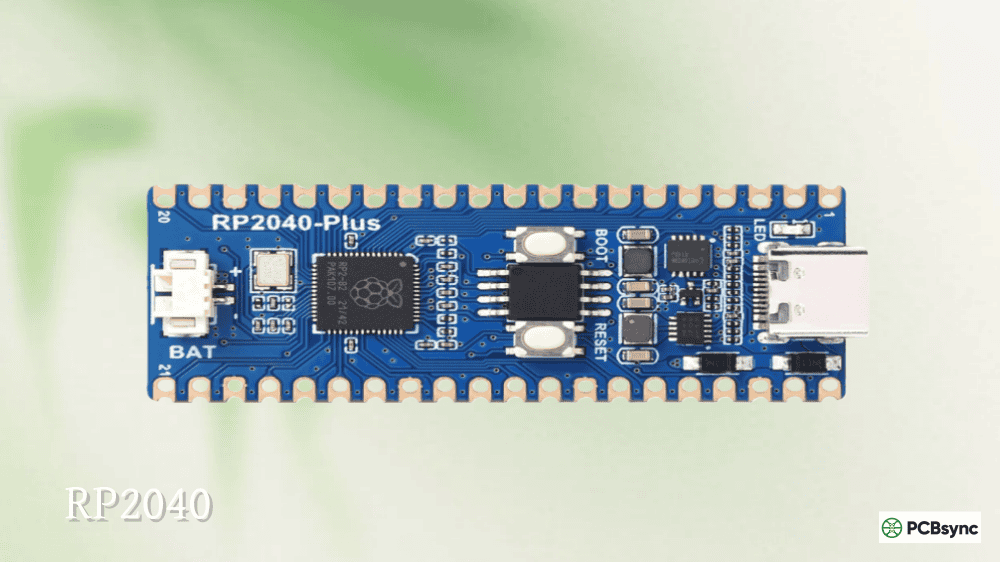
The RP2040 is a dual-core ARM Cortex-M0+ microcontroller designed entirely in-house by Raspberry Pi Ltd. Announced on January 21, 2021, it marked the Foundation’s entry into the microcontroller market after years of success with their single-board computers. Unlike their previous products that relied on Broadcom SoCs, this chip represents genuine custom silicon developed in Cambridge, UK.
The naming convention itself tells a story. “RP” stands for Raspberry Pi. The “2” indicates two processor cores. The “0” represents the ARM Cortex-M0+ architecture. The “4” encodes the RAM capacity (floor(log2(264/16)) = 4). The final “0” indicates zero on-chip flash memory, a deliberate design decision we’ll explore later.
Manufactured by TSMC on their 40nm process node, the rp2040 chip occupies just two square millimeters of silicon. This modern fabrication process delivers high performance with low power consumption, making it suitable for battery-operated applications while keeping costs remarkably low.
RP2040 Technical Specifications
Understanding the hardware capabilities helps you assess whether the raspberry pi rp2040 fits your project requirements. Here’s the complete specification breakdown:
Core Specifications
Component
Specification
Processor
Dual-core ARM Cortex-M0+ @ 133MHz
Architecture
32-bit ARMv6-M
SRAM
264KB (6 independent banks)
On-chip Flash
None (external QSPI)
ROM
16KB bootloader
Bus Fabric
AHB-Lite crossbar
DMA
12 channels
Package
QFN-56 (7mm × 7mm)
Process Node
TSMC 40nm
Operating Voltage
1.8V to 3.3V core
Peripheral Specifications
Peripheral
Quantity/Details
GPIO
30 multi-function pins
UART
2
SPI
2
I2C
2
PWM
16 channels (8 slices × 2 outputs)
ADC
4 channels, 12-bit, 500ksps
Timer
1 (64-bit)
RTC
1
Watchdog
1
USB
1.1 Host/Device with PHY
PIO
2 blocks × 4 state machines
Electrical Characteristics
Parameter
Value
Supply Voltage (DVDD)
1.1V nominal
I/O Voltage (IOVDD)
1.8V to 3.3V
Idle Current
~24mA @ 48MHz
Active Current
~93mA @ 133MHz
Sleep Current
~180μA typical
Operating Temperature
-20°C to +85°C
The Dual-Core Architecture
The RP2040 implements two identical ARM Cortex-M0+ cores that share access to all peripherals and memory. Unlike asymmetric multi-core designs where cores have different capabilities, both RP2040 cores are fully symmetric. Either core can boot first, access any peripheral, or handle any interrupt.
This symmetric design provides genuine flexibility. You can dedicate one core entirely to time-critical tasks like motor control while the other handles user interface and communication. The cores communicate through shared memory and can signal each other using hardware spinlocks and mailbox-style interrupts.
The Cortex-M0+ itself deserves recognition. Despite being ARM’s smallest, lowest-power processor design, it handles 32-bit operations efficiently. The two-stage pipeline keeps instruction throughput high while the deterministic interrupt latency (just 15 cycles) makes real-time applications practical.
What makes the rp2040 chip particularly interesting is the bus fabric connecting these cores. The fully-connected crossbar switch allows both cores and the DMA controller to access different SRAM banks simultaneously without contention. Six independent SRAM banks mean careful memory layout can virtually eliminate bus conflicts during parallel operation.
Programmable I/O: The Game-Changing Feature
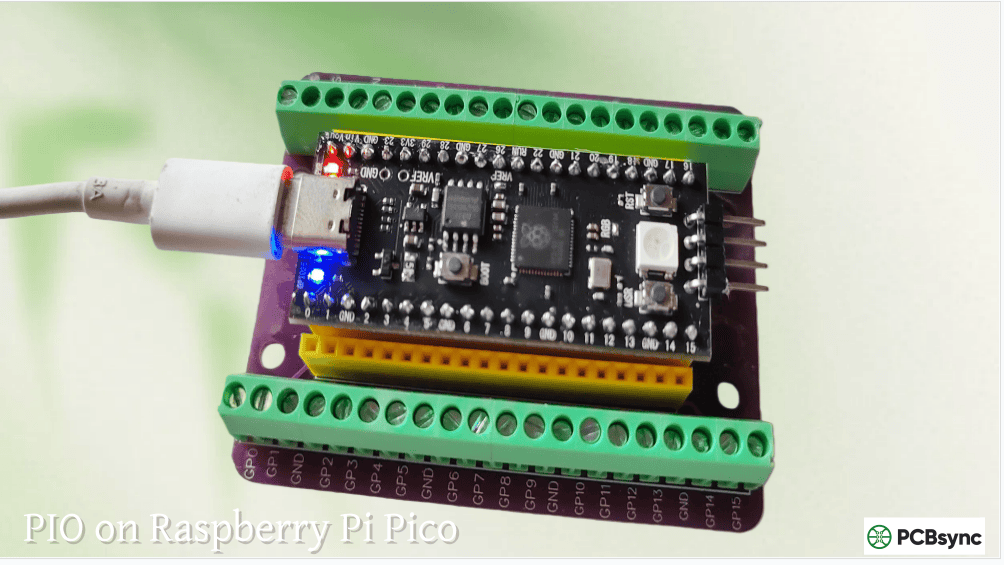
If there’s one feature that distinguishes the raspberry pi rp2040 from every competing microcontroller, it’s the Programmable I/O (PIO) subsystem. This isn’t just another peripheral. It’s essentially four additional tiny processors per PIO block, eight total, dedicated exclusively to I/O operations.
What PIO Actually Does
Traditional microcontrollers handle communication protocols through dedicated hardware peripherals or software bit-banging. Hardware peripherals are fast but inflexible. Bit-banging is flexible but consumes CPU cycles and struggles with precise timing. PIO eliminates this trade-off entirely.
Each PIO state machine executes simple assembly programs from shared instruction memory. With only nine instructions available, the programming model is minimal yet surprisingly powerful:
Instruction
Function
JMP
Conditional/unconditional branch
WAIT
Pause until condition met
IN
Shift bits into input shift register
OUT
Shift bits out of output shift register
PUSH
Transfer ISR contents to RX FIFO
PULL
Transfer TX FIFO contents to OSR
MOV
Move data between registers
IRQ
Set/clear interrupt flags
SET
Write immediate value to pins
Real-World PIO Applications
The state machines execute deterministically at up to system clock speed (133MHz), enabling cycle-accurate timing impossible to achieve with software. Engineers have implemented:
WS2812 LED drivers without CPU involvement
VGA video output using three state machines
SD card SDIO interfaces for high-speed storage
Custom serial protocols for legacy devices
Audio I2S for codec interfacing
Parallel camera interfaces for image capture
DPI display output for LCD panels
A single PIO block with four state machines and 32 instruction words can implement multiple complex protocols simultaneously. The SD card driver, for instance, uses just 18 instructions across three state machines, leaving room for additional interfaces in the same PIO block.
External Flash: A Design Philosophy
The RP2040 lacks on-chip flash memory, which initially seems like a limitation. However, this stateless design is actually intentional and advantageous.
Without embedded flash, you choose the appropriate storage density for your application. Need 2MB? Use a 2MB flash chip. Need 16MB for data logging? Just change the external component. Commodity QSPI flash parts cost pennies in volume, often less than the premium charged for on-chip flash equivalents.
The chip executes code directly from external flash through an XIP (execute-in-place) cache. This 16KB cache provides near-internal-flash performance for typical code patterns while allowing much larger programs than integrated flash would permit at this price point.
Additionally, the external flash makes firmware updates trivial. The RP2040’s built-in USB bootloader presents the flash as a mass storage device. Drag a UF2 file onto the drive, and the firmware updates automatically. No programmers, no special software, no driver installation.
How does the rp2040 chip stack up against popular alternatives? This comparison helps contextualize its position in the market:
Microcontroller Comparison
Feature
RP2040
ATmega328P
STM32F103
ESP32-S3
Cores
2
1
1
2
Architecture
Cortex-M0+
AVR 8-bit
Cortex-M3
Xtensa LX7
Clock Speed
133MHz
20MHz
72MHz
240MHz
SRAM
264KB
2KB
20KB
512KB
Flash
External
32KB
64KB
External
USB
Yes (built-in)
No
Yes
Yes
WiFi/BT
No*
No
No
Yes
PIO
8 state machines
No
No
No
Unit Price
~$1
~$2
~$3
~$3
*The Pico W adds wireless via the CYW43439 chip
The RP2040 excels in raw memory capacity, multi-core processing, and I/O flexibility. The ESP32-S3 wins on wireless integration and raw clock speed. Traditional 8-bit parts like the ATmega maintain advantages in extreme low-power applications and broad ecosystem support.
Boards Using the RP2040
The raspberry pi rp2040 has spawned an ecosystem of development boards beyond the official Raspberry Pi Pico:
Manufacturer
Board
Notable Features
Raspberry Pi
Pico
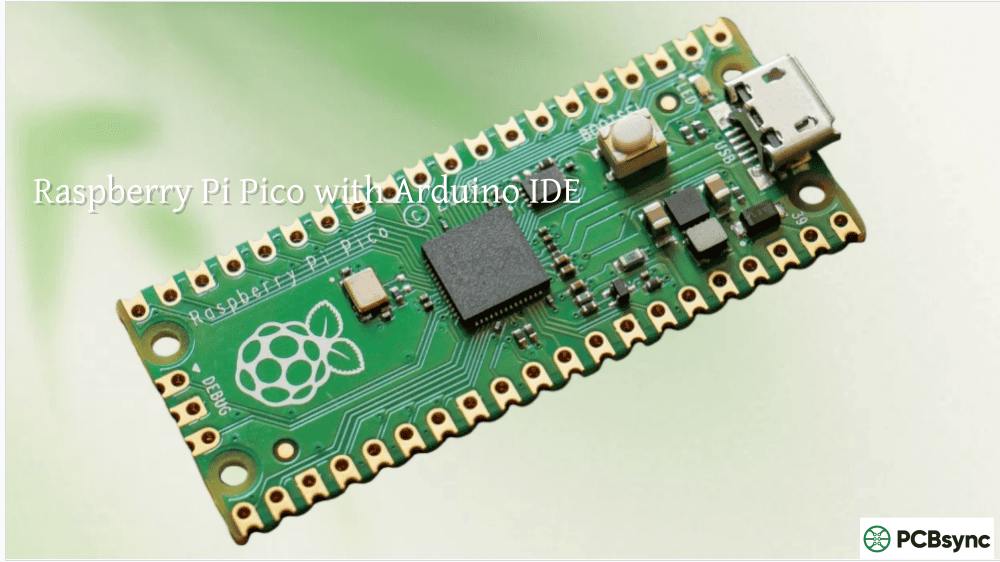
Reference design, $4
Raspberry Pi
Pico W
WiFi + Bluetooth
Adafruit
Feather RP2040
Feather ecosystem, LiPo charging
Adafruit
QT Py RP2040
Tiny form factor, STEMMA QT
SparkFun
Pro Micro RP2040
Pro Micro footprint, USB-C
SparkFun
Thing Plus RP2040
Qwiic connectors, 16MB flash
Arduino
Nano RP2040 Connect
WiFi, IMU, microphone
Pimoroni
Tiny 2040
Ultra-compact, RGB LED
Waveshare
RP2040-Zero
Minimal design, castellated pads
Each board targets different use cases while sharing the same powerful core silicon. The official Pico remains the most cost-effective option, while third-party boards add features like additional flash, wireless connectivity, or specialized form factors.
Programming the RP2040
The RP2040 supports multiple development environments and programming languages:
Officially Supported
C/C++ SDK: Full hardware access, maximum performance
MicroPython: Beginner-friendly, interactive development
CircuitPython: Adafruit’s Python variant with extensive library support
Community Supported
Arduino IDE: Familiar environment with earle-philhower core
Rust: Memory-safe embedded development
Go (TinyGo): Compiled Go for microcontrollers
Ada: Safety-critical development
Zig: Modern systems programming
TypeScript: Via Pico-js runtime
The official C/C++ SDK provides the deepest hardware access and best performance. MicroPython offers rapid prototyping with its interactive REPL. Arduino support brings familiar libraries and simplified syntax for hobbyists transitioning from other platforms.
For commercial products, supply continuity matters enormously. Raspberry Pi has committed to manufacturing the RP2040 until at least January 2041, a 20-year production guarantee. This longevity commitment, combined with multiple authorized distributors worldwide, makes the chip viable for products requiring extended lifecycle support.
The $1 unit pricing at volume removes cost barriers that often push engineers toward inferior alternatives. When the silicon costs less than passive components on your BOM, design decisions can focus purely on technical merit.
Frequently Asked Questions
What makes the RP2040 different from other microcontrollers?
The RP2040 distinguishes itself through its Programmable I/O (PIO) subsystem, dual symmetric Cortex-M0+ cores, and exceptional value. The eight PIO state machines enable custom hardware interfaces impossible on traditional microcontrollers without FPGAs. The 264KB SRAM, roughly 130 times more than an Arduino Uno, eliminates memory constraints for most embedded applications. At approximately $1 per chip, it delivers ARM performance at commodity pricing.
Does the RP2040 have built-in WiFi or Bluetooth?
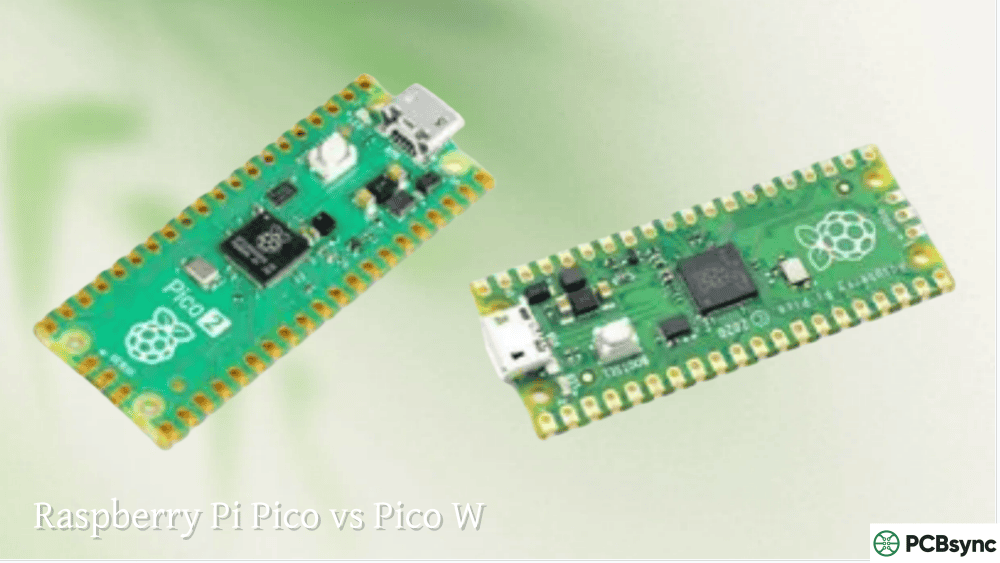
No, the base rp2040 chip lacks wireless connectivity. Raspberry Pi addresses this with the Pico W board, which pairs the RP2040 with an Infineon CYW43439 wireless module providing 2.4GHz WiFi and Bluetooth 5.2. If your project requires wireless communication, select a Pico W variant or add an external wireless module to a standard RP2040 board.
Can the RP2040 run an operating system?
The raspberry pi rp2040 cannot run Linux or other full operating systems due to its Cortex-M0+ architecture, which lacks memory management units required for virtual memory. However, it runs real-time operating systems (RTOS) like FreeRTOS excellently. For most microcontroller applications, bare-metal programming or MicroPython provides sufficient capability without OS overhead.
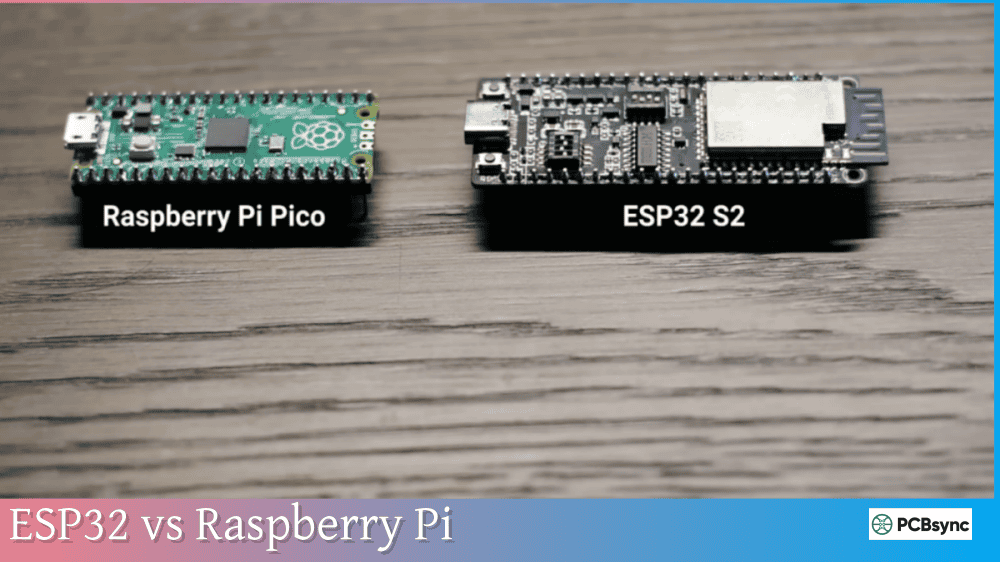
How does the RP2040 compare to ESP32?
Both chips target similar applications but with different strengths. The ESP32 integrates WiFi and Bluetooth directly, runs at higher clock speeds, and suits IoT applications. The RP2040 offers superior I/O flexibility through PIO, better documentation, lower cost, and simpler power management. Choose ESP32 for wireless-centric projects; choose RP2040 for complex I/O requirements, cost-sensitive designs, or applications demanding deterministic timing.
Why doesn’t the RP2040 have built-in flash memory?
The external flash design was intentional, not a limitation. It allows designers to select appropriate flash density (2MB to 16MB typically) for their application requirements. Commodity QSPI flash costs less than equivalent on-chip flash would, reducing overall system cost. The execute-in-place (XIP) cache maintains performance, while the USB mass storage bootloader simplifies firmware updates. This architecture enables larger programs than integrated flash would permit at this price point.
Final Thoughts
The RP2040 represents what happens when experienced engineers design silicon specifically for the maker and embedded communities they understand intimately. The dual-core architecture provides genuine parallel processing capability. The PIO subsystem solves interface problems that traditionally required expensive FPGAs or frustrating bit-banging workarounds. The external flash philosophy prioritizes flexibility over false simplicity.
After integrating this chip into numerous projects over the past few years, my appreciation for its design has only grown. The documentation quality exceeds most professional microcontroller vendors. The community has developed libraries covering virtually every common peripheral. The $1 pricing eliminates any hesitation about experimenting with new applications.
Whether you’re building a commercial product requiring long-term supply assurance or your next weekend project, the raspberry pi rp2040 delivers capability far exceeding its modest price tag. The Programmable I/O alone justifies evaluating it for any project involving non-standard interfaces or precise timing requirements.
Raspberry Pi didn’t just enter the microcontroller market. They raised the bar for what entry-level silicon should offer.
Inquire: Call 0086-755-23203480, or reach out via the form below/your sales contact to discuss our design, manufacturing, and assembly capabilities.
Quote: Email your PCB files to Sales@pcbsync.com (Preferred for large files) or submit online. We will contact you promptly. Please ensure your email is correct.
Notes: For PCB fabrication, we require PCB design file in Gerber RS-274X format (most preferred), *.PCB/DDB (Protel, inform your program version) format or *.BRD (Eagle) format. For PCB assembly, we require PCB design file in above mentioned format, drilling file and BOM. Click to download BOM template To avoid file missing, please include all files into one folder and compress it into .zip or .rar format.