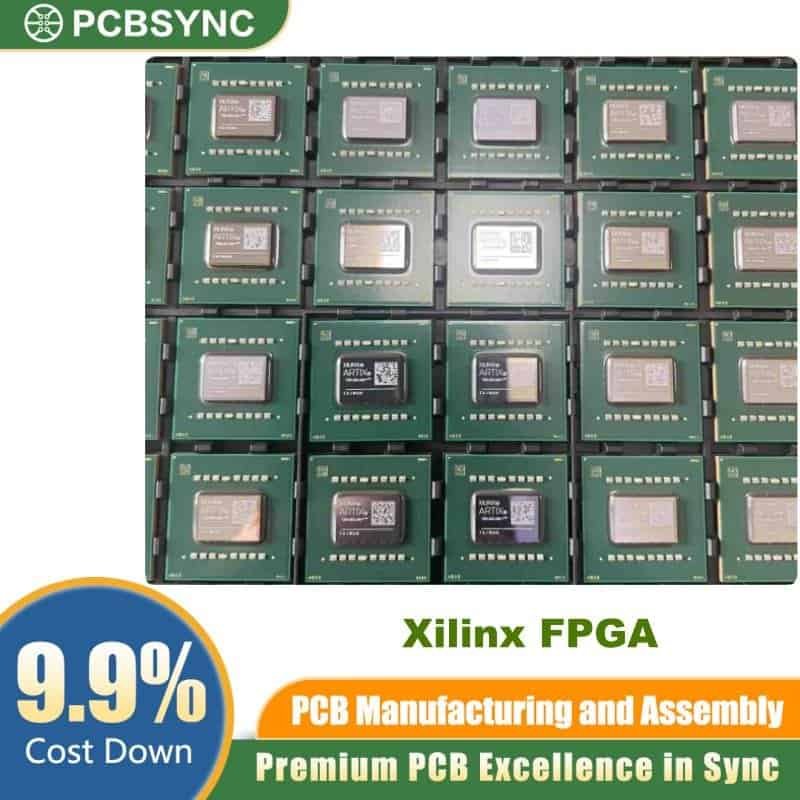
Complete Guide to AMD Xilinx XC2S200E-6FGG456C FPGA
The XC2S200E-6FGG456C is a powerful Field-Programmable Gate Array from AMD Xilinx’s renowned Spartan-IIE family, delivering exceptional performance for cost-sensitive embedded applications. This advanced FPGA combines 200,000 system gates with 5,292 logic cells in a compact 456-pin FBGA package, making it an ideal choice for industrial automation, telecommunications, and consumer electronics designs.
What is the XC2S200E-6FGG456C FPGA?
The XC2S200E-6FGG456C represents second-generation ASIC replacement technology from AMD Xilinx. Built on proven 0.15-micron process technology, this programmable logic device offers designers the flexibility of in-system reprogrammability without the high costs and lengthy development cycles associated with traditional ASICs. The device operates at speeds up to 357 MHz while maintaining low power consumption at 1.8V core voltage.
Technical Specifications
Core Performance Characteristics
| Specification |
Value |
| Logic Cells |
5,292 Cells |
| System Gates |
200,000 Gates |
| Maximum Frequency |
357 MHz |
| Process Technology |
0.15 μm CMOS |
| Core Voltage |
1.71V – 1.89V (1.8V nominal) |
| Operating Temperature |
0°C to 85°C (TJ) |
| Package Type |
456-FBGA (Fine-Pitch BGA) |
| Package Dimensions |
23mm x 23mm |
Memory and I/O Resources
| Feature |
Specification |
| User I/O Pins |
289 I/O |
| Block RAM |
56 Kbits (28 blocks × 2K bits) |
| Distributed RAM |
75,264 bits |
| CLB Array |
28 × 42 matrix (1,176 CLBs) |
| DLL Resources |
4 Digital Delay-Locked Loops |
| Supported I/O Standards |
19 selectable standards |
Advanced FPGA Architecture Features
The XC2S200E-6FGG456C incorporates several advanced features that set it apart from previous-generation devices:
- SelectRAM™ Hierarchical Memory: Dual-port block RAM and distributed LUT-based RAM provide flexible memory options
- Fast Carry Logic: Dedicated carry chains enable efficient arithmetic operations
- DLL Clock Management: Four Delay-Locked Loops ensure precise timing across the device
- Universal Programmable I/O: Support for LVTTL, LVCMOS, PCI, GTL+, and 15 additional standards
- Configurable Logic Blocks: Each CLB contains four slices with dual LUTs, flip-flops, and multiplexers
Key Applications and Use Cases
Industrial Automation and Control
The XC2S200E-6FGG456C excels in industrial environments where reliable, programmable logic is essential. Common applications include:
- Motor control systems and drive electronics
- PLC (Programmable Logic Controller) replacement
- Process monitoring and data acquisition
- Factory automation interfaces
- Industrial communication protocol converters
Telecommunications Infrastructure
With its high-speed performance and extensive I/O capabilities, this Xilinx FPGA is well-suited for:
- Digital signal processing applications
- Protocol bridging and translation
- Network packet processing
- Baseband processing in wireless systems
- Time-division multiplexing (TDM) systems
Consumer Electronics and Automotive
The device’s cost-effectiveness makes it attractive for high-volume consumer applications:
- Digital video processing and display controllers
- Gaming console logic
- Automotive body electronics
- LED lighting control systems
- Audio/video interface converters
Package and Mounting Information
Physical Characteristics
| Parameter |
Details |
| Package Style |
FBGA (Fine-pitch Ball Grid Array) |
| Total Pins |
456 pins |
| Mounting Type |
Surface Mount Technology (SMT) |
| Ball Pitch |
1.0mm typical |
| Package Thickness |
Industry-standard BGA profile |
| RoHS Compliance |
Lead-free / RoHS compliant |
Thermal Management Specifications
The XC2S200E-6FGG456C features robust thermal characteristics suitable for industrial temperature ranges. The junction temperature rating of 0°C to 85°C ensures reliable operation across diverse environmental conditions. Designers should implement appropriate thermal management solutions including:
- PCB copper planes for heat dissipation
- Thermal vias connecting to ground planes
- Optional heatsink attachment for high-power designs
- Adequate airflow in enclosed systems
Configuration and Programming
Programming Options
The Spartan-IIE family, including the XC2S200E-6FGG456C, supports multiple configuration methods:
- JTAG Boundary Scan: In-system programming via standard IEEE 1149.1 interface
- Master Serial Mode: Direct connection to Xilinx Platform Flash PROMs
- Master Parallel Mode: High-speed configuration from external memory
- Slave Serial Mode: Configuration by external processor or microcontroller
- Slave Parallel Mode: Fast configuration for high-volume manufacturing
Development Tools and Software
Designers working with the XC2S200E-6FGG456C utilize industry-standard Xilinx development tools:
- ISE Design Suite: Complete FPGA design environment
- FPGA Editor: Low-level design visualization and modification
- ChipScope Pro: Integrated logic analyzer for debugging
- iMPACT: Device programming and configuration utility
Performance Advantages Over Alternatives
Why Choose XC2S200E-6FGG456C?
| Advantage |
Benefit |
| Cost-Effective |
Lower total system cost compared to ASIC development |
| Fast Time-to-Market |
Immediate availability eliminates fabrication delays |
| Field Upgradable |
Remote firmware updates without hardware changes |
| Proven Architecture |
Based on successful Virtex-E technology |
| Extensive IP Library |
Access to pre-verified cores and reference designs |
| Low Power Operation |
1.8V core reduces overall system power requirements |
Comparison with Similar Devices
When evaluated against comparable FPGAs in the 200K gate range, the XC2S200E-6FGG456C offers:
- Superior price-to-performance ratio for volume production
- More flexible I/O standards than competing devices
- Better availability through multiple distribution channels
- Comprehensive technical documentation and design resources
- Established supply chain with long-term support
Design Considerations and Best Practices
Power Supply Requirements
Proper power distribution is critical for optimal XC2S200E-6FGG456C performance:
- VCCINT (Core): 1.8V ± 5%, requiring low-noise regulation
- VCCO (I/O): 1.5V to 3.3V depending on I/O standard selection
- Decoupling: Multiple capacitors per power pin (100nF + 10μF recommended)
- Power Sequencing: Follow Xilinx guidelines to prevent latch-up
PCB Layout Guidelines
To maximize signal integrity and device reliability:
- Route high-speed signals on inner layers with ground planes
- Maintain controlled impedance for differential pairs
- Provide adequate power plane copper area
- Include test points for JTAG programming access
- Follow BGA fanout recommendations from package specification
Clock Distribution Strategy
The four DLLs in the XC2S200E-6FGG456C enable sophisticated clocking schemes:
- Utilize global clock networks for low-skew distribution
- Leverage DLL features for clock multiplication and division
- Implement proper clock domain crossing techniques
- Consider external clock sources for critical timing applications
Availability and Sourcing Information
Product Lifecycle Status
Important Note: The XC2S200E-6FGG456C has been classified as obsolete by AMD Xilinx. While new production has ceased, the device remains available through:
- Authorized distributors with remaining inventory
- Electronic component brokers specializing in legacy parts
- Aftermarket suppliers with verified stock
- Design-in support for existing applications
Recommended Alternatives
For new designs, consider these current-generation replacements:
- Spartan-7 Series: Pin-compatible successors with enhanced features
- Artix-7 Family: Higher performance with lower power consumption
- Spartan-6 Devices: Previous-generation alternatives with ongoing support
Quality and Authenticity
When sourcing XC2S200E-6FGG456C devices, verify:
- Manufacturer date codes indicating genuine Xilinx production
- Anti-counterfeit markings and packaging
- Traceability documentation from authorized channels
- Proper ESD protection during handling and storage
- Temperature and humidity controlled storage conditions
Support Resources and Documentation
Technical Documentation
Complete design resources for the XC2S200E-6FGG456C include:
- Datasheet DS077: Comprehensive electrical and timing specifications
- User Guide: Detailed architecture and feature descriptions
- Application Notes: Design tips and implementation strategies
- PCB Layout Guide: Package-specific layout recommendations
- Configuration Guide: Programming and startup procedures
Community and Technical Support
Engineers working with this FPGA can access:
- Xilinx Community Forums for peer-to-peer assistance
- Application engineers at authorized distributors
- Third-party design services specializing in Xilinx platforms
- University programs with FPGA design expertise
- Online tutorials and reference design repositories
Environmental and Compliance Information
Regulatory Certifications
| Standard |
Compliance Status |
| RoHS Directive |
Compliant (Lead-free) |
| REACH Regulation |
Registered substances |
| ECCN Classification |
3A991.d (Export control) |
| USHTS Code |
8542390001 |
| TARIC Code |
8542399000 |
Environmental Operating Conditions
The XC2S200E-6FGG456C is specified for reliable operation under:
- Commercial temperature range: 0°C to 85°C junction temperature
- Standard atmospheric pressure conditions
- Humidity: 5% to 95% non-condensing
- Shock and vibration per JESD22 standards
Conclusion: Is the XC2S200E-6FGG456C Right for Your Design?
The XC2S200E-6FGG456C remains a viable solution for specific applications despite its obsolete status. Its combination of 200,000 system gates, 289 I/O pins, and proven reliability makes it suitable for:
✓ Legacy product maintenance and repair ✓ Industrial systems with long lifecycle requirements
✓ Cost-sensitive designs with established supply chains ✓ Applications requiring proven, field-tested technology
However, new designs should carefully consider migration to current-generation devices that offer improved performance, lower power consumption, and guaranteed long-term availability.
Next Steps for Designers
- Inventory Check: Verify component availability through authorized channels
- Lifecycle Planning: Develop long-term sourcing strategy for production
- Alternative Evaluation: Compare specifications with modern FPGA families
- Design Review: Assess migration complexity to newer devices
- Supplier Engagement: Establish relationships with reliable component sources
For organizations maintaining existing XC2S200E-6FGG456C designs, proactive lifecycle management ensures continued product availability while planning eventual transitions to supported product lines.