Inquire: Call 0086-755-23203480, or reach out via the form below/your sales contact to discuss our design, manufacturing, and assembly capabilities.
Quote: Email your PCB files to Sales@pcbsync.com (Preferred for large files) or submit online. We will contact you promptly. Please ensure your email is correct.
Notes: For PCB fabrication, we require PCB design file in Gerber RS-274X format (most preferred), *.PCB/DDB (Protel, inform your program version) format or *.BRD (Eagle) format. For PCB assembly, we require PCB design file in above mentioned format, drilling file and BOM. Click to download BOM template To avoid file missing, please include all files into one folder and compress it into .zip or .rar format.
When I first proposed using a Raspberry Pi for a factory data collection project, the controls engineer looked at me like I’d suggested running production on a toy. Six months later, that same industrial raspberry pi setup has logged over 4,000 hours of continuous operation, survived ambient temperatures from 5°C to 45°C, and replaced a proprietary PLC that cost ten times more.
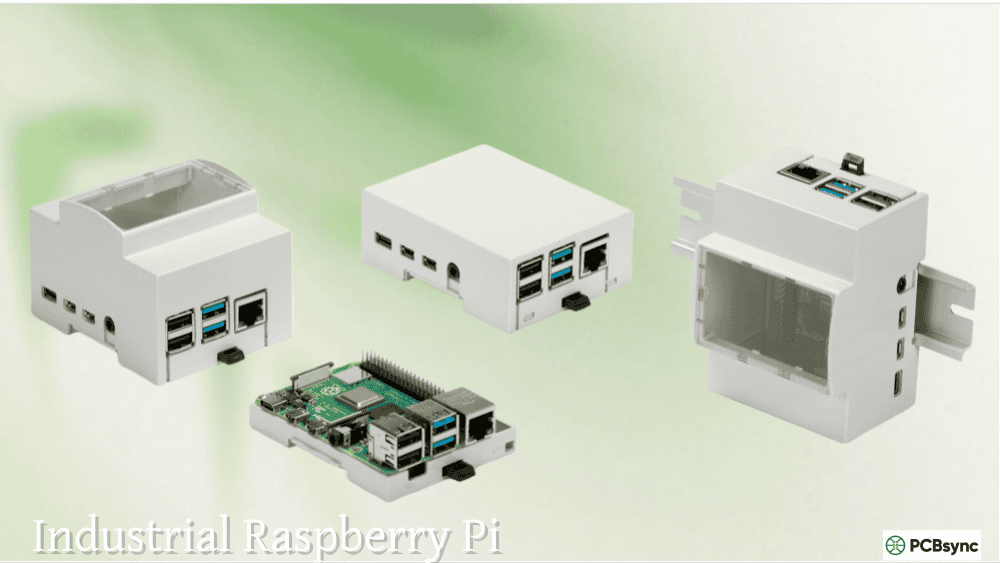
The gap between hobbyist single-board computers and industrial-grade controllers has narrowed dramatically. Whether you need a simple raspberry pi din rail mount for a control cabinet or a fully certified revpi system for demanding automation applications, solutions exist at every price point and capability level.
Consumer Raspberry Pi boards weren’t designed for factory floors. They lack proper mounting, run on 5V USB power, have no industrial I/O, and weren’t tested for electromagnetic interference or temperature extremes. Industrial solutions address these limitations while preserving the Pi’s advantages: familiar Linux environment, massive software ecosystem, and accessible pricing.
Consumer vs Industrial Raspberry Pi Comparison
Feature
Consumer Raspberry Pi
Industrial Raspberry Pi
Power Input
5V USB
24V DC (industrial standard)
Operating Temp
0°C to +50°C
-40°C to +85°C (extended)
Mounting
None standard
DIN rail ready
EMC Testing
Basic CE/FCC
EN61131-2, IEC 61000-6-2
I/O Protection
None
Surge, ESD up to 4kV/8kV
Industrial I/O
Requires add-ons
24V digital, 4-20mA analog
Certifications
CE, FCC
CE, UL, industrial standards
Support
Community
Commercial warranty
Revolution Pi (RevPi): The Industrial Standard
The revpi series from KUNBUS represents the most comprehensive industrial Raspberry Pi platform available. Manufactured in Germany since 2016, Revolution Pi devices have established themselves as legitimate industrial controllers used in manufacturing, building automation, and IIoT applications worldwide.
RevPi Product Line Overview
Model
Compute Module
Key Features
Price Range
RevPi Connect 5
CM5
Dual Gigabit Ethernet, CAN FD, latest performance
~$350-450
RevPi Connect 4
CM4
Dual Ethernet, proven platform
~$300-400
RevPi Core S
CM4S
Compact, cost-effective
~$200-250
RevPi Compact
CM3+
All-in-one with integrated I/O
~$350-400
RevPi Flat S
CM4S
Ultra-slim for tight spaces
~$250-300
RevPi Industrial Specifications
Specification
Value
Operating Temperature
-40°C to +55°C
Protection Class
IP20
Power Supply
24V DC (10.8V to 28.8V)
EMC Compliance
EN61131-2, IEC 61000-6-2
ESD Protection
4kV/8kV contact/air
Certifications
CE, UL, cUL
Mounting
35mm DIN rail (EN 50022)
Warranty
2 years
RevPi Expansion Modules
The modular architecture sets revpi apart from simple DIN rail mounts. Expansion modules connect via the PiBridge backplane, creating integrated systems.
Module Type
Function
Examples
Digital I/O
24V inputs/outputs
RevPi DIO (14 inputs, 14 outputs)
Analog I/O
4-20mA, 0-10V
RevPi AIO (4 inputs, 2 outputs)
Relay
Dry contact switching
RevPi RO (relay outputs)
Fieldbus Gateway
Industrial protocols
PROFINET, EtherCAT, CANopen
Communication
Serial interfaces
RS485, RS232
A complete RevPi system might include a base module flanked by I/O modules on both sides, all connected through simple plug connectors and configured through the PiCtory web interface.
DIY Raspberry Pi DIN Rail Solutions
Not every project requires full industrial certification. For less demanding environments or prototype development, raspberry pi din rail mounting options provide professional installation at lower cost.
DIN Rail Mount Options Compared
Product
Type
Pi Compatibility
DIN Width
Price
DINrPlate 2
Open mount
Pi 4/3/2/B+
32mm
~$15-20
Sequent Type 1
Parallel mount
Pi Zero to Pi 5
Variable
~$10-15
Sequent Type 2
Perpendicular mount
All models + HATs
Variable
~$15-20
Widgetlords VPE-4455
Enclosed
Pi 4 series
3.5″
~$25-30
Phoenix Contact cases
Industrial enclosed
CM4 carriers
Standard
~$100+
DINrPlate 2 Features
The DINrPlate 2 exemplifies purpose-built raspberry pi din rail mounting:
Feature
Specification
Material
6/6 Nylon (industrial grade)
DIN Clips
10mm secure mount
Port Access
All ports and GPIO accessible
Cable Management
Integrated strain relief
SD Access
Easy maintenance access
Color
Industrial grey
Sequent Microsystems Mounting Kits
Sequent offers two mounting approaches:
Type 1 (Parallel): Mounts the Pi parallel to the DIN rail, compact profile, good for tight spaces.
Type 2 (Perpendicular): Mounts Pi and up to 5 HATs perpendicular to rail, better cooling, easier cable access.
Both kits use metal brackets for mechanical stability, critical when stacking industrial HATs that add weight.
Industrial I/O Solutions
Mounting a Pi on DIN rail is only half the equation. Industrial applications require proper I/O interfaces.
Widgetlords PI-SPI Series
Module
Function
Interface
PI-SPI-DIN-8DI
8 Digital Inputs
12-24V DC
PI-SPI-DIN-8DO
8 Digital Outputs
Open collector
PI-SPI-DIN-4AO
4 Analog Outputs
4-20mA
PI-SPI-DIN-8AI
8 Analog Inputs
4-20mA
These modules connect via SPI and stack on standard GPIO headers. Combined with DIN rail enclosures, they create cost-effective industrial I/O systems.
Sequent Microsystems Industrial HATs
Sequent’s stackable HAT system supports up to 8 layers:
HAT Type
Capacity per HAT
Max Stacked
8-Relay
8 relays (250VAC/8A)
8 (64 relays)
8-SSR
8 solid-state relays
8 (64 SSRs)
8-MOSFET
8 power outputs
8 (64 outputs)
8-Thermocouple
8 TC inputs
8 (64 channels)
Building Automation
8 universal I/O
8
The stacking architecture allows building custom I/O configurations while maintaining a compact footprint.
Industrial Software Considerations
Real-Time Operating Systems
Standard Raspberry Pi OS lacks real-time guarantees. Industrial solutions address this:
Solution
Approach
Latency
PREEMPT_RT Patch
Kernel modification
~100μs typical
RevPi OS
Hardened Raspbian + RT
Industrial-grade
Xenomai
Dual-kernel approach
<50μs possible
CODESYS Runtime
Soft PLC on Linux
Cycle times to 1ms
IEC 61131-3 Programming
For traditional PLC-style programming, CODESYS provides IEC 61131-3 languages on Raspberry Pi:
Language
Type
Use Case
Ladder Diagram (LD)
Graphical
Relay logic replacement
Function Block Diagram (FBD)
Graphical
Complex control systems
Structured Text (ST)
Textual
Algorithm implementation
Instruction List (IL)
Textual
Legacy system migration
Sequential Function Chart (SFC)
Graphical
State machine logic
RevPi devices support CODESYS directly through their online store, providing a familiar environment for automation engineers.
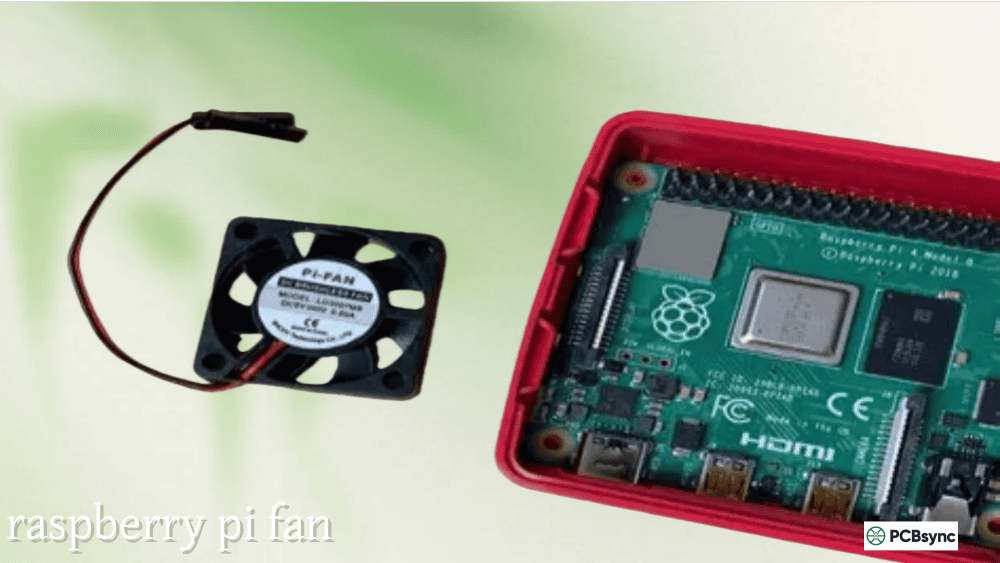
For DIY installations, active cooling becomes important in enclosed cabinets:
Cooling Method
Temperature Reduction
Noise
Passive heatsink
10-15°C
Silent
Active heatsink + fan
25-35°C
Audible
Cabinet ventilation
Variable
External
Useful Resources
Resource
URL
Description
Revolution Pi
revolutionpi.com
Official RevPi documentation
KUNBUS Shop
shop.kunbus.com
RevPi hardware purchase
DINrPlate
dinrplate.com
DIN rail mounts
Sequent Microsystems
sequentmicrosystems.com
Industrial HATs and mounts
Widgetlords
widgetlords.com
Industrial I/O modules
CODESYS Store
store.codesys.com
PLC runtime software
RevPi Forum
forum.revolutionpi.com
Community support
Frequently Asked Questions
Is RevPi certified for industrial use?
Yes, revpi devices carry CE and UL certifications and are tested to EN61131-2 (PLC standard) and IEC 61000-6-2 (industrial EMC immunity). They include protection against ESD (4kV/8kV), surge, and burst transients. The -40°C to +55°C operating range covers most industrial environments. This certification level distinguishes RevPi from DIY solutions using consumer Pi boards.
Can I use a regular Raspberry Pi in industrial applications?
For prototyping and non-critical monitoring, yes, with appropriate mounting and protection. However, consumer Raspberry Pi boards lack industrial certifications, operate on 5V power instead of 24V, have limited temperature ratings, and no I/O protection. For production systems where reliability matters, purpose-built industrial raspberry pi solutions provide necessary protection and support.
What’s the maximum number of I/O points on a RevPi system?
A RevPi Connect base module supports up to 10 expansion modules (5 per side). With RevPi DIO modules providing 28 points each (14 inputs + 14 outputs), a fully loaded system handles 280 digital I/O points plus analog channels from AIO modules. For larger systems, multiple RevPi units can network together.
Do I need CODESYS for industrial Raspberry Pi applications?
No, CODESYS is optional. Many industrial applications run successfully using Python, Node-RED, or custom C/C++ code on standard Linux. CODESYS becomes valuable when you need IEC 61131-3 programming languages familiar to automation engineers, or when integrating with existing PLC ecosystems. RevPi systems also support traditional Linux programming alongside CODESYS.
What’s the cost difference between RevPi and DIY industrial setups?
A basic raspberry pi din rail mount with Pi 4 costs approximately $75-100 total. Adding industrial I/O modules (Widgetlords or Sequent) brings the total to $200-400 depending on I/O count. A comparable RevPi Connect system starts around $300-400 but includes industrial certification, integrated features, and commercial support. For production deployments, RevPi’s certification and warranty often justify the premium. For prototyping or less critical applications, DIY solutions offer excellent value.
Installation Best Practices
Proper installation ensures long-term reliability for any raspberry pi din rail deployment.
Cabinet Environment Guidelines
Factor
Recommendation
Clearance above/below
Minimum 30mm
Clearance left/right
Minimum 20mm
Cabinet ventilation
Required for >3 modules
Cable routing
Separate power and signal
Grounding
Connect shield to cabinet ground
Wiring Considerations
Industrial environments generate electrical noise. Protect your installation:
Cable Type
Maximum Length
Shield Required
Ethernet
100m
Optional (STP recommended)
RS485
1200m at 9600 baud
Yes, >30m
Analog 4-20mA
300m
Yes
Digital 24V
500m
Optional
Always route signal cables away from power cables and variable frequency drives. Use shielded cables for any run leaving the cabinet.
Choosing Your Industrial Solution
The right industrial raspberry pi approach depends on your application requirements. For certified production systems, RevPi provides peace of mind with proven hardware and commercial support. For development, prototyping, or non-critical monitoring, DIY DIN rail solutions deliver capability at lower cost.
What started as skepticism from that controls engineer became appreciation when the Raspberry Pi-based data collector outlasted proprietary equipment installed the same month. Industrial certification matters for critical systems, but the underlying technology has proven itself across thousands of deployments worldwide.
Suggested Meta Descriptions:
Option 1 (155 characters): Industrial Raspberry Pi guide covering RevPi, DIN rail mounting, and ruggedized solutions. Compare certified systems vs DIY options for automation projects.
Option 2 (153 characters): Deploy raspberry pi din rail solutions in industrial environments. RevPi specifications, mounting options, I/O modules, and certification requirements explained.
Option 3 (149 characters): Complete guide to industrial raspberry pi options including RevPi Connect, DIN rail mounts, and ruggedized enclosures for factory automation and IIoT.
Inquire: Call 0086-755-23203480, or reach out via the form below/your sales contact to discuss our design, manufacturing, and assembly capabilities.
Quote: Email your PCB files to Sales@pcbsync.com (Preferred for large files) or submit online. We will contact you promptly. Please ensure your email is correct.
Notes: For PCB fabrication, we require PCB design file in Gerber RS-274X format (most preferred), *.PCB/DDB (Protel, inform your program version) format or *.BRD (Eagle) format. For PCB assembly, we require PCB design file in above mentioned format, drilling file and BOM. Click to download BOM template To avoid file missing, please include all files into one folder and compress it into .zip or .rar format.