Inquire: Call 0086-755-23203480, or reach out via the form below/your sales contact to discuss our design, manufacturing, and assembly capabilities.
Quote: Email your PCB files to Sales@pcbsync.com (Preferred for large files) or submit online. We will contact you promptly. Please ensure your email is correct.
Notes: For PCB fabrication, we require PCB design file in Gerber RS-274X format (most preferred), *.PCB/DDB (Protel, inform your program version) format or *.BRD (Eagle) format. For PCB assembly, we require PCB design file in above mentioned format, drilling file and BOM. Click to download BOM template To avoid file missing, please include all files into one folder and compress it into .zip or .rar format.
After building dozens of Raspberry Pi audio systems over the years, the question I hear most often is whether to choose HiFiBerry or IQaudio for high-fidelity playback. Both manufacturers have earned solid reputations in the audiophile community, but they approach the market differently and offer distinct product lines worth understanding before you spend your money.
This comparison breaks down the technical specifications, real-world performance, and practical considerations that matter when choosing between these two audio HAT platforms for your Raspberry Pi.
The onboard audio on a Raspberry Pi has never impressed audiophiles. The 3.5mm jack uses PWM-based audio conversion that introduces noise and distortion—fine for system sounds, but inadequate for music listening. Audio HATs solve this problem by adding dedicated digital-to-analog converters (DACs) that connect via the I2S interface on the GPIO header.
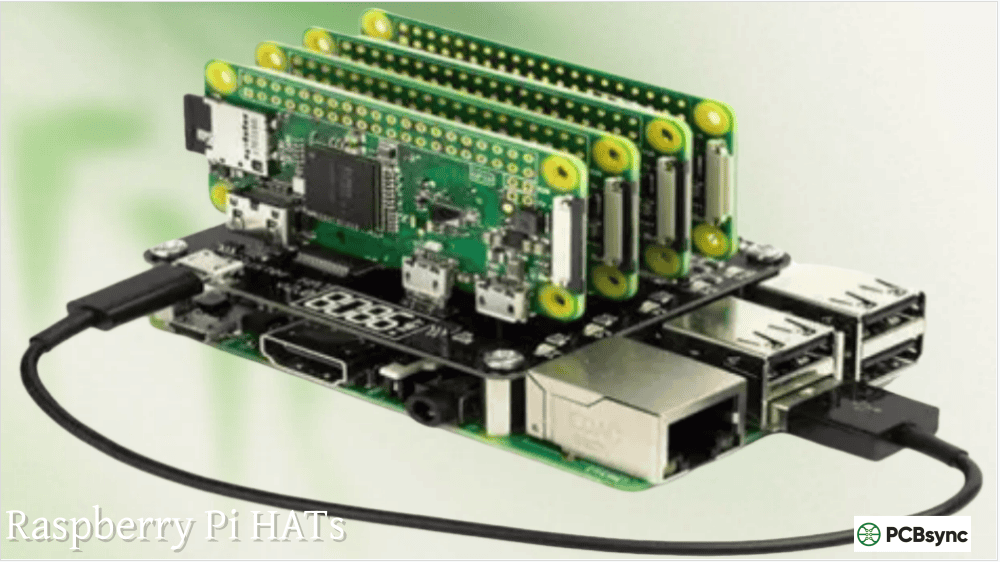
Both HiFiBerry and IQaudio produce HAT-compliant boards that plug directly onto the Pi’s 40-pin header. They draw power from the Pi itself (or from external supplies on amplifier models) and appear as standard ALSA audio devices to the operating system.
The IQaudio Acquisition Story
In December 2020, Raspberry Pi Trading acquired IQaudio, making their products part of the official Raspberry Pi ecosystem. The four most popular IQaudio boards—DAC+, DAC Pro, DigiAMP+, and Codec Zero—now carry Raspberry Pi branding and sell through authorized resellers at reduced prices.
This acquisition matters for buyers because IQaudio products now benefit from Raspberry Pi’s distribution network and long-term support commitment. HiFiBerry remains an independent company based in Switzerland, continuing to develop and sell their own product line.
DAC Chip Comparison
The DAC chip largely determines the audio performance ceiling for these boards. Both manufacturers favor Texas Instruments (Burr Brown) silicon, though specific models vary.
DAC Specifications Table
Product
DAC Chip
Resolution
THD+N
SNR
Price (USD)
HiFiBerry DAC+ Standard
PCM5102A
24-bit/192kHz
-93dB
106dB
~$23
HiFiBerry DAC2 Pro
PCM5122
24-bit/192kHz
-93dB
112dB
~$40
HiFiBerry DAC2 HD
PCM1796
24-bit/192kHz
-107dB
127dB
~$65
IQaudio DAC+
PCM5122
24-bit/192kHz
-93dB
112dB
$20
IQaudio DAC Pro
PCM5242
24-bit/192kHz
-94dB
117dB
$25
The PCM5122 appears across multiple products from both manufacturers because it delivers excellent performance at reasonable cost. The IQaudio DAC Pro uses the slightly superior PCM5242, which offers better signal-to-noise ratio and dynamic range.
HiFiBerry’s DAC2 HD stands apart by using the PCM1796, a higher-end chip that delivers measurably lower distortion and wider dynamic range. For critical listening applications, this difference becomes audible.
Clocking Architecture
Clock jitter introduces timing errors that smear the audio signal, degrading stereo imaging and transient response. How each manufacturer handles clocking significantly affects sound quality.
HiFiBerry Clocking
The HiFiBerry DAC+ Pro and DAC2 Pro use dual-domain clocking with separate oscillators for the 44.1kHz and 48kHz sample rate families. This eliminates the need for sample rate conversion that can introduce artifacts. The Pi feeds I2S data to the DAC, which uses its own precision clocks for conversion.
In “master mode,” the HiFiBerry board controls timing rather than following the Pi’s clock. This isolates the audio path from the Pi’s relatively noisy system clock.
IQaudio Clocking
IQaudio boards also support master mode operation, decoupling from the Pi’s clock. The DAC Pro includes low-jitter oscillators, though IQaudio’s documentation provides less technical detail about their specific clocking implementation than HiFiBerry’s materials.
From a practical standpoint, both approaches work well. Forum discussions reveal that users perceive differences between master and slave mode operation, with master mode generally preferred for critical listening.
Amplifier Options
If you want to drive speakers directly without an external amplifier, both manufacturers offer integrated solutions.
Amplifier HAT Comparison
Product
Amplifier
Power Output
DAC
Price (USD)
HiFiBerry Amp2
TAS5756M
2×30W @ 4Ω
Integrated
~$55
HiFiBerry Amp4
TPA3116D2
2×40W @ 4Ω
External
~$65
IQaudio DigiAMP+
TAS5756M
2×35W @ 4Ω
Integrated
$30
The IQaudio DigiAMP+ uses the same Texas Instruments TAS5756M as the HiFiBerry Amp2. This chip combines a DAC and Class D amplifier in a single package, supporting 24-bit/192kHz audio. At $30, the DigiAMP+ offers remarkable value—it’s a complete stereo amplifier that powers the Pi through its own external supply.
HiFiBerry’s Amp4 takes a different approach, using a separate amplifier chip (TPA3116D2) without an integrated DAC. This requires pairing with a HiFiBerry DAC board for the analog stage, adding cost and complexity but potentially improving audio quality through component separation.
Output Connectivity
The physical outputs determine how you’ll connect to your audio system.
Output Options by Model
Product
RCA Phono
3.5mm Headphone
XLR Balanced
Digital Out
HiFiBerry DAC+ Standard
Yes
No
No
No
HiFiBerry DAC2 Pro
Yes
Yes
Optional
No
HiFiBerry Digi2 Pro
No
No
No
Optical/Coax
IQaudio DAC+
Yes
Yes
No
No
IQaudio DAC Pro
Yes
Yes
Yes (headers)
No
IQaudio Pi-Digi+
No
No
No
Optical/Coax
The IQaudio DAC Pro includes PCB headers for balanced XLR output—unusual at this price point. With an optional daughter board, you can connect to professional equipment or run long cable distances without noise pickup. HiFiBerry’s DAC2 Pro supports similar expansion but requires separate purchase of their XLR board.
For digital output to external DACs, both manufacturers offer “Digi” boards using the Wolfson WM8804 chip. These provide optical (TOSLINK) and coaxial S/PDIF outputs, bypassing the onboard DAC entirely.
Software Compatibility
Raspberry Pi audio applications have matured significantly, with multiple polished options available.
Supported Audio Software
Both HiFiBerry and IQaudio work with all major audio distributions because their drivers are included in the standard Raspberry Pi kernel. Popular options include:
Software
Features
HiFiBerry
IQaudio
Volumio
Polished UI, streaming services
Full support
Full support
moOde Audio
Extensive tuning options
Full support
Full support
piCorePlayer
Squeezebox/LMS integration
Full support
Full support
HiFiBerryOS
Minimal, audio-focused
Native
Supported
Roon Bridge
Roon endpoint
Full support
Full support
HiFiBerry offers their own distribution, HiFiBerryOS, optimized for audio playback with minimal overhead. It’s a Buildroot-based system that boots quickly and supports streaming services, AirPlay, Spotify Connect, and local playback. While designed for HiFiBerry hardware, it recognizes IQaudio boards as well.
Volumio and moOde remain the most popular choices across both platforms. They provide browser-based control, support for Tidal, Qobuz, and Spotify, plus features like parametric EQ and upsampling. Configuration takes under 10 minutes with either HAT family.
Examining these boards on the bench reveals thoughtful engineering from both manufacturers.
HiFiBerry Design Philosophy
HiFiBerry boards typically use more components and elaborate power filtering. The DAC2 Pro includes multiple low-noise voltage regulators and extensive ground plane coverage. PCB layouts show attention to analog/digital separation.
Their documentation is comprehensive, with detailed datasheets covering specifications, pinouts, and configuration options. Support forums are active, and firmware updates arrive regularly.
IQaudio Design Philosophy
IQaudio boards favor clean, symmetrical layouts with minimal track lengths on the analog output path. The DAC Pro’s ground plane coverage is nearly 100% on the underside—good practice for noise rejection.
The company’s acquisition by Raspberry Pi Trading brought improved documentation and integration into the official Pi documentation. The product guide PDF covers setup across multiple software platforms with clear instructions.
Sound Quality Assessment
The subjective question everyone wants answered: which sounds better?
From extensive forum discussions and published comparisons, the consensus suggests both manufacturers produce excellent results at their respective price points. Measurable differences exist—the IQaudio DAC Pro’s PCM5242 chip offers slightly better specifications than the HiFiBerry DAC+ Pro’s PCM5122—but whether listeners perceive these differences depends heavily on the downstream equipment and source material.
Some listeners describe HiFiBerry’s sound as “smoother” or “warmer,” while others characterize IQaudio as more “detailed” or “precise.” These descriptions should be taken with healthy skepticism given the difficulty of controlled listening comparisons.
What’s more relevant for most builders: both platforms deliver performance that exceeds typical Bluetooth speakers, soundbars, and entry-level integrated systems by a significant margin. The bottleneck in most Raspberry Pi audio setups is the amplifier and speakers, not the DAC.
Practical Recommendations
Choose HiFiBerry When:
You want extensive documentation and an active support community. You prefer their specific hardware features like the DSP add-on module. You’re building around HiFiBerryOS for a minimal, audio-focused system. You need the highest-end option (DAC2 HD) with superior measured performance.
Choose IQaudio When:
Budget matters—IQaudio products generally cost less for equivalent features since the Raspberry Pi acquisition. You want official Raspberry Pi support and long-term availability. You need balanced XLR output at an affordable price point. You’re building a DigiAMP+ powered speaker system and want maximum value.
Useful Resources
Official Documentation
Resource
URL
Description
HiFiBerry Documentation
hifiberry.com/docs
Setup guides, datasheets
Raspberry Pi Audio Docs
raspberrypi.com/documentation/accessories/audio
IQaudio product documentation
Volumio
volumio.com
Popular audio distribution
moOde Audio
moodeaudio.org
Audiophile-focused distribution
Community Resources
Resource
URL
Description
HiFiBerry Forum
support.hifiberry.com
Official support community
Raspberry Pi Forums
forums.raspberrypi.com
Active audio discussion threads
Head-Fi Pi Guide
head-fi.org
Audiophile project guides
Frequently Asked Questions
Can I use HiFiBerry and IQaudio boards with Raspberry Pi 5?
Yes, both manufacturers support Raspberry Pi 5. However, some older boards may require firmware updates or specific device tree overlays. Check the manufacturer’s compatibility documentation before purchasing for Pi 5 builds.
Do these audio HATs work with other Pi software like Kodi?
Yes, both HiFiBerry and IQaudio boards work with Kodi, LibreELEC, OSMC, and other media center software. They appear as standard ALSA audio devices, so any application supporting ALSA output will work correctly.
Which DAC chip sounds better—PCM5122 or PCM5242?
The PCM5242 offers marginally better specifications (lower distortion, higher SNR) than the PCM5122, but the difference is subtle in real-world listening. Both chips perform well beyond the resolving capability of most playback systems. Focus on your amplifier and speaker quality first.
Can I stack multiple audio HATs?
Generally no. Audio HATs use overlapping GPIO pins and I2S resources, making stacking impractical. If you need multiple outputs, consider a board with multiple output types (like the IQaudio DAC Pro with RCA, headphone, and XLR options) or use USB audio for secondary outputs.
Do I need an external power supply for better sound quality?
For DAC-only boards like the DAC+ or DAC Pro, the Pi’s 5V supply is adequate. For amplifier boards like the DigiAMP+, an external 12-24V supply is required. Some audiophiles report improvements with linear power supplies over switching supplies, though this enters subjective territory.
Conclusion
The HiFiBerry vs IQaudio comparison ultimately comes down to specific needs rather than clear winners. HiFiBerry offers broader product selection, more documentation, and their own operating system. IQaudio—now part of Raspberry Pi—provides excellent value, official support, and the security of acquisition by a well-funded parent company.
For most Raspberry Pi audio projects, either platform delivers performance that surprises newcomers accustomed to mainstream consumer audio. The real magic happens when you pair these boards with quality amplification and speakers, run Volumio or moOde, and discover what affordable high-fidelity audio actually sounds like.
Start with your budget and required features. Match the DAC to your amplifier and speakers. Then enjoy the music—that’s what this is ultimately about.
Suggested Meta Description:
Compare HiFiBerry vs IQaudio for your Raspberry Pi audio project. Detailed analysis of DAC chips, amplifier options, sound quality, pricing, and software compatibility to help you choose the best audio HAT.
Inquire: Call 0086-755-23203480, or reach out via the form below/your sales contact to discuss our design, manufacturing, and assembly capabilities.
Quote: Email your PCB files to Sales@pcbsync.com (Preferred for large files) or submit online. We will contact you promptly. Please ensure your email is correct.
Notes: For PCB fabrication, we require PCB design file in Gerber RS-274X format (most preferred), *.PCB/DDB (Protel, inform your program version) format or *.BRD (Eagle) format. For PCB assembly, we require PCB design file in above mentioned format, drilling file and BOM. Click to download BOM template To avoid file missing, please include all files into one folder and compress it into .zip or .rar format.