Inquire: Call 0086-755-23203480, or reach out via the form below/your sales contact to discuss our design, manufacturing, and assembly capabilities.
Quote: Email your PCB files to Sales@pcbsync.com (Preferred for large files) or submit online. We will contact you promptly. Please ensure your email is correct.
Notes: For PCB fabrication, we require PCB design file in Gerber RS-274X format (most preferred), *.PCB/DDB (Protel, inform your program version) format or *.BRD (Eagle) format. For PCB assembly, we require PCB design file in above mentioned format, drilling file and BOM. Click to download BOM template To avoid file missing, please include all files into one folder and compress it into .zip or .rar format.
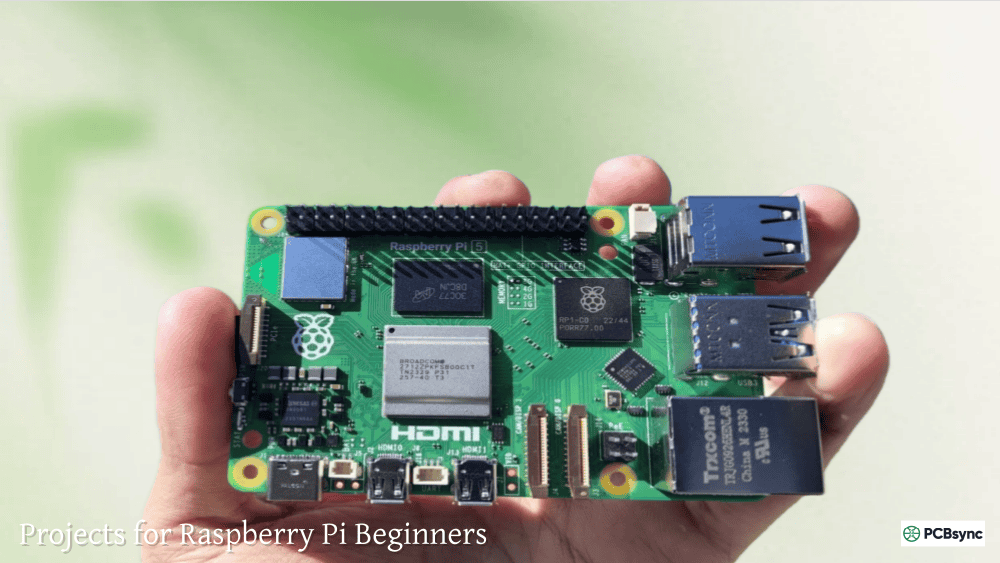
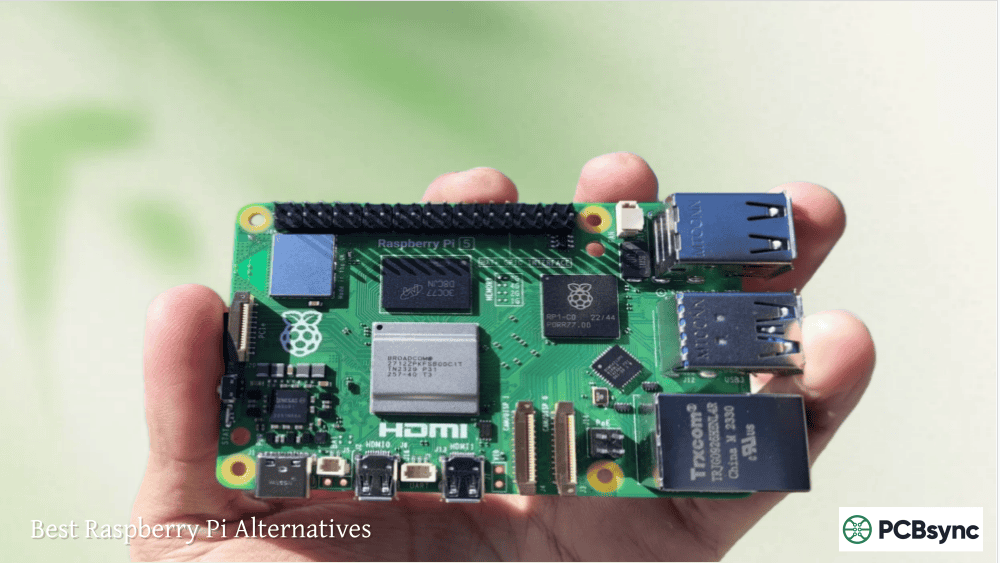
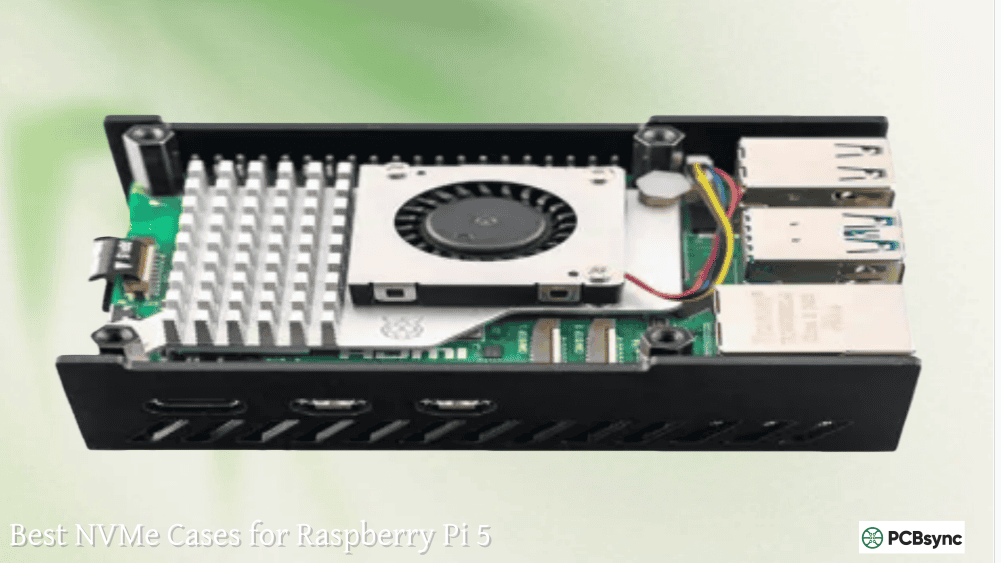
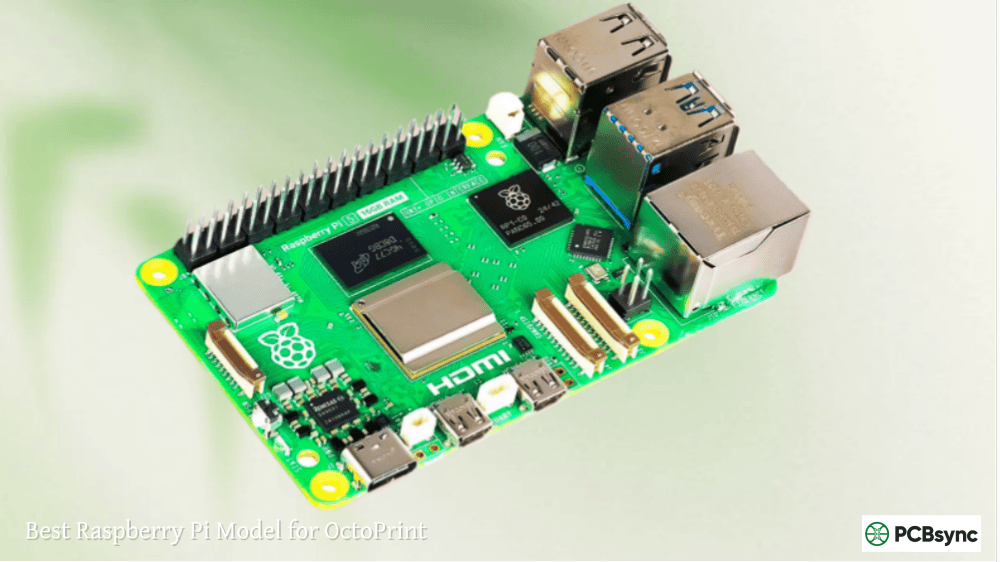
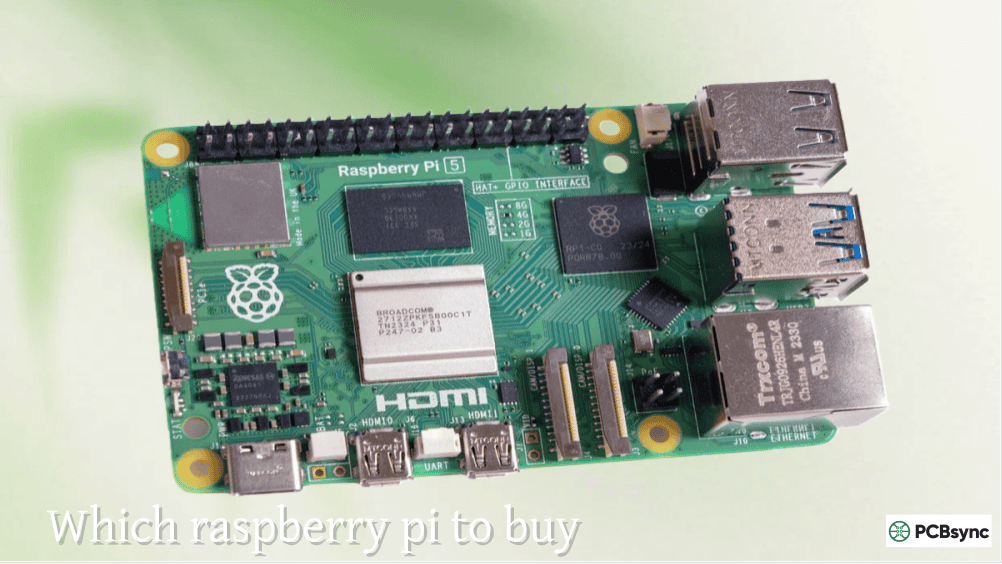
The Raspberry Pi 5 changed everything for those of us who’ve been waiting for proper storage performance. For the first time, we have a native PCIe interface that doesn’t route through USB, and the Raspberry Pi 5 NVMe ecosystem has exploded with options. After testing over a dozen enclosures and HATs in my lab, I’ve compiled this guide to help you pick the right Pi 5 SSD solution for your specific use case.
The difference between a good NVMe case and a mediocre one comes down to signal integrity, thermal management, and power delivery. These aren’t marketing buzzwords. They’re the engineering fundamentals that determine whether your Pi 5 reaches its storage potential or throttles under load.
The Pi 5’s PCIe 2.0 x1 lane delivers theoretical bandwidth of 500 MB/s, roughly five times faster than the previous generation’s USB 3.0 limit. In practice, well-designed NVMe setups achieve 400-450 MB/s sustained transfers. That’s transformative for applications like database servers, media transcoding, container orchestration, or just running a snappy desktop environment.
MicroSD cards, even the fastest UHS-II variants, cap around 90-100 MB/s sequential and suffer dramatically on random I/O. USB-attached SSDs improve on this but still contend with protocol overhead and shared bus resources. Native PCIe eliminates these bottlenecks entirely.
Performance Comparison: Storage Options
Storage Type
Sequential Read
Sequential Write
4K Random Read
Boot Time (Pi OS)
MicroSD (A2)
90 MB/s
60 MB/s
2,000 IOPS
25-30 seconds
USB 3.0 SSD
350 MB/s
300 MB/s
15,000 IOPS
15-18 seconds
NVMe (PCIe)
450 MB/s
400 MB/s
45,000 IOPS
8-12 seconds
The random I/O improvement matters more than sequential speeds for most real-world workloads. When your Pi runs multiple services, compiles code, or hosts virtual machines, those 4K random operations determine perceived responsiveness.
Understanding Raspberry Pi 5 PCIe Interface
Before diving into specific cases, understanding the Pi 5’s PCIe implementation helps explain why some solutions work better than others.
The Pi 5 exposes its PCIe lane through a 16-pin FPC (flat flexible cable) connector designated J7. This connector carries PCIe data lanes, reference clock, power rails, and control signals. The FPC routing creates signal integrity challenges that case designers must address through proper impedance matching and shielding.
By default, the Pi 5 operates in PCIe Gen 2 mode (5 GT/s). Gen 3 (8 GT/s) can be enabled through firmware settings, potentially increasing bandwidth to around 800 MB/s. However, Gen 3 requires tighter signal integrity margins, and not all NVMe cases support it reliably.
PCIe Configuration for Maximum Speed
Add these lines to /boot/firmware/config.txt for Gen 3 operation:
dtparam=pciex1_gen=3
Note that Gen 3 compatibility depends on both your NVMe case’s PCB design and the specific SSD model. Some combinations work flawlessly; others exhibit errors or fall back to Gen 2 automatically.
Top NVMe Cases for Raspberry Pi 5 Reviewed
I’ve evaluated each case based on measured performance, thermal behavior, build quality, and value. All testing used a Samsung 980 Pro 500GB as the reference drive unless otherwise noted.
Pimoroni NVMe Base
The NVMe Base from Pimoroni represents the simplest approach: a bottom-mounted PCB that connects via the FPC cable and positions the SSD underneath the Pi. This design keeps the overall footprint compact while providing solid performance.
Specifications:
Feature
Details
Form Factor
Bottom HAT (underneath Pi)
NVMe Support
M.2 2230, 2242, 2260, 2280
PCIe Generation
Gen 2 (Gen 3 capable)
Cooling
Passive aluminum heatspreader
Power Delivery
Direct from Pi 5V rail
Price Range
$15-20
The PCB layout is clean with proper ground stitching around the high-speed traces. Pimoroni uses gold-plated edge fingers on the M.2 slot, which improves contact reliability over cheaper tin-plated alternatives.
Thermal performance is adequate for most drives. My testing showed the Samsung 980 Pro stabilizing at 52°C under sustained write loads in a 22°C ambient environment. The included thermal pad transfers heat to the aluminum base plate effectively.
Cons: No active cooling option, requires case modification for most enclosures
Argon ONE V3 M.2 NVMe Case
Argon’s V3 case integrates NVMe storage into a full aluminum enclosure with active cooling. This is my recommendation for users who want a complete, polished solution rather than assembling separate components.
Specifications:
Feature
Details
Form Factor
Full enclosure with integrated NVMe
NVMe Support
M.2 2230, 2242, 2260, 2280
PCIe Generation
Gen 2 stable, Gen 3 with configuration
Cooling
30mm PWM fan + aluminum thermal contact
Power Delivery
5V/5A recommended power supply
Price Range
$55-65
The internal design routes the FPC cable through a dedicated channel that maintains consistent impedance. I traced the PCB and found they’ve added ferrite beads on the power rails and properly terminated the PCIe clock reference, details that explain why Gen 3 works more reliably here than on some competitors.
GPIO access comes through the removable magnetic top panel, and the included fan controller allows PWM speed adjustment via software. Under sustained load, my test drive stayed below 45°C with the fan at 50% duty cycle.
Pros: Premium build quality, excellent thermals, full GPIO access, reliable Gen 3 support
Cons: Higher price point, larger footprint than minimal solutions
Geekworm X1001 PCIe to NVMe HAT
Geekworm’s X1001 takes the top-mount approach, positioning the NVMe drive above the Pi. This maintains compatibility with standard Pi cases that have sufficient clearance.
Specifications:
Feature
Details
Form Factor
Top HAT (above Pi)
NVMe Support
M.2 2230, 2242, 2280
PCIe Generation
Gen 2 default, Gen 3 possible
Cooling
Passive heatsink included
Power Delivery
Auxiliary 5V input option
Price Range
$20-28
The X1001 includes an interesting power management feature: an auxiliary power input that bypasses the Pi’s internal 5V regulator. For power-hungry NVMe drives, this prevents brownouts that can cause filesystem corruption. The jumper configuration allows selecting between Pi power and auxiliary power based on your setup.
PCB quality is good but not exceptional. The ground plane coverage around the PCIe connector could be more complete, which may explain occasional Gen 3 instability I observed with certain drive combinations.
Pros: Flexible power options, compatible with many cases, reasonable price
Cons: Gen 3 reliability varies, bulkier than bottom-mount solutions
Pineberry Pi HatDrive! Bottom
The HatDrive! Bottom earned its place through exceptional signal integrity design. Pineberry clearly prioritized electrical performance, using controlled impedance traces and proper termination throughout.
Specifications:
Feature
Details
Form Factor
Bottom HAT (underneath Pi)
NVMe Support
M.2 2230, 2242 only
PCIe Generation
Gen 3 certified
Cooling
Thermal pad to aluminum base
Power Delivery
Through Pi with power monitoring
Price Range
$22-28
The Gen 3 certification matters here. Pineberry publishes eye diagram measurements demonstrating their PCB meets Gen 3 signal integrity requirements. This technical transparency is rare in the Pi accessory market and gives confidence for demanding applications.
The trade-off is limited M.2 size support. Only 2230 and 2242 drives fit, excluding common 2280 SSDs. This restricts your drive choices but keeps the overall assembly compact.
Pros: Certified Gen 3 performance, excellent engineering, power monitoring
Cons: No 2280 support, slightly higher price for smaller drives
Official Raspberry Pi M.2 HAT+
The Foundation’s own M.2 HAT+ offers guaranteed compatibility and straightforward installation. As the reference design, it works reliably but doesn’t push performance boundaries.
Specifications:
Feature
Details
Form Factor
Top HAT with ribbon cable
NVMe Support
M.2 2230, 2242
PCIe Generation
Gen 2 officially supported
Cooling
None included
Power Delivery
Through Pi
Price Range
$12-15
The official HAT uses a standard FFC (flat flex cable) rather than the shorter FPC ribbon. This longer cable simplifies mechanical integration but introduces additional signal path length. Performance testing showed consistent Gen 2 speeds, but Gen 3 operation required cable shielding modifications that aren’t practical for most users.
For those prioritizing compatibility and documentation over maximum speed, this remains a solid choice. The Pi Foundation’s software support ensures NVMe boot works out of the box without kernel patches or custom device trees.
Pros: Official support, excellent documentation, lowest price, guaranteed compatibility
Cons: Gen 2 only practical, no cooling solution, limited M.2 sizes
Not all NVMe drives perform equally on the Pi 5. Power consumption and thermal characteristics matter as much as raw speed specifications. Here are drives I’ve verified for reliable operation:
Budget Tier (Under $40 for 500GB)
Drive
Capacity
Power Draw
Pi 5 Compatibility
WD Blue SN580
500GB-2TB
3.5W max
Excellent
Kingston NV2
500GB-2TB
3.2W max
Excellent
Crucial P3
500GB-4TB
3.5W max
Good
Performance Tier ($50-80 for 500GB)
Drive
Capacity
Power Draw
Pi 5 Compatibility
Samsung 980 Pro
500GB-2TB
5.5W max
Excellent
WD Black SN770
500GB-2TB
5.5W max
Excellent
SK Hynix P41
500GB-2TB
6.0W max
Good*
*Higher power drives may require auxiliary power input or a 5V/5A power supply.
Compact 2230 Form Factor
Drive
Capacity
Power Draw
Notes
WD SN740
256GB-2TB
3.5W max
Steam Deck pulls work great
Samsung PM991a
256GB-1TB
2.5W max
OEM only, check sources
Kioxia BG5
256GB-1TB
3.2W max
Excellent efficiency
Setting Up NVMe Boot on Raspberry Pi 5
Configuring your Pi 5 to boot from NVMe requires updating the bootloader and preparing your SSD. Here’s the process:
Update Bootloader
First, ensure your Pi 5 runs the latest bootloader with NVMe support:
Navigate to Advanced Options → Boot Order → NVMe/USB Boot. Alternatively, set manually:
sudo rpi-eeprom-config –edit
Change BOOT_ORDER to 0xf416 for NVMe-first boot.
Clone or Fresh Install
Either clone your existing SD card installation using rpi-clone or perform a fresh installation directly to the NVMe drive using Raspberry Pi Imager with the SSD connected via USB adapter initially.
Troubleshooting Common Pi 5 NVMe Issues
Drive Not Detected
Check the FPC cable seating at both ends. The connector requires firm pressure to lock. Verify PCIe is enabled in config.txt:
dtparam=pciex1
Some drives require additional firmware. Update your Pi’s firmware to the latest version.
Gen 3 Instability
If you experience crashes or filesystem errors with Gen 3 enabled, revert to Gen 2. Not all case/drive combinations support the higher speed reliably. Check dmesg output for PCIe link training errors.
Thermal Throttling
NVMe drives throttle when exceeding their temperature limits (typically 70-80°C). Add thermal pads between the drive and any available heatsink surface. Consider active cooling for sustained workloads.
Boot Failures After Working Initially
Power delivery issues cause intermittent boot failures. Use the official 27W USB-C power supply or a reliable third-party 5V/5A adapter. Avoid unpowered USB hubs during boot.
Useful Resources and Downloads
Resource
URL
Description
Pi 5 Bootloader
rpi-eeprom releases
Latest firmware with NVMe fixes
PCIe Configuration Guide
Raspberry Pi Documentation
Official setup instructions
Jeff Geerling’s Pi 5 Tests
jeffgeerling.com
Comprehensive benchmarking
Pi 5 NVMe Compatibility List
GitHub/pibenchmarks
Community-tested drive list
rpi-clone
GitHub
SD to NVMe cloning utility
Frequently Asked Questions About Raspberry Pi 5 NVMe
Can I use any NVMe SSD with Raspberry Pi 5?
Most standard NVMe drives work, but compatibility varies. Drives exceeding 5W power draw may cause stability issues without a 5V/5A power supply. DRAM-less drives generally work fine. Enterprise drives with unusual power requirements may not initialize properly. Check community compatibility lists before purchasing.
Is PCIe Gen 3 worth enabling on Pi 5?
Gen 3 doubles theoretical bandwidth to 1000 MB/s, but practical gains depend on your use case. For sequential transfers, you might see 700-800 MB/s versus 400-450 MB/s. For typical mixed workloads with random I/O, the difference shrinks considerably. Enable Gen 3 if your case supports it reliably, but Gen 2 performance already exceeds most users’ requirements.
What size NVMe drive should I get for Pi 5?
For general use, 500GB provides ample space for OS, applications, and projects. Media servers or NAS applications benefit from 1-2TB. The Pi 5 supports drives up to 8TB, though cost per gigabyte favors the 1-2TB sweet spot. Consider 2230 form factor drives if using compact cases.
Do I still need a microSD card with NVMe boot?
No, the Pi 5 boots directly from NVMe without requiring an SD card. The bootloader resides in onboard EEPROM. However, keeping a bootable SD card available helps recovery if NVMe configuration causes boot failures. Some users prefer SD card for bootloader with NVMe for root filesystem.
How does NVMe compare to USB SSD on Raspberry Pi 5?
NVMe delivers approximately 30% higher sequential speeds and dramatically better random I/O, around three times faster for 4K operations. The latency improvement matters most for system responsiveness. USB SSDs remain viable for external storage but shouldn’t be your boot drive if NVMe is an option.
Choosing the Right Raspberry Pi 5 NVMe Case
Your ideal NVMe case depends on priorities and budget. For raw performance and Gen 3 certification, the Pineberry HatDrive! Bottom leads, limited only by its 2242 maximum size. The Argon ONE V3 suits users wanting an integrated solution with active cooling and premium build quality. Budget-conscious builders should grab the Pimoroni NVMe Base, which delivers excellent performance at the lowest price point.
Whatever you choose, adding NVMe storage to your Pi 5 transforms the user experience. Boot times drop, applications launch instantly, and demanding workloads that previously crawled become practical. The Pi 5’s PCIe interface finally gives us the storage performance this platform deserved, and the accessory ecosystem has responded with genuinely capable solutions.
Inquire: Call 0086-755-23203480, or reach out via the form below/your sales contact to discuss our design, manufacturing, and assembly capabilities.
Quote: Email your PCB files to Sales@pcbsync.com (Preferred for large files) or submit online. We will contact you promptly. Please ensure your email is correct.
Notes: For PCB fabrication, we require PCB design file in Gerber RS-274X format (most preferred), *.PCB/DDB (Protel, inform your program version) format or *.BRD (Eagle) format. For PCB assembly, we require PCB design file in above mentioned format, drilling file and BOM. Click to download BOM template To avoid file missing, please include all files into one folder and compress it into .zip or .rar format.