Inquire: Call 0086-755-23203480, or reach out via the form below/your sales contact to discuss our design, manufacturing, and assembly capabilities.
Quote: Email your PCB files to Sales@pcbsync.com (Preferred for large files) or submit online. We will contact you promptly. Please ensure your email is correct.
Notes: For PCB fabrication, we require PCB design file in Gerber RS-274X format (most preferred), *.PCB/DDB (Protel, inform your program version) format or *.BRD (Eagle) format. For PCB assembly, we require PCB design file in above mentioned format, drilling file and BOM. Click to download BOM template To avoid file missing, please include all files into one folder and compress it into .zip or .rar format.
After spending the better part of five years working on embedded projects with Raspberry Pi Compute Modules, I’ve learned one thing: the CM4 carrier board you choose can make or break your project. Whether you’re building a home NAS, deploying industrial IoT devices, or prototyping your next product, picking the right compute module 4 IO board is crucial.
This guide cuts through the marketing noise and gives you practical recommendations based on real-world use. I’ve personally tested many of these boards or worked with teams that have deployed them in production environments.
Even with the CM5 now available, the CM4 remains incredibly relevant. Here’s why:
The CM4 ecosystem is mature and extensively documented. Production boards have years of proven reliability data behind them. For cost-sensitive applications where you don’t need the extra horsepower of CM5, CM4 delivers excellent value. Plus, Raspberry Pi has committed to keeping CM4 in production through at least 2030.
The compute module 4 IO board market has exploded since the CM4’s 2020 launch. We now have options ranging from $15 budget boards to $200+ professional solutions with industrial certifications.
Understanding CM4 Carrier Board Categories
Before diving into specific products, let’s establish what separates budget, mid-range, and professional CM4 IO boards.
Budget Carrier Boards (Under $50)
These boards strip away non-essential features to hit aggressive price points. You’ll typically get basic connectivity—single HDMI, USB 2.0, Gigabit Ethernet, and GPIO. Perfect for learning, cluster computing, or simple dedicated applications.
Mid-Range Carrier Boards ($50-150)
This sweet spot offers PCIe support through M.2 slots, dual Ethernet ports, better power delivery, and additional I/O options. Most hobbyist projects and many commercial prototypes fit here.
Professional CM4 Carrier Boards ($150+)
Industrial-grade options with features like wide voltage input ranges, multiple SATA ports, PoE support, RS-485/CAN interfaces, and proper ESD protection. These boards target NAS builds, edge computing, and production deployments.
Top CM4 Carrier Board Recommendations for 2026
Best Budget CM4 Carrier Board: Sourcekit PiTray Mini
Specification
Details
Price
~$15
Form Factor
Raspberry Pi Model B footprint
USB Ports
1x USB 2.0
Video Output
1x Full-size HDMI
Ethernet
Gigabit
Storage
MicroSD slot
GPIO
40-pin header
The PiTray Mini deserves its reputation as the go-to budget CM4 IO board. At around $15, it delivers the essentials without compromise on build quality.
What I appreciate most is the familiar Raspberry Pi form factor. If you’ve built Pi clusters before, you can stack PiTray boards using existing cases and mounting hardware. The eMMC boot switch makes flashing straightforward—no jumper wires or confusion about which pins need shorting.
Best for: Cluster computing, learning, dedicated single-purpose appliances, cost-sensitive production runs.
Limitations: No camera/display connectors, no PCIe, single USB port.
Best Official Option: Raspberry Pi CM4 IO Board
Specification
Details
Price
~$35
Form Factor
160mm x 90mm
USB Ports
2x USB 2.0
Video Output
2x HDMI (4K60)
Ethernet
Gigabit
PCIe
x1 Gen 2.0 slot
Storage
MicroSD slot
GPIO
40-pin header
Camera/Display
2x CSI, 2x DSI
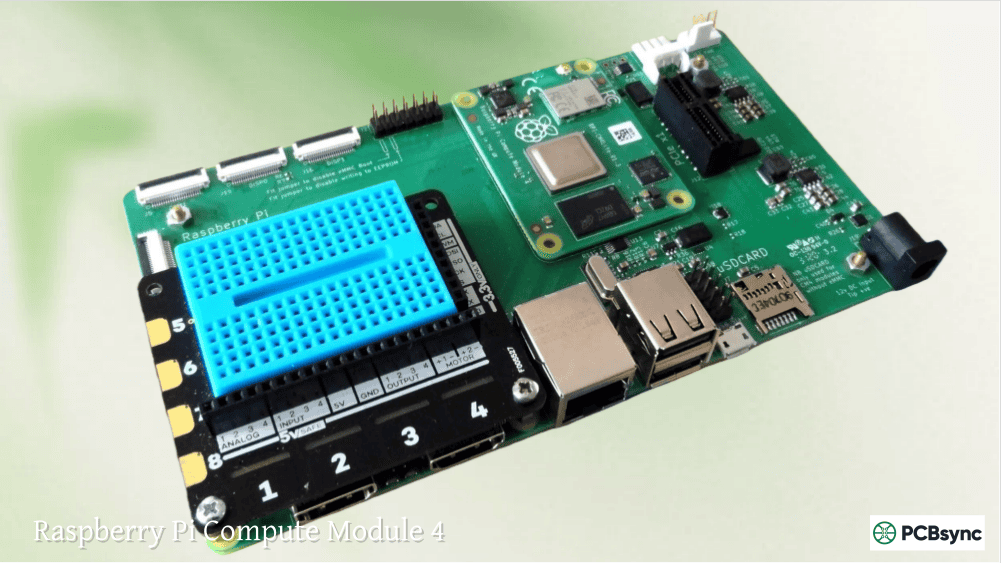
The official compute module 4 IO board from Raspberry Pi remains the reference standard. It exposes every CM4 interface in a well-documented package. The PCIe x1 slot opens up NVMe storage possibilities through adapters.
If you’re developing a product and need to validate CM4 behavior against the reference implementation, this is where you start. The design files are open-source under permissive licensing, which has enabled the entire third-party ecosystem.
Best for: Development and prototyping, HAT compatibility testing, reference validation.
Limitations: Large footprint, no PoE built-in, USB 2.0 only (no USB 3.0).
Best Compact Option: Waveshare CM4-Nano-B
Specification
Details
Price
~$25-30
Form Factor
CM4-sized (55mm x 40mm)
USB Ports
1x USB 2.0 Type-A, USB-C for programming
Video Output
Micro HDMI
Ethernet
Gigabit
Storage
MicroSD slot
GPIO
40-pin header
Audio
3.5mm jack
For space-constrained applications, the Waveshare Nano boards pack impressive functionality into a footprint matching the CM4 itself. The B revision improved power delivery over the original.
I’ve used these in tight enclosures where every millimeter counts. The inclusion of audio output is a nice touch for media applications.
Best for: Embedded systems, space-constrained installations, portable projects.
Limitations: No PCIe, limited expandability.
Best for NAS Projects: Axzez Interceptor v2.0
Specification
Details
Price
~$119-129
Form Factor
Mini-ITX compatible (with adapter)
USB Ports
4x USB 2.0 (2 via header)
Video Output
2x Full-size HDMI (4K60)
Ethernet
4x Gigabit (switched)
SATA Ports
5x SATA (via JMB585)
Industrial I/O
RS-485
Power
24-pin ATX connector
The Interceptor has become the CM4 carrier board of choice for serious NAS and NVR builders. Five SATA ports through a JMicron JMB585 controller, four switched Gigabit Ethernet ports via RTL8367, and proper ATX power delivery set it apart.
Version 2.0 added improved voltage regulation and a microSD slot for Lite modules. The four Ethernet ports make this excellent for managed switch or router applications running OpenWrt.
Best for: 5-drive NAS builds, network video recorders, managed switches, IoT gateways.
Limitations: USB 2.0 only, PCIe bandwidth shared across SATA ports, requires ATX PSU.
Best for Industrial Applications: Oratek TOFU
Specification
Details
Price
~$110-130
Form Factor
90mm x 90mm
USB Ports
3x USB 2.0, 1x USB-C (programming)
Video Output
Full-size HDMI
Ethernet
Gigabit with PoE support
M.2 Slot
B-key 2242/3042
Power Input
7.5-28VDC (jack + terminal)
Additional
Micro SIM slot, CSI/DSI
The TOFU was designed from the ground up for industrial deployment. The wide 7.5-28V input range handles automotive and industrial power rails. The M.2 B-key slot accepts both NVMe storage and cellular modems (with the onboard micro SIM).
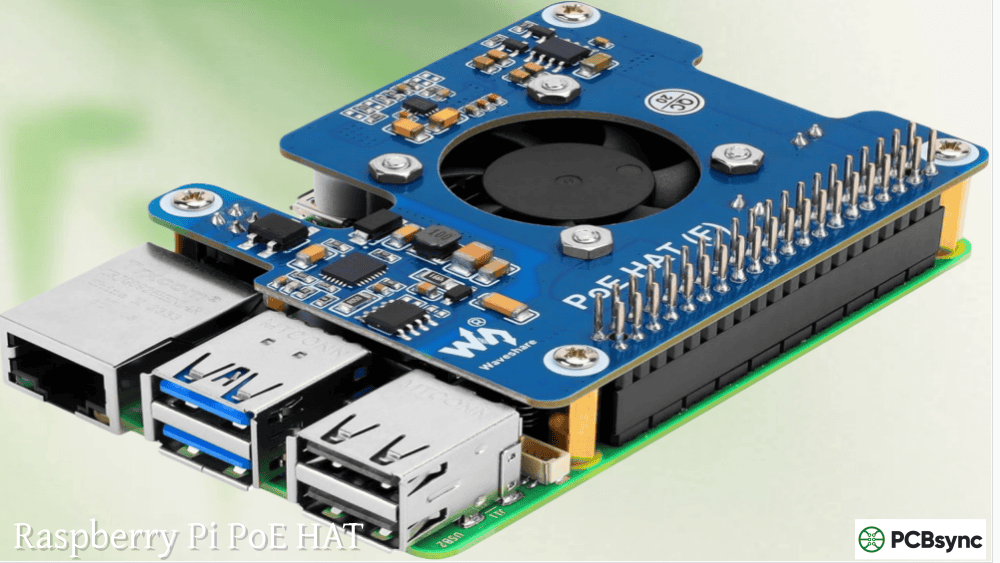
ESD protection on all external ports shows attention to real-world deployment challenges. The PoE support works with the official Raspberry Pi PoE HAT.
Best for: Industrial IoT, remote monitoring, cellular-connected deployments, automotive projects.
Limitations: USB 2.0 only, 2242 M.2 limits SSD options.
Best for Soft Routers: Seeed Dual Gigabit Ethernet Carrier
Specification
Details
Price
~$45-60 (board only)
Form Factor
95mm x 58mm
USB Ports
2x USB 3.0
Ethernet
2x Gigabit
Storage
MicroSD slot
Camera/Display
CSI, DSI connectors
Seeed’s Dual Gigabit carrier solved a common CM4 limitation: USB 3.0. By routing the PCIe lane through a USB 3.0 controller, you get dual USB 3.0 ports alongside dual Gigabit Ethernet.
This makes it ideal for soft router applications where you need WAN/LAN separation plus high-speed USB for additional storage or adapters.
Best for: Software routers, network appliances, projects needing USB 3.0.
Limitations: PCIe consumed by USB 3.0 controller (no NVMe option).
Piunora takes an unconventional approach with its Arduino-compatible form factor. The included ADC provides true analog inputs—something no official Raspberry Pi board offers. The Qwiic connector enables rapid I2C sensor integration.
The M.2 B-key slot on the rear supports both NVMe storage and expansion cards. This is the compute module 4 IO board I recommend to makers and researchers who value rapid iteration.
For users who want an all-in-one NAS solution, Waveshare’s NAS BOX packages their dual NVMe carrier board with a metal enclosure, cooling system, and support for 4G connectivity. The dual M.2 NVMe slots accept 2230 through 2280 form factors, making it flexible for various SSD choices.
The included enclosure provides VESA mounting (75x75mm and 100x100mm), letting you attach it behind a monitor or under a desk. It’s a solid middle-ground between bare carrier boards and full NAS enclosures.
DFRobot IoT Router Carrier Board Mini
At just 55x62mm, this compact compute module 4 IO board adds dual Gigabit Ethernet through PCIe for soft router applications. It retains the 40-pin GPIO header and supports OpenWrt out of the box. If you’re building a travel router or compact network appliance, this board delivers impressive density.
RAK Wireless RAKR314
The RAKR314 takes a different approach by mimicking the Raspberry Pi 4 form factor while adding PoE support. It includes two USB 2.0, two USB 3.0, and two USB-C ports (power and programming). The familiar layout means existing Pi 4 cases and accessories work without modification—useful for production deployments where you’ve already tooled for Pi 4 enclosures.
Key Considerations When Choosing a CM4 IO Board
PCIe Bandwidth Limitations
The CM4 exposes a single PCIe 2.0 x1 lane, capping theoretical throughput at around 500 MB/s (realistically 380-400 MB/s). If a board routes this to multiple SATA ports or USB 3.0, bandwidth is shared.
For NAS applications, this means you’ll hit the PCIe bottleneck before saturating Gigabit Ethernet—but you’ll still see significant improvements over USB 2.0 or SD card storage.
Power Delivery Requirements
CM4 modules can draw up to 4.5W under load, and that’s before adding peripherals. Boards with USB 3.0 controllers, multiple Ethernet ports, or SATA connections need robust power supplies.
Look for carriers with dedicated power regulation rated for your expected load. The official recommendation is 5V/3A minimum for the CM4 alone.
CM5 Compatibility Considerations
Some newer CM4 carrier boards advertise CM5 compatibility. While the form factor is identical, CM5 adds new signals that CM4 boards can’t utilize—like native USB 3.0. If you’re planning a CM5 upgrade path, verify which features will work.
Heat Management
The CM4’s BCM2711 throttles at 85°C. Carrier boards that sandwich the CM4 in enclosures or have components underneath can trap heat. Consider boards with heatsink mounting points or active cooling provisions for demanding workloads.
Useful Resources for CM4 Projects
Here are resources I’ve found invaluable when working with CM4 carrier boards:
Official Documentation
Raspberry Pi CM4 Datasheet: Complete electrical specifications
CM4 IO Board Design Files: KiCad schematics for reference designs
Community Resources
Jeff Geerling’s Raspberry Pi PCIe Database (pipci.jeffgeerling.com): Comprehensive compatibility testing
Raspberry Pi Forums Compute Module section: Active troubleshooting community
Software Images
Raspberry Pi OS: Official supported operating system
Axzez provides pre-built images for Interceptor boards with driver support
Frequently Asked Questions About CM4 Carrier Boards
What is a CM4 carrier board and why do I need one?
A CM4 carrier board (also called a baseboard or IO board) provides the physical connectors and interfaces that the Raspberry Pi Compute Module 4 lacks. The CM4 is essentially a bare module—powerful processor, RAM, storage, and wireless—but with no ports you can directly plug into. The carrier board exposes these capabilities through USB ports, HDMI outputs, Ethernet jacks, GPIO headers, and more. Every CM4 project requires some form of carrier board to function.
Can I use CM4 carrier boards with the newer CM5?
Most CM4 carrier boards will physically accept a CM5 since the form factor and connector layout are identical. However, CM5 adds new capabilities like native USB 3.0 that require specific carrier board support. When using CM5 on a CM4 carrier, those new features won’t be available—you’ll get CM4-level functionality from your CM5. For full CM5 capabilities, you’ll need a carrier designed for it.
Which CM4 carrier board is best for a home NAS build?
The Axzez Interceptor stands out for NAS applications with its five SATA ports and four Gigabit Ethernet ports. For smaller builds, the Waveshare CM4-NAS-Double-Deck or CM4-NVME-NAS-BOX offer dual M.2 NVMe slots or SATA bays with included enclosures. Budget builders can use the official CM4 IO Board with a PCIe-to-SATA adapter for a single-drive or two-drive setup.
Do all CM4 carrier boards support the CM4 Lite (no eMMC)?
Most but not all. Boards supporting CM4 Lite need a microSD card slot since Lite modules have no onboard storage. Check specifications carefully—some compact boards omit the SD slot to save space and only work with eMMC-equipped CM4 variants.
How do I flash firmware to a CM4 with eMMC?
For eMMC-equipped CM4 modules, you’ll need to boot the module in programming mode (usually by holding a button or setting a switch on the carrier board while powering up) and connecting the carrier’s USB-C or USB port to a host computer. The rpiboot utility then exposes the eMMC as a mass storage device for flashing. Most quality carrier boards include a dedicated boot mode switch to simplify this process.
Avoiding Common CM4 Carrier Board Mistakes
Through years of working with these boards, I’ve seen engineers make the same mistakes repeatedly. Here’s what to watch out for:
Underestimating Power Requirements: A bare CM4 might run fine on a 5V/2A supply, but add an NVMe drive, active cooling, and USB peripherals, and you’ll experience mysterious crashes. Always budget for at least 5V/3A, and consider 5V/4A or higher for boards with multiple SATA ports.
Ignoring Thermal Design: The CM4 can thermal throttle within minutes under sustained load without proper cooling. Boards that place components under the CM4 create additional heat challenges. Plan for a heatsink at minimum—active cooling for any production or high-performance application.
Overlooking CM4 Variant Selection: The carrier board you choose should match your CM4 variant. Using a board without microSD on a Lite module won’t work. Similarly, wireless CM4 variants need antenna provisions that not all carriers expose properly.
Assuming USB 3.0 Availability: The CM4 doesn’t have native USB 3.0—it’s USB 2.0 only unless the carrier board dedicates the PCIe lane to a USB 3.0 controller. Double-check if your application requires USB 3.0 speeds before selecting a board.
Final Thoughts
The CM4 carrier board landscape has matured significantly. Whether you’re spending $15 on a PiTray Mini for a cluster node or $120 on an Interceptor for a serious NAS build, there’s a well-tested option available.
My advice: start with the official CM4 IO Board for development if you’re new to Compute Modules. It exposes everything, has the best documentation, and establishes a baseline for what’s possible. Once you understand your project’s actual requirements, migrate to a specialized carrier that fits your needs.
The boards I’ve highlighted here have track records in the community. They’ve survived the scrutiny of thousands of users and years of real-world deployment. That matters more than any spec sheet.
Inquire: Call 0086-755-23203480, or reach out via the form below/your sales contact to discuss our design, manufacturing, and assembly capabilities.
Quote: Email your PCB files to Sales@pcbsync.com (Preferred for large files) or submit online. We will contact you promptly. Please ensure your email is correct.
Notes: For PCB fabrication, we require PCB design file in Gerber RS-274X format (most preferred), *.PCB/DDB (Protel, inform your program version) format or *.BRD (Eagle) format. For PCB assembly, we require PCB design file in above mentioned format, drilling file and BOM. Click to download BOM template To avoid file missing, please include all files into one folder and compress it into .zip or .rar format.