Inquire: Call 0086-755-23203480, or reach out via the form below/your sales contact to discuss our design, manufacturing, and assembly capabilities.
Quote: Email your PCB files to Sales@pcbsync.com (Preferred for large files) or submit online. We will contact you promptly. Please ensure your email is correct.
Notes: For PCB fabrication, we require PCB design file in Gerber RS-274X format (most preferred), *.PCB/DDB (Protel, inform your program version) format or *.BRD (Eagle) format. For PCB assembly, we require PCB design file in above mentioned format, drilling file and BOM. Click to download BOM template To avoid file missing, please include all files into one folder and compress it into .zip or .rar format.
As Moore’s Law approaches its practical limits, advanced packaging technologies have become the new frontier for improving electronic system performance. SiP package (System in Package) and MCM (Multi-Chip Module) technologies enable engineers to integrate multiple dies, passive components, and diverse functionalities into single unified packages—achieving what monolithic integration cannot.
I’ve seen these technologies transform from exotic aerospace solutions into mainstream approaches powering everything from smartphones to high-performance computing. Understanding when and how to use system in package and MCM solutions can dramatically reduce board complexity, improve signal integrity, and accelerate time-to-market for complex designs.
This guide covers the fundamentals of both technologies, their key differences, substrate options, integration methods, and practical applications across industries.
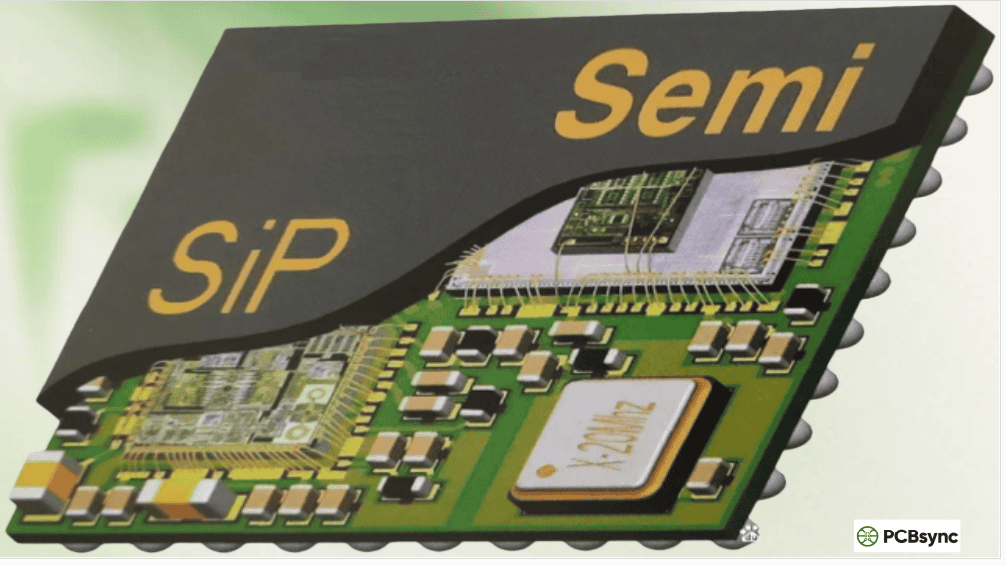
A system in package integrates multiple integrated circuits along with supporting passive devices into a unified package that functions as a complete system or subsystem. Unlike traditional single-die packages, SiP combines diverse components—processors, memory, RF modules, power management, sensors, and discrete passives—into one compact unit.
The defining characteristic of SiP package technology is its system-level integration philosophy. Rather than simply grouping chips together, SiP designs create complete functional systems within a single package footprint. This “system by design, component by construction” approach dramatically simplifies PCB layout while enabling performance levels impossible with discrete component assemblies.
Key Characteristics of SiP Packages
Feature
Description
Integration Scope
Complete systems or subsystems
Component Types
ICs, bare die, passives, MEMS, antennas, sensors
Interconnect Methods
Wire bonding, flip chip, TSV, RDL
Package Forms
BGA, LGA, QFN with internal complexity
Die Arrangement
Side-by-side, stacked, or hybrid configurations
SiP Package Architecture Options
System in package implementations span multiple architectural approaches:
2D SiP: Multiple dies placed side-by-side on a common substrate. This represents the simplest SiP form, using wire bonding or flip chip for die-to-substrate connections. Package variants include stacked die modules, substrate modules, and hybrid configurations combining flip chip with wire bonding.
2.5D SiP: Dies mounted on a silicon interposer that provides high-density interconnections between them. The interposer contains through-silicon vias (TSVs) connecting to the package substrate below. This architecture excels for high-bandwidth die-to-die communication, such as connecting logic dies to High Bandwidth Memory (HBM).
3D SiP: Vertical die stacking with direct chip-to-chip connections. Dies connect through wire bonding, flip chip, TSVs, or combinations thereof. This architecture maximizes density but introduces thermal management challenges.
Antenna-in-Package (AiP): Specialized SiP variant integrating antenna elements within the package, essential for 5G mmWave and radar applications where antenna proximity to RF circuitry is critical.
Multi-Chip Module (MCM) Fundamentals
A multi-chip module integrates multiple ICs or semiconductor dies onto a unifying substrate, allowing them to function as a single larger IC. The MCM approach enables manufacturers to combine components from different processes, improve yields over monolithic solutions, and achieve modular designs.
While MCM and SiP overlap significantly, the key distinction lies in scope: an MCM isn’t necessarily a complete system—it may be a tightly coupled subsystem or module. SiP is purpose-built to be a complete system within a single package, while MCM represents a more general multi-die integration approach.
MCM Substrate Types
MCM technology is classified by substrate construction:
Type
Substrate
Characteristics
Applications
MCM-L
Laminated PCB
Up to 25 layers, cost-effective, familiar processes
Consumer electronics, cost-sensitive products
MCM-C
Ceramic (LTCC/HTCC)
High reliability, excellent thermal, up to 100 layers possible
Aerospace, military, RF applications
MCM-D
Deposited thin film
Finest features (2-10µm lines), high density
High-performance computing, RF
MCM-S
Silicon substrate
Integrated passives possible, CTE matched to dies
Mixed-signal, high-frequency
MCM-L (Laminated)
MCM-L uses organic laminate substrates similar to PCB technology but with finer features and tighter process control. Rigid, flex, and rigid-flex variants exist. The substrate typically uses epoxy-based polymers reinforced with fiberglass, though polyimide and PTFE options serve high-frequency applications.
MCM-L offers the lowest cost entry point for multi-chip integration. AMD’s Zen 2 and Zen 3 processors use MCM-L construction to integrate chiplet dies with I/O controllers on organic substrates.
MCM-C (Ceramic)
MCM-C substrates use either Low Temperature Co-fired Ceramic (LTCC) or High Temperature Co-fired Ceramic (HTCC). These provide excellent thermal conductivity, hermeticity options, and reliability under extreme conditions. The thick-film processes produce wider lines (125-500µm) than MCM-D but at lower cost.
LTCC MCM-C technology particularly excels in RF and microwave applications, enabling embedded passive components (capacitors, inductors, resistors) within the ceramic layers.
MCM-D (Deposited)
MCM-D uses thin-film deposition to create ultra-fine interconnect features (2-25µm lines) on silicon, ceramic, or glass substrates. Polyimide or BCB (benzocyclobutene) dielectrics separate copper or aluminum conductor layers. This approach achieves the highest interconnect density but at premium cost.
SiP vs MCM vs SoC: Understanding the Differences
Engineers often encounter confusion between these integration approaches. Understanding their distinctions helps select the right technology.
Aspect
SiP Package
MCM
SoC
Integration Level
System/subsystem
Module/subsystem
Single monolithic chip
Die Count
Multiple (2-10+)
Multiple (2-10+)
Single
Component Types
ICs, passives, MEMS, sensors
Primarily ICs
Single die with all functions
Process Nodes
Mix of optimal nodes
Mix possible
Single node for all
Time-to-Market
Faster
Faster
Slower
Design Flexibility
High
High
Low (committed)
NRE Cost
Lower
Lower
Higher
Unit Cost (Volume)
Higher
Higher
Lower
Yield Risk
Lower (KGD approach)
Lower
Higher for large dies
When SiP Outperforms SoC
System in package technology provides advantages in several scenarios:
Mixed-Signal Integration: Analog circuits don’t scale well with digital process nodes. SiP allows analog portions to remain on optimal older nodes while digital functions use advanced nodes.
Heterogeneous Technologies: Combining different semiconductor materials (Si, GaAs, GaN) or integrating MEMS, optical components, and sensors becomes straightforward with SiP.
Faster Time-to-Market: Using known-good-die (KGD) from existing products eliminates full chip development cycles. Changes to one die don’t require respinning the entire system.
Yield Optimization: Large monolithic SoCs suffer yield challenges. SiP uses smaller, higher-yielding dies that are tested before integration.
IP Reuse: The same processor die can serve multiple products by combining it with different memory, RF, or sensor dies in various SiP configurations.
Advanced SiP Integration Technologies
Modern SiP package implementations leverage sophisticated interconnection technologies.
Interconnect Technology Comparison
Technology
Pitch
Density
Cost
Complexity
Wire Bonding
35-80µm
Moderate
Low
Low
Flip Chip (C4)
100-200µm
High
Medium
Medium
Micro-bump
40-55µm
Very High
High
High
Copper Pillar
40-100µm
High
Medium
Medium
TSV
5-50µm
Highest
Highest
Highest
Through-Silicon Via (TSV) Technology
TSVs provide vertical electrical connections through silicon substrates or dies, enabling true 3D integration. These copper-filled vias achieve the shortest interconnect paths and highest bandwidth between stacked dies.
TSV applications include:
2.5D interposers connecting logic to HBM
3D stacked memory (HBM, hybrid memory cube)
Image sensor stacking (pixel array over processing)
TSV technology remains expensive due to specialized processes (via etching, isolation, filling, thinning), limiting its use to high-value applications where performance justifies cost.
Redistribution Layer (RDL) Fan-Out
RDL fan-out packages create fine-pitch wiring layers that redistribute die I/Os to a larger package footprint. Fan-out wafer-level packaging (FOWLP) approaches like TSMC’s InFO and ASE’s FOCoS provide interposer-like density at lower cost than silicon interposers.
Fan-out SiP architectures embed multiple dies in molding compound, then create RDL interconnections between them. This approach enables:
High-density die-to-die connections
Thinner profiles than substrate-based solutions
Moderate cost between MCM-L and silicon interposer
SiP and MCM Applications Across Industries
Advanced packaging technologies serve diverse application domains.
Consumer Electronics
Smartphones exemplify SiP adoption. Apple Watch uses ASE’s S2 SiP integrating processor, memory, sensors, and power management into a compact module. Smartphone application processors increasingly use 2.5D or fan-out configurations for memory integration.
Modern TWS (true wireless stereo) earbuds pack Bluetooth, audio codec, battery management, and sensor fusion into SiP modules smaller than a fingernail.
High-Performance Computing
Data center and AI applications drive advanced MCM development. AMD’s EPYC processors use chiplet MCM architecture, integrating up to eight CPU dies with I/O controllers. This approach enabled AMD to offer high core counts economically.
AI accelerators use 2.5D packaging with HBM stacks to achieve memory bandwidth exceeding 1TB/s—impossible with traditional approaches.
Automotive
Automotive applications demand high reliability and wide temperature operation, making MCM-C popular for safety-critical systems. ADAS (Advanced Driver Assistance Systems) processors increasingly use SiP to integrate radar, camera processing, and sensor fusion.
For complex FPGAs used in automotive and industrial applications, Altera FPGA devices offer various package options supporting system integration requirements.
Aerospace and Defense
Military and aerospace systems have long used MCM-C and hermetic SiP for extreme reliability. Radar modules, electronic warfare systems, and satellite electronics benefit from the high integration and robust substrates these technologies provide.
Medical Devices
Implantable devices like continuous glucose monitors (CGMs) use SiP to integrate microcontrollers, sensors, antennas, and power management in miniaturized biocompatible packages. Size and reliability requirements make SiP essential for these applications.
5G and RF Communications
5G mmWave systems require antenna-in-package (AiP) technology to minimize losses between RF circuitry and antennas. These SiP solutions integrate phased array antennas, beamforming ICs, and RF front-ends in unified packages.
Successful multi-chip package design requires attention to several critical factors.
Thermal Management
Stacking multiple active dies creates thermal challenges. Considerations include:
Factor
Impact
Mitigation
Die-to-die thermal coupling
Hot spots, reliability concerns
Thermal simulation, strategic die placement
Substrate thermal resistance
Heat trapping
Thermal vias, high-K substrates
Power density
Junction temperature limits
Spreaders, enhanced cooling paths
Package-to-board interface
System-level thermal path
Thermal pad design, TIM selection
3D packages particularly challenge thermal design. Placing high-power dies at the bottom (closest to cooling) and using through-substrate thermal vias helps manage heat flow.
Signal Integrity
Multi-die packages introduce unique signal integrity considerations:
Shorter paths reduce RC delays but demand tighter routing
Mixed-signal integration requires isolation between digital and analog sections
High-speed interfaces need co-design of die-to-die interfaces with package characteristics
Known-Good-Die (KGD) Requirements
SiP economics depend on integrating only functional dies. KGD testing at wafer level ensures defective dies don’t enter expensive packaging processes. Test coverage must match final application requirements—a challenging task for dies designed for system-level test only.
Co-Design Approach
Unlike traditional chip-then-package workflows, SiP requires co-design of dies, interposers, substrates, and system PCB. Die-to-die interface IP must be optimized for specific package characteristics. Early collaboration between die designers, package engineers, and system architects is essential.
Useful Resources for SiP and MCM Design
These resources support advanced packaging implementation:
IMAPS (International Microelectronics Assembly and Packaging Society)
IEEE ECTC (Electronic Components and Technology Conference)
SEMI Advanced Packaging programs
Frequently Asked Questions About SiP and MCM
What is the main difference between SiP and MCM?
The primary difference lies in integration scope. A system in package is designed to be a complete system or subsystem within a single package, integrating multiple ICs along with supporting passive components, sensors, antennas, or other elements. An MCM (Multi-Chip Module) represents a tightly coupled collection of dies on a common substrate that functions as a larger IC but isn’t necessarily a complete system. In practice, many people use the terms interchangeably when referring to multi-die packages, though SiP implies a higher level of system-level functionality and integration.
Why use SiP instead of designing a single SoC?
SiP offers several advantages over monolithic SoC development. Time-to-market is faster because you can combine existing validated dies rather than developing everything from scratch. Cost is often lower due to better yields from smaller dies and the ability to use optimal process nodes for each function—analog circuits can stay on mature nodes while digital functions use advanced nodes. Design flexibility is higher since dies can be mixed and matched for different product variants. Risk is reduced because proven dies have known behavior, and changes to one die don’t require respinning the entire system. For applications combining different semiconductor technologies (Si, GaAs, GaN) or integrating MEMS, sensors, and optics, SiP may be the only practical approach.
What substrate should I choose for an MCM design?
Substrate selection depends on your application requirements. MCM-L (laminated) offers the lowest cost and leverages familiar PCB processes—choose this for consumer electronics, cost-sensitive products, or when signal performance requirements are moderate. MCM-C (ceramic) provides superior thermal performance, hermeticity options, and reliability under extreme conditions—ideal for aerospace, military, RF/microwave, and high-reliability applications. MCM-D (deposited thin film) achieves the finest features and highest density but at premium cost—use it for high-performance computing or when extreme interconnect density is essential. Consider thermal requirements, operating environment, frequency, cost targets, and production volume when deciding.
What are the main challenges in SiP design?
Thermal management tops the challenge list—multiple active dies generate concentrated heat that must be extracted through the package. Known-good-die (KGD) availability and testing is critical; integrating untested dies into expensive packages destroys economics. Die-to-die interface design requires co-optimization with package characteristics; generic interfaces may not achieve optimal performance. Design tool integration remains challenging because SiP spans die, package, and board domains that traditionally use different EDA tools. Supply chain coordination involving multiple die sources, substrates, and assembly services adds complexity. Finally, testing assembled SiP packages requires new approaches since traditional probe access may be impossible.
How does SiP affect my PCB design?
SiP dramatically simplifies PCB design in most cases. Component count drops significantly—what might be 50-100 discrete components becomes a single package. High-speed routing between dies moves inside the package where controlled impedances are easier to achieve. Power distribution becomes simpler with fewer high-current nodes on the PCB. Board layer count often decreases. However, the SiP package itself may have demanding requirements: fine-pitch BGA connections, stringent power delivery networks, and careful thermal interface design. You trade component-level complexity for package-level interface challenges—typically a favorable tradeoff for complex systems.
Inquire: Call 0086-755-23203480, or reach out via the form below/your sales contact to discuss our design, manufacturing, and assembly capabilities.
Quote: Email your PCB files to Sales@pcbsync.com (Preferred for large files) or submit online. We will contact you promptly. Please ensure your email is correct.
Notes: For PCB fabrication, we require PCB design file in Gerber RS-274X format (most preferred), *.PCB/DDB (Protel, inform your program version) format or *.BRD (Eagle) format. For PCB assembly, we require PCB design file in above mentioned format, drilling file and BOM. Click to download BOM template To avoid file missing, please include all files into one folder and compress it into .zip or .rar format.